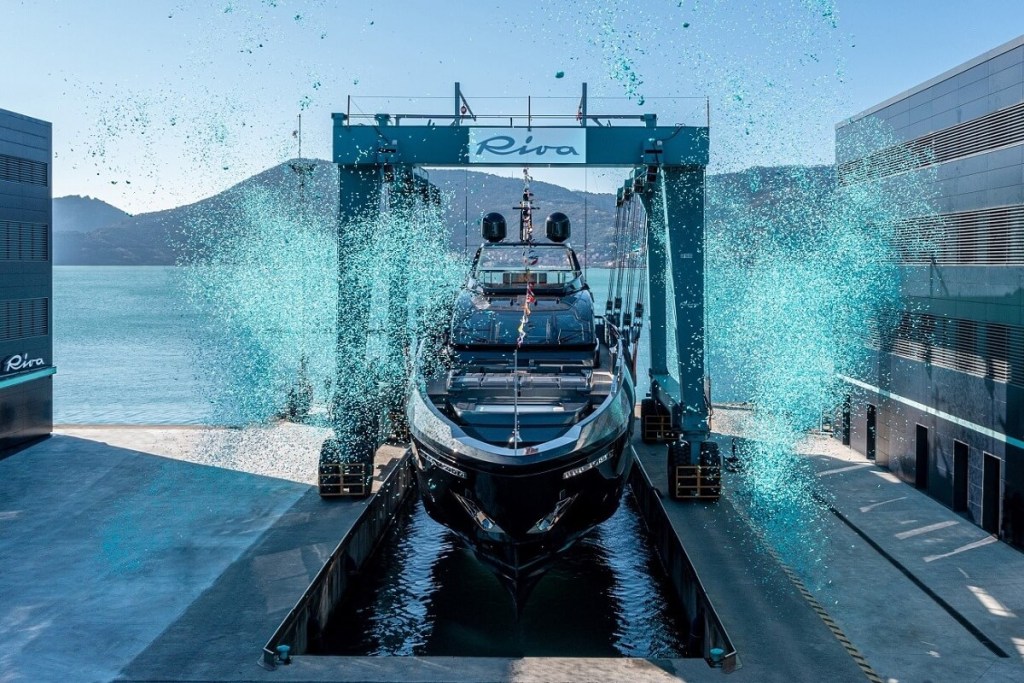
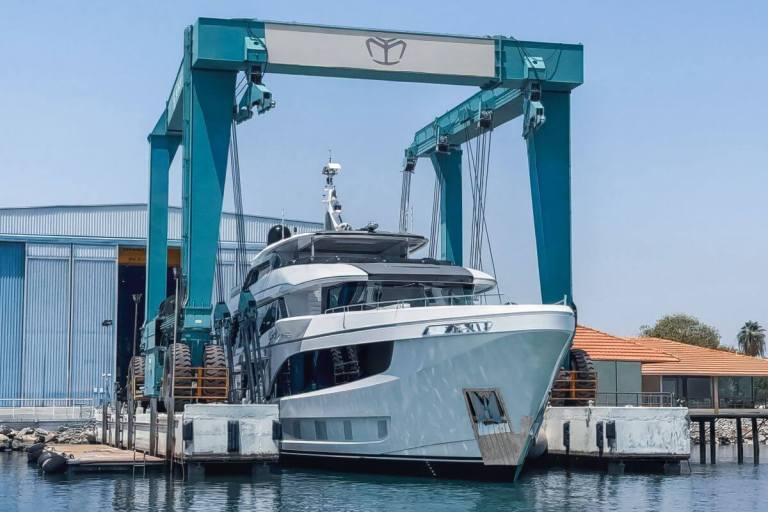
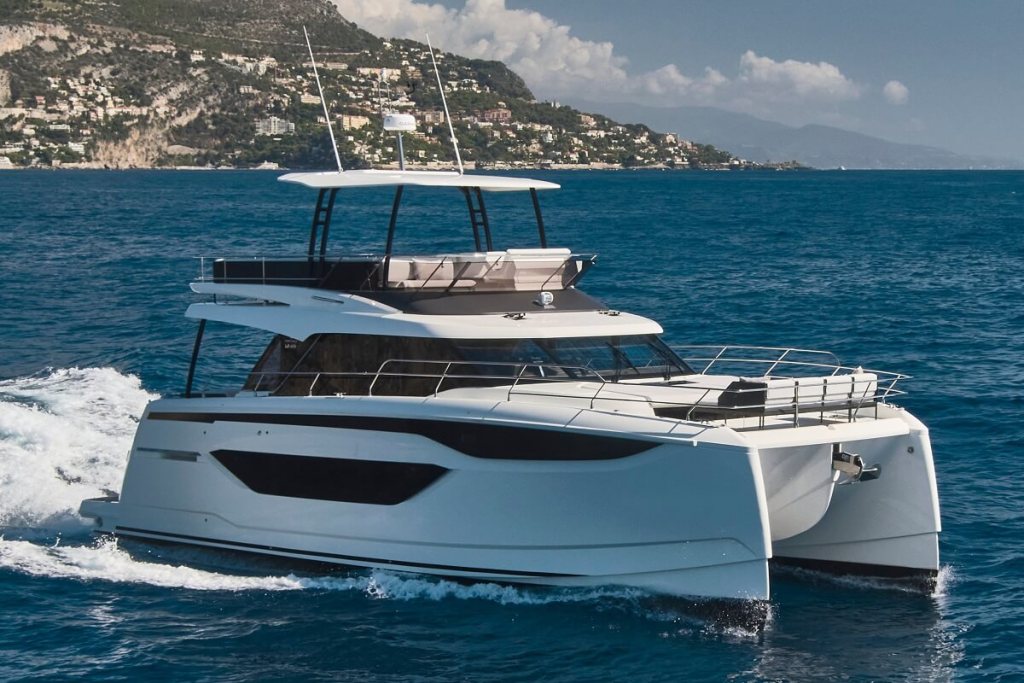
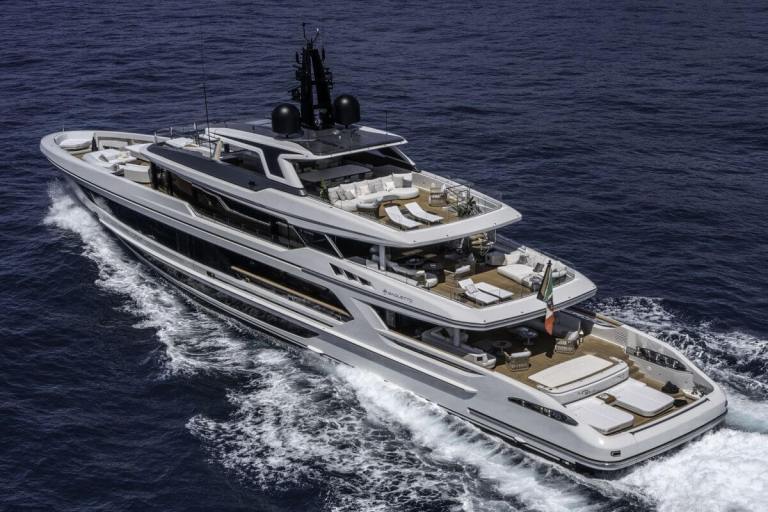
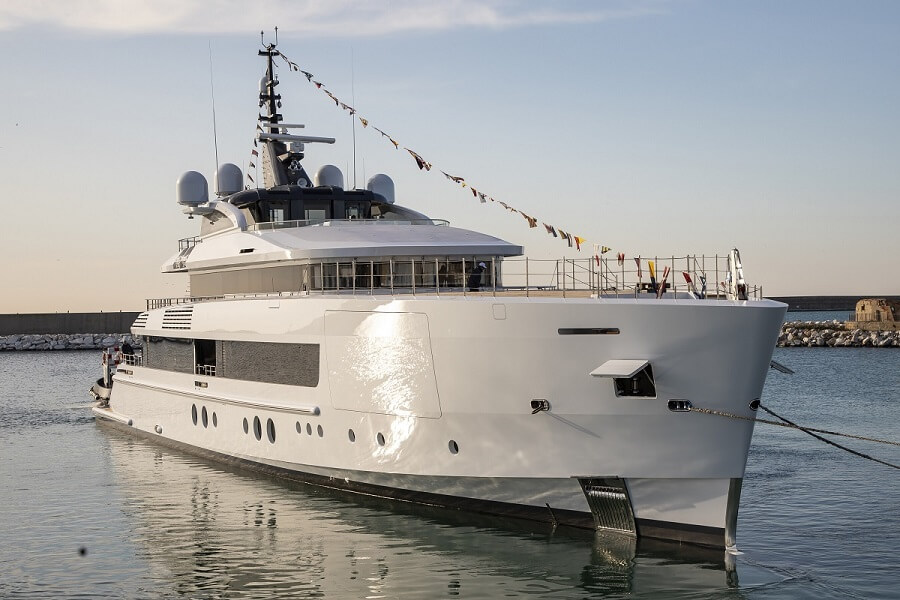
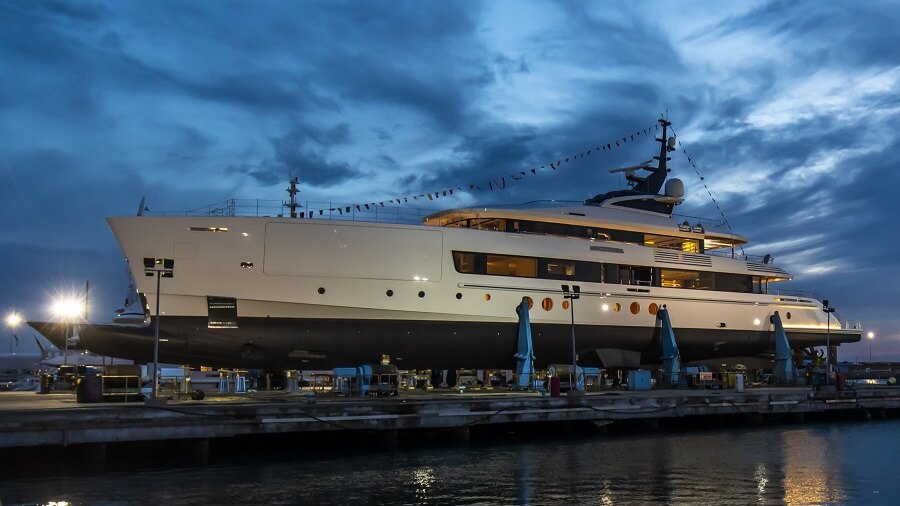
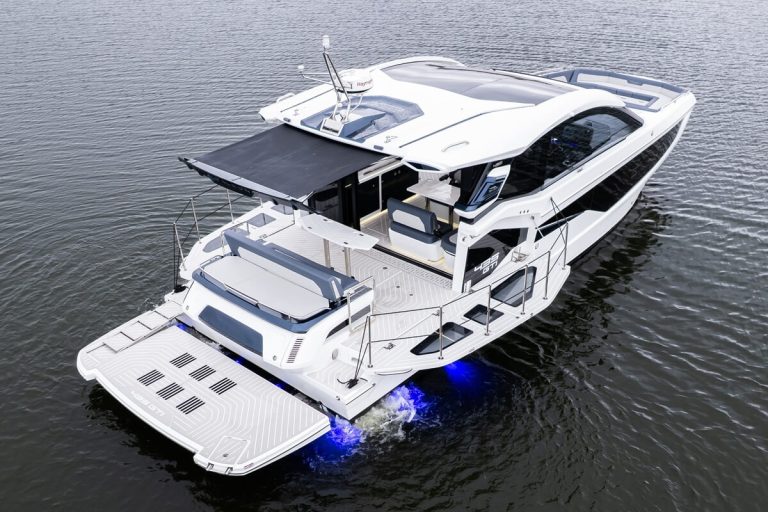
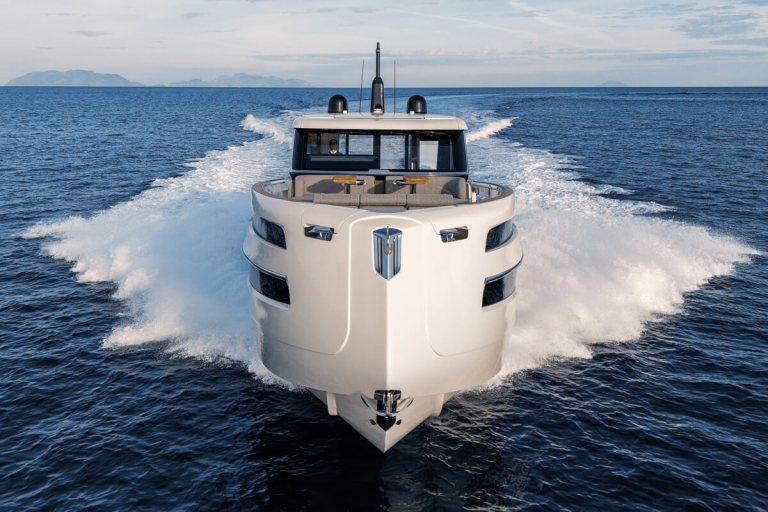
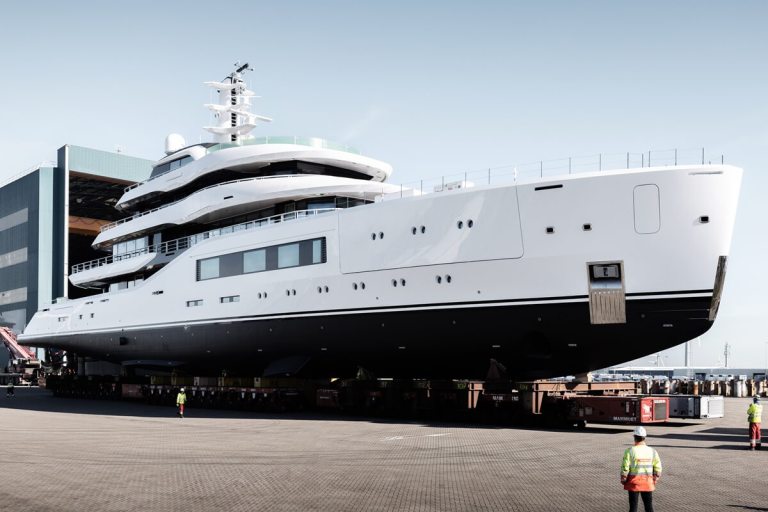
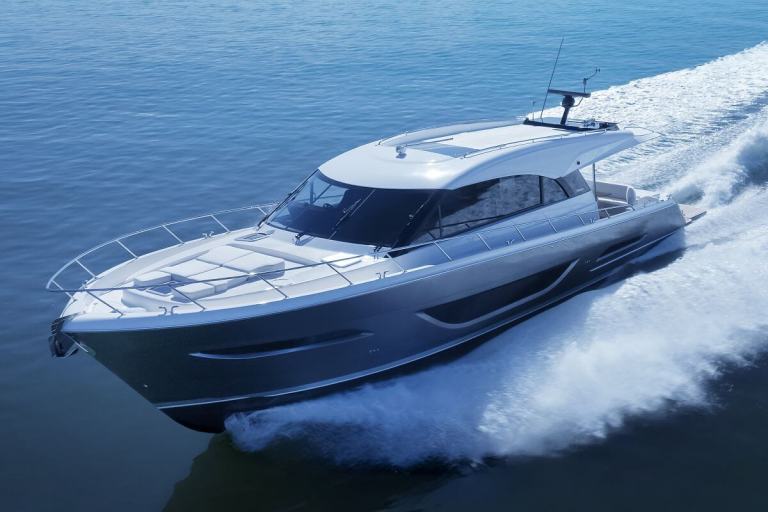
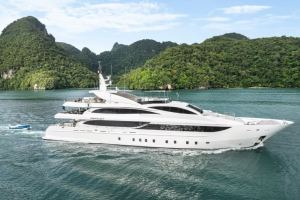
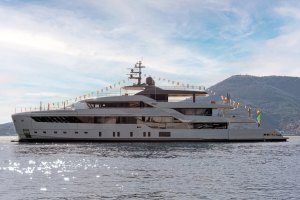
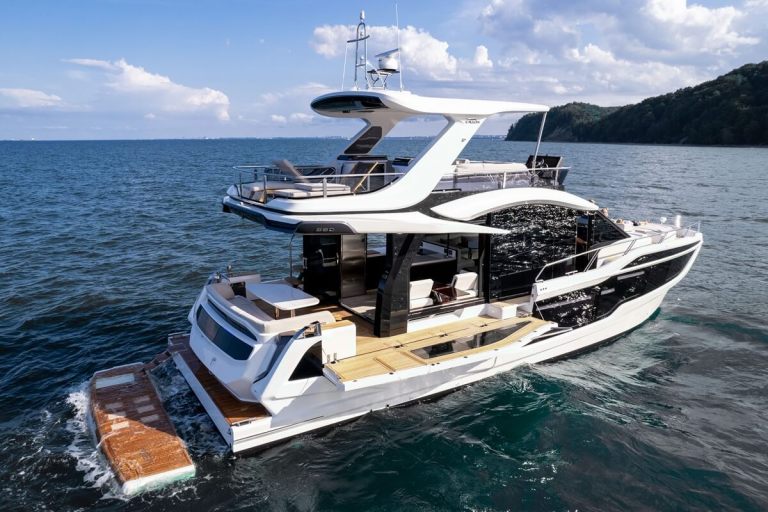
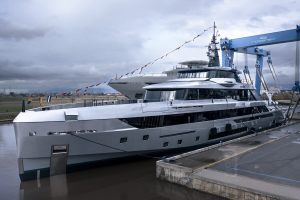
The Ferretti Group brand launches the second Bellissima at the expanded La Spezia facility, which has opened a new hospitality wing for owners.
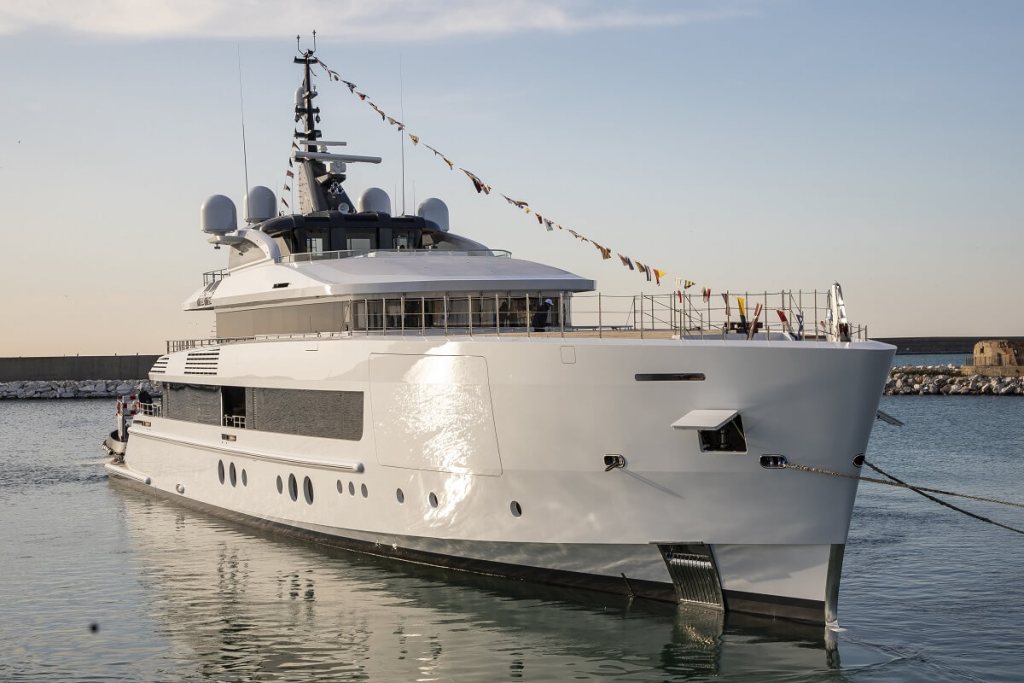
Launch of the second Riva 130’ Bellissima
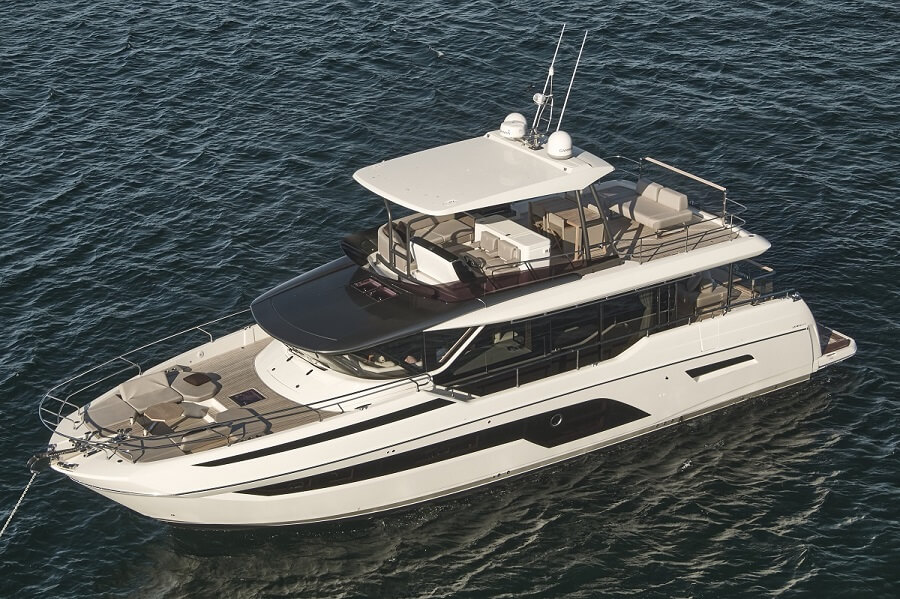
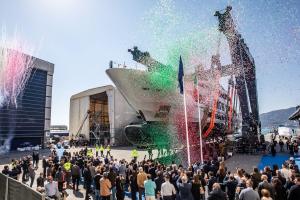
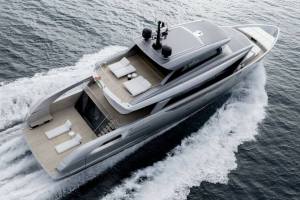
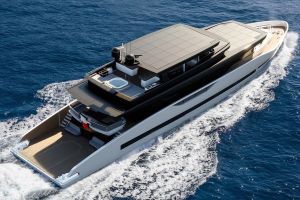
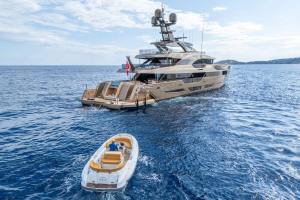
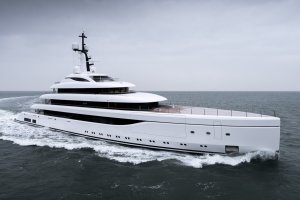
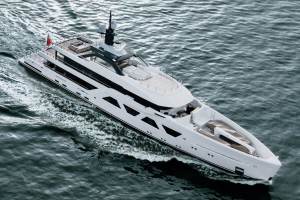
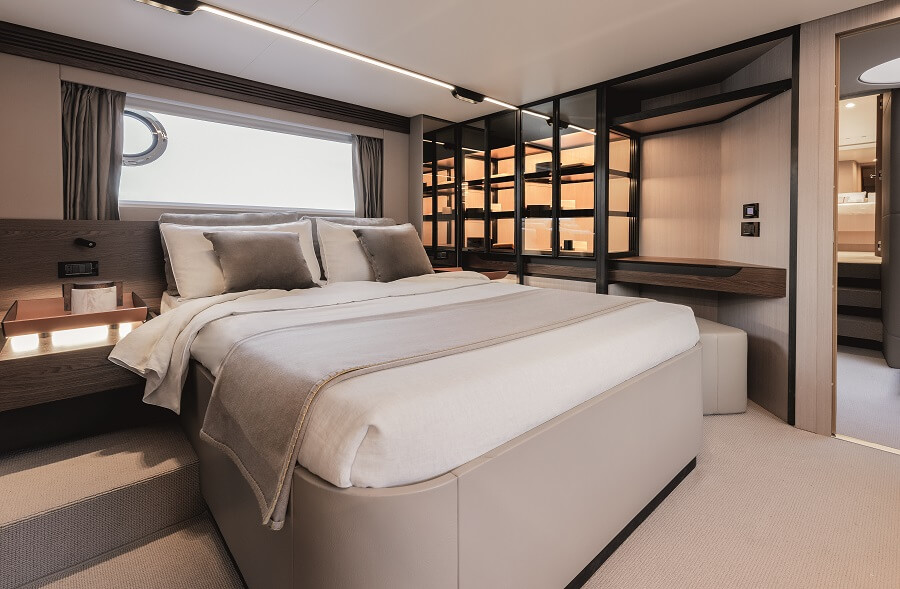
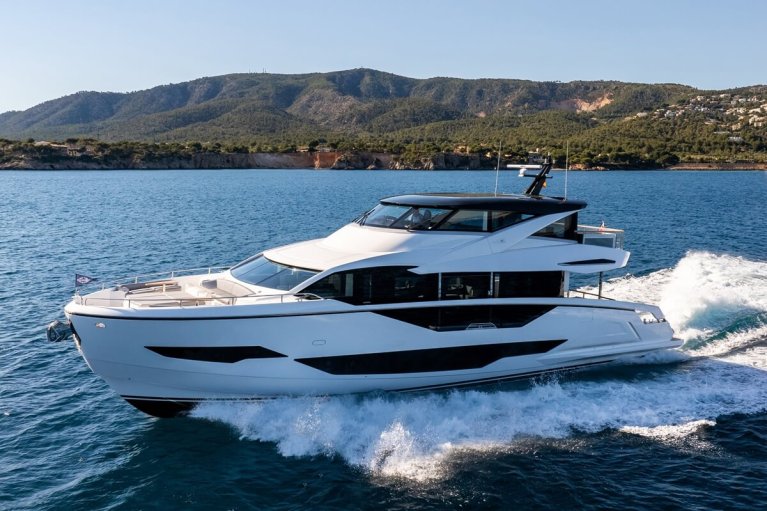
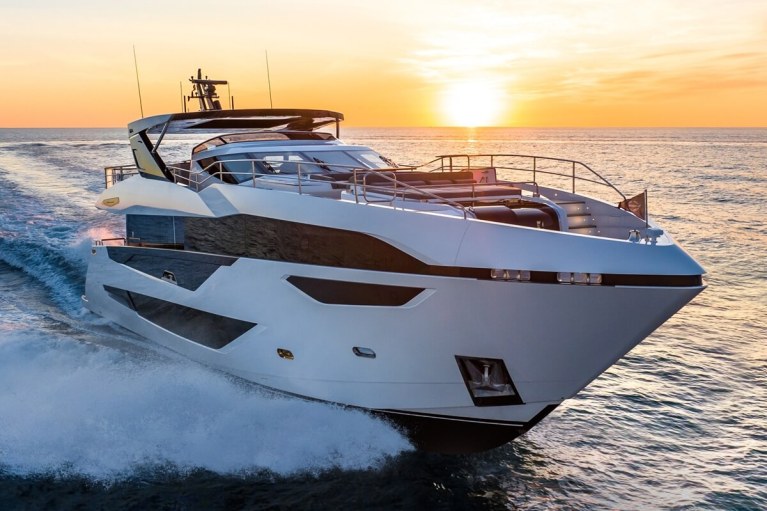
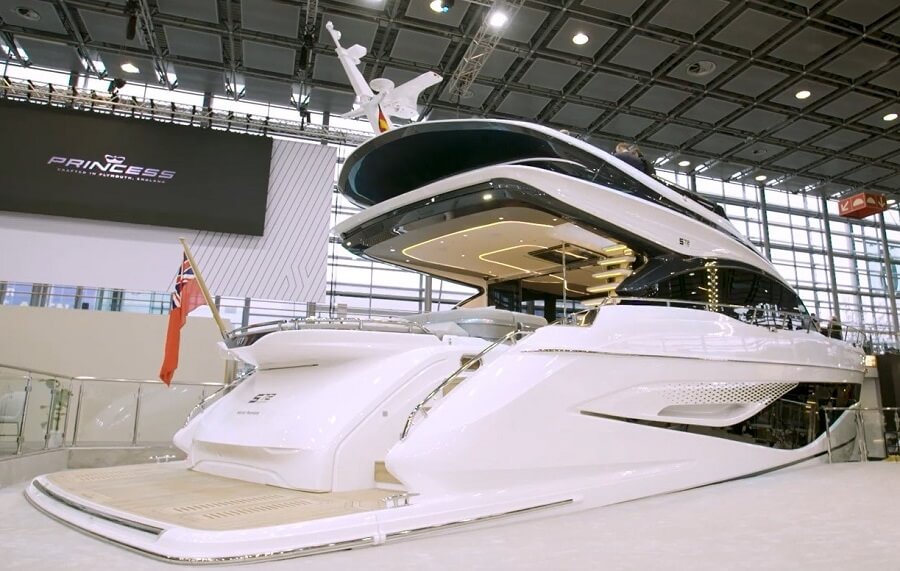
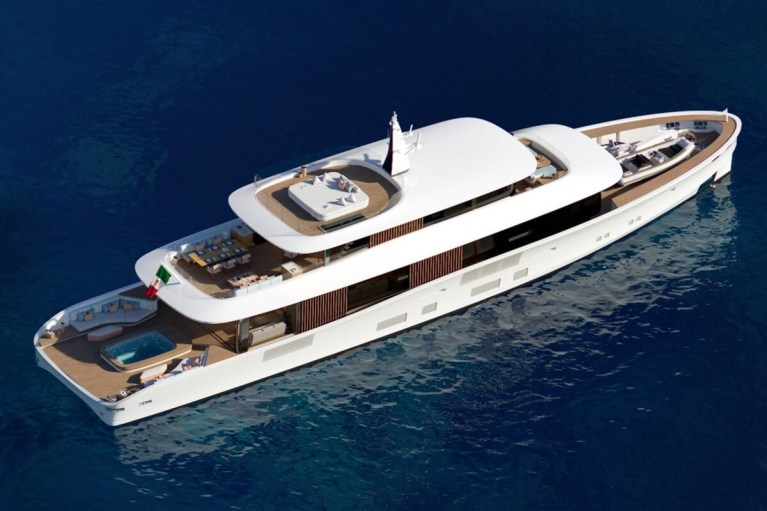
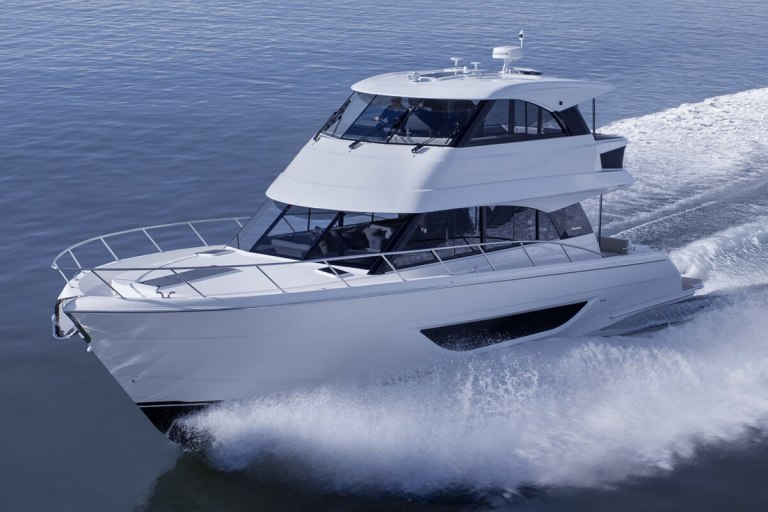
Riva has launched the second hull of the 130’ Bellissima in La Spezia, just a few months after the first hull splashed ahead of the model’s world premiere at the Monaco Yacht Show last September. The 40m model is the flagship of Riva’s Flybridge range, which also includes the 90’ Argo, 102’ Corsaro Super and 110’ Dolcevita, as well as the upcoming 82’ Diva.
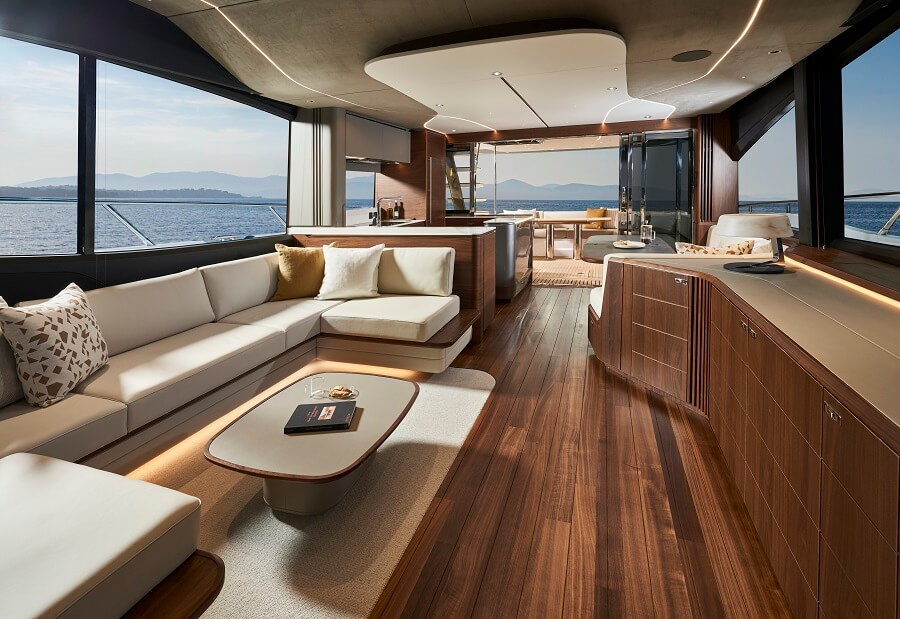
Riva 130’ Bellissima has exterior styling and interiors by Mauro Micheli and Sergio Beretta, founders of Officina Italiana Design, working in partnership with Ferretti Group’s Product Strategy Committee led by Piero Ferrari and Engineering Department. The five-cabin yacht is powered by twin 2,638mhp MTU 16V 2000 M96L engines, giving her a top speed of 22.5 knots and a cruising speed of 20 knots.
The La Spezia facility is dedicated to Riva yachts from 70-130ft
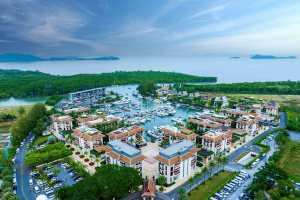
The second 130’ Bellissima was launched on behalf of a European owner in La Spezia, a Ferretti Group shipyard dedicated to the production of Riva yachts from 70-130ft. After recently undergoing major expansion and architectural restyling work, the yard now covers more than 39,000sqm, of which 17,000sqm are under cover.
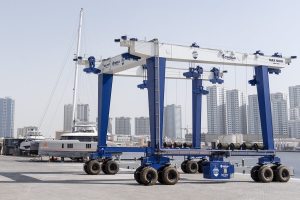
The facility includes three buildings containing 18 assembly stations, plus six equipped for testing. The production site also has a 300-tonne travel lift and two of the largest advanced-technology painting systems in Europe.
The launch also saw the official opening of the new wing of the facility reserved for owner hospitality. Representing a further optimisation of the services offered to guests, it joins 26 yacht berths, with two docks under cover, ensuring optimal conditions for work and delivery to owners in any season.
Headquartered in Hong Kong, the regional dealer has revealed solid growth in sales and the upcoming arrivals of new Prestige models.
A Prestige M48 will arrive in 2023
Asia Yachting has announced that it sold more than 50 boats last year, with more than 20 units over 50ft. The length of the boats sold totalled 3,808ft (1,161m), which the dealership said is over 50 per cent more than in 2021.
“In the Year of the Tiger, we continued our strong momentum in yacht sales, and successfully sold more than 50 boats,” Asia Yachting stated, which also won dealership awards from Prestige, Nautique and Fountaine Pajot.
“As well as this outstanding performance, we are also in awe of winning ‘dealer of the year’ awards from some of the leading brands we represent. We’re proud to start the Year of the Rabbit with growing numbers, awards and a solid order book.”
The Italian yard launched the 62m custom superyacht, FB283, designed by Giorgio Cassetta and Van Oossanen Naval Architects.
Giorgio Cassetta designed the 62m superyacht
Celebrating its 150th anniversary this year, Benetti held a launch ceremony at its Livorno yard for FB283, a 62m full custom yacht with a steel hull and an aluminium superstructure. The yacht has an overall length of 62.0m (203ft 5in), a beam of 10.5m (over 34ft) and a draft of 2.95m (9ft 6in).
The yacht has accommodation for 12 guests in six cabins, as well as 15 crew in nine cabins, while Benetti said the owner requested four fundamental characteristics: “speed, silence, long range and guaranteed fun for the family”.
Dutch studio Van Oossanen Naval Architects handled ‘speed’ and ‘long range’ with the design of the fast displacement hull form (FDHF), which combines with two MTU 12V4000 M93L diesel engines to deliver a top speed of 21 knots and a range of 4,500nm at 12 knots.
Van Oossanen designed the fast displacement hull form
Italian Giorgio Cassetta designed the exteriors and interiors, with the lines including a sleek bow and a stern sloping down towards the water’s surface. Features includes massive oval capping rails, natural teak panels, solid wood and stone furniture, and uninterrupted 6m-long, 2m-high windows on both the main and upper decks.
‘Fun for the family’ is assured by storage areas for water toys including diving gear. Located forward on the upper deck, the garage has a side door and space to contain a 10m tender, two jet-skis and a second tender, while there’s also a touch-and-go helicopter platform to allow the owner and guests to reach the yacht in remote locations.
The build process began during the lockdown period in early 2020 and made use of innovative and functional solutions, which included the use of 3D technology to develop the project, video calls to keep the owner updated, and new working methods and timings.
As well as Custom builds, Benetti’s ranges include B.Now (50M, 60M, 67M, 72M), B.Century (55M, 62M, 68M, 75M), Oasis (34M, 40M), B.Yond (37M) and Class (Motopanfilo 37M, Diamond 44M).
Highfield Boats enters electric era with two models
SHARE
The leading aluminium RIB builder has introduced two 11ft models with electric propulsion systems from companies in New Zealand and China.
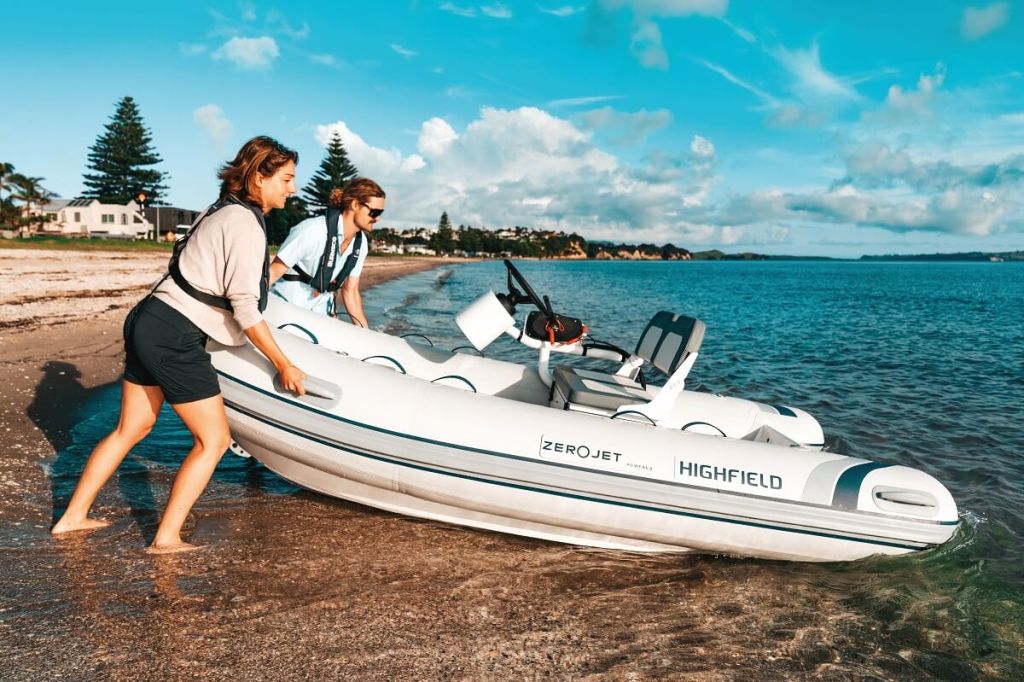
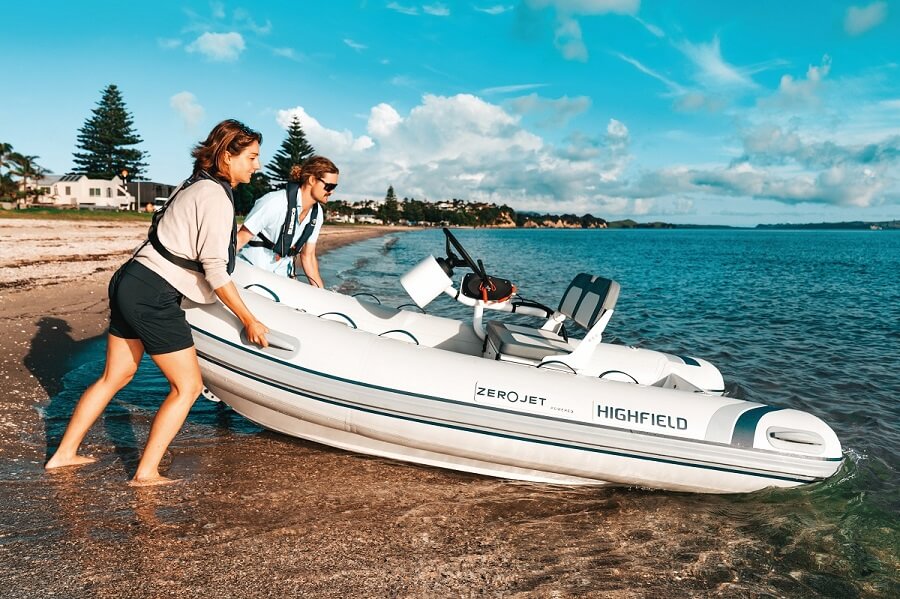
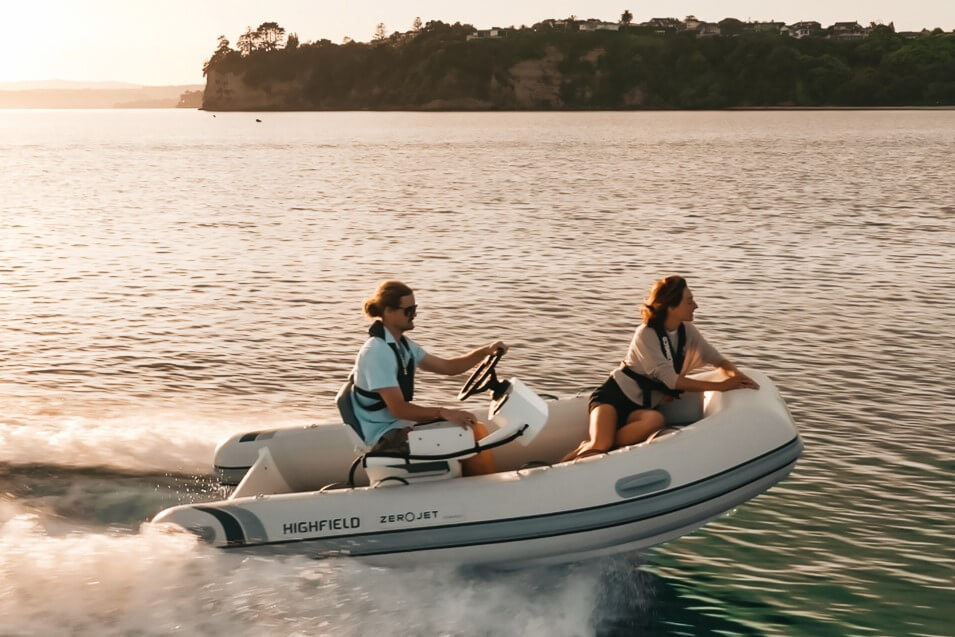
Highfield’s E Jet 330 is a collaboration with Zero Jet
Highfield Boats, which produced a record 10,000 aluminium-hulled RIBs in 2022, debuted its first electric models at Boot Dusseldorf, one sporting a system from New Zealand’s ZeroJet, the other using an outboard from Chinese company ePropulsion.
Measuring 11ft overall and 6ft wide, the E Jet 330 has a 15kW (20hp) jet drive system from ZeroJet and an impressive top speed of 25 knots.
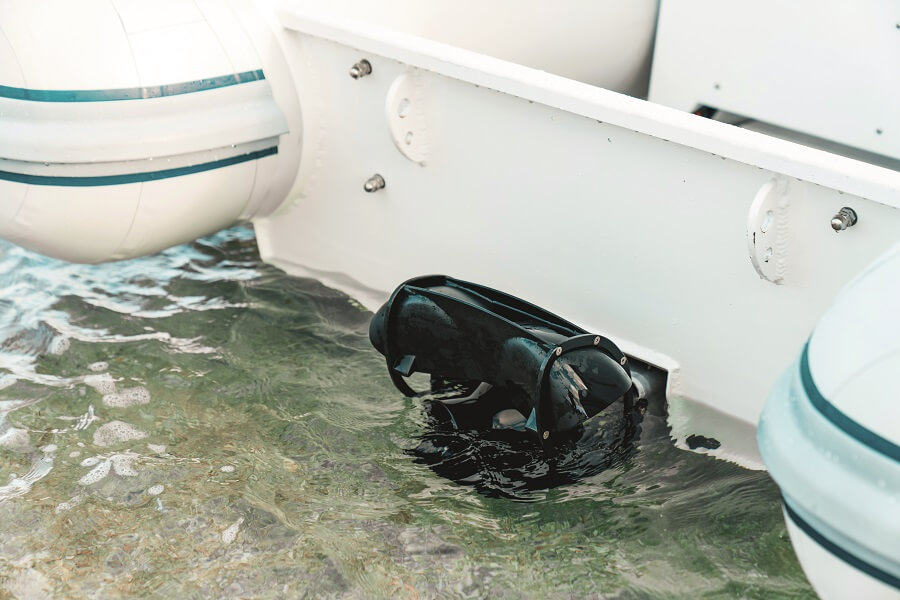
The electric jet drive from ZeroJet
The RIB has a range of 23nm and 12nm at three knots and 14 knots respectively, although lasts only an hour at 14 knots and requires a 2hr 40min charge time.
The E Jet 330 has practically no draught due to the electric jet drive, so can skim over shallow ecosystems and easily ‘beach’, while no exposed propeller increases safety for swimmers.
The E Jet 330 has a top speed of 25 knots
The ZeroJet jet pump and compact electric motor weigh 50 per cent less than a comparable outboard motor, while the 48V LiFePO4 batteries (10kWh) are housed inside a waterproof battery case under the deck.
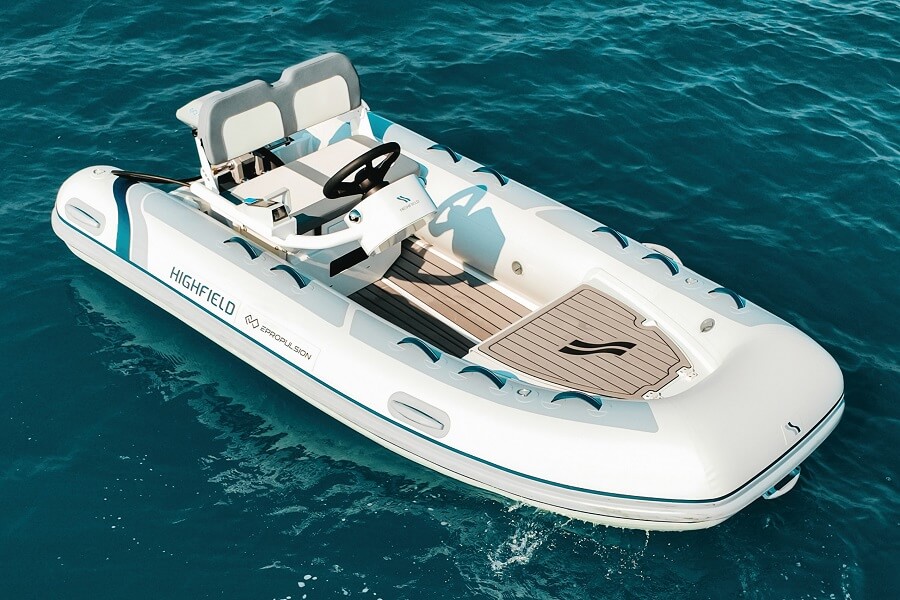
Designed to carry up to five people, the E Jet 330 has a side-mounted steering system and LCD display, an adjustable helm bench seat, a seat/locker in the bow, and further space on the tubes.
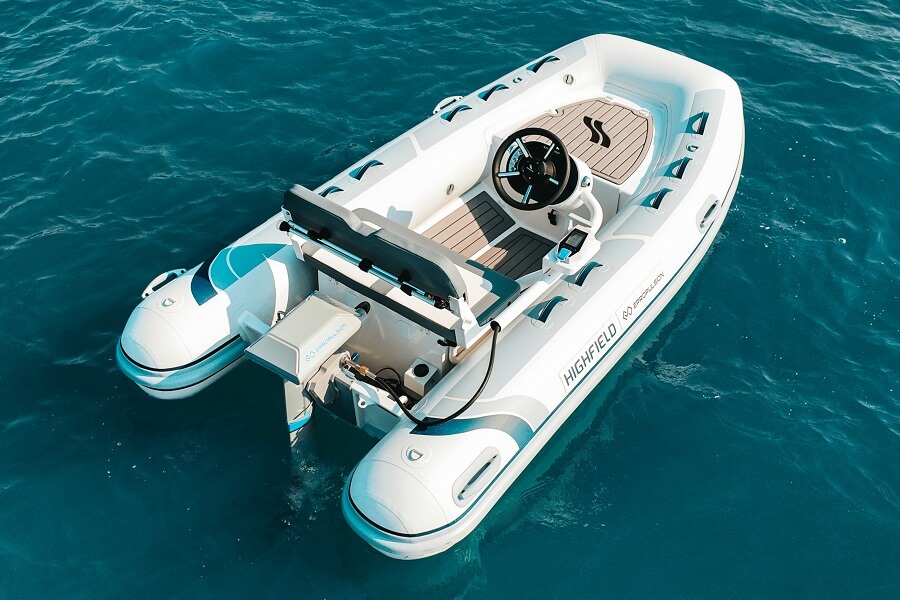
The Classic 340E developed with China’s ePropulsion
Highfield has also developed the Classic 340E, an electric version of the Classic 340 using a Navy 6.0 Evo electric outboard motor (6kW/9.9hp) from ePropulsion.
The 11ft 2in boat has a beam of 5ft 7in and a top speed of 10 knots, recharging in 7hrs 10mins with one charger and 3hrs 40 mins with two chargers. Both the E Jet 330 and Classic 340E weigh about 225kg and are Category C.
The Classic 340E has a 6kW electric outboard
New Highfield models for 2023 also include the Sport 600, 660, 700, 760 and 900, plus the Patrol 700. The company has a production facility in China’s Shandong province and its ranges include Sport (3m-9m), Patrol (4.2m-8.6m), Classic (2.6m-4.6m) and Ultralite (2.2m-3.4m). The French-owned RIB builder is distributed in over 45 markets and its network of dealers includes Simpson Marine. www.simpsonmarine.com www.highfieldboats.com
Invictus, Sacs TecnoRib, Lomac, Aquador and Nimbus all showed or previewed new models at Boot Dusseldorf.
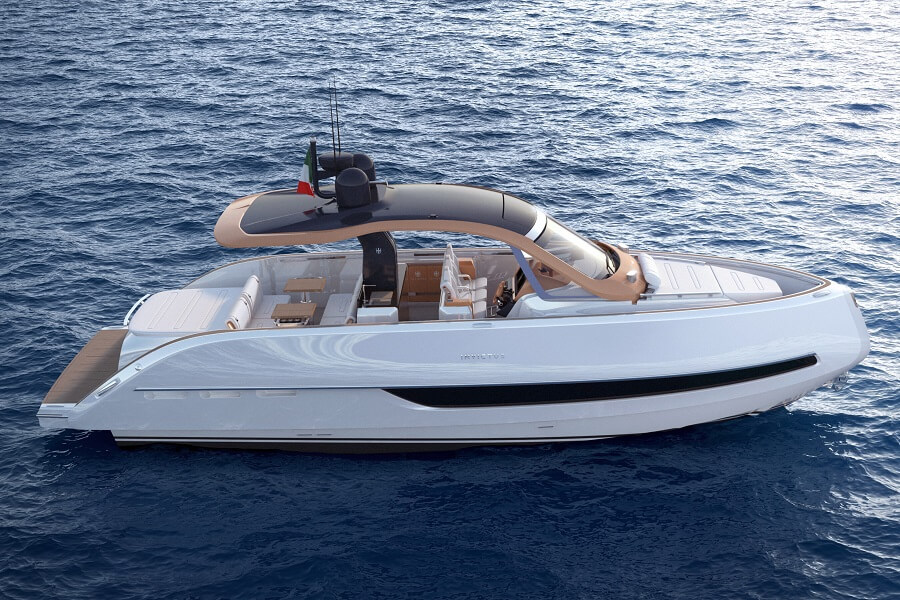
CGI of Invictus TT420
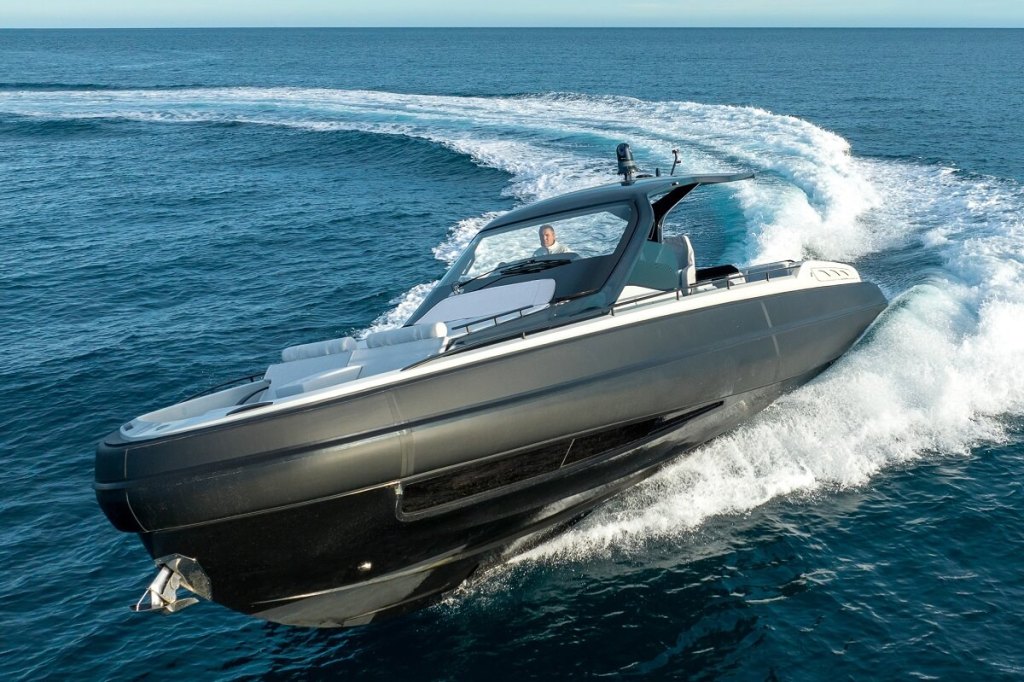
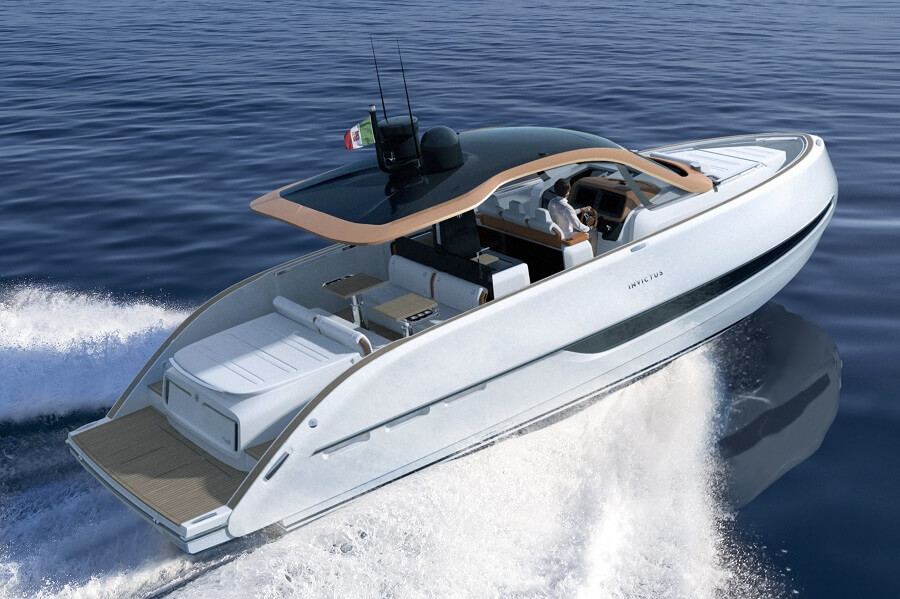
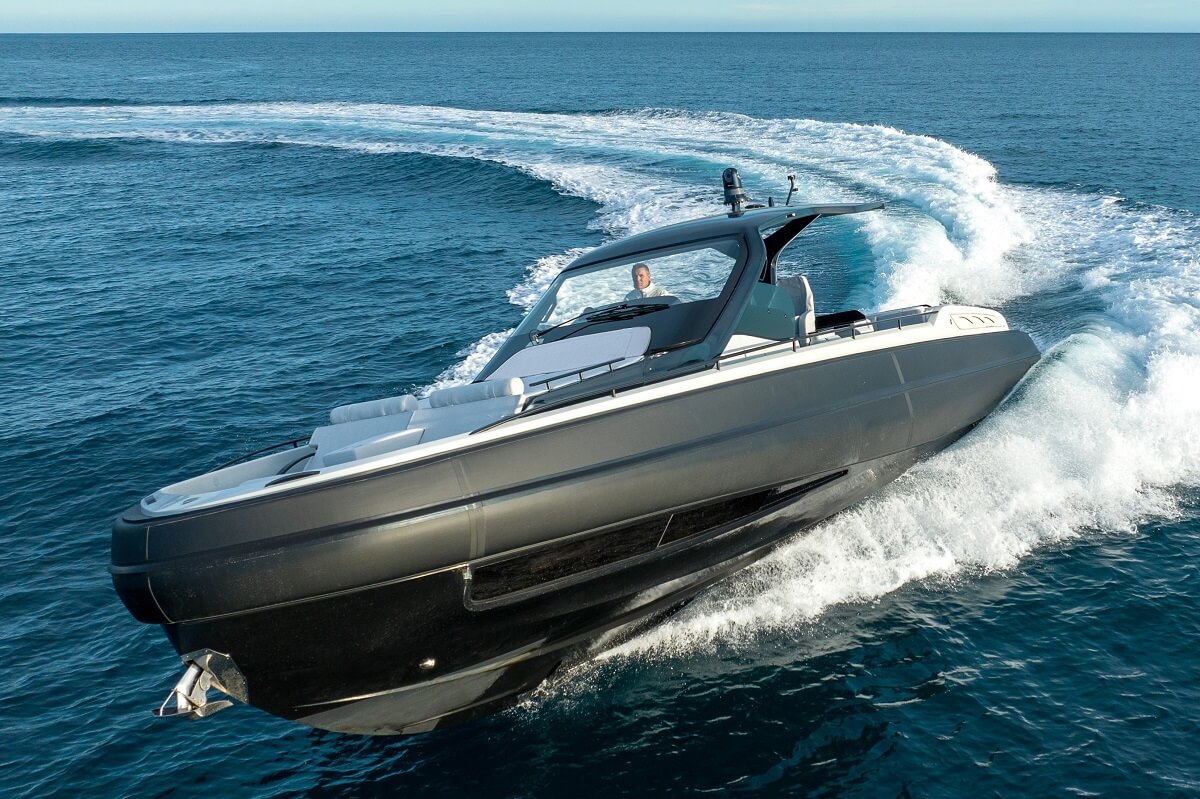
Boot Dusseldorf world premieres in Hall 5, dedicated to ‘superboats’, included the Invictus TT420, which features a garage able to house a 2.1m tender. The slightly smaller sister of the Italian brand’s flagship TT460, the new 12.3m model has a 4.15m beam and a distinctive Invictus design by Christian Grande, featuring a curved hard top incorporating a windshield with wipers.
The teak-covered walkaround design features a swim platform, double sunpad, dinette with foldable tables, outdoor galley, triple-seat helm station, high bulwarks with the option of fold-out side terraces, and a foredeck that can be converted into a chaise longue. The lower deck includes a forward lounge that can convert into a double bed, a midships twin cabins, and a bathroom with separate shower.
CGI of Invictus TT420
The TT420 features a sterndrive engine with two 440hp Volvo Penta D6 engines. Based in Calabria in southern Italy, Invictus produces both a TT and GT series, with all GT models and the TT280 available with outboards. The company recently appointed NextWave Yachting as its dealer in Hong Kong.
Sacs TecnoRib debuted the Pirelli 30 in Hall 5 along with the Rebel 47 restyled by Christian Grande. Based on the Rebel 47, which has sold over 60 units and was launched in 2017, the new-look 14m boat includes a remodelled carbon-fibre hard top to lighten the structure and lower the centre of gravity, a new windshield with curves to improve visibility from the helm, a reduced beam under 4m and a new range of metallic paints.
The restyled Rebel 47
The model on display was equipped with a pair of 440hp Volvo D6 inboards, while the upholstery of the stern and bow sundecks derives from the new collaboration with Serge Ferrari. The lower deck has two double cabins with a super queen size double bed, two-seater sofa and bookcase.
The Pirelli 30 is the new entry model for the Pirelli-branded walkaround speedboats line designed by Ted Mannerfelt, head of the Swedish Mannerfelt Design Team. The Pirelli 30 is available in two different bow configurations: a complete walkaround allowing passage around the boat and the other following the Mediterranean tradition of using the bow as a sundeck.
The restyled Rebel 47
Sacs TecnoRib also announced €46.3 million sales in 2022, a 21.6 per cent increase on the two companies’ combined revenues in 2021, with Sacs and TecnoRib merging in December 2021. Further growth of about 24 per cent is expected for 2023, with a turnover target of €57.5 million.
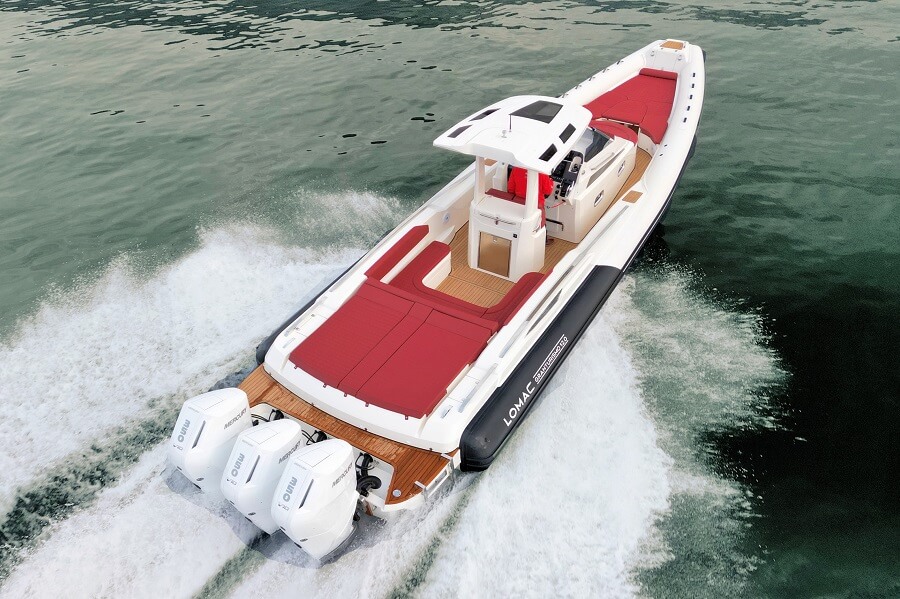
Also in Hall 5, Lomac displayed its fastest yacht to date, a GranTurismo 12.0 powered by three 350hp Mercury Verado V10 engines. The 11.7m yacht recorded over 60 knots during a certified trial in December carried out by the Milan yard and the engine makers. The GranTurismo 12.0 was designed by Federico Fiorentino, who has been working with the shipyard for a decade.
Lomac GranTurismo 12.0 with three 350hp Mercury Verado V10 engines
Paolo Lo Manto, Sales Manager at the Lo Manto family’s Milan-based boatyard, said: “We’re extremely happy with this landmark result, which shows not only our boats’ constant innovation and evolution for over 60 years but also the perfect ‘seaworthiness’ of the hulls and their geometries, designed to exploit the full potential of the latest-generation engines.”
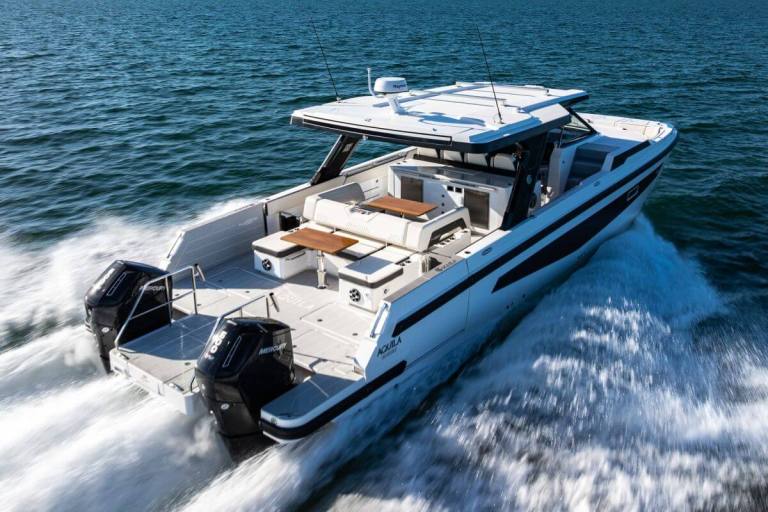
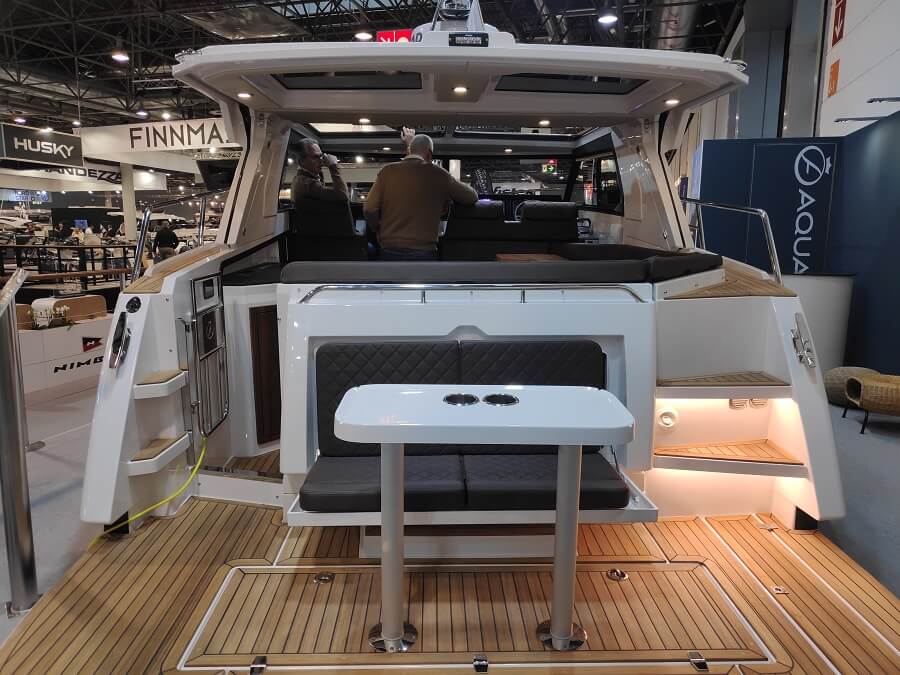
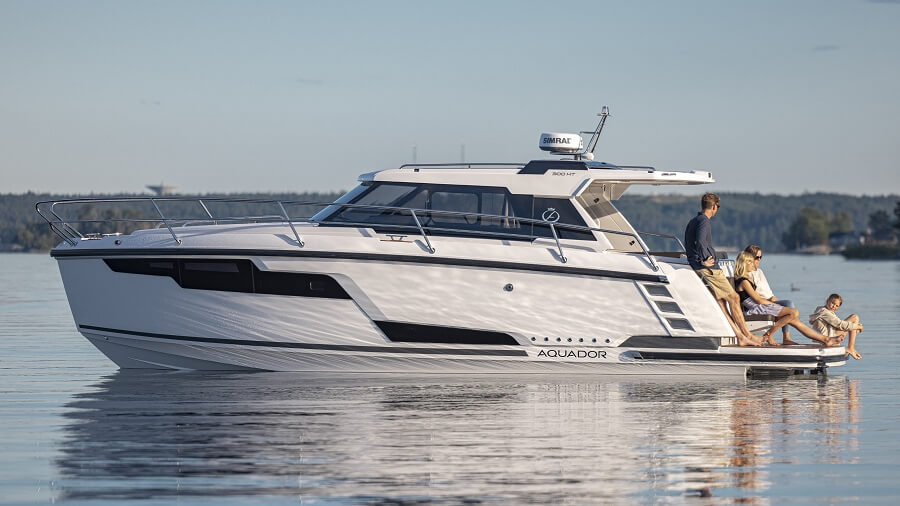
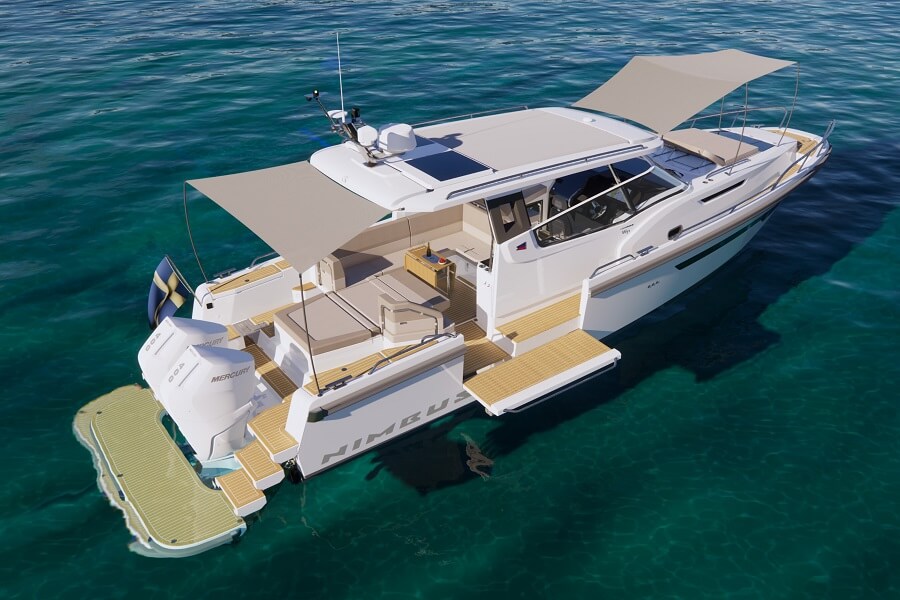
In Hall 4, Nimbus Group presented models from its various brands including the world premieres of the Aquador 250 HT and Aquador 300 HT, the latter earning a lot of attention due to its fold-out sofa and table on the aft platform.
Aquador 300 HT at Boot
The new generation of models includes a new hardtop design “that combines all of a cabin boat’s advantages with those of a fully open boat”. Both the 250 HT (7.8m) and 300 HT (9.3m) have the new AquaDynamic hull, which enables planing at lower speeds and requires less power to reach cruising speed, so reducing fuel consumption and emissions.
The 300 HT is available with stern drive or outboard engines, while the 250 HT can be fitted with a 225hp V6 or 250hp V8 Mercury outboard engine.
Aquador 300 HT
The new series of boats marks the most comprehensive product renewal for the Finnish brand for two decades, with upcoming models including the 380 HT. Aquador and sister brand Bella joined Sweden’s Nimbus Group in 2018.
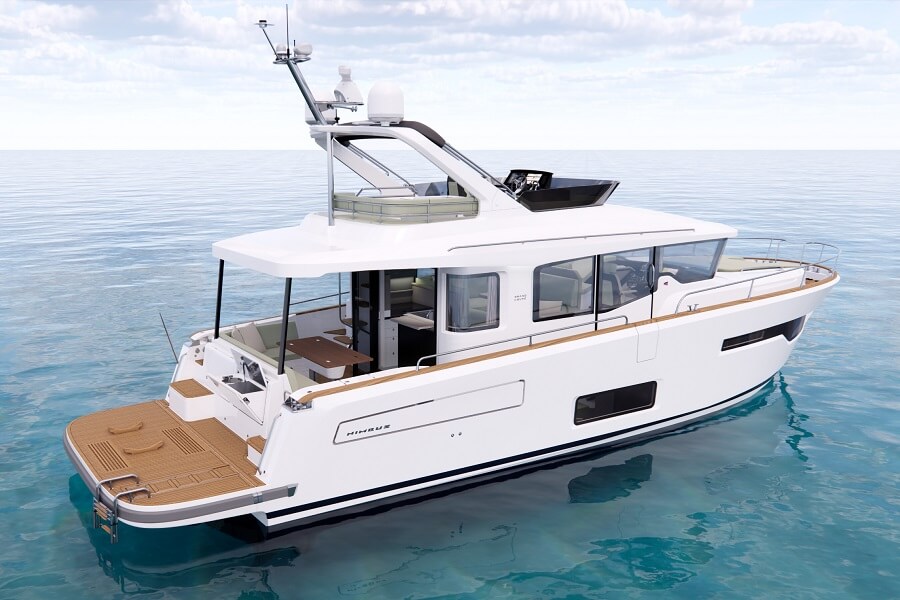
Also at Boot, the Nimbus brand – represented in this region by Asiamarine – announced two upcoming models including the new flagship 465 Coupe. However, the first boat to be seen will be the Weekender 11 (W11), which will join the W9 and 305 Drophead from the Day Cruiser series and is built on the same hull as the Tender 11 and the Commuter 11.
Nimbus W11
An evolution of the W9, the W11 has a length of 12.4m and a 3.5m beam, and offers folding side balconies. Other features include a spacious aft lounge area with adjustable seating, multiple sunbeds, outdoor galley, gyro stabilisation, storage for gear and toys, and lots of deck space.
Options include an electric sun top and a hydraulic bathing platform that extends aft of the engines, while below deck has two double berths and a bathroom with toilet and shower. The boat is fitted with two 300hp or 400hp Mercury V10 outboard engines.
Nimbus 465 Coupe
Meanwhile, the 465 Coupe will join the 305, 365, 405 and 405 Flybridge from the Coupe line. The yacht has a large swim platform, covered aft cockpit that can be enclosed, flybridge, flexible foredeck with sunpads, full-beam aft galley, raised saloon with sunroof, lower helm with side door, plus a washing machine, dishwasher, generator, increased fuel capacity and other features for extended cruising.
Both models will be available to order in spring, with deliveries of the W11 starting in autumn and the 465 Coupé following in autumn 2024.
Akila Leverages Data and Technology to Improve Companies’ ESG Efforts
SHARE
Akila is a digital twin platform built to revolutionise sustainability, performance and human-centricity in the built environment, while also streamlining ESG reporting for C-suites.
By Joseph Low
Philippe Obry, Akila Co-Founder. Image: Akila
Akila is a real-estate data and management platform founded in 2021 that uses digital twin and AI technologies to empower data-driven decision making and ESG for large and multinational portfolios. How was the concept of Akila nurtured?
Akila started with a group of people from different fields related to the built environment: 3D design and simulation, system engineering, energy, construction, IoT and smart buildings, and facility management. What united us was a recognition that buildings contribute a massive share of all carbon emissions, approximately 40 per cent in fact, and that the sector still ranks bottom three for digitalisation. This simply must change. So, we were resolved to create a platform capable of driving a sustainability transformation in the built environment. This is a transformation oriented around data, digitalisation, improved performance and ESG. It very much includes the luxury industry and its built assets — mining operations, factories, warehouses, retail spaces, yachts and more.
There were many steps to get us where we are today. We took a lot of inspiration from the example of our strategic partners, Dassault Systèmes. From the 1980s onwards, they completely transformed manufacturing in the aerospace and automotive industries, using digital twin and 3D simulation to move from an analogue and paper-based system to one that was fully digital and model-based, leveraging the concept of a single source of truth from design through production and operation.
Now we want to do the same thing for the built environment, helping businesses and portfolio holders achieve massive decarbonisation across their holdings. We can achieve this because the Akila platform is an enabling technology capable of optimising across the value chain from design and construction to operations, all the way until decommissioning. In Akila, we are confident we have built a unique digital twin platform, carefully designed for the age of ESG.
Tell us about the close relationship between Akila and Aden Group?
Aden Group was the incubator of Akila and remains one of its three main strategic partners, alongside Dassault Systèmes and Microsoft. From Aden Group, we have been able to draw on 25 years of hands-on expertise managing complex operations at large facilities — factories, industrial parks, commercial space, retail space, etc. That experience has greatly informed the development of Akila because, alongside ESG and performance dashboards for high-level decision-makers, Akila is also designed as a solution for operational teams at sites. So, the functionalities of Akila have been very deeply informed by Aden’s decades of experience understanding client needs, resolving their pain points and making their buildings into high-performing, high-comfort, human-centric spaces.
Another exciting thing is that our partnership with Aden Group opens up opportunities to collaborate on net-zero carbon projects with other entities under the Aden Group umbrella. I am thinking especially of Tera Energies, the clean-energy JV it co-founded Total-Eren, and NXpark, a series of turn-key Industry 4.0 industrial parks that it is developing in China right now. Simply put, we are stronger together, and able to make an even stronger push for decarbonization and optimisation.
How instrumental has Dassault Systèmes been in the definition of the data to be collected and overall process of these?
Building Digital Twin with sensors. Image: Akila
As I mentioned earlier, Dassault Systèmes are truly pioneers in the field of 3D design and simulation. Over the past 40 years, they have become global leaders in software for advanced simulation and 3D modelling. Having Dassault Systèmes as one of our three main strategic partners has greatly expanded our capabilities in two areas especially.
First, Dassault Systèmes is central when creating and maintaining what we call the “digital thread” of a site in the built environment. This ensures that a single source of truth is preserved for a project through design, construction, commissioning, and then the Akila integration makes sure that this digital thread is maintained through operations. Only by having accurate data inputs can you have accurate outputs — otherwise, as the saying goes: garbage-in, garbage-out. Dassault Systèmes ensures the integrity of all structural data that goes into our platform.
Secondly, Dassault Systèmes software enables advanced simulation of an enormous range of scenarios for a building or asset without limitation. This includes things like energy simulation, thermal comfort simulation, carbon footprint calculation and more. In effect, we are able to merge the virtual and physical world for a continuous loop of optimisation and “see into the future” in ways that facilitate smarter and more sustainable building design for greenfield projects. Then, during the operational phase of a building, this simulation capability enables critical carbon-reducing features like predictive maintenance — this means we can target potential issues before they impact operations and cause unnecessary environmental impact.
Who are the key members of the Akila team?
Honestly, too many to name. Since our founding, we have grown from a team of five to 80, and we’ll see that number continue to rise. Our founding team is multicultural and multinational, bringing together high-level tech, business and sustainability experts from across a range of global tech, consulting and industrial groups. Our backgrounds cover ESG, energy, engineering, construction, PropTech and LEED. We started in China, but we’ve been expanding fast in Singapore, Vietnam, Malaysia and Indonesia, with two main divisions: SaaS as well as an Architecture & Engineering Technologies division.
Akila’s Energy Savings Tracker: a smarter, simpler way to measure impact. What specific solutions is Akila providing?
Akila asset management. Image: Akila
Many companies are already undertaking energy-savings projects but lack the tools to successfully conduct and measure optimisation at scale. For instance, some companies don’t have a clear picture of how much energy they are consuming and where the inefficiencies lay — they can only compare energy bills side-by-side, for the crudest measurement of energy consumption. Or, they have undertaken energy optimisation projects, but they are still working off massive Excel sheets, dependent upon manual input and management. This limits how often measurement can take place, brings the risk of human error, and proves enormously difficult to coordinate across sites and borders.
These are the problems Akila Energy Savings Tracker addresses. The platform uses IoT to create a transparent energy-consumption baseline for each site, down to the level of individual pieces of equipment. Then, it tracks all subsequent energy consumption in real time, in the same digital space, using the same metrics. That means that at any point you can measure in exact terms how much energy has been saved for any equipment, facility, or portfolio over any period of time, and also calculate the change in carbon emissions that has been produced.
Real-time data and analytics in a user-friendly dashboard — is that the key message delivered to decision makers?
Akila workspace energy matrix. Image: Akila
Yes, it is one of the key messages. Akila is designed to facilitate faster, better decision-making among C-level leadership. We believe that centralising key information relating to ESG and building performance into a customisable “portfolio performance cockpit” is one of the best ways to achieve this. Importantly, this is not just a static report, but a dynamically updated one, so that leadership can be updated immediately if there are any irregularities at a particular site and ensure that they are followed up on in the fastest manner possible.
Is the Akila team acting as an adviser — can the team support clients in high ESG risk industries to develop their climate transition strategies?
In these cases, Akila is the enabler and we work with specialists to produce a detailed report. Those specialists can be either the company’s in-house experts or can be drawn from one of the consultancy firms in our own network. Either way, when this groundwork is done, Akila parametrises its solutions to meet the specific recommendations and needs of the company. We are then able to greatly simplify the execution of tour clients’ climate transition by automating the collection of data covering Scopes 1, 2 and 3.
Which clients have started implementing the various Akila solutions?
We are working with American, Japanese and European multinationals, many of whom are currently running pilots in China and Southeast Asia as a first step towards a global deployment. One of our biggest contracts for ESG and decarbonisation is in the retail sector (expect a public announcement about this very soon), but to date the largest share of our client base has been in industry and manufacturing, including automotive, construction equipment, electronics, and petrochemicals.
The beauty of the platform, though, is that any building or asset in any sector produces data, and Akila can help harness and scale this data collection, no matter what type of building or sector. We also have used Akila to help clients link and optimise multisite portfolios covering commercial buildings, warehouses, even hospitals and international schools.
The World Economic Forum (WEF) has just recognised Akila as a fast rising player in the ESG space. The highly selective award recognises annually the top 100 early- to growth-stage worldwide that are shaping the future by advancing technologies. How such an award impacts on the whole team at Akila?
Yes, we were selected as one of 100 global startups to join the WEF’s 2022 Technology Pioneers cohort. Needless to say, this was a big milestone and will really help us connect with high-level audiences and partners in our mission of decarbonisation. To us, it is an indication that the things driving Akila — the climate crisis, the rise of ESG, digitalisation as the key to decarbonisation — are also resonating with a wider audience and people at the highest levels of business, technology and government.
As members of the Technology Pioneers cohort, we are able to connect directly with the WEF through working groups (we have just joined the Digital Twin Cities Advisory committee in Beijing, for example), as well as WEF events and networking in a group whose alumni include Google, Airbnb, Spotify, Wikimedia and many other massive tech companies.
Do you see growing number of companies integrating ESG into their investment process?
Akila multi-site dashboard in China. Image: Akila
Absolutely. And this makes good sense because ESG has always been structured from an investor point of view — making it easier and more reliable for investors to assess different companies on sustainability and best practice metrics. Looking at the luxury industry today, different companies are in different places on the journey, but the trend towards ESG is clear and lasting. It’s safe to say that in the coming years, sustainability — based on transparent, quantitative ESG data — will be one of the key markers of a premium brand, right alongside traditional measures like the grade of materials, craftsmanship and design, etc.
What is driving this is a real convergence in different sectors. On one hand, there is a wave of tougher government and industry regulation, but just as important is the market pressure coming from consumers themselves. This makes the robustness of a company’s ESG and sustainability policies a major strategic concern. Buyers today think about sustainability and carbon impact more than ever before and have been empowered by a new wave of apps and other tools to do their own research on a company’s impact. And, they are spending accordingly. In the past, companies have been able to pay lip service to sustainability and just greenwash, but ESG really takes an axe to that. The new reality is that companies which proactively adopt ESG policies will win, while greenwashers will pay. There will be nowhere to hide.
Overall, what should a company do to make sure its social and governance-focused targets are credible and ambitious?
They must put a premium on the transparency of their data. How do you achieve this? It requires digital transformation, carried out systemically across whole portfolios and across the property lifecycle — concept to operations all the way to operations and decommissioning. For credibility, companies also need third-party auditing of their data. Akila enables the needed traceability, and is designed to ensure a coherent structure of ESG data, making this process transparent and smooth.
As for ensuring that targets are ambitious enough, that needs to be taken on a case-by-case, looking at the clients’ specifics and taking into account industry benchmarking. It’s also important to remember that ESG is not something you start today and finish tomorrow — it is a process, and continuous improvement is the name of the game. Akila is the tool that lets companies document this trajectory in great detail. And by working with organisations like SBTi (of which Akila is a partner), targets can be set in both an ambitious and scientific way.
Where do you see Akila in five years?
Image: Akila
Well, by 2027, we won’t need to explain what a digital twin or ESG are anymore, because both will have become so prevalent in business and life. Our ambition by that point is to have become one of the defining digital tools of this ESG era, and to have accelerated a substantial change in the carbon emissions of buildings and cities.
How do we get there? Our Asia-first strategy and the fact that we are operational inside and outside of China will be very important. Asia will remain the world’s most dynamic economic zone. Then as now, it will be the place where MNCs have the freedom to pilot new technologies ahead of their global rollout. We have already begun this process with many major global clients, and we see this as a path we’ll continue on over the next five years: in short, we’ll be taking Akila from Asia to the world.
The other aspect we will see developing more is Akila’s open Ecosystem — a space we can conceptualise as a kind of app store for buildings and assets in the ESG era. Akila is designed as an open platform, so that partners with strong vertical specialisations can offer integrations inside the Akila platform. We have already begun this process by working with partners in industries like AR (augmented reality), but in five years we should see this really coming to fruition.
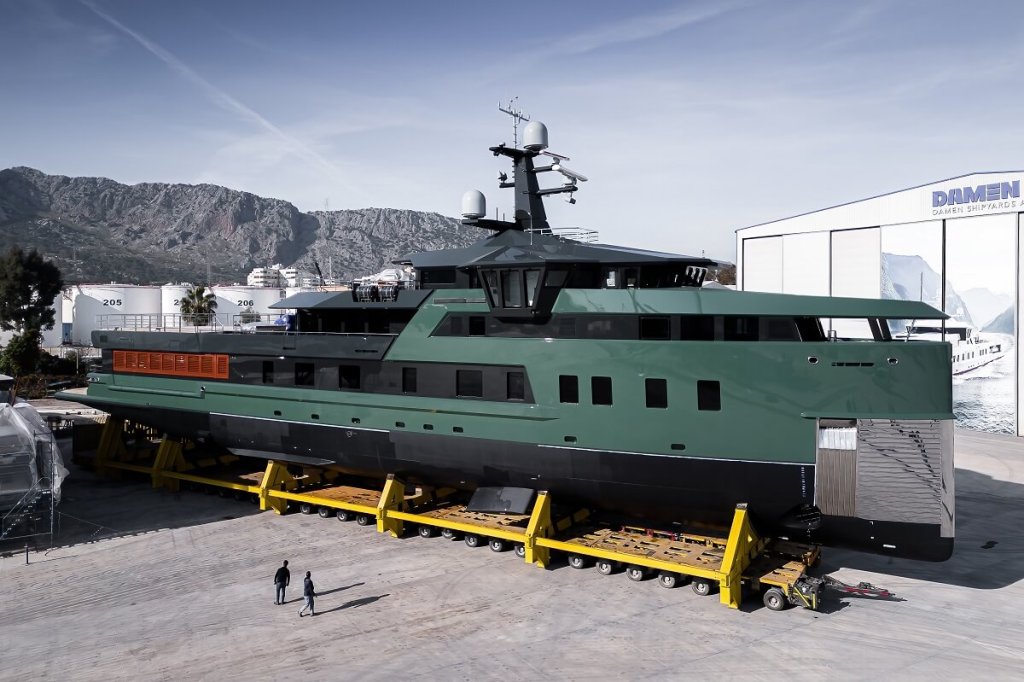
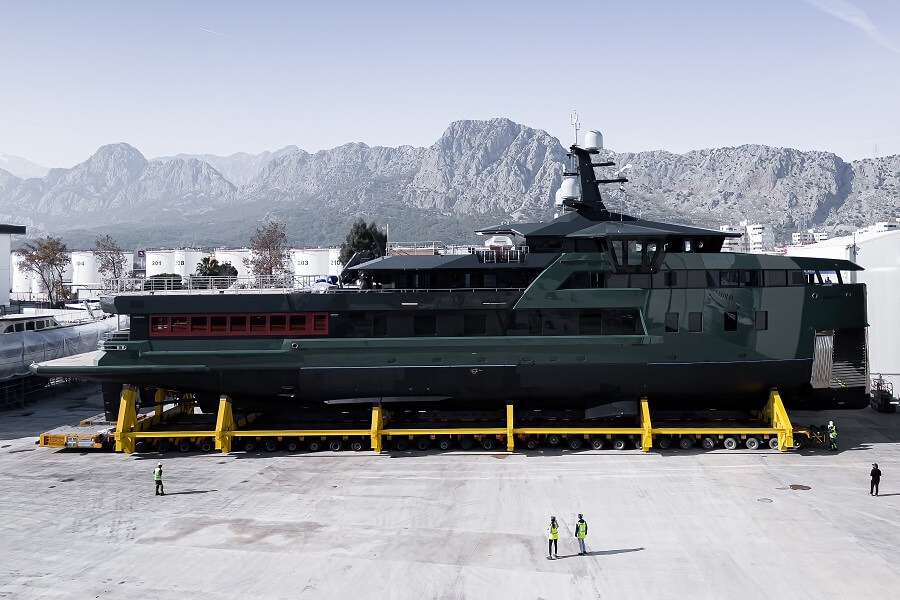
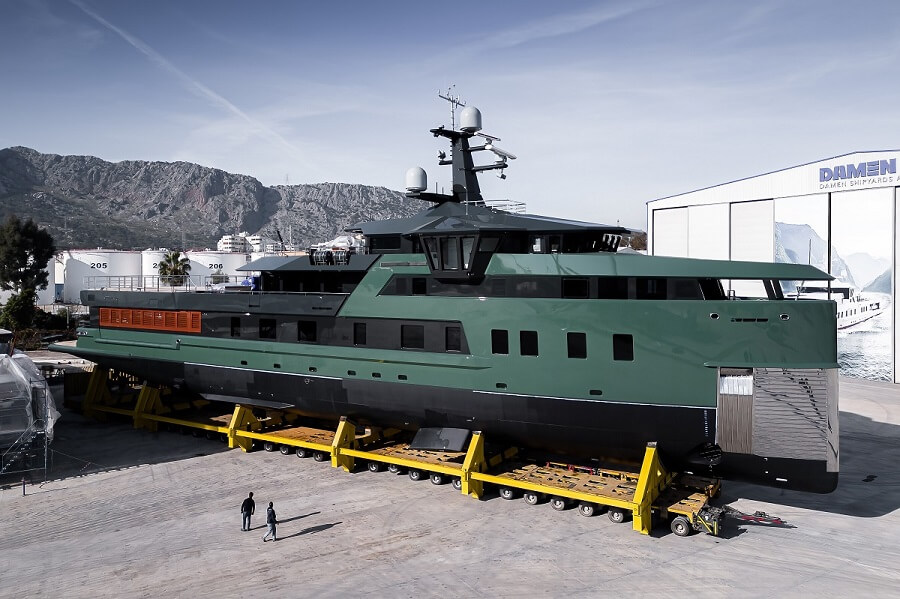
The Dutch-owned superyacht builder has launched the SeaXplorer 58 in Antalya, Turkey.
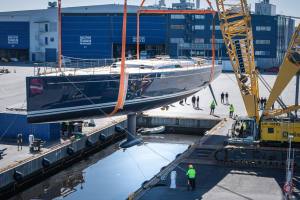
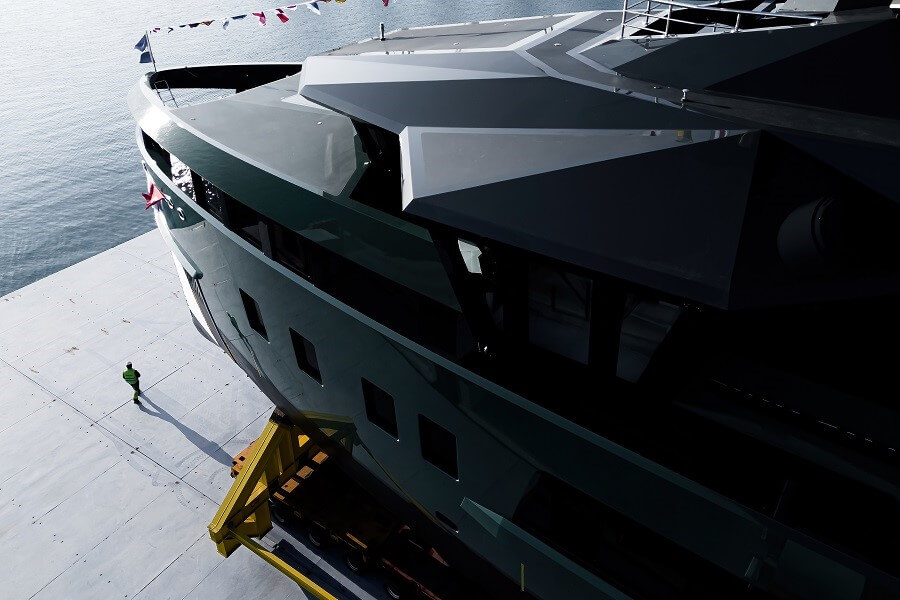
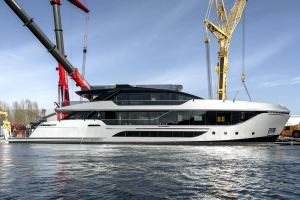
Damen Yachting’s SeaXplorer 58 has been lowered into the water, having emerged from its production shed in Antalya, Turkey.
Featuring anexterior by Azure Yacht Design and naval architecture by Damen Yachting , the 58m, 1,090GT yacht is the first SeaXplorer to be constructed in Antalya and will undergo her final build phase in preparation for delivery to her owner in the coming months.
Enrique Tintore, SeaXplorer Design Manager at Damen Yachting, said: “It was a breathtaking moment for all involved to see the yacht out of the shed for the first time. She looked spectacular in the winter sunshine, a clear testament to what the combined team in the Netherlands and Turkey, along with our subcontractors, can achieve together.
“We are looking forward now to putting the finishing touches to the yacht and handing her over to her owner in the spring.”
The SeaXplorer 58 has been developed with considerable input from her owner, who plans to “enjoy adventures with friends and family around the world”. With Design Unlimited, the owner has created a “personal and alluring interior” in keeping with the SeaXplorer’s spirit of adventure and exploration.
The 190-footer features accommodation for up to 12 guests in six suites, as well as up to 15 crew and two expedition staff. The yacht features a wide range of toys including a custom 11.4m sail boat, two multi-role tenders, motorcycles and vehicles for both road and off-road use.
Features include a cabana-style bar and lounge with an infinity-edged pool, located beneath the SeaXplorer’s certified helideck. The bridge deck includes a Jacuzzi, a sky lounge and dining area. The yacht also features the SeaXplorer signature bow point observation lounge, offering expansive views of the surrounding scenery.
With her ice class hull and 30 days’ ocean-going autonomy, the SeaXplorer 58 can safely sail to the most extreme and sensitive environments on the planet. The yacht features several sustainable options including a premium synthetic teak deck and waste water tanks, ensuring suitability for operations in zero-discharge zones of outstanding natural beauty.
Damen is also working on the first SeaXplorer 60, which is scheduled for delivery in spring 2024 (click for article). The yacht will feature a luxurious interior by H2 Yacht Designs and offer enhanced sustainability courtesy of Hybrid by Amels technology. This innovative feature enables cruising at speeds of up to seven knots on electric propulsion, so lowering noise, vibrations and emissions. www.damenyachting.com
The Finnish builder has staged the global debut of the Swan 48 MKII, an upgrade of a model that has sold over 50 units.
The 2019 edition of the Swan 48
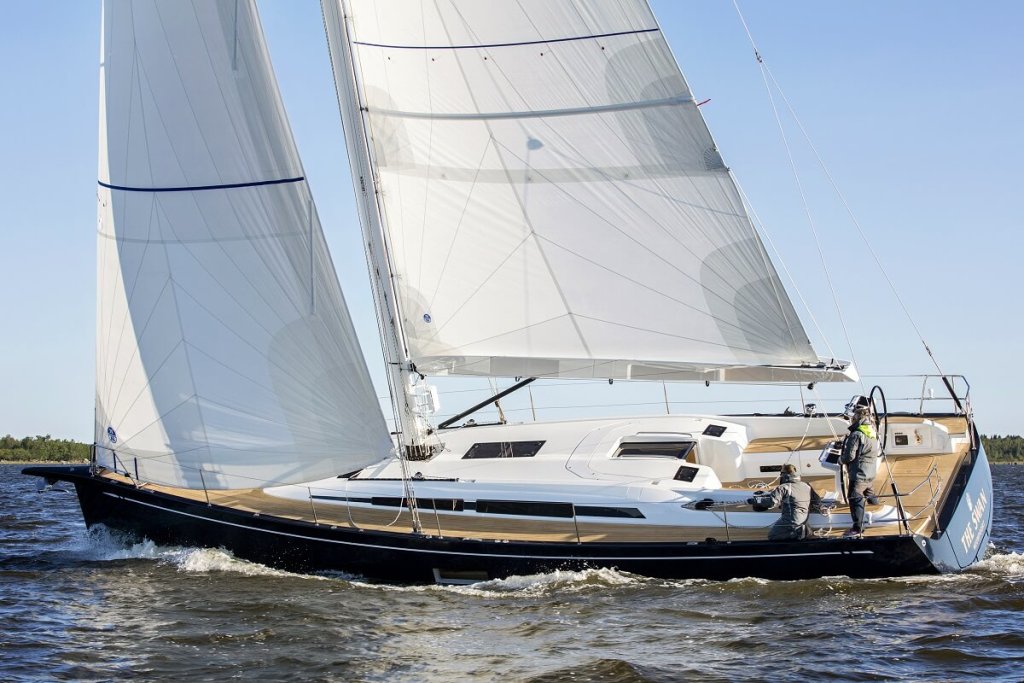
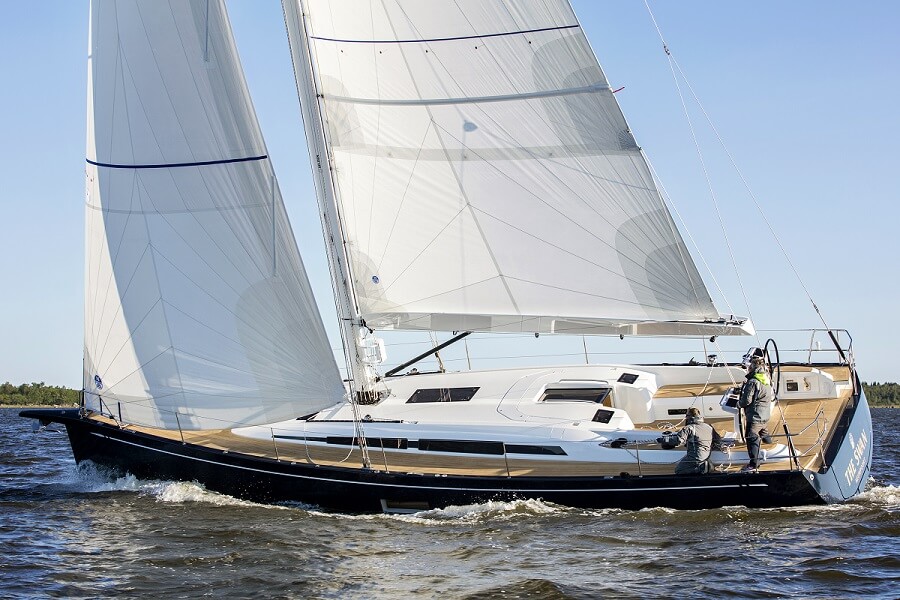
The Swan 48 MKII made its debut at Boot Dusseldorf, presenting the upgraded version of the popular Swan 48, which debuted at the Cannes Yachting Festival in September 2019 and has sold over 50 units. The improvements have been converted into both standard and optional items.
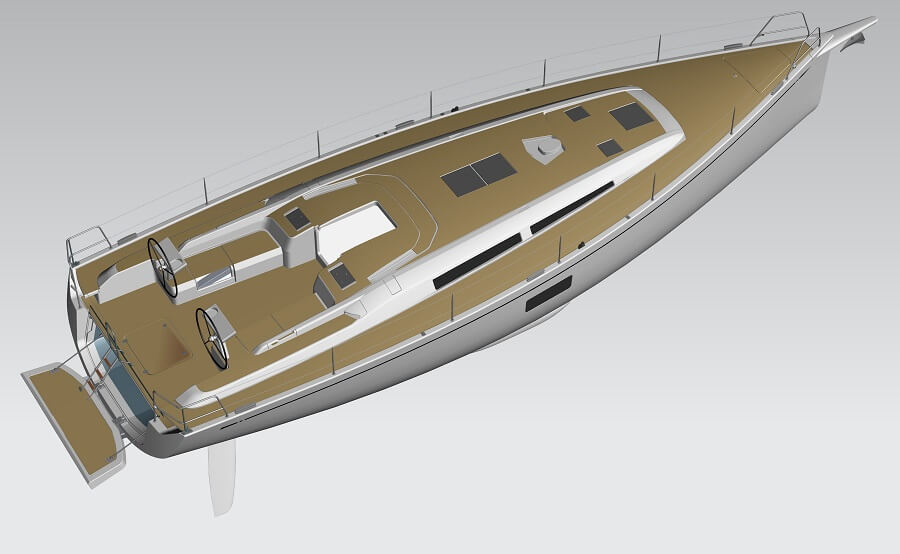
CGI of Swan 48 MKII exterior
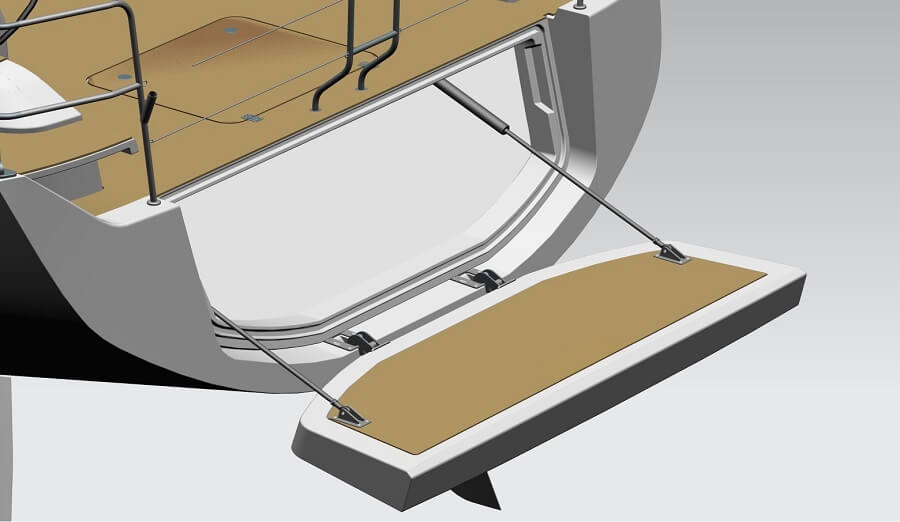
Firstly, the transom door is now opened by a system of hydraulic pistons to enhance functionality. On deck, the coachroof features a new window design in keeping with the Swan 55 that debuted last year, there’s a new bowsprit design offering greater functionality for anchor and tack line, while the chainplate has been positioned further outboard to allow easier passage on the side decks.
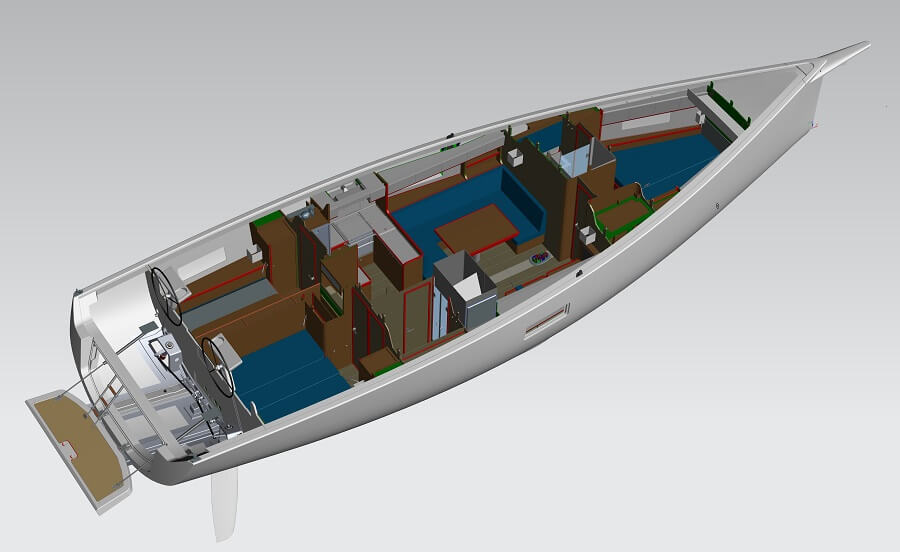
CGI of Swan 48 MKII interior
The interiors feature a galley with an innovative Corian design with rounded corners and a lower division between the galley and saloon, while new options include lockers above the sink. There’s a more comfortable sofa design with increased storage volumes, shower doors are now in tempered glass, while there are many optional additions designed to increase comfort aboard.
CGI of new transom door
The Swan 48MKII is offered in four moods by Misa Poggi: Swan Soul, Scandi Vision, Velvet Vibe Red and Velvet Vibe Blue.
The French builder staged the world premiere of the DB/37 at Boot Dusseldorf before hosting the global debut of the Jeanneau Yachts 55.
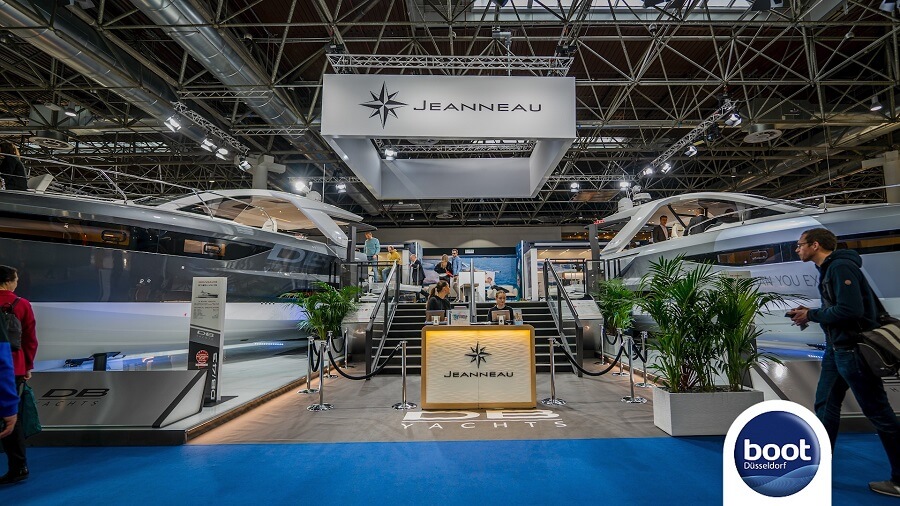
Jeanneau’s stand in Hall 5
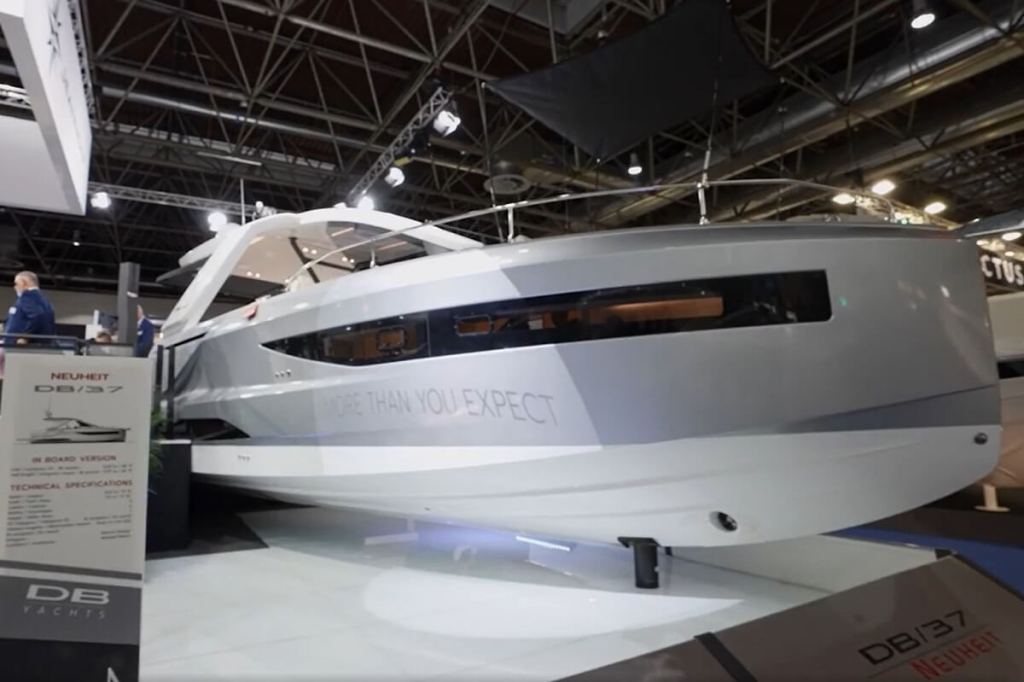
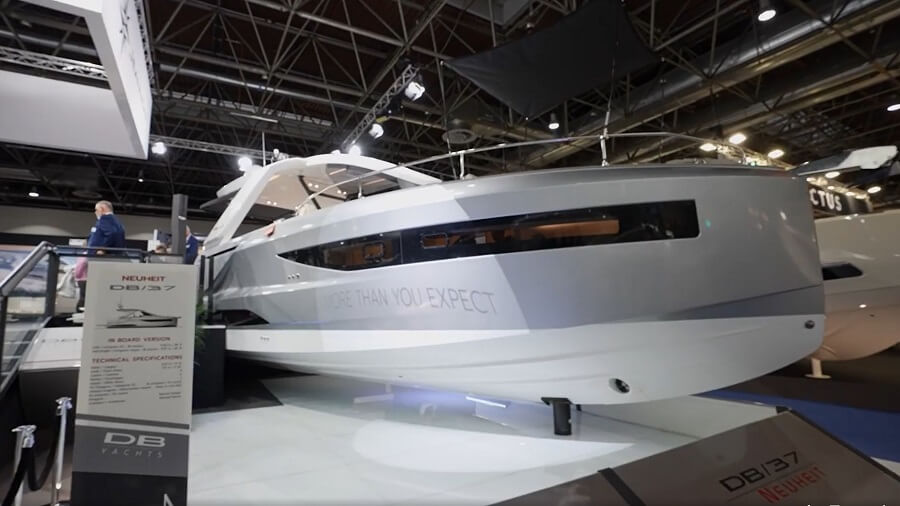
Jeanneau staged the world premieres of the DB/37 day boat and the Jeanneau Yachts 55 sailing yacht at Boot Dusseldorf. Showcased in Hall 5 dedicated to luxury dayboats or ‘superboats’, the DB/37 is the second model in the Groupe Beneteau brand’s new series of luxury dayboats, following the DB/43 that had its global debut at the Cannes Yachting Festival last September.
Like the DB/43, the DB/37 features drop-down sides, naval architecture by US-based Michael Peters Yacht Design and exterior design by Garroni Design’s Camillo Garroni, who was present for the premiere in Dusseldorf.
Camillo Garroni designed the DB/37 exterior
“The development of the DB/37 constituted a veritable stylistic challenge. Our objective was to perpetuate the distinguishing character of the DB Yachts line, initiated by the DB/43, all while conserving this ability to meet all the expectations of those who love the sea in a more compact boat,” said the Italian designer.
“The DB/37 displays an unexpected elegance at this level, notably due to codes from the world of the automobile, all while offering exceptional interior volumes and a high level of comfort.”
The media launch of the DB/37
The DB/37 is available in an inboardversion, with twin Volvo D4-320 engines and sterndrive, as well as an outboardversion for up to two 400hp engines.
Two facing bench seats can accommodate up to eight people around a large, transversal table, while the central island galley has a large Corian countertop, stovetop, grill, sink and refrigerator. The central helm station has three seats and is protected by an integrated glass windscreen and hard top, while the entire area can be canvas-enclosed. The foredeck has a double sunpad.
Aft view of the DB/37 cockpit
The lower deck has a breakfast point with copious storage, microwave and refrigerator, an owner’s cabin forward, full-beam midships cabin and a shared bathroom with sink, cabinet, head and separate shower.
In Hall 16, the debut of the Jeanneau Yachts 55 completed a trio of new models, following the launches of the Jeanneau Yachts 60 in 2021 and flagship 65 last year. Like the 60 and 65, the Jeanneau Yachts 55 features exterior design by French naval architect Philippe Briand and an interior by London-based Winch Design.
CGI of Jeanneau Yachts 55
The 17m model has a 5m beam, which is superbly showcased with an aft cockpit dedicated to relaxation, with lounge areas aft on each side, one U-shaped and one L-shaped, including tables and bench seating that convert into a full-beam sunbed. There’s also a large retractable hydraulic swim platform.
The forward cockpit, dedicated to handling, features twin steering wheels and winches within easy reach. This space, which can be entirely covered by a hard top – as shown in Dusseldorf – is equipped with an exterior chart table and protected by a wide windscreen. There’s also private access to the two guest cabins, as well as the main companionway to enter the saloon and owner’s suite.
CGI of Jeanneau Yachts 55
The flush deck features integrated wraparound side decks, which are slightly inclined and facilitate movement around the perimeter of the cockpit. For long offshore cruises, in addition to a wraparound windscreen, Jeanneau has offered a hard top – with the option of solar panels – that fully encloses the forward helm and a bimini to shelter the aft living space.
To starboard, a large galley faces the L-shaped saloon. Forward is the generous owner’s cabin equipped with a large berth to the port side, multiple storage compartments and a dressing table. An optional skipper cabin can be added forward of the en-suite bathroom.
CGI of Jeanneau Yachts 55
Aft, the two guest cabins with private access from the deck each have a double berth and en-suite bathroom. Cabins are appointed with fine woodwork in light oak (or teak) and dark floorboards (or light). Details include leather-wrapped door handles, wood by Alpi, a refined door design, ceiling treatment and indirect lighting in the owner’s cabin and saloon.
The hull has a draught of 2.45m (or 1.95m with a shallow draught) and a choice of two riggings: classic or with a furling mast. Owners can also choose between a self-tacking jib or a classic genoa. A code 3, for crosswinds of between 15-20 knots of true wind, can be secured on the bowsprit, while a bow thruster and stern thruster can help short-handed manoeuvres. www.jeanneau.com
The Italian builder reveals the new S7, which has an exterior by Alberto Mancini and a fresh interior by Yachtique.
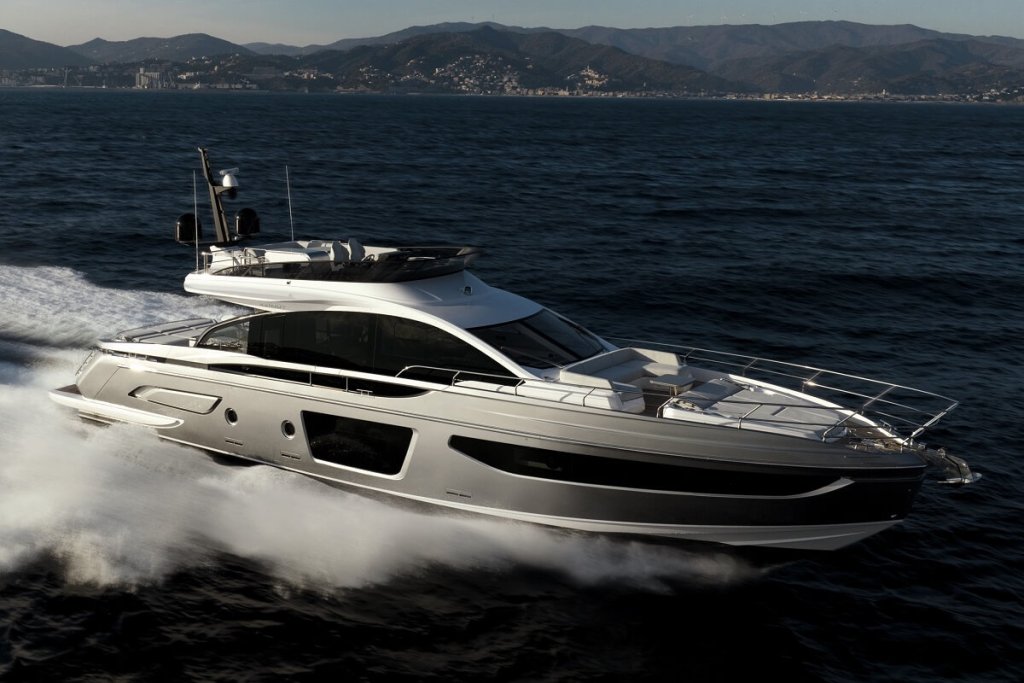
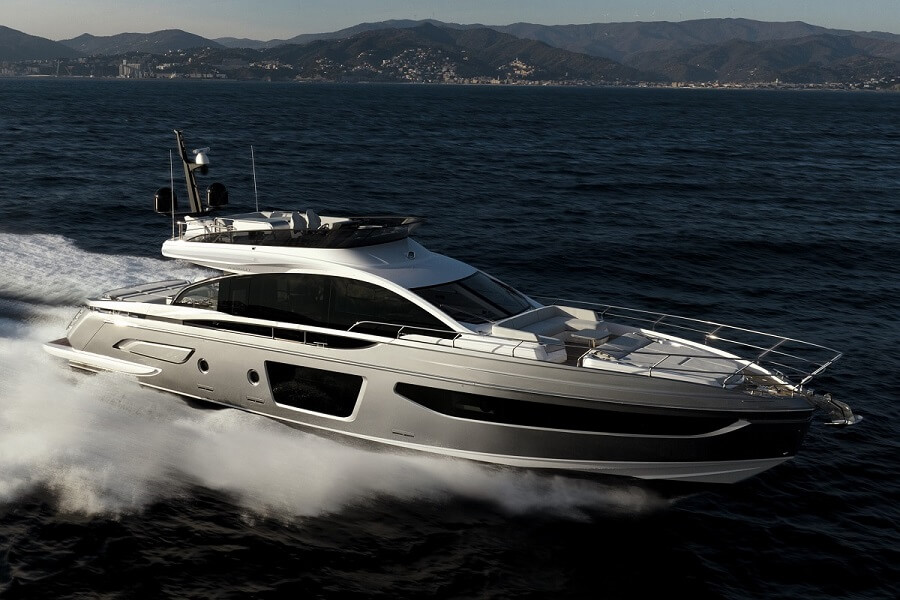
Azimut’s new S7 can reach 35 knots
Azimut staged the official world premiere of the new Azimut S7 at Boot Dusseldorf, describing the new yacht as “the most advanced sport yacht in her category” and an example of the brand’s eco-sport philosophy. Classified CE Category A and NMMA-certified, the 71-footer complements the S6, S8 and S10 in the sportbridge range.
Three 800hp Volvo Penta D13-IPS1050 engines deliver a cruising speed of 27 knots and a top speed of 35 knots, with the compact propulsion system also freeing up more space on the lower deck.
With a high-efficiency hull and an extensive use of carbon-fibre to reduce weight, the S7 joins Azimut’s family of Low Emission Yachts, with 20-30 per cent less fuel consumption and emissions compared to shaft-line boats of the same weight and size with a traditional hard-chine hull.
Aft view of the saloon
Alberto Mancini, who has designed many recent S, Fly and Grande models, sculpted the sleek exterior, which includes an arched line created by the extensive glazing that runs along the superstructure. Cut-out bulwarks also help increase natural light in the interiors.
Outdoor areas include an aft cockpit with island sun pad and L-shaped dinette, an extended sport fly with dining and lounging areas and a wet bar, and a foredeck with C-shaped sofa and sunpads. The garage can house a custom version of the Pirelli J33 tender and a jet-ski.
Yachtique designed the interiors as the Italian studio worked on an Azimut model for the first time, focusing on colour shades ranging from cream to almond to dark brown. The main wood is pale Dove grey, while flamed Canaletto walnut is used to finish the furnishings.
The owner’s suite
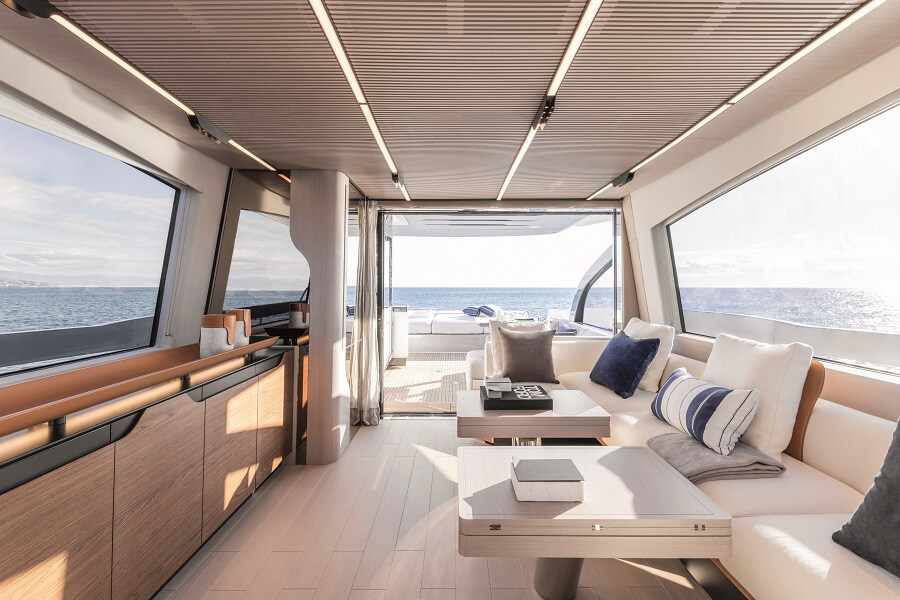
The interior starts with a TV unit to starboard facing a C-shaped sofa and twin coffee tables that can be raised and converted into a large dining table. Forward is an open galley opposite a twin-seat helm station to starboard. Opaline ceiling lights work with the ribbed-effect detailing, while Mancini’s exterior curves are duplicated in some interior lines.
The four guest cabins include a full-beam master suite midships featuring an inward-facing bed, while along the forward bulkhead is a display-and-storage cabinet with internal lighting. The bathroom has a smoked-glass shower, folding like a screen to form the opening angle of the dressing room door. There are twin and bunk cabins either side of the stairs, with an en-suite VIP forward. www.azimutyachts.com www.azimutyachts.hk
The British shipyard entertained a large audience as it staged the global debut of the Superhawk 55, which emerged from under an enormous Union Jack.
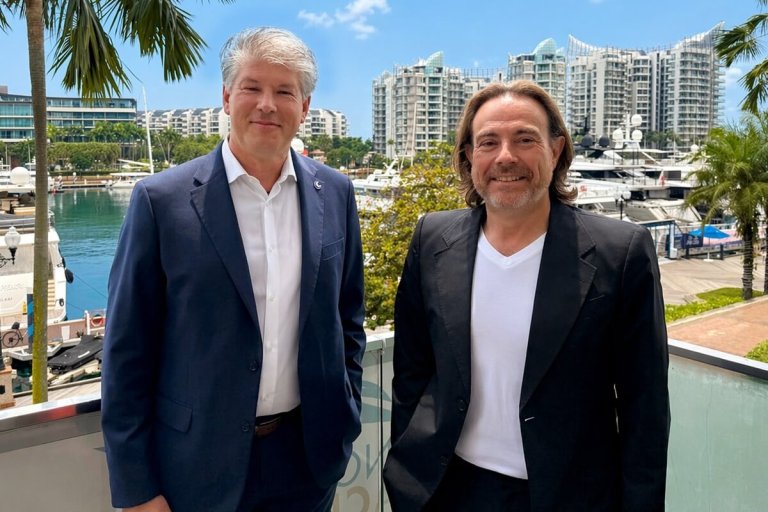
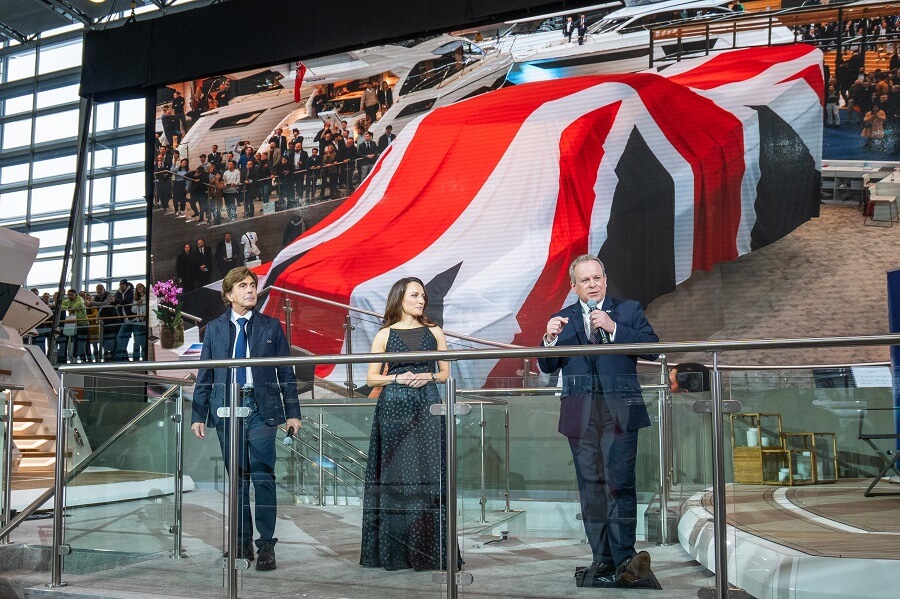
Andrea Frabetti (left) and Sean Robertson (right)
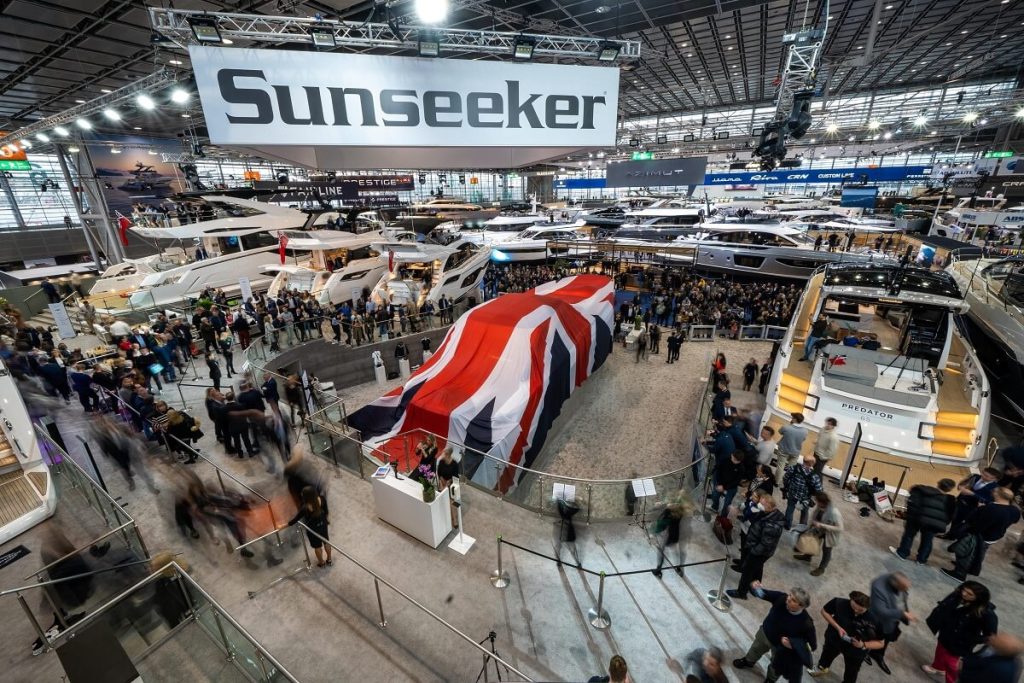
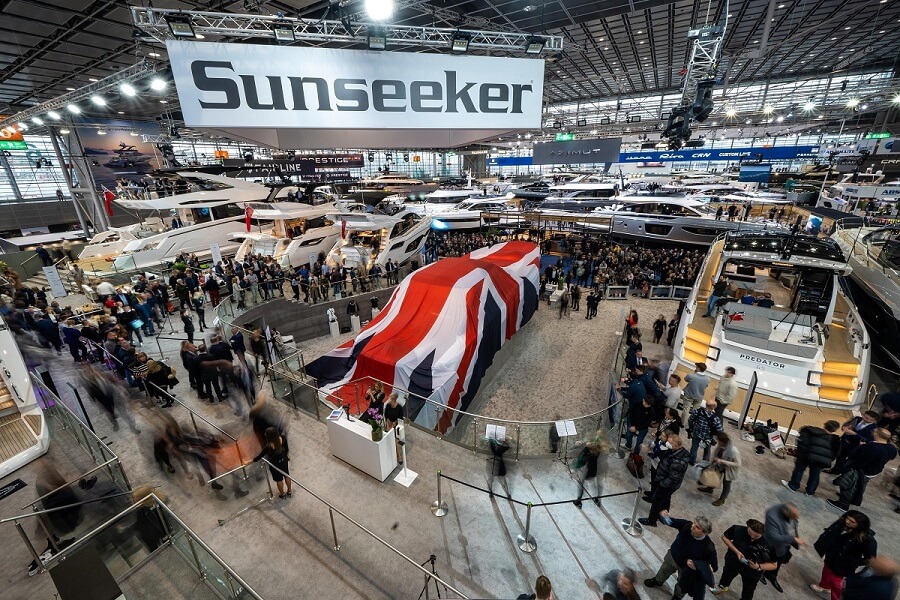
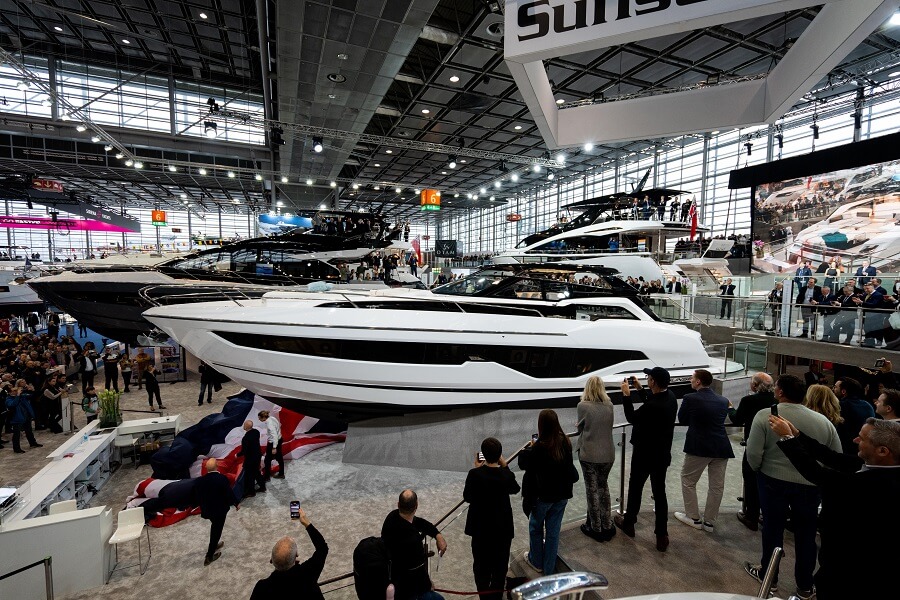
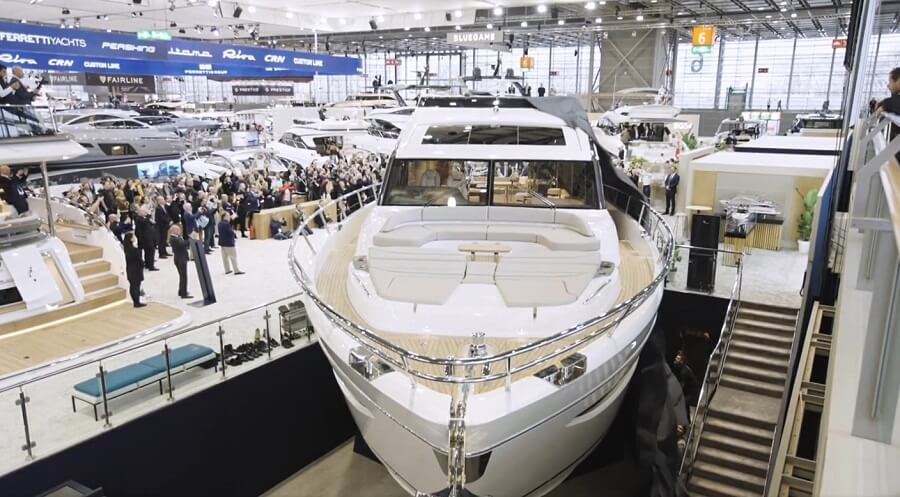
Sunseeker unveiled the Superhawk 55 on the opening day of Boot Dusseldorf, with an enormous crowd in the aisles and around the British shipyard’s stand witnessing the premiere.
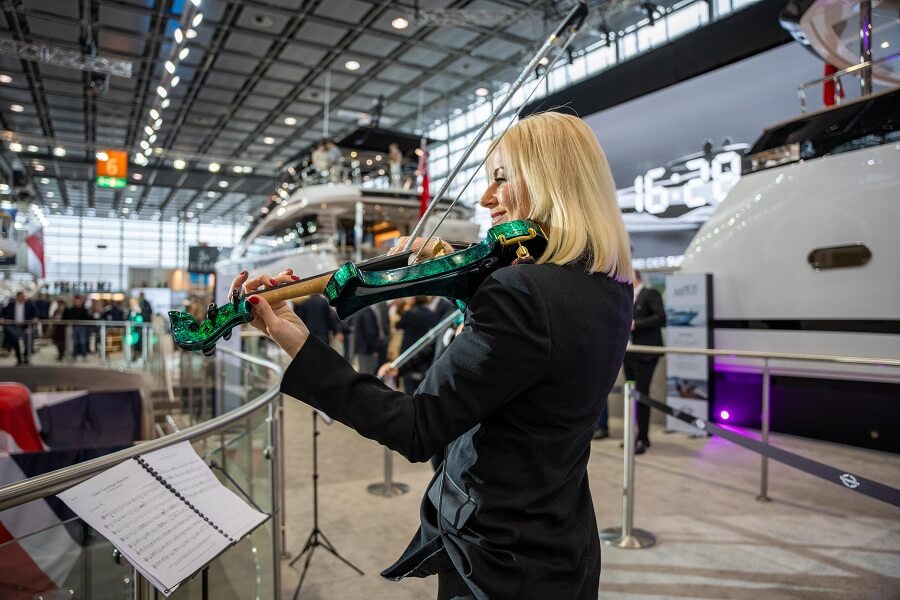
Andrea Frabetti, CEO of Sunseeker, and Sean Robertson, its Sales and Marketing Director, introduced the Superhawk 55, while a live performance from Siren String Quartet and mixology on the nearby 95 Yacht, commissioned for Meros Yachtsharing, added to the atmosphere.
A large crowd gathered for the Superhawk 55 premiere
“We are delighted to return to Düsseldorf after a three-year hiatus. The atmosphere on opening day was electric,” Frabetti said. “Clients, suppliers, the Sunseeker team and the world’s press all joined the celebration of the stunning new Sunseeker Superhawk 55. This is the start of a new range that will make waves for years to come.”
Available as an open-top yacht or with a hard top, as shown on hull one, the CE Category A boat has an overall length of 56ft 10in (17.3m) and features an all-new composite hull, stainless-steel detailing and expansive glazing.
The 17m yacht includes a lower-deck saloon and two double cabins
Fitted with twin 725hp Volvo Penta D11-IPS950 engines, matched with a hull form designed for the IPS propulsion system, the Superhawk 55 is expected to have a top speed of 38 knots.
A full-beam aft cockpit makes full use of the 16ft 3in (4.95m) beam and starts with a large sunpad that stows water toys under an electrically opening hatch, while the tender garage below can house a Williams MiniJet tender. Forward are two L-shaped sofas that can slide aft diagonally to create a dining area around the central table, plus a feature wet bar and optional rise-and-fall TV.
The triple-seat, centre-line helm is midships, includes dual glass bridge display screens, charging pads and chrome multi-purpose dials, and is protected by a stainless-capped, curved windscreen. Either side of the helm, pantograph doors offer entry to the side decks and walk-around access to the bow.
Siren String Quartet was among entertainment
The foredeck features a full-length sun pad, which can slide forward to reveal a table and dedicated seating area complete with wireless charger and storage lockers.
Starboard steps lead down to the lower deck, where an open-plan saloon and galley area features a rise-and-fall TV, ambient recessed lighting, curved wood and lacquer finishes.Natural light floods through from the expansive glazing above, which has a Union Jack feature and an electric blind.
The forward cabin includes from an en-suite bathroom, upholstered units and a wardrobe on the port side. Midships, the full-beam master cabin comes with optional sliding berths, offering a double or two singles, plus a generous en-suite. www.sunseeker.com
The British builder opened the show with the world premiere of the all-new S72, among a seven-yacht line-up including European and German debuts.
A large crowd gathered for the S72 premiere
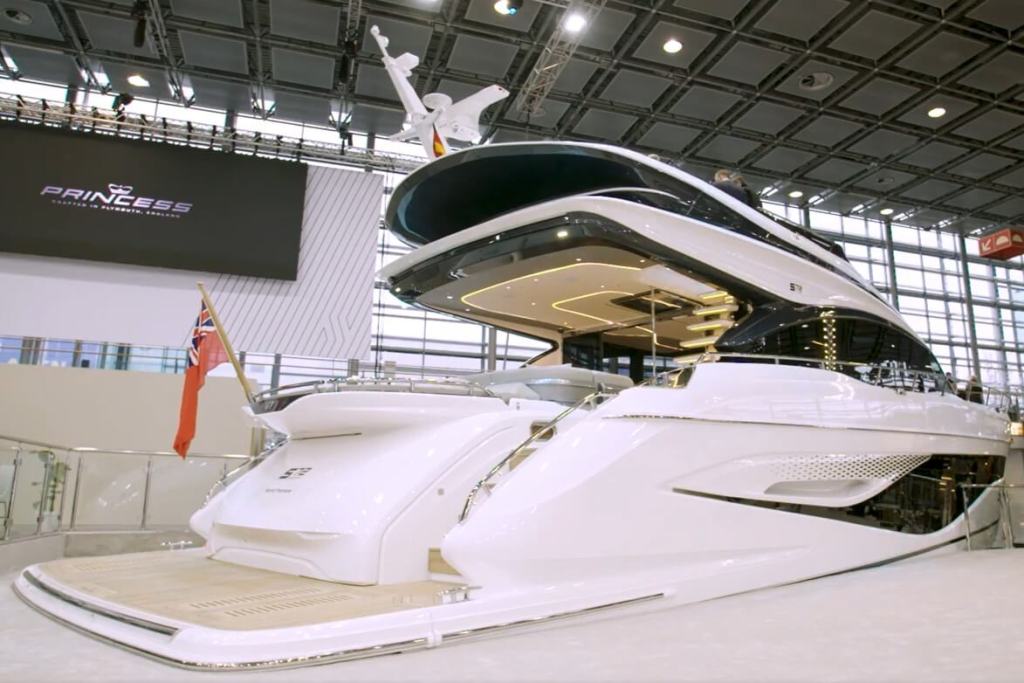
Princess kicked off Boot Dusseldorf with the world premiere of the S72, which was unveiled on the opening morning of the show and is the newest addition to the Plymouth builder’s sportbridge S Class, joining the S62, S66 and S78.
The new model is part of a seven-strong Princess display at Boot that includes the European premiere of the Y85, the Dusseldorf debuts of the X80 and F65, plus the S62, F45 and V40.
Designed by the Princess Design Studio with naval architects Olesinski and Italian design house Pininfarina, the S72 features sweeping styling lines and full-length hull windows. The S72 features a resin-infused deep-V hull and twin 1,650hp or 1,800hp MAN V12 engines, reaching up to 36 knots with the latter.
S72 was among seven Princess yachts at Dusseldorf
An illuminated Princess ‘crown’ logo on the transom guides guests aboard the electro-hydraulic teak-laid bathing platform, while the garage for a 3.9m tender has an integrated launch system and an electro-hydraulic door with a locker for two Seabobs. A separate transom door gives direct access to the twin-berth crew cabin.
On the main deck, the cockpit has an aft sun pad, modular seating, folding teak table and servery unit, while a cockpit bar connects to the galley. The saloon has a large L-shaped dining area opposite the galley, while forward is a lounge with C-shaped sofa, Princess coffee table and an elegant sideboard unit containing a 55-inch rise-and-fall UHD LED TV.
CGI of aft view of saloon
There’s companion seating with a foldout table opposite the twin-seat helm, which has a pantograph door to the side and a large opening roof above. Systems are accessed through an integrated Böning vessel monitoring system while a Naim audio system is installed throughout the saloon, master stateroom and sportbridge.
A dedicated staircase leads from the main deck to the full-beam owner’s stateroom midships, via a private lobby area in the lower companionway. There are three more en-suite guest cabins, as well as the twin cabin aft for crew or occasional guests.
The sportbridge has a large C-shaped dining area, wet bar with barbecue and L-shaped seating forward that transforms to a sunbed. Forward on the main deck, the spacious foredeck has sunbeds with adjustable headrests, which can be converted to create additional aft-facing seats, while a locker between the sunbeds can be specified as an additional cool box. www.princessyachts.com