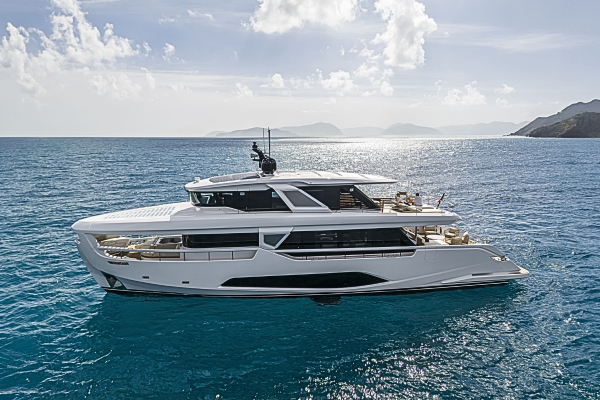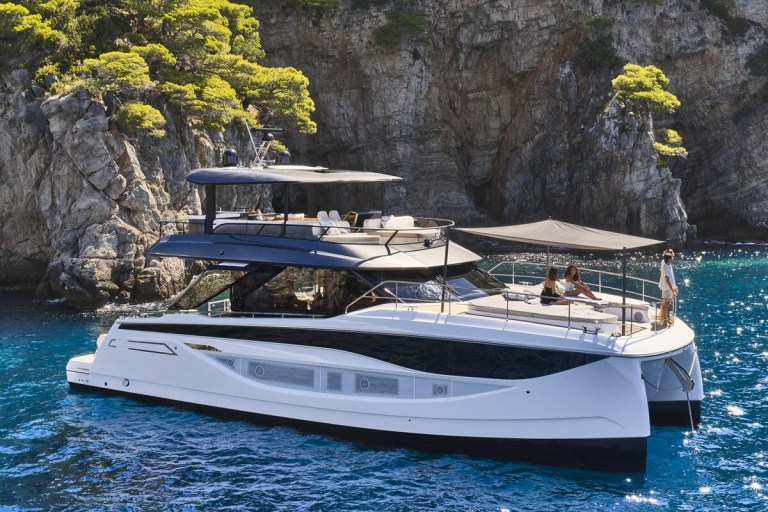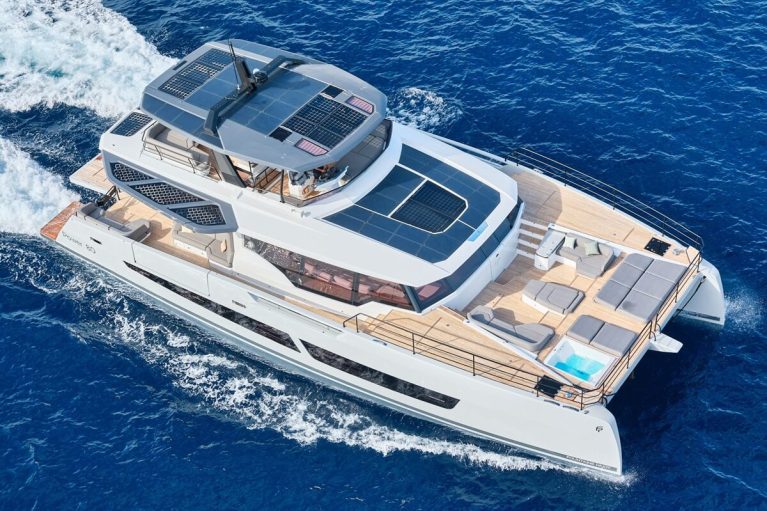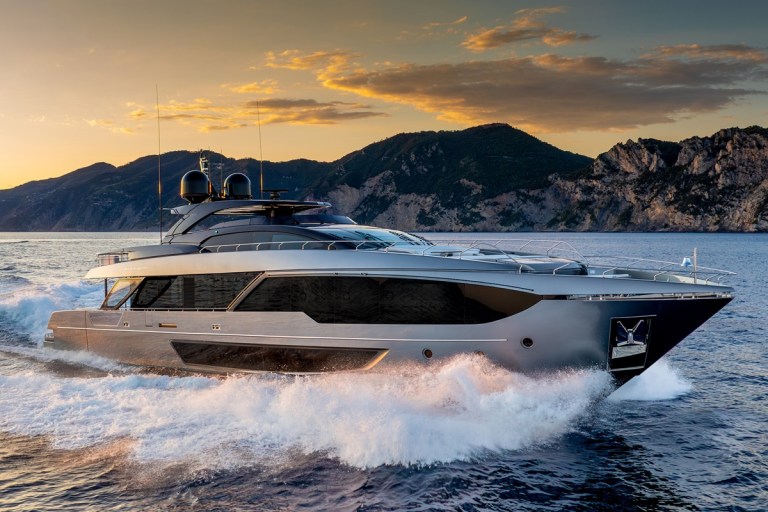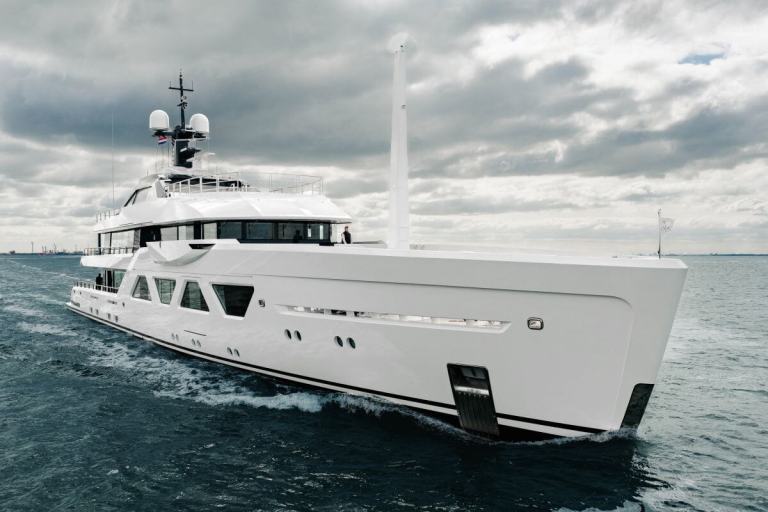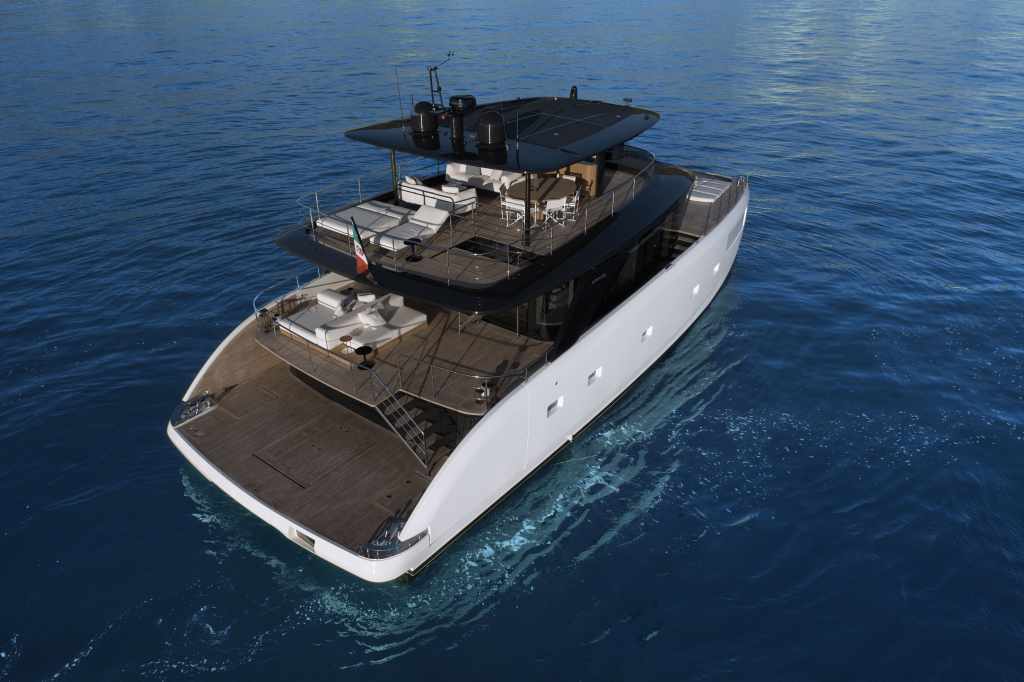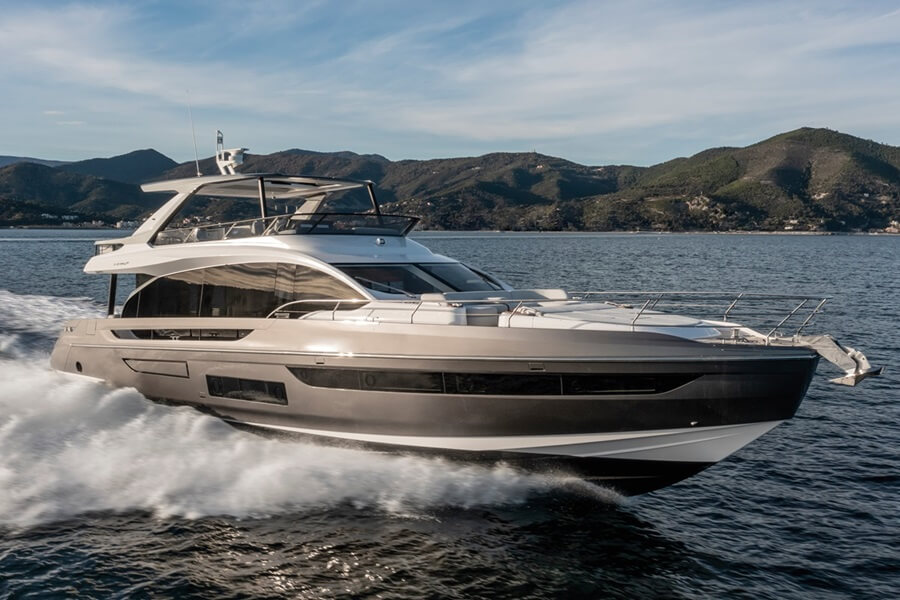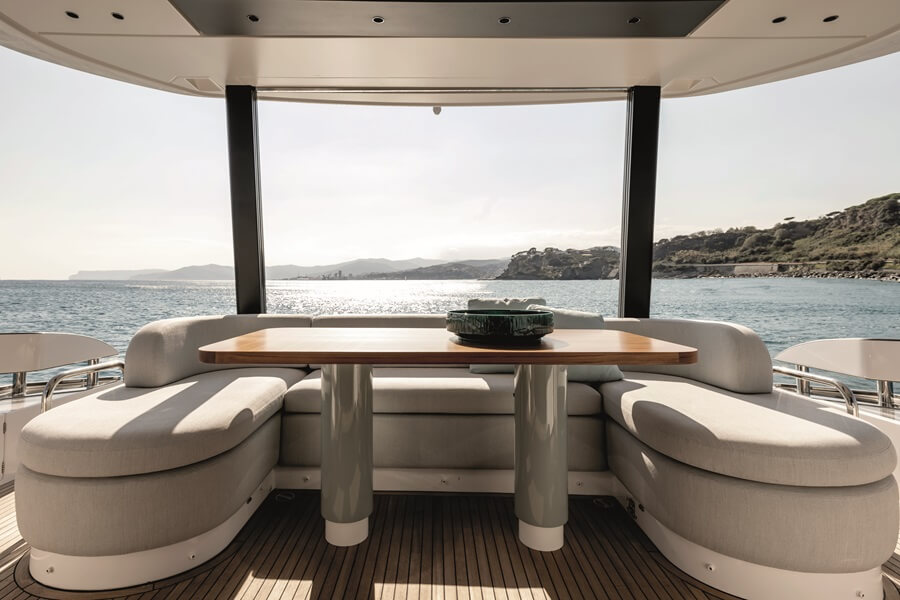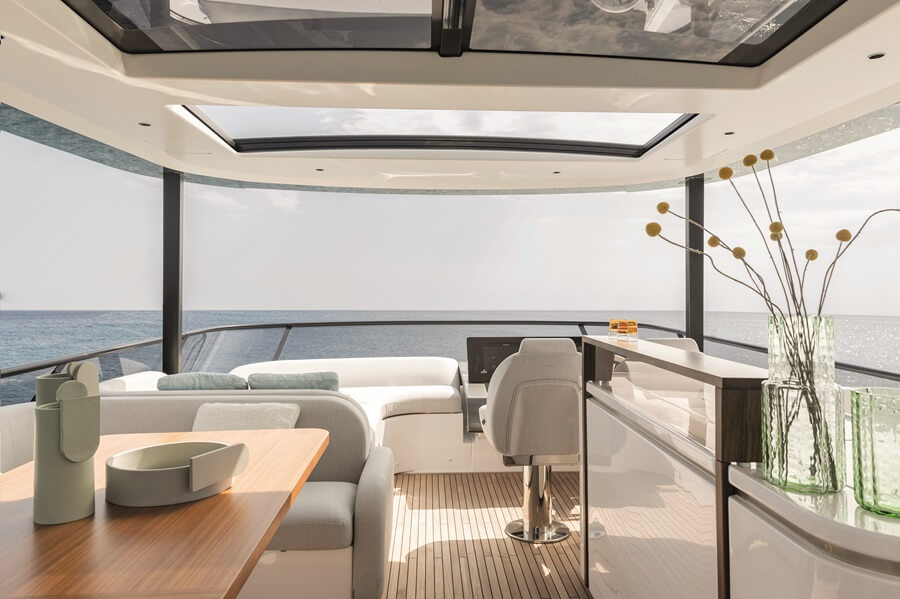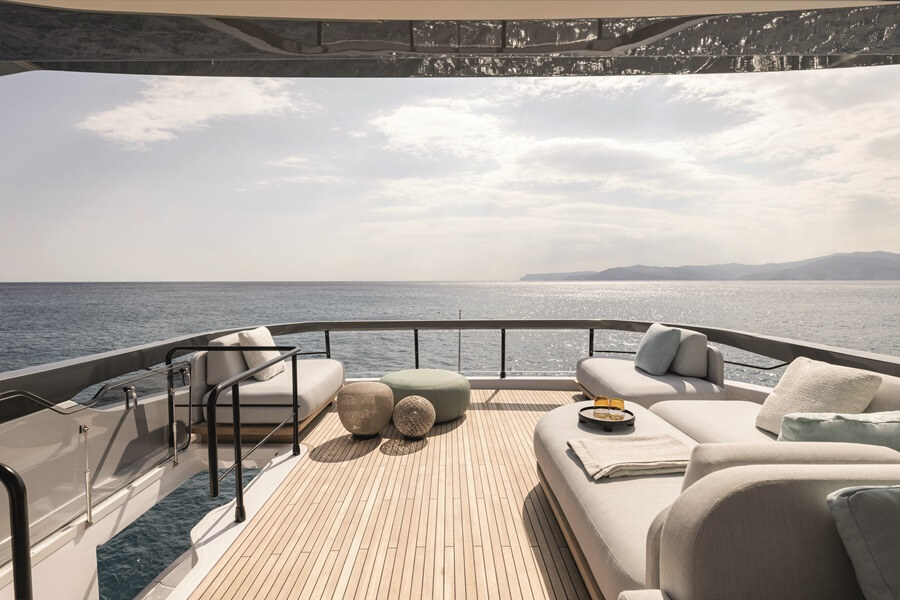
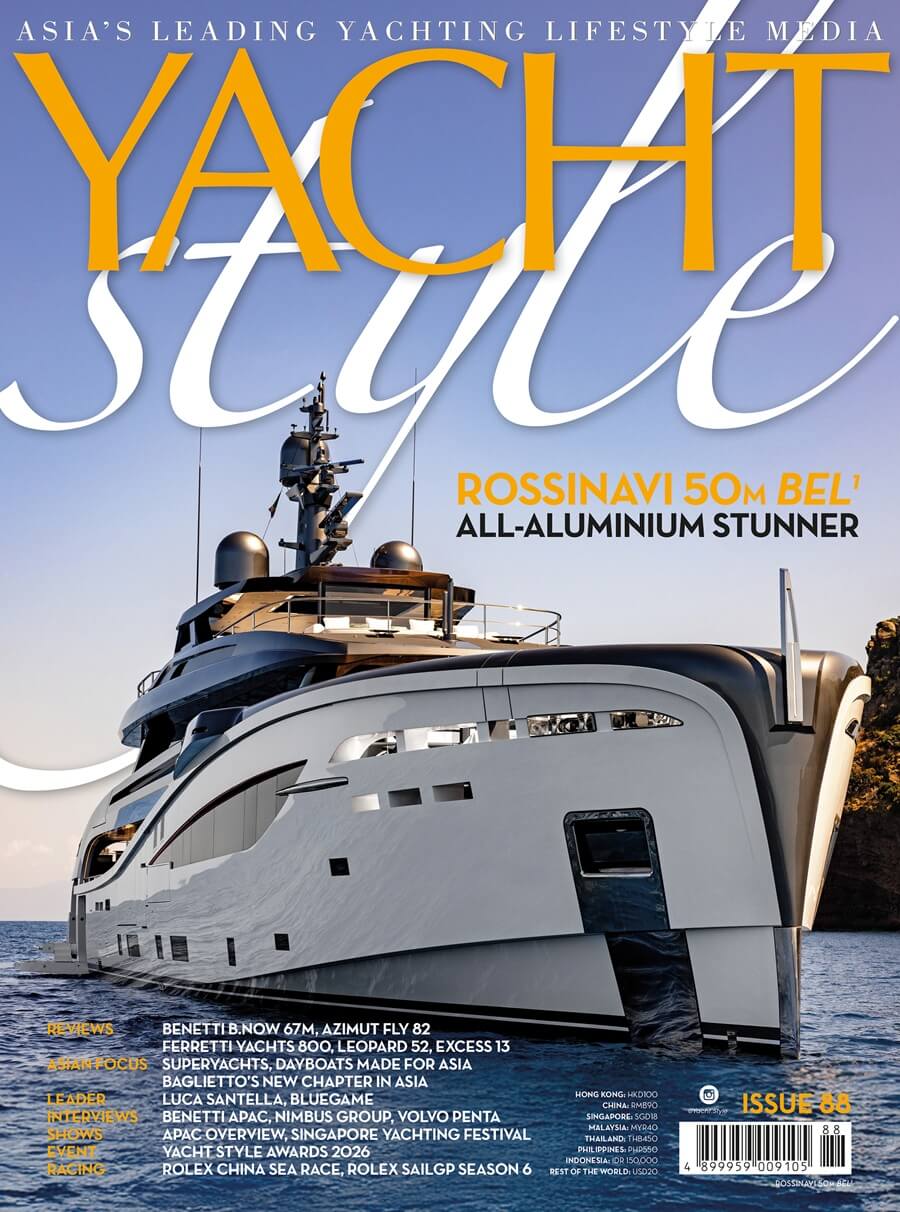
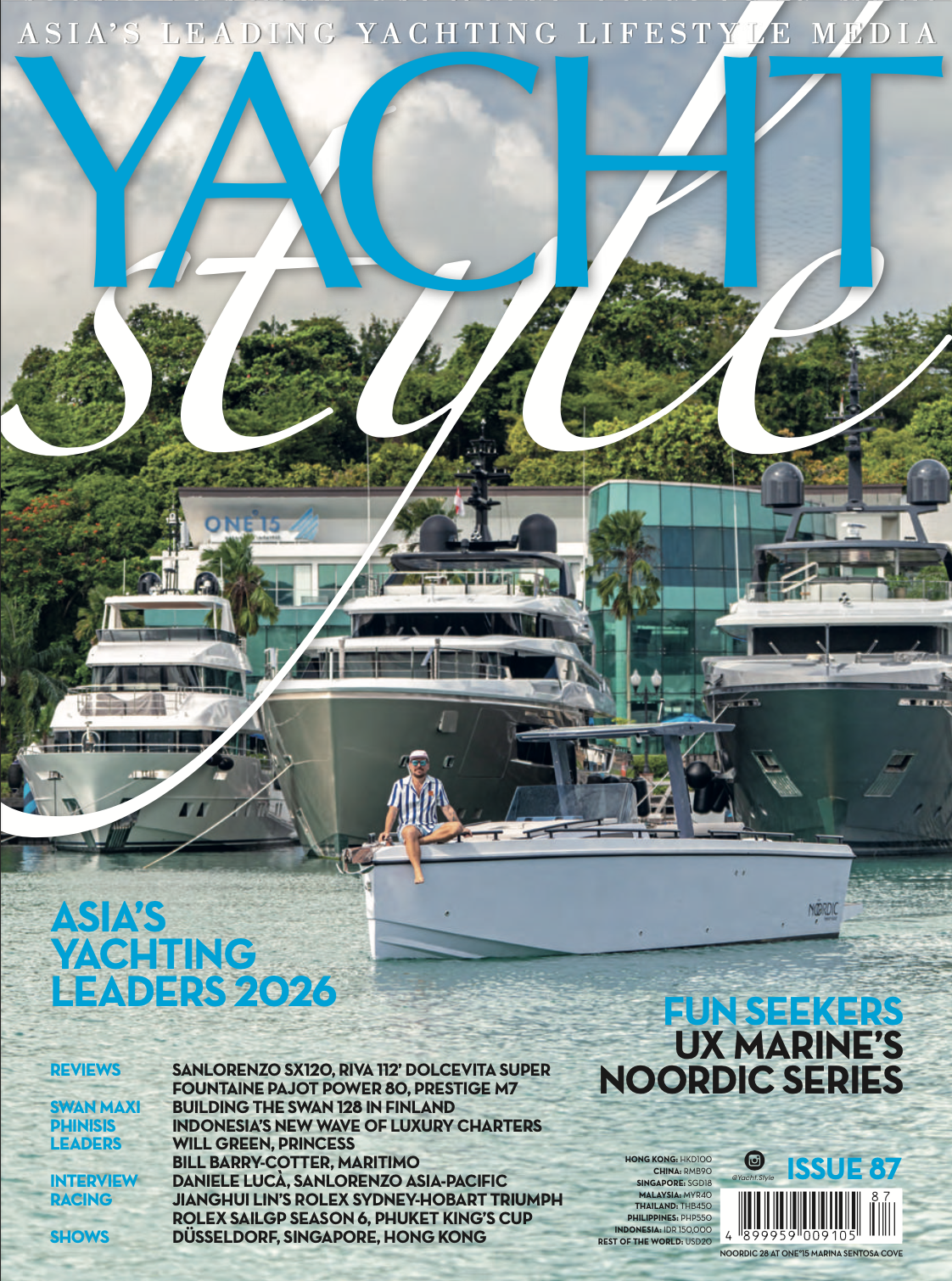
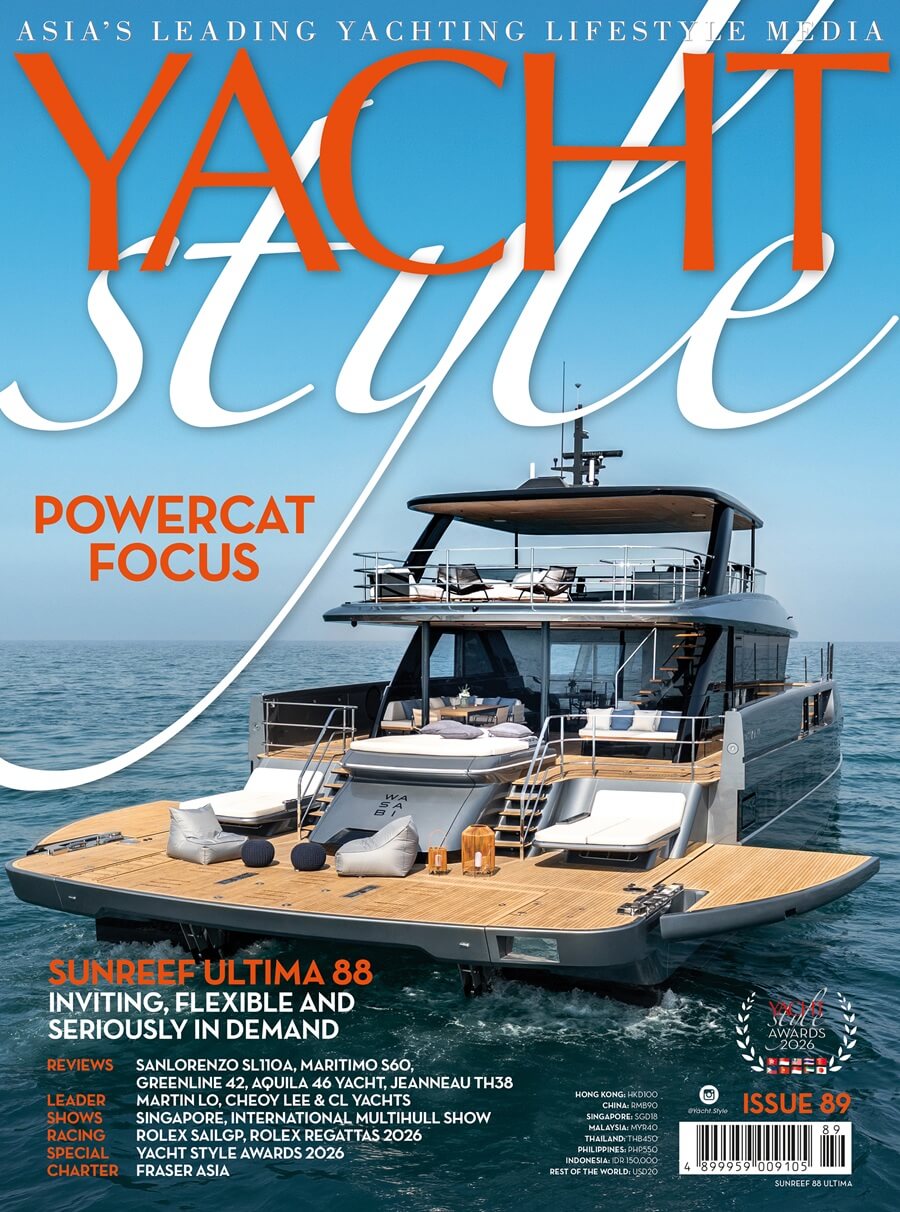
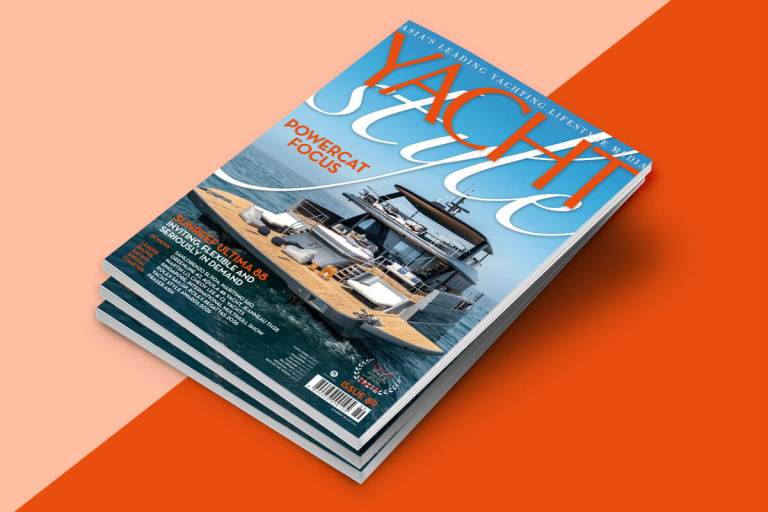
Yacht Style, Issue 88
Read and download copy
Yacht Style, Issue 86, Top 100 Superyachts of Indo-Asia-Pacific 2026, Jonathan Beckett, Burgess, Erwin Bamps, Gulf Craft Group, Fraser, Camper & Nicholsons, AB Yachts, AB 95, Van der Valk, Lalabe, Azimut, Grande 30M, Ferretti Yachts, 940, Absolute, Navetta 62, Cannes Yachting Festival, Genoa International Boat Show, Monaco Yacht Show, Lantau Yacht Club Boat Show - Festa Nautica, Rolex SailGP, Maxi Yacht Rolex Cup, Rolex Middle Sea Race, Phuket King’s Cup Regatta, Thailand, Port Takola Yacht Marina & Boatyard, Krabi, Yousuf Al Hashimi, Phoenix Yacht Management, Su Lin Cheah, ICOMIA, Suzy Rayment, Asia-Pacific Superyacht Association, APSA
Read and download copy

Asia's leading yachting lifestyle media

More results...

Generic selectors
Exact matches only
Search in title
Search in content
Post Type Selectors
Screenshot 2026-01-16 at 9.52.20 AM
Read your copy

More results...

Generic selectors
Exact matches only
Search in title
Search in content
Post Type Selectors

More results...

Generic selectors
Exact matches only
Search in title
Search in content
Post Type Selectors

Reviews

Bluegame’s big multihull

Bluegame’s big multihull

SHARE

Bluegame’s big multihull

SHARE

Represented in Asia by Simpson Marine, Bluegame has joined the multihull world with the BGM75, bringing together Philippe Briand, Bernardo Zuccon and Piero Lissoni to collaborate on the brand’s biggest yacht to date.

Words: Risa Merl; Photos: Bluegame

Bluegame’s big multihull

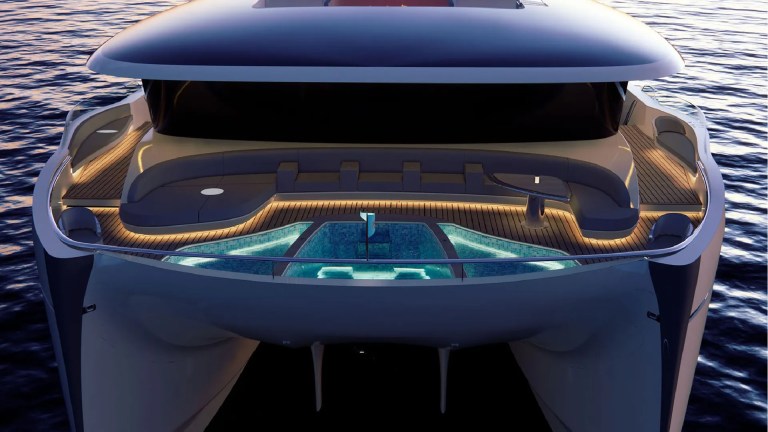
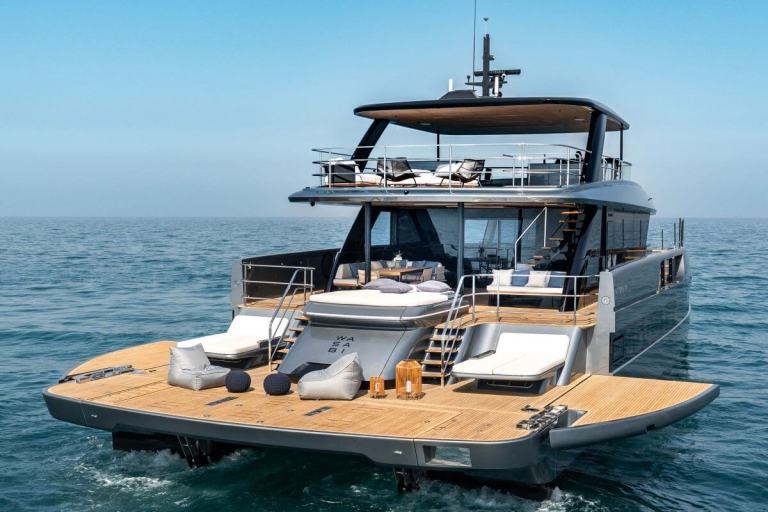
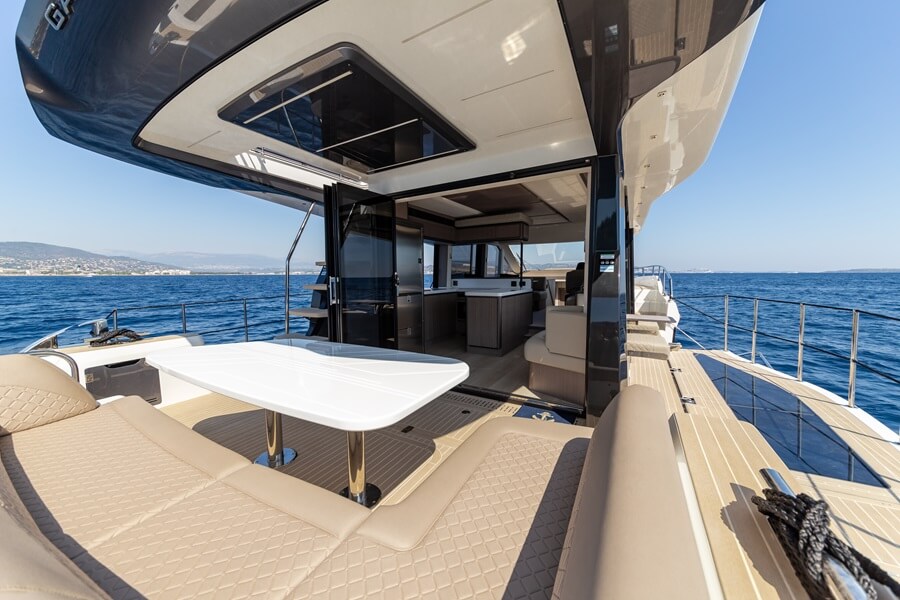
The BGM75 includes a clean aft deck


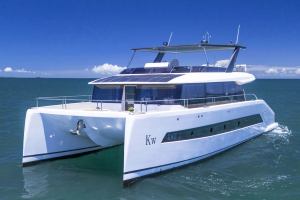
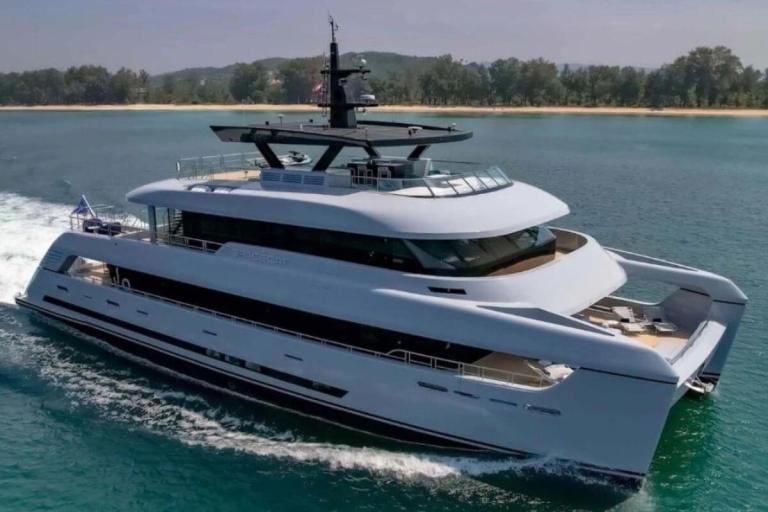
Moored stern-to quayside, it’s apparent that the new 22.7m BGM75 from Bluegame isn’t your typical multihull. Sitting lower in the water and with a narrower beam than a typical catamaran, you nearly have to do a double take to confirm that, yes, she does have two hulls beneath her.

Philippe Briand of Briand Yacht Design, which handled the boat’s naval architecture, says: “This is an evolution of the monohull, rather than an evolution of a sailing catamaran.”

Case in point, BGM75’s main deck doesn’t tower over the water the way that other catamarans do. Her midsection between the two hulls hovers only 90cm above the surface. It’s just enough clearance to allow her to reap the performance benefits of a multihull platform while keeping her profile low and sleek.

The reason for the difference, Briand notes, is that some powercats have simply been sailing catamaran platforms repurposed as motoryachts; not, like the BGM series, designed from the outset to maximise the benefits of a multihull motoryacht.

“So far, there aren’t too many powercats purposefully designed as a powercat,” he says.

Bluegame’s big multihullPhilippe Briand was the naval architect for the BGM75, which has a beam of 8.15m

Briand explains that sailing cats need to sit higher in the water to afford for slight heeling while underway, but a powercat doesn’t need this same provision. As such, the Frenchman was able to lower the decks and eke out as much space as possible when designing the BGM75 from scratch.

“What I like in life is a challenge,” he adds. “I like to design something that doesn’t exist yet but, of course, makes sense.”

THE CHOSEN ONE

Luca Santella, Bluegame’s founder and Head of Product Strategy, explains why Briand was selected, going on to cite the multiple benefits of a narrow catamaran platform, from performance and comfort to exterior aesthetics and interesting layout options.

“Between the five designers, Philippe gave the strongest answer to our brief,” Santella says. “His idea to have a narrower cat was fantastic. It felt like we didn’t have to compromise, which is rare when starting a new project.”

Another reason for choosing a catamaran over a monohull is comfortable seakeeping. Two hulls mean the yacht is more stable and less susceptible to rolling, and utilising a narrower platform maximises this, says Briand. This enhanced stability can also help to quell seasickness.

“Seasickness is actually a matter of acceleration – it’s amplitude multiplied by the speed,” Briand says. “A monohull has a big amplitude but low speed of rolling, and a wider catamaran has a small amplitude and quick-rolling reaction, which can also be bad for seasickness. But the BGM75 is in-between a cat and a monohull, so it has a moderate amplitude and a limited rolling period for added comfort in any sea state.”

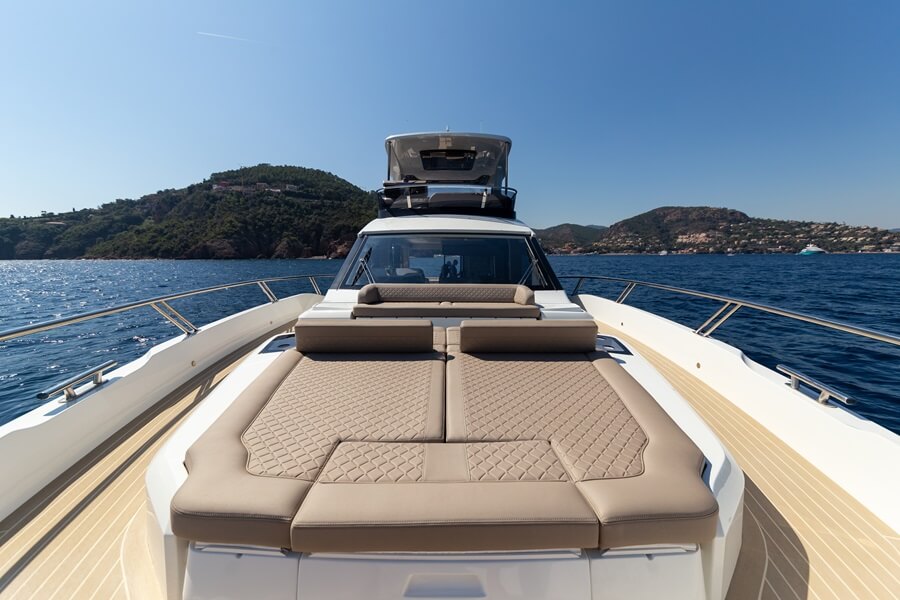
Bluegame’s big multihullForedeck tables can be lowered and covered

In addition to the naval architecture, Briand Yacht Design presented a full concept, which changed slightly in terms of style and exterior lines after longtime Sanlorenzo collaborator Zuccon International Project stepped in to help shape the exterior to look like a natural addition to the Bluegame range.

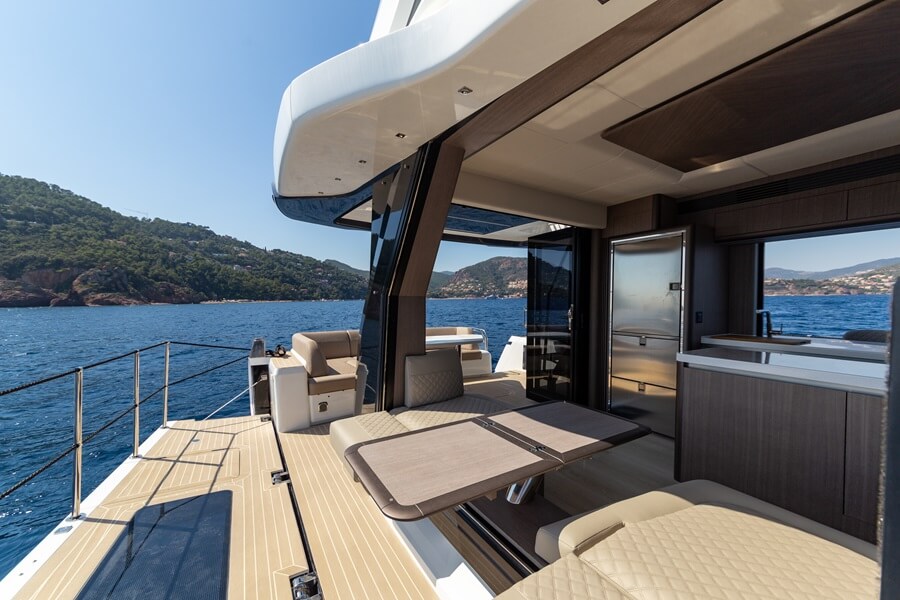
The BGM75 has bountiful outdoor living spaces for its size, and the aft main deck features an interesting seating area with a modular settee with a wooden base so can sit one way looking aft, forward or starboard. There’s also a bow lounge and expansive flybridge with a bar area, cooktop and comfortable loose furnishings.

Bluegame’s big multihullLissoni & Partners designed the interior, which includes a helm-free saloon

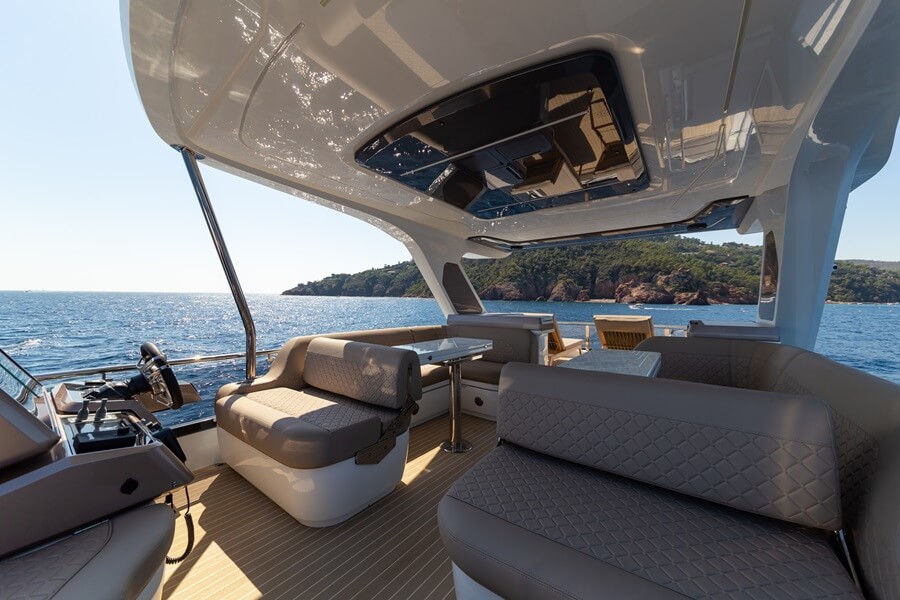
The flybridge is protected by a fixed hardtop that has a shape reminiscent of a hull of a yacht – wide at the back and narrower at front. The ceiling of the hard top is finished in a teak-like wood that mimics the teak on the deck below. Santella says that for the Asian market, they could enclose the flybridge in plexiglass windows for protection from the elements.

Bluegame’s big multihullThe flybridge is covered but open, with six-seat dining and a triple-seat helm station forward 

FULL-BEAM MASTER

Lissoni & Partners – another long-time Sanlorenzo collaborator – was called in to create the yacht’s interiors. An advantage of a multihull is, of course, enhanced volume, due to its beamier body and two hulls. While the BGM75 is narrower than other cats, at well over 8m it’s still wider than a monohull of the same length.

“Space-wise, it’s like a 30m monohull, in terms of volume and what you can offer to the clients in the layout,” Santella says.

It was important to Santella that the BGM75 have a special owner’s cabin. “Considering our level of product, we didn’t want an owner staying down in one of the hulls.”

By lowering the floor of the main deck to be close to the water, the design team was able to carve space for guest accommodation out of the space between the two hulls at the forward end of the main saloon.

Bluegame’s big multihullAn elegant dining area mixes an integrated sofa and chairs

Steps lead down from the saloon to an owner’s enclave where a cabin stretches the width of the superstructure. This nearly full-beam cabin is akin to what you might find in a monohull.

“So far in the cat market, you’ll find cabins in the hulls, but not in the space between the hulls,” says Santella. An en-suite bathroom is separated from the bedroom by tempered glass walls, which gives the illusion of space while still offering privacy.

The first unit has three cabins. In addition to the forward owner’s cabin, there are two cabins in the port hull, while the starboard hull holds a day head and galley that’s connected to the crew mess and crew cabins. 

Bluegame’s big multihullPort view of the stunning full-beam owner’s suite, which has a sloping forward bulkhead, aft-facing bed, and bathroom and walk-in wardrobe to port

Zuccon also consulted on the general arrangement and provided a layout option that has four cabins with the galley on the main deck. Lissoni & Partners designed the cabins to have a neutral and natural feel, with walls adorned in a stone-like surface, complemented by walnut joinery. In the guest cabins, the beds sit up on elevated wooden bases.

There are already plans to expand the fleet, with a BGM65 due to launch in 2025 followed by a BGM85 in the future. With the BGM series, Bluegame is on a mission to prove that two hulls are better than one.

www.bluegame.it

www.simpsonmarine.com


Bluegame’s big multihull Read More »
Corsaro’s super second coming

Corsaro’s super second coming

SHARE

An upgrade of the model that had its world premiere in Hong Kong to launch Riva’s current Flybridge series, the 102’ Corsaro Super is having a similarly strong impact in Asia.
Words: Risa Merl; photos: Riva

  •  
  •  
  •  
  •  
  •  
  •   

An upgrade of the original 100’ Corsaro, the 102’ Corsaro Super


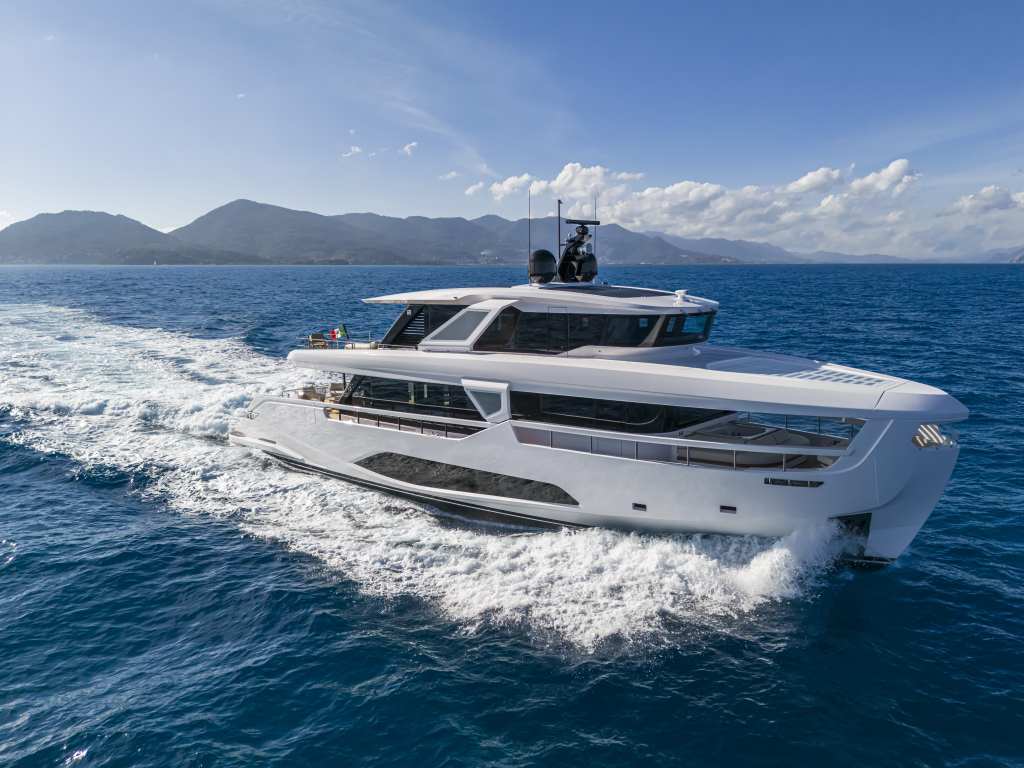
Classic Riva iconography conjures up images of Hollywood legends like Brigitte Bardot lounging on a gleaming runaboat moored off the south of France. But it’s Asia where the new-era Riva yachts are making waves today. By this time next year, there will be three new 102’ Corsaro Super yachts plying these waters.


From the shaded flybridge and spacious beach club to its sophisticated interior, every aspect of the 30m flybridge motor yacht reflects the Italian brand’s commitment to blending traditional Riva elegance with cutting-edge design.


The original 100’ Corsaro – the first model in Riva’s current Flybridge series – made its debut in Hong Kong in 2017, with two more units later arriving in Asia. Now, the new 102’ Corsaro Super is taking the region by storm.


The first 102’ Corsaro Super in Asia arrived in Taiwan last year, with delivery facilitated by Amal Yachting. Two more hulls in this series will be heading to Hong Kong, with the first arriving this year and the second coming next year. Both have been sold by Starship Yachts, which also sold the original 100’ Corsaro and has been the Ferretti Group’s Hong Kong dealer for decades. 


FLYBRIDGE PIONEER


Crafted from fibreglass with carbon-fibre elements, the 102’ Corsaro Super builds upon its predecessor with refined features and extended dimensions. Stefano de Vivo, Ferretti Group’s CCO, notes the new model’s focus on enhancing proximity to the sea, achieved through enlarged windows and low-slung bulwarks.


“With the 102’ Corsaro Super, we aimed to further improve the yacht and the experience on board, meeting the needs of our owners, who increasingly desire greater contact with the sea,” De Vivo says.


Officina Italiana Design, which has designed for Riva for three decades, took a holistic approach to modernising the exterior to create a cleaner and more fluid appearance. By incorporating subtle changes such as painting the flybridge hard top entirely black, lowering the stern and extending the aft living areas, the design team achieved a sense of forward movement and enhanced visual appeal.


Mauro Micheli, Officina Italiana Design’s co-founder and Chief Designer, says: “We started by keeping the severity, sportiness and elegance of the 100’ Corsaro’s original lines but also refined their signature styling cues, giving them a cleaner look.”


Riva, 102 Corsaro Super, Ferretti Group, Stefano de Vivo

Cleaner lines are a signature of the new Corsaro


However, according to Sergio Beretta, the studio’s co-founder and CEO, the updates went beyond aesthetics, with the yacht still satisfying the sub-24m load line length.


However, according to Sergio Beretta, the studio’s co-founder and CEO, the updates went beyond aesthetics, with the yacht still satisfying the sub-24m load line length.


“The yard wanted a restyling of a much-loved model, but the fact that RINA set new parameters for boats under 24m led us to do more important thinking than just refreshing the lines of a model,” Beretta says. “These subtle modifications have produced an entirely new craft.”


Riva, 102 Corsaro Super, Ferretti Group, Stefano de Vivo

The spacious cockpit has a fitted sofa and loose furniture


The design studio sought new design solutions to update a popular model, especially in the aft area. “We flattened the shape of the stern and lowered it,” Michelli says. “The result was a sort of terrace, creating an additional aft space the 100’ Corsaro didn’t have.”


The 102’ Corsaro Super introduces an outdoor beach club, paying homage to the ample sunpads found on classic Riva day boats. Just a few steps below the main-deck cockpit, the beach club boasts a large settee on the transom.


The 35sqm beach club features a 15sqm high-low swim platform. There’s a seamless flow between the beach club and main deck, so guests can feel connected and interact easily whether lounging at water level or enjoying the views from the dining area on the aft main deck


Riva, 102 Corsaro Super, Ferretti Group, Stefano de Vivo

Plenty of entertainment space punctuates the flybridge


Despite the addition of the beach club, the 102’ Corsaro Super retains a garage, accommodating a Williams DieselJet 445 tender. Launching the tender is facilitated by lifting the transom and sliding the aft swim platform below the waterline, flooding the garage. The redesign of the stern not only enhances the yacht’s amenities but also reshapes its exterior, creating a sleek and graceful profile.  


RICH INTERIOR


The interior of the 102’ Corsaro Super, also created by Officina Italiana Design, is a study in refined luxury, for which Riva is renowned. The indoor living areas showcase premium materials and exquisite craftsmanship.


Riva, 102 Corsaro Super, Ferretti Group, Stefano de Vivo

Forward view of the interior, which starts with the dining area and leads to the lounge and the large TV on the bulkhead


Gleaming wood, supple leather and sleek, stainless-steel accents create an atmosphere of understated elegance, while marble accents add a touch of opulence. Carefully curated furnishings from top Italian brands further elevate the interior, ensuring both comfort and style for discerning owners and guests.


Exuding glamour synonymous with a classic Riva, the interior also has a touch of masculine appeal due to chrome metal finishes, matte Canaletto walnut joinery, black and white leather panels, and tinted glass. The richness of the interior stems from the thoughtful use of wood, stainless steel and leather. Notably, the rising cost of stainless steel, which increased by 300 per cent in the past few years, underscores the exclusivity of these materials.


The saloon offers two layout options, as well as the choice to add fold-down bulwark balconies on either side. The main-deck master suite boasts redesigned and extended 2m-long windows, providing breathtaking views. Below deck, four en-suite guest cabins ensure comfort and privacy for all aboard.


The full-beam owner’s cabin first appeared on the 100’ Corsaro. “In the 102’ Corsaro Super, we wanted to maintain this layout, improving it even further by enlarging the glazing,” De Vivo says.


Efforts to maximise natural light throughout the yacht led to the redesign of hull windows and the incorporation of larger windows in the owner’s cabin. This presented technical challenges for the naval architects, who worked to ensure structural integrity while enhancing the connection to the sea.


Riva, 102 Corsaro Super, Ferretti Group, Stefano de Vivo

Starboard view of the full-beam owner’s suite, with a forward-facing bed, accessed from the saloon by a hallway


Rivas are known for their thrilling performance as well as their good looks. In the standard version, the yacht is equipped with a pair of MTU 16V 2000 M96 engines, with a power output of 2,435hp each, for an expected maximum speed of 26 knots and 23 knots cruising.

Alternatively, a pair of MTU 16V 2000 M96L engines with a power output of 2,638hp each can be installed to give a cruising speed of 24 knots and a top speed of 28 knots.

The 102’ Corsaro Super has proven to be another fruitful collaboration between Riva, Officina Italiana Design and Ferretti Group’s Strategic Product Committee led by Piero Ferrari. But more than this, the design team were able to take a much-loved yacht in the 100’ Corsaro and create something that stands out on its own.


“The 102’ Corsaro Super is a yacht undoubtedly created in the Riva tradition – you can feel it immediately,” Beretta aptly states. “We’re delighted with the result because we succeeded in retaining the Corsaro’s elegance while crafting redesigned lines that have turned it into a completely new boat.”
riva-yacht.com
ferrettigroupasiapacific.com


SHARE

Corsaro’s super second coming Read More »
Sunreef’s 60 Power Eco

Sunreef reveals 60 Power Eco

SHARE

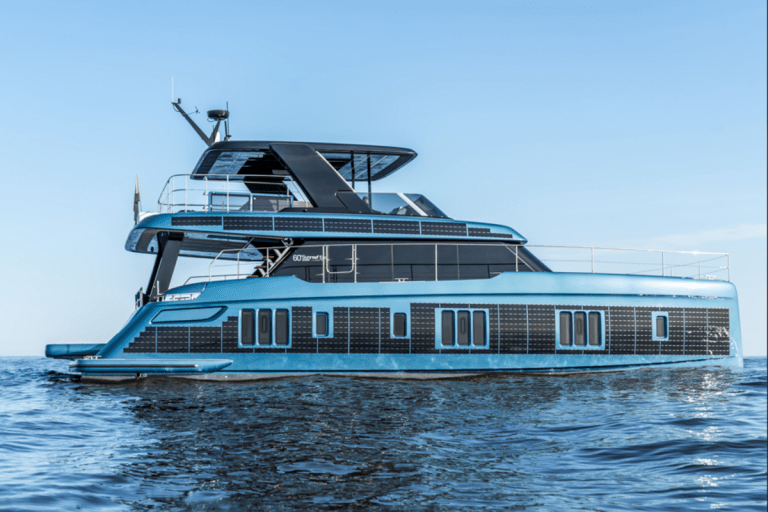
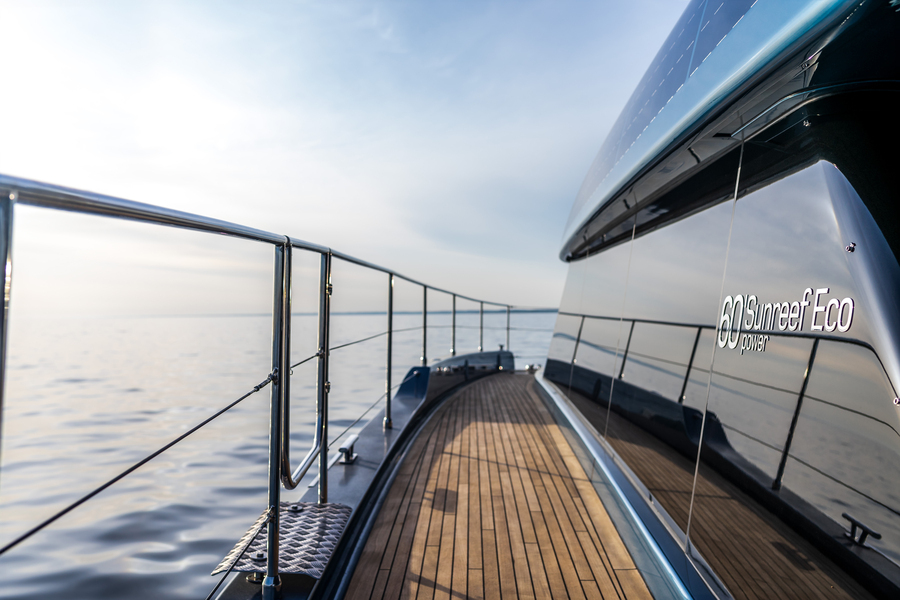
Sunreef’s selection of Eco catamarans cruising at sea just keeps getting bigger, although its newest model is its smallest solar-electric powercat to date.

Words: Claire Lim; Photos: Sunreef Yachts

  •  
  •  
  •  
  •  
  •  
  •  

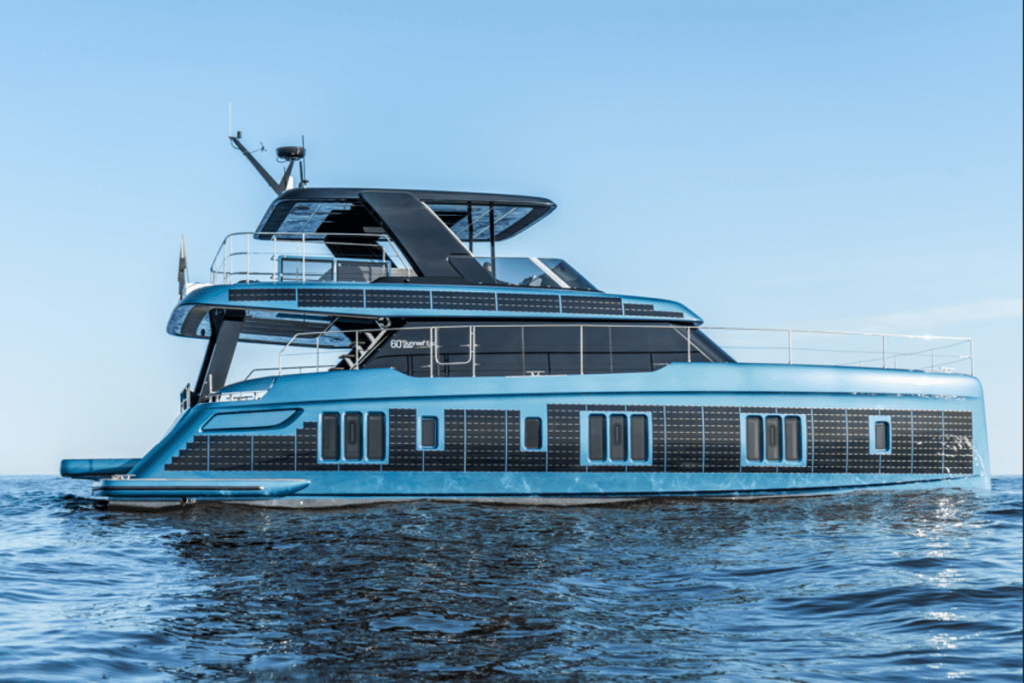
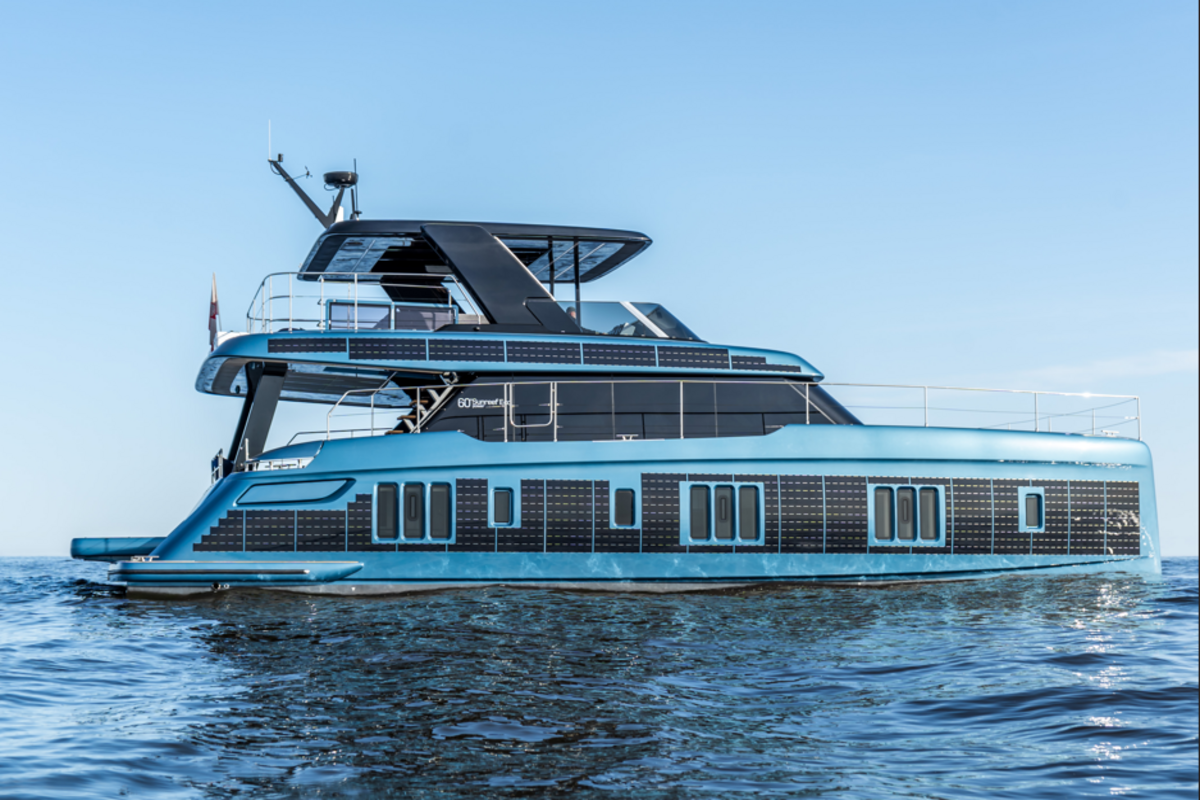
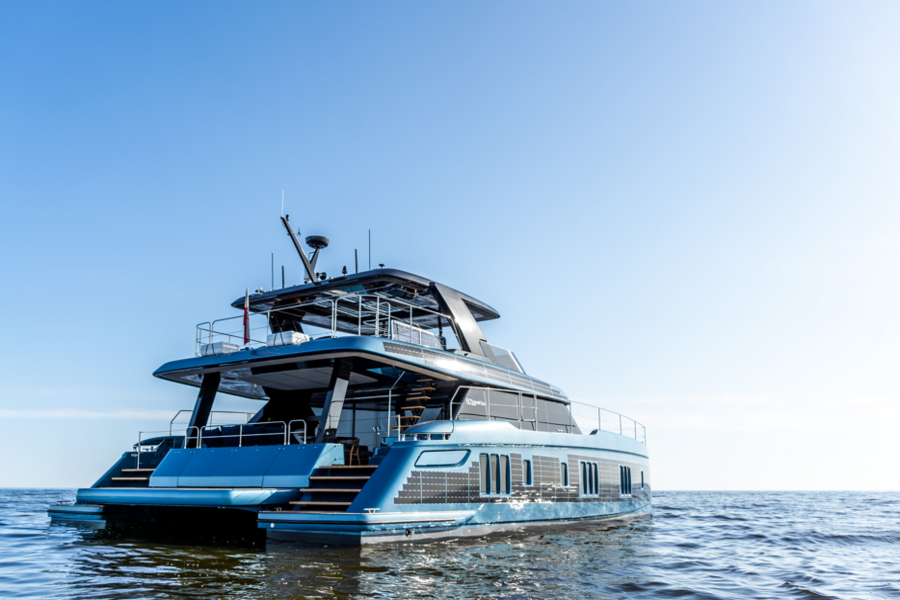
The 60 Sunreef Power Eco premieres at Cannes Yachting Festival 2024


Sunreef plans to premiere its 60 Sunreef Power Eco at this year’s Cannes Yachting Festival on France’s south coast from September 10-15. The Polish shipyard, which also has a growing production facility in the UAE, has long used Cannes and the Monaco Yacht Show a couple of weeks later as its main events to debut new yachts, and this year will be no exception.


The shipyard started showcasing its current New Beginnings range at Cannes in 2018 when it unveiled the Sunreef 80 and 60 sailing cats, adding the 50 (2019) and 70 (2021) in subsequent years. In parallel, the 80 Sunreef Power that premiered at Cannes in 2019 kickstarted the modern powercat range – using completely different hulls to the sailing cats – and was followed by the 60 Power and 70 Power, unveiled at Cannes in 2021 and last year respectively. 


As if this wasn’t enough, Sunreef splashed its first 100 Power in late 2021, with the yacht eventually appearing on the cover of Yacht Style’s Multihull Issue in 2022 and finally making its public premiere at last year’s Palma International Boat Show.


The Eco range sport a wafer-thin ‘solar skin’


However, Sunreef’s post-Covid focus has been on rolling out its Eco range, which offers the classic models listed above – and even larger sailing cats – with the shipyard’s green tech.


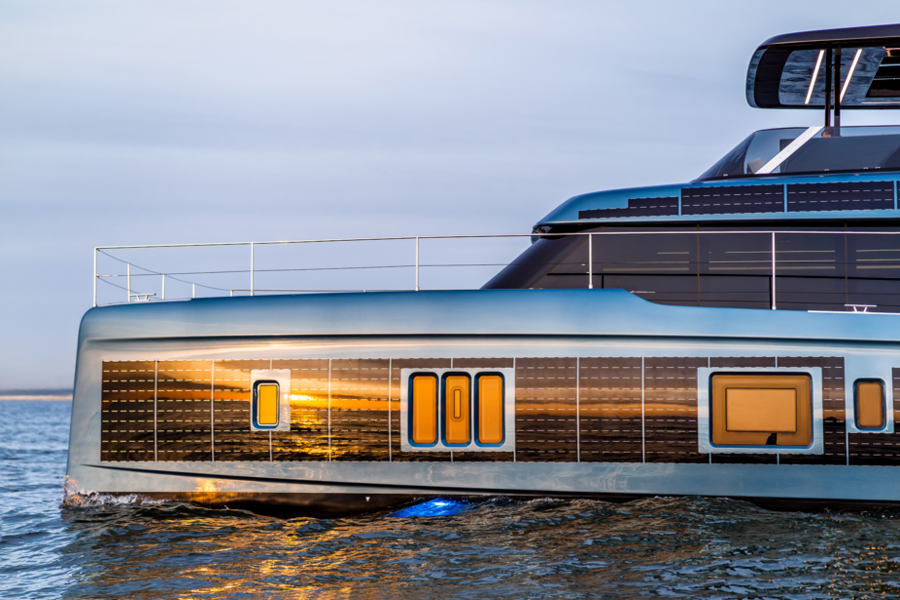
Most obviously, this includes its wafer-thin ‘solar skin’ that can wrap around hull sides, the superstructure, hard top and even the mast, while it also includes custom-engineered batteries and electric motors to produce silent, emission-free cruising and operations. Hydrogeneration systems, ultra-efficient air-conditioning, and even wind turbines are among options.


Eco models have also been led by the sailing side, with the 80 Eco just missing out on a premiere at the Dubai International Boat Show in early 2022, instead debuting at Cannes later in the year. At Cannes last year, the 80 Eco was joined by both the 70 Eco and 60 Eco sailing cats. 


On the powercat side, the 80 Power Eco had its world premiere at Cannes last year with Athena Too. The yacht was actually launched after Sol, which had made its way across the Atlantic and was used for the model’s US premiere at the Fort Lauderdale International Boat Show in October.


The most recent Eco model on the water is the 60 Sunreef Power Eco, the smallest Eco powercat to date. Like other Eco models, it offers the shipyard’s revolutionary solar-power system, with photovoltaic cells built into the hulls, superstructure and flybridge hard top. The green energy generated powers both the yacht’s propulsion and onboard appliances, with electric motors fed by an ultralight battery bank for vibration-free cruising.


The 60 Sunreef Power Eco has plenty of deck space


Special features include a large hydraulic swim platform that can carry a tender and double as a ‘private beach’, plus there’s an aft garage for water toys. However, it’s the cockpit and its large table for alfresco dining that better reveal the sheer expanse of the cat due to its whopping 35ft-plus beam.  The wide-open space is also felt on the foredeck terrace.


Forward of the windscreen is a sunken lounge including an L-shaped sofa and a table to port, as well as sunpads to starboard, all surrounded by clean deck space that allows people to gather, socialise and admire the view.


A large flybridge offers plenty of room for customisation. Proposed layouts include a bench-seat helm forward, wet bar to port and a dining table placed athwartships, which is moved slightly forward if the owner takes up the enticing option of a spa pool and sunpads spanning the aft end of the top deck.


The aft and flybridge desks offer pockets of outdoor privacy


Although not represented in this article, the saloon in the 60 Power Eco can be customised but is otherwise offered in two basic layouts, all arrangements benefiting from natural light from both the skylight and panoramic glazing.

The choice of galley-up or galley-down – or galleys up and down – can influence the cabin arrangement in the hulls. Without a lower galley, the yacht can offer up to six en-suite guest cabins – three on each side – as well as two en-suite crew cabins, each in the forepeak.

Otherwise, a galley can replace the starboard midships cabin, while a master suite option replaces the two aft cabins in the port hull. The options are almost endless, one reason Sunreef has become so dominant in its sector.

www.sunreef-catamarans.com

www.hongsehmarine.com.sg

www.nextwaveyachting.com


SHARE

Sunreef’s 60 Power Eco Read More »
Simpson Yacht Charter, Sanlorenzo SL90A, Hong Kong charter, Hong Kong

True Blue Dutch Beauty

SHARE

True Blue Dutch Beauty

SHARE

Custom designed by Guido de Groot and built by Van der Valk for a Hong Kong owner, the all-aluminium Blue Jeans is a tailor-made 34m masterpiece.

  •  
  •  
  •  
  •  
  •  
  •  


Simpson Yacht Charter, Sanlorenzo SL90A, Hong Kong charter, Hong Kong

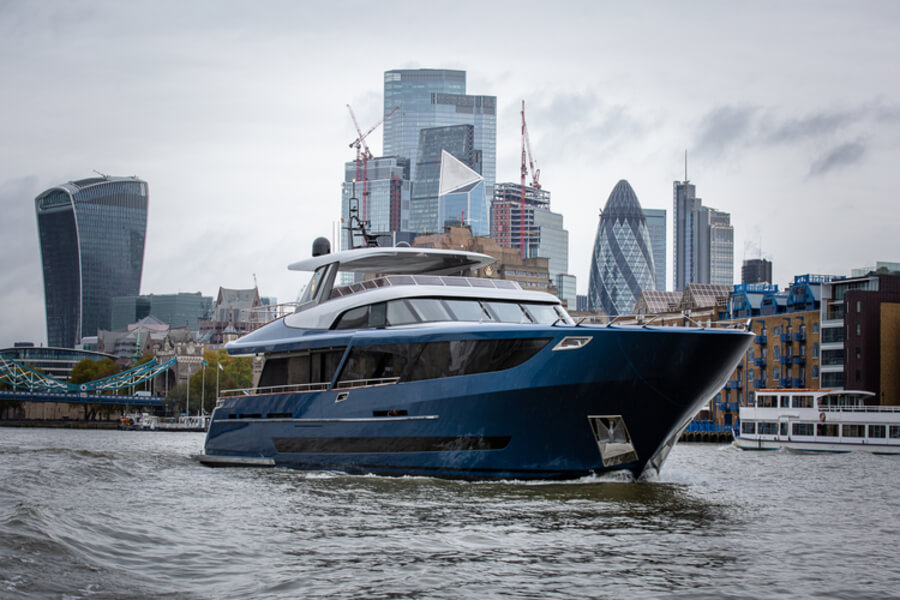
On a tour around Europe, Blue Jeans visited London

There are few more exciting challenges for a shipyard than an owner telling you to impress them. This happened during the build of Blue Jeans, a sleek and very blue motor yacht built by Van der Valk in southern Netherlands and based in Hong Kong since early 2023.

At her home in Aberdeen Marina Club, the all-aluminium yacht is easily recognisable due to sporty, dynamic lines and a hull in a custom deep-blue metallic paint developed with Alexseal, with the new coating named ‘Blue Jeans’.

The 33.74m tailor-made raised pilothouse is an attractive addition to Asia’s resident superyachts and an eye-catching testament to Van der Valk, the Dutch shipyard that specialises in bespoke 25-40m builds and offers semi-custom ranges including the BeachClub line.

The builder clearly rose to the Hong Kong client’s challenge, judging by the smile on his face as he took delivery in late 2022 before the yacht’s maiden voyage took in Belgium, France and the UK, where some iconic photos were captured in front of London’s Tower Bridge.

However, it’s worth noting that the custom build is a true-blue team effort, with Van der Valk collaborating with two Dutch studios, Guido de Groot Design on the exterior and interior, and Diana Yacht Design for naval architecture.

Simpson Yacht Charter, Sanlorenzo SL90A, Hong Kong charter, Hong KongA maximum speed of 28 knots, and cruising at 25 knots were owner requirements

Van der Valk described the project as both enjoyable and challenging. So challenging that it also billed Blue Jeans as one of the most complex superyachts it has created to date. Building the yacht during the Covid pandemic added an extra challenge to the project, as the shipyard tried to keep the owner as involved as if he was able to physically visit the yard.

The owner required the shipyard to create a fast vessel able to reach 28 knots and cruise for longer periods of time at 25 knots. To achieve this, Van der Valk worked with Diana Yacht Design to develop a semi-displacement hull with a hard chine V-shape, propelled by two 2,600hp MTU 16V 2000 M96L engines. Two tunnels over the propellers were designed to make space for bigger props and increase efficiency without increasing the draft.

The engine girders were strengthened to support bigger engines, while the gearbox and drivetrain were modified to transfer that extra power to the propellers. Using larger-diameter propellers improved efficiency and enabled power to be used optimally. To help create the space for the expansive engine room, the 4m aluminium tender is stored sideways in the aft garage. Created inhouse, the fully-custom tender matches the mothership and has a 50kW Torqeedo 50 electric outboard engine connected to a 40kWh BMW i3 battery pack.


SHARP EXTERIOR


While much of Diana Yacht Design’s impressive work is hidden below the surface, Guido de Groot’s exterior work is not only notable but a star attraction. The Dutch design studio was tasked by the owner to create a sleek-looking yacht yet one with plenty of interior and exterior entertaining space and lots of headroom, which required a tall flybridge and raised bow.


Simpson Yacht Charter, Sanlorenzo SL90A, Hong Kong charter, Hong KongAs well as the exterior, Guido de Groot Design handled the interior of Blue Jeans


It’s hard not to stare when you’re in the presence of such a stunning superyacht, which looks fast and slim yet houses expansive volumes that include ceilings that rise to almost 2.5m in the saloon. The blue used on the hull and flybridge base is an attention grabber, while the client’s request to not have any hint of white was achieved by a silver-grey flybridge structure and blackout surfaces on the glass.


The dark glazing used all along the main deck, in strips along the bottom of the bulwarks and for the long hull windows even helps Blue Jeans appear as a widebody yacht from some angles.


The outdoor areas include a long cockpit, which includes square loungers side by side and facing coffee tables and loose chairs, making the covered area more suitable for relaxing, cocktails and nibbles than alfresco dining.


Two symmetrical side decks lead to the foredeck, where innovative design presents guests with a C-shaped sofa, a pop-up table and a sunbathing area integrated into the forepeak, with Diana Yacht Design helping create a flush surface by locating the anchoring equipment below deck.


The naval architect’s influence extended to the sun deck, as it worked for the first time on designing a retractable dive board, which is integrated near the aft end of the port bulwark.


ASIAN FUSION INTERIOR


At the brainstorming stage, the forward-thinking client asked Van der Valk and Guido de Groot Design to surprise and impress him with interior concepts. The shipyard presented a range of options and was thrilled when he opted for the most intricate and radical, which included incorporating beautiful natural materials.


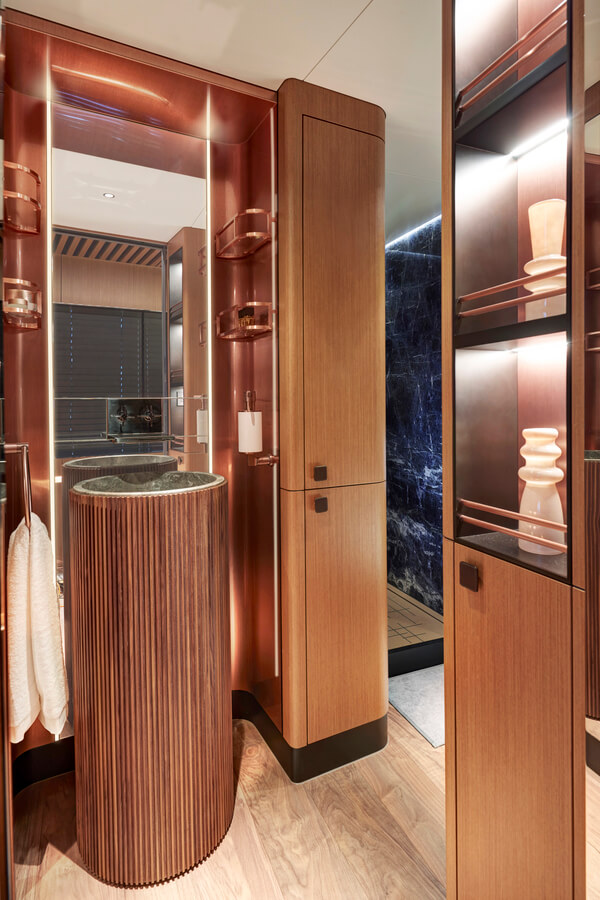
A day head and showers for day guests have been incorporated


With the design scheme reflecting a fusion of Northern European and Asian styles, the interior includes a wide variety of materials including multiple marbles, metals and woods. Liquid metal was used for walls and doors, copper accents are seen on walls, light fixtures and furniture, while reconstituted teak is used in wooden trims for the walls and ceilings.


Letting natural materials speak for themselves was a core ethos of the project, although some metals proved particularly challenging to integrate. The use of liquid metal was new to Van der Valk, which created bespoke panels onto which the alloy was poured and transformed into a pattern prior to solidification.


The overall layout of Blue Jeans was designed around the need for multi-functional use and to accommodate multiple generations of the owner’s family, so is equally suitable for large groups on day trips and extended voyages.


From the cockpit, large sliding doors open to welcome guests to an interior that starts with a hallway and counters in White Carrara marble. Forward is a quite stunning saloon, offering stunning views and natural light through tall windows and sliding glass doors on both sides.


LIGHTING UP


Simpson Yacht Charter, Sanlorenzo SL90A, Hong Kong charter, Hong Kong

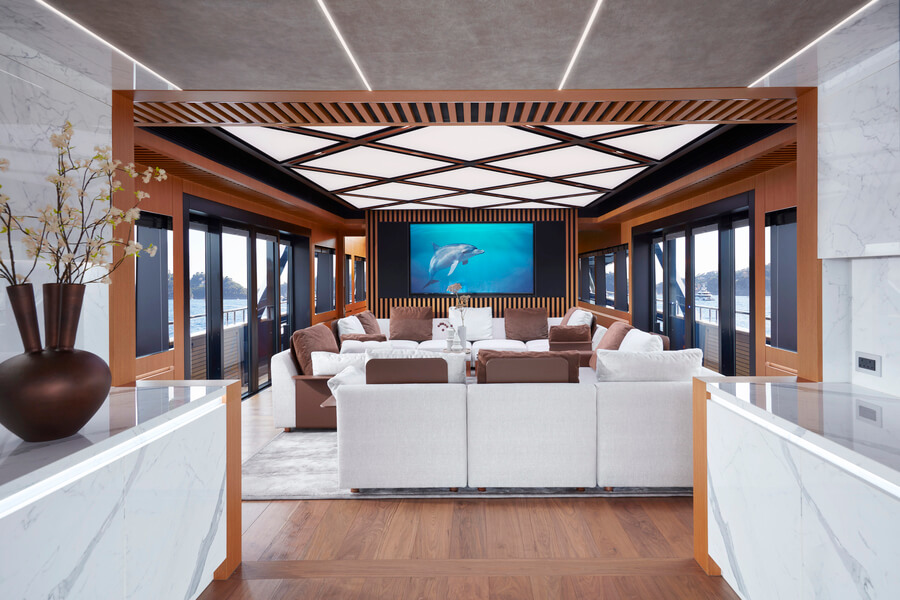
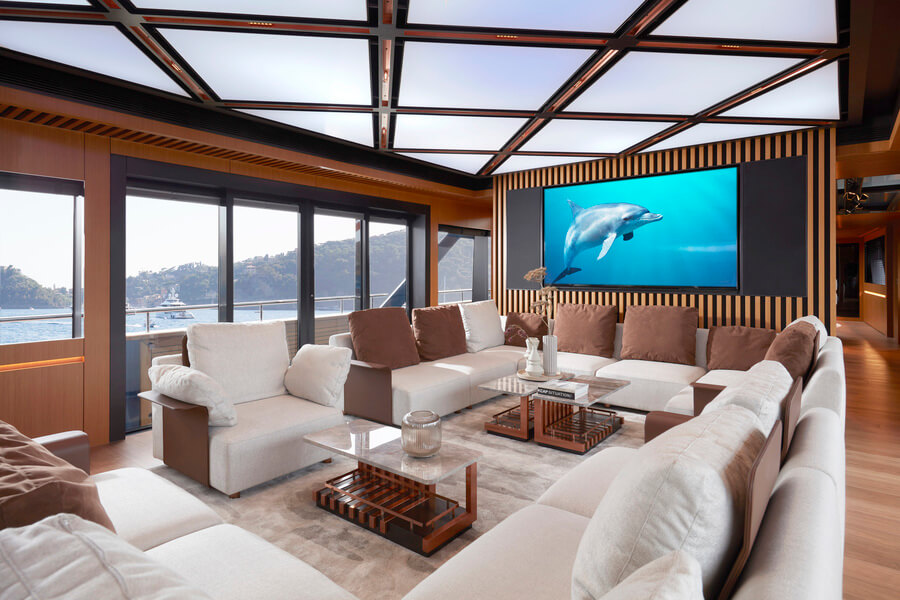
The saloon has sliding doors, fold-down balconies to each side and Barrisol LED ceiling


The saloon is also illuminated by one of the yacht’s signature interior highlights, a fully lit Barrisol ceiling, attractively arranged in diagonal square panels lined by copper detailing that gives guests another reason to cast their eyes above.


Recessed lighting is used cleverly throughout the interior, from shelves in the day head to the dining area.


The saloon is laid out in a ‘walkaround’ design, with custom Poltrona Frau sofas and chairs set in a long rectangle around marble-topped coffee tables. The seats can be moved to make the most of the outdoor views, such as when the sliding doors are opened or even placed outside on the drop-down balconies. The furniture can even be rearranged or partially removed to make space for a dance floor.


To cater to groups of day trip guests, having enough areas to shower during the day was a requirement. To meet that demand, the day head accessed by the starboard hallway doubles as a shower area, while the large bathroom on the lower deck in-between the two guest cabins can be used by day guests.


The dining area is bathed in natural light


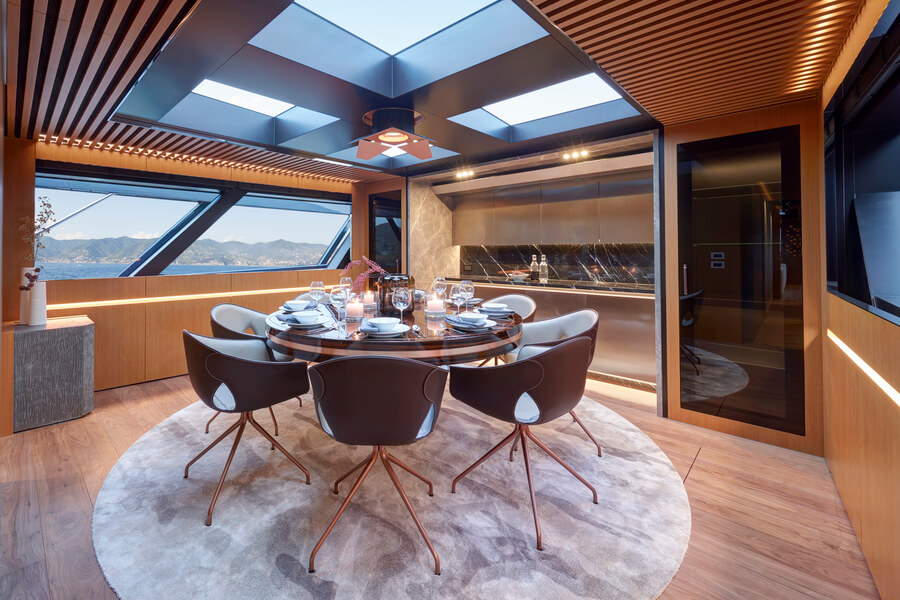
On the main deck, the starboard hallway leads forward past the door to the galley and onto the formal dining room. This magnificent space offers spectacular views and daylight through long windows on both sides but also four large, square skylights, which are positioned directly above the round, eight-seat Fletcher Capstan dining table that can be downsized to a smaller table for playing games.


Forward in each corner are symmetrical doors to full-height wine fridges that flank a long, dark counter in Nero Marquina marble, with storage cabinets above and below. Grey Fior di Bosco marble is used for a hip-high cabinet in the aft port corner.


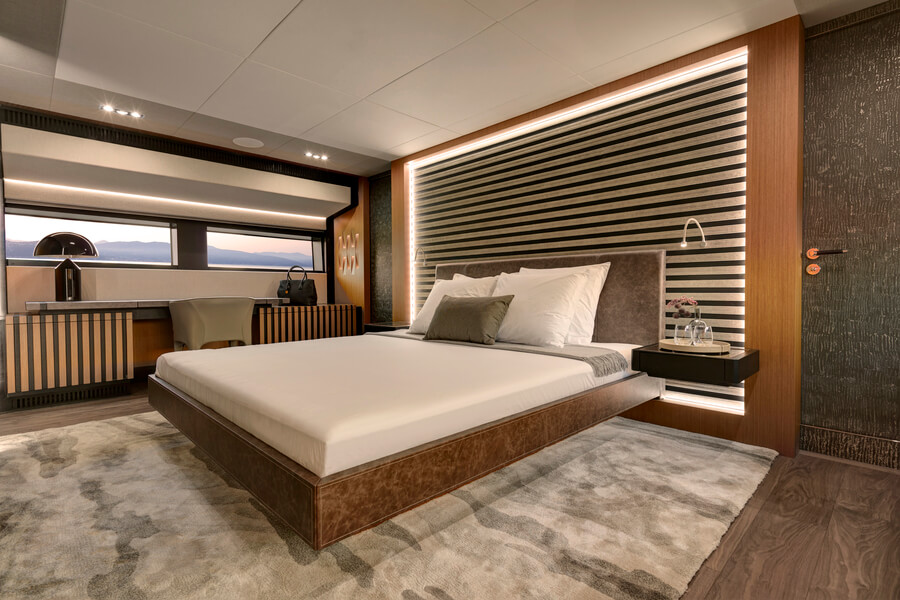
From the saloon, the port hallway accesses the stairs down to the lower deck, which lead first to the full-beam master suite midships. The room features a sofa along the port side, a desk and storage on starboard side, and a forward-facing bed flanked by grey, textured liquified-metal doors.


The port door leads to the walk-in shower featuring a striped bench, while the starboard door leads to the twin-sink bathroom and walk-in wardrobe, with both rooms featuring rare Lapis Lazuli Blue marble.


The airy owner’s suite


The guest cabins include a twin and a double aft and fore of a shared bathroom to starboard, while the VIP to port has an en-suite bathroom. Forward, accessed from the galley, is the crew area including a crew mess and two en-suite cabins, each with twin bunks. Blue Jeans has won multiple awards, although the biggest reward is an owner’s smile after seeing his challenge met.

www.vandervalkshipyard.com


True Blue Dutch Beauty Read More »

Riva, 82’, Diva, Flybridge, La Spezia, Ferretti Group, Cannes Yachting Festival, Mauro Micheli, Sergio Beretta, Officina Italiana Design, Strategic Product Committee, Piero Ferrari

Riva’s stunning new Diva

Riva’s stunning new Diva

SHARE

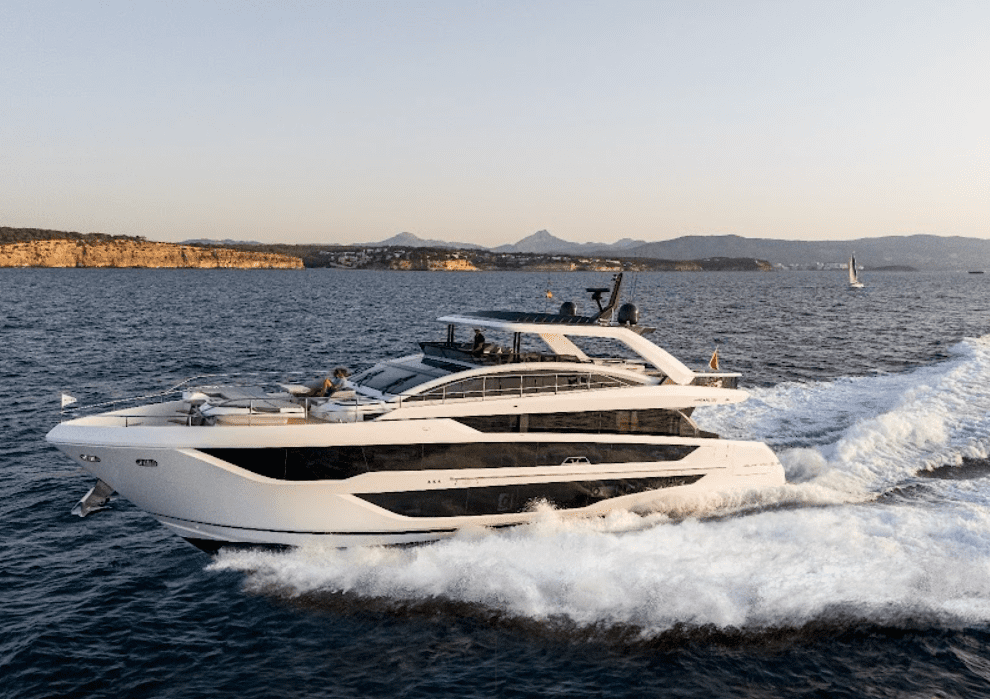
Designed to get tongues wagging, the 82’ Diva is the new starting point for Riva’s growing Flybridge line and the iconic brand’s first model to feature drop-down sides – just one of this Italian beauty’s remarkable features.
Words: Clare Mahon; Photos: Ferretti Group

  •  
  •  
  •  
  •  
  •  
  •  
  •  


Riva, 82’, Diva, Flybridge, La Spezia, Ferretti Group, Cannes Yachting Festival, Mauro Micheli, Sergio Beretta, Officina Italiana Design, Strategic Product Committee, Piero Ferrari

The 82’ Diva can reach 31 knots with the upgraded engine options


Riva is already the yachting brand most closely associated with divas, at least with those from the Dolce Vita era. So, when the brand launched a model called the Riva 82’ Diva, the yachting paparazzi snapped to attention. Does this flybridge yacht have what it takes to make her a star? We took her out for a spin to see.


A first look at any diva starts with her figures and the 82’ Diva has an overall length of 25.3m, a 6.1m beam and 2.05m draft. Since this is a special kind of diva, we’ll also look at how fast she runs. With her standard twin MAN V12 1800 engines, she has a top speed of 29 knots and a cruising speed of 26, which rise to 31 knots and 27 respectively with the upgraded 1,900hp versions.


The yacht is produced at the La Spezia shipyard for Riva’s 76-130ft models, with the first Diva enjoying her red carpet moment last September when she debuted at Cannes – at the Yachting Festival not the Film Festival. It was also our occasion to see her up close and in person, so to speak.


Riva, 82’, Diva, Flybridge, La Spezia, Ferretti Group, Cannes Yachting Festival, Mauro Micheli, Sergio Beretta, Officina Italiana Design, Strategic Product Committee, Piero Ferrari

The 82’ Diva is a proud addition to the portfolio of Officina Italiana Design, founded in 1994


Mauro Micheli and Sergio Beretta, founders of Officina Italiana Design, are the designers behind the yacht’s interior and exterior, working in collaboration with the Ferretti Group’s Strategic Product Committee led by Piero Ferrari and its Engineering Department.


The Diva’s exterior looks are eye catching, with sporty lines and a gunmetal-grey hull that seems to be pierced by a lobster claw of glass that breaks up the line of the flybridge and keeps the look light and airy. You can tell from afar that the Diva is part of Riva’s stable by the trademark turquoise bootstrap painted just above the waterline.


WATERSIDE AND UP

Riva is known for being extremely attentive to build quality and as soon as board you can sense that the Diva is a cut above. The aft swim platform is dominated by a large sunpad, which sits on top of the hidden door to the tender garage.


Riva, 82’, Diva, Flybridge, La Spezia, Ferretti Group, Cannes Yachting Festival, Mauro Micheli, Sergio Beretta, Officina Italiana Design, Strategic Product Committee, Piero Ferrari

The 82’ Diva is the first Riva to feature drop-down cockpit bulwarks, which expand the space around the central sunpad


The width of the large platform can be increased by a hefty 3m due to side bulwarks that fold down to become additional waterside settings. The opening bulwarks are a Riva first and they’ve proved such a hit that they’re likely to be incorporated into many more models to come.


Symmetrical staircases lead up to the cockpit, where twin couches face each other and look out – across a teak table embossed with Riva’s signature logo – over to the water. Even the fashion plates have large glass inserts to keep the view free and clear.


Protected side passages lead from the cockpit to the foredeck where two more sunpads and a couch form a long C-shaped social area. The flow is easy and natural, with any one of these outdoor spots looking like an ideal setting for a bit of glamour in the sun and fresh air – just grab your sunglasses.


Riva, 82’, Diva, Flybridge, La Spezia, Ferretti Group, Cannes Yachting Festival, Mauro Micheli, Sergio Beretta, Officina Italiana Design, Strategic Product Committee, Piero Ferrari

The 82’ Diva is the smallest model in Riva’s Flybridge range, joining the 90’ Argo, 102’ Corsaro Super, 110’ Dolcevita and 130’ Bellissima


SIGNATURE FINISHES

Riva’s signature logo adorns everything from table tops and thresholds to doorknobs and even windows, but the quality of finish and materials used aboard is also distinctive. The living area of the saloon is on the same level as the cockpit, giving the Diva an indoor/ outdoor continuity that’s easy to love.


Officina Italiana Design has selected luxurious materials like walnut and leather to give the interior an atmosphere with a bit of gravitas that contrasts with the sea views that flood in through the large, single-pane windows. The dining area is up a couple of steps from the living area, setting it apart without cutting it off from the rest of the communal space indoors.


Riva, 82’, Diva, Flybridge, La Spezia, Ferretti Group, Cannes Yachting Festival, Mauro Micheli, Sergio Beretta, Officina Italiana Design, Strategic Product Committee, Piero Ferrari

The saloon offsets light-coloured sofas with dark cabinetry


Another notable feature of the main-deck interior is the helm station, which has three Simrad touchscreens to starboard and sits beside a fully equipped galley to port. All this in a single area that on many yachts would be dedicated to the bridge and the bridge alone.


While this combination of cooking and helming may seem strange at first, it can work because rarely are people cooking and helming at the same time, although there’s plenty of space for both.


Riva, 82’, Diva, Flybridge, La Spezia, Ferretti Group, Cannes Yachting Festival, Mauro Micheli, Sergio Beretta, Officina Italiana Design, Strategic Product Committee, Piero Ferrari

The dining area sits aft of the galley, which neighbours the helm station and shares views through the large windscreen

Riva, 82’, Diva, Flybridge, La Spezia, Ferretti Group, Cannes Yachting Festival, Mauro Micheli, Sergio Beretta, Officina Italiana Design, Strategic Product Committee, Piero Ferrari


A large window can separate the galley from the dining area, but just drop it down and you get a show kitchen where culinary talents can be demonstrated in a galley that offers views as good as the ones the captain enjoys.


CLASSY CABINS

On the lower deck, the accommodation includes two en-suite twin cabins and a full-beam VIP suite fore that receives extra illumination from a large skylight.


Midships and down a couple of steps from the other guest cabins is a full-beam owner’s cabin that has stunning views through large hull windows set just above water level. There’s plenty of storage in a full wardrobe and the whole cabin has a broody, dramatic air due to liberal use of dark leather and walnut.


Riva, 82’, Diva, Flybridge, La Spezia, Ferretti Group, Cannes Yachting Festival, Mauro Micheli, Sergio Beretta, Officina Italiana Design, Strategic Product Committee, Piero Ferrari

The full-beam master suite midships has an en-suite bathroom with twin sinks


Did a Hollywood diva once quip that the fastest way to end a marriage was to have to share a bathroom sink? Well, there’s no danger of that aboard the 82’ Diva, as both the owner and VIP bathrooms have double sinks in Corian or Statuarietto marble, as well as excellent natural light to help get the hair and makeup just right.


Also on the lower deck, with separate access through a dedicated companionway, is a crew area for three, ensuring guests will be able to enjoy privacy and a good level of service when they’re aboard.


FLYING HIGH

No diva goes yachting to sit around inside, and the 82’ Diva has a flybridge that’s the perfect setting for those wind-in-your-hair moments. With almost 40sqm of space, the flybridge has a large aft area that can be set up with loose furniture and an outdoor galley and bar that lets the good times roll.


Riva, 82’, Diva, Flybridge, La Spezia, Ferretti Group, Cannes Yachting Festival, Mauro Micheli, Sergio Beretta, Officina Italiana Design, Strategic Product Committee, Piero Ferrari

The VIP cabin in the bow benefits from a long skylight


A carbon-fibre hard top with a large glass insert shades and protects a dining area that has the upper helm station right next to it. While all these features are lovely and liveable, the standout feature on the flybridge could well be the immense sunpad that occupies the entire fore section, an excellent place to lounge under the sun – or the stars.


So, the 82’ Diva looks the part, but can she perform? Just spend a few minutes underway with her, especially at the outdoor helm, and you’ll be ready to sign her up. She handles easily and smoothly, and Simrad screens displaying up-to-the-minute info on all her systems make her a joy to direct.


Best of all, you can share the thrill of running her with an audience of friends and family. Because a yacht, no matter how glamorous she looks, is about time spent in good company, enjoying that special on-the-water dimension – otherwise, it’s curtains.


Board the Riva 82’ Diva and you’ll be thinking it’s the yacht that’s the protagonist; spend some time aboard and you’ll be feeling like a star. Need I say more? It’s a wrap.

www.riva-yacht.com

www.ferrettigroupasiapacific.com


SHARE

Riva’s stunning new Diva Read More »

Azimut, Fly 72, Alberto Mancini, Fabio Fantolino

Azimut’s fresh Fly 72

Azimut’s fresh Fly 72

SHARE

Alberto Mancini’s exterior design ensures Azimut’s new Fly 72 fits well with the Italian shipyard’s modern family of flybridge models, but there’s a completely fresh look and feel in the interior following a first collaboration with Fabio Fantolino.
Words: Clare Mahon; Photos: Azimut-Benetti

  •  
  •  
  •  
  •  
  •  
  •  
  •  


Azimut, Fly 72, Alberto Mancini, Fabio Fantolino

Azimut’s new Fly 72 features an Alberto Mancini exterior


When Giovanna Vitelli picked up the phone to call architect and designer Fabio Fantolino, the Azimut-Benetti Group Chairwoman knew what she was looking for: another decisive step in the updating of Azimut’s offerings.


An upgrade of the Azimut 72 designed by the late Stefano Righini with interiors by Carlo Galeazzi, the new Fly 72 is among Azimut’s latest models to feature an exterior by Alberto Mancini – now responsible for most new S, Fly and Grande series designs. However, for the interiors, Vitelli wanted to work for the first time with Fantolino, despite the fact he had never worked on the design of a yacht.


“They sought out my studio for the interiors after they had carefully examined our styles and analysed the market sectors that our work would appeal to,” Fantolino recalls. “They were looking to upgrade on elegance.”


Azimut, Fly 72, Alberto Mancini, Fabio Fantolino

The cockpit is well sheltered and features a C-shaped sofa and a large table


The upgrade the Azimut-Benetti Group is reaching for with the revamp of its product line is sweeping. Objectives also include lighter, more energy-efficient yachts for a greener, more sustainable approach to life at sea.


With the new model part of Azimut’s Carbon-Tech Generation, Pierluigi Ausonio’s PLANA studio designed the Fly 72’s naval architecture with a hull in GRP and large areas of the superstructure and the beach platform in weight-saving carbon-fibre.


Up top, the carbon-fibre-laminated flybridge is 30 per cent lighter than it would have been if fully built in fibreglass, says the yard. The overall reduction of weight improves fuel efficiency and keeps the boat’s centre of gravity low, always a plus for a planing yacht’s comfort and manoeuvrability.


OUTDOOR SPACES

Mancini has been penning the exteriors of most of Azimut’s new Fly, S and Grande yachts and the consistency of his work has brought a real family feeling to the shipyard’s new offerings. “I always try to create a dialogue between traditional and modern, land-based and seafaring,” Mancini says.


Azimut, Fly 72, Alberto Mancini, Fabio Fantolino

The flybridge has a C-shaped dinette to port, outdoor galley, helm station and sunpads


While the yachts he has designed for Azimut have long sweeps of glass that bring lots of light into the interiors, Mancini never designs what he calls “glass shoebox yachts” and always keeps his lines fluid, especially when designing a flybridge yacht that’s sporty in its essence.


“As a designer, I feel I should coax owners back into a more seafaring world because it’s important not to forget that we’re at sea and have to respect it.”


To access the sea, the transom has a high-low swim platform with a fold-down ladder. The hydraulic gangway is telescopic, while the garage can store a 4m tender and a jetski, plus there’s an additional storage locker for toys such as Seabobs and diving equipment.


Azimut, Fly 72, Alberto Mancini, Fabio Fantolino

The roomy flybridge has an open aft deck


Up the steps, the aft cockpit has a comfortable C-shaped sofa and a table in synthetic stone. Shaded by the flybridge overhang, the area also has a wet bar that can be closed off to keep a clean look.


A starboard staircase leads to the large flybridge, which has an open aft section that owners can set up as they wish to make the most of the views through a glass balustrade topped by a slender stainless steel rail.


The carbon-fibre hard top has an opening central section and shades an area with couches, a table and a full outdoor galley. The helm station has Raymarine touch screens, while the area around it can be set up with a table or sun pads.


Azimut, Fly 72, Alberto Mancini, Fabio Fantolino

The foredeck has a C-shaped couch, while forward is a large sunbathing area


The foredeck is also exceptional and benefits from the extra space provided by the trapezoidal bow shape. Couches and sun pads can be shaded by a hydraulically operated bimini without the fuss of mounting awnings on poles. And the bow’s accentuated flange means water is deflected off the foredeck, so no surprise splashes.


FANTOLINO’S SURPRISE

However, it’s all change inside, after Fantolino responded positively to Vitelli’s request to design the Fly 72’s interiors. “When someone calls your studio, you know they’re looking for your style. Her thoughts on the project and Azimut’s objective for the yacht matched ours. From there, we had an optimal working relationship and made a great team,” he says of his first yachting project.


Azimut, Fly 72, Alberto Mancini, Fabio Fantolino

Fabio Fantolino’s yachting debut has resulted in a light, open and warm interior


“It was a challenge, but being an architect is always a challenge. When you’re called to work in a new sector, it’s always a pleasure because it’s a new world, a new opportunity to express yourself. I’m always pushing my design comfort zone; that’s the joy in my line of work.”


Fantolino and his studio started the project with a market analysis, and were surprised at what they found. “We didn’t expect the nautical world to be so isolated from the rest of the design world. It seemed niche and maybe a bit exclusive up to about 10 years ago, then the design world accelerated, and trends changed,” he says.


“The world of transversal design moved ahead while nautical design dropped back. It didn’t look niche anymore. It just looked old and wasn’t keeping pace.”


Azimut, Fly 72, Alberto Mancini, Fabio Fantolino

Aft view of the saloon shows large windows on both sides offering grand sea views, plus an easy connection to the cockpit


Fantolino’s goal was to bring the worlds of nautical and transversal design closer together and create an interior where elegance and refinement would also be luxurious.


“Our approach was to update the nautical language with new colours, materials, shapes and combinations. Aboard the Fly 72, we synced luxury design with yacht design and international design by using contradictions, giving contemporary lines to classic materials or creating contrast between straight and curved lines or matte and glossy surfaces.


“The hard part is finding the sweet spot between contrast and comfort in a smaller space because you must also have balance and equilibrium. We wanted to avoid a puzzle of overlapping areas so the space would feel larger and more open.”


The midships galley connects to all the aft and fore areas


WALKING INTO WOW

Large and open is what you feel immediately when you enter the saloon and find long windows in uninterrupted panes of glass, soft shapes, interesting textures and muted colours. Fantolino’s studio also designed all the furnishings, from the lamps to the couches and tables, but that wasn’t enough for Fantolino.


“Aboard a yacht, the exterior is always nearby, and you don’t want to distract from the views, but you still want a wow effect when you enter the interior,” he says. The wow is the galley, which Fantolino recalls as being difficult to design.


“But it was also the spot that gave us the greatest satisfaction as it gives personality to the interior. Working with a single focal point was important because on a yacht everything is physically close to you. Guests should enjoy being inside, so designers must lighten things up. That’s more difficult in a smaller space.”


The dining table to starboard


The galley’s design, with its serving station dressed up in coloured wood, is impressive. Its central location with the dining area across from it makes it a convivial, social area and fits the way we live today, especially when we’re on vacation. Fore of the galley is the helm and a tight crew dinette or games table to port.


STYLISHLY CONSISTENT

Lower-deck accommodation features a VIP cabin fore with a centrally placed bed that benefits from the extra width provided by the trapezoidal bow. The full-beam owners’ cabin is midships and has large, single-pane hull windows in structural glass, a central bed and lots of storage. A TV is concealed behind a magic mirror at the foot of the bed and there’s even a safe in the closet.


The full-beam master suite and other three guest cabins reflect the look of the rest of Fantolino’s interior


There are two further guest cabins, while a separate crew area can sleep two. The look throughout is consistently stylish, due also to the fact that Fantolino has thought of everything, right down to the taps in the bathrooms.


“Chromed faucets are not in fashion anymore,” he says of a small detail that can make a big difference. “Maybe in the nautical world, nobody realised the market was looking ahead and that people didn’t want the same old thing.”


Interiors aside, Fantolino admits to enjoying his time spent aboard the Fly 72 during sea trials, even if he wasn’t focused on the power and performance supplied by the twin 1,400hp MAN V12 engines.


The master suite’s day bed doubles as seating for the vanity table


“It was a lovely experience to work in this new world, as it’s very different from anything we had done before. You can learn about managing the storage spaces and how to work within the limitations of materials, and I thank Azimut for helping us to avoid some errors,” he admits.


“The hardest part about nautical design is making a smaller space feel light. The design and quality of materials need to impress, and there are limits on the materials you can use, but within those limits you can still take a lot of steps to lighten the feeling. That said, the experience of being aboard the yacht on the water was even better than I thought it would have been. I wouldn’t change a thing.”

www.azimutyachts.com

www.marineitalia.asia


SHARE

Azimut’s fresh Fly 72 Read More »

Galeon, 560 Fly, beach mode, Cannes Yachting Festival, MarineMax, Asiamarine, Hong Kong, Singapore, Thailand, beach mode, 680 Fly, 800 Fly, 400 Fly, 640 Fly, 440 Fly, Tony Castro

Galeon’s 560 Fly expands beach mode

Galeon’s 560 Fly expands beach mode

SHARE

Renowned for its drop-down sides and iconic waterside bar to port, Galeon’s flybridge range enters new territory as the 560 Fly introduces alfresco dining on the starboard side.
Words: John Higginson; Photos: Galeon


Galeon, 560 Fly, beach mode, Cannes Yachting Festival, MarineMax, Asiamarine, Hong Kong, Singapore, Thailand, beach mode, 680 Fly, 800 Fly, 400 Fly, 640 Fly, 440 Fly, Tony Castro

Tony Castro designed the 560 Fly’s shapely exterior


It’s coming up to nine years since Galeon debuted the 500 Fly at the 2015 Cannes Yachting Festival, where its drop-down sides and waterside bar provided not just a wow factor but expanded the ways guests could enjoy life on the sea on a 50ft boat.


MarineMax, the world’s largest yacht distributor, was quick to spot a good thing and four months later announced it was the shipyard’s US dealer. The move helped transform Galeon – now producing about 350 boats annually – into one of the leading brands in one of the industry’s most competitive segments.


Also in 2016, Asiamarine started representing Galeon on the other side of the Pacific and today is the brand’s official representative in Hong Kong, Singapore and Thailand, while overseeing a regional network of dealers in other markets.


Galeon, 560 Fly, beach mode, Cannes Yachting Festival, MarineMax, Asiamarine, Hong Kong, Singapore, Thailand, beach mode, 680 Fly, 800 Fly, 400 Fly, 640 Fly, 440 Fly, Tony Castro

The 560 Fly fits between the 500 Fly and 640 Fly


Since debuting the ‘beach mode’ concept on the 500 Fly, Galeon has continued to add layer upon layer of innovation in all areas of its flybridge yachts, which now range from 40-80ft. The design still feels ahead of its time, while the brand’s competitors in the flybridge sector have generally been slow to respond.


The line’s two largest models – the 680 Fly and flagship 800 Fly – don’t feature drop-down sides, but otherwise fold-down bulwarks have become a staple of new Galeon flybridge models, such as the 400 Fly (Review, Issue 56), 640 Fly (Review, Issue 64), and the new 440 Fly (Review, Issue 74) and 560 Fly that debuted last year.


The 560 Fly is Galeon’s second-largest model to feature the wings, yet the brand’s ‘transformer’ DNA has moved to a new level on the newcomer, with both the main deck and flybridge offering functionality, flexibility and space that hasn’t been seen on a monohull this size to date.


CASTRO DOES IT AGAIN

First things first. Among an overall length of 58ft 6in, the model has a 53ft 5in hull with a 15ft 10in beam, which expands to 22ft 4in when in ‘beach mode’.


Galeon, 560 Fly, beach mode, Cannes Yachting Festival, MarineMax, Asiamarine, Hong Kong, Singapore, Thailand, beach mode, 680 Fly, 800 Fly, 400 Fly, 640 Fly, 440 Fly, Tony Castro

The swim platform’s integrated steps, cockpit stairs and flybridge stairs are all to port


Tony Castro, who has been designing for Galeon since 2001, has created a muscular exterior, with a tall band of dark glazing running from fore to aft along each hull side. Above, the saloon glazing is topped by a curvy superstructure, which is matched by flowing side supports for the hard top. Even before you board the 560 Fly, you feel like it offers ‘a lot of boat’.


The hydraulic aft platform can carry a RIB or tender and sets the tone for the fun to come with its ability to descend into the water while an integrated ladder to port unfurls to provide access for guests. The transom incorporates a fold-out sofa that’s good for putting on flippers or watching over kids in the water.


Galeon, 560 Fly, beach mode, Cannes Yachting Festival, MarineMax, Asiamarine, Hong Kong, Singapore, Thailand, beach mode, 680 Fly, 800 Fly, 400 Fly, 640 Fly, 440 Fly, Tony Castro

The drop-down bulwarks include large glass inserts and a boarding gate


Port side stairs lead to the cockpit, which is covered by the flybridge overhang and features a large table on two fixed pedestals and an L-shaped sofa that reaches round to starboard. Stairs, again to port, lead to the flybridge.


The top deck has an open aft area that can include a couple of sun loungers, but otherwise Galeon has provided a fully fitted master class in maximising seating and lounging space on the fly.


Flanked by the hard top supports, the two-part outdoor galley includes an L-shaped set-up to starboard with a grill, sink, fridge and storage. To port is another wet bar, with either a fixed countertop or fold-up double grill atop storage and an ice maker. Both sides allow the cook or anyone grabbing drinks to face and converse with other guests.


Galeon, 560 Fly, beach mode, Cannes Yachting Festival, MarineMax, Asiamarine, Hong Kong, Singapore, Thailand, beach mode, 680 Fly, 800 Fly, 400 Fly, 640 Fly, 440 Fly, Tony Castro

The flybridge has helm and companion seating, mirror dinettes, a full-beam galley and an open aft deck


Forward, the main social area features not one but two C-shaped dinettes that mirror each other. Each has a dining table that can fold out to adjoin the other and create one large dining table with seating on all four sides. It’s a remarkable option, although it’s advisable for anyone planning to sit at the forward end to visit the head first.


The transformations don’t stop there. The forward backrest of each sofa can be moved aft, necessary to create the bench-seat sofa for the helm to starboard. To port, moving the backrest creates matching companion seating that faces a long sofa under the windscreen. Throughout the fly, there’s storage under almost all the seating.


Galeon, 560 Fly, beach mode, Cannes Yachting Festival, MarineMax, Asiamarine, Hong Kong, Singapore, Thailand, beach mode, 680 Fly, 800 Fly, 400 Fly, 640 Fly, 440 Fly, Tony Castro

Backrests can be added to the foredeck sunpad


Look over the windscreen and you’ll see the foredeck, where a sofa faces a large sunpad that can fit backrests to create aft-facing seating and even has a small fold-up backrest at the forward end.


OPENING SALOON

Back to the cockpit and you’re at the heart of what makes this model different to any Galeon before. Even before the drop-down sides are lowered, they still allow access to the boat from either side due to an integrated boarding gate in the bulwark. When the sides are down, integrated glass allows you to see the water look through the floor.


The port bulwark allows access to the brand’s iconic waterside bar, where two stools can be inserted into the side deck and a foldout bar provides a platform for drinks and snacks. A huge open window allows easy conversation between the outdoor bar and those in the U-shaped galley and rest of the saloon.


Galeon, 560 Fly, beach mode, Cannes Yachting Festival, MarineMax, Asiamarine, Hong Kong, Singapore, Thailand, beach mode, 680 Fly, 800 Fly, 400 Fly, 640 Fly, 440 Fly, Tony Castro

The saloon’s large starboard door slides forward to allow the seats and table to be folded out


The rest of the saloon is not so easy to define on the 560 Fly because a sliding door on the starboard side can completely open the aft half of the saloon, giving a clear view over the water when the bulwark is down.


This is already appealing but Galeon has gone a major step further by enabling the dinette to expand outside to provide alfresco dining for four. The starboard side of each seat can fold down to create facing bench sofas either side of a table that also unfolds to double its size. To port, a waterside bar; to starboard, waterside dining. It’s a winner.


Galeon, 560 Fly, beach mode, Cannes Yachting Festival, MarineMax, Asiamarine, Hong Kong, Singapore, Thailand, beach mode, 680 Fly, 800 Fly, 400 Fly, 640 Fly, 440 Fly, Tony Castro

An enormous fridge-freezer and a U-shaped galley to port face a convertible dinette


With three sides of the aft half of the saloon open to the outside, Galeon has broken new ground in indoor-outdoor living in the sub-60ft flybridge sector. In fact, the enormous footprint and lack of barriers creates such a large sense of space that it’s easy to forget there’s more to explore inside.


It’s two steps up to the forward – or indoor – half of the saloon, where Galeon still manages to fit a C shaped sofa around a large table, which can electronically lower to seat height and be covered and converted into a double bed for extra guests. To starboard is a two-seat sofa that’s backed by a high low 50-inch TV. Both sides have large windows that can be covered by electrically actuated shades.


Galeon, 560 Fly, beach mode, Cannes Yachting Festival, MarineMax, Asiamarine, Hong Kong, Singapore, Thailand, beach mode, 680 Fly, 800 Fly, 400 Fly, 640 Fly, 440 Fly, Tony CastroThe saloon offers indoor dining on a high-low table, plus a 50-inch TV behind the starboard sofa


The starboard helm includes a bench sofa, while to port is storage below the large one-piece windscreen that also illuminates the central companionway and the hallway on the lower deck, which houses all the accommodation.


CREATIVE CABINS

Midships, the full-beam master stateroom has an en-suite, while the guest cabin to starboard and forward VIP cabin share a bathroom to port. The entrance to the master stateroom passes the door to the bathroom, which benefits from a massive hull window that even extends to the walk-in shower.


Galeon, 560 Fly, beach mode, Cannes Yachting Festival, MarineMax, Asiamarine, Hong Kong, Singapore, Thailand, beach mode, 680 Fly, 800 Fly, 400 Fly, 640 Fly, 440 Fly, Tony Castro

The full-beam master suite is midships


Two steps lead down to the bedroom, where the double bed faces a 50-inch television and is flanked by hanging cupboards in both aft corners and massive hull windows.


A hip-height storage cabinet – including a small fridge – runs along the starboard side, while to port is a desk cum vanity table beside a thick-cushioned seat, forward of which is a pull-out, two-level bottle drawer! There’s additional storage under the bed, under the TV and above the bedhead.


The guest cabin has a hanging cupboard and two single beds, with the inward bed able to be pushed across to create a double. The room also benefits from a huge hull window.


Galeon, 560 Fly, beach mode, Cannes Yachting Festival, MarineMax, Asiamarine, Hong Kong, Singapore, Thailand, beach mode, 680 Fly, 800 Fly, 400 Fly, 640 Fly, 440 Fly, Tony Castro

The forward VIP also benefits from huge hull windows


The VIP suite is impressively spacious considering its bow location and offers over 7ft of headroom at the bottom of the bed. It’s naturally bright due to big side windows and three skylights including a central opening hatch that provides the option of fresh air.


On both sides of the bed – which faces a 32-inch TV on the aft bulkhead – there’s storage integrated into stylish, curved joinery, which includes a hanging cupboard to starboard. To port is a vanity table with swingout stool, and the door to the bathroom, which is like the owner’s and has a huge window spanning across to the walk-in shower.


Galeon, 560 Fly, beach mode, Cannes Yachting Festival, MarineMax, Asiamarine, Hong Kong, Singapore, Thailand, beach mode, 680 Fly, 800 Fly, 400 Fly, 640 Fly, 440 Fly, Tony Castro

The 560 Fly (above) debuted in 2023 with the 440 Fly, the latter coming to Asia through Asiamarine
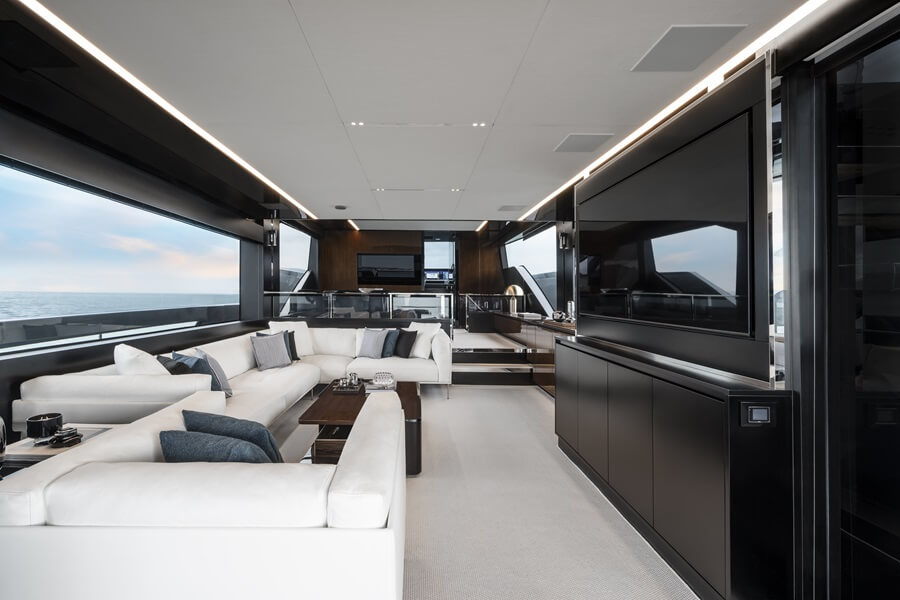
 

All the cabins feature smooth joinery, lots of recessed lighting and a nice variety of textures, especially evident in the attractive bedheads. And there’s even a twin crew cabin aft with access from the swim platform. Galeon’s forward-looking focus on flexibility and functionality shows no signs of slowing down.

http://www.galeonyachts.pl

http://www.asiamarine.com


SHARE

Galeon’s 560 Fly expands beach mode Read More »

Sanlorenzo’s stunning 57Steel

Sanlorenzo’s stunning 57Steel

SHARE

Building on the innovative features of the popular 52Steel, Sanlorenzo’s new 57Steel offers over twice the volume, novel deck arrangements and customised interiors, as shown on Virtuosity.
Words: Risa Merl; Photos: Sanlorenzo

  •  
  •  
  •  
  •  
  •  
  •  
  •  


Sanlorenzo, 57Steel, 52Steel, Lissoni & Partners, Piero Lissoni, Zuccon International Project, Bernardo Zuccon, Virtuosity, Ferruccio Rossi

Bernardo Zuccon of Zuccon International Project drew the 57Steel


Combining an enormous volume with a 56.5m LOA and perfectly balanced proportions – as well as thoughtful customisations that set her apart from her sisters in the series – Virtuosity is the second hull in the new 57Steel range from Sanlorenzo.


Creating the new 57Steel line for Sanlorenzo was a careful balancing act between volume, length and proportions. The Italian builder sought to expand its range of steel-hulled superyachts with an offering that provided a generous volume exceeding 1,000GT without reaching an excessive length, and without looking too stocky or top heavy.


Ferruccio Rossi, Group General Manager and President of Sanlorenzo Superyacht, says: “One of the 57Steel’s strengths lies precisely in being able to provide extraordinary volumes and liveable spaces, while staying below 60m in length and maintaining a perfect balance in proportions.”


Sanlorenzo, 57Steel, 52Steel, Lissoni & Partners, Piero Lissoni, Zuccon International Project, Bernardo Zuccon, Virtuosity, Ferruccio RossiVirtuosity’s aft decks include a main-deck pool, alfresco dining and an outdoor party zone


It was a challenging brief for the yacht’s designer, but fortunately one that it was prepared for, as Zuccon International Project is one of Sanlorenzo’s longtime collaborators.


“My design has become almost second nature when it comes to drawing for Sanlorenzo,” Bernardo Zuccon says. “The integration and synergy with the shipyard’s style have made it almost spontaneous for me to incorporate the Sanlorenzo DNA into new designs. Starting from a general language, I introduced stylistic elements and details to make the 57Steel an extremely recognisable yacht.”


STYLED FOR THE OWNER

Zuccon sought to create a timeless exterior style that would be recognisable as part of the Sanlorenzo family while standing out among the current fleet. The designer achieved this with specific design elements, such as the signature handrails on the main and upper deck.


Sanlorenzo, 57Steel, 52Steel, Lissoni & Partners, Piero Lissoni, Zuccon International Project, Bernardo Zuccon, Virtuosity, Ferruccio Rossi

Zuccon is responsible for the exteriors of most Sanlorenzo yachts


In a different colour from the rest of the all-white Virtuosity, the dark-grey handrails lead the eye from their starting point aft to the next deck up. The handrails don’t merely end at the top of the bulwark, but continue at a 45-degree slope, connecting to the superstructure above. This seemingly subtle styling cue creates a sense of dynamism and forward motion.


Virtuosity was preceded by the first 57Steel, Alma. It’s obvious that the two are sisters, but Virtuosity stands out from grey-hulled Alma with a nearly all-white hull and superstructure.


Sanlorenzo, 57Steel, 52Steel, Lissoni & Partners, Piero Lissoni, Zuccon International Project, Bernardo Zuccon, Virtuosity, Ferruccio Rossi

The float-in garage and beach club shown on Alma, hull one


Rossi says: “Virtuosity flaunts a unique colour, giving the line a sportier appearance, as wished by the client. Another distinctive external element is the foredeck private pool on Virtuosity’s upper deck, located in front of the owner’s cabin.” Such personalisation speaks to Sanlorenzo’s quest, and company motto, to create ‘made to measure’ yachts.


DIFFERENT LEVEL

To strike a proper proportional balance in the 57Steel series, the yacht’s general arrangement was pored over and revised from what you might typically expect in a yacht of similar length. An innovative layout that bucks tradition was conceived.


Sanlorenzo, 57Steel, 52Steel, Lissoni & Partners, Piero Lissoni, Zuccon International Project, Bernardo Zuccon, Virtuosity, Ferruccio RossiThe entrance to the main-deck saloon introduces guests to Virtuosity’s interior by Lissoni & Partners


The wheelhouse area, normally found forward on the upper deck, was moved up one level. Instead of an entirely open sun deck, this arrangement places the enclosed bridge area forward on the top deck. This is set forward of a chart room and captain’s cabin, while a corridor leads to a small interior lounge/DJ area that opens out onto an aft deck exterior party area.


“It’s a real bridge deck, like those found on much larger yachts, which made it possible to utilise the upper deck in a different way,” Rossi says.


A higher vantage point for the bridge is not only a benefit to the captain, but this shakeup in the general arrangement has allowed the upper deck to host a sprawling 54sqm owner’s suite like you might find on a yacht with a longer LOA.


The 580sqft owner’s suite on the upper deck looks out onto an enormous foredeck that includes a private pool


An owner’s office and walk-in dressing room at the entrance to the suite lead into the forward-facing bedroom. Surrounded by windows and set at a lofty height, this upper-deck haven enjoys expansive views, which can be further appreciated by stepping outside onto the connected private forward deck lounge with a swimming pool.


Zuccon says: “It’s challenging to pinpoint a single favourite space on board Virtuosity, but considering the typological characteristics of the yacht, the owner’s cabin on the upper deck with its exclusive external deck is perhaps the most fascinating space on board.”


One of the four guest cabins on the lower deck


On the main deck forward is a full-beam stateroom that would make for an enviable VIP cabin or a worthy second owner’s suite for dual charterers. A further four cabins are found on the lower deck below, including two doubles and two twin cabins, one of which can serve as a staff cabin.


STEPPING UP CUSTOMISATION

Though the build of Virtuosity began on spec, an owner was found only months after beginning carpentry work, allowing the clients to put their personal stamp on the vessel. Rossi explains: “One of the most interesting challenges was meeting the clients’ request for a ‘masterpiece’ within the boat, a situation that could create astonishment, a wow effect.”


Sanlorenzo, 57Steel, 52Steel, Lissoni & Partners, Piero Lissoni, Zuccon International Project, Bernardo Zuccon, Virtuosity, Ferruccio Rossi

The showpiece steel-and-aluminum staircase winds up and down all four decks


Lissoni & Partners created Virtuosity’s minimal yet chic interior, which includes a wow-feature of a staircase at its core. Designer Piero Lissoni, Sanlorenzo’s Art Director, is known for his utterly unique, architectural staircases, and the one found on Virtuosity is no exception. A study in organic shapes, this curvaceous staircase is certainly the piece de resistance that it set out to be.


“I couldn’t resist adding one of my staircases,” Lissoni admits. “It’s not a simple staircase; it belongs to a kind of twilight zone, something in-between different places. I hope that the owners keep on going up and down these stairs as if they were in a dream.”


The staircase, which features a steel and aluminum structure, spans all four decks, winding around itself and creating unprecedented perspectives in terms of pathways and passages. Natural light filters in through a glass skylight above, creating an interplay of light and shadows.


Sanlorenzo, 57Steel, 52Steel, Lissoni & Partners, Piero Lissoni, Zuccon International Project, Bernardo Zuccon, Virtuosity, Ferruccio Rossi

The lower deck of Virtuosity includes a gym, as well as the beach club


The challenge lay in achieving a sense of weightlessness and transparency while ensuring structural integrity. Precision engineering and innovative construction methods, overseen by Lissoni’s team, were employed to bring this exceptional staircase to life.


Rossi says: “It was a stimulating challenge not only from a formal and stylistic perspective but also from an engineering and craftsmanship standpoint due to the complexities arising from placing such a sculptural staircase in such a compact space with a complex structure.”


The clients are also very interested in onboard technology, particularly in audio/video systems, so Virtuosity has a DJ area at the aft of her bridge deck with a space for DJ decks and a bar, creating a dedicated space for celebrations. The party space, along with a main-deck pool area and a huge beach club on the lower deck, proves that Virtuosity is all about entertainment.


Sanlorenzo, 57Steel, 52Steel, Lissoni & Partners, Piero Lissoni, Zuccon International Project, Bernardo Zuccon, Virtuosity, Ferruccio Rossi

The upper-deck saloon includes an enormous sofa facing a large TV screen


Building a superyacht on spec can be a gamble, but it’s one that paid off for Sanlorenzo. Three more units of the 57Steel range are already in production. And Zuccon says that the owner’s satisfaction with Virtuosity has led to an ongoing collaboration on an even larger project.


The word Virtuosity, of course, means an impressive skill in an artistic pursuit, and it could be said that the yard and designers have showcased great virtuosity befitting of the yacht’s name in the creation of this well-balanced superyacht.

www.sanlorenzoyacht.com

www.simpsonmarine.com


SHARE

Sanlorenzo’s stunning 57Steel Read More »

Sanlorenzo, SX100, SX112, SX88, SX76, Piero Lissoni, Artistic Director

Sanlorenzo’s extra-cool SX superyacht

Sanlorenzo’s extra-cool SX superyacht

SHARE

With a hull destined for Southeast Asia, the new SX100 is the fourth model in Sanlorenzo’s explorer-styled ‘crossover’ flybridge series, with fold-down terraces expanding the waterside experience in the beach zone.
Words: Clare Mahon; Photos: Sanlorenzo & Guillaume Plisson

  •  
  •  
  •  
  •  
  •  
  •  
  •  


Sanlorenzo, SX100, SX112, SX88, SX76, Piero Lissoni, Artistic Director

The SX100 reaches 23 knots with four 800hp Volvo Penta IPS pod drives


Sanlorenzo says its SX series of yachts blurs the boundaries between flybridge and explorer-type yachts, with the X representing the ‘cross’ in crossover. The new SX100, the range’s latest model, has exterior lines by Zuccon International Project like those on the SX112, SX88 and SX76 that came before her, with reverse-angle windscreens giving a robust, explorer-yacht look.


Hull one showcases interiors by Piero Lissoni, who is also Sanlorenzo’s Artistic Director, although future SX100 owners can create or commission their own bespoke layouts and designs.


Sanlorenzo, SX100, SX112, SX88, SX76, Piero Lissoni, Artistic Director

SX signatures include an enormous aft lower deck


Furthermore, the crossover doesn’t end with yacht types. A strong accent on ease of outdoor living and quick access to the water means the boundaries that divide indoors from out are blended so much that the only logical way to begin a tour of the yacht is from an outdoor space.


WATERSIDE LIVING

The main saloon is usually a yacht’s largest area and the centrepiece that sets the tone for an onboard experience. Not so aboard the SX100, where the stern deck is a huge expanse of free and open space that’s much more than a swim platform.


Sanlorenzo, SX100, SX112, SX88, SX76, Piero Lissoni, Artistic Director

Distinguished by reverse-angled windscreens, the SX series features exterior lines by Zuccon


When the space is not being used to store the 5.65m tender and water toys, it becomes an area without barriers between guests and the sea. The pieds dans l’eau effect is multiplied exponentially when, at the touch of a button, two spacious side terraces open out over the water.


An up/down platform fully aft is for getting in and out of the water and deploying toys, while a crane for launching the tender is integrated into one of the arches over the side terraces.


Sanlorenzo, SX100, SX112, SX88, SX76, Piero Lissoni, Artistic Director

Drop-down sides increase space and views, including from the beach lounge


Teak benches fold down over the mooring equipment, both concealing it and offering a very handy spot for putting on swimming fins. It’s a real shot of luxury lifestyle for those who enjoy the outdoors, whether swimming, sailing or soaking up the sun.


Lowering the terraces also opens the side views in the lower-deck lounge, which is accessed through a sliding glass door in the centre of a full-width screen of windows that are slanted at a similar angle to the SX’s iconic windscreens.


Sanlorenzo, SX100, SX112, SX88, SX76, Piero Lissoni, Artistic Director

Port view of the lower-deck ‘beach lounge’, which has fixed aft windows either side of the sliding door


Set slightly lower than the aft deck, the lounge has a red-lacquer bar to port along with chairs, coffee tables, a sofa to starboard and mirror-lined walls, so you see the water no matter which way you’re facing. And when the terraces are down, the aft deck and beach lounge become one integrated zone that can be enjoyed from dawn to dusk.


OPEN INTERIORS

The slender, ‘floating’ external staircase up to the main deck’s aft cockpit is enclosed in glass, while the same beautiful, curved glass used to encase the lower-deck lounge is used in the cockpit’s glass railings.


Sanlorenzo, SX100, SX112, SX88, SX76, Piero Lissoni, Artistic Director

The saloon includes a starboard staircase down to the lower deck and, forward, a concealed wooden staircase to the flybridge


Rather than just a gateway to the saloon, the cockpit is more of a continuation of the stern deck, with the two spaces connecting both philosophically and ergonomically. The cockpit is large enough for sun loungers and side tables due to the absence of an external staircase leading to the flybridge.


Lissoni explains the lack of a traditional feature: “It used to be that a yacht and everything aboard it had to be made by a yacht designer, but I’m not a nautical designer and I don’t want to become one. I’m an architect, and when I design a yacht, I approach it just as I would any other project, aiming to create something functional, comfortable and beautiful. Outsiders like me have changed the rules in yachting.”


Sanlorenzo, SX100, SX112, SX88, SX76, Piero Lissoni, Artistic Director

Port view of the saloon


Only a tour of the SX100’s interiors in the ‘Lissoni version’ reveals just how true that is. In his edition of the interior, the saloon is a display space for iconic design pieces arranged in a large, open space where glass, both in the form of windows and mirrored surfaces, seems to be the main building material.


Built-in pieces are limited in number and blend into the yacht’s structure while natural woods offer a subtle backdrop to an area where nothing glistens or sparkles but everything shines. Signature Lissoni elements include a steely, sculptural, spiral staircase to starboard that leads to the lower deck, while forward is a slender wooden staircase that leads to the flybridge and can be concealed behind a decorative screen.


Sanlorenzo, SX100, SX112, SX88, SX76, Piero Lissoni, Artistic Director

Stairs linking the lower and main decks


Lissoni’s approach to yacht interiors revolves around spaces that are as open and as contemporary as possible.


“I’ve never understood the ‘Lord Nelson’ approach to nautical design. Yachts are ultra-technological pieces of machinery, so why all the tradition? We’re modern people living today, so why not design an interior that reflects that. In my opinion, everything used aboard a yacht should be commercial because industrial designers are better attuned than nautical designers to how we live today.”


FORWARD MASTER

The SX100 has Lissoni’s preferred layout for yachts in this series, with the owner’s cabin fore on the main deck in a spot normally used for the helm in traditional 100ft motor yachts. Featuring an aft facing bed, the cabin has excellent visibility and textured glass is used for the closet and bathroom walls to keep things light and airy.


Sanlorenzo, SX100, SX112, SX88, SX76, Piero Lissoni, Artistic Director

The forward room on the main deck can be a master suite with an aft-facing bed or a dining room


Other options for this space on the SX100 include a formal dining room. In either layout, a port side door offers quick access to the foredeck, which has a large sofa, table and lots of sun pads that can be spread out over the mooring gear when the yacht is stationary.


The lower deck is home to three en-suite guest cabins: a double, a twin and a VIP set just opposite the galley. All cabins have interior walls set slightly off the yacht’s centreline and exterior walls that follow the curve of its hull shape. The bottom deck also has crew cabins for five and a crew mess near the galley.


Sanlorenzo, SX100, SX112, SX88, SX76, Piero Lissoni, Artistic Director

Forward of the main-deck master suite, the bow lounge has a large C-shaped sofa that can be covered by a bimini, plus a huge sunbathing area


Like previous SX yachts, the SX100 only has one helm and it’s on a table fore on the flybridge, featuring four Raymarine screens and Volvo Penta IPS joystick commands. The covered area, which includes a dining area and bar, can be left open in nice weather or sealed off by electrically operated windows and sliding doors.


The aft section of the fly is another outdoor area for sun and fun, with a glass balustrade so guests can enjoy the views from on high.


POWER & PERFORMANCE

While Lissoni always says he approaches the interiors of the SX series as if he were designing a residential building, the SX100 was born to run and has a fast displacement hull. Access to the engine room under the stern deck is from a deck hatch or a small door on the starboard side of the beach club.


Sanlorenzo, SX100, SX112, SX88, SX76, Piero Lissoni, Artistic Director

Forward view of the flybridge, which the protected helm forward


Propulsion comes from four Volvo Penta D13-IPS pods with twin counter-rotating propellers designed to improve performance, manoeuvrability and range while reducing fuel consumption, noise and vibrations. The propulsion system delivers a top speed of 23 knots and a range of 1,600nm at 10 knots, while the engine, transmission and drive have integrated helm-to-prop Electronic Vessel Control (EVC).


Lissoni’s approach has given the SX100 an unusual setup and a chic, home-like look that crosses the boundaries between residential architecture and nautical design. The continuous connection, both visual and physical, between the yacht and the environment around it crosses the divide between indoors and out.


Sanlorenzo, SX100, SX112, SX88, SX76, Piero Lissoni, Artistic Director

Asia’s first SX100 is set to arrive this summer


Add explorer looks combined with flybridge performance and you have the SX100, a crossover yacht that crosses over a lot more than just genres of yachts.

www.sanlorenzoyacht.com

www.simpsonmarine.com


SHARE

Sanlorenzo’s extra-cool SX superyacht Read More »

Wally, wallywhy150, Stefano de Vivo, Luca Bassani, Hong Kong, Asia, Ferretti Group, Asia Pacific, Venice Boat Show, Cannes Yachting Festival, Fort Lauderdale International Boat Show, Speedo Marine, Shenzhen, Tiketitan, Tiketitoo, Poltrona Frau, Simrad screens, Darth Vader, Studio Vallicelli Design, Edra

Wally shows why in Asia

Wally shows why in Asia

SHARE

As Wally celebrates its 30th anniversary this year, Asia will welcome two units of the stunning wallywhy150, the brand’s new 24m widebody ‘spaceship’.
Words: John Higginson; Photos: Gilles Martin-Raget & Toni Meneguzzo

  •  
  •  
  •  
  •  
  •  
  •  
  •  


Wally, wallywhy150, Stefano de Vivo, Luca Bassani, Hong Kong, Asia, Ferretti Group, Asia Pacific, Venice Boat Show, Cannes Yachting Festival, Fort Lauderdale International Boat Show, Speedo Marine, Shenzhen, Tiketitan, Tiketitoo, Poltrona Frau, Simrad screens, Darth Vader, Studio Vallicelli Design, Edra

The wallywhy150 has a similar profile to the wallywhy200


Following the arrival of Asia’s first wallywhy200 in Singapore last year, Wally is set to enjoy an even higher profile in the region this year with the arrival of at least two units of the new wallywhy150.


Since debuting in Italy at last year’s Venice Boat Show, the 24m wallywhy150 earned plaudits in France at the Cannes Yachting Festival, Europe’s biggest in-water show, before making its US bow at the Fort Lauderdale International Boat Show, the world’s biggest.


Coming up this year is the model’s Asia premiere, with hull two expected to be delivered in May after being sold by Speedo Marine to a client who plans to use it between the likes of Shenzhen and Hong Kong. As on hull one and most subsequent builds, hull two will feature the wallywhy200-inspired main-deck master suite, which offers 270-degree views around the towering bow.


Wally, wallywhy150, Stefano de Vivo, Luca Bassani, Hong Kong, Asia, Ferretti Group, Asia Pacific, Venice Boat Show, Cannes Yachting Festival, Fort Lauderdale International Boat Show, Speedo Marine, Shenzhen, Tiketitan, Tiketitoo, Poltrona Frau, Simrad screens, Darth Vader, Studio Vallicelli Design, Edra

The wallywhy150 is shown with a power-grey hull


However, the space will be used for a dining room on Asia’s next hull, which is scheduled to arrive in Hong Kong through Ferretti Group Asia Pacific in late summer. Both units destined for Asia have the upgraded option of three Volvo Penta D13-IPS1350 (1000mhp/735kW) engines, which give the yacht a top speed of 23 knots, a cruising speed of 20 and a 1,000nm range at 10 knots.


Stefano de Vivo, Wally’s Managing Director, said: “Our goal was to anticipate market demands by developing a yacht capable, once again, of being ahead of its time, starting from those innovative features that made the wallywhy200 successful.


“The wallywhy150 is a flexible yacht, ideal for experienced owners who understand and appreciate the skilful use of space, considerable living areas and its unmistakable personality. We’re sure the wallywhy150 will establish itself in the most diverse international markets.”


The yacht has a two-deck-high bow and stealth-like flybridge superstructure


FAMILIAR SHAPE AND STYLE

Look from the side and the 78ft wallywhy150 looks much like the 88ft wallywhy200, with an almost identical profile to the 200GT ‘big sister’ that kick-started the why (Wally hybrid yacht) series, which features models numbered after their volume.


Like the wallywhy200, the wallywhy 150 features a full-length widebody design – so no side passages on the main deck – and is fronted by the almost vertical bow rising the height of two decks. Again, each side features two long, parallel strips of dark glazing that run below full-length ‘bulwarks’ in the chosen hull colour.


“In the next 20 years, I think that this shape of boat will be much more common because when you come inside and see the volume, you understand why,” de Vivo says.


The beach club leads into the saloon; the aft flybridge offers fixed and loose furniture


Also like her big sister, the wallywhy150 is topped by an angular, stealth-like flybridge superstructure that only Wally could design, although this time it’s an open design without an enclosed skylounge.


Furthermore, the proportion of length and width is almost identical. In fact, the wallywhy150 initially just looks like a slightly smaller edition of the wallywhy200 – until you approach the aft deck.


OPEN TERRACE AND FLYBRIDGE

Instead of a beach club dominated by two raised garages accessed by drop-down sides, the wallywhy150 has a large, clean aft deck described by Wally founder Luca Bassani as a “terrace on the sea”, a concept he popularised on the Tiketitan and Tiketitoo sailing yachts over two decades ago.


Wally, wallywhy150, Stefano de Vivo, Luca Bassani, Hong Kong, Asia, Ferretti Group, Asia Pacific, Venice Boat Show, Cannes Yachting Festival, Fort Lauderdale International Boat Show, Speedo Marine, Shenzhen, Tiketitan, Tiketitoo, Poltrona Frau, Simrad screens, Darth Vader, Studio Vallicelli Design, Edra

The aft deck can deploy a 3.9m tender on a high-low platform with integrated steps


The aft terrace features a high-low platform that can deploy a tender up to 3.9m (12ft 8in) and has integrated steps to port. Just forward are fitted low sofas with adjustable backrests, so guests can enjoy the sea views including through the glass-panelled bulwarks, or face forward into the remarkable split-level saloon.


To port of the sofas are steps to a fantastic flybridge, the yacht’s other major outdoor social zone. Sheltered under the end of the hard top, an attractive three-sided sofa takes centre stage and faces a clean, aft deck that can be dressed with sunpads and loungers offering clear views through wraparound railings.


Forward of the sofa is a wide wet bar, which is flanked by Y-shaped hard top supports and serves a covered dining table offering breezy alfresco dining for eight. Most of the upper deck offers guests panoramic views, even forward, where the recessed pilothouse is set four steps down and feels like a different planet.


Wally, wallywhy150, Stefano de Vivo, Luca Bassani, Hong Kong, Asia, Ferretti Group, Asia Pacific, Venice Boat Show, Cannes Yachting Festival, Fort Lauderdale International Boat Show, Speedo Marine, Shenzhen, Tiketitan, Tiketitoo, Poltrona Frau, Simrad screens, Darth Vader, Studio Vallicelli Design, Edra

The flybridge’s covered dining table, as seen from the wheelhouse


Featuring two high-backed, Poltrona Frau helm seats and three Simrad screens, the enclosed control room recreates the Darth Vader vibes of the wallywhy200’s wheelhouse, with an almost all-black décor only interrupted by a light daybed on port side. You can also enjoy a front-on view of the pilothouse from the foredeck, a working area accessed by a low door starboard of the dining table.


SPLIT-LEVEL FIRST

If the terrace on the sea and open flybridge are notable differences to the wallywhy200, the saloon is also different. In fact, the double-height saloon is not only a first for Wally but also Ferretti Group.


On most motor yachts, the aft platform is well below the cockpit, but on the wallywhy150 it’s on the same level as the saloon, so a vast indoor-outdoor terrace is created when all the doors electronically slide out of sight. When needed, stoppers can be raised to create a seaworthy barrier.


Wally, wallywhy150, Stefano de Vivo, Luca Bassani, Hong Kong, Asia, Ferretti Group, Asia Pacific, Venice Boat Show, Cannes Yachting Festival, Fort Lauderdale International Boat Show, Speedo Marine, Shenzhen, Tiketitan, Tiketitoo, Poltrona Frau, Simrad screens, Darth Vader, Studio Vallicelli Design, Edra

Entrance to the two-height saloon, with both levels offering enough space to feature a lounge, dining, bar or galley


“This is the first vessel with direct access to the sea at cockpit level with no stairs necessary,” says Bassani, Wally’s Chief Designer. “It’s effectively a floating loft on the water.”


The interior by Studio Vallicelli Design immediately stands out due to a 2.5m-high, ribbed-teak ceiling that rises like a wave above the saloon’s upper level, which is reached by four steps on either side. The lower and upper levels can feature an array of furniture and Ferretti Group has already designed multiple arrangements.


The lower level has an oblong dining table on hull one, a wide bar with bar stools for an upcoming US delivery, and low-slung loungers for the second Asia-bound hull, which has the dining room in the forward suite. De Vivo’s own ideas include bringing the outdoor vibe inside and continuing the unpolished teak decking into the lower level.


Wally, wallywhy150, Stefano de Vivo, Luca Bassani, Hong Kong, Asia, Ferretti Group, Asia Pacific, Venice Boat Show, Cannes Yachting Festival, Fort Lauderdale International Boat Show, Speedo Marine, Shenzhen, Tiketitan, Tiketitoo, Poltrona Frau, Simrad screens, Darth Vader, Studio Vallicelli Design, Edra

The saloon’s upper level offers sea views above a cabinet with high-low, double-sided TV


The upper level typically features an aft-facing sofa or sofas. On hull one, a large Edra sofa offers guests views of the aft terrace and sea, plus a central cabinet with a retractable, double-sided TV.


“As the beach club is on the same level as the saloon, it becomes so much more useable as you’re fully engaged with everyone inside. Even on the upper level, you’re overlooking the beach club and sea,” he says. “There are so many ways to arrange the saloon, so you almost want to have three or four boats just to try them all.”


SUPREME MASTER SUITE

In the forward bulkhead, a central door leads to a four-sided galley, the laundry facilities and stairs down to two crew cabins with en-suite bathrooms in the bow. The galley can also be designed in an open style, visible from the saloon.


Wally, wallywhy150, Stefano de Vivo, Luca Bassani, Hong Kong, Asia, Ferretti Group, Asia Pacific, Venice Boat Show, Cannes Yachting Festival, Fort Lauderdale International Boat Show, Speedo Marine, Shenzhen, Tiketitan, Tiketitoo, Poltrona Frau, Simrad screens, Darth Vader, Studio Vallicelli Design, Edra

The main-deck master is a signature offering, offering sensational 270-degree views


The upper saloon also has a starboard door to the master suite, where a long hallway by the windows passes cupboards in fluted panelling before the door to the near full-width, twin-sink bathroom. Going beyond the bathroom door leads to one of the wallywhy150’s ‘wow’ moments.


Described as an “amphitheatre of the sea”, the symmetrical, spaceship-style bedroom offers spectacular views through windows wrapped around the bow and both sides of the room.


“All visitors love it, especially the ladies. They say, ‘Wow, yeah, I like this’,” Bassani smiles. “If the wives or girlfriends like it, then it’s a very positive sign.”


Wally, wallywhy150, Stefano de Vivo, Luca Bassani, Hong Kong, Asia, Ferretti Group, Asia Pacific, Venice Boat Show, Cannes Yachting Festival, Fort Lauderdale International Boat Show, Speedo Marine, Shenzhen, Tiketitan, Tiketitoo, Poltrona Frau, Simrad screens, Darth Vader, Studio Vallicelli Design, Edra

Aft view of the master suite; clients can choose to use the space as a dining room


The guest cabins are on the lower deck. The standard layout includes two en-suite cabins midships, with an inward-facing double bed to port and forward-facing twins to starboard, while the forward,

full-beam VIP has a bed facing port to a large bathroom. Wally also offers the option of two full-beam VIP cabins by combining the space of the two midships cabins.


Overall, the wallywhy150 features many of the best bits of the wallywhy200, but offers a novel way to live on the water, with a huge aft terrace leading straight into a game-changing, double-height saloon.


“We tried to make the wallywhy150 a bit different from the wallywhy200 and we’re happy we had the chance to change the concept a bit,” Bassani says. “We needed something smaller as the wallywhy200 was too big for some people walking onto an 88ft motor yacht because it has the space of a 115-footer.


Wally, wallywhy150, Stefano de Vivo, Luca Bassani, Hong Kong, Asia, Ferretti Group, Asia Pacific, Venice Boat Show, Cannes Yachting Festival, Fort Lauderdale International Boat Show, Speedo Marine, Shenzhen, Tiketitan, Tiketitoo, Poltrona Frau, Simrad screens, Darth Vader, Studio Vallicelli Design, Edra

Three lower-deck guest cabins include a midships double to port


“A lot of people prefer the wallywhy150, but that’s expected because the wallywhy200 was the first to introduce the look and concept of the wallywhy series, so people understand it better and are more familiar by the time they see the wallywhy150. There are many reasons why the wallywhy150 is so popular.”

www.wally.com

www.ferrettigroupasiapacific.com


SHARE

Wally shows why in Asia Read More »

Azimut, S7, Alberto Mancini, Stefano Righini, Yachtique, Grande, Fly, S, Sport, Monte Carlo

Azimut S7: Smooth, sleek and eco sporty

Azimut S7: Smooth, sleek and eco sporty

SHARE

Along with a slick new exterior by Alberto Mancini and reduced fuel consumption, Azimut’s new S7 features the Italian shipyard’s first interior design by Yachtique.
Words: Clare Mahon; Photos: Azimut

  •  
  •  
  •  
  •  
  •  
  •  
  •  


Azimut, S7, Alberto Mancini, Stefano Righini, Yachtique, Grande, Fly, S, Sport, Monte Carlo

The new S7 is among Azimut’s growing fleet of Low Emission Yachts


Eco-friendly sustainability and sporty performance usually don’t come in the same package. However, in a boating community increasingly attentive to the environment, it’s important to find a way to offer the thrill of performance with reduced environmental impact.


To fulfil this need, Azimut has been developing a new generation of ‘eco-sport’ boats, sometimes revamping previous models, sometimes creating new ones. The Italian builder’s restyled S7 not only offers lower fuel consumption but also offers improved onboard lifestyle features due to an exciting new design collaboration.


The previous S7, designed by Stefano Righini, made its debut in 2018, five years before Azimut released the current version by Alberto Mancini, the Italian designer who in recent years has been refreshing Azimut’s Grande, Fly and S series, where the ‘S’ stands for Sport.


Azimut, S7, Alberto Mancini, Stefano Righini, Yachtique, Grande, Fly, S, Sport, Monte Carlo

Alberto Mancini designed the exterior of the S7


Based in Monte Carlo, Mancini is young, lithe and smooth as silk, all adjectives that can apply to his design for the S7, with its elegant long lines and attractively refreshed exterior.


Interior design is by Yachtique, the in-house company previously tasked with creating some of the Azimut-Benetti Group’s superyacht interiors, so it’s not surprising to see the studio bring a touch of extra lux to the S7.


OPEN TO THE ELEMENTS

The S7 is made for easy connection with the sea, starting from the aft swim platform, which has a hydraulically operated up/down central section that lowers to the water to launch the tender and jet-ski stored in the garage. The top ‘overhang’ of the garage door serves as a base for the cockpit’s aft sunpad, an excellent spot for relaxing while keeping an eye on what’s going on in the water.


Azimut, S7, Alberto Mancini, Stefano Righini, Yachtique, Grande, Fly, S, Sport, Monte Carlo

The cockpit has an aft sunpad atop the garage door


As well as the open sunpad area, the cockpit has a living/dining area with an L-shaped couch covered by the flybridge overhang. This zone gets extra protection from fashion plates that shelter without enclosing due to large glass panels inserted into them. A bar cabinet by the stairs to the flybridge can be fitted with a sink and icemaker or a mini fridge.


The large, well-designed foredeck is easy to access and on the same deck level as the aft cockpit. A large C-shaped sofa faces an adjustable table and a convertible aft-facing couch that flattens to become part of the sunpad, meaning the area can be used for sunbathing, dining or enjoying the sunset.


Azimut, S7, Alberto Mancini, Stefano Righini, Yachtique, Grande, Fly, S, Sport, Monte Carlo

The aft end of the foredeck sunpad can become a backrest for an aft-facing sofa


Even though Mancini’s new version has a much larger flybridge compared to the Righini version, the S7 still falls somewhere between a hard top cruiser and a proper flybridge boat. To keep the exterior lines low and spare, a look that befits the S7’s sporty calling and suits Mancini’s taste, a fold-down bimini is the only option for covering the upper deck.


“As a designer, I feel I should bring owners into a seafaring world where a yacht’s lines are beautiful in of themselves. I’m not going to design just thinking about comfort; I will always think about beauty,” Mancini says.


“I like to think of owners arriving aboard with a group of friends and stepping into an ambience that takes them far away from their everyday lives. It’s also important not to forget we’re at sea and must respect it.”


Azimut, S7, Alberto Mancini, Stefano Righini, Yachtique, Grande, Fly, S, Sport, Monte Carlo

The flybridge has an L-shaped dinette and forward sunpad


The fly includes a carbon-fibre dining table with L-shaped banquette seating to port and aft, facing a wet bar cabinet with a grill and fridge to starboard, aft of the twin-seat helm station.


The double sunpad by the helm has aft headrests that convert to become backrests for seating around the dining table, a small feature that says much about the careful thought and planning that went in to getting the most out of every inch aboard.


YACHTIQUE ELEVATES INTERIORS

Sports and the outdoors go hand in hand and as a sports boat, even the S7’s interiors keep an eye on outdoor life. Designed for easy flow and continuous connection between spaces, the saloon looks like a natural continuation of the aft cockpit.


Azimut, S7, Alberto Mancini, Stefano Righini, Yachtique, Grande, Fly, S, Sport, Monte Carlo

An L-shaped dinette leads into the saloon


Upholstery colours and cushion shapes are similar, so indoor and outdoor areas recall each other, while large, single-pane windows offer vast, uninterrupted views.


Yachtique’s experience in designing for the seafaring life can be seen in furnishings like the saloon tables that adjust both in height and in configuration to transform from being two separate coffee tables to one dining table large enough for eight.


Azimut, S7, Alberto Mancini, Stefano Righini, Yachtique, Grande, Fly, S, Sport, Monte Carlo

Forward and port view of the saloon

Azimut, S7, Alberto Mancini, Stefano Righini, Yachtique, Grande, Fly, S, Sport, Monte Carlo


The whole furnishing scheme revolves tastefully around a colour palette limited to white, grey, walnut brown, black and tobacco. Luxurious touches include wooden slats in the ceiling treatment and leather tray tops on built-in storage pieces.


The saloon’s TV screen is concealed in an up/down storage unit and LED light strips in the ceiling provide ambient lighting and include spotlights that can be used to highlight certain areas.


Fore is the helm station to starboard, with the galley to port. While it may seem incongruous to position the galley right next to the helm, preparing a meal in the spot with the best view on board is a treat.


Azimut, S7, Alberto Mancini, Stefano Righini, Yachtique, Grande, Fly, S, Sport, Monte Carlo

Forward to port, the galley offers open views


Also, cooking is frequently done when the boat is at anchor, so captain and chef can co-exist happily – even if it’s the same person changing hats. The technology in both areas is top quality: Garmin for the helm touchscreens, and Miele for the kitchen appliances.


COMFORT ZONE

Between the helm and the galley is the staircase leading to the lower-deck guest accommodation. A washing machine and dryer are concealed behind the panelling in the hallway that leads to the full-beam owner’s cabin midships.


Azimut, S7, Alberto Mancini, Stefano Righini, Yachtique, Grande, Fly, S, Sport, Monte Carlo

Port view of the full-beam master suite, which has the bed athwartships


The double bed is placed beam-wise on the port side under a hull window: the water seems close enough to touch. There’s a sofa to starboard with an up/down TV screen behind it, a vanity/desk and the same stylish leather trays seen in the saloon.


Storage solutions include a chic, glassed-in cabinet and a large walk-in closet. The bathroom has a black-and-tan colour scheme with luxurious details like a bowl sink and a rain shower.


Azimut, S7, Alberto Mancini, Stefano Righini, Yachtique, Grande, Fly, S, Sport, Monte Carlo

Yachtique’s style elevates the master bathroom


The en-suite VIP cabin fully fore has curved walls to follow the hull shape, while there are two twin cabins, one with forward-facing beds to port and a starboard version with criss-crossing bunks. A crew cabin that can sleep two has separate access from the side deck passage.


TECH GENERATION

While the interiors are lovely, a lot of what’s new about the Azimut S7 doesn’t meet the eye. The boat is part of the shipyard’s Carbon Tech Generation programme, with lightweight carbon-fibre used extensively, especially in the superstructure.


Azimut, S7, Alberto Mancini, Stefano Righini, Yachtique, Grande, Fly, S, Sport, Monte Carlo

The S7 is powered by triple 800hp Volvo Penta IPS D13 pods


Due to the subsequent weight savings, the S7 has a low centre of gravity which helps to reduce roll. Less weight equals less roll and more comfort, plus it means the boat is more responsive to helm commands and more fun on the water.


Below the waterline, the S7’s hull shape was optimised for the yacht’s propulsion system: three 800hp Volvo Penta IPS D13 pods. IPS is well known for its fuel efficiency and reduced noise and vibrations, but its benefits don’t stop with performance.


The pods can be mounted further aft than conventional shaft-drive propulsion systems, creating greater volume for areas like the crew cabin and a garage large enough to fit both a Pirelli J33 tender and a jet-ski.


Azimut, S7, Alberto Mancini, Stefano Righini, Yachtique, Grande, Fly, S, Sport, Monte Carlo

The twin-seat helm on the sportbridge


All the S7’s systems can be run and monitored using Garmin touchscreen technology, while the Volvo Penta joystick controls make manoeuvring easy and intuitive. Azimut reports a top speed of 35 knots and a range of 300nm at efficient cruising speed, numbers that will please both the speed freak and the eco warrior.


Only five years have passed between the first S7 and its updated version, but considering the urgency of climate issues today, the shipyard has done well to invest in an already efficient model. With its enhanced fly area and elegant, contemporary interiors, the new Azimut S7 improves on an already good boat and shows that eco-friendly can coexist with sporty performance and Italian style.

www.azimutyachts.com

www.marineitalia.asia


SHARE

Azimut S7: Smooth, sleek and eco sporty Read More »

Aquila, 47 Molokai, 28 Molokai, Chris Peart, Peart Yacht Design, Florida, Mercury Racing

Aquila 47 Molokai: Power up for fast fun

Aquila 47 Molokai: Power up for fast fun

SHARE

The second model in Aquila’s new Offshore series, the 47 Molokai propels the powercat brand into the world of big-game fishing yet can also be a high-speed day boat for family and friends.
Words: Dominic Salander; Photos: Aquila

Aquila, 47 Molokai, 28 Molokai, Chris Peart, Peart Yacht Design, Florida, Mercury Racing

The 28 Molokai was design by South African studio Peart Yacht Design


With the 28 Molokai, Aquila showed its determination to tackle the world of fishing by producing a high-performance open catamaran. With the 47 Molokai, the world’s leading powercat manufacturer has taken its Offshore series to new lengths, with the yacht’s generous dimensions making it a remarkable entry into the world of big-game fishing.


Featuring an overall length of more than 49ft and a beam of 14ft 7in, the Molokai has a sleek, appealing profile. Unlike the 28, the 47 was designed by naval architect Chris Peart of Peart Yacht Design (PYD), the South Africa-based studio founded in 2020. While there are similarities with its little sistership, starting with the long hull porthole, the 47 is different in many ways.


For example, the bows are less vertical than on the 28, and the overall line is more tapered and sportier. An interesting detail is that the long hull portholes open onto the side decks, while other portholes have been added on the sides of the cabin.


OFFSHORE-INSPIRED HULLS

Another interesting feature of the 47 Molokai is the wide hulls for its class. Not only does this improve buoyancy and seaworthiness but it also provides substantial interior volume. As a result, the tunnel is quite narrow, but relatively high, as the front of the nacelle is rather thin.


Aquila, 47 Molokai, 28 Molokai, Chris Peart, Peart Yacht Design, Florida, Mercury Racing

The 47 Molokai has a sporty look and two or four outboard engines


The hulls are supported by a large, inverted strake and a second strake that becomes a lively chine. The architect has also integrated two steps in the style of offshore hulls, a real plus for performance but also for fuel consumption.


The boat we tested in Florida boasted four 450hp Mercury Racing engines, which set the tone for its anticipated performance. However, the production version is offered with either four 400hp V10s or twin 600hp V12s, and even more unusual configurations on request. Lovers of big engines will be delighted.


Once at the helm, the power delivered puts a large smile on your face. Barely out of the harbour, it starts planing in just over five seconds, tops 20 knots in eight seconds, while cruising speed is reached at about 35 knots.

Aquila, 47 Molokai, 28 Molokai, Chris Peart, Peart Yacht Design, Florida, Mercury Racing

The boat is dotted with dozens of rod holders


At this point, the catamaran is moving so well that you have almost no idea what speed it’s going. Nothing moves, waves are swallowed with disconcerting ease, and the air cushion under the hull contributes to smooth sailing. Add to this the excellent protection provided by the windshield and side windows, and you’re eager to put in the miles.


Encouraged by the good seakeeping, we push the throttle and the GPS goes wild: 40, 45, 50 knots and counting. In no time at all, we’re up to 60 knots and still in total comfort. The craziest thing is that the test hull is not even fitted with the ideal propellers, so we’re missing a few rpm.


As for the curves, they’re swallowed up at high speed and with very little angle. If you want to play around a bit, you can desynchronise the trims between the port and starboard hulls to be more aggressive when cornering, but it’s not necessary.


DESIGNED FOR DEEP-SEA FISHING

As well as enabling you to head offshore quickly, the 47 Molokai features a roomy, highly versatile deck layout. Its primary appeal as a fishing boat is reflected in the large cockpit, which can accommodate a full set of rod holders and even a fighting seat.


Aquila, 47 Molokai, 28 Molokai, Chris Peart, Peart Yacht Design, Florida, Mercury Racing

Each side has a bulwark door, for accessing the boat or sea or hauling your catch


There are also two good-sized livewells aft, thigh cushions and two lateral doors, very practical for reeling in your catch or just accessing the boat.


Another original feature is the transom, with a central door that leads to a long swim platform between the engines. This platform conceals a well-made swim ladder with handrails to help climb back on board.


Retractable bench seats can disappear into the transom and the floor conceals several lockers including two for technical access and two that can be used for storage or transformed into a livewell, as on our test model.


Aquila, 47 Molokai, 28 Molokai, Chris Peart, Peart Yacht Design, Florida, Mercury Racing

The foredeck has three sunpads and an aft-facing sofa


A forward bench seat allows a view of the fishing action or water sports. It also features two coolers under the seats and a large lure box behind the backrest. If required, this bench seat can be replaced by an external galley with a grill, two sinks and a refrigerator.


All in all, the cockpit boasts well over 20 rod holders and even, as an option, sockets for electric reels. On the rear of the hard top, a screen has been installed to act as a repeater for the fish finder or GPS. The model can even accommodate a tuna tower, which can be accessed via steps on the rear of the hard top.


CARBON CONSTRUCTION

Mostly made in infusion, the powercat features carbon bulkheads on the front and rear to save weight and increase rigidity. The hard top is also made of carbon, which makes it very solid and rigid. Build quality and finish are of the highest order, as the GRP is well made, the woodwork well protected and the assemblies reliable.


Aquila, 47 Molokai, 28 Molokai, Chris Peart, Peart Yacht Design, Florida, Mercury Racing

The 47 Molokai is big enough to host families and friends; the hard top covers seven forward-facing chairs for navigation


Continuing forward through the wide, deep side decks, you discover two large fish boxes on each side. The passageways lead to the foredeck, where there are three sunpads on the cabin roof and a well-sheltered sun lounger in the bow, but no table. To make the most of the volume, storage space is provided under these seats, as well as under the solarium.


The nose of the boat features three lockers including two for the electric windlass and chain. The other includes a pressurised rinsing system and can be used as a storage locker reaching down to the bottom of the hull. It’s a good space, but don’t drop anything small in there as it may not be that easy to fish out!


COMFORT ABOVE AND BELOW

Sheltered by the hard top and windshield, the central covered zone features rows of three and four individual seats, with the rear line of four set a little higher to allow for better views. All seats are equipped with footrests and have a leaning-post position.


Aquila, 47 Molokai, 28 Molokai, Chris Peart, Peart Yacht Design, Florida, Mercury Racing

The central backrest in the main sofa can transform into a table, while two folding bench seats can be fitted aft


The helm fits the image of the best fishing boats on the market, with a glovebox, switches, cupholders and a gloss-black front panel.


Depending on the options chosen, there are two or three large screens, all well integrated for a sleek, modern look. Despite my modest size, visibility at the helm was decent, but you can also use the floor riser, which makes things even easier, especially when manoeuvring.


It’s not easy to design an open fishing boat based on two hulls, maintaining a low profile and include a real cabin, but that’s exactly what Aquila did. The trick was to place the aft-facing double bed on the tunnel and use the hollows of the hulls for circulation on either side.


Aquila, 47 Molokai, 28 Molokai, Chris Peart, Peart Yacht Design, Florida, Mercury Racing

The cabin can be accessed via a sliding door by the helm or from the port side


On the downside, to get from one side of the bed to the other, you must climb over the bed or use the two openings, one starboard of the helm and the other on the port side deck. The cabin has storage to starboard, while the port side has a bathroom just big enough to use the head and take a shower without too much contortion. There’s a TV at the end of the bed.


When it comes to energy management, Aquila has opted for a bank of lithium batteries with a total of 900 amp-hours. Avoiding the need for a generator, this solution offers enough power for a long day’s cruise.


Overall, the standard equipment is generous, and the catalogue of options is long enough to provide something for everyone, with the galley option allowing a couple to spend a few nights on board.


Aquila, 47 Molokai, 28 Molokai, Chris Peart, Peart Yacht Design, Florida, Mercury Racing

The cabin includes an aft-facing double bed, skylights, a TV and a full head to port


Combining the best of monohulls and multihulls, the powerful, seaworthy 47 Molokai is a real challenger in the club of 45ft-plus offshore fishing powercats, yet is versatile and comfortable enough to appeal to fun-loving groups focused on fast coastal cruising to enticing destinations.
www.aquilaboats.com

SHARE

Aquila 47 Molokai: Power up for fast fun Read More »