Read and download copy
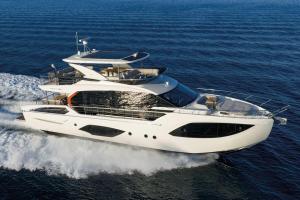
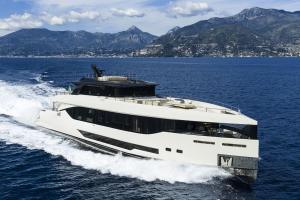
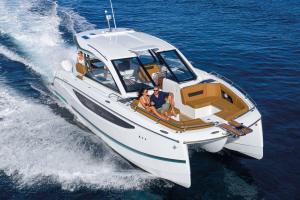
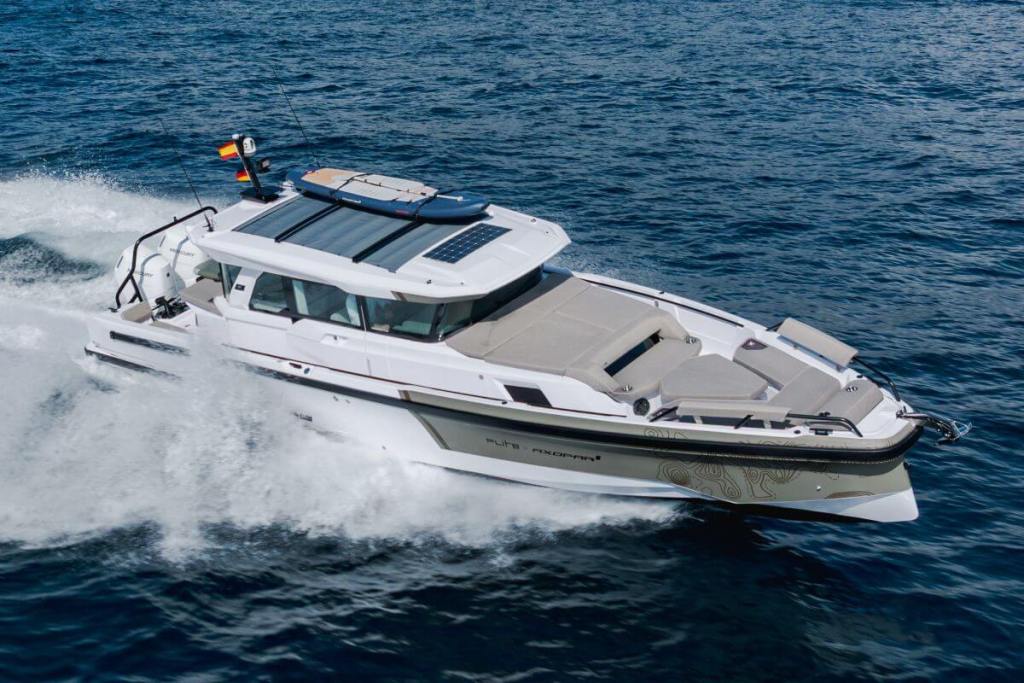
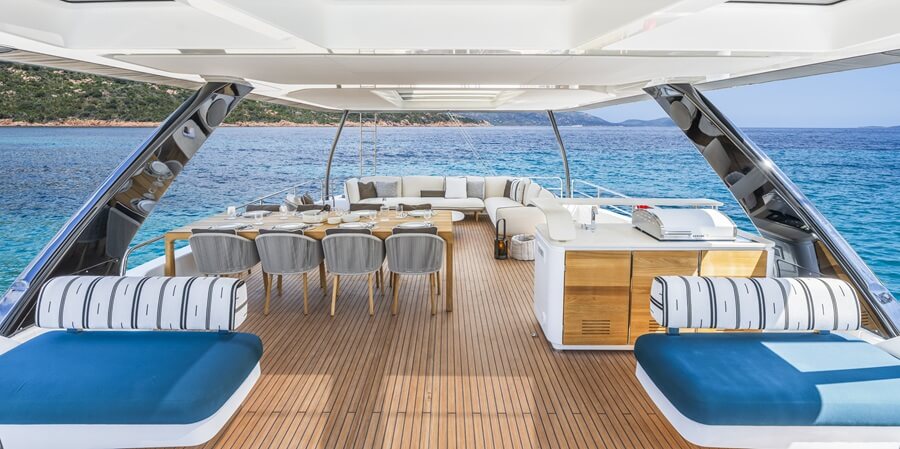
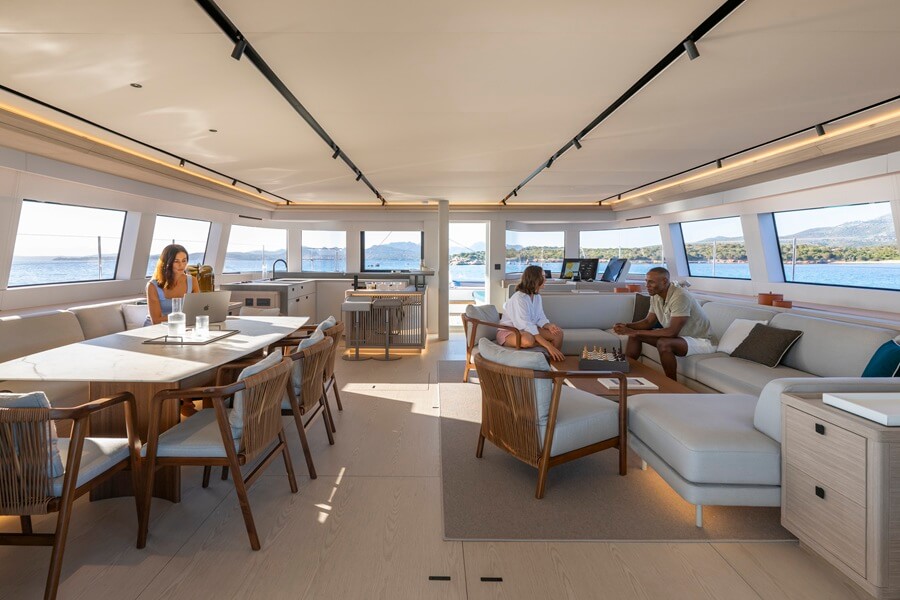
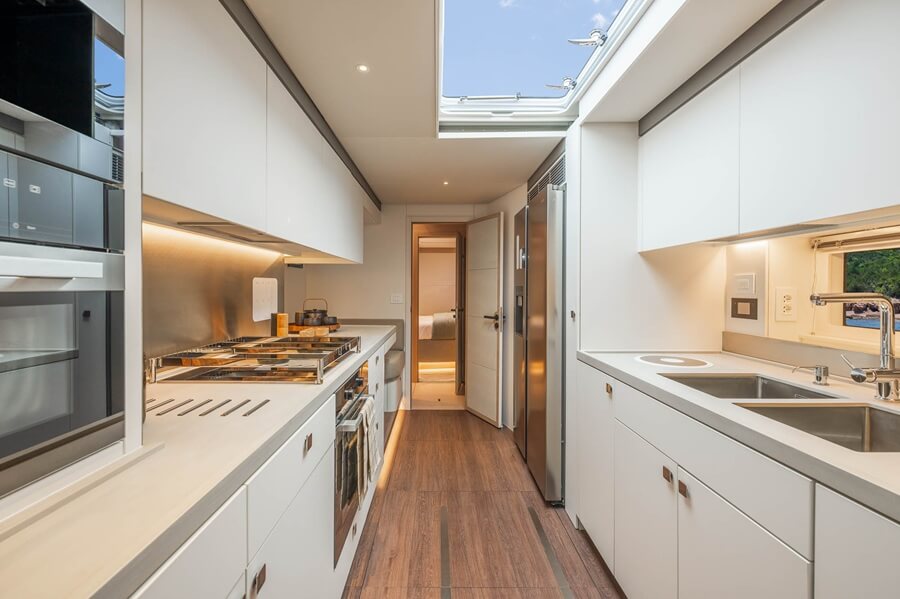
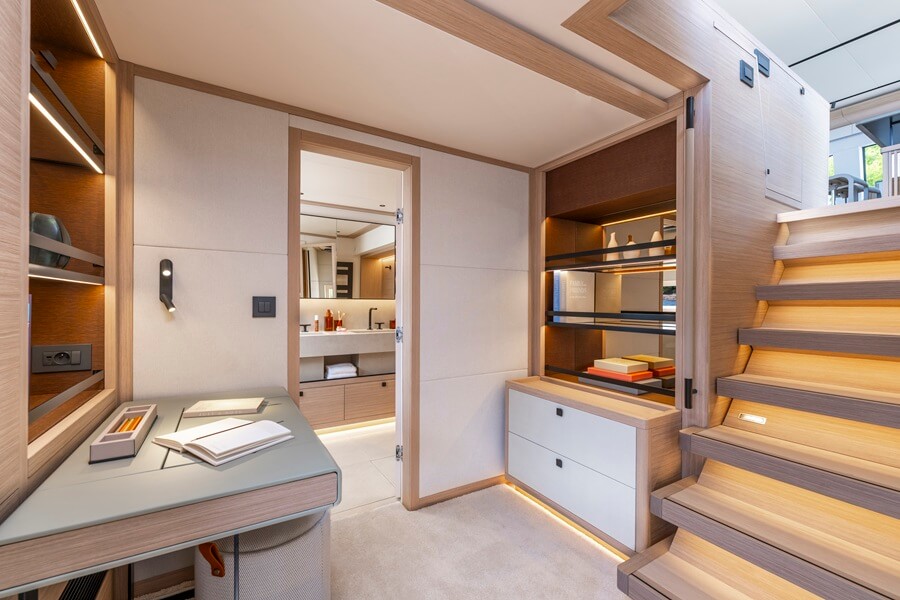
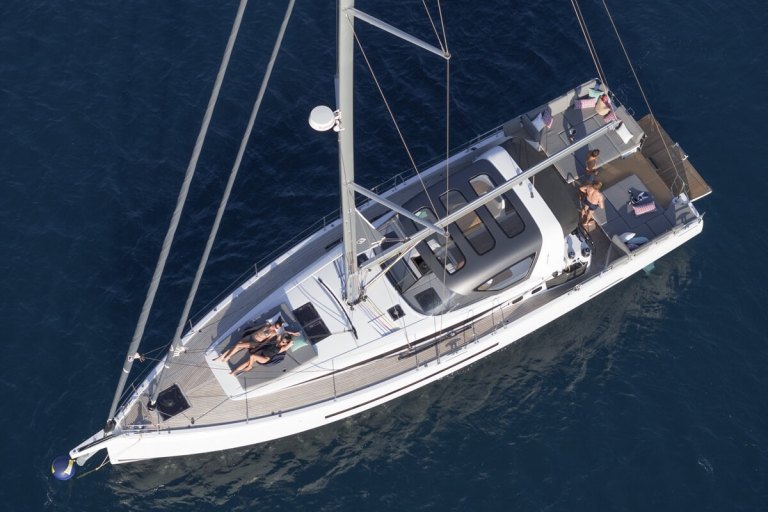
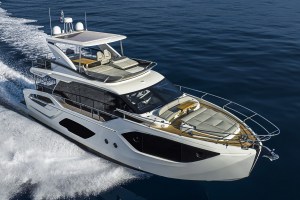
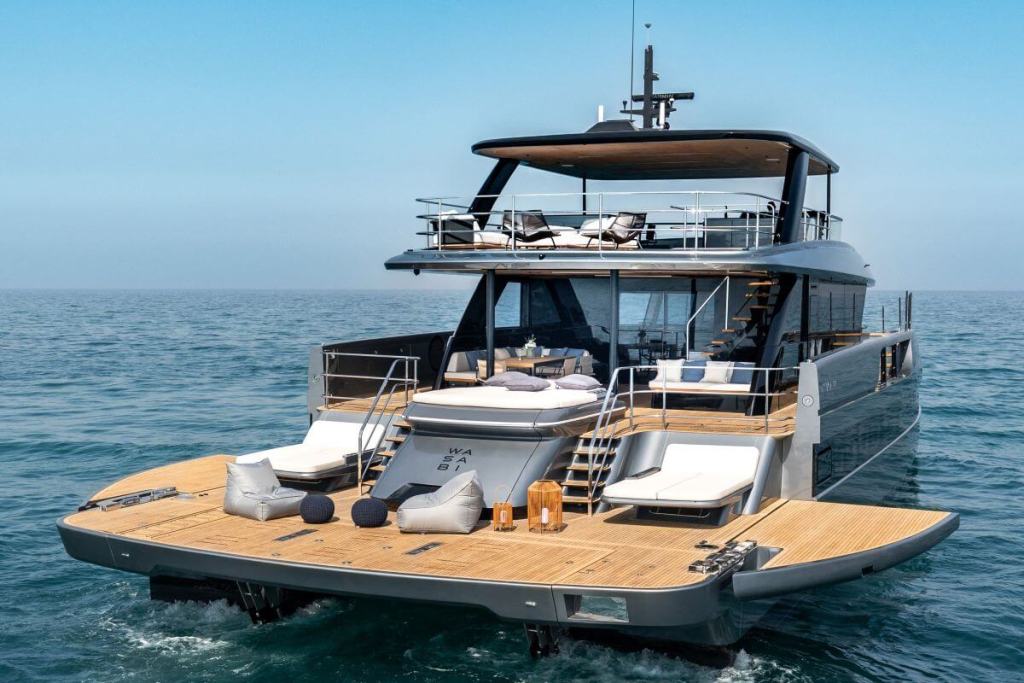
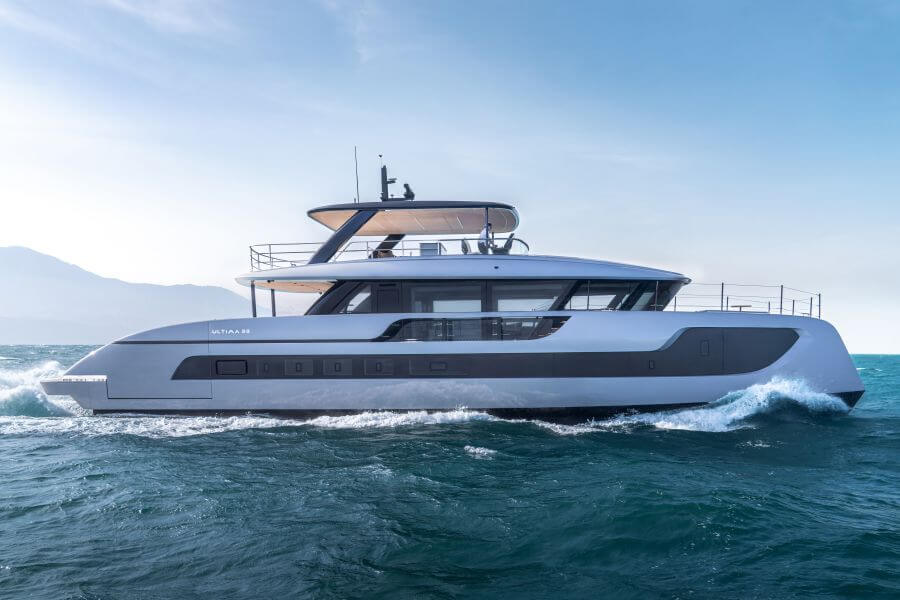
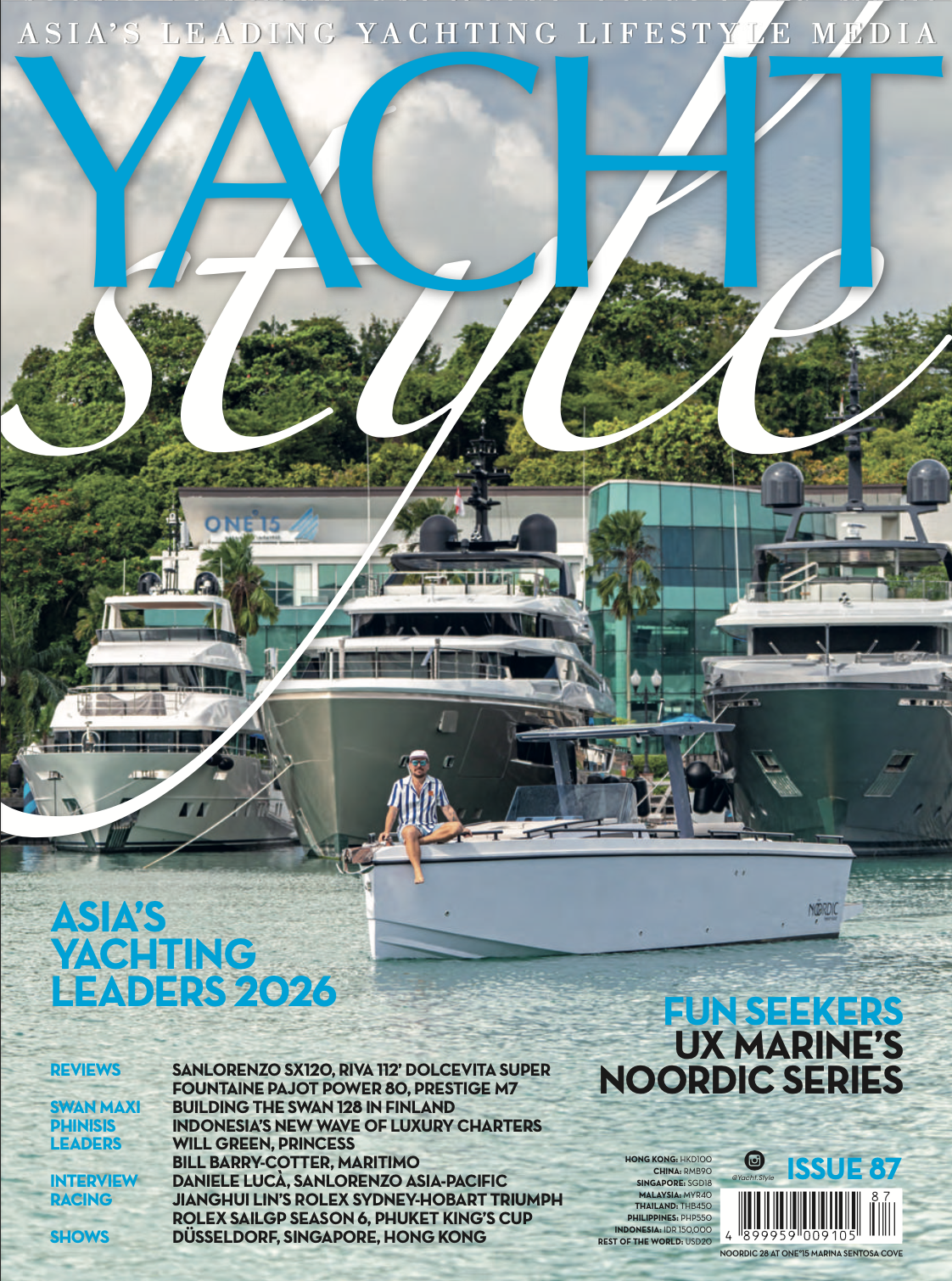
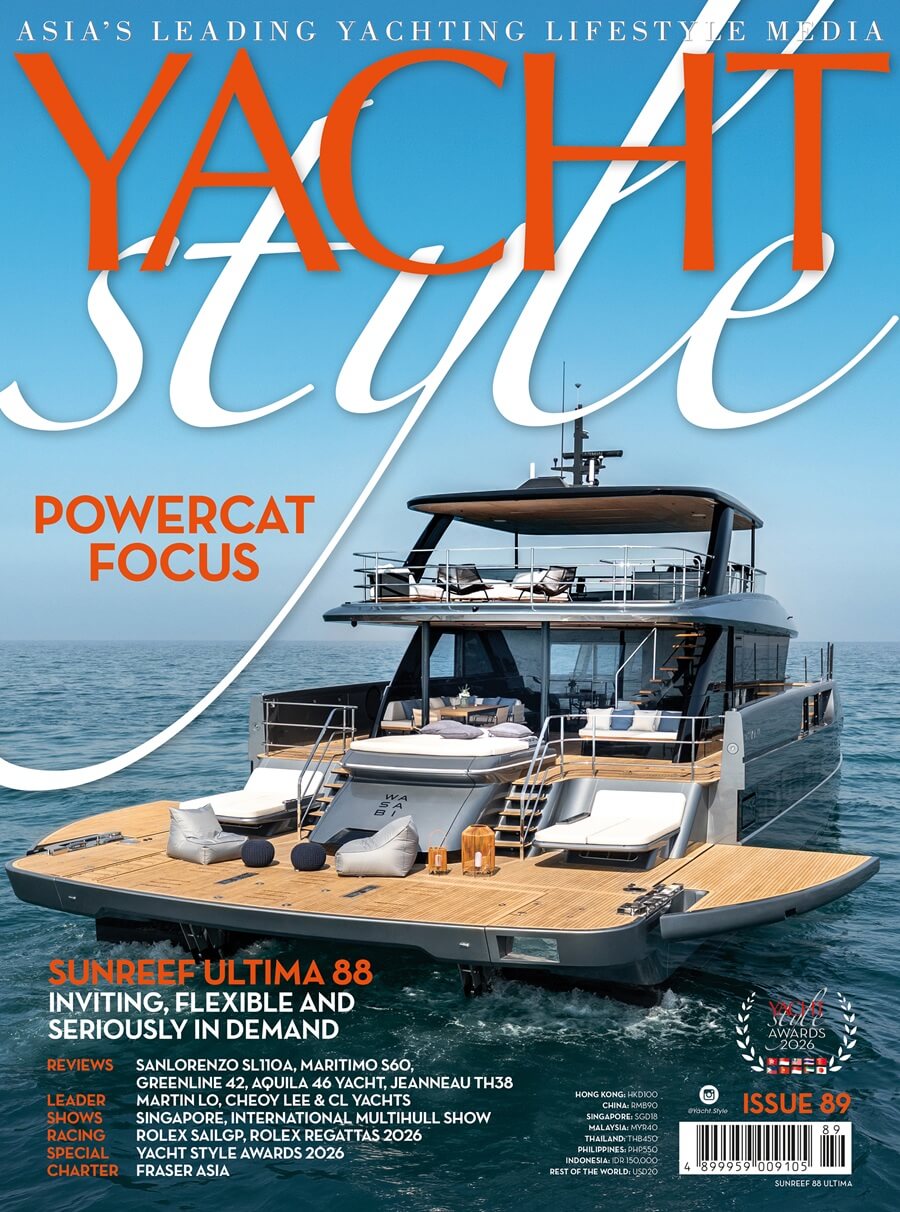
Yacht Style, Issue 89, powercat, third issue, 2026, Sunreef, Aquila, Jeanneau, Sanlorenzo, Maritimo, Greenline, Yacht Style Awards 2026, Martin Lo of CL Yachts, charter, Fraser Asia, Rolex, regattas, Hong Kong Yachting Association, Chairman, Tommy Ho, Singapore Yachting Festival
Read and download copy
Yacht Style, Issue 88
Read and download copy

Asia's leading yachting lifestyle media

More results...

Generic selectors
Exact matches only
Search in title
Search in content
Post Type Selectors
Yacht Style, Issue 89, powercat, third issue, 2026, Sunreef, Aquila, Jeanneau, Sanlorenzo, Maritimo, Greenline, Yacht Style Awards 2026, Martin Lo of CL Yachts, charter, Fraser Asia, Rolex, regattas, Hong Kong Yachting Association, Chairman, Tommy Ho, Singapore Yachting Festival
Read your copy

More results...

Generic selectors
Exact matches only
Search in title
Search in content
Post Type Selectors

More results...

Generic selectors
Exact matches only
Search in title
Search in content
Post Type Selectors

Reviews

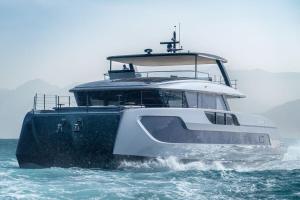
Maiora 36 Exuma: Speedy island explorer

Maiora 36 Exuma: Speedy island explorer

SHARE

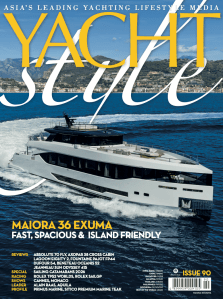
Cover star of Yacht Style Issue 90, Maiora’s 36 Exuma offers 295GT of high-speed luxury with alluring features like a covered pool, a secluded ‘Nest Deck’ and even netting in the bow like a sail catamaran.

Words: Julia Zaltzman; Photos: Leonardo Andreoni & Gionata Xerra

  •  
  •  
  •  
  •  
  •  
  •  
  •  


Maiora, 36 Exuma, Quartostile, Acube Design, Alessio Merciadri, Next Yacht Group, Stefania Delmiglio, Andrea Sartori, Matteo Broglia, Franco CaroneMaiora, 36 Exuma, Quartostile, Acube Design, Alessio Merciadri, Next Yacht Group, Stefania Delmiglio, Andrea Sartori, Matteo Broglia, Franco Carone

The 36 Exuma was a world premiere at Monaco Yacht Show 2025


For the owners of the first hull in Maiora’s 36 Exuma series, charter is not on the horizon. Their focus is on private cruising, which is what they’ve been doing since taking delivery in August 2025. Their itinerary has largely featured the Mediterranean, including the most intimate ports and shallow sea beds that the yacht’s 1.45m draft allows for.


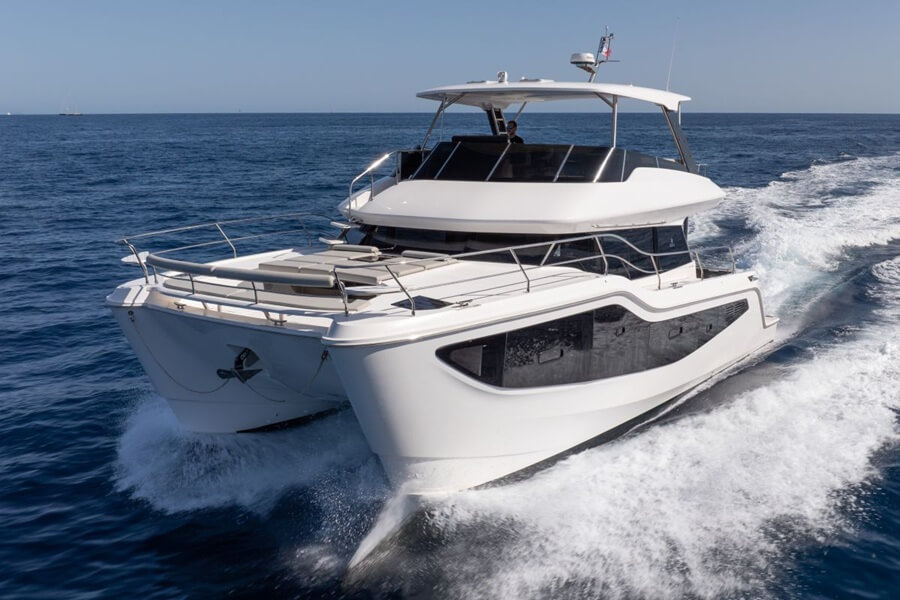
Powered by a triple waterjet propulsion system, the yacht’s zippy 33-knot top speed is another strong point.


However, “the real added value of this project is its interior volume”, says Alessio Merciadri, co-founder and Co-Chief Designer of Acube Design, which penned the interior of the 36.9m, 295GT motoryacht.


Maiora, 36 Exuma, Quartostile, Acube Design, Alessio Merciadri, Next Yacht Group, Stefania Delmiglio, Andrea Sartori, Matteo Broglia, Franco Carone

The 36 Exuma can reach 33 knots with three 2,000hp MAN V12 engines, two steerable waterjets and a central booster


According to Maiora, a brand of Next Yacht Group, the project had twin objectives: to bring the 36 Exuma in-line with the Italian yard’s new design direction for more sporty, dynamic, explorer-led yachts, and to increase onboard liveability and substantial bespoke options while keeping the yacht within the 300GT limit.


“At Next Yacht Group, we build around 19 units per year, allowing for significant customisation. We see ourselves as a true ‘yacht boutique’,” says Stefania Delmiglio, Chief Marketing and Communications Officer.


The 36 Exuma is a 36.9m, 295GT motoryacht topped by a ‘Nest Deck’


“Our focus is on delivering genuine customisation and uncompromising quality in every yacht we build. Rather than pursuing high production volumes, we are committed to creating highly personalised yachts that reflect each owner’s vision. Volume will never be our strength – craftsmanship, exclusivity, innovation and attention to detail are what define us.”


QUARTOSTILE DESIGN

At 1.91m longer than its predecessor, the award-winning 35 Exuma (four hulls delivered), the 36 Exuma benefits from a flush deck profile extension that stretches to a sharp-angled full-beam plumb bow penned in collaboration with Quartostile.


Open social areas include the beach club, cockpit, aft and fore upper deck, plus the crowning ‘Nest Deck’


“The full-beam bow posed a significant challenge when designing the yacht’s exterior,” says Andrea Sartori, one of three founding partners of the Turin-based design studio. “Defining the right balance between closed and open areas, and creating a new ‘size impression’ without compromising dynamism was key.”


The 36 Exuma was not conceived as a mere exercise in exterior styling but was “born from a desire to give shape to ideas and visions that we believe should define the design of a Maiora,” Sartori adds.


The profile is defined by a vertical, blade-like shape that tapers along the hull towards the multi-level aft beach area, where a large central sunpad and two elegant integrated teak-clad chaise longues are set into the aft bulwarks.


The beach club on the first Maiora 36 Exuma


Above the sunpad is a striking curved teak feature that links together the beach area, cockpit and saloon. It’s one of the hallmarks of the 36 Exuma, notes Sartori, adding that the stern area elongates the main deck like a cascading surface, while the chaise longues, like stones embedded into the architecture, offer exclusive moments of relaxation.


“With so much space available, we approached the layout with the same logic and expectations of a larger vessel,” he says. “This is why the arrangement follows the principles of bigger yachts.”


The cockpit on the first Maiora 36 Exuma


More seating is found on the raised aft cockpit, which leads into the main saloon via a sliding glass door that Maiora has coined the ‘Infinity Door’ system.


“The Infinity Door is one of the Maiora’s strongest features,” says Matteo Broglia, another Quartostile founding partner. “When it opens and disappears [into the bulwarks], the boundary between interior and exterior simply vanishes.”


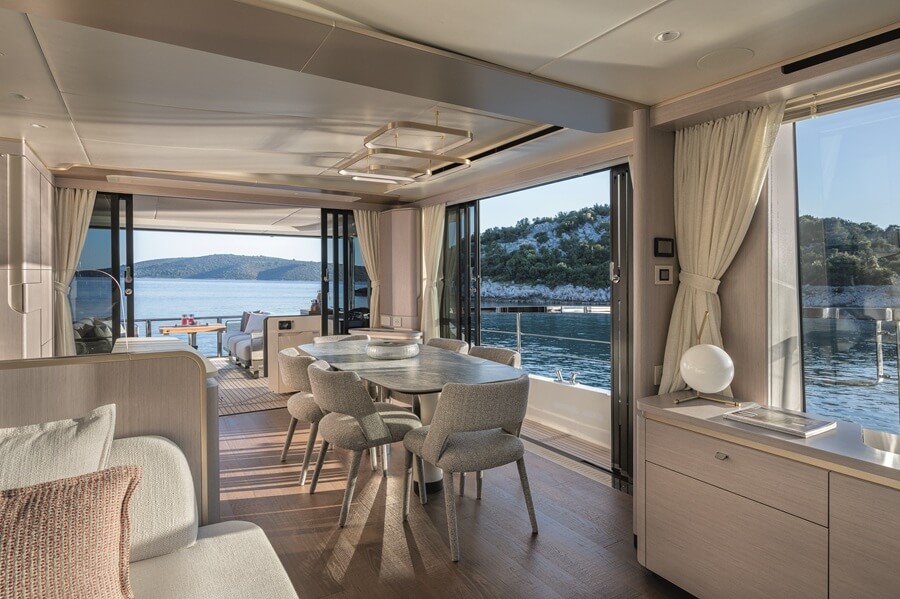
Forward view of the main-deck saloon, which has a mirror on the forward wall showing the cockpit’s furniture and sea view


The Italian studio worked with large, continuous glazing and sliding doors that integrate surfaces without interrupting the exterior profile. Light penetrates deeply, enhancing spaces and creating a sense of openness.


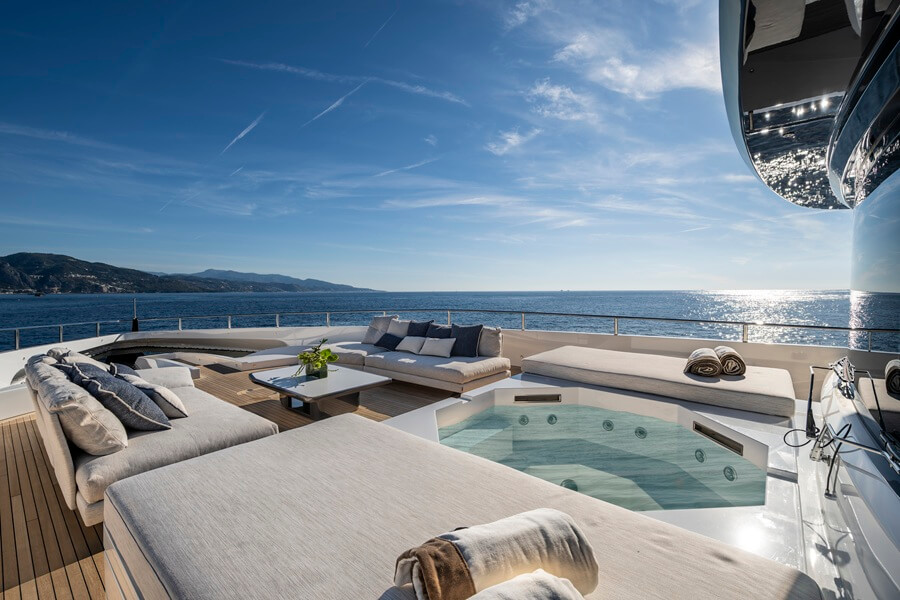
Other exterior areas of note include the forward upper deck, which features a coverable pool, comfortable sofas and a relaxation netting area – a feature commonly found aboard sailing catamarans but used on the Maiora to keep within the 300GT threshold.


Forward on the upper deck, fittings include a pool that can be covered


“The voids had to be usable space,” explains Franco Carone, another of Quartostile’s founding partners. “The net maintains liveability and allows natural light into the owner’s suite below.”


ACUBE INTERIORS

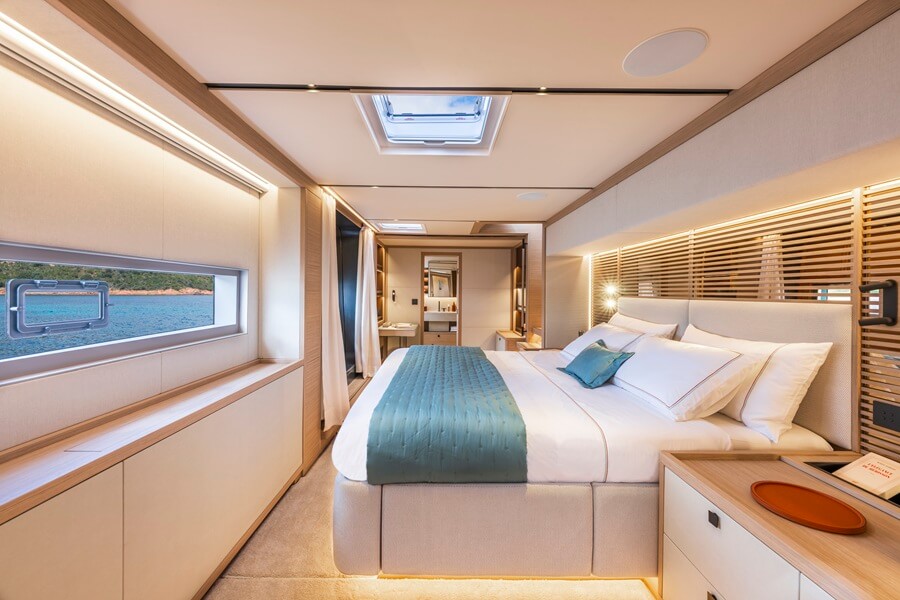
The layout in the full-beam owner’s suite, forward on the main deck, pivots around natural light and sea views. A case in point is the owner’s headboard, which features a large, organic opening that channels light directly into the master bathroom behind, where a central shower is flanked by two sinks and two toilets.


Maiora, 36 Exuma, Quartostile, Acube Design, Alessio Merciadri, Next Yacht Group, Stefania Delmiglio, Andrea Sartori, Matteo Broglia, Franco Carone

The master suite includes an office area that leads to the full-beam bedroom


There’s also a private study by the entrance, a walk-in wardrobe and large windows on three sides with views onto the foredeck. Forward vistas in the suite are partially obstructed by fixed stairs that lead from the bridge deck to the foredeck mooring area, although the second hull (launched in June 2026) features a retractable stairway that can ‘roll up’, so giving the owners a clear view from the bed.


Previous Exuma models included a side terrace door for owner access to the bow. However, the owners of the first 36 Exuma – who stepped into the project just six months after the yacht’s build commenced – decided against this, preferring to keep the suite as a cosy indoor sanctuary.


Starboard view of the full-beam master suite, which has magnificent views forward and on both sides; the large bathroom is aft of the bed


The heart of onboard life centres around the protected, climate-controlled ‘alfresco’ skylounge on the upper deck. It’s also equipped with Maiora’s Infinity Doors, fully retractable side windows, teak parquet flooring and a flush threshold.


Whereas the 35 Exuma featured a retractable roof in the skylounge, the first 36 Exuma owners elected to add a pocket sundeck, described by Maiora as a ‘Nest Deck’, which features large sunpads and a 360-degree view. It’s an open yet intimate space and the most private area onboard.


Forward view of the upper-deck skylounge, which also has a forward mirror


Several elements were developed specifically for hull one, including bespoke recessed furniture handles to avoid guests snagging clothes when passing, and a dumb waiter in place of a central double staircase. The remaining single staircase is designed with wide openings along the handrails so light can pass through.


“We treated the 36 Exuma as if it were a 45m yacht,” says Merciadri of Acube Design. “The circulation between spaces is therefore clear, generous and intuitive, reflecting the comfort and usability normally found on yachts several metres longer.”


One of the key benefits of the 36 Exuma’s extra length is the inclusion of two aft tender garages that enable owners to carry a serious collection of toys onboard.


The ‘Nest Deck’, a private haven above the upper-deck skylounge


One transversal garage can accommodate a 6.25m tender, and an aft garage comfortably houses water toys and a jet-ski plus a crane. Both are strategically positioned beneath the raised cockpit to reduce noise transmission between the engine room and guest areas.


In parallel, the extra space provided by the vertical bow has been used for generous crew cabins, typically accommodating five crew. On hull one, the captain shares his cabin with his wife, the chief stewardess, so increasing the total to six.


The Maiora 36 Exuma’s generous volumes includes proper service areas and abundant storage. They’re yet more strings in the yacht’s bow, underpinning two elements that are always appreciated in both private cruising and charter operations, according to Merciadri.


“It creates a layout that adapts naturally to different lifestyles, while maintaining a high standard of comfort for everyone on board.”

maiora.it

nextyachtgroup.com


SHARE

Maiora 36 Exuma: Speedy island explorer Read More »
TH38 leads Jeanneau’s twin-hull charge

TH38 leads Jeanneau’s twin-hull charge

SHARE

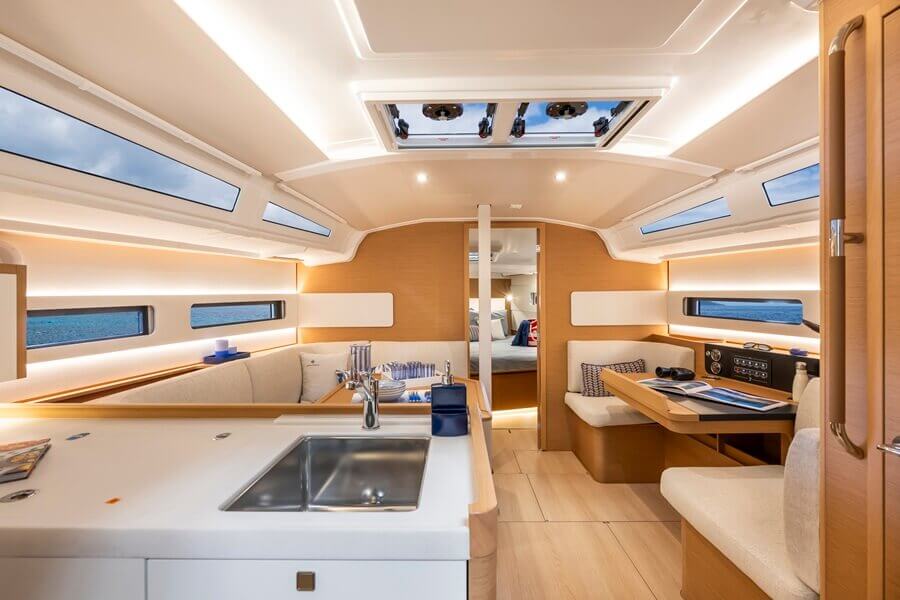
With Jeanneau moving into the multihull segment with the TH series, Yacht Style asks superyacht expert Katia Damborsky (@TheYachtWriter) to jump on the TH38 for a fun-filled spin around Cannes.
Words: Katia Damborsky; Photos Jeanneau

  •  
  •  
  •  
  •  
  •  
  •  
  •  

Jeanneau, TH, TH33, TH38, twin hull, power catamaran, powercat, Groupe Beneteau, Katia Damborsky, Cannes, Lagoon, Excess, Prestige, Garroni Design, Marc Lombard

The TH38 features exterior design by Italy’s Garroni Design


Groupe Beneteau used to have one multihull brand. It now has four. Having developed Lagoon into the world leader in cruising catamarans and a builder of large power catamarans, Groupe Beneteau added the Excess brand of twin-helm sailing catamarans in 2019.


However, the French-owned conglomerate then made a major move into the heart of the powercat sector with a two-pronged approach. In 2022, the first models from Prestige’s M-Line of flybridge multihull motoryachts and Four Winns’ TH series of open cruisers debuted at the Cannes Yachting Festival, with Italy’s Garroni Design handling the exterior styling for both.


Four Winns followed up on its first model, the TH36, by debuting both the TH33 and TH38 at the Cannes show in September 2025. However, late last year, the American brand’s twin-hull range was repositioned within the Groupe Beneteau family, under Jeanneau, to better reach global markets including Asia.


Jeanneau, TH, TH33, TH38, twin hull, power catamaran, powercat, Groupe Beneteau, Katia Damborsky, Cannes, Lagoon, Excess, Prestige, Garroni Design, Marc Lombard

France’s Marc Lombard Yacht Design Group handled naval architecture


“The TH series naturally aligns with Jeanneau and its sporty, fun image, long embodied by the Cap Camarat series and presented in a more premium offering by the DB Yachts series of dayboats,” says Tanguy Tertrais, Jeanneau’s Asia-Pacific Sales Director.


“Being under Jeanneau allows the TH line to reach a far broader base of customers, especially outside North America. The TH range now enjoys Jeanneau’s global dealer footprint of over 400 sales points, which matters to owners considering service coverage and resale. Also, plenty of Jeanneau owners were looking for a multihull platform and the TH line is the perfect solution.”


FIRST IMPRESSIONS

I’m here in Cannes to test out the TH38, the larger weekender counterpart to the TH33’s dayboat-focused offering. Grey skies, jumpy seas and a low mist greet visitors for the sea trials of new models by Jeanneau and other Groupe Beneteau brands. The horizon is doing that unnerving thing where it blends with the sea, and it’s spitting intermittently.


Jeanneau, TH, TH33, TH38, twin hull, power catamaran, powercat, Groupe Beneteau, Katia Damborsky, Cannes, Lagoon, Excess, Prestige, Garroni Design, Marc Lombard

The bow lounge is accessed by an opening central gate and folding windscreen


Boats line up along the quay, waiting to welcome journalists. I feel a twinge of anxiety, which is heightened when a friend and fellow journalist embraces me and asks me squarely: “What are you doing here?”


What, indeed? My specialty is 80ft and above, and the TH38 sits well below that threshold. I’m accustomed to yachts that are usually skippered, as opposed to owner-operated. This is an opportunity for me to get behind the helm and see how a 38ft powercat designed for coastal jaunts and island-hops really handles.


Before I even step on board, I size up the TH38 from multiple angles while she waits patiently in port. The silhouette is streamlined, designed to blend with the marine environment. The bulkiness that often comes with catamarans has been countered with a sharp strip of glazing running from midships forward, plus a raked windshield and flared line along the roof that give the boat a sporty appeal.


The aft deck is shown with the two L-shaped sofas slid to the sides, creating an open corridor to the swim platform


I’m among a group of journalists who gamely hop on. As we motor out into the choppy bay of Cannes, my first impression is that this is a yacht builder that knows what it’s doing when producing a family-friendly yacht.


The TH38 is focused on affordability, accessibility and safety. Jérôme Dufour, Jeanneau’s Powerboat Product Manager, calls the TH38 a “boat for everyone” with a “short learning curve” that prioritises ease of use above almost all else. “If you start having loads of systems, you start to lose the momentum,” he says.


TRANSFORMER COCKPIT

My second impression is that it’s a well-considered boat. At the back is a 1.5m swim platform that juts out between the twin outboard engines. The platform includes a hatch and integrated ladder just beneath, a feat which would be harder (if not impossible) to achieve on a monohull. It adds easy water access that proves this is geared towards fun and families.


Set between the two outboard engines, the aft platform includes side rails, a hatch and integrated swim ladder


The cockpit is dominated by twin corner sofas, which can slide sideways to either close together or sit far apart, spanning the yacht’s near-15ft beam.


As each L-shaped sofa has an adjoining table, the flexibility effectively creates two separate lounging set-ups: a spacious, two-sofa zone with a clear corridor from the swim platform to the helm, or an intimate, three-sided dining area flanked by circulation on both sides.


If neither of those options take your fancy, you can also transform the dining set-up to a sunpad by lowering the tables and covering them with cushions.


Each L-shaped sofa and attached table can slide together to create a three-sided dining area


“Luxury comes from space and modularity,” Dufour says. “By having everything flexible, you create different areas. You can create the lifestyle that people are looking for.”


He shows me how easy it is to unlock and lock the furniture into place. It’s intuitive, with nuts and bolts that work predictably and easily.


FUN AT THE WHEEL

As we cruise into the open sea, I decide it’s time for me to take over the controls. The handling is good: responsive and easy to understand. Some other boats in the Groupe Beneteau family have opted for gadgets and gizmos to support joystick control and manoeuvrability, but this boat keeps it back-to-basics with a single helm and good visibility.


Katia Damborsky at the wheel


I get her up to just below 31 knots, with minimal thumping and thudding. The smooth ride of the TH38 is credit to Marc Lombard Yacht Design Group, which handled the naval architecture of both current TH models. I do a wide sweeping arc over the murky blue water and enjoy the feeling of the flat turn, with the twin hulls keeping us from heeling too much.


“Jeanneau was designed for the family,” Dufour reminds me when I point out how flat the turn is. He nods to the high gunwales and the sturdy hardtop that keep you feeling safely cocooned inside the boat.


Checking out the rest of the boat, I find a midships counter space with a wet bar, fridge, sink and grill. I’m told 14 people can comfortably gather on the boat. Between the cockpit, midships area and the bow lounge, I can believe that.


The en-suite guest cabin to starboard (pictured) is mirrored in the port hull


Below deck, there are two twin cabins, both with en-suite bathrooms and both with enough storage packed in that you could spend more than a night or two onboard.


“We’re selling most of these for the exterior lifestyle, but the interior is also really nicely done,” says Dufour, showing me a cubby in the step access to one of the cabins.


The en-suite cabins to starboard (above) and port (below)


Protecting the helm, the three-piece windshield is large and connects with the hardtop. However, the boat can also be offered with a shorter windshield that stops short of the roof, allowing for breeze through your hair.


BOW LOUNGE SUPREME

To offer access to the foredeck, the central windscreen folds to port and a low door is opened, while even a central flap in the hardtop can be lifted. I quickly realise that the bow is my lounge space of choice.


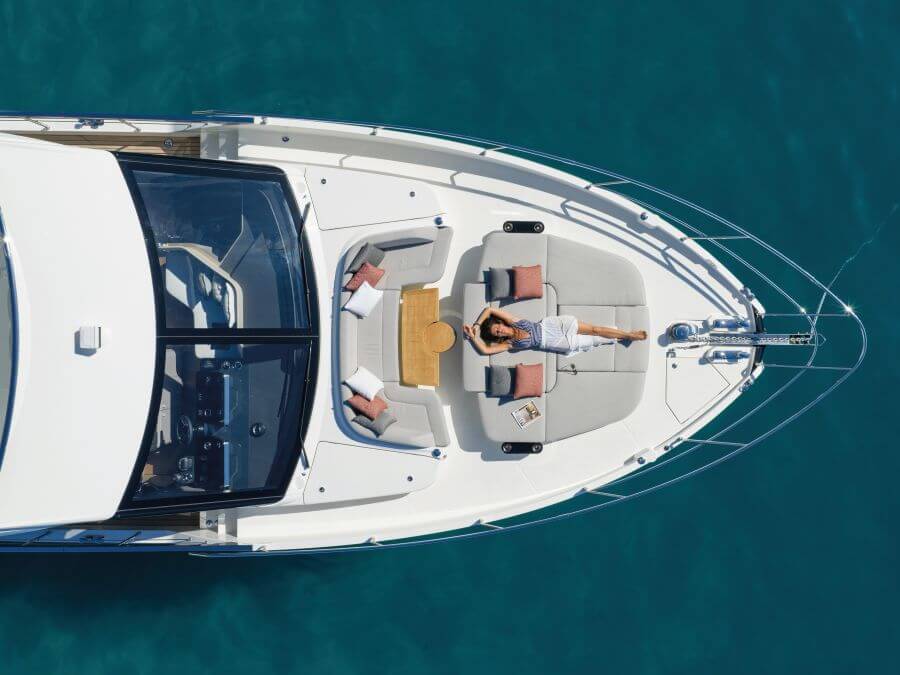
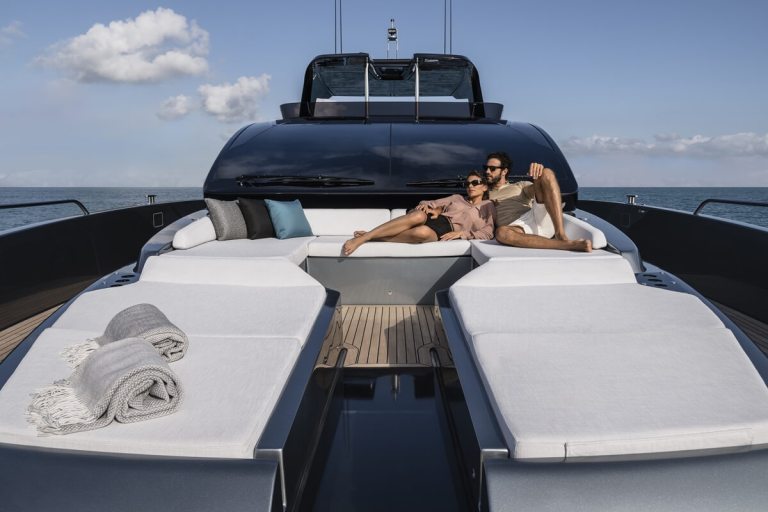
The bow lounge has drinks holders and speakers integrated into facing C-shaped sofas that offer wraparound seating


The area is surrounded by two symmetrical C-shaped sofas, and includes integrated drinks holders and audio speakers, as well as a finishing that reminds me of my beloved superyachts. Again, with a couple of infills, this whole area can be switched to a sunpad.


It’s here that I park myself for the last bit of the sea trial, listening to the twin 350hp Mercury outboards doing their thing at about 3,500rpm for a speed of 17 knots.


The bow is my favourite area on most catamarans. It sits high above the water, so if the sea conditions are smooth enough, you feel like you’re flying. The sea isn’t particularly smooth today, but somehow the TH38 manages to glide anyway.


I’m being hypnotised by the sea when Dufour joins me at the bow. Sitting opposite me, he describes the TH38 as a boat that’s designed to be easy to operate.


“Jeanneau focuses on making boats better, so boaters can focus on having more fun on the water,” he adds. My interest has certainly been piqued, with the TH38 proving a winning boat that ticks all the boxes for a fun day or weekend at sea.

jeanneau.com 


SHARE

TH38 leads Jeanneau’s twin-hull charge Read More »
Greenline Yachts, Slovenia, Marco Casali, Vladimir Zinchenko, Greenline 42, options, Boot Düsseldorf, Alessandro Lorenzon

Greenline 42 offers more power, more options

Greenline 42 offers more power, more options

SHARE

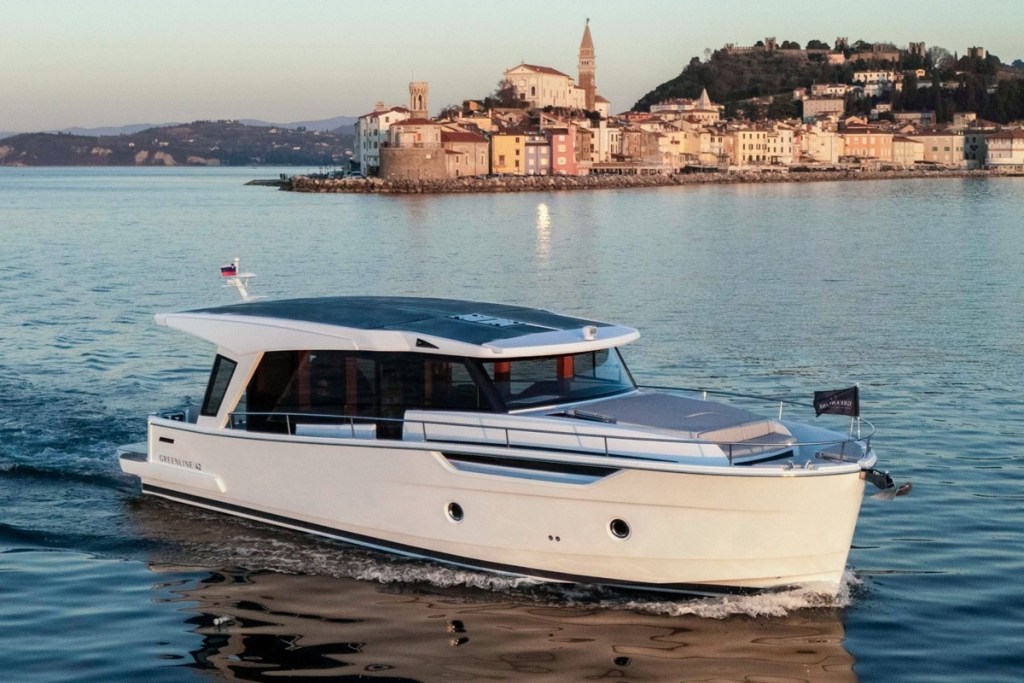
Slovenia’s Greenline Yachts has expanded its range of hybrid-option models with the Marco Casali-designed Greenline 42, a world premiere in 2026 and the ‘Responsible Yachting’ shipyard’s most option-rich offering to date.
Words: Olivia Michel; Photos: Greenline Yachts

  •  
  •  
  •  
  •  
  •  
  •  
  •  


The hybrid option includes two 23kW electric motors, up to 4.5kW of solar energy from 10 photovoltaic panels and up to six 11kWh lithium batteries


Vladimir Zinchenko, founder, owner and CEO of Slovenian boatbuilder Greenline Yachts, puts it simply. “Fantastic design has no shelf life. We don’t seek to constantly update or replace our models. Therefore, when we do finally introduce a new boat, it’s no light decision.”


Zinchenko is talking about the new Greenline 42, introduced to the world at Boot Düsseldorf in Germany in January 2026. The new 44ft model arrived on the scene three years after Greenline last expanded its lineup of hybrid motoryachts with the addition of the flagship 58 Fly in 2023. According to Greenline Yachts, the Greenline 42 has taken “several years” to complete, from initial concept to launch.


It originally began as a project to revamp the Greenline 40, one of the longest-standing models in the range and which has sold hundreds of units since its launch in 2012. However, the new model eventually took on a life of its own, becoming the new Greenline 42.


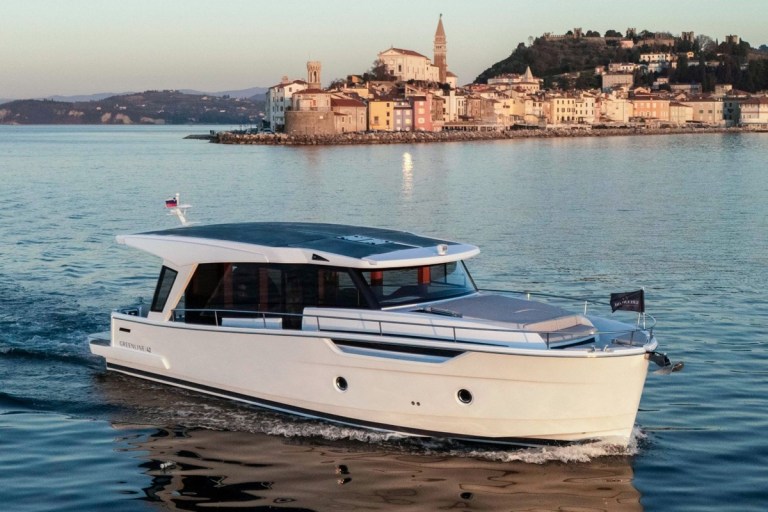
 The Greenline 42 can reach 25 knots with two 250hp Yanmar diesel engines


Zinchenko says: “With the feedback we gathered from our existing owners and commercial prospects, we began to see that the Greenline 40 still had a hugely loyal following. There remain many good reasons for people to buy that boat. So, I decided to add a new model rather than replace an established one.”


Carrying the tagline of an “icon, redefined”, the Greenline 42 was developed from a brief informed primarily by owner feedback.


Alessandro Lorenzon, Greenline Yachts’ Global Business Director and Chief Experience Officer, explains: “When we looked at owners’ experiences, a few things became clear. They wanted more cockpit space for relaxing, higher speeds under power and a more modern design language. The new Greenline 42 supplies all that and more.”


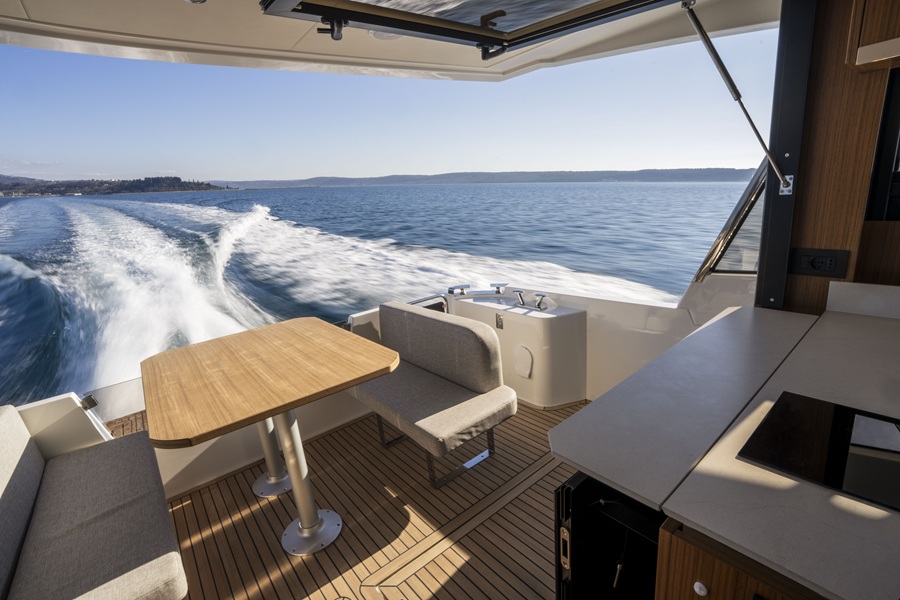
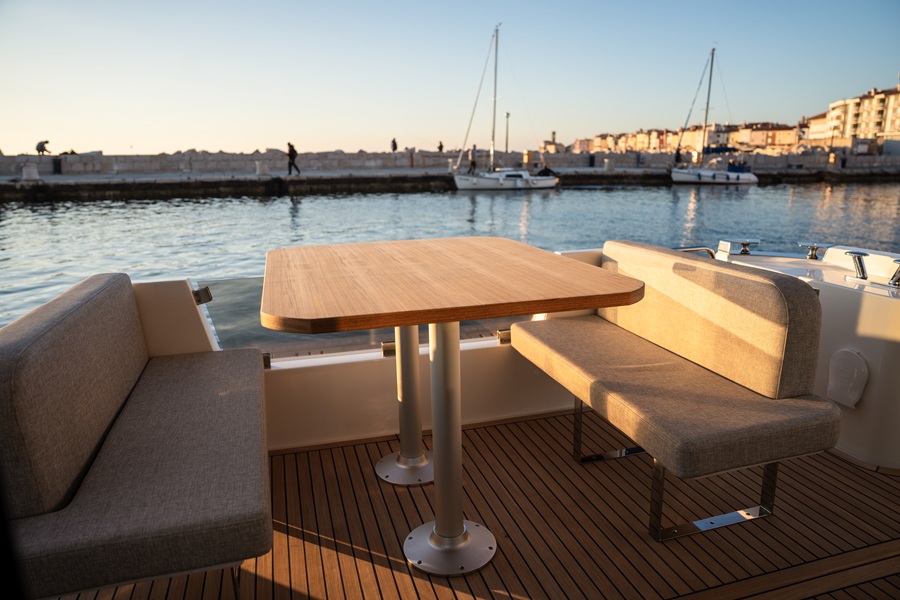
Cockpit choices include a table and sofas (pictured) or a clean aft deck and fold-down platform


The Category B yacht has emerged as a happy marriage between the 40 and 45 models, a new 13.5m-long vessel that takes the best features from both and neatly fills the gap between its smaller and bigger sisters.


GREENER THAN EVER

Since Greenline Yachts launched its first hybrid vessel in 2008, the brand has been committed to helping its owners enjoy yachting in a sustainable way. Greenline claims to be the only brand worldwide to offer conventional, hybrid or electric drive options across its entire fleet. Its full range of vessels – even the flybridge models – sport a characteristic, streamlined roof specifically designed to accommodate solar panels.


The Greenline 42 carries the most solar panels in the fleet, fitting 10 450W photovoltaic panels flush mounted on the coachroof. In total, the solar coverage delivers up to 4.5kW of energy, enough to run all onboard appliances.


A flip-up galley window and sliding door can both open


Surplus energy is diverted into the battery bank, with two 11kWh batteries offered as standard with the hybrid option. The total output of 22kWh can be upgraded to as much as 66kWh with four additional batteries. With this technology, the Greenline 42 can run on silent electric power for 48 hours or more, even with the air-conditioning running.


Lorenzon says: “Thanks to technological improvements, we were able to integrate more solar panels into a yacht of this size than ever before, matching the total solar output of the 58 Fly, despite being significantly smaller.” He adds that with this new design, “the Greenline 42 maximises onboard renewable energy without compromising space”.


The hull design of the Greenline 42, rethought by MICAD, has also been refined to reduce drag underway while also increasing stability. This optimisation, combined with two 250hp Yanmar diesel engines, allows the 42 to hit top speeds of 25 knots, which is three knots faster than the 40.


Greenline Yachts, Slovenia, Marco Casali, Vladimir Zinchenko, Greenline 42, options, Boot Düsseldorf, Alessandro Lorenzon

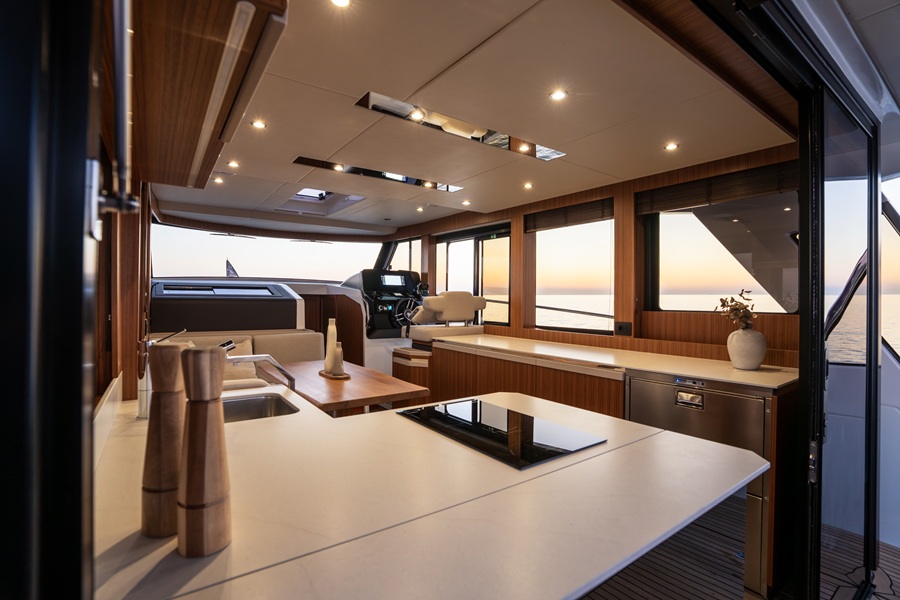
The aft galley connects the covered outdoor area with the indoors


The new model also features Greenline’s proprietary H-Drive technology, with two powerful 23kW electric motors able to power the boat silently up to 20nm at a speed of five knots.


ITALIAN DESIGN

An upgraded design was just as important as improving the performance on the Greenline 42. Marco Casali of the Too Design studio, a recurring partner on Greenline projects, returned once again to add Italian flair to the project, having previously collaborated on the interiors of the Greenline 45 and overseen the full design of the Greenline 58 (available in Fly and Coupe versions).


“Marco Casali was a natural choice for the Greenline 42 project,” Lorenzon notes. “He was already deeply familiar with our design philosophy, making him the perfect fit to shape the new model.”


Greenline Yachts, Slovenia, Marco Casali, Vladimir Zinchenko, Greenline 42, options, Boot Düsseldorf, Alessandro Lorenzon

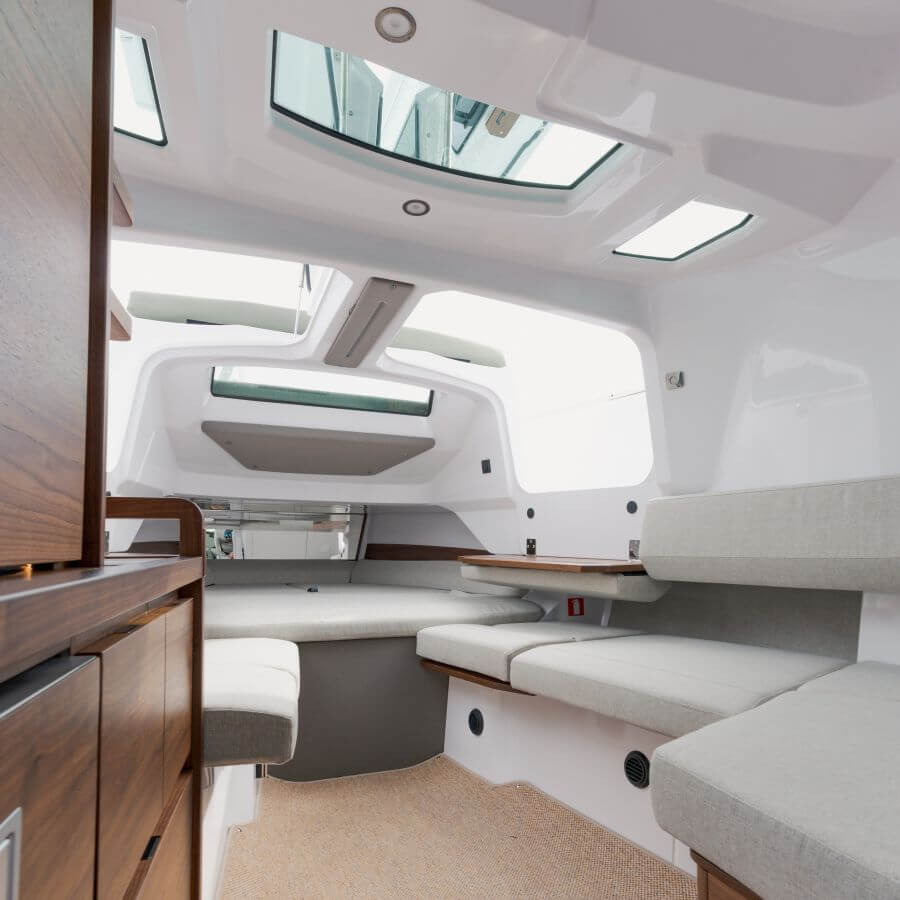
The open L-shaped galley and L-shaped dinette face either a cabinet (pictured) or a second sofa to starboard


Many yachts boast of a ‘seamless’ connection with the sea, but rarely is this so well encapsulated as on the Greenline 42. While the modification options are abundant, the principal layout of the main deck runs smoothly across a single level from the helm station, complete with its own climate control dashboard, through to the saloon midships then galley and cockpit aft.


With the option to fully open the access between the galley and cockpit, as well as automatic sliding windows for further ventilation, the entertaining space can be completely opened to the sea breeze to enjoy a truly indoor-outdoor experience. An additional lounge at the bow further expands alfresco entertaining options.


Inside, generous headroom, ample storage and panoramic windows ensure a light, airy and uncluttered interior. The interior design also keeps the focus on the great outdoors with subtle styling built around a natural colour palette and renewable materials, with owners able to choose a ‘honey teak’ or ‘modern oak’ finish.


The starboard cabinet includes a pop-up TV, while a sliding door by the helm allows for a through breeze


Greenline specifies that Casali concentrated on “creating refined shapes and living spaces rather than using expensive, exotic materials” in his styling of the Greenline 42.


“With the new Greenline 42, there was a tightrope to walk,” Casali says. “We wanted to rework the Greenline 40 without giving the sense that everything was ‘new’. There was a big focus on the forms you see around the boat, so we have avoided curved cabinetry in favour of more linear edges. This echoes the masculine profiles seen in the cutaway bulwarks and the coachroof.”


OPTIONS IN AND OUT

Looking beyond performance, the Greenline 42 is also a frontrunner within the range as the brand’s “most customisable model ever”. Although the exterior is still distinctly Greenline, there are more options than on other models.


Greenline Yachts, Slovenia, Marco Casali, Vladimir Zinchenko, Greenline 42, options, Boot Düsseldorf, Alessandro Lorenzon

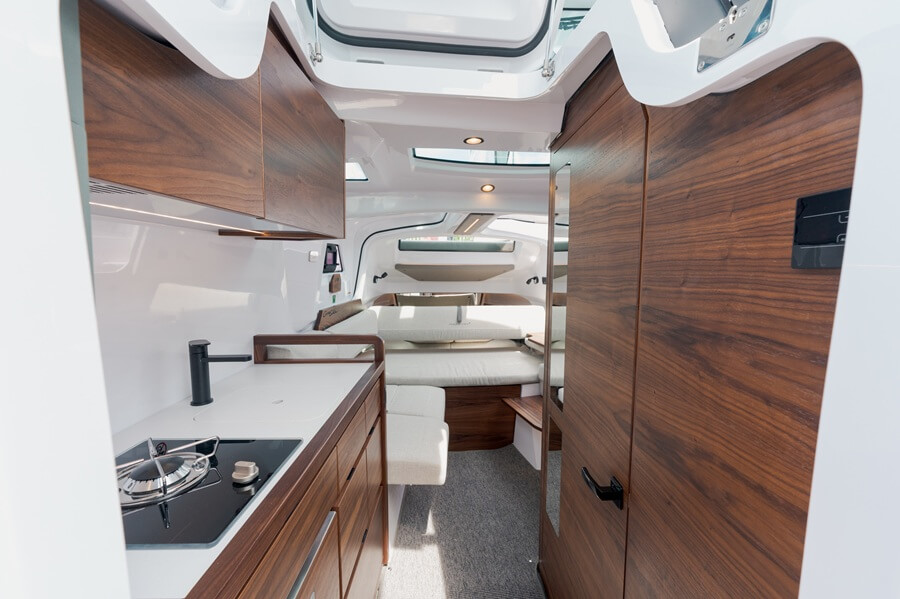
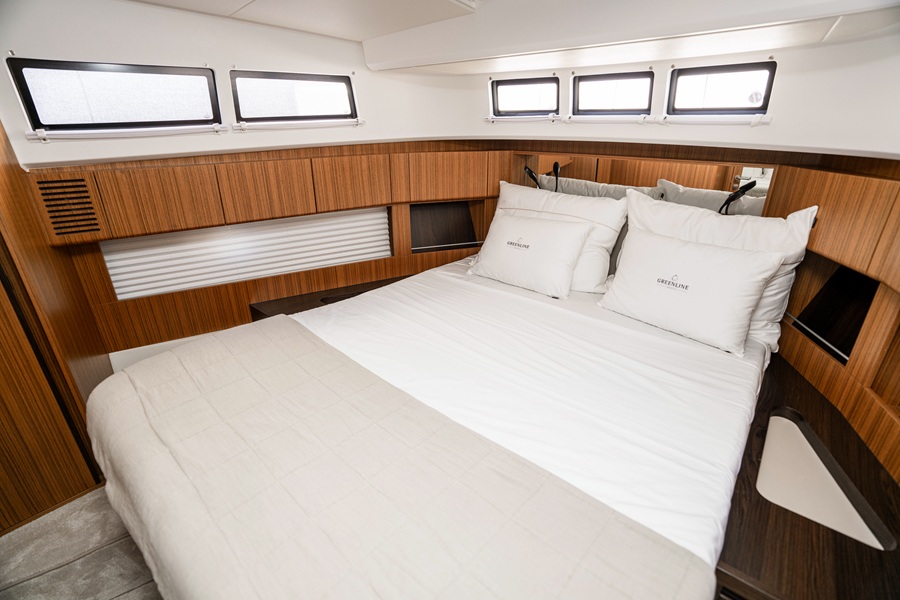
The master suite is forward and can include a desk or walk-in wardrobe instead of a second bathroom


For the cockpit, owners can opt for a four-seater table and a hydraulic aft platform, or a fold-down swim platform and a clear aft deck offering open space for sunbathing and lounging.


Casali has a favourite: “I’m in love with the possibilities offered by the connection between the cockpit and the galley-saloon area. My favourite one is with a big table related to the open galley.”


Other options for the main deck include adding an extra fridge or freezer in the galley, a second sofa in the saloon, or an additional drinks table in the bow lounge. Either way, a fully integrated pop-up TV to starboard can be hidden or deployed in an instant.


Greenline Yachts, Slovenia, Marco Casali, Vladimir Zinchenko, Greenline 42, options, Boot Düsseldorf, Alessandro Lorenzon

Guest cabin to port


Below deck, there’s a master cabin forward and a twin cabin to port. Owners can choose between offering a second bathroom with en-suite access from the guest cabin or expanding the en-suite master cabin with a walk-in wardrobe or vanity table.


MADE TO LAST

The new design of Greenline’s latest model is already proving popular, with the shipyard confirming half-a-dozen sales to owners across Europe as well as “great interest from the Asian market”. Going forward, Greenline hopes to deliver about two units per month of the new model.


Greenline Yachts, Slovenia, Marco Casali, Vladimir Zinchenko, Greenline 42, options, Boot Düsseldorf, Alessandro Lorenzon

The starboard bathroom has access from the master suite and hallway


The early demand for the Greenline 42 rewards its customisable nature and what Lorenzon describes as the “longevity of our designs”.


As Zinchenko puts it, the Greenline 42 is not simply a new-fangled model. It’s an amalgamation of research and feedback packed into a form designed to last for the long-term.


“Timeless, long-lived design is a key part of our ‘Responsible Yachting’ commitment,” Zinchenko says. “You can be sure that the new Greenline 42 has absorbed every inch of our know-how and will provide a reference in the market for decades to come.”

greenlinehybrid.com


SHARE

Greenline 42 offers more power, more options Read More »
Aquila, 46 Yacht, powercat, power, catamaran, 44 Yacht, 42 Yacht, 50 Yacht, 54 Yacht, Nick Harvey, Sino Eagle, Sport, Luxury, Offshore, Coupe

Aquila’s 46 Yacht successfully succeeds icon

Aquila’s 46 Yacht successfully succeeds icon

SHARE

Following up on Aquila’s first global icon, the all-new 46 Yacht is well up to the task of replacing and bettering her legendary predecessor.
Words: Zuzana Prochazka; Photos: Aquila

  •  
  •  
  •  
  •  
  •  
  •  
  •  


Aquila, 46 Yacht, powercat, power, catamaran, 44 Yacht, 42 Yacht, 50 Yacht, 54 Yacht, Nick Harvey, Sino Eagle, Sport, Luxury, Offshore, CoupeReplacing Aquila’s hugely popular 44 Yacht, the 46 Yacht joins a flybridge series featuring the 42, 50 and 54 plus the 70 Luxury


How do you replace a legend? That was the question asked by the Aquila design team when they contemplated what should follow the 44 Yacht, a cruising powercat that sold over 200 units since her introduction in 2014. In production for 11 years, she would be tough to match, but that’s how the Aquila 46 Yacht was born.


Sized perfectly for the cruising couple’s sweet spot, the all-new model has big shoes to fill. However, a detailed walkthrough with Nick Harvey, Aquila’s Chief Revenue Officer – whose enthusiasm for the model and the line is contagious – showed us she’s up to the task.


MEET THE MODEL

Sino Eagle, the builder behind Aquila, has been particularly busy in recent years. Having started with the Yacht flybridge line then added Sport cruisers, post-Covid the Chinese shipyard has also been producing models across the Luxury, Offshore and Coupe powercat ranges and now the new Sail series.


Aquila, 46 Yacht, powercat, power, catamaran, 44 Yacht, 42 Yacht, 50 Yacht, 54 Yacht, Nick Harvey, Sino Eagle, Sport, Luxury, Offshore, Coupe

The sole helm station is on the centreline of the flybridge and includes a well-equipped dashboard with two Raymarine MFDs


In terms of its flybridge powercats, it debuted the 54 Yacht and flagship 70 Luxury in 2021 and has since fully fleshed out the core of the range with the 42 Yacht (2023), 50 Yacht (2024) and the 46 Yacht (2025), which debuted at last year’s Cannes Yachting Festival.


All three inboard boats are exceptional, but the 46 Yacht may be the most impressive because she shoehorns in just about all the amenities of her bigger sister on a considerably smaller platform.


Like the 50 Yacht, the Aquila 46 has a high freeboard with a sheer line that angles up dramatically in the full forward sections. Large windows are used to visually break up the expanse of white fibreglass of the side hulls and make her seem less tall. This change does two things: it raises the height of the bows for drier decks in a rough seaway, and it creates space for the full-beam master suite below.


Aquila, 46 Yacht, powercat, power, catamaran, 44 Yacht, 42 Yacht, 50 Yacht, 54 Yacht, Nick Harvey, Sino Eagle, Sport, Luxury, Offshore, Coupe

The side decks and bridge-to-bow steps to starboard lead to a foredeck featuring flexible sunbeds and aft-facing seating


Still present at the waterline are Aquila’s wave-piercing bows that are used to improve fuel efficiency and reduce hobby-horsing. These bulbous bows are designed to break away in case of collision and are backed by watertight bulkheads for safety.


ONBOARD COMFORT

Aquila used every inch of deck space to enhance comfort and functionality. The high foredeck is topped by two giant sunbeds with adjustable backrests. At their foot, another section folds up to form a seat that stretches across the foredeck, which joins a bow bench to make the perfect place for a breezy happy hour.


Aquila’s signature steps that lead from the foredeck to the flybridge – or vice-versa – have moved from the centreline to starboard. They provide a quick traverse for guests or the skipper, who can move with urgency to help with dock lines or during anchoring.


Aquila, 46 Yacht, powercat, power, catamaran, 44 Yacht, 42 Yacht, 50 Yacht, 54 Yacht, Nick Harvey, Sino Eagle, Sport, Luxury, Offshore, Coupe

Flybridge fixtures include a wet bar wrapped around the stairway, an L-shaped dinette with a foldable table, and an aft sunpad


The flybridge on the 46 Yacht is large – in fact, almost as large as the one on her bigger sister, the 50 Yacht. On the centreline is the helm with a fully-equipped dashboard including two Raymarine MFDs, 7in Volvo Penta engine screens, thruster controls and a bench seat as standard. This exterior helm is the only one aboard.


Visibility forward is good, but cameras will be necessary when backing into a slip because the driver can’t see past the flybridge overhang and it’s not easy to sight down either side of the boat because the helm is centred. Sunbeds on both port and starboard impede the driver’s path to get a clear view down to the dock. This is a standard configuration for Aquila designs, and it can be polarising.


Comfort details on the fly abound. An L-shaped dinette is to port, with a wet bar on starboard next to the stairs from the aft cockpit. Ten guests won’t feel crowded up here and for lazy lounging with a book, the best place aboard will be on the third sunpad aft of the dinette.


Aquila, 46 Yacht, powercat, power, catamaran, 44 Yacht, 42 Yacht, 50 Yacht, 54 Yacht, Nick Harvey, Sino Eagle, Sport, Luxury, Offshore, Coupe

View of Aquila’s signature cockpit bar, the open aft galley to port and the raised C-shaped dinette to starboard


The cockpit is at once new and familiar. To port is Aquila’s trademark bar with twin stools, a fold-out counter and a window that opens to the galley. To starboard are the flybridge steps, and aft is a nice transom seat that faces a dining table for those early mornings with a cup of coffee and some quiet time.


Much of this layout is typical of Aquila’s Yacht series, but it’s also an updated improvement over the 44 for better traffic flow and comfort.


Aquila, 46 Yacht, powercat, power, catamaran, 44 Yacht, 42 Yacht, 50 Yacht, 54 Yacht, Nick Harvey, Sino Eagle, Sport, Luxury, Offshore, Coupe

The aft steps and transoms offer waterside seating, while the retractable crane in the cockpit overhang is a novel Aquila solution


A noteworthy system back here is Aquila’s innovative crane that protrudes from the aft overhang and holds a cable to lift the dinghy onto the transom. It’s a clever appendage you don’t really notice until you need it and it’s a slick way to manage the tender.


INVITING INTERIOR

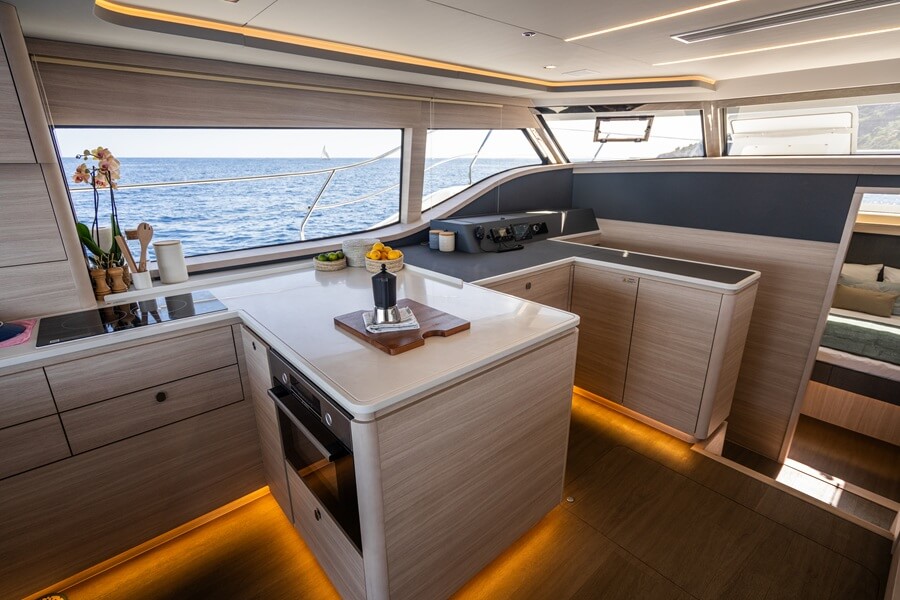
On the main deck, the galley is in the port aft corner and in direct communication with both the cockpit and the dinette to starboard. Everything is at hand including the floor-to-ceiling, home-style refrigerator to starboard.


Aquila, 46 Yacht, powercat, power, catamaran, 44 Yacht, 42 Yacht, 50 Yacht, 54 Yacht, Nick Harvey, Sino Eagle, Sport, Luxury, Offshore, Coupe

The galley is complemented by a navigation counter that doubles as a standing bar


Just ahead of the galley is an open space surrounded by countertops including a navigation desk where you’ll find a C-Zone digital switching screen and instruments. This area also doubles as a gathering spot for people to stand and chat with others in the galley, dinette or even cockpit.


“At home, entertaining always centres on the kitchen,” Harvey says. “So, we created a dedicated space for it on the 46 Yacht.”


Aquila, 46 Yacht, powercat, power, catamaran, 44 Yacht, 42 Yacht, 50 Yacht, 54 Yacht, Nick Harvey, Sino Eagle, Sport, Luxury, Offshore, Coupe

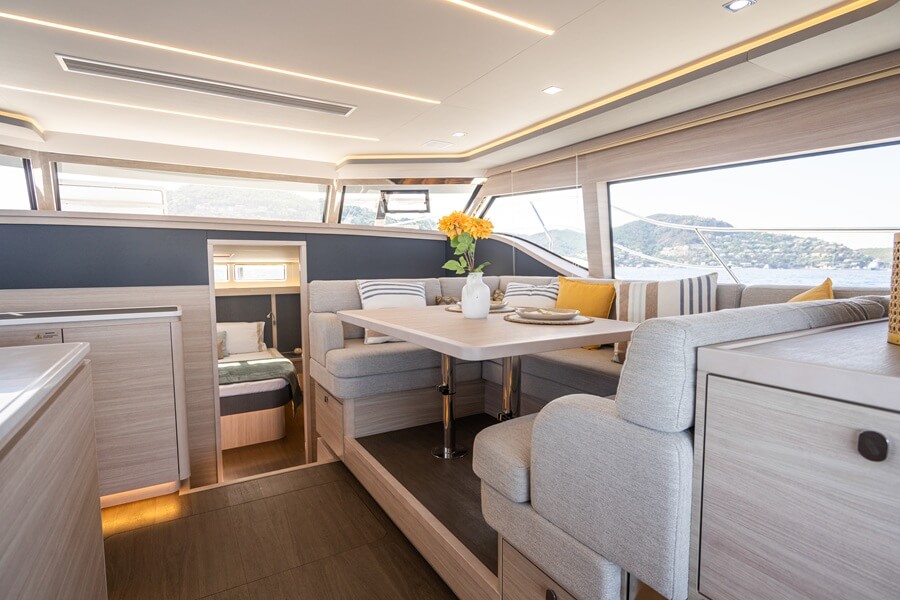
The dinette is starboard, while forward are steps to the cabins


The 46 Yacht is available with three, four or five cabins. Our boat had the standard three-stateroom configuration, which includes a sumptuous master suite forward. Well separated from the other cabins, this stateroom has a king-sized memory foam bed on the elevated centreline.


Unlike on the 44 Yacht, the bathroom isn’t buried all the way down in the hull but has been lowered, two steps down to port, to create full standing headroom. The open layout has twin vessel sinks below a large window, full-height storage and shower aft, and the toilet forward.


Aquila, 46 Yacht, powercat, power, catamaran, 44 Yacht, 42 Yacht, 50 Yacht, 54 Yacht, Nick Harvey, Sino Eagle, Sport, Luxury, Offshore, Coupe

The full-beam master suite forward has storage and an open bathroom two steps down to port, while to starboard is a desk and more storage


On the starboard side is more storage and a desk below an even bigger window than on port side. The hull and foredeck windows plus a skylight hatch ensure lots of natural light in the bedroom, with much of this unique accommodation made possible by the increased freeboard.


Privacy was top-of-mind during the design phase, so the other two cabins are in opposite hulls and have their own entries as well as bathrooms.


PERFORMANCE

As with the 50 Yacht, the 46 Yacht leans on the ‘explorer’ aesthetic and highlights offshore capability. Standard propulsion includes twin 320hp Volvo Penta D4 diesels, with two more powerful options available. She’s expected to cruise at 18 knots and burn approximately two gallons per nautical mile. The yacht carries 1,800 litres of fuel as standard, with another 800 as an option.


Aquila, 46 Yacht, powercat, power, catamaran, 44 Yacht, 42 Yacht, 50 Yacht, 54 Yacht, Nick Harvey, Sino Eagle, Sport, Luxury, Offshore, Coupe

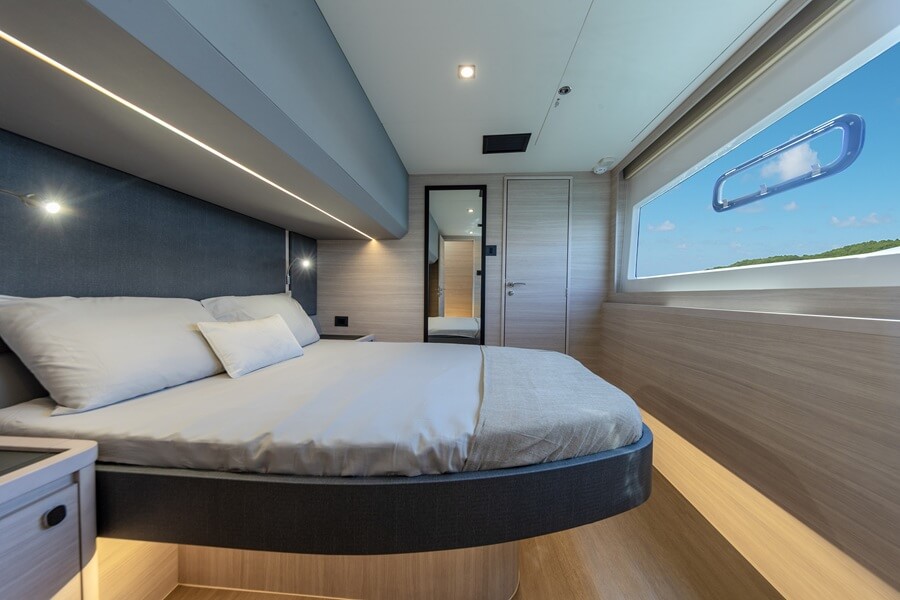
Guest cabin with window-facing bed and en-suite bathroom aft


Once again, the brand offers its Aquila Hydro Glide (AHG) foil system as an upgrade for semi displacement performance. This system generates a smoother ride and better fuel economy by raising approximately one third of the boat’s weight. She doesn’t fly, but she does foil. Hybrid diesel/electric propulsion, like on Aquila’s other models, is being discussed.


OVERALL IMPRESSIONS

Stowage options throughout the 46 Yacht are impressive, so she’s capable of carrying all the necessities for extended cruising. Every space has been rethought and it’s clear that the 46 Yacht will give the 44 Yacht a run for her money.


She’s just 2ft longer and 2ft wider than her predecessor, but she feels dramatically larger and more lavish. Nobody will be roughing it aboard this luxe cruiser. Aquila’s tagline is ‘Out there, starts here’. Rarely does marketing capture exactly why someone would buy the product, but it most certainly nailed it with that message.

aquilaboats.com


SHARE

Aquila’s 46 Yacht successfully succeeds icon Read More »
Sunreef’s Ultima range soars with 88

Sunreef’s Ultima range soars with 88

SHARE

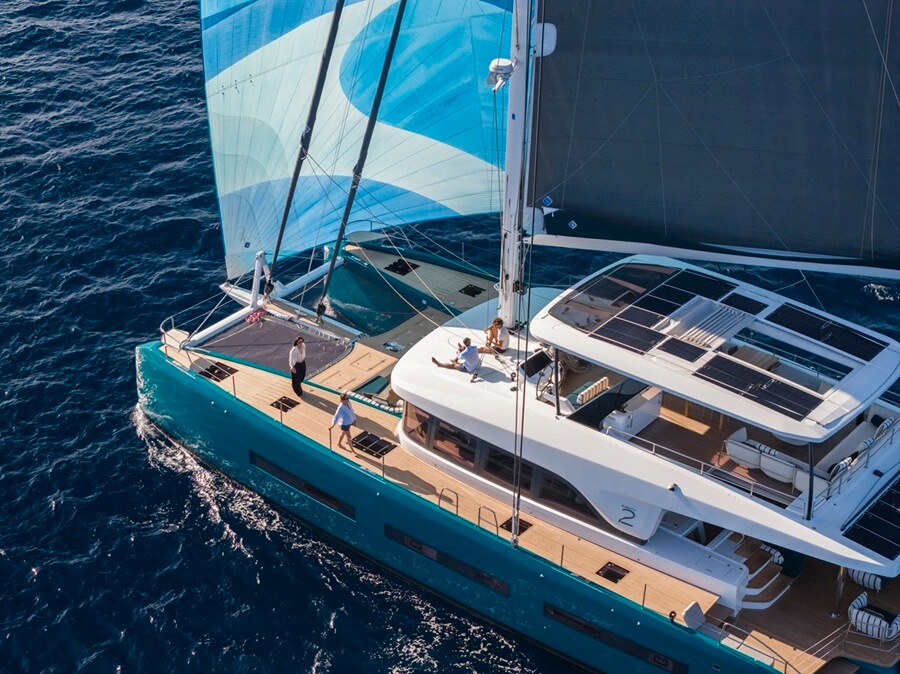
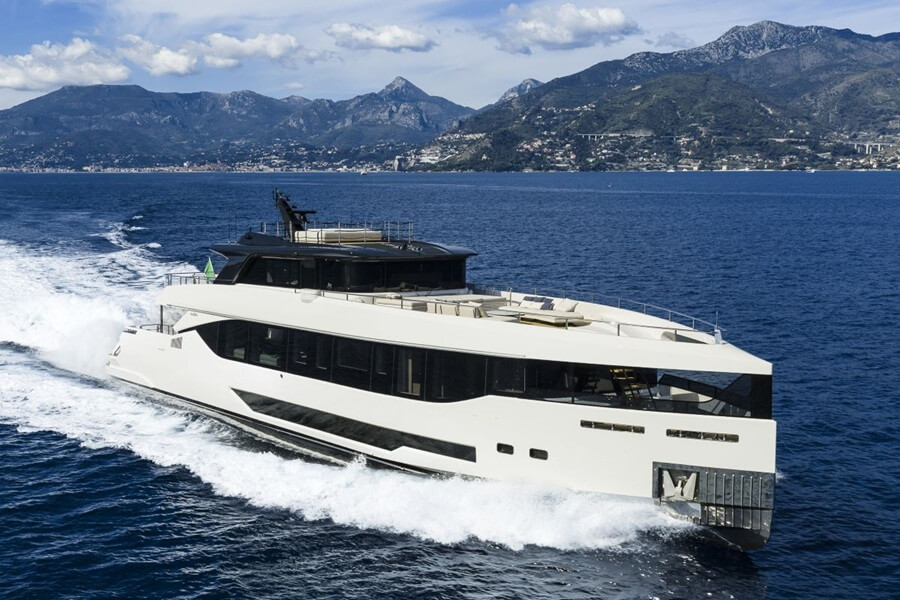
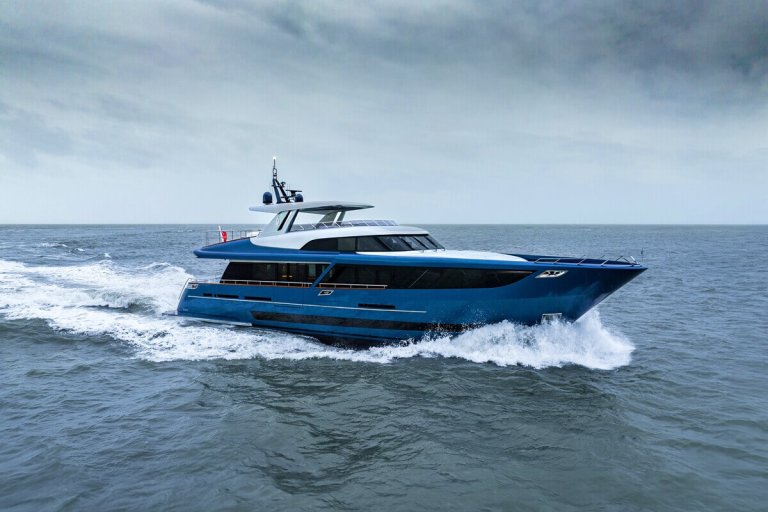
While staging the Ultima 88’s virtual world premiere at the 2026 Singapore Yachting Festival, Sunreef revealed it had close to 30 orders for the 93ft flybridge powercat. Reasons include an inviting, three-sided Ocean Lounge and surprisingly spacious, light-filled interiors that include a full-beam master suite with a ‘magic glass’ bathroom.
Words: John Higginson; Photos: Sunreef Yachts

  •  
  •  
  •  
  •  
  •  
  •  
  •  


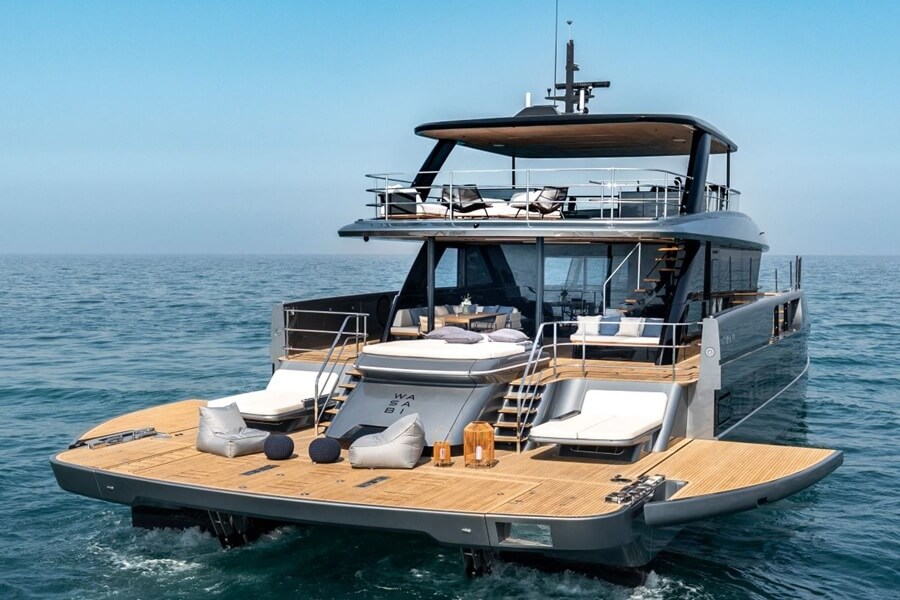
The Ultima 88 is styled with a forward-raked windscreen and inverted bows


After Sunreef Yachts launched the first Ultima 88 from its fast-growing shipyard in UAE’s northernmost emirate of Ras Al Khaimah, Wasabi was scheduled to debut at the Dubai International Boat Show.


However, when the Middle East’s biggest boat show was postponed to November, Sunreef instead showcased the Ultima 88 via a ‘virtual’ world premiere at the Singapore Yachting Festival in late April. Held at the Nebula Bar in ONE°15 Marina Sentosa Cove, the invitation-only gathering offered guests a first look at the Ultima 88 on the water via a walk-through video.


Sunreef President Francis Lapp, who founded the company in Gdansk on Poland’s north coast in 2002, was among speakers as he attended the ceremony with his family. “We’ve already signed around 30 contracts for the Ultima 88, which clearly confirms how strong the market response has been,” Lapp told Yacht Style.


“And after seeing the first images and videos of the yacht, people instantly understand what this yacht represents. It’s a completely new approach to luxury yachting; a balanced blend of luxury, performance and high-tech. The feedback has been incredibly positive.”


SPORTY APPEAL

Tennis superstar Carlos Alcaraz, 23, is among clients to order an Ultima 88, a model that Lapp believes appeals to a younger generation of owners.


The Ultima 88 can reach 26 knots with two 1,000hp engines


For starters, the Ultima range has a sleeker, sportier design than the established, high-volume Sunreef Power models (60, 70, 80 and 100), which are now in their second generation and rebranded as the Next range. Highlighting the difference in basic proportions, the Ultima 88 has a beam of just over 30ft, making it almost 5ft slimmer than even the 60 Sunreef Power Next.


“I think the Ultima 88 naturally appeals to younger owners because of its design and performance, but it’s more about personality than age,” Lapp said. “Of course, we were very excited to see Carlos Alcaraz choose the Ultima 88 as his first yacht. In his case, both his generation and his personality probably played a role – he perfectly represents this new, dynamic profile of yacht owner.”


As for performance, the Ultima 88 can be fitted with two 1,000hp engines that give a top speed of 26 knots and a fast cruising speed of 16 knots, while a sizeable 6,000-litre fuel capacity ensures significant range.


“I think the Ultima 88’s most important feature is her naval architecture. With this yacht, we combined some of the best qualities of catamarans and monohulls into something entirely new,” Lapp said. “The yacht is narrower, more dynamic, and much sportier in its proportions, which translates directly into performance. With twin 1,000hp engines, the Ultima 88 reaches around 26 knots, and future engine options will push those speeds even higher.”


ULTIMATE CONFIDENCE

The total of 30 or so orders for the Ultima 88 is hugely impressive, but what’s even more remarkable is that almost all were signed before clients had even seen the yacht.


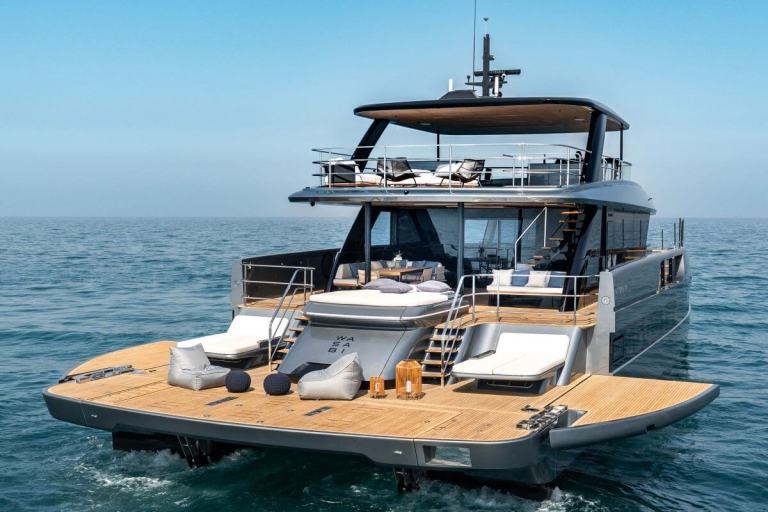
The Ocean Lounge features drop-down aft bulwarks, a full-beam hydraulic platform and a central garage flanked by integrated sunpads


Although the series-first Ultima 55 debuted at last year’s Dubai International Boat Show, the 55ft cruiser is a world away in scale from the Ultima 88, a flybridge superyacht with an overall length of 93ft and accommodation for up to 10 guests and five crew.


The client confidence is understandable. Earlier this year Sunreef announced that it is targeting €1 billion in annual revenue by 2030 as part of its Beyond 2030 “structural transformation”. Having been a world leader in luxury catamarans for over two decades, Sunreef gradually expanded its facilities in Gdansk, where it has in the region of 2,000 employees.


In 2023, Sunreef opened its Ras Al Khaimah facility, where it currently has about 1,700 employees and expects to have around 2,000 by the end of 2026. In the UAE, the company is aiming to produce more than 50 Ultima powercats a year, with the range comprising the 44, 55, 66, 77, 88 and 111 models.


“I think it comes down to trust. In fact, we signed several contracts for Ultima models before the final drawings had even been completed. That says a lot about the confidence our clients have in Sunreef Yachts,” Lapp said.


“Over the years, we’ve built a reputation for creating new trends in the catamaran industry rather than simply following existing ones. Clients know that when Sunreef introduces a new concept, it’s not just a design exercise. I would say it was a combination of curiosity and excitement, but above all, trust in the brand and in our ability to deliver on ideas.”


OCEAN LIVING

It has certainly delivered with the Ultima 88, which has a dynamic, almost aggressive silhouette fronted by a forward-raked windscreen and tall, inverted bows.


The Ultima 88 appears on the front covers of Yacht Style Issue 89


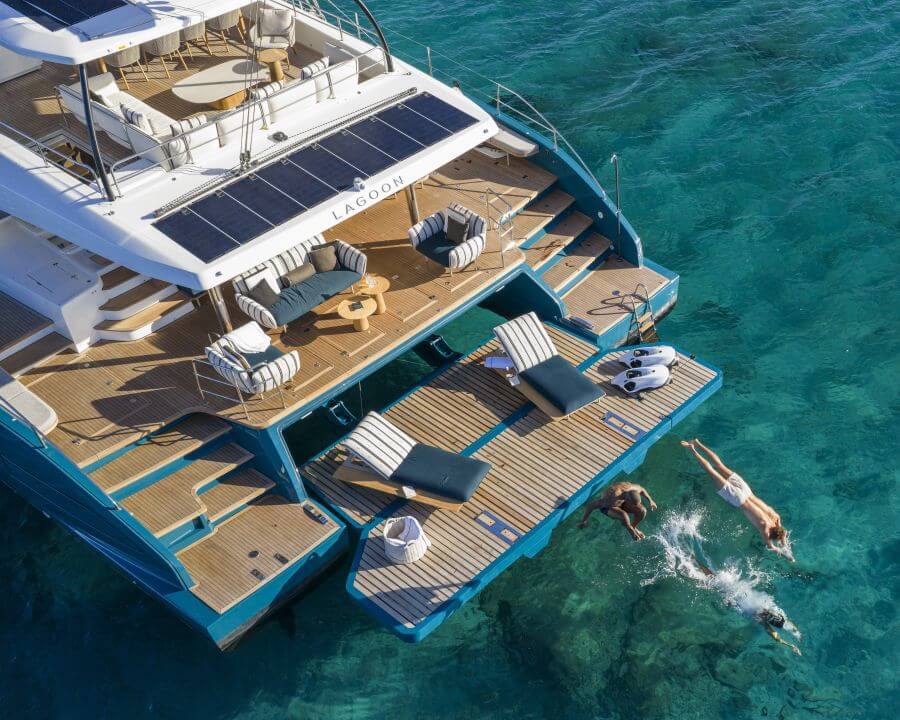
However, as you start to look closer, it’s Sunreef’s expansive ‘Ocean Lounge’ that garners much of the attention, especially when the aft bulwarks are lowered to form a curvaceous, three-sided waterside lounge.


The full-beam high-low platform is big enough to carry a good-sized tender. Forward is a fixed platform that features two integrated aft-facing double sunpads either side of a central garage, which can carry a jetski and other water toys, and is topped by a large sunpad.


“The Ocean Lounge is a major highlight,” Lapp said. “Despite the slimmer design, the folding side platforms at the stern create a very large waterside living space with easy access to water toys, sunbathing areas and relaxation zones right by the sea.”


The extra-long cockpit stretches from the aft sunpad to a side-protected zone with a lengthways dining table and wet bar


A few steps bring you up to the main deck, where – unlike the more traditional proportions on the Next range – the Ultima 88 also features an extra-long cockpit, with much of it protected on the sides.


This design offers a genuinely indoor-outdoor feel to alfresco dining at a lengthways dining table surrounded by a fixed L-shaped sofa and foldable chairs. To starboard is a smaller aft-facing sofa and an outdoor galley-bar module near the saloon doors.


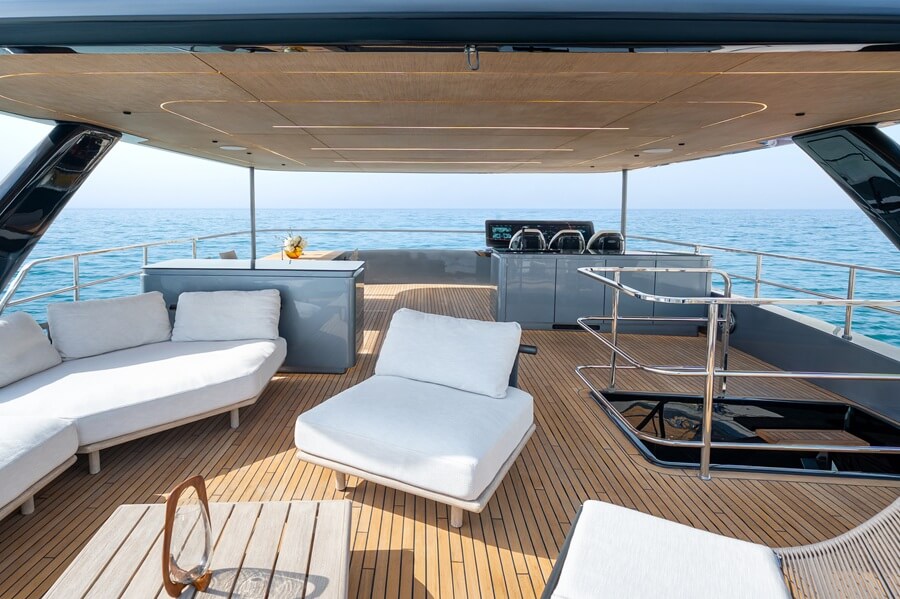
Just before the bar module are curved stairs to the flybridge, a feature on all Ultima models from the 66 upwards. On the Ultima 88, the flybridge is an enormous, customisable space that can be laid out according to an owner’s wishes.


Aft view of the flybridge; a large jacuzzi and full-width sunpads are among options


Hull one features sofas, chairs and poufs on the clear aft deck, while forward is a lengthways dining table to port. Options include a full-width aft sunbathing area and a large central jacuzzi, or dedicated space for outdoor exercise equipment.


The forward starboard corner is home to the only true fixtures on the flybridge: a fully equipped outdoor galley-bar and a triple-seat helm station that’s home to an ultra-wide 66in multi-function display.


Forward view of the flybridge on hull one, Wasabi


Back on the main deck, the yacht’s high topsides offer excellent protection for wide walkways that eventually lead up four steps to the foredeck. The bow lounge is protected by railings and offers guests a large sunbathing area with foldable backrests, integrated drinks holders and low tables.


LIGHT AND BRIGHT

If the Ultima 88’s exterior lines and outdoor areas mark a big shift for Sunreef, there’s also a notable change in the interior, at least on hull one, where the décor is far lighter than on many Sunreef models. Floor-to-ceiling windows along the aft half of the saloon and panoramic windows wrapping around the forward half ensure masses of natural light in the interior.


“The interiors are defined by natural light,” Lapp said. “Large, glazed surfaces throughout the yacht create bright, open living spaces with a very strong connection to the ocean outside.”


The saloon on hull one dedicates the aft half to lounging and the forward half to a U-shaped bar-galley and L-shaped omakase counter


The aft half of the enormous single-level saloon on hull one has been arranged with sofas and chairs on both sides of the lounge area. Beyond glass-sided stairways to the guest cabins are an open U-shaped galley-cum-bar with wine storage to port, and a Japanese-style L-shaped omakase counter to starboard, where diners can observe the chef’s meal preparation.


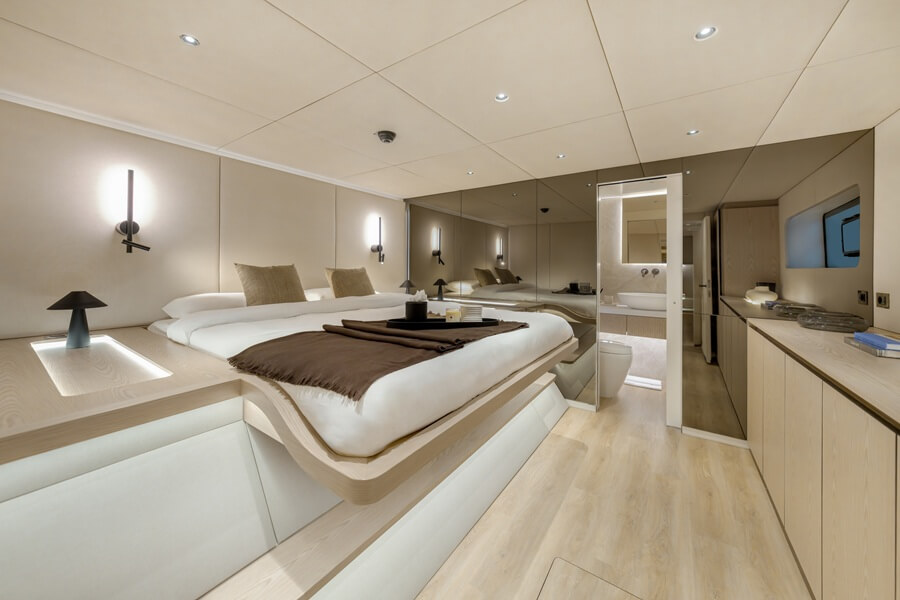
Heading forward, carbon-fibre steps lead down to a magnificent full-beam master suite with large hull windows and a forward-facing bed set to starboard.


The full-beam master suite in the bow has a forward-facing bed offset to starboard; larger versions of the master are available


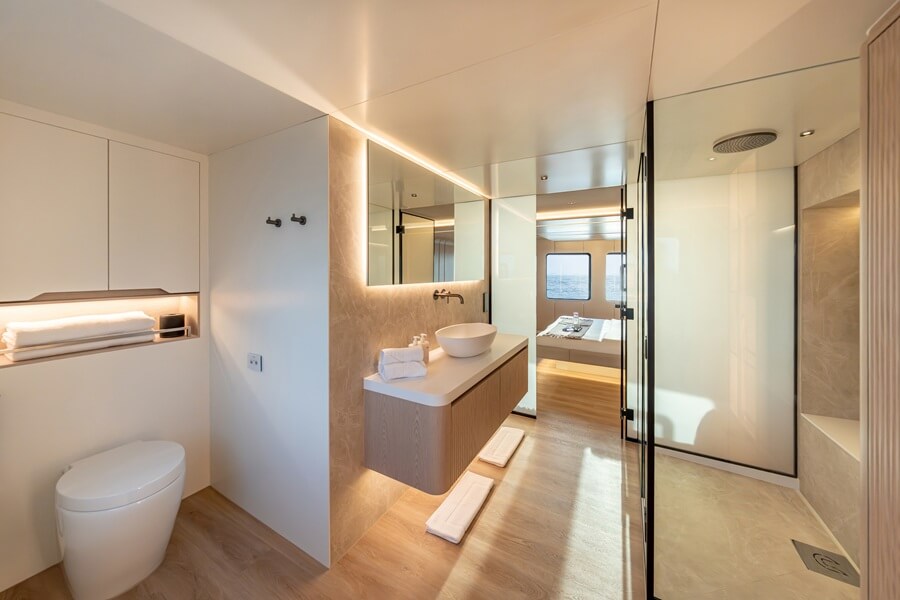
To port is both a walk-in dressing room and an en-suite bathroom in ‘magic glass’, which can transform from transparent to solid white when privacy is required. Furthermore, larger versions of the master suite are available by expanding into the space otherwise allocated for the forward port guest cabin.


“The owner’s suite is a very special space,” Lapp said. “It’s a full-beam cabin with a lot of personalisation possibilities including different bathroom layouts and even an option for a bathtub.”


Starboard view through the master cabin’s en-suite bathroom, which can be private or transparent due to ‘magic glass’


Sunreef’s clever naval architecture and design has resulted in the entire lower deck spanning the yacht’s full beam, rather than only offering accommodation in each hull, as on the much wider Next models.


In the standard layout seen on Wasabi, each side includes two ensuite guest cabins with sea-facing beds, double or twin.


As well as a full-beam master suite forward, there are three or four guest cabins (pictured) with raised, window-facing beds


Aft, forward of the engine room, are comprehensive crew quarters including three en-suite cabins and a large crew mess that also incorporates the yacht’s main galley, which is packed with Miele appliances.


Overall, the Ultima 88 looks like a winner from top to bottom, and has the order book to back it up. “People who want a more dynamic yachting experience immediately connect with this concept,” Lapp said. “The yacht feels sporty, modern and active while still offering a very high level of luxury and comfort.”

sunreef-yachts.com


SHARE

Sunreef’s Ultima range soars with 88 Read More »

Review-Azimut-Fly-82

Azimut’s grand new Fly motoryacht

SHARE

Azimut’s grand new Fly motoryacht

SHARE

Styled by Alberto Mancini and featuring warm, light-filled interiors by Fabio Fantolino, Azimut’s smooth-lined Fly 82 also benefits from being the series’ first model to feature the aft Deck2Deck™ system and the shipyard’s first motoryacht to include WatchIt Eye technology.
Words: John Higginson; Photos: Azimut


Review-Azimut-Fly-82

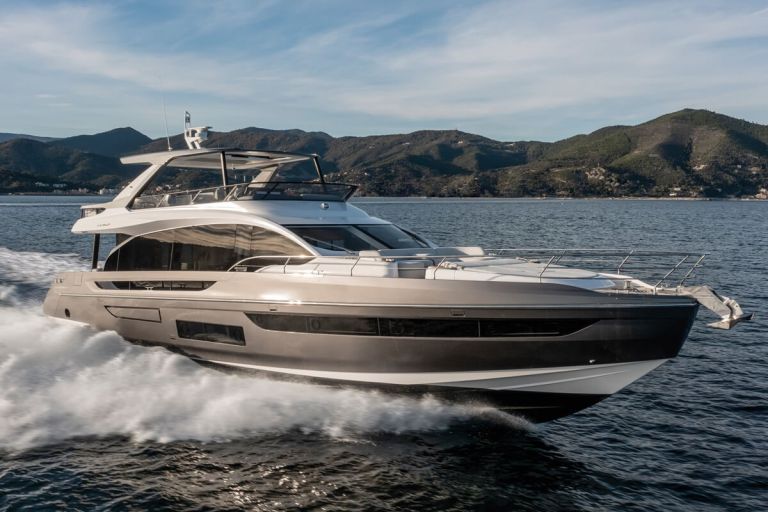
Azimut’s Fly 82 can reach up to 32 knots with triple IPS engines


Azimut’s Fly 82 is the new flagship of the Italian shipyard’s renowned Fly series, which remains a core line for the brand even as the new, fast-growing Seadeck range garners plenty of attention and the shipyard’s Grande superyacht series grows from strength to strength.


Successor to the Fly 78, the Fly 82 is a CE A flybridge motoryacht with a significant overall length of 24.8m that even encroaches on Grande territory, with the Grande 26M being just a few feet longer. In fact, the Fly 82 and Grande 26M were both on display during the former’s world premiere at last September’s Cannes Yachting Festival in France, then the following week’s Genoa International Boat Show in Italy and again at this year’s Boot Düsseldorf in Germany.


Comparable lengths aside, stats bear out the significant differences. At full load, the Fly 82 weighs 63 tonnes, compared to 84 for the Grande 26M. As well as being a third heavier, the Grande 26M has two-thirds more interior volume.


Dressed in comfortable, deep cushions, the foredeck offers plenty of seating and a flexible sunbathing and lounging area


And although Alberto Mancini designed the exteriors of each model and is responsible for both the Fly and Grande series, the profiles also underline the differences between the series, which remain in different sectors.


While the Grande 26M’s profile looks almost muscular, the sharply defined Fly 82 is dominated by straight, horizontal lines and rectangular windows, with a long, gently sloping windscreen and smoothly inclined bow underpinning a streamline look described as “shaped by the wind”.


EXTENSIVE OUTDOOR OPTIONS

However, at the aft end, there’s a notable overlap between the yachts. The 82 is the first model in the Fly series to feature Azimut’s own Deck2Deck™ system, which was introduced on the Grande 26M and is also included on the Grande 30M that debuted at Cannes last year, with hull one now in Hong Kong.


The Deck2Deck™ garage door shown in its closed position


Overlooking an almost full-beam hydraulic swim platform, the Deck2Deck™ essentially features a hinged, teak-clad garage door that rises to align horizontally with the main deck. And, yes, it makes a big difference, extending the Fly 82’s aft cockpit by about 5ft.


The raised garage door allows for foldable chairs or even a yoga mat or two to be placed aft of the cockpit’s two facing sofas and round-edged, adjustable coffee table, which can be raised and folded out to double its size for alfresco dining, all with guests fully covered by the flybridge above.


When the Deck2Deck™system is deployed, the cockpit offers a walkaround social zone centred around the facing sofas and high-low table


In the cockpit’s forward port corner is a wood-topped wet bar that even includes a fold-up cover revealing the third helm. Opposite is a fridge, which is fitted under the curved stairs to the flybridge.


The flybridge is a truly expansive space, making the most of the fact that the deck reaches as far aft as the garage door below. The aft end of the top deck is surrounded by railings and glass panels aft, while the floor is left clear for loose furniture, with Azimut dressing it with two stylish, curved sofas and a rounded coffee table.


The flybridge includes a large lounging area and twin-seat upper helm forward


Forward of the steps, the flybridge is covered by a hardtop with a sliding sunroof and is partially protected from breeze by a low-set, wraparound windscreen. Fixtures include a large American-style wet bar with flip-up grill and bar stools, while to port is a long, rectangular dining table surrounded by eight foldable director’s chairs.


To port, the helm station features a large two-screen display and twin pilot seats backed by a half-height storage unit, while the rest of the forward area is occupied by a large lounging-cum-sunbathing area.


The flybridge features loose furniture at the aft end


Outdoor lounging and comfortable cushions are also offered in the beamy foredeck, an attractive social area where a wide C-shaped sofa faces a large triple sunpad with adjustable cushion backrests that allow guests to sit and face fore or aft.


FANTOLINO CHAPTER THREE

Fabio Fantolino – who opened his first studio in Turin in 2001 and added a second in Milan in 2014 – handled the interiors of the Fly 82, his third project for Azimut after starting with the Fly 72 and Fly 62 that debuted in 2023 and 2024 respectively.


Fabio Fantolino’s interiors feature huge windows and a round dining table


Saloon doors slide to starboard to reveal an interior bathed in natural light through massive, almost full-length windows along both sides. The lounge features a deep L-shaped sofa and a coffee table in the aft port corner, with two circular, orange-brown chairs to starboard providing further seating while remaining low enough to not distract from the expansive window views.


Forward to port, by a bronze glass wall, Azimut has entered new territory by including a round dining table, a common feature in Asia but a first for the shipyard in its Fly series. To starboard, two steps lead to an elegant day head, a superyacht-level addition benefiting from large mirrors and a window.


Aft view of the saloon, where round chairs to starboard complement the circular dining table


The steps also lead to a combined wheelhouse and galley, laid out with the twin-seat helm to starboard, a central dinette, an L-shaped kitchen to port with a double, full-height Siemens fridge freezer aft, plus forward stairs down to a crew accommodation area with three berths and shared head.


On the lower deck, guest accommodation comprises four en-suite cabins, with a twin and double either side of the central hallway and a forward VIP with a slightly angled, inward-facing bed.


The master suite’s bed is flanked by doors to a walk-in dressing room to port and bathroom to starboard


It’s the full-beam owner’s suite, situated midships, that gets most of the attention and is dominated by a large forward-facing bed and lit by long hull windows. Beautiful cabinetry adorns the port side and includes a pull-out vanity drawer with fold-up mirror, while aft is the walk-in wardrobe. To starboard is a sofa and access to the bathroom, which includes a large central shower.


HIGH-TECH PIONEER

Azimut has always been a leader in technology, and the Fly 82 is the shipyard’s first model to incorporate WatchIt Eye, developed by WatchIt in collaboration with the shipyard’s R&D department.


Review-Azimut-Fly-82

The master suite’s port cabinet includes an elegant vanity drawer


An AI-based collision-avoidance system designed specifically for recreational boating, WatchIt Eye is designed to detect obstacles such as floating objects, boats and submerged hazards, so a few less things to worry about.


In terms of performance, the Fly 82 features hull design by Pierluigi Ausonio Naval Architecture and the shipyard’s R&D department, while the yacht benefits from Azimut’s extensive use of carbon-fibre to lighten the superstructure, so reducing weight and lowering the centre of gravity.


Review-Azimut-Fly-82Stairs to the guest cabins


Like the 78 Fly, the Fly 82 comes standard with triple 900hp Volvo Penta IPS1200 engines, with the upgrade option of 1,000hp IPS1350 versions providing a top speed of over 32 knots – as proven in sea trials – and a cruising speed of 25.


Among the shipyard’s ‘Low Emission Yacht’ family, the Fly 82 is another example of Azimut’s extensive use of IPS, which is also fitted on all Seadeck models and most S sportbridge models.


With maturing synergy between Mancini and Fantolino, the Fly 82 is a triumph both outside and in, while the introduction of the Deck2Deck™ and WatchIt Eye systems help take onboard technology to a new level and Azimut’s iconic Fly series to a new high.

azimutyachts.com


Azimut’s grand new Fly motoryacht Read More »
Maritimo S60: Sharp lines, serious range

SHARE

Maritimo S60: Sharp lines, serious range

SHARE

Maritimo’s three-cabin S60 ticks the boxes of owners looking for sophisticated sedan living at sea, pairing the beauty of indoor-outdoor living with long-range, bluewater brawn.
Words: Jeni Bone; Photos: Maritimo


Maritimo debuted the S60 at the 2025 Sanctuary Cove International Boat Show


For so many boat owners comparing models in the highly prized 50-60ft bracket, the feeling you get when you step aboard is everything – or very close to it. And the Maritimo S60 exceeds expectations.


Maritimo’s S60 Sedan Black Edition hits the elusive ‘sweet spot’ among motoryachts, combining a single-level, open-plan layout and proven offshore credentials in a manageable 18.9m package with a formidable fuel capacity of 4,550 litres.


Hot on the heels of the successful M60 Flybridge, the S60 was unveiled at the 2025 Sanctuary Cove International Boat Show. It has proven an appealing option for cruising couples and families seeking long-range capabilities, performance and all the benefits of single-level living.


‘Black Edition’ is the nomenclature applied to all Generation II editions of M and S models since 2024. According to Maritimo, now represented by Primus Marine in Southeast Asia, ‘Black Edition’ entails enhanced aesthetics and functionality with exterior styling and interior finishes drawn from the brand’s flagship models, the M75 and S75.


Motoryacht, Maritimo S60, Sedan, Black Edition, yacht review, Southeast Asia, Primus Marine

The S60 is ideal for exploring Southeast Asia’s cruising grounds


For Southeast Asia, the S60 is a compelling package that delivers luxurious amenities, generous social spaces, all the practical features for days on the water, and the hull-design and range to venture further afield and explore the region’s fascinating cruising grounds.


The S60 was developed from hundreds of hours of R&D based on owner and dealer feedback that identified key characteristics for onboard liveability: free-flowing spaces, protection from the elements for year-round enjoyment, and close connection to the water.


According to Simon Stewart, Maritimo’s Marketing Manager: “The S60 delivers a rare balance of long range efficiency, internal volume and proven operating systems, with proportions optimised specifically for this 60ft size rather than inherited from a bigger hull.”


One couple, loyal Maritimo customers over many years, moved up from their much-loved M54 to the S60 due to its family-friendly attributes. “There’s a lot of room on board, and we feel it delivers all the extra space we enjoyed with our flybridge,” they explain.


Motoryacht, Maritimo S60, Sedan, Black Edition, yacht review, Southeast Asia, Primus Marine

With a 4,550-litre fuel capacity, the S60 has a range of 2,200nm at displacement speeds


A major factor in the couple’s decision was concern for the safety of their young grandchildren. “There’s that extra layer of caution having them on board. We find it a lot more interactive to socialise on one level. People tend to congregate on one level so it’s great for younger guests and older people, and the skipper feels a part of it.”


Ease of operation, reliability and Maritimo’s low-maintenance shaft-drive system sealed the deal, as far as this cruising couple is concerned. “The shaft drive is a really important factor, and great for driver confidence, ease of servicing and future-proofing the boat to ensure its resale value in time to come.”


FIRST IMPRESSIONS

Viewed from the marina, the S60 bears a svelte and sporty silhouette. More space allocated to the aft end of the vessel is masterfully balanced by the foredeck and extended hardtop. Tinted panoramic hull windows and the saloon’s two-stage vista sliding windows punctuate the dart-like shape.


More than aesthetics, its aerodynamics convey Maritimo’s focus on fuel-efficient performance and offshore capability. True to Maritimo’s long-range cruising ethos, the S60’s robust hull has been engineered for large fuel capacity and to deliver a stable ride in all conditions.


Motoryacht, Maritimo S60, Sedan, Black Edition, yacht review, Southeast Asia, Primus Marine

The ‘Adventure Deck’ includes access to a wet bar, lazarette and an almost full-beam, 1.4m-deep high-low platform that can carry a tender


Featuring a variable deadrise hull with a sharp, fine bow entry for cutting through the chop, which gradually transitions to a flatter, ‘warped’ running surface aft, this characteristic design aims to reduce drag and improve fuel efficiency at long-range cruising speeds.


A deep, long keel is used for improved tracking and straight-line stability, while a reverse chine running almost the full length of the hull increases lift and reduces slapping impacts. Central placement of engines, fuel tanks and batteries is crucial to Maritimo’s renowned stability offshore. Its three-tank fuel system allows for bunkering from either side.


The S60 has a range of over 350nm at a brisk 25 knots and about 2,200nm at displacement speeds, making it a true long-range cruiser. Remember, these are motoryachts that regularly make the 1,100nm crossings from Australia to New Zealand, the equivalent of cruising from Singapore to Phuket and back.


Ideal for island hopping, the S60 is equally capable of more ambitious passage making throughout Southeast Asia, such as voyages to the Andaman Islands northwest of Phuket, or through the vast archipelagos of the Philippines and Indonesia.


Motoryacht, Maritimo S60, Sedan, Black Edition, yacht review, Southeast Asia, Primus Marine

Electric actuators can raise the ‘cockpit boot’ module to reveal a lazarette for water toys and safety gear


For this reason, Maritimo prefers shaft-drive technology, as the low 8-degree shaft angle allows for a draft of 1.5m, allowing access to a greater choice of anchorages and reliable long-range operation away from major boating centres.


ADVENTURE DECK TO BOW

Spanning nearly the full 5.2m beam, the aptly named ‘Adventure Deck’ with its high-low swim platform is a versatile space that can stow a tender, launch water toys or simply be decked out with bean bags, sun loungers, tables and chairs – making the S60 the ideal platform for avid divers, active families and those simply seeking solace at sea level.


The S60 boasts an enhanced cockpit boot module with integrated Epicure barbecue grill, bench top and fridge. The entire module can pivot upwards on electric actuators to reveal a deep lazarette capable of stowing assorted watertoys, fishing, diving and safety gear.


Motoryacht, Maritimo S60, Sedan, Black Edition, yacht review, Southeast Asia, Primus Marine

It’s one step up from the ‘Adventure Deck’ to the cockpit


On each side of the module, recessed transom gates and lockers embody the guiding design principle of ‘aesthetics and practicality’. Meanwhile, the ‘Hardtop Utility Deck’ can be used for additional stowage, even for a tender, and is accessible from the cockpit by a ladder and an overhead hatch.


The cockpit or ‘upper cockpit’ is the outdoor hub connecting the Adventure Deck, side decks and the interior. Perfect for entertaining, the area features a fixed settee aft and a teak table that can seat six guests, while forward options include one or even two sofas.


Catering to the promise of year-round entertaining regardless of heat, humidity, high UV or a sudden change in conditions as is experienced in the tropics, the cockpit can be transformed into a cosy or cool weatherproof haven by using clears or a breezeway system concealed in the overhead lining.


Motoryacht, Maritimo S60, Sedan, Black Edition, yacht review, Southeast Asia, Primus Marine

The cockpit has a fixed sofa and a table that can seat six


Maritimo’s deep side decks with high handrails and well-lit treads provide safe accessibility to the foredeck. Set up as a glorious sun trap, the bow provides an array of comfy sunpads and seating, plus lockers for gear such as fenders or an optional canopy for protection and privacy – vital in regions with high UV.


INNER PEACE

Bi-fold doors are among options for the entrance to the interior, which starts with a step up to the aft galley popularised by Maritimo for over two decades. Central to the galley is an island bench of a height that ensures unobstructed sightlines from the cockpit through to the windscreen.


Fitted with Miele appliances, including a full-size fridge and convection oven concealed behind Maritimo’s exquisite cabinetry, the galley provides an abundance of storage for provisions and bench space for food preparation for weekends or even weeks on the water.


Motoryacht, Maritimo S60, Sedan, Black Edition, yacht review, Southeast Asia, Primus Marine

The full-width aft galley is centred around an island counter and has masses of storage


A step up from the galley is the capacious saloon, the boat’s social heart, where the lounge and helm are unified by wrapround glazing that maximises natural light and panoramic views. The S60 offers two-stage vista sliding windows that open fully, and with the optional sunroof, amplify the water views and sea breezes, while air-conditioning ensures year-round comfort no matter the season.


Portside is a long, four-seat sofa, while forward is a 55in TV on an electric lift. To starboard is a high-low, fold-out dining table with L-shaped seating. Black Edition elements include added cabinetry, upgraded LED mood lighting, and a wide selection of fabrics and finishes.


Motoryacht, Maritimo S60, Sedan, Black Edition, yacht review, Southeast Asia, Primus Marine

The saloon includes a foldable, high-low table and a TV in the forward-port corner


Maritimo has evolved its interior design approach over the past few years, giving owners the opportunity to create highly personalised spaces on board. Working closely with the Maritimo Design Team or using the Maritimo Virtual Configurator, owners can explore the colour ways, timber options, fittings and fixtures, and soft-furnishing packages to bring their vision to life.


To starboard, the twin-chair helm station was designed for stress-free vision and communication with the saloon, back out to the cockpit and even down through the open atrium to the lower deck. Visibility is optimal through the large, heavily raked front windscreen, while there’s also a new ‘floating dash’.


Motoryacht, Maritimo S60, Sedan, Black Edition, yacht review, Southeast Asia, Primus Marine

The saloon benefits from panoramic glazing and opening windows on both sides


Equipped with a Garmin navigation package as standard, the dash comprises intuitive, large-format multi-function displays for monitoring all systems, and cameras covering the engine room and stern.


REFINED REPOSE

Below deck, the three staterooms are characterised by generous head height thanks to a concerted effort by Maritimo designers to maximise every cubic-centimetre of the hull’s volume.


Motoryacht, Maritimo S60, Sedan, Black Edition, yacht review, Southeast Asia, Primus Marine

The full-beam master suite midships can be configured with a chaise longue and desk/vanity or more storage


Midships, the full-beam master suite features a centreline king-size bed, en-suite bathroom, chaise longue and desk/vanity, with large, cedar-lined wardrobes and drawers. The hull windows with opening portholes allow in natural light, water views and ventilation.


Forward, the VIP cabin has an angled bed positioned against the starboard side for ease of access on both sides. The bed is slightly lower than on previous models, and hinges up to reveal ingenious stowage underneath with moulded spaces for luggage, vacuum and blankets.


Motoryacht, Maritimo S60, Sedan, Black Edition, yacht review, Southeast Asia, Primus Marine

The VIP suite has an angled bed and en-suite access to the day head


The flexible third cabin to starboard can be used as a double or twin due to a berth that slides at the push of a button. Guests share the second bathroom with the VIP cabin.


Black Edition attributes include the additional cabinets along the side of the VIP cabin, upgraded bathroom fittings and a nifty laundry drawer in the companionway for the washer/dryer.


Motoryacht, Maritimo S60, Sedan, Black Edition, yacht review, Southeast Asia, Primus Marine

The guest cabin has twin berths that can slide together


Meanwhile, the engine room – accessed via a hatch in the cockpit deck – is designed for easy serviceability and features a fully moulded, easy-to-clean structural liner that ensures a vibration-free experience for guests on board. Housing the twin Volvo Penta D13 engines, the engine room is well-ventilated, and air vents are subtly integrated into the rear edge of the coachhouse.


“The S60 is the complete package, really,” the S60 owners conclude. “The ability to entertain on one level, sweet lines and styling, lots of onboard storage and the quality of finish, which is world-class.”
maritimo.com.au


Maritimo S60: Sharp lines, serious range Read More »
Motoryacht, superyacht, Benetti B.Now 67M, Oasis Deck, Lady Estey, Iryna, Sinot Yacht Architecture & Design, RWD

Benetti’s triumphant B.Now 67M

SHARE

Benetti’s triumphant B.Now 67M

SHARE

A recent winner at Yacht Style Awards 2026, Benetti’s B.Now 67M series includes the lovely Lady Estey, which features the Italian shipyard’s popular Oasis Deck option and a stunning Sinot interior heavily influenced by an owner with a strong vision for his first new build.
Words: Julia Zaltzman; Photos: Breed Media / Benetti


Motoryacht, superyacht, Benetti B.Now 67M, Oasis Deck, Lady Estey, Iryna, Sinot Yacht Architecture & Design, RWD

In late April, Benetti’s B.Now 67M won the Superyacht 60-80m category at Yacht Style Awards 2026 in Singapore


When a shipyard launches a new yacht concept, it makes commercial sense to include a neutral interior that will appeal to the widest audience. Yet in a world where bespoke is king, ubiquitous beige sometimes falls wide of the mark.


Launched after Iryna, Lady Estey is the second Benetti B.Now 67M with Oasis Deck® and a strong example of what happens when an owner is intent on making tailor-made touches that go beyond mere upholstery and finishes.


In May, Lady Estey won the 500-1,499GT category at the 21st World Superyacht Awards in Venice


The exterior line of the entire B.Now family, which also includes 52M, 60M and 72M models, was developed by Benetti in collaboration with British design studio RWD. Lady Estey’s interior concept was penned by Dutch studio Sinot Yacht Architecture & Design and described as having a “beach house style and colour palette” featuring untreated, light materials.


However, the owner who stepped in at the start of the project had other ideas for his first-ever new build, drawing inspiration from a yacht he’d seen that featured high gloss materials and a moody, rich ambience. He wanted his own space with his own taste in a ‘Gatsby-esque’ style.


The owner’s private saloon showcases the owner’s ‘Gatsby’ interpretation of Sinot’s interior proposal


The challenge for Sinot was in sourcing materials and finishes that accommodated the owner’s taste while not straying too far from their original proposal. That said, the final monochrome design is quite the departure, using a selection of woods and marble that include sycamore, ebony, wenge, ziricote and macassar. The result is a semi-custom yacht with a full-custom interior.


WELCOMING OASIS

The B.Now 67M draws on Benetti’s expertise in building 100m-plus steel-hulled superyachts. Every level has been purposefully accounted for: the main deck is for guests; the upper deck is dedicated to the owner; the bridge deck is where the captain sleeps and works; the lower deck has the spa area aft and crew quarters forward; and the tank deck is for operational systems.


The upper deck or owner’s deck includes alfresco dining


It’s a well thought out layout with a clear distinction between spaces, allowing for guest privacy and smooth crew service.


The overall concept focuses on blurring the boundaries between inside and out, with the Oasis Deck – the star exterior feature of the B.Now family – bringing its usual wow factor. Two fold-down side terraces create large lounging areas with a built-in corner sofa port side and steps to the main deck aft starboard side. Only having steps on one side allows guests to make full use of the extended beam.


Like most B.Now models, Lady Estey features the Oasis Deck option with a large infinity pool and drop-down sides


The glass-fronted infinity pool features integrated sun loungers that sit below the waterline, and a retractable cover that transforms the area into a large, stepped terrace. The aft main deck totals more than 170sqm.


OWNER INPUT

RWD’s ‘beachside chic’ exterior is reflected in the outdoor furniture made by a Tuscan artisan. It’s further enhanced by the owner’s request for even more custom pools, including a spa pool on the hidden observation deck atop the yacht and, on the owner’s deck, a reflecting pool at the bow with a waterfall effect.


The owner’s pool is surrounded by seating and lounging areas


The owner, represented by Engage Maritime, took delivery of Lady Estey in early September 2025 and spent a week cruising the Mediterranean ahead of the 34th Monaco Yacht Show where the yacht made her international debut.


His requested changes range in scale and vision, though perhaps the most significant is his desire for “one harmonious melody” throughout the interior to ensure guest equality and consistency on every level.


On the main deck, the backlit quartz bar is a standout feature of the saloon


To achieve that, the design team homed in on three main areas – the main-deck saloon, the signature central staircase constructed in marble with a glass balustrade, and the owner’s stateroom – before translating those details to the rest of the yacht.


SALOON, STAIRCASE, STATEROOM

On the main deck, the focal point of the saloon is a polished black grand piano, one of many shiny black surfaces reflected in the mirrored ceiling. Initially smaller in size, the piano was later upgraded to a large Steinway and is connected to the yacht’s sound system. This required a rearrangement of the loose furniture, not to mention reinforcements in the floor.


The saloon includes a formal dining area


A large backlit quartz bar that attracts the eye sits forward of a custom dining table made from macassar and sycamore, and which conveniently divides into two separate tables. Cream soft furnishings underpin the owner’s love of dark and light tones, which is further enhanced by an assortment of sculpture and art scattered throughout the interior.


Arguably a fixed work of art is the tailor-made central staircase, which according to Benetti “marks a transition in style from the darker tones of the various guest areas to the lighter walls of the stair column”.


The custom rectangular elevator and marble staircase with glass balustrade


It’s finished in Calacatta white marble with a recurring metal motif. The textured glass balustrade was both complex to produce and tricky to handle but ensures light flows through the heart of the yacht.


Situated on the upper deck, the master suite is entered via a private lobby, with a desk area and private TV lounge. A black-and-white marble double en-suite includes a shower for him and a full-sized bath for her.


The vast owner’s suite includes a full-width bedroom with expansive views including through to the foredeck spa pool


The owner chose Nero Marquina marble for its intense dark colourway and didn’t want slabs with too many white veins, so Benetti spent time meticulously selecting each slab to ensure it fitted his specification.


Wall-mounted reading lamps either side of the bed in the style of twisted deer antlers were also specified by the owner to match the same ones the couple has at home. A fur bed throw and snakeskin linen underlines the opulence of the room, complete with a TV that descends from the ceiling.


The owner’s office is opposite a private TV room


The owner’s private lounge aft benefits from custom furniture designed by Sinot, including a coffee table, dining table and backlit onyx bar. It leads onto the aft deck, which deliberately has no crew access to guarantee full privacy.


THE THEME CONTINUES

Elsewhere dark wood boiserie panels and lacquered finishes drive home the interior’s contrasting tones, while the oak floors match the tone and plank width of the exterior decks to blur the lines between indoor and out. The owner mandated wide guest corridors with integrated handrails and an unusually wide entrance to the rectangular elevator to futureproof the yacht for wheelchair access.


The bridge deck has sofas, a dining table and a bar


Ensuring all six guest suites share a uniform design that’s finished to the same quality as the owner’s suite was another prerequisite. Each suite is dressed in white sycamore and has marble en-suites with heated floors and large picture windows that fill them with light.


The bridge deck has a much warmer feel, with leather, dark wood and teak flooring continued indoors from the aft area, where a large circular dining table with a ‘lazy Susan’ invites alfresco gatherings.


The observation deck is home to a circular spa pool


Crew areas are generous, with two crew messes and an industrial-sized galley, as the owners wanted to create a purpose-built space for meal preparation.


Other standout features include a full lower-deck gym and spa complete with sauna, hammam and treatment room. Both the relaxation room and ‘muscle room’ filled with Technogym equipment are accessed via the beach club.


The lower deck includes a spacious wellness area with a well-equipped gym, sauna, steam room and treatment room


And demand continues for the B.Now 67M with Oasis Deck, with a growing focus on eco-friendly technology. At Benetti’s Livorno shipyard, the first two units to feature hybrid propulsion were launched in the water in early 2026 and will be delivered later in the year. For Benetti, even the future is B.Now.

benettiyachts.com


Note: This article first appeared in Yacht Style Issue 88


Benetti’s triumphant B.Now 67M Read More »
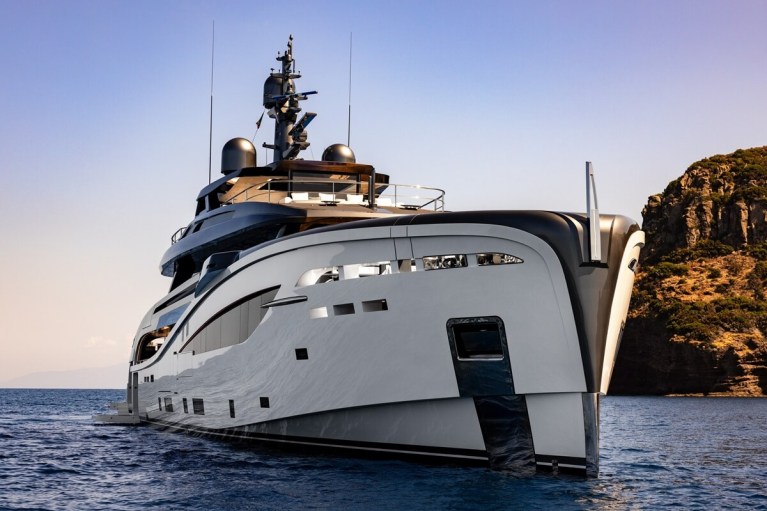
Sailing yacht, catamaran, Leopard 52, Robertson and Caine, Simonis Voogd

Leopard’s new sailing queen

Leopard’s new sailing queen

SHARE

An Asia premiere at this year’s Singapore Yachting Festival and a Yacht Style Awards 2026 winner, the super-versatile Leopard 52 is the exciting flagship of the brand’s range of sailing catamarans.
Words: Zuzana Prochazka; Photos: Leopard

  •  
  •  
  •  
  •  
  •  
  •  
  •  


Sailing yacht, catamaran, Leopard 52, Robertson and Caine, Simonis Voogd

The Leopard 52 had its world and US premieres in late 2025


A world premiere at Cannes Yachting Festival 2025 and Sailing Catamaran 14-18m winner at Yacht Style Awards 2026, the all-new Leopard 52 replaces the 50 as the flagship of the brand’s range of sailing catamarans, which like its powercats, are built in South Africa by Robertson and Caine.


The new model boasts a more powerful rig, a versatile layout targeted at both private owners and charter, and an optional hybrid diesel/electric propulsion that’s seamless and easy to use. We were fortunate to visit the new model at both Cannes and the Annapolis Sailboat Show, where the 52-footer made its US debut and again generated significant interest.


For the Leopard 52, naval architects Simonis Voogd joined Robertson and Caine’s design team to create refined stepped hulls with a narrow entry for increased agility and significant volume above the waterline to accommodate a sizeable interior. The rig has become more robust and there’s a choice of standard diesel engines or twin hybrid pods for propulsion.


Sailing yacht, catamaran, Leopard 52, Robertson and Caine, Simonis Voogd

The aft coachroof can fit up to 1,600W of solar panels


Because this model will serve both private owners and charter guests with The Moorings fleet, the design is somewhat modular for impressive layout versatility.


Key Leopard elements are still visible on this new model, starting with the raised helm on starboard where two electric winches and a set of jammers handle the lines. A bench seat for two and a choice of Garmin or Raymarine electronics make easy work of navigation.


Visibility is good forward and down the starboard side, and the driver can duck under the flybridge overhang to see the aft port corner. An enhanced coachroof lounge offers seating around a table, so guests can keep the helmsman company. This semi-flybridge configuration has all the social space but less windage of a full flybridge.


PERFORMANCE

Our test day served up gusty winds, pouring rain and plummeting temperatures, but the Leopard 52 was built to take these conditions and keep us somewhat warm and dry. This model likes a lot of wind, so at 18-22 knots of true breeze, we sailed 8.2-8.3 knots at 50 degrees apparent wind angle (AWA).


Sailing yacht, catamaran, Leopard 52, Robertson and Caine, Simonis Voogd

The new model retains the brand’s semi-raised helm station


In 24-knot gusts, she pumped up to 9 knots of speed with the genoa and the square-top mainsail remaining unreefed. As we cracked off to 150 degrees AWA, the wind dipped to 14 knots, but we still held on to 7.3 knots of boat speed. The new rig is powerful with a taller mast, longer boom and 17 per cent more upwind sail area than on the Leopard 50. Ulman aramid sails are optional.


Standard power is provided by twin 57hp diesel engines that can be upgraded to 80hp versions. Our test boat was equipped with the Joool serial hybrid system. This includes a 1,600W solar array and a 24kW range-extending generator that powers a 27kWh lithium battery bank, which in turn drives twin 25kW electric pods below the waterline.


The system is designed to have the genset start automatically when the batteries reach 40 per cent without the need for operator interface. Hydro-regeneration under sail is possible at the touch of a button, but the large propellers induce drag, slowing the boat down. Although touted to start at 5-6 knots, any measurable regeneration needs at least nine knots before it becomes meaningful.


Sailing yacht, catamaran, Leopard 52, Robertson and Caine, Simonis Voogd

The upper lounge has an L-shaped sofa, a table and a sunpad


It was a bit miserable when we sailed, but the Leopard 52 was self-assured, even with all the canvas up, and we had plenty of places to tuck in to warm up. In our estimation, it was the only boat to have been out for sea trials on that day.


ONBOARD COMFORT

As well as the solid helm set-up, Leopard signatures on the 52 include the brand’s renowned forward cockpit that can be accessed by the side decks or the watertight, forward saloon door, which can also be used to cool down the boat quickly when open.


Forward of the door is a covered, sunken seating area, while there’s plenty of space to lounge on the wide expanse of sunpads and the nets, plus there are floating ‘stools’ attached to the siderails in both forward corners.


Sailing yacht, catamaran, Leopard 52, Robertson and Caine, Simonis Voogd

The central lifting platform is among many options on the Leopard 52


At the other end, the aft cockpit offers a large dinette to port and an L-shaped sofa and a barbecue area to starboard. An optional hydraulic platform adds so much to the practical use as well as the enjoyment of the boat that it should be on the spec list.


Leopard is experimenting with a new layout that is becoming increasingly popular across the multihull universe. The highlight of this configuration is the integration of the interior and exterior with a dining arrangement that flows in a straight line from the saloon to the cockpit, creating a connected environment.


Sailing yacht, catamaran, Leopard 52, Robertson and Caine, Simonis Voogd

The cockpit has lift-up access to the port hull, an aft sofa with adjustable backrest, and a dinette that aligns with the interior dining area


On the 52, two tables, a foldable one inside and a large one outside, create banquet-style dining along the port side, while foldable chairs and a bench sofa can be moved as needed. To create an opening large enough to make this indoor-outdoor connection work, the panels of the glass door stack and disappear on starboard, improving circulation and blending the two living spaces.


One thing that Leopard clings to – and for good reason – is a full navigation station tucked into the forward port corner of the saloon. It’s dedicated to the business of running the ship and if electric propulsion is specified, it holds a repeater screen so the skipper can monitor the system from inside.


Sailing yacht, catamaran, Leopard 52, Robertson and Caine, Simonis Voogd

The saloon has a table that can be folded and rotated when more space is needed, a navigation station to port and an open galley to starboard


VERSATILE ACCOMMODATION

The Leopard 52 is available with three to six guest cabins plus a small optional crew cabin in the port forepeak.


For liveaboard owners, the three-stateroom configuration comes with a spacious master stateroom that takes up two thirds of the starboard hull and has its own interior stairway. A large, forward-facing bed, a vanity desk and an enormous bathroom forward create a lovely owner’s retreat.


Sailing yacht, catamaran, Leopard 52, Robertson and Caine, Simonis Voogd

The starboard hull has the option of a master suite aft (pictured) with VIP suite forward, or three en-suite guest cabins


The master is joined in the starboard hull by an en-suite VIP cabin, which has a similarly large bed but facing the hull window, while the room also benefits from a skylight. The other layout option for the starboard hull is three en-suite cabins, with two cabins in place of the master.


There are fascinating options for the port hull, which can include a long aft cabin with its own exterior companionway to the aft cockpit and a smaller guest cabin forward.


Sailing yacht, catamaran, Leopard 52, Robertson and Caine, Simonis Voogd

The port hull also has options for utility rooms, aft and/or forward


However, as pictured, there’s an option for a forward utility room, which can act as a dedicated space for all kinds of tools, spares and sundries, with a washer/dryer available. There’s also the option for up to three guest cabins in the port hull, while the space for the smaller aft cabin can also be used as an aft utility room.


The layouts with four, five and six guest cabins are suitable for charter, where neither comfort nor privacy will be sacrificed.


Large wraparound windows, soft indirect lighting, and neutral colour schemes allow sailors to live on the water just like they do at home. Additional comfort options include a dishwasher, a wine fridge and an induction cooktop to eliminate the need for propane.


Sailing yacht, catamaran, Leopard 52, Robertson and Caine, Simonis Voogd

The port hull has the option of a large aft cabin with cockpit access


Robertson and Caine has launched over 3,000 boats in its long history, so has much expertise on which to draw. Leopard’s new flagship is a big boat that’s stable and tolerant of anything that even new charterers can serve up. However, with the new sail configuration, she’s also surprisingly responsive and agile. Owners looking to do extensive cruising will appreciate that.


The Leopard 52 has been asked to do many things and manages them all well, which entitles her to be called the queen of versatility. Long may she reign.
leopardcatamarans.com


SHARE

Leopard’s new sailing queen Read More »

sailing yacht, catamaran, Excess 13, Groupe Beneteau

Enjoying the new Excess 13 catamaran

Enjoying the new Excess 13 catamaran

SHARE

Winner of the ‘Sailing Catamaran Under 14m’ category at Yacht Style Awards 2026, the all-new Excess 13 further solidifies the appeal of the Groupe Beneteau brand in a competitive sailing catamaran market, with units already in Asia-Pacific following the model’s world premiere last year.
Words: Zuzana Prochazka; Photos: Excess

  •  
  •  
  •  
  •  
  •  
  •  
  •  


sailing yacht, catamaran, Excess 13, Groupe Beneteau

The Excess 13 was displayed at Singapore Yachting Festival 2026


The Excess line of cruising catamarans has only been in existence since 2019, but with the Excess 13, its third from-scratch design, the French builder seems to have found its stride. Joining her smaller and bigger siblings, the Excess 11 (2020) and 14 (2022), the new 43-footer lives up to expectations.


We had so much fun on a cold and windy day that it’s only fair to jump right in with how the Excess 13 sails. In winds of 16-18 knots true, we made a good 10-11 knots at 70 degrees apparent wind angle (AWA). Catamarans aren’t known for their pointing ability, but our test boat surprised us by nosing up to 40 degrees AWA and holding onto 8.5 knots of boat speed.


The numbers were good, but the simplicity of the setup was even better. High-performance cats will reel off higher speeds, but they often have complex and touchy systems that can be unforgiving of cruisers’ mistakes.


sailing yacht, catamaran, Excess 13, Groupe Beneteau

Like the Excess 11 and 14, the Excess 13 has two steering stations


By comparison, the Excess 13 is straightforward. Lines are led to arrays of clutches and Harken winches at the primary helm on starboard, and it helps if both are electric for easy sail handling. Another winch on the transom bulkhead manages the traveller and the davit lines. Speed doesn’t have to be synonymous with complexity, and we found the intuitive nature of this boat to be mighty appealing.


Because the helms use direct rather than hydraulic steering, the wheels answer immediately and precisely, and you can feel exactly what the boat is doing.


We sailed the Pulse Line edition that adds 3ft to the mast and 100sqft of upwind canvas. Our test boat had a square-top mainsail and an overlapping genoa with a 3D ring system that helps dial in optimal sail shape without the need for jib tracks or cars.


sailing yacht, catamaran, Excess 13, Groupe Beneteau

The Pulse Line pack includes a performance bowsprit and larger rig


The blustery day didn’t slow down our team from Excess that included Brand Director Thibaut de Montvalon, who doesn’t shy away from boisterous conditions. We put up the 818sqft Code 0 that attaches at the composite bowsprit, and it gave us a thrilling ride. (I nearly forgot I had other boats to test that day.)


ON DECK

For the Excess 13, the brand worked for the first time with Marc Lombard Yacht Design Group as naval architects, having collaborated with VPLP on previous models. Inverted bows with a free forefoot give the model an aggressive stance while the asymmetrical hulls are rounder outboard than inboard. This does two things: it shifts the centre of buoyancy outward for increased stability and reduces drag between the straighter inner hulls.


The mast sits out on the foredeck and is surrounded by well-integrated steps up to the coachroof. The boom is low, creating space for a larger mainsail and enabling crew to manage the sail from the coachroof without much trouble.


sailing yacht, catamaran, Excess 13, Groupe Beneteau

The helm seat is lifted and sugarscoop lowered to provide water access


Black anodised stanchions add a bit of flair and fold-up transoms enhance practicality and safety, especially for anyone cruising with kids or pets. If you drop your sunglasses at the helm while underway, they’re much less likely to bounce down the steps and overboard. Better yet, fold-up sugarscoops translate to a shorter length to pay for in the marina.


At its aft end, the coachhouse includes incorporated wings or wind scoops that pop open to sweep in the breeze moving down the side decks. Cork has replaced teak and fake teak on the decks. It looks good and feels grippy underfoot, even when it’s wet.


sailing yacht, catamaran, Excess 13, Groupe Beneteau

The cockpit’s aft end includes helm bench seats each side of an 8ft-plus central sofa


The entire Excess line was created around the concept of twin helms positioned aft on the hulls to give sailors a sportier feel close to the water.


Compact individual biminis provide sun and rain cover. On the Excess 13, small sunshields were added over the multi-function displays to make them readable in bright sun and less hot to touch. The double helm seats are now deeper and more comfortable, and they can be lifted outward and out of the way for easier access to the transoms and the water when at the dock or anchor.


sailing yacht, catamaran, Excess 13, Groupe Beneteau

Forward is a dinette to port and double sofa to starboard


The cockpit features bountiful seating including a dinette to port, a double sofa to starboard, and a wide transom sofa with storage underneath.


A feature I’m not sure what to do with is a lateral strip of open space between the cockpit dinette and the aft galley window. Excess claims it’s a bonus space for anyone keeping the cook company. I think it’ll be used more for tossing cockpit detritus like shoes and swim fins. It may be a good place for a cooler that could complement the meagre fridge inside.


sailing yacht, catamaran, Excess 13, Groupe Beneteau

Opening the sliding door and window connects the cockpit with the interior, where the L-shaped galley includes a sink and prep area aft


Unlike giant glass openings between the inside and the outside on competitor models, Excess has opted for a single, wide sliding door and window. It’s not as inviting but it seems more practical, especially for passage making.


EASY LIVING

On the main deck, the saloon includes a well-proportioned navigation station in the port forward corner.


sailing yacht, catamaran, Excess 13, Groupe Beneteau

The saloon includes a navigation station and L-shaped dinette forward, plus refrigeration and cabin access to starboard


I’m a huge fan of space dedicated to ship’s business, although it may have come at the expense of adequate refrigeration. The model currently only offers a half-height front-loading fridge, with no upgrade available. That’s not enough for cruising or chartering. Galley storage is light and I’d like to have seen twin sinks.


For accommodation, the model is available with two cabins per hull or with a plush master suite occupying the starboard side. Excess has opted for open storage with many shelves but few actual lockers. It looks good and reduces weight, but for distance cruising, it’s not very practical.


sailing yacht, catamaran, Excess 13, Groupe BeneteauThe master suite option on starboard includes an aft bed, desk and shelves (above), walk-in dressing room (below) and forward bathroom

sailing yacht, catamaran, Excess 13, Groupe Beneteau


An odd choice is the sink in the master bathroom that has one drain but two faucets with a dividing top to make it appear as though there are two sinks. When asked about this, the Excess representative said customers demand the look of a double vanity, so this is a simplified solution.


There’s a practical head arrangement on the port side, where two bathrooms share a central shower stall, which is a cleaner approach than stuffing in two smaller showers.


WINNING OPTIONS

I believe a few upgrades are a must. Choose the Pulse Line for optimal performance and add the Code 0 for fast sailing off the wind.


Port aft view of the saloon and galley, plus stairs to the guest cabins


Spec the starboard primary winches as electric and choose the larger 40hp diesel engines that provide a comfortable cruising speed of 7-7.5 knots at 2,400 rpm. They’ll push through head seas or get you out of the way of a storm if needed. Comfort items include the genset, air-conditioning and davits to carry the tender.


Overall, the low profile and angled coachroof give the Excess 13 the look of a performance cat more than a production cruiser, but her easy handling makes her approachable for cruisers, many of whom are new to multihulls.


sailing yacht, catamaran, Excess 13, Groupe Beneteau


It’s unlikely the builder will be able to introduce a model smaller than the 11 (37ft), but it could potentially shoot higher and introduce a longer flagship in the future, to effectively replace the former Excess 15. In that case, this reviewer will be first in line to test one and if the last three designs are any indication, the next one should be worth the wait.
excess-catamarans.com


SHARE

Enjoying the new Excess 13 catamaran Read More »
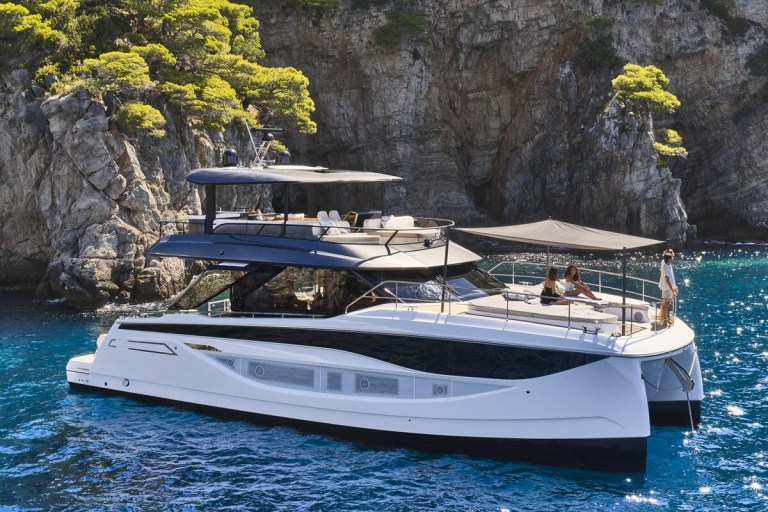
Motoryacht, superyacht, Rossinavi, Bel¹, Fulvio De Simoni, Enrico Gobbi Team for Design

Exploring Rossinavi’s 50m Bel¹

Exploring Rossinavi’s 50m Bel¹

SHARE

Another custom build from Rossinavi, the all-aluminium Bel¹ features a curvy exterior by Fulvio De Simoni’s studio, an elegant interior by Enrico Gobbi’s Team for Design, and hands-on owner input on aspects ranging from the technical to the artistic.
Words: Julia Zaltzman; Photos: Rossinavi

  •  
  •  
  •  
  •  
  •  
  •  
  •  


Motoryacht, superyacht, Rossinavi, Bel¹, Fulvio De Simoni, Enrico Gobbi Team for Design

Fitted with two Cat C32 diesel engines, the all-aluminium yacht has a top speed of 18 knots and a cruising speed of 14 knots


It’s no secret that Rossinavi is paving the way for sporty superyachts with sustainable technology; its 43m catamaran Seawolf X was the first to bring energy-saving AI to yachting. Yet the Italian shipyard’s 50m full-custom Bel¹ adds space and weight optimisation to the mix.


The full-aluminium superyacht is 60 tonnes lighter than if it had been built in steel, making its diesel engines 50 per cent more fuel efficient. Thanks to a 500GT interior volume and intelligent layout, space is in abundance, inside and out, while a 2.3m draft allows for shallow-water cruising in even the smallest of bays.


Bel¹ was delivered to her owners in July 2024, after which they embarked on a summer of Mediterranean cruising, largely in Greece and Saint Tropez. Despite two summer seasons under her belt, including a few charters, the yacht’s debut at the 34th Monaco Yacht Show in September 2025 was the first time her intriguing design had been shown to the world.


Motoryacht, superyacht, Rossinavi, Bel¹, Fulvio De Simoni, Enrico Gobbi Team for Design

Rossinavi premiered Bel¹ at Monaco Yacht Show 2025, a year after debuting the 43m Seawolf X powercat


Federico Rossi, Rossinavi’s COO, says: “The premise of this design was for a super-sporty yacht, with beautiful shaft lines and super lightweight. Then we went a step further by incorporating the SUV trend.


“We closely monitor the automotive sector. In the same way that Porsche and Aston Martin have created SUV designs, we’re doing the same with yachts. Now, many of the boats that we have in construction have SUV DNA because owners want sporty vessels.”


PERSONAL CREATION

The owners of Bel¹ were at the forefront of the design process. “They were making decisions on both interior materials and technical requirements right from the first sketch,” says Sofia Rossi, the company’s Marketing and Communications Director.


Motoryacht, superyacht, Rossinavi, Bel¹, Fulvio De Simoni, Enrico Gobbi Team for Design


A focus on personalised detail is evident throughout, most notably in the selection of marbles, for which the owners went to great lengths to ensure they complemented the range of loose furniture.


“They had a lot of knowledge when it came to interior design, particularly madame, and the use of stone,” Federico says. The material’s use is initially evident in marble trims, shelves and an eye- catching, heavily veined dining table in the main saloon, hewn from Patagonian marble.


“The table was a passion project,” adds Sofia, referencing how the owners bought a decommissioned marble cave in which all the commercially viable marble had been exhausted, and set about finding the right stone for their large dining table. The result is a one-of-a-kind work of art that originated from a 700kg block.


Motoryacht, superyacht, Rossinavi, Bel¹, Fulvio De Simoni, Enrico Gobbi Team for Design

The saloon includes a mirror separating the lounge and the dining area, which benefits from sliding doors on each side


Other marbles found onboard include Verda Green and Venetian Green marble tabletops from Italy’s Veneto region, Tuscan white Carrara marble in the en-suite guest cabins, and grey deep-veined marble from Pakistan. It’s complemented by a broad use of stainless steel, bronze, glass and wood that ties together the interior by Enrico Gobbi of Venice-based Team For Design.


Another artistic focal point is the elaborate central staircase in the lobby, which runs from the lower deck to the upper deck. The walls feature a brass-hued honeycomb aluminium with a backlit panel to bring light and interest to the area. The aluminium is produced under high temperature and pressure to create a textured bubble effect.


Artwork is an area of interest for the owners, evidenced by the mix of sculptures and paintings adorning the interior. The selection process was “intense, as madame wanted to meet each artist in person to better understand their artistic expressions”, Sofia says. “Her involvement in that process was considerable.”


Motoryacht, superyacht, Rossinavi, Bel¹, Fulvio De Simoni, Enrico Gobbi Team for Design

The main dining table is made of heavily veined Patagonian marble


Gobbi, who collaborated with designer Carlo Lionetti on the interior, underpinned the onboard artworks with curated Murano glass creations from international artists, as well as natural, textured materials in desaturated brown, dark aluminium and black, with accents of ochre and dark blue to bring depth.


Brushed American walnut and matte-finished Thai wood is paired with soft, stitched Nappa leather (made from the hides of calves, lambs and goats, and prized for its supple feel and durability), which adds a tactile and warm quality to the modern interior. A gradient from darker to lighter tones adds an elegant touch.


MAXIMISING LIGHT

The overall design intention was to maximise the yacht’s expansive open areas, exemplified by two large main-deck openings in Bel¹’s high, imposing hull that invite light into the main saloon and full-beam master suite.


Motoryacht, superyacht, Rossinavi, Bel¹, Fulvio De Simoni, Enrico Gobbi Team for Design

The full-beam master suite is also on the main deck


Yet perhaps the most striking element of the Fulvio De Simoni Yacht Design exterior is the bow – neither raked nor vertical – but featuring a ‘sceptre-like’ tip that evokes the hooked beak of a golden eagle.


Fulvio De Simoni, the studio’s founder, says: “The originality and architectural complexity of this project posed significant challenges, but it also allowed us to express our creativity by inventing new forms without compromising functionality or the enjoyment of life on board.”


Motoryacht, superyacht, Rossinavi, Bel¹, Fulvio De Simoni, Enrico Gobbi Team for Design

Forward view of the upper-deck skylounge, which includes mirrored surfaces and an attractive bar, and leads to a gym


Bel¹ is equipped with four stabiliser fins for increased stability, ensuring comfortable navigation in all sea conditions, particularly on the lower deck, which includes four evenly sized guest cabins: three doubles and a twin with sliding beds.


“It’s a very democratic layout as each family member required the same amount of space,” Federico says. The result is large guest cabins, with extra-large en-suites, dedicated desk areas, and integrated luggage storage.


Motoryacht, superyacht, Rossinavi, Bel¹, Fulvio De Simoni, Enrico Gobbi Team for Design

Starboard view of the upper-deck skylounge


Special attention has been paid to small details such as magnetic door latches to minimise noise at night when guests are sleeping. The cabin doors also use weighted chains for an effective soft-close mechanism, cutting noise by 40db.


OUTDOOR HAVENS

The lower deck aft houses an intimate beach club that opens on three sides. The folding sides allow for easy access to toy storage from both the outside and inside, not to mention water-level relaxation for guests.


Motoryacht, superyacht, Rossinavi, Bel¹, Fulvio De Simoni, Enrico Gobbi Team for Design

The aft upper deck is linked by stairs to the mezzanine deck


Central steps lead to the main-deck cockpit, a protected area for outdoor living sheltered from the elements, while a second set of steps on either side lead directly to the mezzanine deck. Located halfway between the main deck and the upper deck, the mezzanine creates an area for more intimate gatherings.


“The mezzanine serves two purposes: firstly, to increase guest privacy on the main deck, and secondly, to focus attention on the design of this part of the boat,” says Federico. It also creates a comfortable place for guests to gather when the crew are setting up water toys and arrangements in the beach club.


Aft view of the sheltered, private main-deck cockpit and, above it, the open mezzanine deck offering sea views


Further outdoor seating is found on the upper deck’s aft veranda where guests can dine alfresco. “The veranda is a big extension of this level, with LED heating lamps and sliding glass panels that provide protection from the wind,” notes Federico. Suitable for colder climes, the upper-deck skylounge has an open bar for drinks with a view, and an adjoining gym with a Pullman berth.


The heart of the outdoor arrangement, however, is found on the 145sqm sundeck, with a central bar for cooking and dining, representing how entertaining is at the core of Bel¹’s design. “We created a functional bar with dedicated crew access that can be used for breakfast, lunch and dinner,” Federico says. “It’s not just a bar, it’s universal.”


Motoryacht, superyacht, Rossinavi, Bel¹, Fulvio De Simoni, Enrico Gobbi Team for Design

Port view of the 145sqm sundeck, which includes a central bar, a pool and sunbathing area, plus aft seating (not pictured)


The forward part of the hardtop includes louvres to allow for sun or shade, while a lounge area aft sits under a solid hardtop. A retractable TV serves both the bow sunpads and mini pool, as well as the stern seating area.


Bel¹ is another full-custom win for Rossinavi, where views remain front and centre, and all owner requests have been delivered on, says Federico. “We are extremely satisfied and proud of this project.”
rossinavi.it


SHARE

Exploring Rossinavi’s 50m Bel¹ Read More »
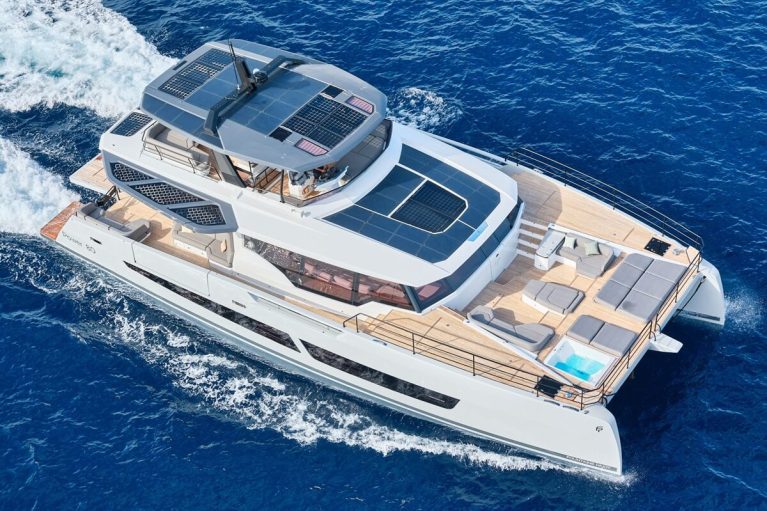
Motoryacht, superyacht, Ferretti Yachts 800, IdeaeItalia, Filippo Salvetti, flybridge

Ferretti Yachts 800 embodies balance

Ferretti Yachts 800 embodies balance

SHARE

The Ferretti Yachts 800 completes the design renewal of a Flybridge line designed by Filippo Salvetti with interior options by IdeaeItalia – and is a shining example of a shipyard and design studios in harmony.
Words: Lucie Gardiner; Photos: Ferretti Group


Motoryacht, superyacht, Ferretti Yachts 800, IdeaeItalia, Filippo Salvetti, flybridge

The Ferretti Yachts 800 had its world premiere at Cannes Yachting Festival 2025


Plenty of yachts try to impress at first glance. The Ferretti Yachts 800 does something rarer: it arrives with ease. No theatrics, no posturing, just a clear sense of proportion and purpose that speaks louder than any flourish.


This model closes the loop on Ferretti Yachts’ design renewal, a process that began in 2018 and gradually reshaped the brand’s modern identity. The 800 stands as the final expression of that evolution, familiar in footprint, but elevated in its execution and intent.


Motoryacht, superyacht, Ferretti Yachts 800, IdeaeItalia, Filippo Salvetti, flybridge

The foredeck has a C-shaped sofa facing an optional table and a large sunlounger with backrest


Guided by Ferretti Group’s Strategic Product Committee chaired by Piero Ferrari and brought to life by the company’s Engineering Department, the yacht carries the joint signatures of architect Filippo Salvetti on the exterior and IdeaeItalia on the interior. The dimensions reflect the category, but the experience feels distinctly more curated.


The 800 also reflects a clear understanding of how owners in this size bracket use their boats. Increasingly, they’re seeking something that balances professional crew support with the freedom of an owner-driver experience.


Motoryacht, superyacht, Ferretti Yachts 800, IdeaeItalia, Filippo Salvetti, flybridge

The full-beam platform can become a waterside lounge, complemented by a fold-down sofa


This yacht makes that balance look effortless. The deck flow, the discreet crew routing and the thoughtful separation of service and leisure areas all contribute to a sense of personal space rarely achieved on an 80-footer.


Families can settle in without ever feeling managed, while owners who prefer to take the helm from time to time won’t feel overshadowed by the operational side of the boat. It’s a yacht designed for real life, not just for spec sheets, and that practicality ultimately becomes part of its understated charm.


Motoryacht, superyacht, Ferretti Yachts 800, IdeaeItalia, Filippo Salvetti, flybridge

Aft view of the 15sqm cockpit with flybridge stairs


The 800’s profile is defined by poise rather than drama. Salvetti introduces a subtle shift: the flybridge line slopes gently toward the stern instead of running parallel to the hull, giving the yacht a natural sense of movement even at rest. Small as it is, this gesture shapes the whole attitude of the design.


Large, uninterrupted glazing stretches across the hull and superstructure, drawing in light and dissolving the barrier between interior and horizon. The lines remain clean, confident and unmistakably contemporary – proof that design restraint can be every bit as expressive as embellishment.


Motoryacht, superyacht, Ferretti Yachts 800, IdeaeItalia, Filippo Salvetti, flybridge

The flybridge includes a covered area with wet bar, dining and a lounging area by the twin-seat helm

Motoryacht, superyacht, Ferretti Yachts 800, IdeaeItalia, Filippo Salvetti, flybridge


The 40sqm-plus flybridge embodies the yacht’s approach to outdoor living. It’s generous but never showy. A relaxed aft lounge, a natural-feeling dining area to starboard, and a discreetly equipped bar to port form the backbone of the space.


Forward, the helm enjoys clear visibility and sits beneath a choice of fixed-glass or louvred hardtop, both maintaining the yacht’s sleek profile while ensuring usability throughout the day. The design reads as purposeful and composed, exactly as the rest of the yacht does.


The saloon’s starboard side can feature a storage unit with high-low TV (pictured), cabinet with free-standing TV or another sofa


Inside, IdeaeItalia approaches the main deck as a study in proportion and flow. The atmosphere depends not on volume alone but on balance: tall glass, uncluttered sightlines and a calm, measured layout. Two décor moods – Classic and Contemporary – guide the palette without defining it. In both, the materials remain subtle and tactile, with an emphasis on warmth, clarity and Italian restraint.


The saloon carries a natural ease, more shaped by light and flow than decoration. Whether arranged for a sociable dual-sofa layout or a more formal lounge, the space encourages ease. You notice how it works because nothing gets in the way.


Motoryacht, superyacht, Ferretti Yachts 800, IdeaeItalia, Filippo Salvetti, flybridge

A sliding glass door starboard of the dining area is optional


Where the 800 excels is in how it manages people and movement. The galley sits between the dining area and helm zone, able to open or close with a sliding section that changes the dynamic of the entire deck. Crew can access the galley and wheelhouse without crossing guest areas, a subtle architectural decision that pays dividends on long stays aboard.


It’s a layout that particularly benefits the kind of owner drawn to the 800: often still an owner-driver, but one who appreciates the support of a small crew without feeling their presence. This separation keeps family life undisturbed and movement around the yacht effortless and quiet, with privacy designed into the very structure rather than managed off the cuff.


Motoryacht, superyacht, Ferretti Yachts 800, IdeaeItalia, Filippo Salvetti, flybridge

Port view of the Minotti smoked-glass dining table with Alf DaFré-designed chairs


The wheelhouse itself is a highlight, with a single-pane windscreen, uninterrupted by uprights, creating a full panorama. The effect is cinematic and immersive, enhancing both comfort and situational awareness underway.


The lower deck continues the 800’s measured tone. The full-beam master suite is proportioned around comfort, calm and privacy – an 18sqm retreat softened by ribbed wood, warm lighting and acoustic separation from the machinery aft.


Motoryacht, superyacht, Ferretti Yachts 800, IdeaeItalia, Filippo Salvetti, flybridge

The master suite has a desk and bathroom to starboard, and a walk-in wardrobe and daybed to port


The VIP cabin forward and two flexible guest cabins maintain the same philosophy: considered, welcoming and free of unnecessary flourish. Each has its own bathroom, and the twin cabins shift easily between doubles and singles.


A discreetly accessed crew area aft houses three single cabins and a proper shower room, with direct engine-room access ensuring practicality without disturbing guest spaces.


Motoryacht, superyacht, Ferretti Yachts 800, IdeaeItalia, Filippo Salvetti, flybridge

The VIP is one of four en-suite guest cabins on the lower deck


Power comes from either 1,550hp or 1,800hp MAN V12 engines. The latter pushes the top speed to around 31 knots, but speed isn’t the story here. What stands out is the composure: low noise, little vibration, and a hull that feels unhurried even when asked to move fast. It’s performance shaped for comfort, not spectacle. A sense of control that mirrors the yacht’s broader character.


What distinguishes the Ferretti Yachts 800 is cohesion. Design, engineering, comfort and movement all align into something balanced and quietly expressive. It doesn’t try to outshine anything around it. It simply shows what confidence looks like when it’s built on clarity, not excess.


Motoryacht, superyacht, Ferretti Yachts 800, IdeaeItalia, Filippo Salvetti, flybridge

Bird’s eye view of the louvred hardtop and the foredeck


As the final chapter in Ferretti’s renewed design era, the 800 sets a clear direction: modern, assured and deeply considered. In a market segment full of yachts vying for attention, it finds its strength in understatement. Sometimes the most powerful statement a yacht can make is knowing exactly what it is – and saying nothing more.
ferretti-yachts.com
ferrettigroupasiapacific.com


SHARE

Ferretti Yachts 800 embodies balance Read More »