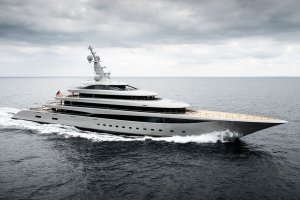
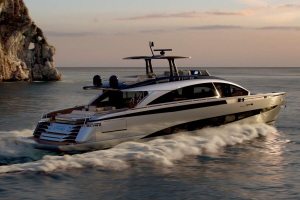
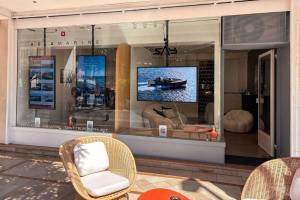
The shipyard showcased Italian design excellence at the Shanghai International Yachting Week.
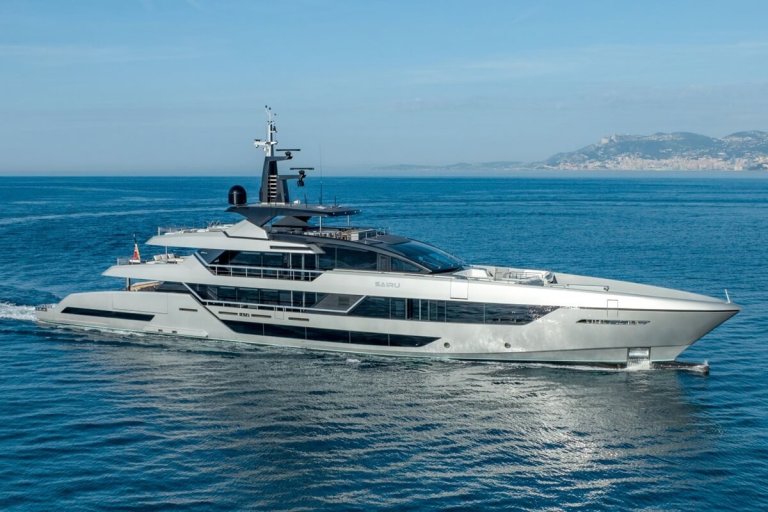
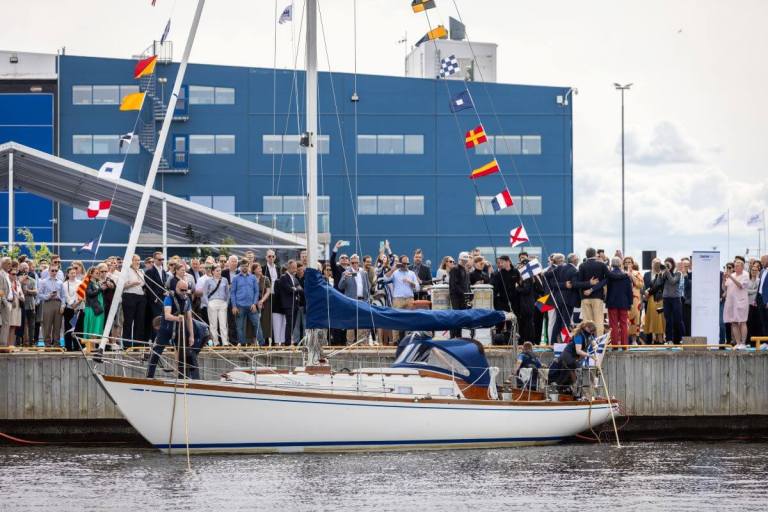
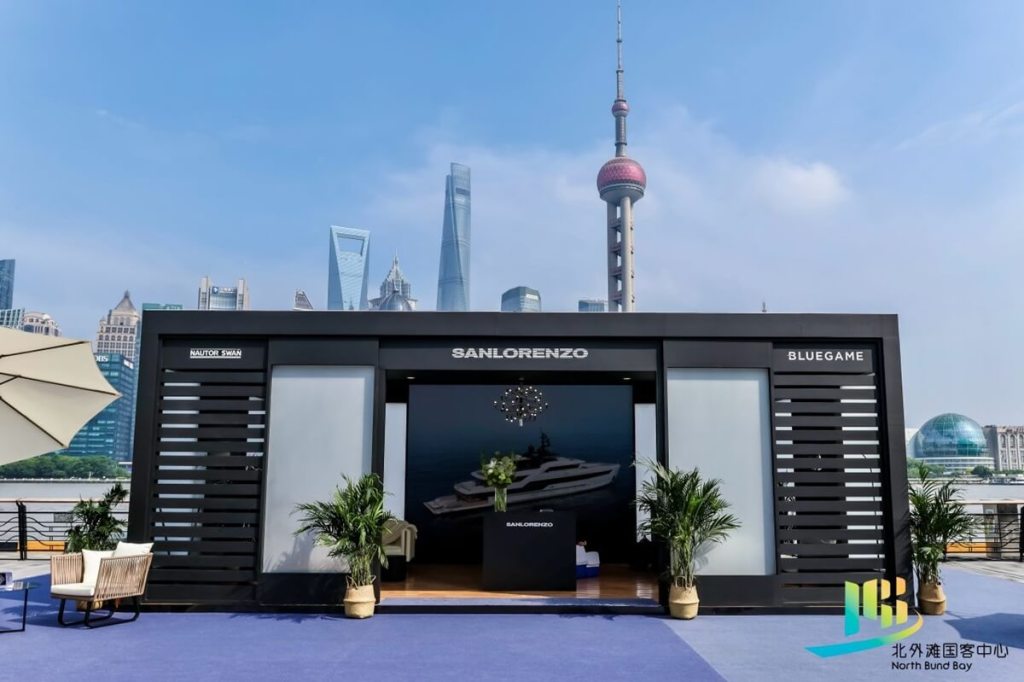
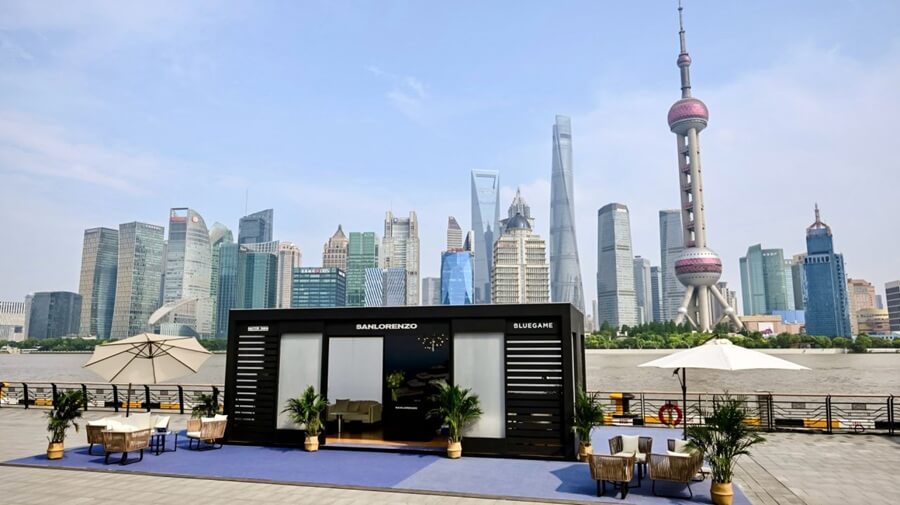
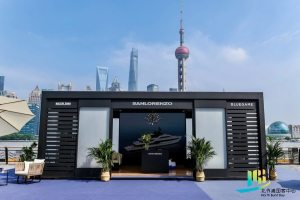
Sanlorenzo marked a distinguished presence at the inaugural Shanghai International Yachting Week, held at the North Bund International Cruise Terminal. Set against the backdrop of Shanghai’s historic waterfront, the brand presented its distinctive vision, combining contemporary Italian design with a steadfast dedication to elegance and the refined yachting lifestyle.
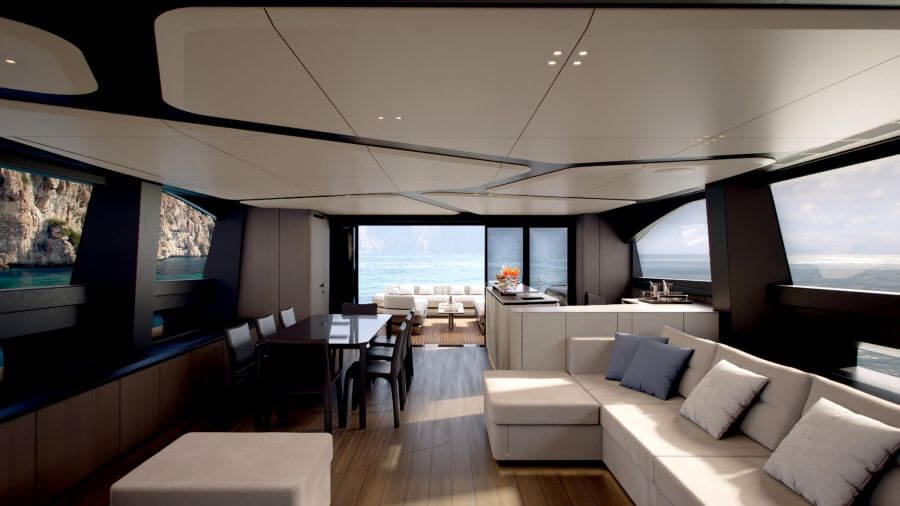
Presenting a signature Piero Lissoni Sanlorenzo Lounge against the iconic backdrop of Shanghai’s waterfront, the shipyard shared its creative vision – one that fuses innovative design with an uncompromising commitment to bespoke craftsmanship, understated elegance and the yachting lifestyle.
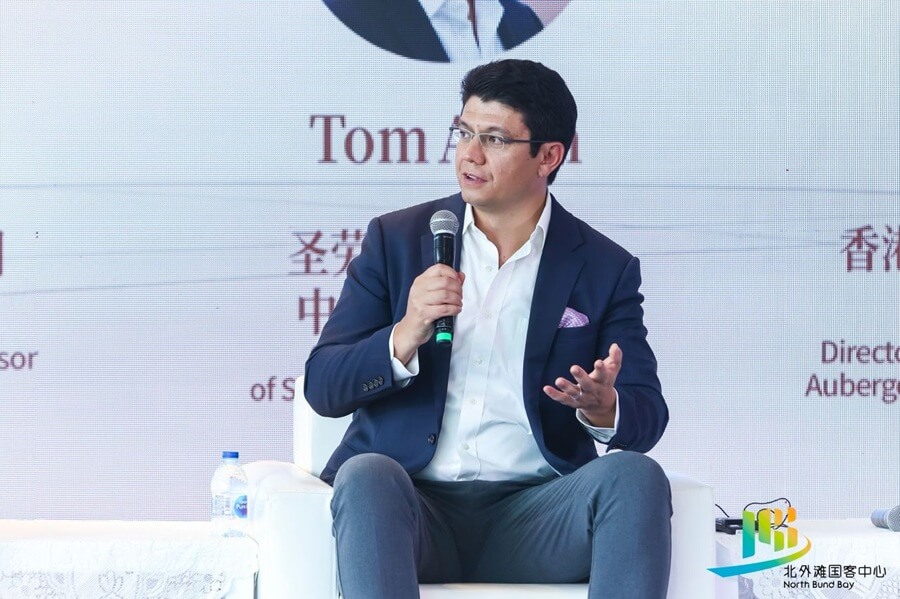
The team was engaged with a series of initiatives throughout the week. Tom Allen, Country Manager China & Hong Kong, was a special guest at the opening ceremony and participated in the industry forum. During the panel discussion, he offered expert insights and practical case studies on the evolving dynamics of the Asia-Pacific yachting market, highlighting emerging consumer trends and the region’s growing appetite for bespoke luxury experiences.
Taking the opportunity of its presence in Shanghai, Sanlorenzo Asia-Pacific hosted an exclusive dinner at the Capella Hotels and Resorts Shanghai, a perfect host venue for an intimate, curated experience. Guests gathered in the heritage Shikumen villa, evoking the charm of old Shanghai, and enjoyed a Michelin-starred culinary journey into the French and Italian Riviera.
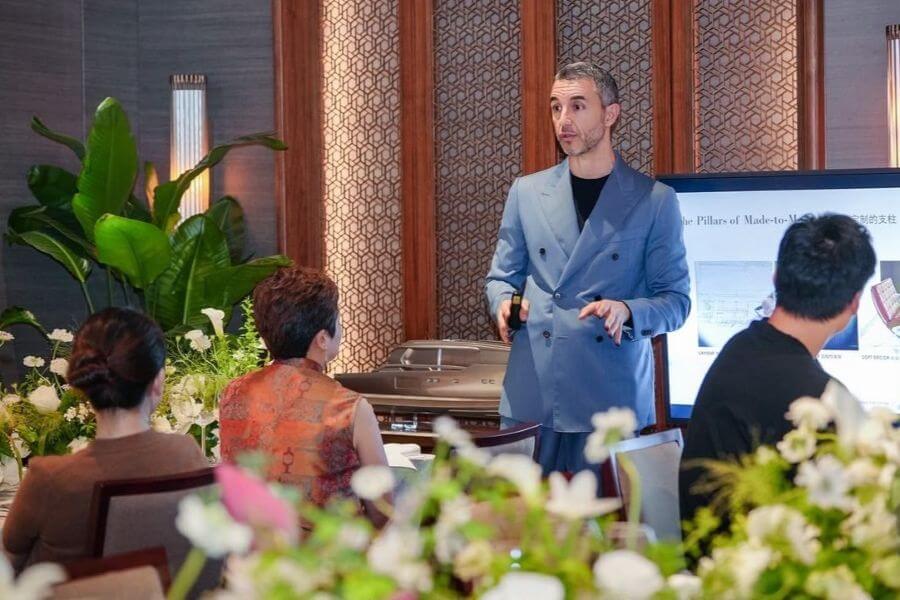
Daniele Lucà, CEO of Sanlorenzo Asia-Pacific, addressed the attendees, presenting the brand’s pioneering design philosophy, deep-rooted artistic heritage, and unwavering commitment to tailor-made craftsmanship – values that distinguish Sanlorenzo as a reputed creator of elite yachts and superyachts.
Sanlorenzo’s participation in Shanghai reflects its strong confidence in the Chinese market and reaffirms its long-term commitment to supporting the continued development of the country’s yachting industry, in close collaboration with its local partners.
The Turkish motorboat builder makes a move into Asia, while also expanding its dealer network in Europe.
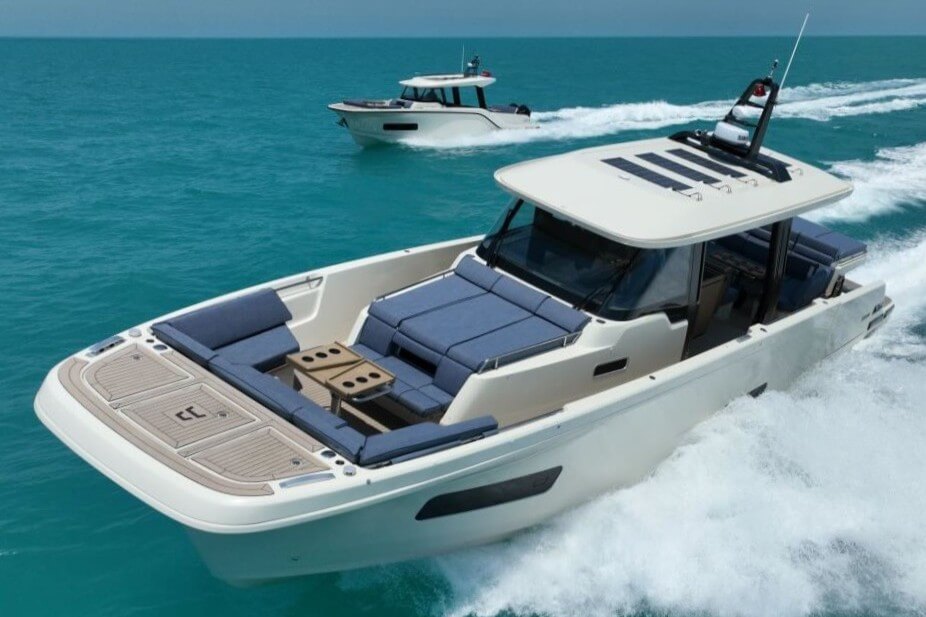
CGI of Sunfinder 50
Aiata, the boat brand developed by Anadolu Motor and part of the Anadolu Group, has appointed Extreme Marine as its dealer in Thailand, as well as SMN Chantier Naval de Port Grimaud for France and Monaco.
Headed by Tony Nixey, Extreme Marine is headquartered in Phuket, where it has an office in Royal Phuket Marina. The company has two decades of operational experience in Thailand, Malaysia and Singapore.
Hakan Kefoğlu, General Manager of Anadolu Motor, said: “These new partnerships mark another important step in Aiata’s growing international dealer network and further strengthen the brand’s footprint across Europe and Asia.
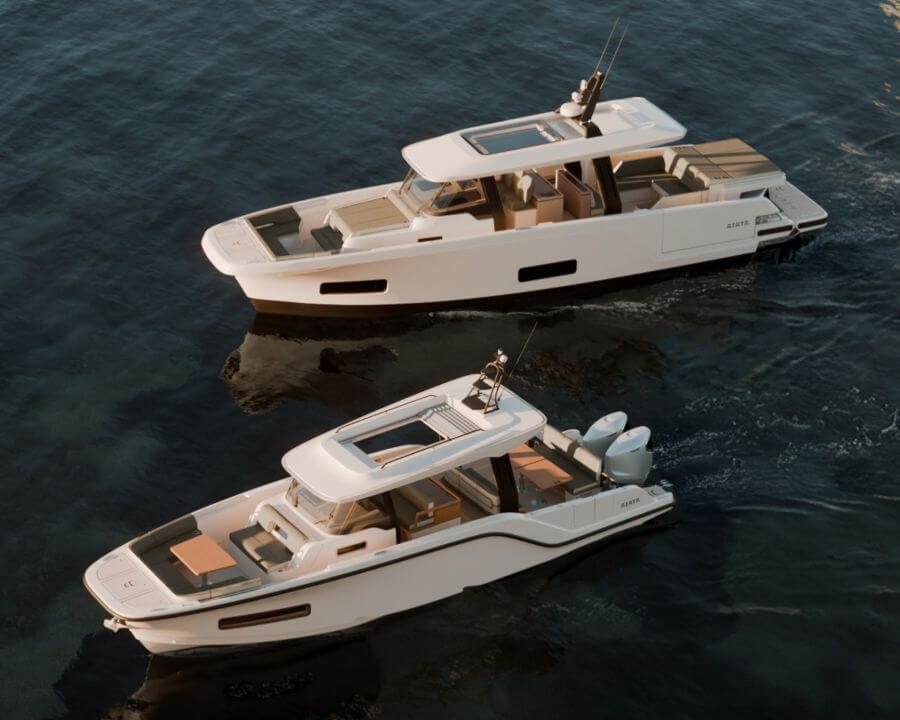
CGI of Sunfinder 38 and 50
“With the addition of dealer partners in France and Monaco, and Thailand, Aiata continues to build a representation structure capable of supporting its long-term growth strategy in some of the world’s most important boating markets.”
Aiata entered the boating market at Boot Dusseldorf 2025 with the simultaneous debut of three versions of its Wayfinder 38 in Hall 1. At this year’s edition of the world’s biggest indoor boat show, the company premiered the Sunfinder 38 and Sunfinder 50 in Hall 4. All three models are designed by Jarkko Jämsén of Navia Design.
Developed and manufactured by Anadolu Motor at a 10,000sqm facility in Çayırova, Aiata benefits from the industrial and financial strength of Anadolu Group, a global organisation operating in 20 countries with more than 80 companies, approximately 100 production facilities and over 100,000 employees worldwide.
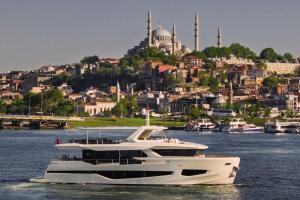
Luxury is a love language, and nowhere is that more obvious than at Four Seasons Istanbul. From the mesmerising view of the Topkapı Palace to the hidden alleys, its an experience that stays with you.
By Lucas Raven
There are cities that belong to the present, and then there is Istanbul. Where a sixth-century cathedral shares a skyline with contemporary art galleries; where ferries zigzag between continents as casually as commuters crossing town; where the scent of roasting chestnuts drifts past Roman columns and Ottoman fountains.
It is a place perpetually suspended between eras, refusing to settle on a single identity. Which is perhaps why I felt so at home here. Most luxury hotels attempt to transport guests somewhere else. In the crossroads of civilization, Four Seasons does something more interesting. It transports you deeper into the city itself.
The experience begins on the Bosphorus.
Approaching Four Seasons at the Bosphorus feels less like arriving at a hotel and more like being granted access to a private residence that just happens to have belonged to Ottoman royalty. The restored 19th-century palace stretches elegantly along the water’s edge, its pale façade mirrored by the strait that has shaped empires, economies and destinies for centuries.
Inside, there is none of the intimidating grandeur often associated with palace hotels. Instead, the atmosphere is one of effortless confidence. Fresh flowers tower over marble floors. Light dances through vast windows. The Bosphorus remains the star of every room, every corridor, every meal.
And what a backdrop it is. The water never stops moving. Ferries shuttle between Europe and Asia. Fishing boats trail seabirds. Private yachts glide silently past Ottoman mansions whose timber façades have weathered generations of change. The view feels cinematic, but more importantly, alive.
From a table at Aqua, breakfast arrives as a celebration of Turkey itself. Sun-ripened tomatoes. Local cheeses. Honey still fragrant with wildflowers. Olives in shades of green and black so beautiful they look curated by an art director. Beyond the terrace, the Bosphorus performs its endless choreography. This is where Four Seasons understands something fundamental about Istanbul: luxury here is not separation from the city. It is proximity to it.
The hotel’s greatest achievement is that despite its polish, it never feels detached from its surroundings. The city flows through it. Istanbul’s social set drifts in for long lunches by the water. Families gather for extravagant Sunday brunches. Business magnates negotiate over coffee. Guests become spectators to a city that continues unfolding beyond the palace gates.
Yet there is also a palpable sense of history. Not the kind trapped behind glass, but history that remains woven into daily life.
Nowhere is this more apparent than in the hammam. Beneath marble domes and rising steam, centuries collapse. The ritual remains largely unchanged from the days when Ottoman sultans inhabited these shores. For a brief moment, the distinction between traveller and resident, between modernity and tradition, disappears completely.
And then there is the journey to Sultanahmet.
The complimentary boat transfer between Four Seasons’ two Istanbul properties may be one of hospitality’s most inspired gestures. Not simply because it bypasses traffic, but because it transforms transportation into storytelling.
As the palace recedes behind you, Istanbul reveals itself from the water—the perspective from which Byzantine emperors, Ottoman sultans and generations of traders first encountered the city. The destination could not be more different. If the Bosphorus property embodies Istanbul’s grandeur, Sultanahmet embodies its soul.
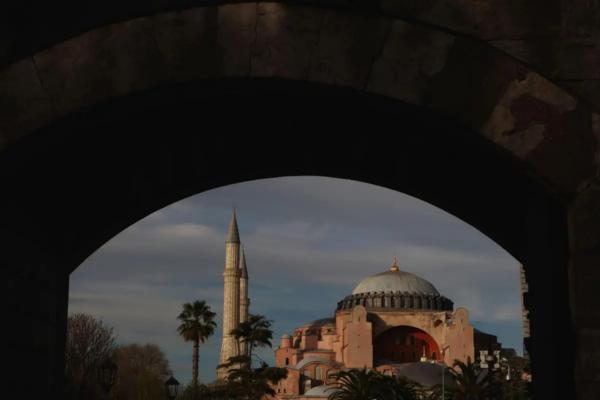
Set within a former Ottoman prison, the hotel occupies one of the most extraordinary addresses in the city. Hagia Sophia rises moments away. The Blue Mosque punctuates the skyline. Topkapı Palace sits within walking distance. Yet inside the ochre-coloured walls, tranquillity reigns. It is one of Istanbul’s most delightful contradictions, a former prison transformed into a sanctuary.
The building carries its history lightly. You sense it in the architecture, the proportions, the atmosphere. But Four Seasons has softened every edge. Courtyards bloom with greenery. Suites feel like the private residences of an old Istanbul family. Service is so discreet it borders on invisible. Here, opulence whispers rather than announces itself.
The magic of Sultanahmet is not merely its location but its perspective. Staying here places you at the intersection of civilisations. Byzantine, Roman, Ottoman and modern Turkish histories coexist within a few city blocks. Every walk becomes an act of discovery. A hidden courtyard, centuries-old hammam, contemporary gallery tucked behind ancient stone walls — the city reveals itself in layers.
From the rooftop terrace, with Hagia Sophia dominating the horizon, Istanbul feels less like a destination and more like a conversation between centuries. The call to prayer drifts across the rooftops. Seagulls circle overhead. Past, present and future coexist in a single glance.
Perhaps that is the true luxury they offer in this dynamic city. Not merely exceptional rooms or impeccable service, though both abound. It offers access — access to the Bosphorus at its most glamorous. Access to the historic peninsula at its most intimate. Access to the city’s rhythms, rituals and contradictions. Access to Istanbul itself.
Because this is not a city that can be understood from a checklist of landmarks. It must be tasted, walked, sailed, listened to.
And when the day ends, whether beside the Bosphorus or beneath the shadow of Hagia Sophia, Four Seasons provides the rarest luxury of all: a sense that you are not simply visiting Istanbul. For a fleeting moment, you belong to it.
For more on the latest in lifestyle, culture and travel reads, click here.
The Swedish-owned shipyard is scheduled to premiere the Sport Tender 35 at the 2026 Cannes Yachting Festival.
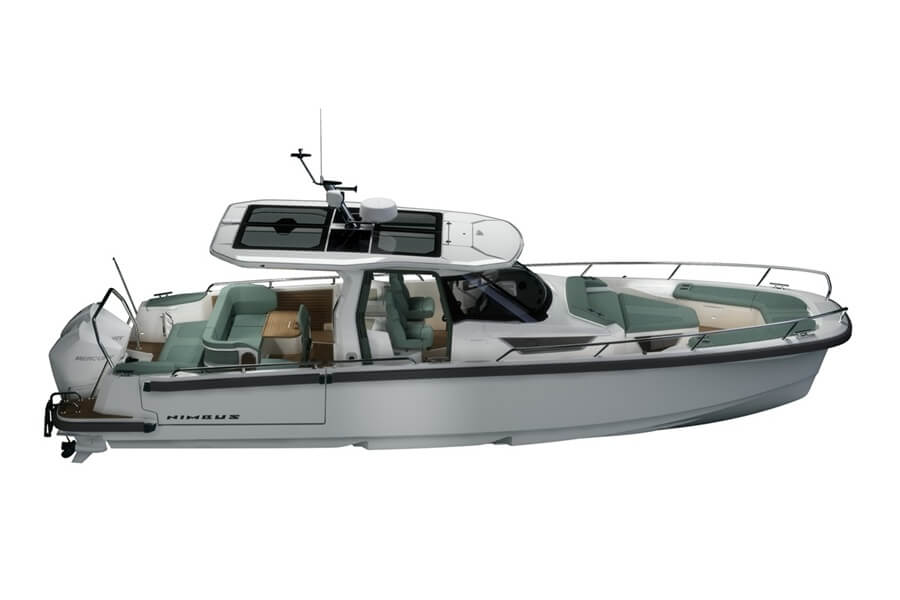
Nimbus – whose dealers in Asia include Asiamarine – is developing the all-new Sport Tender 35. The 35ft open sport cruiser is a smaller sister of the Sport Tender 42, which is the new name for the T12 that debuted with the W12 (semi-enclosed) and C12 (enclosed) at Boot Düsseldorf in January.
The Sport Tender 35 is scheduled to have its world premiere at this year’s Cannes Yachting Festival from September 23-26. It will later be joined by the Sport Weekender 35 and the Sport Coupé 35, with all three models based on the same hull.
The CE Category B boat weighs 4.5 tonnes, has an overall length of 35ft 5in and features a 34ft 11in hull with a 10ft 6in beam. Its twin-stepped, air-lubricated hull is built with vacuum-infused Divinycell sandwich construction, and a single laminate structure from behind the helm to the roof.
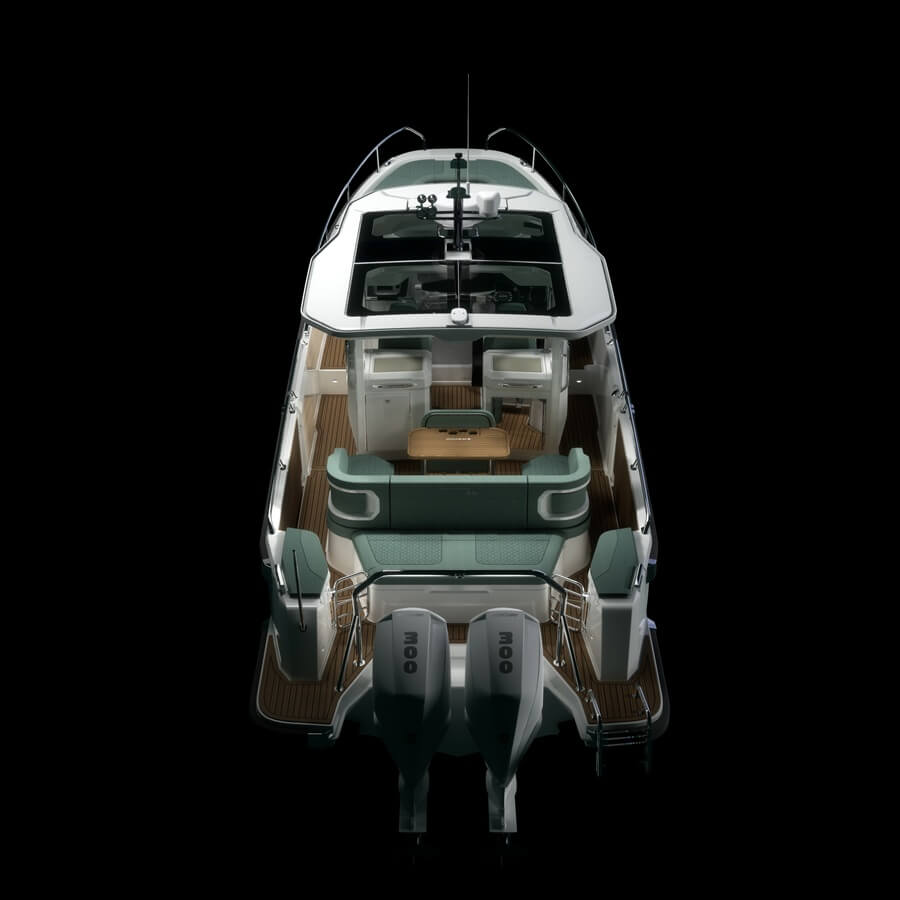
The yacht is fitted with a single 350hp Mercury V10 outboard engine as standard, while options include a 425hp Mercury V10 or twin 300hp Mercury V8s, which Nimbus predict could provide a top speed of about 45 knots. The tanks can carry up to 620 litres of fuel and 80 litres of fresh water, as well as 80 litres or black and grey water combined.
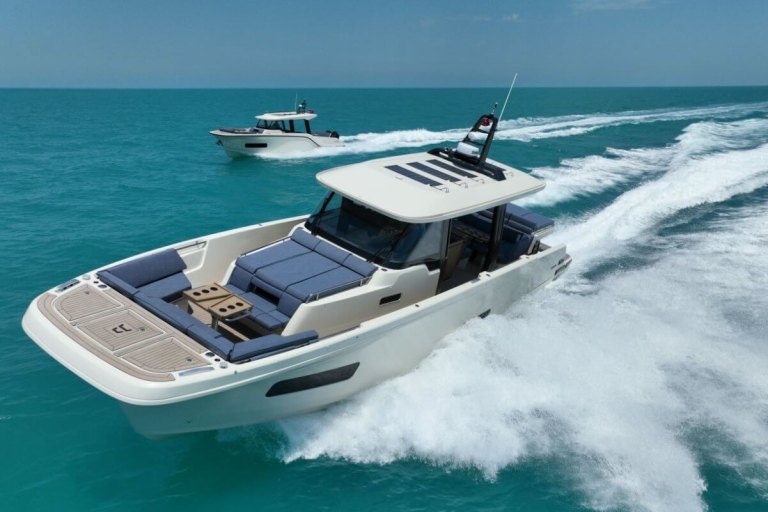
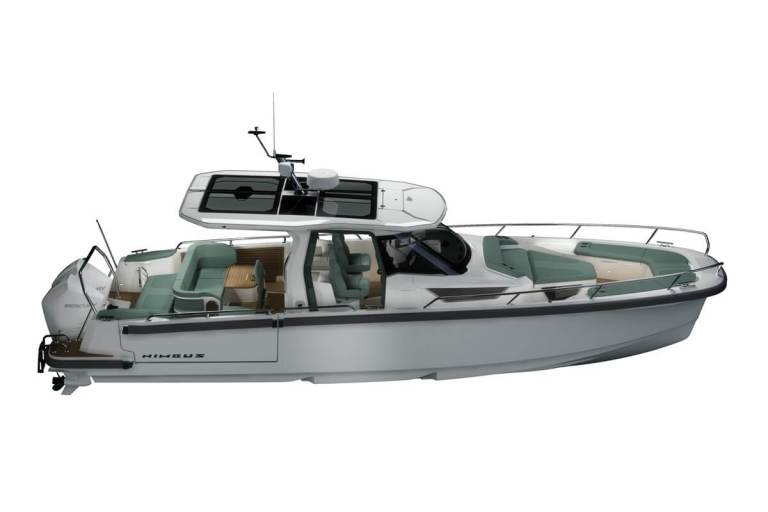
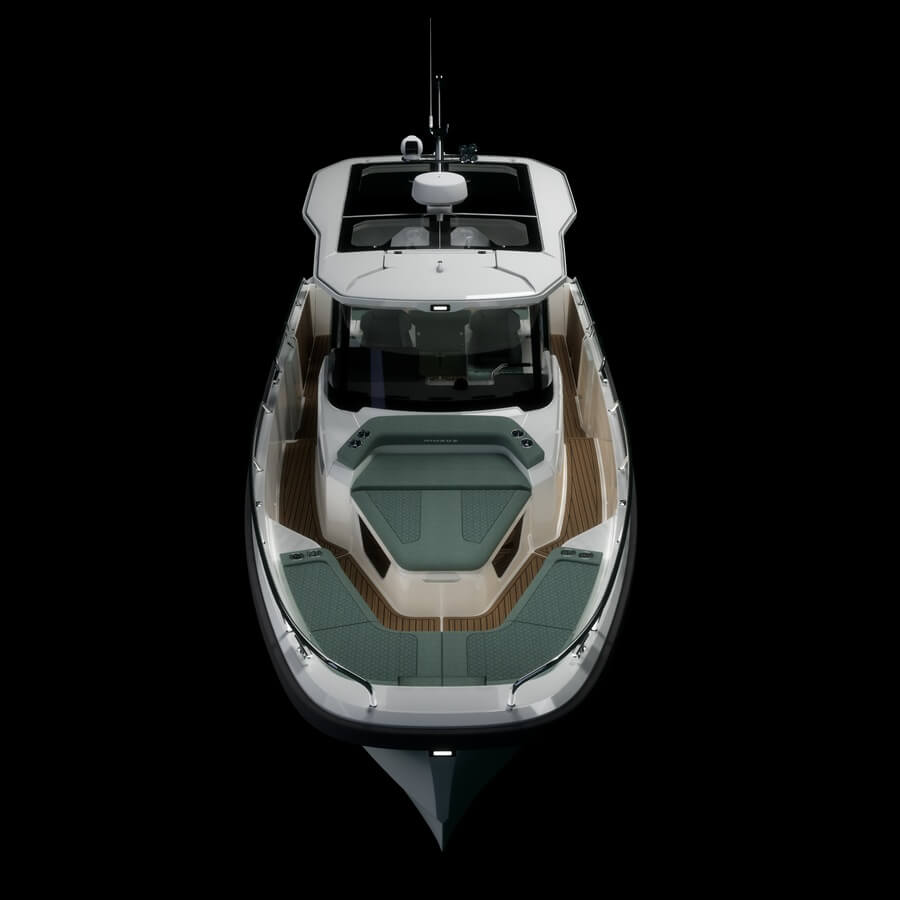
The Sport Tender 35 features a T-top that’s integrated with the full-height windscreen and includes an acrylic sunroof as well as speakers in the optional sound system.
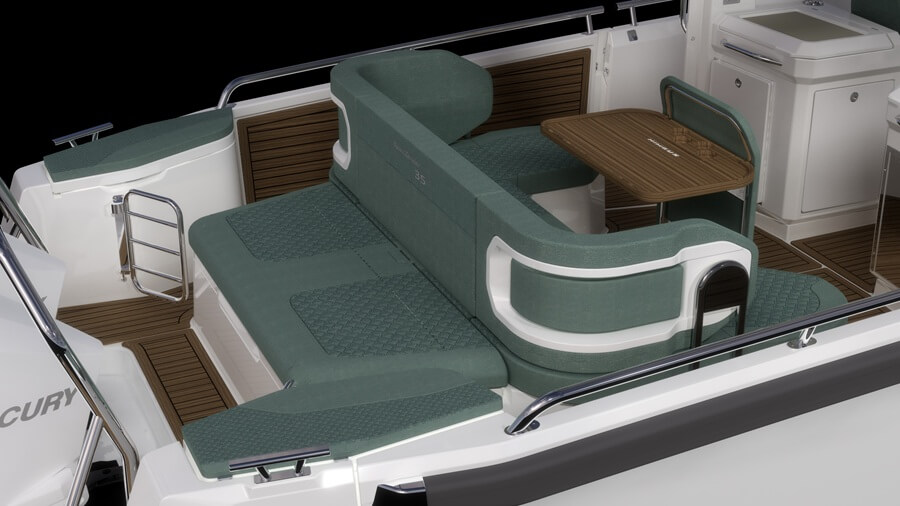
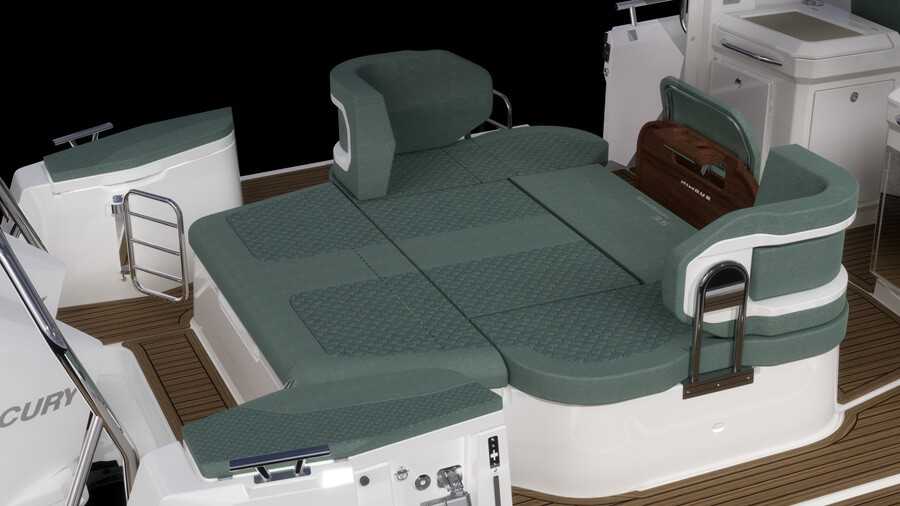
The cockpit area includes an aft-facing sofa – with storage below – attached to a forward-facing C-shaped sofa that wraps around a high-low teak table, which can be covered with the central part of the three-part backrest to create a sunbed. The side rests can also be folded forward to create alternative seating and lounging arrangements.
Either side of the main sofa, the bulwarks fold out electrically operated to become balconies. Aft, the side lockers are covered in cushions to provide more seating, while options include a live bait tank to port.
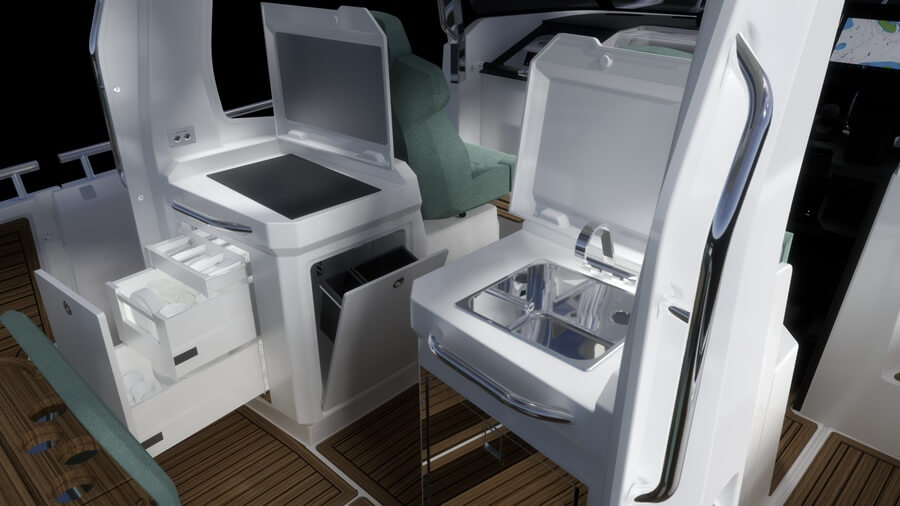
Midships, the pilot seat to starboard and the companion seat are backed by wet bar modules, with a grill and storage to port and a sink and a 65-litre fridge to starboard, while both can be linked by a small table top.
The helm area and main C-sofa can all be enclosed with integrated canvas side canopies, while the aft and fore ends of the boat can be sheltered by overhead canopies extending from the T-top.
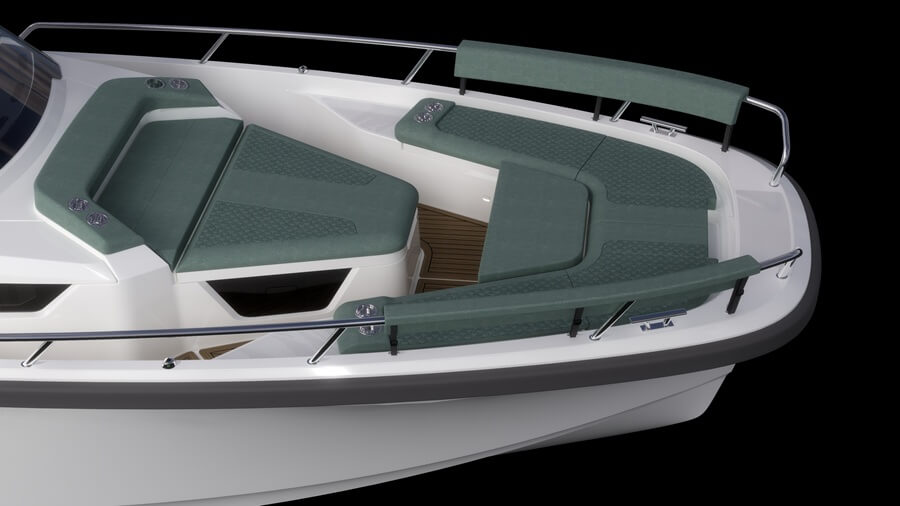
The foredeck includes a forward-facing lounging area with a low backrest, while the bow features wrap-around seating and optional backrests attached to the side rails. A high-low table can be lowered and covered by an in-fill to make this into a lounging area. Most of the boat’s cushioned areas include storage underneath, with an extra 70-litre fridge under the aft sofa among options.
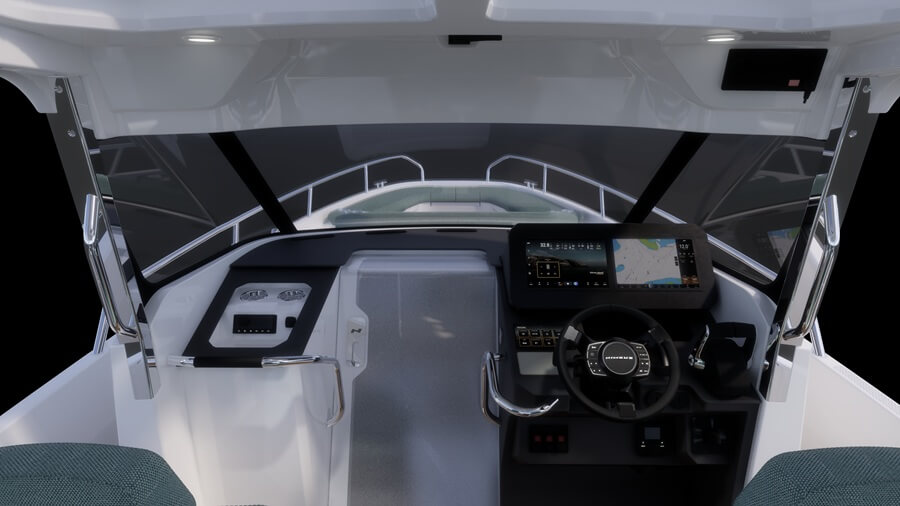
The helm is to starboard and includes a steering wheel with integrated buttons, and a choice of twin 12-inch displays or a single 16-inch. A door to port leads to the interior, which includes a bathroom with shower to starboard, a double bed forward, two full-length berths in the mid-cabin and a sofa that could take a child.
Throughout the boat, there’s ambient and courtesy lighting as standard, step lights over walkways, downlights over the galley and lights below the waterline, including under the balconies. Options include air-conditioning, a diesel heater/defroster, roof rack, gyro stabiliser, solar panels and lithium batteries.
Jonas Göthberg, Commercial and Brand Director at Nimbus, said: “Buyers who have chosen quality across a lifetime – in cars, in homes, in the things they surround themselves with – recognise a boat like this. It holds up to a closer look, and the choices are clear: you see at once why each one was made.
“This is a premium way to be on the water, smart and discreet, and that quiet confidence is exactly what this buyer recognises.”
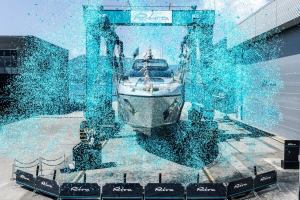
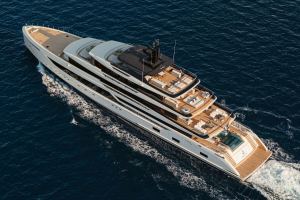
The 54Metri is the new sub-500GT, all-aluminium flagship of the iconic brand and the largest Riva built to date.
Riva has revealed details of its first 54Metri, which succeeds the former 50Metri, the brand’s first all-aluminium yacht built at the Ferretti Group Superyacht Yard in Ancona. Also built at the Ancona shipyard, the 54Metri has an overall length of 54.83m, a 9.18m beam and a sub-500GT volume.
The yacht’s sleek, sporty lines are highlighted by a combination of Moon Grey, London Grey and Bright Black colourways, enhanced by polished steel detailing, while an aquamarine waterline cuts through the sea.
The design is by Officina Italiana Design, which is led by co-founders Mauro Micheli (Chief Designer) and Sergio Beretta (CEO) and has been the exclusive designer of the entire Riva range since 1994. The studio worked in collaboration with Ferretti Group’s Product Strategy Committee and Engineering Department.
Officina Italiana Design stated: “Riva 54Metri is a sleek and elegant yacht: a balanced blend of sportiness and sophistication. She achieves a unique equilibrium between volumes, proportions and masses, becoming an almost sculptural object.
“A few distinctive features – such as the forward sweep of the deckhouse and windscreen, or the angled lines of the stern section echoed by the steel handrails on the upper decks – give this yacht a strong identity that is instantly recognisable as part of the Riva world. The aft beach club boasts unrivalled surface area because of four side sections that swing out on two levels.”
Among notable changes from the 50Metri are four aft balconies – two either side of the cockpit and two flanking the long aft platform, which help create a 60sqm-plus beach club by the water. This area includes an enclosed, sunken gym with exercise bike and a treadmill, a 4m-long outdoor pool and a 5sqm transformer platform with an extra-wide, 1.5m-long walkway.
The yacht has four decks, with the main, upper and lower decks connected by a central lift. There’s accommodation for up to 10 guests in four cabins and a magnificent master suite at the bow on the main deck, while the crew quarters consist of five double cabins and a captain’s cabin next to the helm station.
Stassi Anastassov, Ferretti Group’s Global CEO, said: “The Riva 54Metri is much more than the largest Riva ever built. It is the expression of over 180 years of craftsmanship, innovation and an uncompromising pursuit of beauty. What makes Riva unique is its ability to respect its extraordinary heritage without ever becoming captive to it.
“We are proud of the icons that have shaped our history, but our responsibility is to create the icons of the future. This yacht embodies that philosophy. It carries the timeless elegance that has defined Riva for generations, while setting new standards in design, technology, comfort and the onboard experience.”
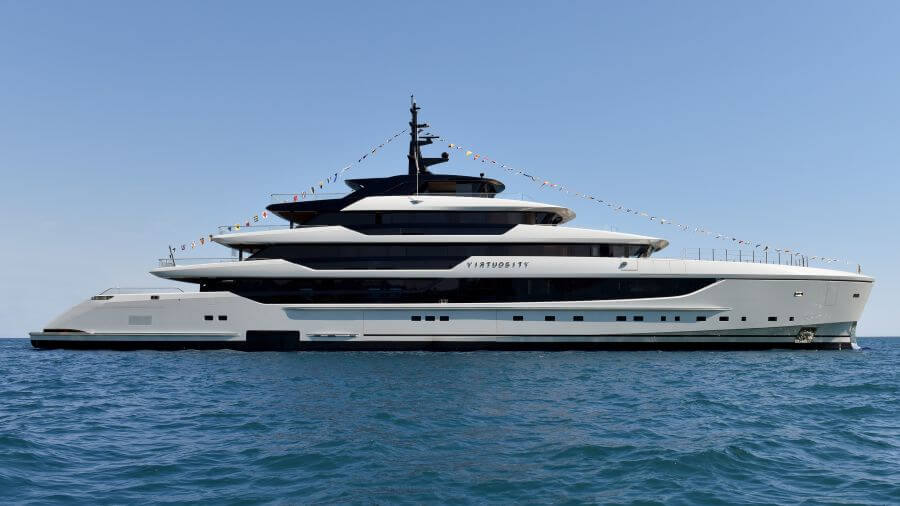
Virtuosity has already gained publicity for featuring a two-storey tree in the interior and a submerged aquarium integrated in the hull.
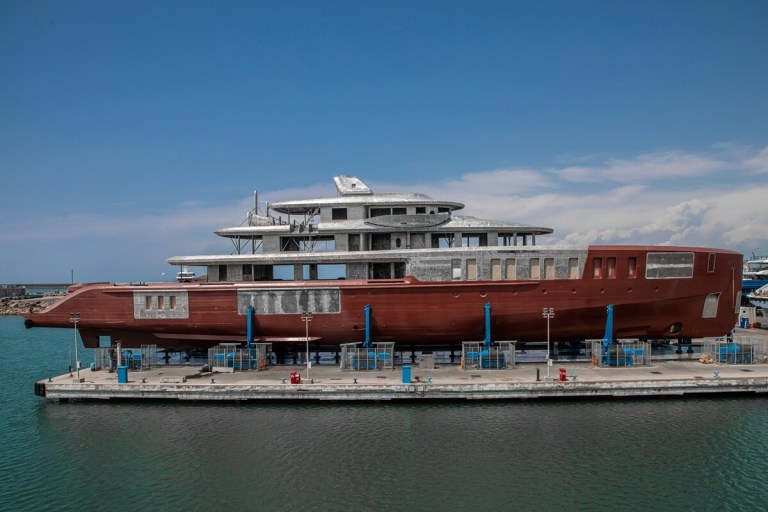
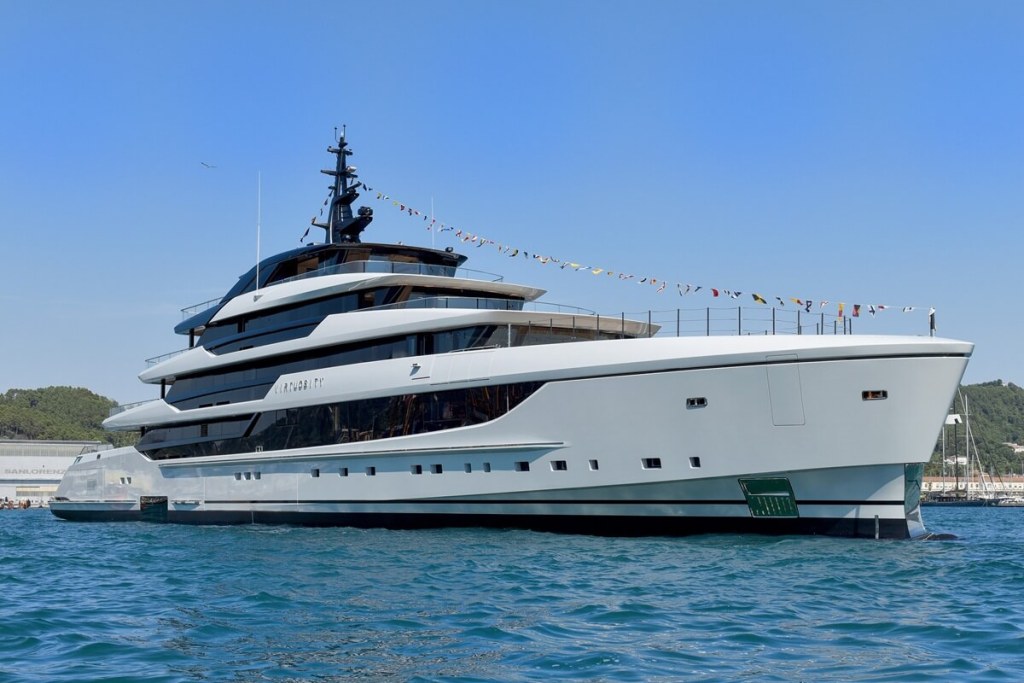
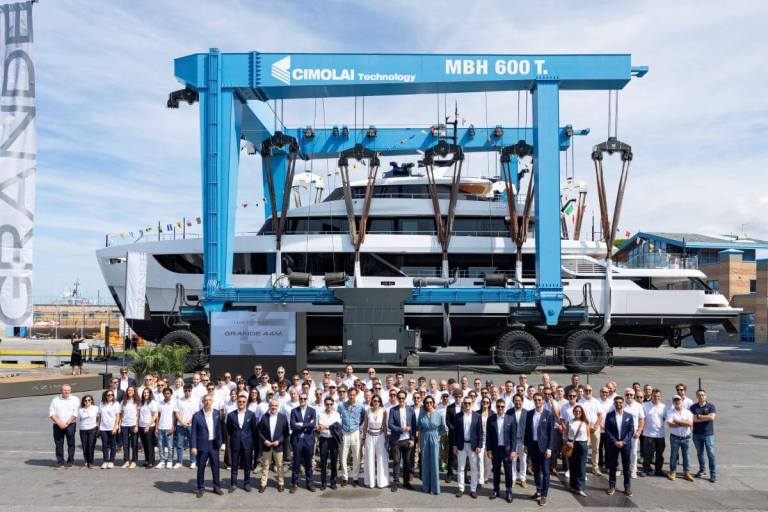
Sanlorenzo has launched Virtuosity, the second 74Steel, at its facility in La Spezia. Commissioned with Fraser, the 73m yacht features exterior lines by the Zuccon International Project studioand was built on the same engineered diesel-electric platform as the first 74Steel (Silver Fox), which was launched in October 2025 and will debut at Monaco Yacht Show 2026.
While Francesco Paszkowski and Margherita Casprini handled the interior of hull one, Virtuosity features interior architecture and design by Studio Paolo Ferrari, which collaborated with the owner and the shipyard for over four years to create “a fully bespoke spatial concept”.
The spatial innovation is evident at the aft end of the main saloon as a Ficus Nitidatree (also known as Chinese Banyan or Indian Laurel Fig) rises through an oval void to the upper or bridge deck, where the top part of the tree can be seen from the dining area on the aft terrace.
On the lower deck, the beach area – or ‘Ocean Resort’ – extends 18m from the platform to the first bulkhead, features fold-down side platforms and exceeds 230sqm in area, making it about 40 per cent larger than the first 74Steel. As well as the open sides and transom, the interior is also illuminated by natural light streaming down through the 28sqm glass-bottom pool on the aft main deck.
The lower deck also includes a wellness area with a hammam, sauna, massage room and cryotherapy. However, arguably the most innovative zone is the 35sqm aquarium, which is essentially a partially submerged glazed section of the hull, offering seated guests views above and below the waterline.
On the owner’s deck, a forward ‘reflecting pool’ features removable seating and a sensory shower. On the sundeck above, the external profile has been reinterpreted to enclose the gym while maintaining opening glazing at the bow, stern and sides.
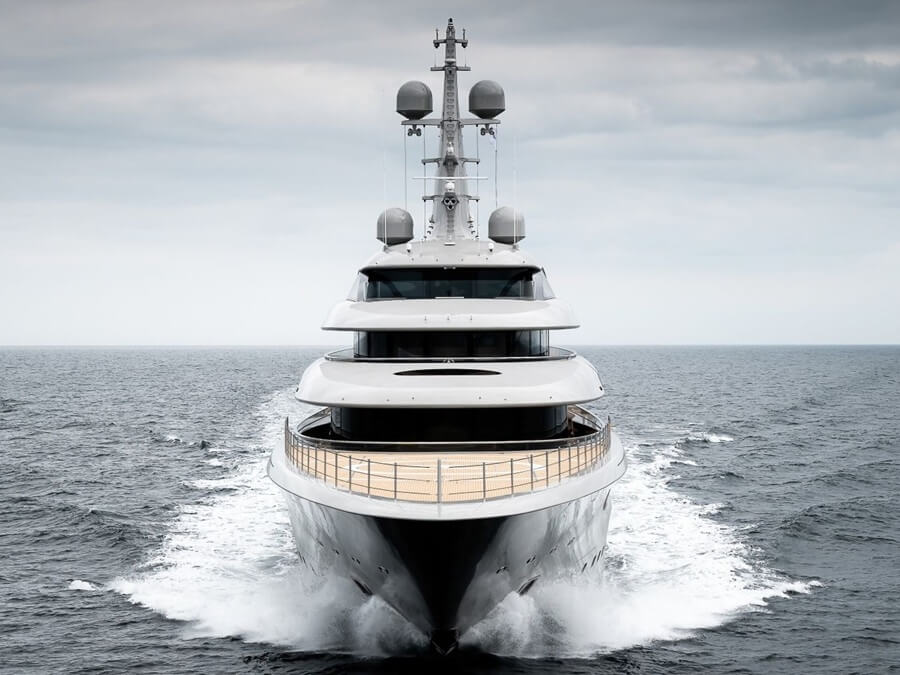
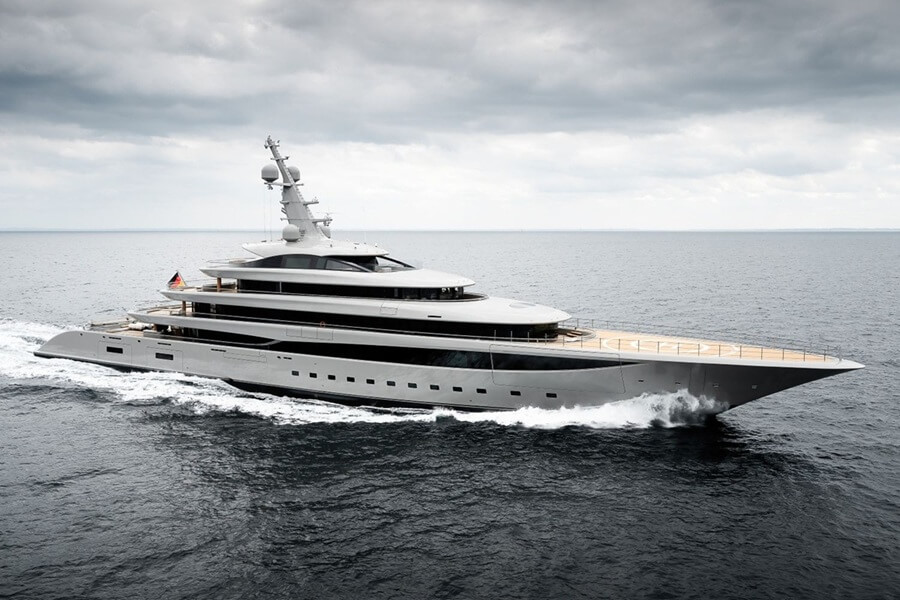
The German shipyard’s sixth delivery in four months, Nixie will debut at the 2026 Monaco Yacht Show in September.
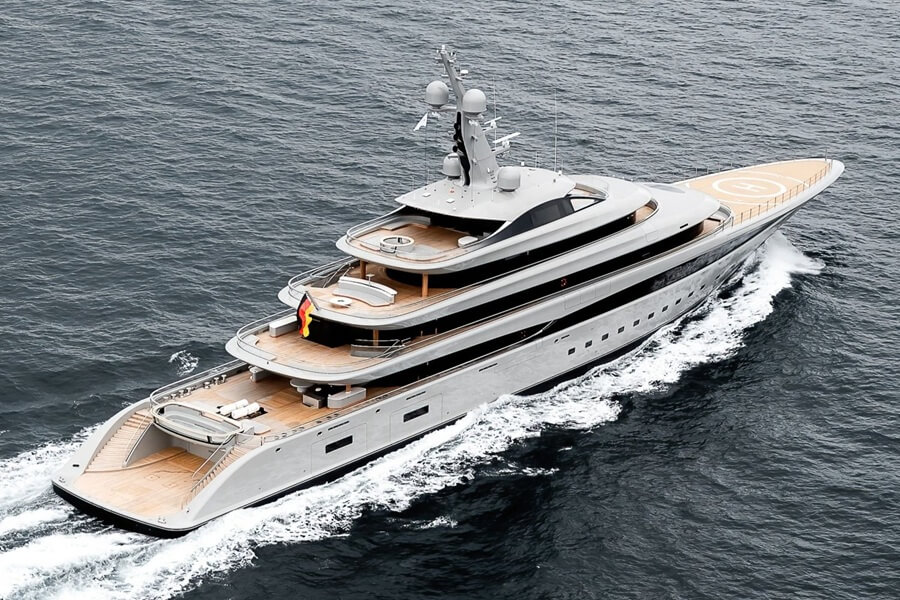
Nixie; Photos: Tom van Oossanen
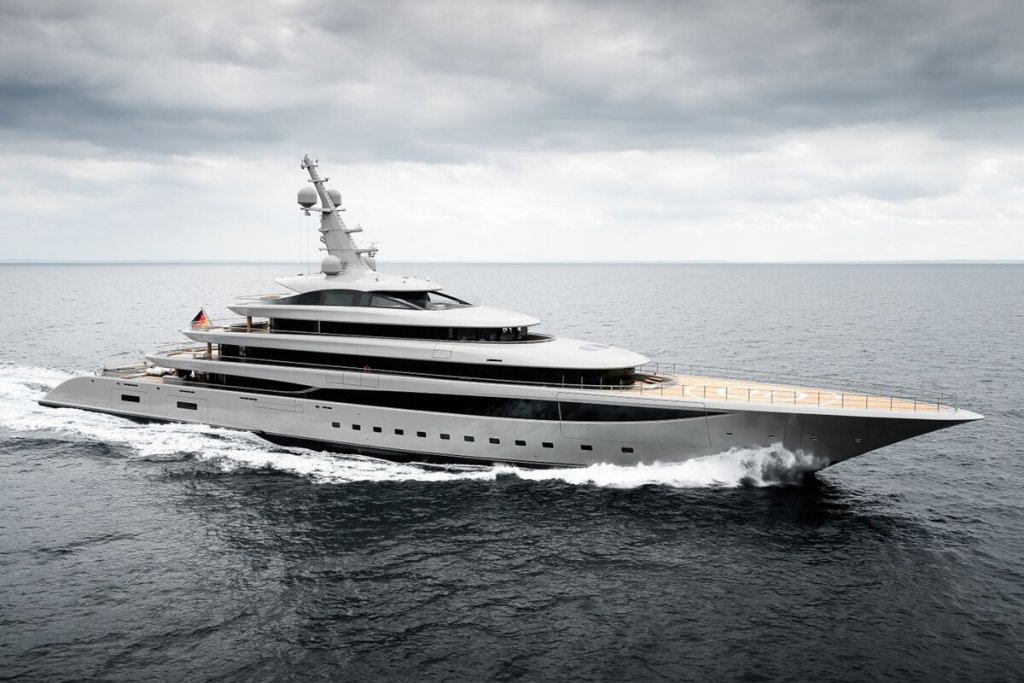
The 102.4m Nixie set off on her maiden voyage on June 26 following a handover at Lürssen, marking the latest delivery in what has been a remarkable opening six months of the year for the German shipyard.
In March 2026, Lürssen announced the handover of the 78m Odisea, the shipyard’s first collaboration with RWD. It has since delivered the 134m Deep Blue, 117m Boardwalk, 114m Nausicaäand the 109m O3, the latter in early June, before handing over the RWD-designed Nixie for its sixth delivery of the year.
Formerly known as Project JASSJ, Nixie will make her global debut at the Monaco Yacht Show from September 23-26 and will be available for charter through Edmiston, her central charter agent.
Nixie is designed inside and out by RWD, while engineering and naval architecture were all completed in-house, as with all Lürssen yachts. The 336ft yacht includes a diesel-electric propulsion system, supported by an advanced energy-storage system, providing efficient operation across a wide range of cruising profiles.
Tanja Peters, Project Manager at Lürssen, said: “It has been a great experience collaborating with RWD. The project demanded a high level of coordination across design, engineering and
procurement, and the team approached each challenge with clarity, creativity and a strong focus
on finding workable solutions.”
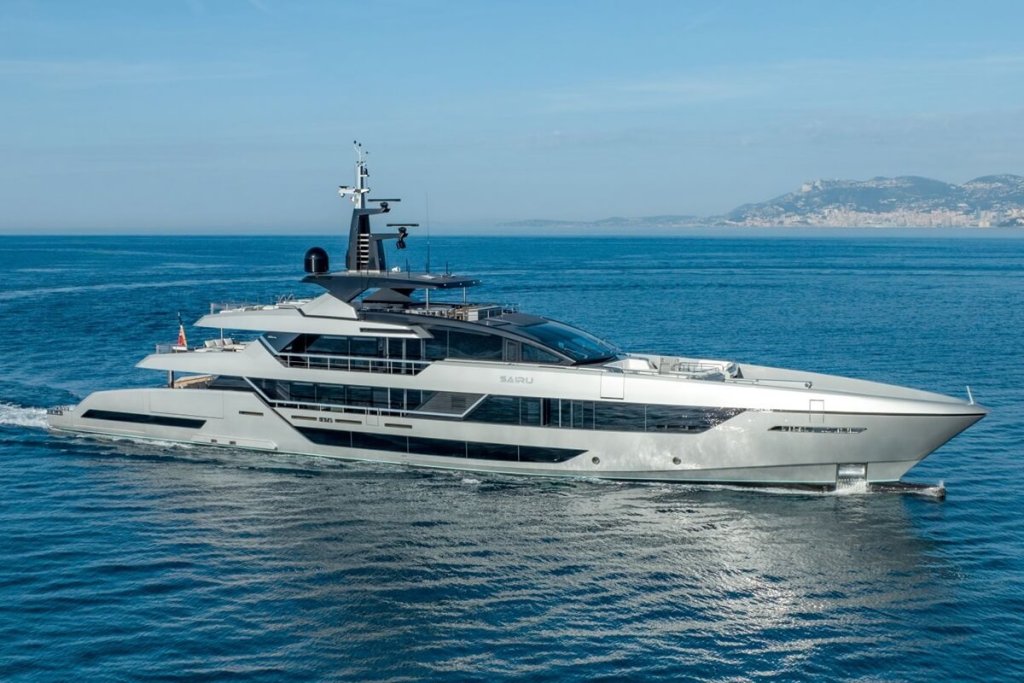
The hull and superstructure are finished in a bespoke warm grey, which Lürssen states “is light-responsive and lends a subtle pearlescent quality”. In the structural glazing, each pane is shaped and gradient-tinted, blurring the distinction between where the glass ends and the steel begins.
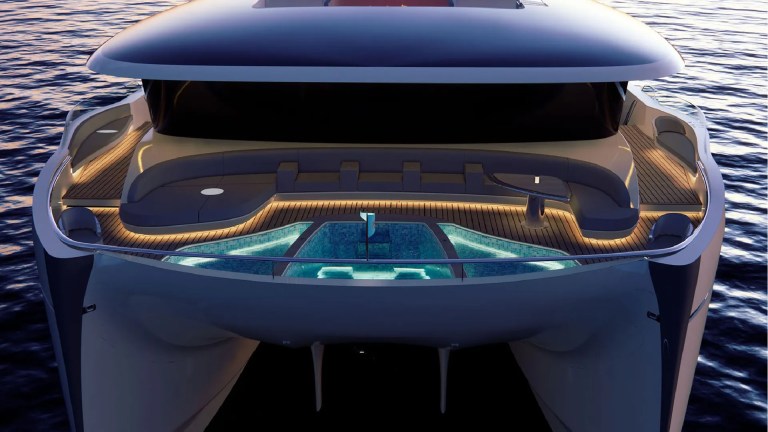
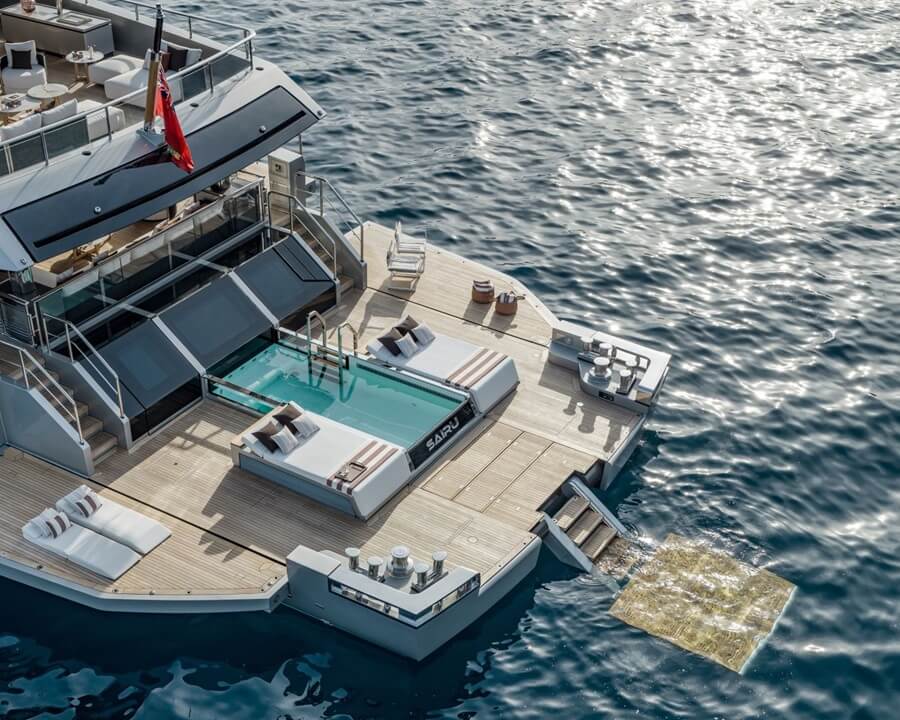
Signature elements include a semi-suspended, 6m-wide glass swimming pool on the aft main deck, extending over the swim platform. The pool features a privacy screen and has been engineered with adjustable water levels, making it fully accessible for multigenerational use.
Directly below the pool is one of the largest beach clubs to feature on a Lürssen to date. Four large sea terraces and the transom hatch can lie flush with the Indian teak to create a vast 270sqm liveable space, while facilities include a fitness area with a gym and cryochamber.
Douglas Hynd of RWD stated: “From the beginning the ambition was clear – every detail, inside and out, intentional – and that became the foundation for everything that followed. We are incredibly proud of this exceptional yacht.”
World Cup 2026 History Points to a Familiar Shortlist
SHARE
With informed insights, LUXUO delves into the discernable data to determine which nation could end up winning the 2026 World Cup.
By Joe Lim
The FIFA World Cup stadium
The countdown to the crowning of a winner at the World Cup rarely begins with the opening match. Long before a ball is kicked, conversations gather momentum in cafés, offices and living rooms across the globe. Predictions are exchanged, favourites debated and dark horses identified. Every tournament arrives with a sense of possibility, yet history suggests the list of genuine contenders is often smaller than it first appears. The 2026 FIFA World Cup may be approaching its centenary, but it remains a surprisingly limited dataset. Since the inaugural tournament in 1930, only 22 men’s World Cups have been played. Two editions were cancelled during the Second World War and the tournament takes place only once every four years. Compared with annual sporting competitions, the sample size is remarkably small.
That scarcity gives historical trends unusual weight. Over almost a century of competition, winning teams have shared several common characteristics. Past performance cannot predict the future with certainty, but it can provide a useful framework for assessing the expanded 48-team field heading to the United States, Canada and Mexico in 2026.
The simplest route would be to focus exclusively on previous winners. Only eight nations have ever lifted the trophy. Italy, a four-time champion, failed to qualify for the 2026 tournament. Uruguay, winner of the first World Cup and again in 1950, enters as a long shot despite a proud footballing tradition. The remaining former champions — Argentina, Brazil, England, France, Germany and Spain — all sit among the leading favourites according to bookmakers and predictive models.
The Game Has Become More Competitive
The numbers reveal another consistent pattern.
No nation entering a World Cup outside the top 17 Elo rankings has ever won the tournament. In reality, the threshold may be even stricter. Uruguay’s victory in 1950 remains the only championship won by a team ranked lower than fifteenth before the tournament began. 15 of the 22 World Cup winners entered their tournaments ranked in the top four.
The implication is significant. Football frequently produces surprise results over 90 minutes, but World Cups are rarely won by genuine outsiders. Sustaining success across seven matches against elite opposition requires a level of consistency that underdogs have historically struggled to maintain.
Applying that benchmark immediately removes several ambitious challengers. Paraguay, Austria, Scotland, Czechia, Sweden and Bosnia and Herzegovina all fall outside the traditional winning range. Host nations Canada, Mexico and the United States also sit beyond the historical threshold despite enjoying home advantage.
Host Nations Usually Win
World Cup 2022 Winner, Argentina.
Hosts have historically performed well. Six host nations have won the World Cup, and four secured their first title on home soil. None, however, entered the tournament as a surprise contender. Geography may provide an edge, but elite quality remains a prerequisite.
However, individual excellence offers another revealing clue. Among European champions, every World Cup-winning nation has produced multiple Ballon d’Or winners. The award, first presented in 1956, remains football’s highest individual honour and serves as a useful indicator of sustained elite talent production.France leads this category with six different Ballon d’Or winners. Germany and Italy have produced five each. England has four, while Spain, Portugal and the Netherlands have each produced three.
The pattern reflects a broader truth. Nations capable of producing the world’s best players over multiple generations tend to possess the depth, infrastructure and footballing culture necessary to compete at the highest level.
The Process of Elimination
This trend eliminates several respected European sides. Belgium’s highly regarded golden generation failed to convert talent into major international silverware. Croatia’s achievements, including a runner-up finish in 2018 and a third-place finish in 2022, remain remarkable but do not align with the historical profile of previous champions. Norway continues to emerge as an exciting prospect, powered by one of the strongest groups of attacking talent in Europe, yet the nation lacks the track record associated with World Cup winners. Attention then shifts from players to the technical area.
One of the tournament’s most fascinating historical quirks concerns managerial nationality. No team has ever won a World Cup under a foreign-born manager. The statistic may be partly self-reinforcing. Football’s strongest nations have traditionally developed elite coaches alongside elite players, while national federations have often preferred domestic appointments. Correlation does not necessarily prove causation. Even so, the record remains intact after almost a century.
The trend creates complications for several leading contenders. Brazil enters the tournament under Italian manager Carlo Ancelotti, one of the most accomplished coaches in football history. England is led by German manager Thomas Tuchel, while Portugal continues under Spanish manager Roberto Martínez. Uruguay, Colombia and Ecuador are also managed by foreign-born coaches. At some point, the pattern is likely to end. Modern football is more international than ever before, and coaching expertise increasingly transcends borders. Yet historical evidence remains a powerful consideration when narrowing the field.
The Final Five
After applying these filters, only five nations remain: Argentina, France, Germany, the Netherlands and Spain. None represents a surprise. Argentina enters as defending champion, carrying the confidence and experience that accompany recent success. France continues to possess one of the deepest talent pools in world football, supported by a development system that consistently produces elite players.
Germany’s presence reflects a remarkable ability to reinvent itself across generations. Four World Cup titles have arrived under different tactical philosophies and in different footballing eras, reinforcing the country’s reputation as one of the sport’s most resilient tournament teams.
Spain has emerged as the consensus favourite among many analysts, bookmakers and predictive models. Recent international success, technical consistency and a squad blending established leaders with exceptional young talent have strengthened confidence in another deep run.
The Dutch team for World Cup 2026.
Then there is the Netherlands. No nation has experienced more heartbreak without winning the World Cup. Defeats in the finals of 1974, 1978 and 2010 remain defining moments in football history. Yet Dutch football continues to produce technically gifted players, influential coaches and a clear footballing identity. Among countries still pursuing a first title, few possess a stronger claim.
Of course, the World Cup has never been decided solely by trends, rankings or historical precedents. A tournament that unfolds over four weeks inevitably produces moments beyond prediction: a decisive save, an unexpected breakthrough star, or a single goal that alters football history.
Historical Shortlist
History points towards a familiar shortlist heading into 2026. Spain and France sit at the front of the queue. Argentina seeks to defend a title. Germany continues another cycle of renewal. The Netherlands pursues a long-awaited breakthrough. The names may feel familiar, but that is precisely the point. Nearly a century of World Cup history suggests that football’s biggest prize rarely strays far from its established centres of power.
Yet anticipation persists because certainty remains impossible. Every tournament begins with data, trends and forecasts. Every tournament ends with a story. The nation that lifts the trophy in North America next summer will add another chapter to football’s most enduring narrative — whether history repeats itself or takes an unexpected turn.
The GTX90 could be among Ferretti Group’s world premieres at the 2026 Cannes Yachting Festival.
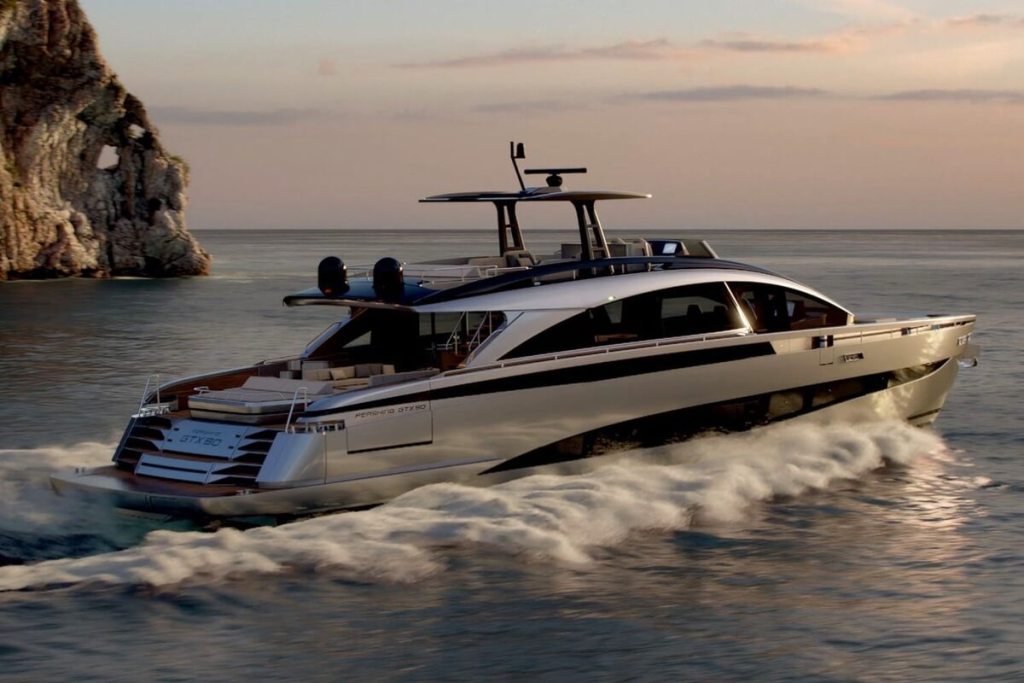
Pershing could launch its first GTX90 as early as July 2026, with the model expected to be a global debut at this year’s Cannes Yachting Festival from September 8-13. The GTX90 joins a ‘Sport Utility Yachts’ range that includes the GTX70 (2025), GTX80 (2024) and the series-flagship GTX116 (2023).
Designed by Vallicelli Design and Ferretti Group’s Engineering Department, the GTX90 is predicted to have a top speed of 35 knots and cruise at 30 knots with two 2,200hp MAN V12 engines, which are paired with two Castoldi Turbodrive 600 HCT waterjets. Two Seakeeper 18 gyroscopic stabilisers can also be installed on the CE Class A yacht.
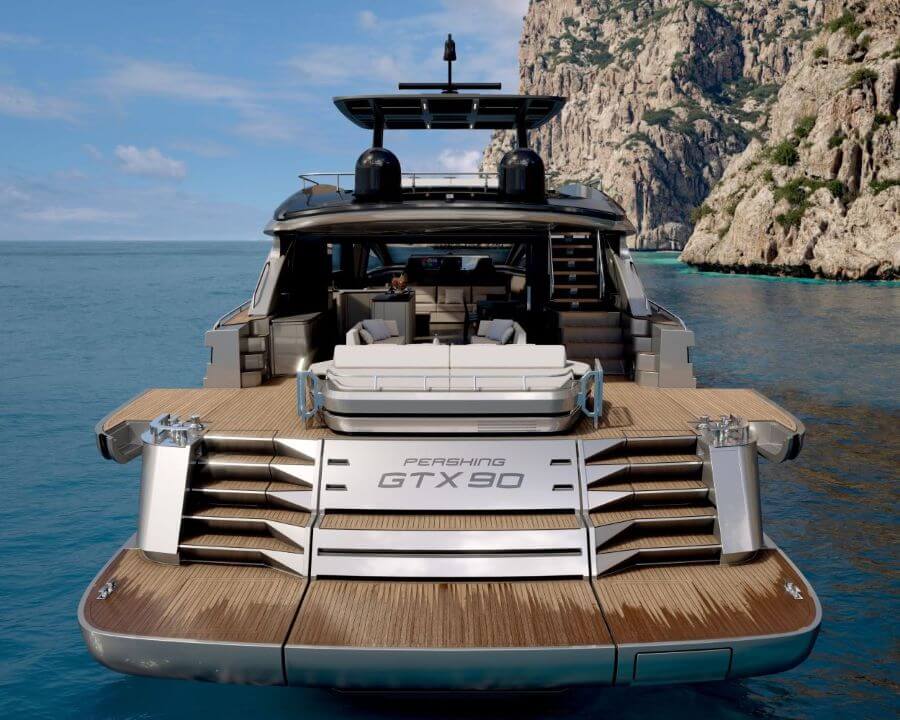
Shown in a Pershing Anniversary Silver colour, the GTX90 has an exterior style in keeping with the range’s other models including a near-vertical bow, continuous, slightly convex sheerline and two opening side terraces.
However, unlike on the GTX70 and GTX80, where the balconies fold down beside the swim platform, the side terraces on the GTX90 are either side of the large aft sunpad, expanding the cockpit’s total surface area to 37sqm. The beach club also includes a convenient garage, designed to house a tender and a jetski.
Among outdoor areas, the GTX90 features a 33sqm sportsbridge, which Pershing states is 43 per cent larger than the average for boats of this size. The sportsbridge includes a sunbathing area aft, a dining space amidships sheltered by a hard top, and helm station forward.
On the main deck, the saloon is accessed from the cockpit bya wide five-panel door – one fixed and four that open. The interior includes a show kitchen with bar counter in the aft port corner, while the formal dining table opposite can seat up to eight guests. This area can include an optional day head.
Forward, the lounge is furnished with a large L-shaped sofa or two couches, while the helm station has three pilot seats and dual access to the side walkways leading to the foredeck.
The lower deck includes four en-suite guest cabins led by a full-beam master suite midships and VIP cabin in the bow featuring an angled bed. In between are two guest cabins, one with a double bed and the other with two singles. The crew quarters with full galley are aft of the master suite and forward of the engine room.
The region’s first power catamaran from the fast-growing Gulf Craft Group brand will spend time in Singapore, Malaysia and Indonesia.
SilverCat 35CX arrives in Singapore
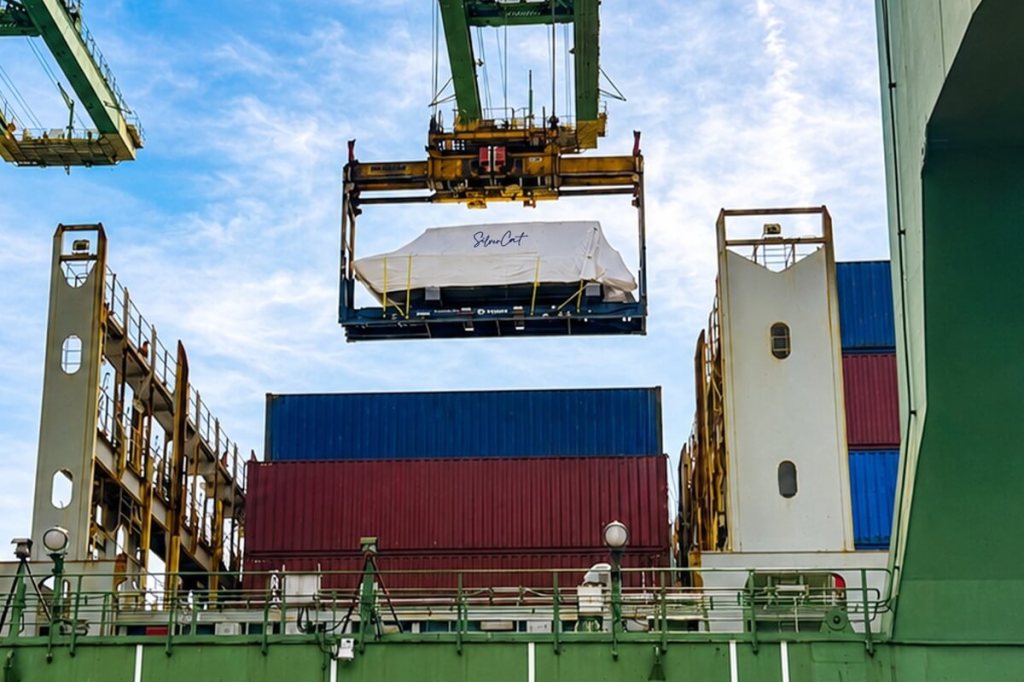
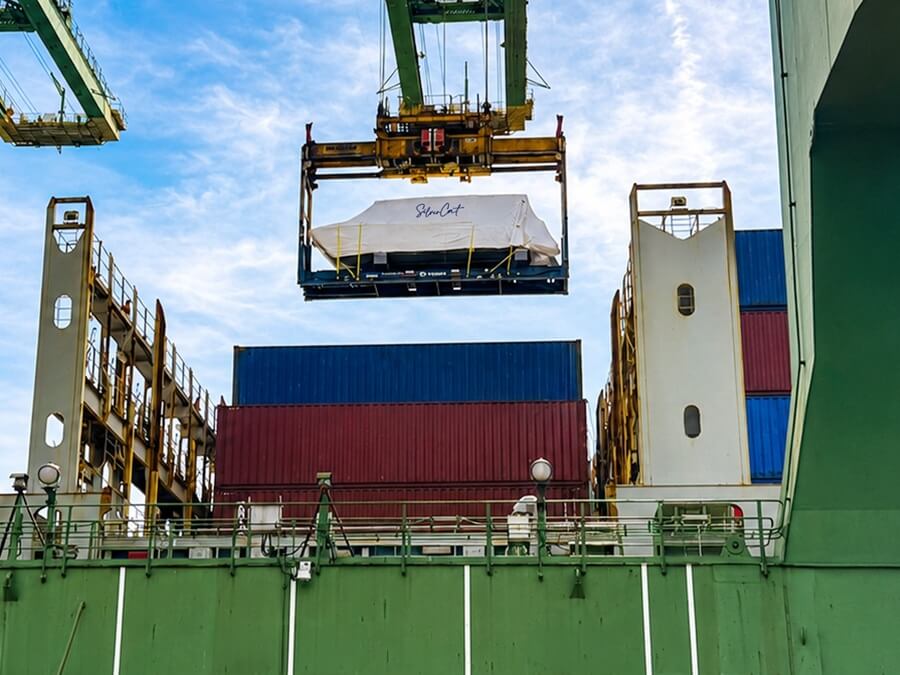
Southeast Asia welcomed its first SilverCat model with the arrival in Singapore of a 35CX powercat, sold by MAG Subsea. A world premiere at the 2025 Dubai International Boat Show, the 35CX is part of SilverCat’s Offshore crossover range along with the 34HT and 46CX, with the series offering both cruising and sportfishing capabilities.
“The arrival of the SilverCat 35CX is an important step in bringing SilverCat closer to Asian owners,” said Alvin Chua, Director of MAG Subsea. “The vessel will be berthed between Singapore, Malaysia and Indonesia, where it will be available for visits and walk-throughs via the MAG Subsea team.”
SilverCat 35CX in Singapore
The arrival of the SilverCat 35CX reflects the growing appetite for versatile powercats in the region, where island cruising and sports fishing with family and friends are popular activities.
SilverCat stated: “Designed for owners who value excellent stability, ample deck space and confident performance, the SilverCat 35CX brings together the practicality, comfort and ease of use expected from a modern multi-hull vessel. Its arrival [in Southeast Asia] gives boaters a taste of the SilverCat brand, with models built for both leisure and adventure, featuring generous deck areas and hulls designed to handle any seas.”
SilverCat 35CX
SilverCat’s other ranges comprise Anglers (34CC, 35CC, 40CC), open centre-console boats designed for sportfishing enthusiasts, and Family (34Lux, 40Lux, 46Lux), fully enclosed, air-conditioned powercats designed for cruising.
Founded in 2020, SilverCat is the newest of Gulf Craft Group’s yacht brands, which include Majesty, Nomad and Oryx. SilverCat has a dedicated production facility in Ajman, where many of the models across the ranges share common platforms. The brand’s yacht owners benefit from a global support network, covering everything from initial selection to comprehensive after-sales service.
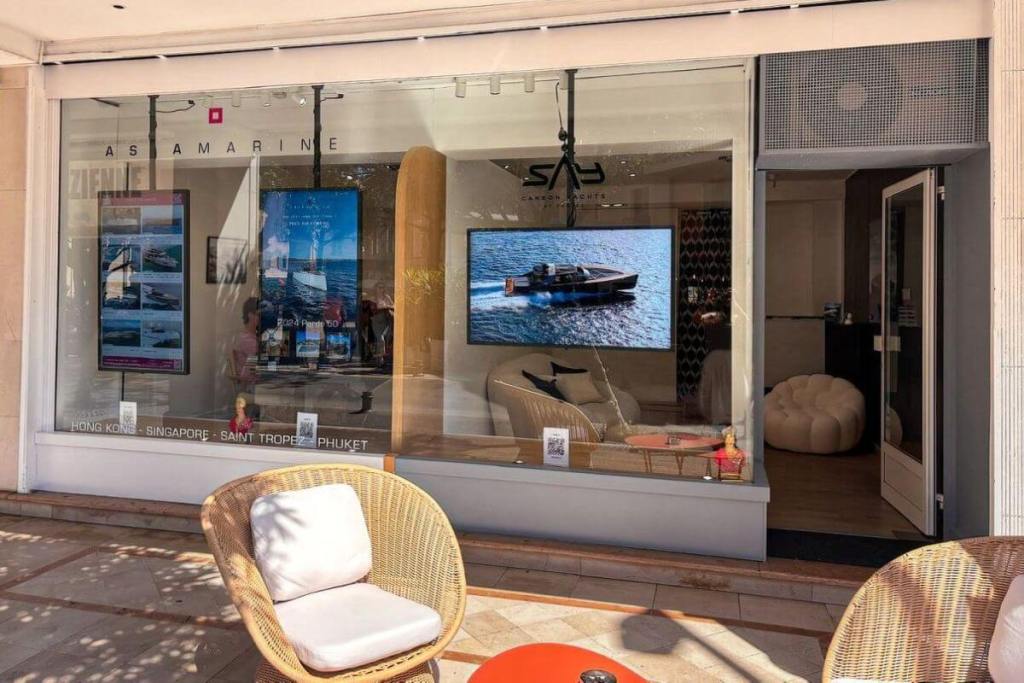
One of Asia’s leading yachting companies, Asiamarine has expanded to Europe, offering a wide range of yachting services in the French Riviera.
Asiamarine Saint-Tropez, 36, Rue du 11 Novembre 1918
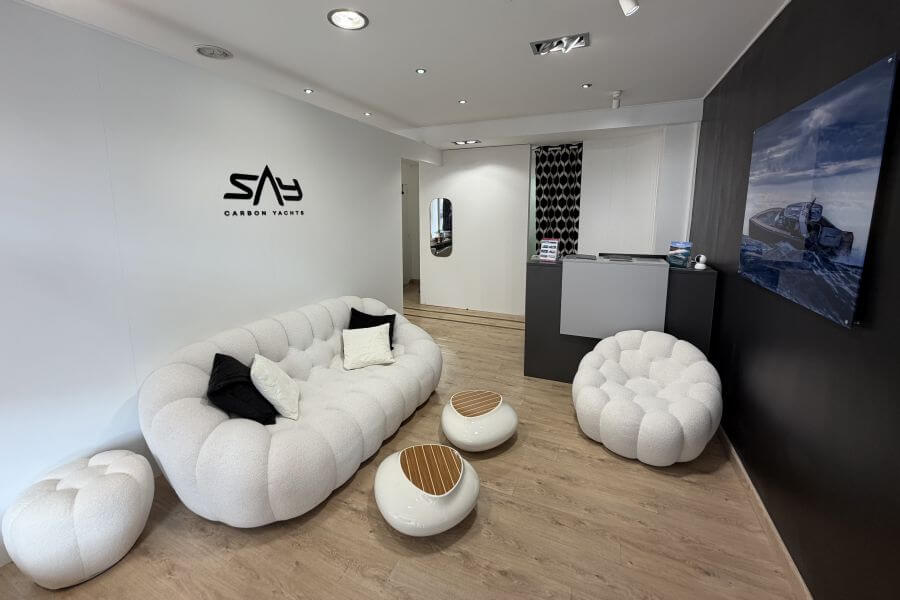
Asiamarine has opened an office in Saint-Tropez, where it represents SAY Carbon Yachts for the Côte d’Azur region along France’s south coast. The office also specialises in charter throughout the French Riviera and offers more than 25 yachts including a wide range of models by Pardo, the Italian luxury dayboat builder represented by Asiamarine in Hong Kong and other key markets in Asia.
The new Saint-Tropez office is the brainchild of Asiamarine founder Eric Noyel, who grew up in the south of France before moving to Hong Kong over two decades ago. Noyel regularly returns to France, while French colleagues based in Hong Kong include Laura Verbrugge, who will work at the Saint-Tropez office during the European summer.
Asiamarine represents SAY Carbon Yachts
“For over 20 years, Eric has lived and worked in Asia, helping develop the region’s yachting industry and building lasting relationships with yacht owners, charter guests and boating enthusiasts across Hong Kong, Thailand, Singapore and beyond,” Verbrugge said.
“Yet France has always remained close to his heart and among all the destinations along the French Riviera, Saint-Tropez is a special place. With its legendary harbour, glamorous lifestyle, crystal-clear waters and rich yachting heritage, it remains one of the most iconic and glamourous destinations in the world for yacht owners and charterers alike.”
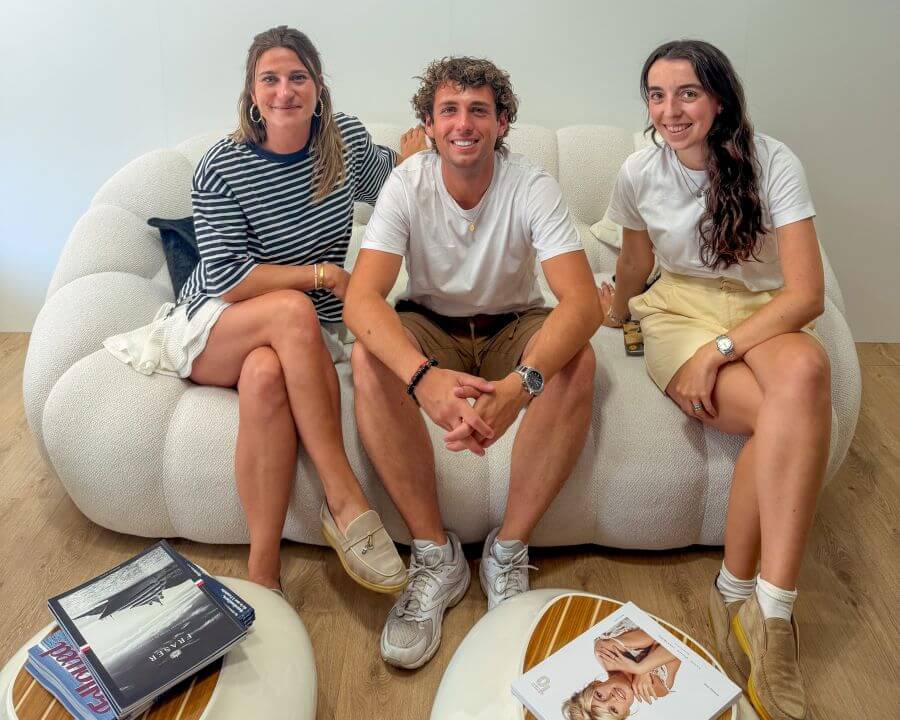
Laura Verbrugge, Matt Reveyrand and Julia Moriaux
Julia Moriaux and Matt Reveyrand are also among staff at Asiamarine Saint-Tropez, which is located on Rue du 11 Novembre 1918. The office acts as a local point of contact for Asiamarine’s clients, with many spending time in Europe each summer.
Asiamarine’s charter fleet in Saint-Tropez also includes a Jeanneau Sea Loft 480, an eco-friendly 49-footer based on a ‘monomaran’ platform, with a draft of just 21 inches. A full-beam superstructure occupies the aft half of the boat, where all the side and aft windows can open, while aft bulwarks can fold down to create waterside balconies.
Jeanneau Sea Loft 480
In addition, the Saint-Tropez office can offer a wide range of additional services through its partnership with Upscale Yachting, a Cogolin-based specialist in berth and marina solutions, yacht management, technical support and maintenance, crew recruitment and placement, charter management, plus administrative and operational services.
“For our clients based in Asia, Asiamarine Saint-Tropez provides a familiar and trusted point of contact, even when they’re thousands of miles from home. Whether planning a summer charter, purchasing a yacht, securing a berth or managing an existing vessel, our team is here to guide every step of the journey,” Verbrugge said.
“Our objective is simple: to make yacht ownership effortless. For many of our clients, Saint-Tropez represents the perfect location to own a yacht. Spend your summers cruising the French Riviera with family and friends, then return to Asia knowing your yacht remains in expert hands.”
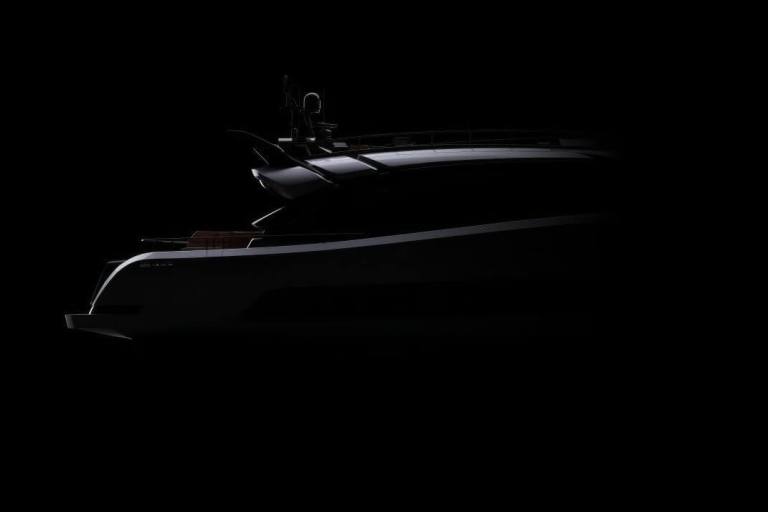
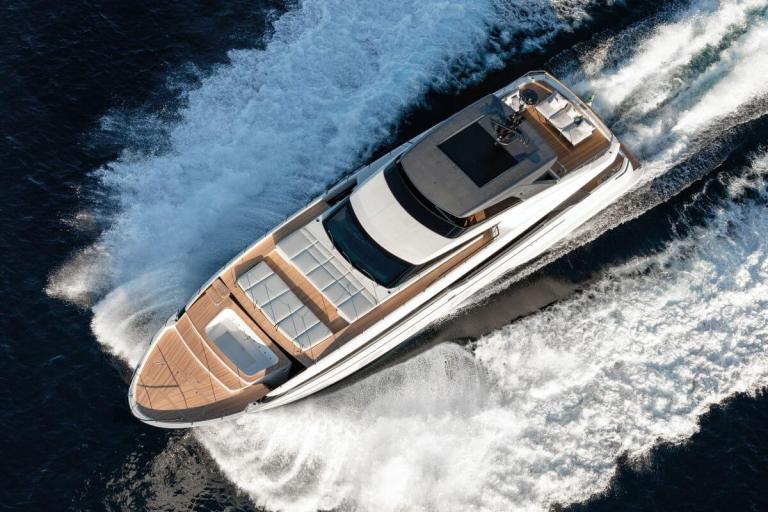
The Italian shipyard is creating a new asymmetric entry model for its popular planing series.
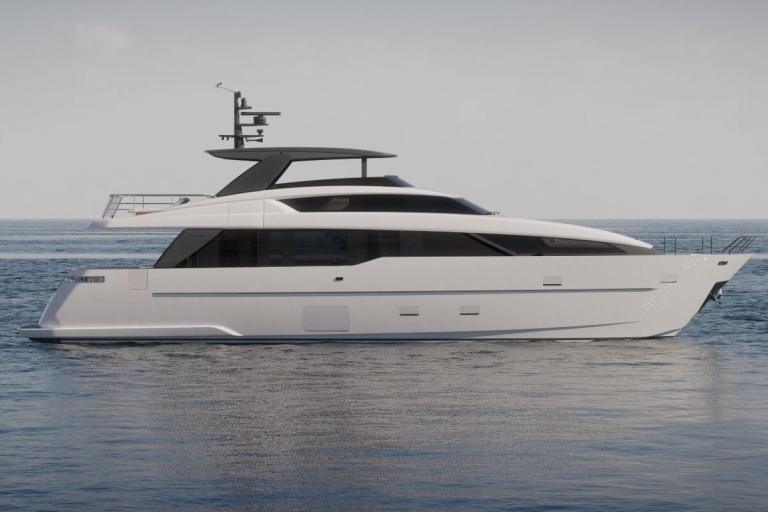
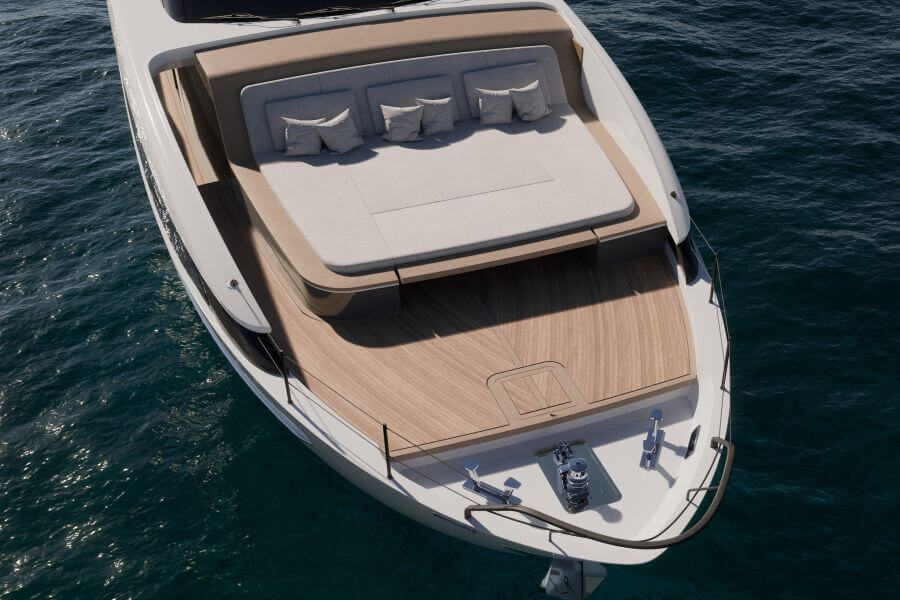
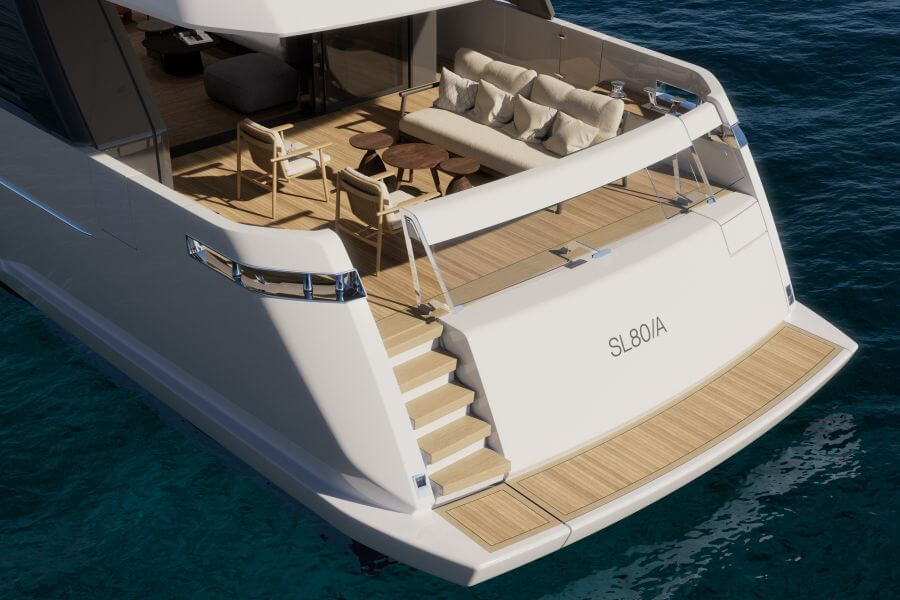
Sanlorenzo has introduced the SL80A, an upcoming addition to the Italian builder’s planing series of asymmetric yachts, which also includes the SL86A, SL90A, SL96A, SL110A and SL120A (click for Review). Predicted to reach 29 knots with two 1,800hp MAN V12 engines, the SL80A has a sub-24m load line length and can carry 5,350 litres of fuel and 1,400 litres of water.
Zuccon International Project, a long-time Sanlorenzo collaborator, is responsible for the exterior design and interior architecture of the SL80A, which evolves the asymmetric architecture introduced by the shipyard in 2018.
Bernardo Zuccon of Zuccon International Project: “With SL80A, our objective was to preserve the clarity and recognisability of the SL language within a more compact and versatile dimension. Every proportion, every connection between spaces and every architectural gesture was designed to create a sense of balance, openness and harmony on board. It is a yacht conceived around conviviality and life at sea, yet with a strong identity that makes it instantly recognisable as a true Sanlorenzo.”
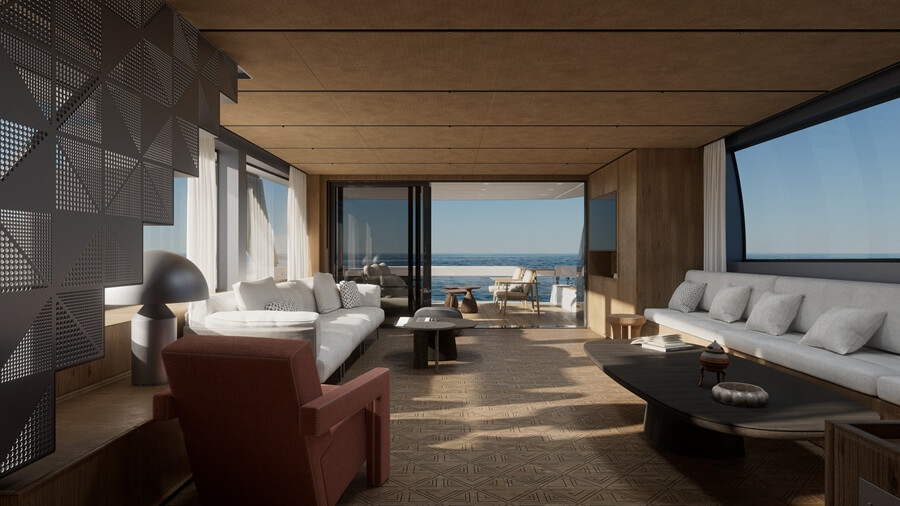
The aft cockpit and foredeck sunbathing area are connected by one side passage, to starboard. This enables the yacht to have a widebody design to port and increase both its volume and light in the main saloon, where full-height glazing allows for a greater visual connection with the outdoors.
Sanlorenzo has singled out the staircase to the flybridge in the saloon’s forward starboard corner as “a defining architectural feature”, describing it as “a folded, micro-perforated metal structure that visually dematerialises within the space”.
A mezzanine-level navigation station also frees volume for the living spaces, which include the galley and crew dinette forward of the saloon. Guest accommodation on the lower deck comprises a full-beam owner’s suite midships, a forward VIP and two guest cabins.
The shipyard has described the interiors as expressing “a warm and contemporary material language centred around Thai walnut, selected for its soft tone and natural dialogue with the exterior teak surfaces”. Other highlights include ‘Azteca’ parquet flooring, with triangular forms echoed throughout wall panels and headboards.
Tommaso Vincenzi, CEO of Sanlorenzo, said: “SL80A represents the essence of our philosophy. It is not a simplified version of a larger yacht but a synthesis of the experience we have built over decades with the SL line.
“Our objective was to concentrate the same quality of space, comfort and design into a yacht that allows owners to experience the sea in a more immediate and versatile way while remaining unmistakably Sanlorenzo. We believe SL80A has the potential to welcome a new generation of owners into our Maison, while keeping our design philosophy without compromising its identity, quality or architectural integrity.”



































 The numbers reveal another consistent pattern.