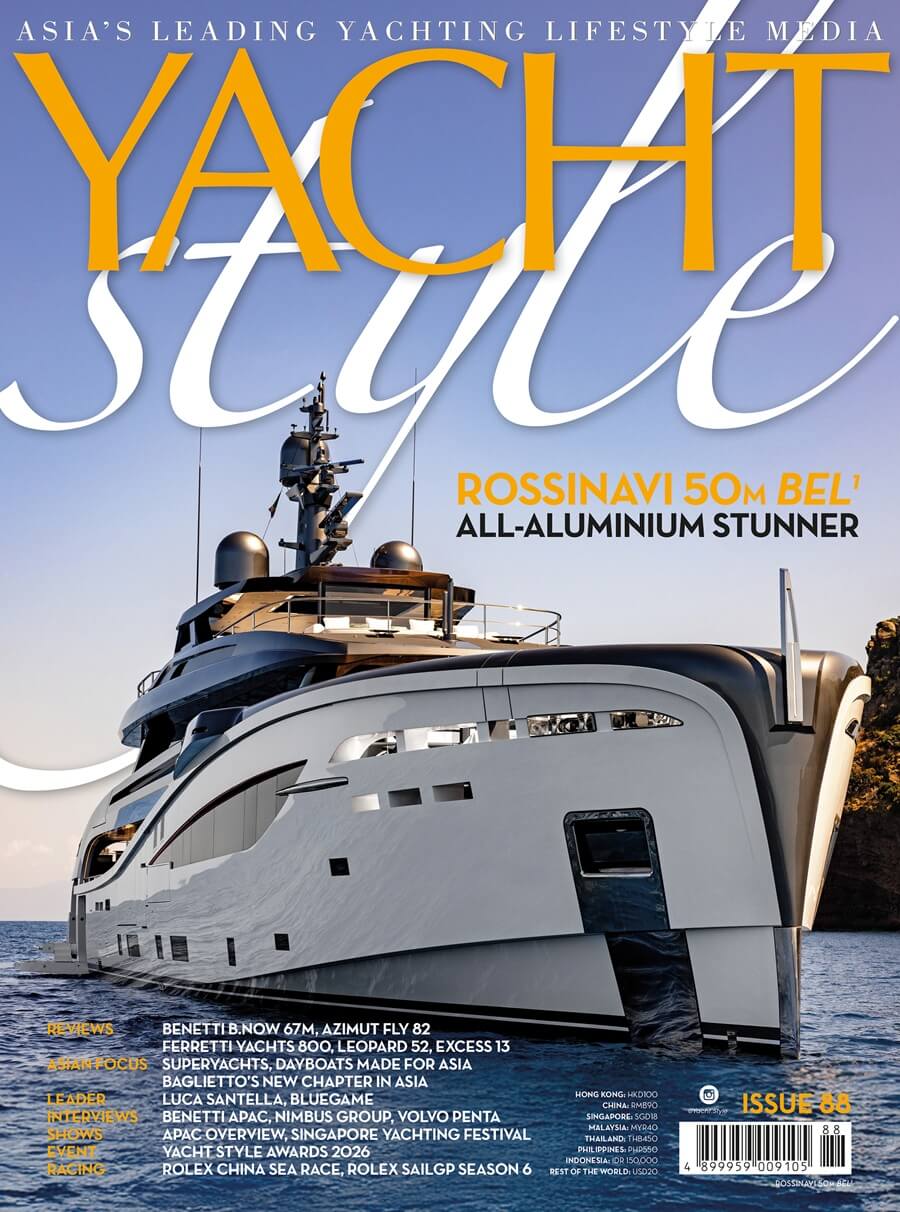
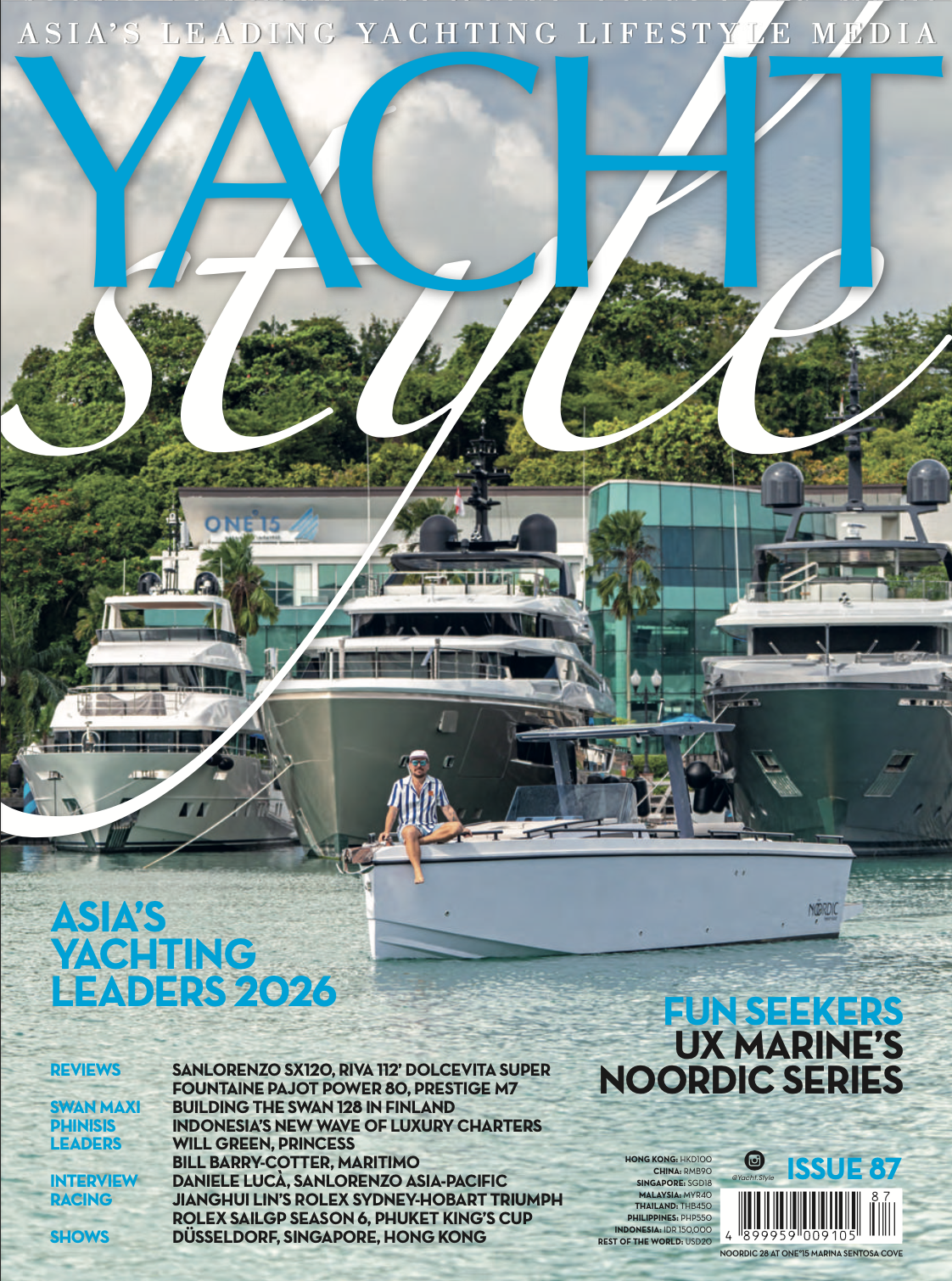
Yacht Style, Issue 88
Read and download copy
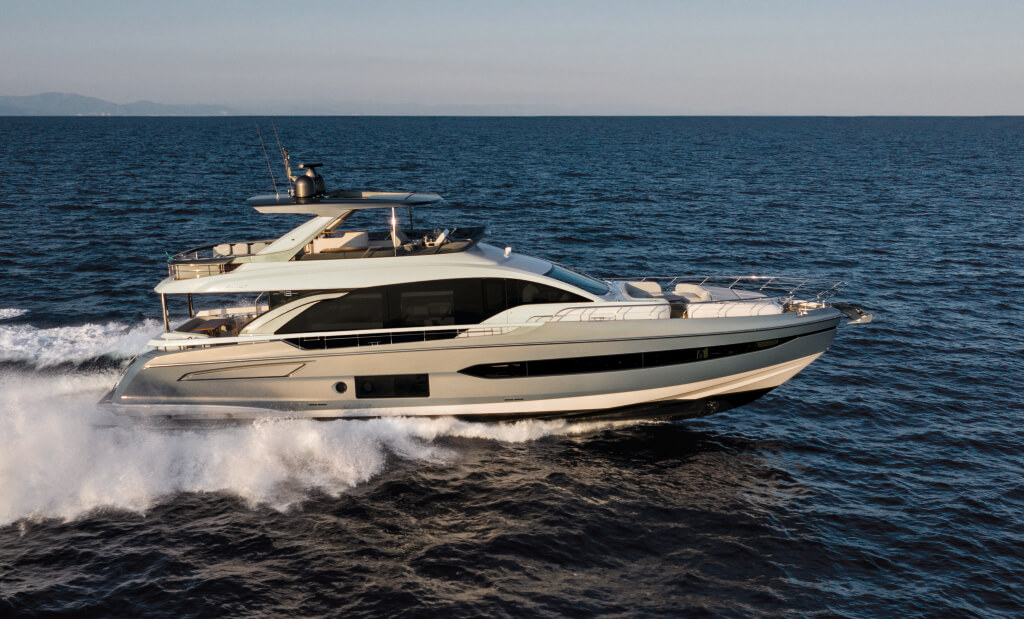
Yacht Style, Issue 86, Top 100 Superyachts of Indo-Asia-Pacific 2026, Jonathan Beckett, Burgess, Erwin Bamps, Gulf Craft Group, Fraser, Camper & Nicholsons, AB Yachts, AB 95, Van der Valk, Lalabe, Azimut, Grande 30M, Ferretti Yachts, 940, Absolute, Navetta 62, Cannes Yachting Festival, Genoa International Boat Show, Monaco Yacht Show, Lantau Yacht Club Boat Show - Festa Nautica, Rolex SailGP, Maxi Yacht Rolex Cup, Rolex Middle Sea Race, Phuket King’s Cup Regatta, Thailand, Port Takola Yacht Marina & Boatyard, Krabi, Yousuf Al Hashimi, Phoenix Yacht Management, Su Lin Cheah, ICOMIA, Suzy Rayment, Asia-Pacific Superyacht Association, APSA
Read and download copy

Asia's leading yachting lifestyle media

More results...

Generic selectors
Exact matches only
Search in title
Search in content
Post Type Selectors
Screenshot 2026-01-16 at 9.52.20 AM
Read your copy

More results...

Generic selectors
Exact matches only
Search in title
Search in content
Post Type Selectors
Yacht Style, Issue 88
Read and download copy

More results...

Generic selectors
Exact matches only
Search in title
Search in content
Post Type Selectors

Reviews

Sunseeker Manhattan 68: Toy Story Proves a Winner For All Ages

Sunseeker Manhattan 68: Toy Story Proves a Winner For All Ages

SHARE

Serious boat buyers, children and the young at heart have fallen in love with the toy store built into the transom of Sunseeker’s Manhattan 68 – and the first hull in Asia is expected in Thailand later this year.

  •  
  •  
  •  
  •  
  •  
  •  
  •  

What do you get the yachtsman who has everything? How about a yacht that can store it all. The aft end of the Sunseeker Manhattan 68 has been attracting serious buyers and ogling onlookers since the model debuted at Boot Dusseldorf earlier this year followed by its US debut at the Miami Yacht Show.

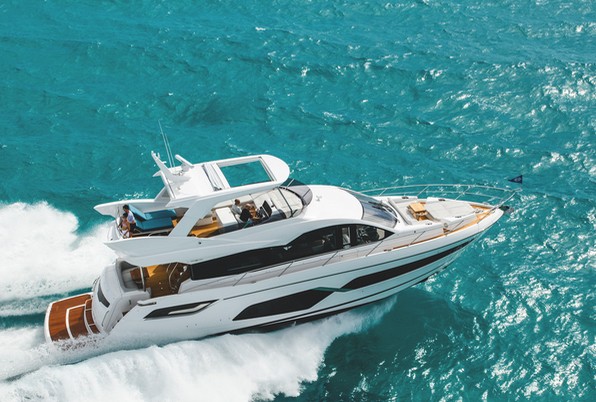
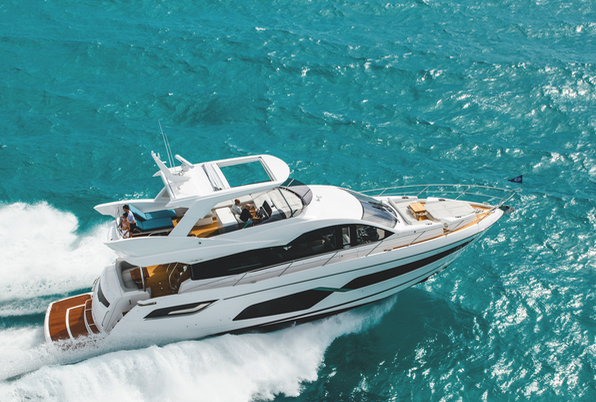
The Sunseeker Manhattan 68 debuted this year and a model has been ordered for Asia

In fact, I had to laugh when I crouched down to snap a photo of the grown-up toy cupboard when a kid, about 10 years old, crouched beside me to do the same thing. It appears the replacement for the Manhattan 66 appeals to boaters of all ages. (I’m still getting over the fact he had a newer phone and more than double the Instagram followers as me.)

The Manhattan 68 uses the proven hull of the 66, which sold well around the world including into Hong Kong, Singapore and Thailand. The larger model number is due to the enhanced Beach Club and longer swim platform, increasing the overall length by 10 inches to 69ft 1in.

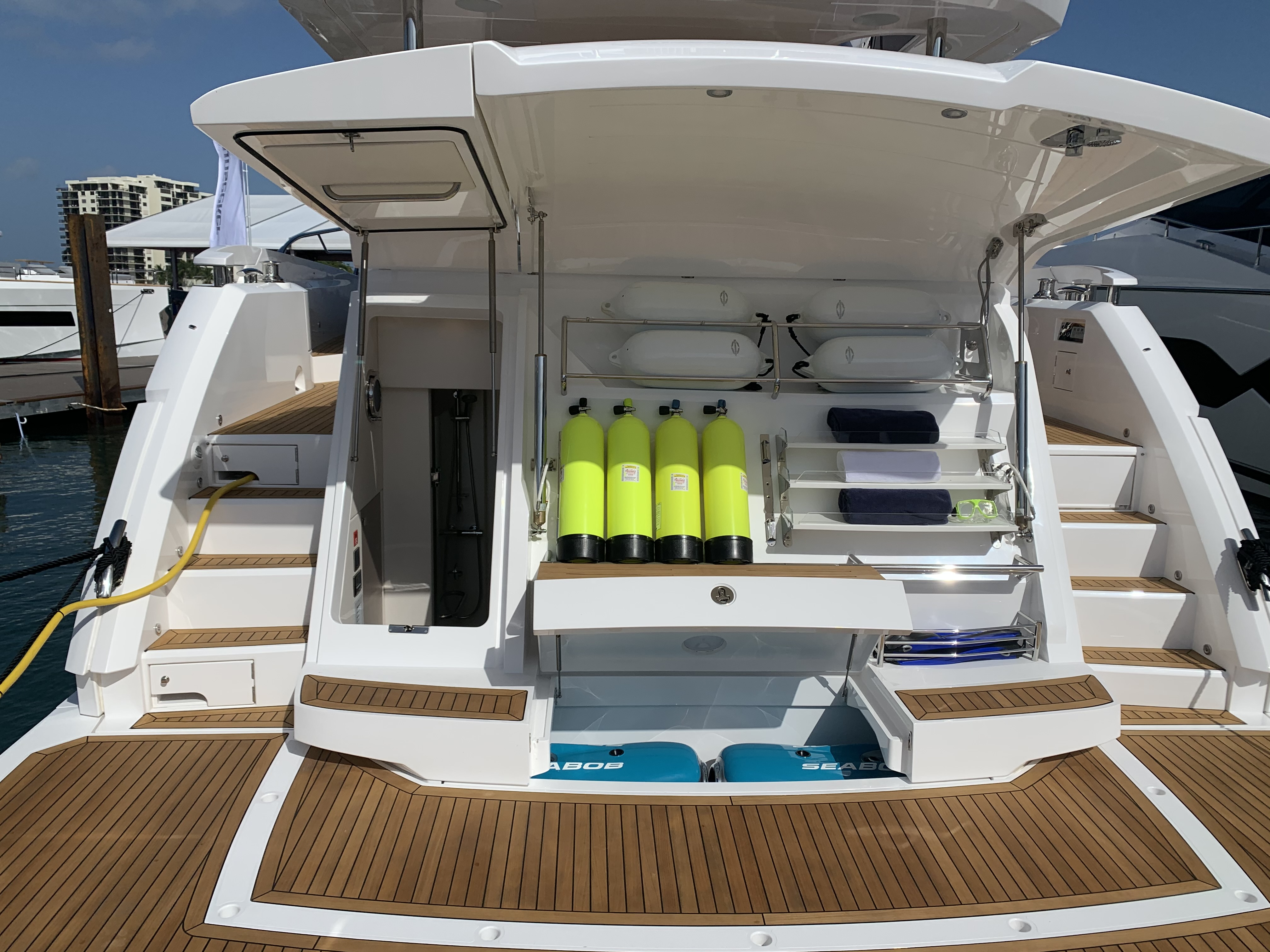
The toy cupboard in the Manhattan 68’s Beach Club stores gear for water activities, with a fold-down bench and hydraulic swim platform improving the experience

Even before you even step inside, you notice the exterior has been refined with a new hull window line, larger saloon windows, carbonfibre over the engine vents and stainless-steel detailing, hinting at further improvements within.

The 68 also features new layouts, particularly on the main deck and flybridge and in the master cabin, as well as many new design touches and features. However, it’s Sunseeker’s prized Beach Club that steals a lot of the attention, both at shows and at sea.

The water-level locker can store and charge two Seabobs (up to the F5) or two iAquasThe transom door has a shower, lights and speakers – and provides shade

WATER TOYS BY THE WATER
Sunseeker has been among the first builders to shift their design focus to a space that previously was reserved for cramped crew quarters or storage. In fact, just two years ago I sat with a friend on the
Sunseeker 74 Sport Yacht’s fold-down transom seating and asked: Why hasn’t anyone else thought of this?

I especially like that the 68 has a fold-down seat in the toy store where you can put your fins on without needing to balance on one foot like Karate Kid. You can get squared away comfortably, lower the hydraulic platform and be on your way to an underwater adventure.

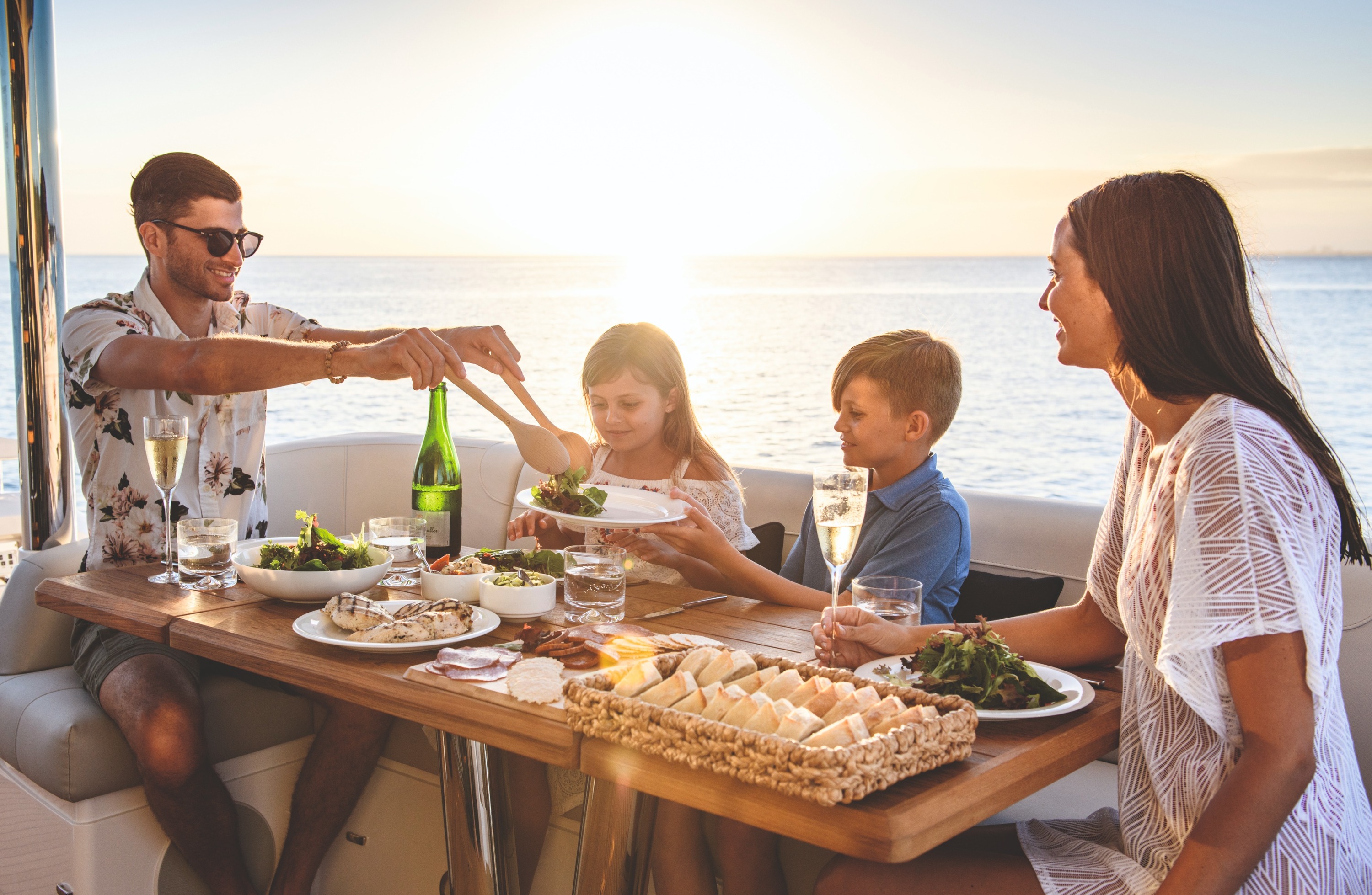
 The cockpit table can fold out for alfresco dining

Perhaps the most innovative trick in the transom is dedicated waterlevel storage for personal watercraft (PWC) that can hold and charge two units at a time, whether they’re Seabobs, iAqua or other models.

One downside to PWCs is that they’re surprisingly heavy and cumbersome to carry out of the water, yet Sunseeker has solved that problem with a system that allows them to simply slide in and out of
the locker just by raising and lowering the swim platform. Again: Why didn’t anyone else think of that?

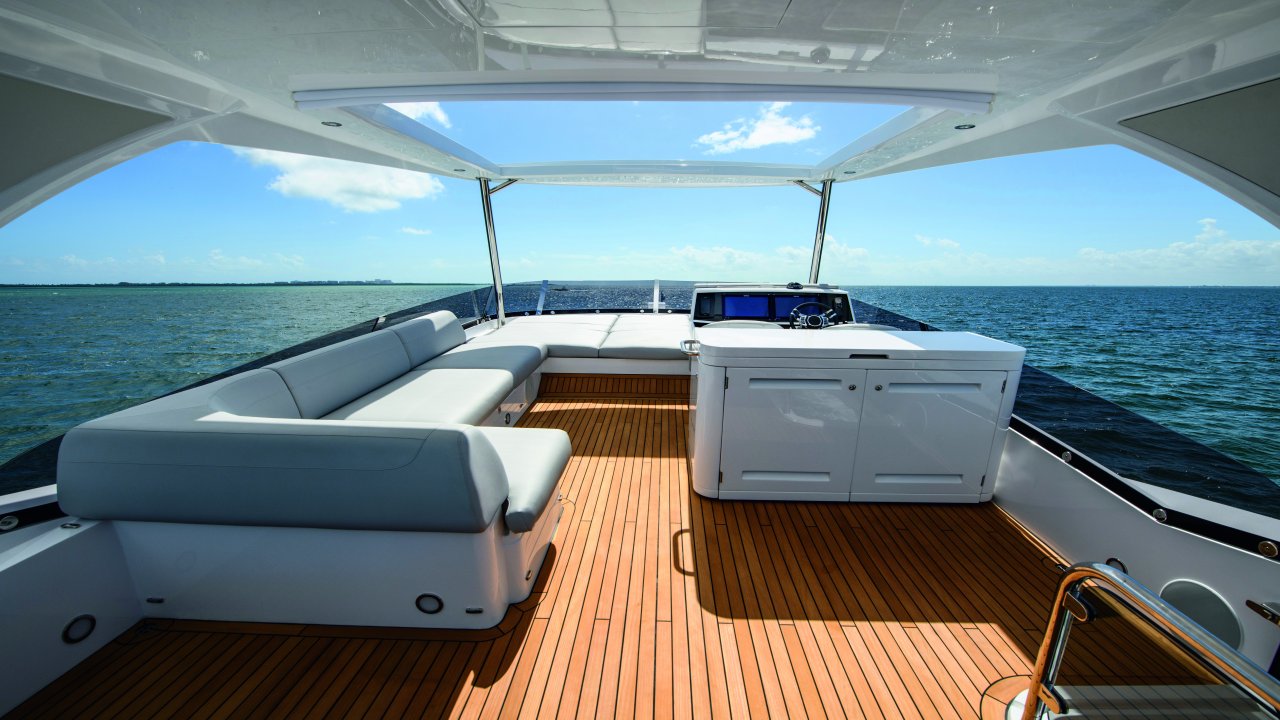
The flybridge can be fitted with a hardtop and allows owners to choose how to use the clear aft area

Another party trick from the Beach Club is the door itself, which when raised can act as a huge sun shade over the platform area, a big bonus in Asia.

The underside features an overhead shower to allow for a rinse-off seconds after surfacing from the sea. Now, that’s a fresh touch. The door also reveals lights and speakers, making it fun to hang out here in the evening.

The platform also has functional uses and can carry a jetski or tender, such as a six-seat Williams Sportjet 345.

STAYING OUTSIDE
When you finally get past the swim platform, it’s a few steps up to the cockpit, where a C-shaped sofa provides seating around an adjustable table that has drinks holders on each side and can fold out
to become a long dining table. New for the cockpit is an optional sink unit with either icemaker and refrigerator, located under the starboard stairs to the flybridge.

The top of the staircase brings you to an all-new wet bar with icemaker and optional barbecue and refrigerator, all situated behind the twin-seat helm station.

To port is a forward-facing L-shaped sofa that connects to a huge, full-beam sunbathing area that stretches right across in front of the helm, which itself provides a double backrest. Any tables by the sofa are optional, while the standard design leaves almost the entire aft half of the flybridge as open space, allowing for creative input. 

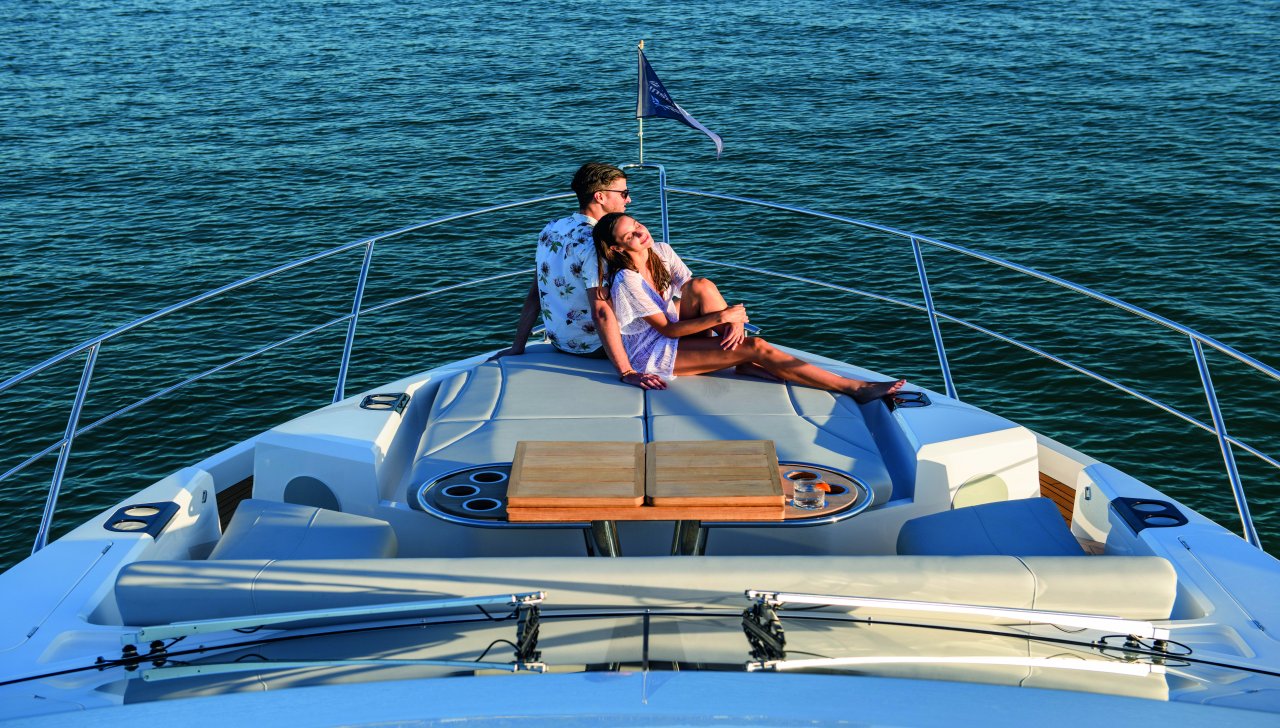
The upgraded foredeck features a forward-facing C-shaped sofa, adjustable table, flexible sunpads and plenty of drinks holders 

Douglas Culverwell, Sunseeker International’s Regional Business Manager for Asia, says: “The flybridge was an area of considerable design focus in the upgrade. Our clients have been requesting the possibility of loose custom lounging sofas, sun loungers or a more traditional L-shaped seating area with a fold-out teak dining table.

“The latter has been the preferred choice in Asia on yachts sold so far. Importantly for the Asia market, this area is sheltered from the sun by the retractable shade in the hardtop or bimini.”

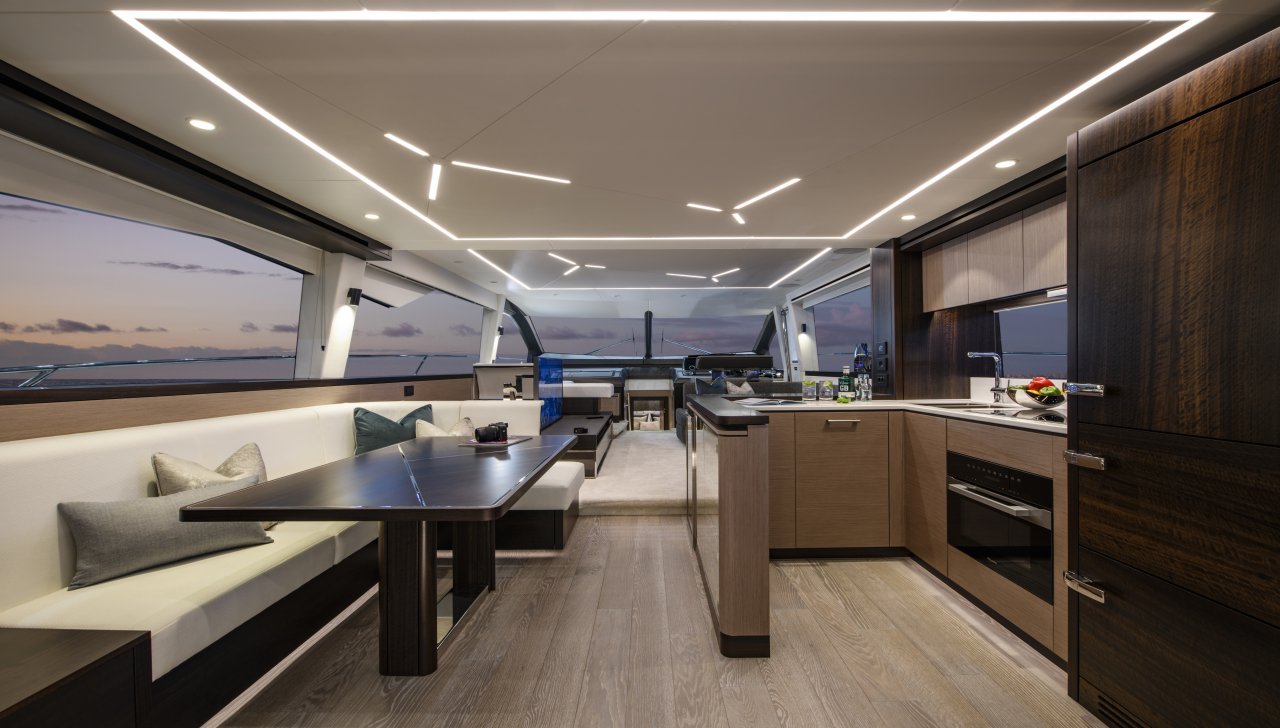
Finished in Eucalyptus, the model shown has the galley up, although the galley-down option creates more saloon space and could be popular in Asia

CHANGES IN THE MAIN
Inside, through full-width sliding doors, you’ll also find yourself in a thoroughly updated model from stern to stem.

Following the Predator 60 Evo, the Manhattan 68 is Sunseeker’s second yacht featuring a dynamic, sophisticated interior designed in collaboration with Design Unlimited. It has also resulted in a new selection of wood options complemented by a new fabric range.

Under CEO Andrea Frabetti’s leadership, there has been not only a huge emphasis on use of space and luxurious materials but also technology. One example is the Videoworks control app that allows owners to control many features remotely including lighting moods, airconditioning and electric blinds to create the right ambience on the boat, even in advance of arriving.

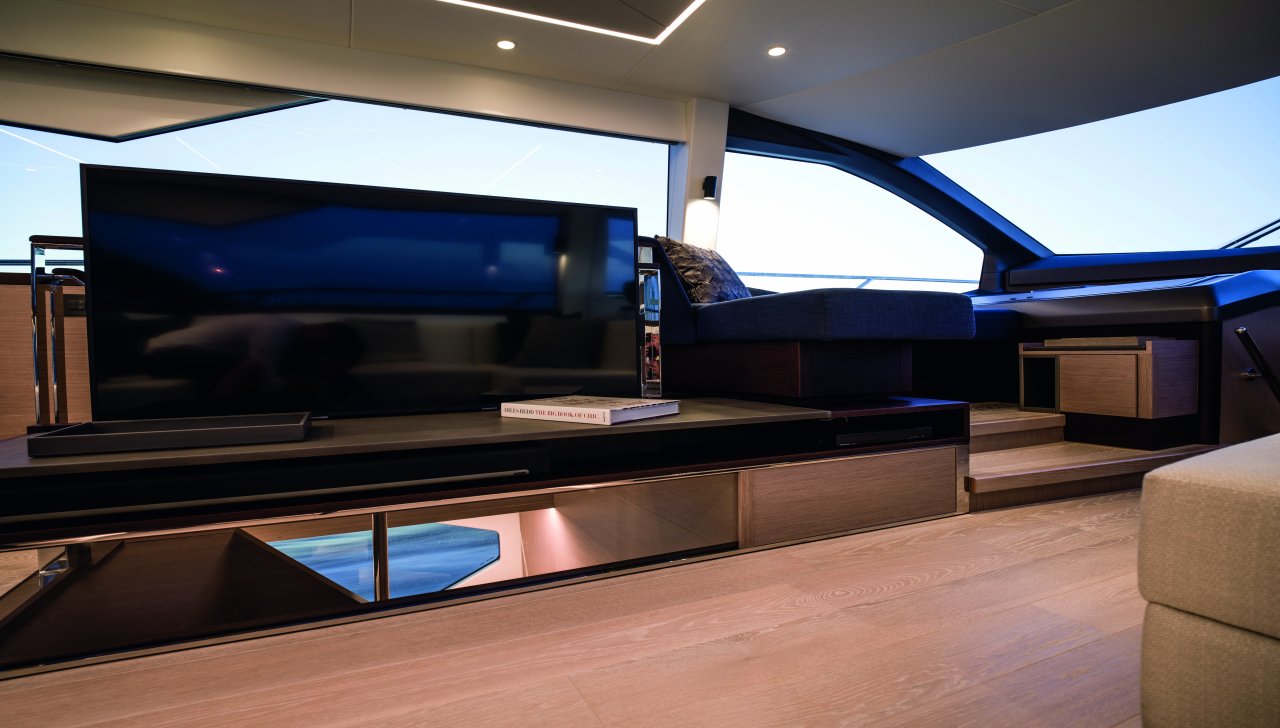
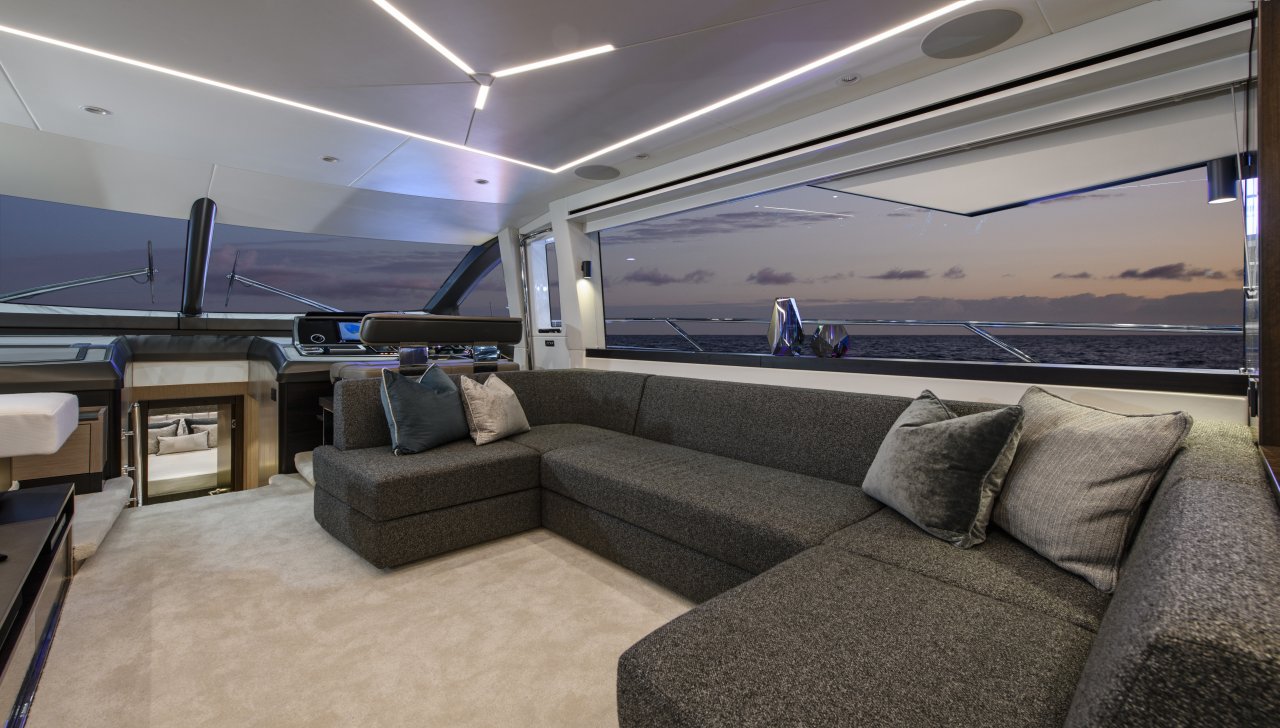
The lounge sofa faces the TV, which sits on a transparent structure that allows guests views of the water through windows by the master-suite staircase

The Manhattan 68’s standard layout features the galley located aft, with dining table opposite and saloon forward. An option designed with Asia in mind is the galley on the lower deck in place of the portside twin cabin, with the ‘galley-up’ space used to provide more lounging space on the main deck.

“Like the flybridge, a considerable amount of design time was spent on the internal layout to meet our global market requirements,” Culverwell says.

“A key design criteria driven by client feedback was for us tokeep the four good-sized staterooms and gain a dining area opposite the galley, at the same time as making the entrance to the boat more inviting. We were only able to achieve this by moving the owner’s private staircase forward and integrate it into the space.

The forward guest accommodation includes a VIP suite (above) and one or two twin cabins (below), depending on whether the galley is up or down

“But for Asia, we have continued the tradition at Sunseeker of the galley-down option. This and all the other new features and designs have transformed this yacht, so we look forward to the model’s Asia
debut later this year.”

Looking ahead, the forward area is dedicated to lounging and features a large C-shaped sofa that faces a portside TV, which sits above a see-through base that offers guests an interesting view of the
water through a window by the stairs to the master suite.

Forward of this area is raised, L-shaped companion seating opposite the double-seat helm station, both areas sitting either side of the central stairs to the guest cabins.

The newly designed master suite benefits from long hull windows and offers portside options including a beautifully designed chaise longue

LOWER DECK UPGRADED
The lower deck was also revised, with the full-beam master cabin restyled to allow for the new location of the owner’s staircase. The room features some great design details from the feature TV panel to the clever storage shelves and very stylish chaise longue.

The three guest cabins up front comprise two large forward-facing twin cabins and a VIP stateroom in the bow with an aft-facing bed.

Subtle changes to this area include a larger lobby and easier access to the day head, which is shared by the port and starboard twins. A striking change is the bathroom finishes, featuring new stones that are both stunning and practical.

 Compared to the Manhattan 66, the exterior of the Manhattan 68 has a new hull window line, larger saloon windows and carbon-fibre over the engine vents

A deck hatch in the cockpit accesses the engine room, where you’ll find twin Quick Gyro stabilisers, a change from the fins used in the 66.

Meanwhile, access to the twin crew cabin is by a transom door, which is hinged at the top to match the door to the beloved toy store.

Overall, the 68 is a remarkable new model, with many of the innovations, layout options, and improvements in technology and design beneficial for yachting in Asia.

Furthermore, the toy store and improved Beach Club is another reminder of Sunseeker’s new emphasis on the aft end of its yachts, most evident in the exciting options available on upcoming models like the Ocean Club Ninety and 42.

After all, innovation in these spaces makes it easier to enjoy being on – and in – the water with friends and family. And isn’t that what boating is all about?

The lower helm station features a bench-seat and access to the side deck

http://www.sunseeker.com

The original article first appeared in Yacht Style Issue 54 (Charter Issue 2020) – see below:
To subscribe to Magzter version, visit: 
magzter.com/SG/Lux-Inc-Media/Yacht-Style/Fashion/
For more information or print subscription enquiries, email: info@lux-inc.com
hat do you get the yachtsman who has everything? How about a yacht that can store it all. 

Yacht Style Issue 54 Out Now: The Charter Issue 2020 - LUXUO

Yacht Style has released Issue 54 (July-August), its Charter Issue for 2020. Flying Fox, the world's largest charter yacht, stars on the front cover of the 208-page magazine, as the 136m megayacht prepares to return to Asia later this year.

SHARE

Sunseeker Manhattan 68: Toy Story Proves a Winner For All Ages Read More »
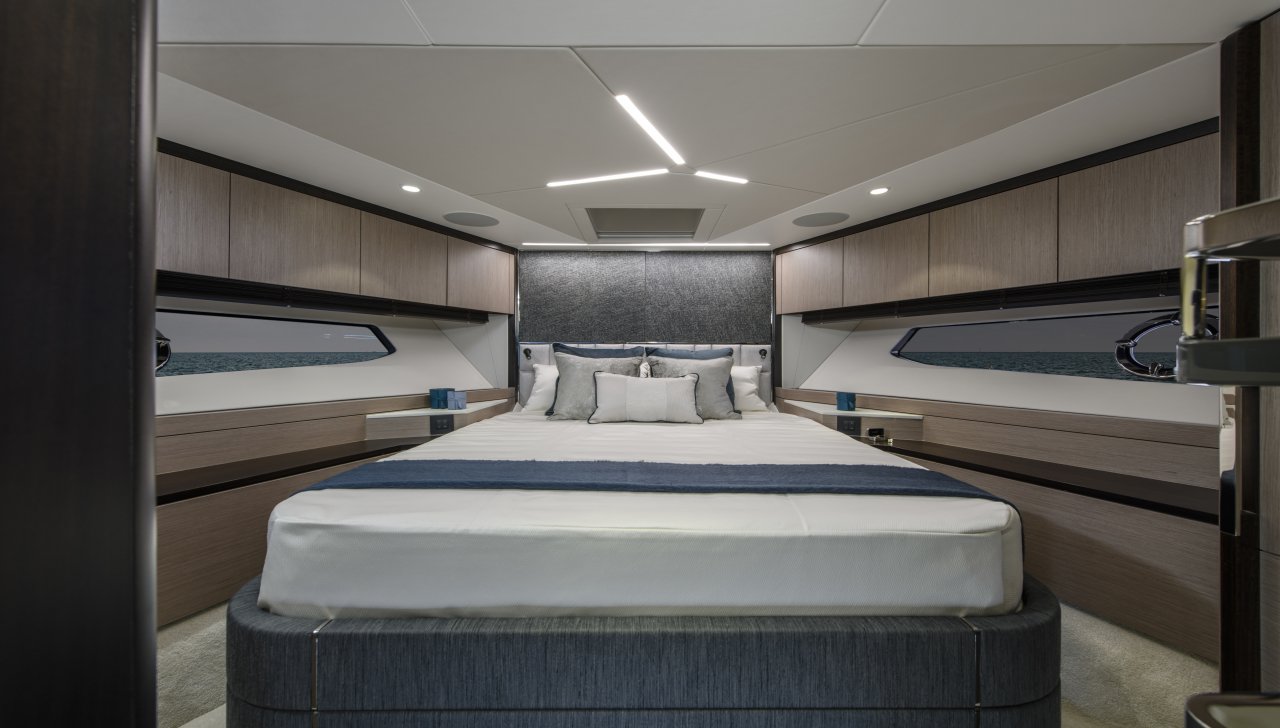
Custom Line 106’ Shows Emphasis on Customisation

Custom Line 106’ Shows Emphasis on Customisation

SHARE

The Custom Line 106’ is a powerful addition to the Italian brand’s planing range, with the first hulls showing its focus on customisation.

A wise shipyard knows that it’s not always about re-inventing the wheel. When a design is proven to work well, a smart approach is to recreate the yacht’s best attributes in a different size, attracting a different client base. Cue the new Custom Line 106’, which takes its styling and strong focus on indoor-outdoor living from its big sister, the Custom Line 120’.

Like the 120', the Custom Line 106' is designed by Francesco Paszkowski

Like the 120′, the Custom Line 106′ is designed by Francesco Paszkowski

“The idea is to create the beauty of the 120’ in a smaller size, with some variations,” says Karin Paggi, Head of Sales for Custom Line at the Ferretti Group.

One of those variations is immediately evident when stepping on board at the main deck aft. In the 120’, the angled aft door opens completely, connecting the aft deck and saloon seamlessly. In the 106’, which has 
a smaller space to work with, this is interpreted with an electrically controlled, accordion-style door, which still opens to foster a connection between indoors and out.

The garage door folds down to allow access to the tender and toys, and create an extended beach club; the sun deck (below) also offers uncovered lounging areas

The garage door folds down to allow access to the tender and toys, and create an extended beach club; the sun deck (below) also offers uncovered lounging areas

Built in GRP with teak decking and a carbon-fibre hardtop, the first 106’ was launched by the Italian builder in 2019. Designed by Francesco Paszkowski, who also penned the 120’, the exterior is crisp and clean, with large, angled windows and sharp exterior lines that give a sense of speed.

With a fast planing hull, she’s as quick as she looks. The 106’ reaches a top speed of 26 knots and cruises at 23 knots, powered by the more powerful MTU 16V 2000 M94 engine options.

The cockpit has a large, adjustable table for al fresco dining

The cockpit has a large, adjustable table for al fresco dining

Hull one debuted at last year’s inaugural Venice Boat Show, but the official world premiere of the new model took place at the Monaco Yacht Show, where hull number two was on display.

The second hull was started for a specific owner, a previous Ferretti Group customer. He was able to give his input in terms of not only decor but the layout, making subtle yet palpable modifications throughout
the yacht to put his stamp on it. This is a testament to Custom Line’s commitment for its yachts to be customisable and suit the needs of each individual owner.

Photos show hull one, while the article refers to hull two in which there is a much lighter-coloured decor in the interior, as well as some notable design differences

Photos show hull one, while the article refers to hull two in which there is a much lighter-coloured decor in the interior, as well as some notable design differences

The owner of hull two, for instance, preferred to have a dining area on the main deck aft, where you’d normally find more of a lounge area. The sofa can still be converted into a big sunpad when it’s time to unwind after a meal.

Below, the garage hatch opens to reveal its cache of tenders and toys, which on this yacht includes a Williams 505 Diesel Jet tender and a jetski. The bow has additional storage space, including room for a second jetski and a sizeable crane to launch it.

The layout of the large saloon can be customised, while options include a sliding door on the starboard side, which was selected for hull one

The layout of the large saloon can be customised, while options include a sliding door on the starboard side, which was selected for hull one

According to the yard, the owner also put his stamp on the interior design. “The owner (of hull number two) wanted something very fresh and light,” Paggi says of the interior. By comparison, she points out that hull one had shiny lacquer and a combination of strong colours, as seen in the accompanying photographs.

In hull two, the owner sought something simpler, with an all-white ceiling, lighter colours on the soft goods and matte wood finishes, thus creating an extremely light and bright space. The saloon literally reflects the light, as the forward bulkhead is covered in mirrors. It’s a nice touch, making the room feel larger and continuing the theme of wide, open spaces.

The formal dining area is situated forward of the saloon

The formal dining area is situated forward of the saloon

Attributes from the 120’ retained in the 106’ include the full-height windows in the saloon, which give a great connection with the sea outside, while there’s an option to have sliding doors on either side.

Another design feature seen in both Custom Line planing models is the use of columns in the main saloon, which are upholstered in leather. Besides being a decorative element, these columns are practical, hiding speakers and technical equipment.

An elegantly designed staircase leads down to the lower-deck guest area

An elegantly designed staircase leads down to the lower-deck guest area

Midships, a door leads off the starboard foyer out to the side decks and up to the bow. Inside, the bright, airy foyer connects to an open stairwell, which allows light to pour in to the lower deck, which has two VIP and two twin cabins. Both twins have Pullman berths, taking the guest capacity up to 12.

The full-beam master cabin is forward on the main deck and begins with a dressing room with a walk-in wardrobe, across from a small desk. The original master en-suite has his-and-hers bathrooms with separate doors either side of a central shower, but the owner of hull two preferred to have an extra walk-in closet and only one bathroom to share.

On hull one, the main-deck owner’s suite features a drop-down balcony on the starboard side

On hull one, the main-deck owner’s suite features a drop-down balcony

The owner also had a hand in designing the streamlined headboard, bed frame and bedside tables. Keeping to his minimalist preferences, the bed and tables are the only furniture in the room.

“He kept the master really simple,” says Paggi. “Usually, we would add an armchair with a small table, a desk, a chest of drawers, but he wanted to keep it open and clean.”

Lower-deck guest cabins comprise two doubles and two twins (pictured)

Lower-deck guest cabins comprise two doubles and two twins (pictured)

The bed itself is set quite low, which gives the illusion of even more space. A balcony can be added to the master to further open up the room, as seen in the photos of hull one.

Like the furniture found inside, the outdoor furnishings on the upper deck are also low-slung and minimalistic. Glass partitions help protect against the wind while still allowing wide-open views. The client for hull two made a few modifications in this area, too, requesting a big bar with stools. “He wanted a little bit more of a lounge feeling with the big bar,” says Paggi.

The beautifully designed sun deck has multiple social areas

The beautifully designed sun deck has multiple social areas

A TV lowers from the ceiling and rotates so it can be viewed forward or aft. There is also a noticeable lack of pillars, which is made possible by the use of a carbon-fibre hardtop to keep the construction light but strong.

This 106’ doesn’t just thrive on creating feelings of openness and connecting indoor and outdoor areas – it also makes excellent use of
the outdoor living space that’s available. There’s an impressively large foredeck lounge, for instance, with a settee and tables right in front of the bridge, and steps leading down to two large sunpads.

The exceptional foredeck features a central passageway that links an outdoor lounge, separate sunbathing zones and a working area in the bow

The exceptional foredeck features a central passageway that links an outdoor lounge, separate sunbathing zones and a working area in the bow

Ferretti Group plans to keep pushing this winning formula forward 
in the Custom Line planing range. The next project is the tri-deck 140’, which will have a bigger volume yet still be performance-oriented, affording top speeds around 22 knots.

“The idea is to keep the same styling, but getting bigger in size,” Paggi says.

As the saying goes, if it ain’t broke, don’t fix it. Custom Line knows they have a winner on their hands and will, fittingly, keep pushing this holistic design further and further.

www.customline-yacht.com

www.ferrettigroup.com

YACHT STYLE Issue 53: Catamarans Shine in 'Multihulls Issue' 2020

Yacht Style's second annual Multihulls Issue throws the spotlight on power and sailing catamarans, as the boating industry pushes on.

SHARE

MORE REVIEWS

Custom Line 106’ Shows Emphasis on Customisation Read More »

Sanlorenzo’s Biggest yacht By Far: Attila The Hun

Sanlorenzo’s Biggest-Ever Superyacht … By Far: Attila The Fun

SHARE

More than three times the volume of Sanlorenzo’s previous flagship, the first 64Steel is more notable for its stunning beach club and pool.

  •  
  •  
  •  
  •  
  •  
  •  
  •  

Some yacht layouts are so predictable that you could practically walk through the boat with your eyes closed and still find your way around. But in recent years, more designers and builders are breaking the mould and creating something else entirely, which is what Sanlorenzo has done with its new flagship, the 64Steel Attila.

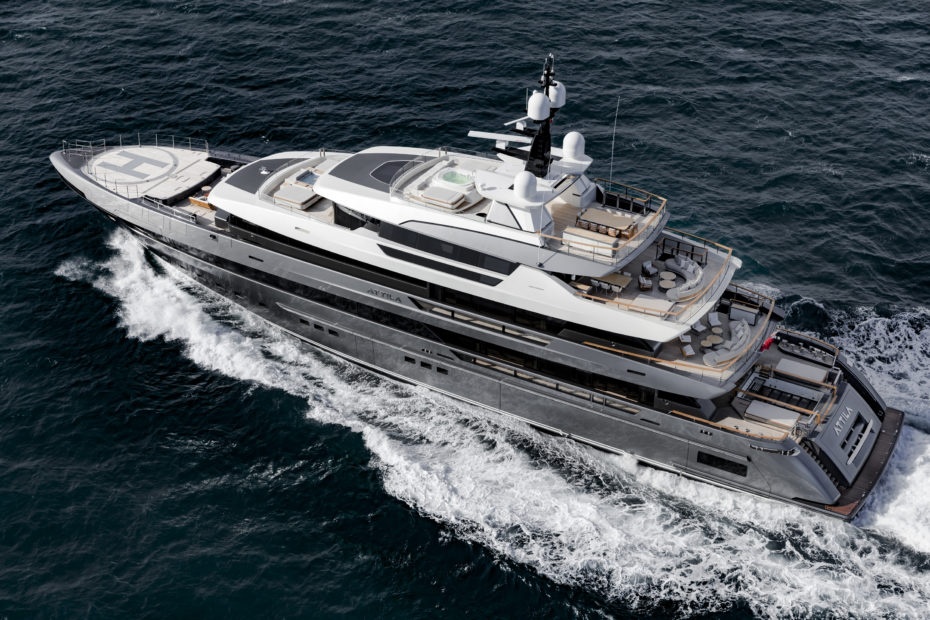
The first 64Steel has a helipad and a volume of 1,600GT, so was a huge step up for the Argentine owner, whose previous yacht was a Sanlorenzo 46Steel; Photos: ©Guillaume Plisson for Sanlorenzo

The first 64Steel has a helipad and a volume of 1,600GT, so was a huge step up for the Argentine owner, whose previous yacht was a Sanlorenzo 46Steel; Photos: ©Guillaume Plisson for Sanlorenzo

A superyacht with a unique layout customised to suit her owner’s lifestyle, the 64.25m Attila is the largest yacht to emerge from the Italian builder, by some way. It’s 12m longer than the 52Steel Seven Sins and at 1,600GT, more than three times the volume of the builder’s 499GT former flagship.

The Attila owner’s previous boat was the Sanlorenzo 46Steel, Achilles. The first 64Steel represents not just a step up in size for this owner and her builder but also in scope. She brims with creative ideas and big- ticket amenities that you would expect to find on a much larger yacht.

Sanlorenzo 64Steel: Attila offers beautiful outdoor social areas on five decks

Attila offers beautiful outdoor social areas on five decks

With bold exterior lines by Officina Italia Design and a striking silver hull, Attila is certainly a head-turner. Interior design and decor are by Francesco Paszkowski and Margherita Casprini, who worked in concert with the owner and Sanlorenzo to create the calm interior motif and unusual layout.

SUMMER LIVING

The moment you enter Attila, you can tell she is different. The owner’s idea was to get rid of a formal main saloon and create a way for everyone to be connected as they enjoyed the yacht throughout day. “Who is using a big saloon in a boat?” says the owner of Attila. “They are not. In the end, in the summer, you are outside.”

“Who is using a big saloon? In the summer, you are outside.”

“Who is using a big saloon? In the summer, you are outside.”

Stepping into the main-deck living area, you have to take a moment to get your bearings. Instead of a foyer or saloon, you enter directly into the dining room, which is anything but a formal affair.

The first thing you see upon entering this room is dual staircases to port and starboard, leading to the expansive beach club below, which is bathed in light from the glass-bottom pool above on the main deck aft. Sliding glass doors open on both sides of the dining room to let in fresh air.

The garage door folds down to open up the beach club, which includes sofas and rooms below the main-deck swimming pool

The garage door folds down to open up the beach club, which includes sofas and rooms below the main-deck swimming pool

Sanlorenzo 64Steel

“This is unique,” says Antonio Santella, Sanlorenzo’s Vice President of Sales and Marketing. “We have this connection between the pool, al fresco veranda, dining area and beach club. People are not divided into different groups. They are all together.”

ARGENTINE GRILL

A 10-seat wood dining table, backed by a bar and a huge grill, consumes the room. Placing a barbecue inside the yacht’s living spaces – essentially inviting open fire onto the main deck – was no easy task. It challenged the yard to find creative solutions, which emerged with the use of A60 fireproof stainless steel as well as installing a special system to remove smoke.

The pool on the aft main deck leads into the main dining room

The pool on the aft main deck leads into the main dining room; Attila also has a large pool on the aft main deck and a jacuzzi on the sun deck

Sanlorenzo 64Steel

This barbecue is just one of the elements that speaks to her owner’s Argentine origins and love for grilling meat. Another is the copious, dedicated meat storage found on board – during my visit I was shown 450kg of meat stored on the tank deck.

With her enormous volume and 13.1m beam – wider than most yachts of her length – Attila has the room to pack in all of her owner’s special requests as well as amenities you’d usually find on larger yachts.

“All the design ideas you see in this boat are typical of boats 90m and over, and we are only 64m,” Santella says. “This was the goal: to give something more and be similar to a 90m or 100m boat.”

The main dining room on the Sanlorenzo 64Steel has seating for 12

The main dining room has seating for 12

This includes items such as a touch-and-go helipad, storage for two big 10m-plus tenders, and a 78sqm beach club with a gym, sauna and massage room.

Another big-boat goal, according to Santella, was to have all the guest living spaces on the main deck. There are four double cabins and one master-worthy VIP on the main deck that any guest would feel lucky to have. To achieve this layout, the only ‘saloon’ on the main deck is a cosy cinema lounge.

The lounge and dining area on the upper deck or bridge deck, which also houses the Captain’s cabin

The lounge and dining area on the upper deck or bridge deck

A larger, but still cosy, saloon is found on the upper or bridge deck, adjacent to another dining area for 14. This deck also houses the Captain’s cabin and a cabin for a nanny or staff member, while the bridge is forward, enjoying excellent sight lines.

OWNER’S HAVEN

The deck above is a space completely dedicated to the owner, as per his exacting brief. “The main characteristic of this boat is the fact that the owner wanted to have a full deck completely private for him,” Santella says.

The owner’s deck features a spacious lounge

The owner’s deck features a spacious lounge

This palatial suite includes a large en-suite bathroom, walk-in wardrobe and a forward-facing bedroom opening out onto a private terrace with a pool.

Aft on this deck is a private living room opening onto an outdoor lounge area. It’s the ideal personal space for an owner who says he plans to use the boat “as much as possible.”

Between Attila’s delivery and world premiere at last year’s Monaco Yacht Show, he had already used his new boat for three months.

The forward master suite has a large bed that enjoys an open view

The forward master suite has a large bed that enjoys an open view

The owner loves to be outside, but if he happens to be stuck inside more than he likes, the calming yet cool interior should be a pleasure in which to spend time. The designers wanted to create something that was modern yet timeless, choosing a soothing palette of grey, white and brown and a plethora of natural materials.

The interior is replete in marble, backlit onyx, glass, stainless steel and teak, the owner’s favourite wood. Furnishings come from Italian brands like Flexform sofas and Catellani & Smith light fixtures, while Summit has provided suitably chic exterior furniture.

Stunning night view of the swimming pool on the owner’s deck; Attila also has a large pool on the aft main deck and a jacuzzi on the sun deck

Stunning night view of the swimming pool on the owner’s deck

Sanlorenzo admits that building this owner-specific, technically intrinsic yacht was a challenge, but it’s one they relished.

“Every boat for us is a challenge,” says Santella. “We don’t build a boat without innovation. On every Sanlorenzo boat, there is something different from all the others.”

For those who want to push the envelope even further, the technical platform of the 64Steel is designed to extended up 70m. Perhaps this owner, after he’s had plenty of time to chill and grill on his new yacht, will be ready to go even bigger yet.

Attila proves that the sky’s the limit for what an innovative yard, designers and owner can create when they combine forces.

www.sanlorenzoyacht.com

www.simpsonmarine.com

Sanlorenzo Asia Secures Five Sales in Five Months

Sanlorenzo Asia has started 2020 with sales of five yachts in five months into Hong Kong, ranging in size from 76-146ft.

YACHT STYLE Issue 53: Catamarans Shine in 'Multihulls Issue' 2020

Yacht Style's second annual Multihulls Issue throws the spotlight on power and sailing catamarans, as the boating industry pushes on.

SHARE

MORE Reviews

Sanlorenzo’s Biggest yacht By Far: Attila The Hun Read More »

Monte Carlo Yachts Creates Special-Edition MCY 86 for Hong Kong

Monte Carlo Yachts Creates Special-Edition MCY 86 for Hong Kong

SHARE

A Hong Kong dealer’s brief for a tailored MCY 86 resulted in a lavish interpretation by Italian designer Dan Lenard. By Andrew Dembina.

When Olivier Besson, founder and CEO of Asia Yachting, decided to commission an MCY 86 as a stock boat, it provided him with a deeper insight into the level of personal involvement a client enjoys with Monte Carlo Yachts, the high-end, detail-oriented shipyard based in Monfalcone, Italy.

The Hong Kong-based special edition MCY 86 by Monte Carlo Yachts

The Hong Kong-based special edition MCY 86 by Monte Carlo Yachts

A luxury motor yacht broker for 13 years, the Hong Kong-based Besson sought to fashion a craft that would offer would-be local or regional owners practical space for both potential personal family use and formal entertaining.

SPACIOUS SALOON

“The difference between this boat and its competition is the way it has been designed,” says Besson, as we walk towards a backlit wall-panel of pale ochre alabaster marble at the far end of the airy saloon, which has generous headroom.

“The very high bow opens up to give a lot of width through the whole yacht, so it offers ‘a lot of boat’, a lot more usable area. This is something clients notice about an MCY when they come aboard. Most of our clients aren’t newcomers – they own or have owned several boats – and feel this extra space.”

The enormous saloon has been customised by Asia Yachting

The enormous saloon has been customised by Asia Yachting

Asia Yachting is Monte Carlo Yachts’ exclusive dealer for Hong Kong, Macau and much of Southeast Asia (Indonesia, Malaysia, Philippines, Singapore and Thailand). Besson wanted as spacious and adaptable a saloon as possible for what he believes appeals to Asian owners.

“I was very aware we needed to have at least twice the air-conditioning power than is often possible in a similar boat, which may specify that it’s using ‘tropical’ strength,” he explains.

“We did this because we know in Hong Kong the weather is extremely humid and people enjoy being indoors in a really comfortable environment. We also know they go in and out [of enclosed areas] all the time, so we really want to make sure we offer a comfortable temperature all the time.”

MATERIALS MAKETH THE YACHT

Monte Carlo Yachts is known for its high-quality fittings and coverings. In the case of this MCY 86, Besson discussed possibilities suggested by Dan Lenard, co-founder of Venice-based Nuvolari-Lenard, which has designed all of the company’s yachts, currently comprising seven models from 66-105ft plus Skylounge options for the 70 and 76.

Dan Lenard of Nuvolari-Lenard handled the bespoke design of this MCY 86 ordered by Asia Yachting, Monte Carlo Yachts’ dealer for Hong Kong, Macau and much of Southeast Asia

Dan Lenard of Nuvolari-Lenard handled the bespoke design

Hermès and Armani Casa fabrics bring luxury to the touch and to the eye, from the table, bench seating and chairs of the cockpit, through to the free-standing saloon furniture and the four lower-deck guest cabins.

“In terms of style, I wanted something that feels like luxury but I also wanted richness, freshness and a sense of modernity,” Besson says. “They came up with the idea of using backlit alabaster – a material somewhere between marble and precious stone.”

It also appears as a countertop, lit from within, that adorns a cabinet running along the port side of the saloon.

Pale ochre alabaster marble has been used on the port-side countertop, as well as the bulkhead forward of the dining table

Pale ochre alabaster marble has been used on the port-side countertop, as well as the bulkhead forward of the dining table

“Other saloon designs we have done on MCYs have been totally different. One client on an 80 wanted an open galley up, instead of below deck, as they really like cooking and interacting with guests.”

There’s a sliding glass door on each side of the dining area, while a bulwark balcony can also drop down to open up a sea vista from the indoor table.

“We worked hard on this. When you’re on a boat, you want to be close to the sea,” Besson says. “Too often, when the size of a boat increases, you can lose this link.”

The dining area benefits from sliding doors and a drop-down balcony

The dining area benefits from sliding doors and a drop-down balcony

SELF-CONTAINED FUNCTIONALITY

Forward of the dining area, to port, are double doors to provide privacy for guests from the crew area, which includes a lobby beside the starboard helm station, aft of which are stairs to the flybridge. The lobby also has steps down to the lower deck, where the galley and crew mess are to port, with the Captain’s cabin and a twin in the bow.

The helm station, which incorporates centralised Böning electronic controls for the whole yacht and Raymarine navigation, merits its roominess as the yacht’s range is 1,200nm, potentially enabling regional cruising.

With this in mind, Besson installed the slightly larger propulsion option of twin MAN V12 1,900rpm engines and opted for a second generator. The shipyard selected both the engine and generator for their comparatively eco-friendly impact.

The covered aft cockpit (above) and multi-functional foredeck (below) are among the popular outdoor areas on the 86ft yacht, which is in Hong Kong and available

The covered aft cockpit (above) and multi-functional foredeck (below) are among the popular outdoor areas on the 86ft yacht, which is in Hong Kong and available

Asia Yachting helps clients arrange regional tours with appealing cruising itineraries that can include staff crew taking a yacht to Thailand, Malaysia or the Philippines, to await time-pressed owners who fly in. Owners can also take delivery in Europe and cruise in the Mediterranean before their yacht is shipped to Asia.

ALFRESCO ENHANCEMENTS

The swim platform can lift up to 1.2 tonnes, handy if a large tender is selected or perhaps for weighty toys kept in the garage. It also fits a tall, attractive chrome shower that can be erected on demand, while a water-resistant day head is a few steps away, next to the cockpit.

At the bow, a Portuguese deck layout features a seating area and expandable dining table that sits up to 12 in comfort, offering great waterside visibility.

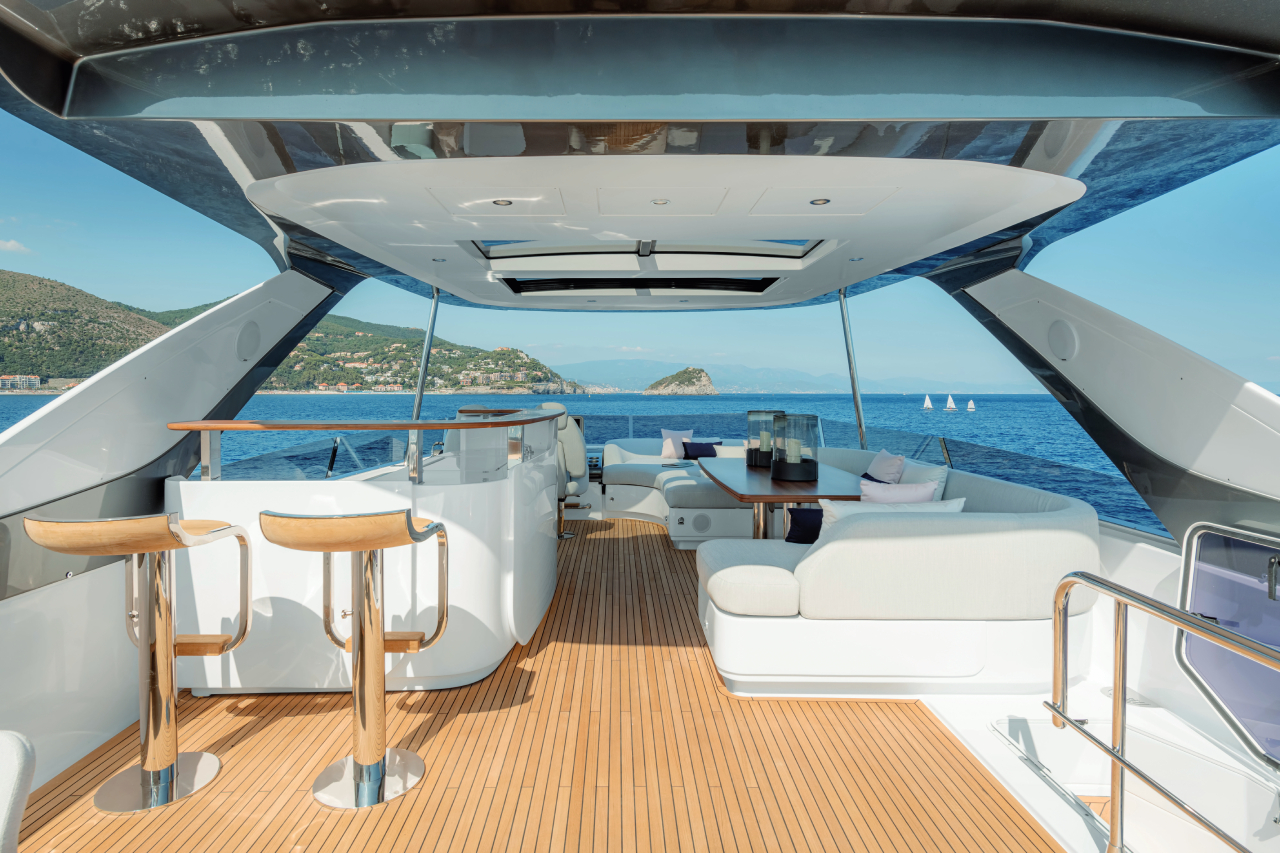
The bar (above) is the focal point of the flybridge; its counter and stool seats are crafted from carbon Kevlar to match the deck’s T-top (below)

The bar (above) is the focal point of the flybridge; its counter and stool seats are crafted from carbon Kevlar to match the deck’s T-top (below)

For the flybridge, “the idea was to try to create a different living and entertaining area,” says Besson, who installed a pop-up TV in the lounging area behind the twin-seat helm.

The focal point, though, is the bar station with its panel of backlit alabaster that conceals a large grill. Its counter and stool seats are crafted from carbon Kevlar to match the deck’s T-top, which can open up to the sun or stars.

SLEEPING ARRANGEMENTS

On the lower-deck, the four ensuite guest cabins include an impressive full-beam master suite midships and a forward twin cabin. Suitable for owners and their children, both rooms share a staircase that starts starboard of the dining area.

Accessed by a forward staircase, the full-beam master suite benefits from Monte Carlo Yachts’ iconic overlapping-circle windows

Accessed by a forward staircase, the full-beam master suite benefits from Monte Carlo Yachts’ iconic overlapping-circle windows

In the spacious master, Italian-designed silk and leather is used for the wallcoverings and decorative cabinet and door surfaces, while the owners also benefit from an ample walk-in closet, as well as a beautiful marble-walled ensuite bathroom with twin basins and twin rainforest showers.

There’s a VIP double and another twin aft, accessed by a separate staircase before the saloon sofa.

Not only do all internal doors carry the satisfying weight of quality but, when closed, they provide effective soundproofing that’s enhanced by a layer of rubber that seals each modular-construction cabin, also reducing vibration.

Hermès and Armani Casa fabrics provide a luxurious look and feel; the master cabin ensuite bathroom (below)

Hermès and Armani Casa fabrics provide a luxurious look and feel; the master cabin ensuite bathroom (below)

A previous MCY 105 commission for Asia Yachting was for a Hong Kong client that comprised two brothers, who both had young children. They requested shared, easy-access three-tier bunk-bed cabins for the kids as well as two master cabins of equal size for the parents. “Each master was absolutely tailored to each brother’s preferences,” Besson says.

All in all, this MCY 86 – currently on the market – offers both a very high level of finish and, in this configuration, an abundance of different areas around the yacht where people can easily find their comfort zone.

www.montecarloyachts.it

www.asiayachting.net

YACHT STYLE Issue 53: Catamarans Shine in 'Multihulls Issue' 2020

Yacht Style's second annual Multihulls Issue throws the spotlight on power and sailing catamarans, as the boating industry pushes on.

SHARE

MORE Reviews

Monte Carlo Yachts Creates Special-Edition MCY 86 for Hong Kong Read More »
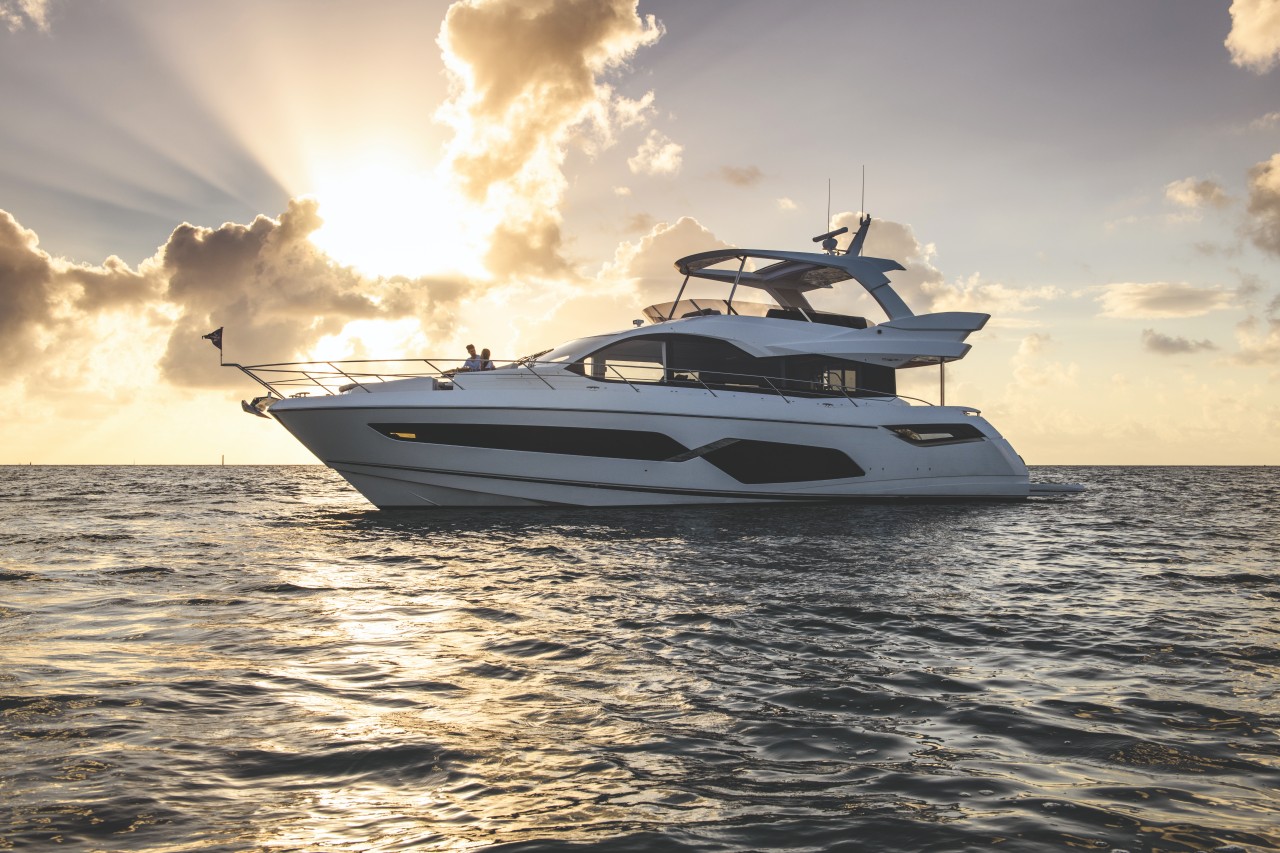
Red Alert: Lagoon Sixty 7 Powercat Appeals to Owners Across Asia

Red Alert: Lagoon Sixty 7 Powercat Appeals to Owners Across Asia

SHARE

Owners from Malaysia to Taiwan have ordered the Sixty 7, which joins the flagship Seventy 8 in Lagoon’s range of large motor yachts.

In late 2017, Lagoon made headlines by launching its Seventy 8, a power catamaran as large as a tennis court, measuring almost 24m in length with an 11m beam.

Lagoon Sixty 7 units will arrive in Port Dickson and Kaohsiung; Photos: Nicolas Claris

More recently, readyviewed the French builder showcased its ‘little sister’, the Sixty 7, with the red-hulled beauty making its North American debut at this year’s Miami International Boat Show, having had its world premiere at the Cannes Yachting Festival last September.

Designed for long cruising in comfort with family and friends, the Sixty 7 will ultimately succeed the Lagoon 630 MY and shares a similar beam of 10m to the 2014 model.

However, the newcomer offers huge gains in comfort, luxury, technology and deck area, the latter due to an overall length of 66ft 1in, just over 2ft longer than her predecessor, and a solid foredeck instead of trampolines. She’s also a lot taller.

Like the Seventy 8, the Sixty 7 has a solid foredeck, which greatly increases the amount of useable living space on the motor yacht

New units of the Sixty 7 have already been ordered by clients in Malaysia and Taiwan through Simpson Marine, Asia’s largest yacht dealership, which has sold over 400 Lagoon catamarans around the region since being appointed the brand’s dealer over three decades ago. The first two hulls into Asia are set to be based in Port Dickson and Kaohsiung respectively.

Lagoon is firmly established as the world’s largest builder of sailing and power catamarans, delivering over 5,000 units since 1984. Part of Groupe Beneteau, it builds across three sites in France, with the Sixty 7 and other 50ft-plus models created at the Lagoon headquarters in Bordeaux, a site it used to share with CNB before production of the high-end sailing monohulls was recently shifted to the Group’s Monfalcone facility in Italy.

For the Sixty 7, Lagoon retained its tried-and-tested design team of French studio VPLP Design (Marc Van Peteghem and Vincent Lauriot- Prevost) for naval architecture, compatriot Patrick Le Quement for the exterior and Italy’s Nauta Design for the interior.

A wide hydraulic swim platform links the two transoms and creates a long beach club, which is overlooked by an adjustable aft sofa in the cockpit

The same line-up worked on the Seventy 8, Seventy 7 sailing cat and many other models within the current range, so familiar traits include elegant, modern lines, a superstructure smoothly integrated in the hulls and bevelled bows.

MEGA MAIN DECK

When boarding the catamaran, the space and deck area of the cockpit makes an immediate impression. The wide aft sofa is adjustable, so two sections can face either aft or forward, while forward is a large table, fixed L-shaped sofa and space for loose chairs.

Like on the Seventy 8, the Sixty 7 features a wide hydraulic swim platform – operated by a remote control – that connects the two transoms to form a single level above the water for relaxation and recreation with water toys such as paddleboards or Seabobs, while also enabling easy launching of a tender.

The forward saloon door visually connects the yacht from bow to stern

Other cockpit features include an outdoor galley that’s equipped with a refrigerator, sink, icemaker and waste-bin, while options include a grill and secondary coolbox for drinks.

Wide side decks and high side rails provide a comfortable and safe access to the foredeck, which offers one of the yacht’s largest social zones and can also be reached through a central door in the front of the saloon.

The Sixty 7 – again, like the Seventy 8 – has a solid foredeck that features two separate social areas, comprising the sunken lounge in front of the saloon door and the vast raised deck, where sunloungers and other loose furniture can be placed.

The Sixty 7 features a large covered cockpit that connects to well protected, wide side decks and the attractive flybridge

The flybridge, another large social area, is accessed by portside cockpit stairs, which can be covered by an electrically controlled sliding panel to protect the companionway and cockpit in the case of rain.

The flybridge is offered in three layout versions – Standard, Sun Bathing or Tribu. Features included as ‘standard’ are a central helm station with a bench seat that’s connected to an aft-facing lounger to starboard and accompanied to port by a forward-facing sofa, which sits in front of a galley with grill, refrigerator, sink, icemaker and bin.

The Sun Bathing version includes all the standard features and also has a long table to starboard beside a long sofa, which is connected to a huge, freeform sunbathing lounger aft, both seating areas providing extra storage space.


The Tribu version of the flybridge features the Italian brand’s outdoor furniture

The Tribu version – as seen in the photographs – features loose furniture from the Italian outdoor furniture manufacturer, including a central sofa, chair and coffee table, and a long dining table aft. The cockpit can be completely covered by the hardtop, while a sliding sunroof is a pleasing option in the right weather.

SALOON AND CABIN OPTIONS

The Sixty 7 is available in two versions – galley up or galley down. In either set-up, the saloon offers 36sqm (385sqft) of space, a lot of light and 360-degree views. The galley-up version features the kitchen to port and a central island counter, while starboard is a sofa-and-table arrangement similar to that found in the cockpit.

In the galley-down version, the saloon features a long sofa, dining table and chairs to port, and a similar starboard sofa as in the galley-up version but with a low coffee table.

Forward view of the saloon (above) in the galley-down version, as chosen by clients in Malaysia and Taiwan; the dining area is portside and the lounge is to starboard

A good quality of finish is found throughout, with solid joinery on doors, drawers and the like, but just as eye-catching is the forward door – beside the helm station – which, when open, connects the whole main deck both by views and breezes.

Massimo Gino of Nauta Design says: “The interior of the Sixty 7 is the latest step in an evolution defined by open and uninterrupted spaces that join the interior and exterior seamlessly and open up the views all around you.”

Both the galley-down and galley-up versions are offered with multiple layouts for accommodation, with cabins served by four sets of stairs – on both sides at the front of the saloon, starboard side by the saloon entrance and forward of the cockpit stairway.

The large galley is in the aft port hull and features a dining area for crew

The latter stairs are used by crew in the galley-down version, where the cooking and crew mess is situated in the aft port hull, with a table and two bench seats for crew meals. This layout is offered with either three, four or five cabins, including forward doubles in each hull.

On port side, midships – forward of the galley – is the option of a guest double or crew bunks, the latter having access to the galley. In the aft part of the starboard hull, there’s either a long master suite, or a midships double and an aft twin cabin with sliding beds.

These cabin options are also available in the galley-up version, along with a double in the aft port hull, meaning the yacht can offer up to six guest rooms of similar quality, all with en-suite bathrooms, so ideal for charter.

The Sixty 7 has the option of a master suite in the starboard hull

If there isn’t a demand for so many rooms, the large owner’s suite to starboard is an appealing option and has access from both the saloon and directly from the cockpit.

It offers excellent views, as the king-size bed has been situated at an ideal height for the window, and also features elegant bedside cabinets and storage space. There’s a separate library area containing a sofa and dressing table, while further aft is the large en-suite bathroom, plus steps up to the cockpit.

The master suite includes a ‘library’ and en-suite bathroom aft, plus cockpit access

Lagoon worked hard on the atmosphere and ambiance of the cabins through a partnership with Sunbrella, offering a range of fabrics, as well as three décor options – Nomad, Pure or Fusion.

The standard engines are twin 340hp Volvo D6 diesels, giving a top speed of 14 knots and a cruising speed of 11, although the Sixty 7 is capable of 19 knots with the optional 440hp Yanmars, which provide a cruising speed of 14 knots.

However, range is arguably the yacht’s most appealing spec. With the standard Volvo engines and four 1,375-litre fuel tanks, the yacht can cruise at seven knots for 2,700nm – more than enough for a trip from Port Dickson to Kaohsiung, for example.

www.cata-lagoon.com

www.simpsonmarine.com

YACHT STYLE Issue 53: Catamarans Shine in 'Multihulls Issue' 2020

Yacht Style's second annual Multihulls Issue throws the spotlight on power and sailing catamarans, as the boating industry pushes on.

SHARE

MORE REVIEWS

Red Alert: Lagoon Sixty 7 Powercat Appeals to Owners Across Asia Read More »

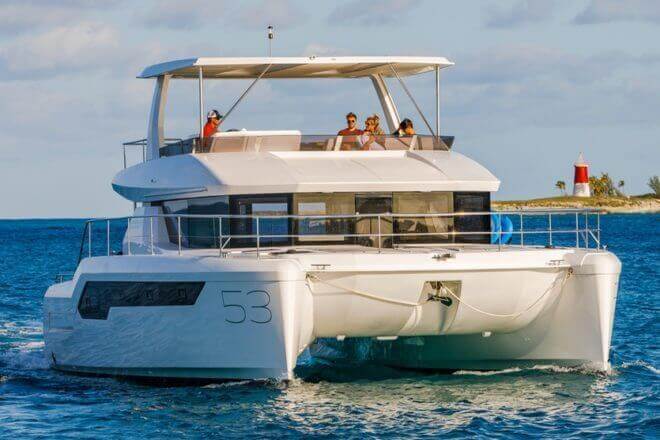
Leopard 53 Power Catamaran in Asia after World Debut

Leopard 53 Power Catamaran in Asia after World Debut

SHARE

Successor to the most popular powercat of all time, the Leopard 53 PC is over 30 per cent bigger than the 51 PC, with the same engines.

Considering the Leopard 53 PC only made its world debut in Miami in February, Asia’s importance to the brand is illustrated by the fact a highly-specced, three-cabin owner’s version was delivered to Raffles Marina on Singapore’s west coast by March.


The Leopard 53 PC debuted in Miami and hull three is now in Singapore

It’s especially notable considering the model will only be offered by sister company The Moorings as a charter yacht from June, starting in the Caribbean. The Moorings version is known as the 534PC (53ft, four cabins), but is basically the same model as Leopard’s 53 PC, which is for sale with either three or four cabins.

South Africa’s Robertson & Caine has been building catamarans for The Moorings charter company since the late 1990s before also producing personalised, Leopard-branded versions for private ownership.

As Leopard celebrates its 20th anniversary this year, readyviewed the 53 PC joins the 43 PC and four sailing models in the current range, and kick-starts what the brand describes as its fourth generation of catamarans.

Kit Chotithamaporn, Leopard’s Yacht Sales Manager – Asia, believes the 53 PC is a worthy successor to the 51 PC, which the company describes as the most successful powercat of all time, with 137 units sold since 2013, including a dozen to Asia.

The cockpit features a lounger, corner sofa, table and chairs, while the flybridge has aft sunpads, a lounge and forward sofa

“The Leopard 51 PC was a well-designed, high-performance powercat that has been successful in Asia,” said the Phuket-based Thai. “The new 53 PC has improved space, luxuries and amenities, so should have the same popularity with potential buyers.”

The Simonis Voogd naval architecture and yacht design studio – which has offices in Cape Town and also the Netherlands – was told that the new model was “to be bigger, better and faster, but use the same engines” as the iconic 51 PC. It was a tall order.

The good news? Whereas the 51 PC was required to offer the same interior options offered on the Leopard 48 sailing catamaran, this time the designers started with a clean slate, with no requirement to tie in the interiors with any existing models.

As such, Simonis Voogd rebooted the entire design, lengthening and refining the hull, and creating an enlarged superstructure, offering Leopard more flexibility to design an improved layout. The result? A total of 218.5 cubic metres of space, a dramatic 31.1 per cent increase in volume from the 51 PC.

The starboard side of the large two-sided galley

Designer Alex Simonis says the design shift on the brand’s new flagship powercat ‘is more radical than others that are merely evolutionary’, a sentiment echoed by Franck Bauguil, Vice President of Yacht Sales & Product Development, who describes the 53 PC as ‘an evolutionary change in the Leopard powercat range’.

NEW DECK LAYOUT

Visiting the Leopard 53 PC at Raffles Marina, the new design is evident from the electric swim platform, which holds a dinghy, and the walk-around cockpit, which in contrast to the 51 PC, makes the most of the 25ft beam to create a large socialising zone.

Both sides are clear as they feature 6ft-long, 4ft-wide deck hatches for access to the large engine rooms, which have good space for two or even three people to work.

The creative fitted furniture features an aft-facing chaise longue with an L-shaped backrest that’s almost mirrored by a large two-sided corner sofa, which sits around an interestingly shaped table – imagine a square with one corner cut off diagonally.

The enormous fridge is on your left as you enter the interior; the foredeck door is straight ahead, connecting the length of the yacht

The two central doors slide behind the outer ones to enable entry to the huge saloon, which starts with an impressive walk-through kitchen.

To starboard is a large C-shaped Staron worktop, four-hob Miele cooker, stacks of drawers and cupboards, a microwave at head height and a useful two-level rack in the corner for bottles, sauces and herbs.

Behind the cooker is an extra sliding-top freezer. However, it’s the enormous two-door Samsung fridge-freezer to port – with ice-maker and water dispenser in the left-hand door – that really gives the galley a ‘home kitchen’ feel. Beside it is a sink, storage/drying racks, bin and dishwasher.

Step forward and you get a better feel of the fantastic windows all around the saloon, with the see-through foredeck door increasing the feeling of space and connectivity to the outside. And the headroom throughout the main deck is really impressive. Overall, it’s a much more modern, roomy interior compared to previous Leopard powercats.

The well-lit saloon features carpeting; the latter is one of many options on the first hull in Asia, such as a foldable dining table instead of a coffee table

The open-plan lounge features a long, L-shaped sofa to port and a folding dining table. Across to starboard is a two-seat sofa, behind which is a hidden TV that can be electronically raised and lowered, plus built-in phone chargers.

For the first time on a Leopard powercat, there’s an interior helm station, where an interactive touchscreen screen controls and monitors of all the onboard systems including lighting, air-conditioning, fuel tanks, water tanks and much more.

“The indoor helm station and amplified interior space, especially in the saloon and galley, are examples of the motoryacht-type features this has compared to previous Leopards,” Kit says. “And this unit is very highly specced, with all the luxuries an owner in Asia may need.”

The first hull in Asia has a bow thruster, a huge help while manoeuvring in marinas, while other options include carpeting, air- conditioned crew quarters and separate head, inverter, solar panels, underwater lights, dishwasher, barbecue, icemaker, additional freezer, electric lifting platform, composite teak decking and more.

The 53 PC is the first Leopard powercat with an interior helm

Typical of Leopard, the standard layout includes the forward saloon door, which leads to a foredeck featuring two adjustable sunbathing mattresses either side of the central steps, while the corner tables fitted to the handrails are a nice touch. As per the options, there’s a crew berth in the port forepeak, with head and shower in the starboard one.

UPSTAIRS AND DOWNSTAIRS

The huge flybridge is billed as ‘the heart of the boat’ and it’s easy to see why. The starboard stairs – which can be covered by a see- through hatch – bring you to the helm station, while the port side features three separate social areas, starting with a forward-facing sofa beside the helm.

The heart of the flybridge itself is a square dining table and large C-shaped sofa that faces a big wet bar with grill, fridge, freezer, sink, storage and bin, yet I had the feeling this area could prove a bit of a ‘pinch point’ when people are cooking or watching the chef in action.

Most of the flybridge is covered by a solid hardtop, although sun worshippers can get their dose of vitamin D on the triple sunpad aft, beside which is enough space to roll out a couple of yoga mats. The enormous flybridge is a key reason why a local charter operator thinks the boat could carry over 35 people for a day cruise.

The master suite features a forward-facing bed towards the aft end of the starboard hull, separated from the engine compartment; forward of the bed is a vanity table, sofa and enormous storage (below)

Meanwhile, the accommodation is accessed by stairs on each side forward of the galley, with both hulls benefiting from long and large windows, plus several portholes. The model in Singapore is the three-cabin owner’s version, which has the master suite occupying much of the starboard wing.

The bed is aft and looks forward to a cupboard and sofa on the left, with a vanity desk and drawers below the window and a double wardrobe. Further forward is a dressing room/bathroom with more drawers, his-and her-sinks, large wall cabinets and a big walk-in shower.

Guest rooms in the port hull comprise an aft cabin with forward-facing bed and a forward one with a window-facing bed, and both are also very comfortable and elegantly designed, with en-suites. The four-cabin version has the same cabin layout in both hulls. On both versions, the port hallway features a washer/dryer, next to the instrument panel.

“Compared to the 51, the 53 PC has more space in the hulls, so guests in each cabin have the feeling they’re in the owner’s suite – until they tour the owner’s suite,” Kit smiles.

The forward (above) and aft (below) guest cabins in the port hull, which has a washer/dryer in the hallway

POWER AND PERFORMANCE

While we’re here, it’s worth noting that one of the key design changes from the 51 PC – and why the 53 PC is 2ft longer – was the relocation of the Yanmar engines from under the aft beds to separate compartments further aft, so reducing noise and vibration in the guest areas.

Simonis Voogd also refined the bow section of the hull to reduce spray, developing a more efficient stern section to better carry the aft-positioned engines. It was all part of the designers’ challenge to create a bigger, better and faster boat than the 51 PC, while using the same engines.

After all, the 51 PC had a good thing going with the 8LV range from Yanmar, which worked with the purpose-designed hulls and a flow-optimised tunnel design around the drive train to produce a top speed over 24 knots and a cruising speed of 17.

The 53 PC is listed as having a top speed of 24-25 knots and a cruising speed of 17.5 and it compared well to its predecessor in early tests.


The Leopard 53 PC reaches 25 knots with twin 370hp Yanmar engines

In ‘light ship’ sea trials, a fully specced 53 PC weighing 22.5 tonnes was faster than a basic-model 51 PC (19.4 tonnes) through most of the rpm range except at full power, where it was marginally slower – despite being over three tonnes heavier. Results were similar in ‘half load’ trials, where a full-spec 53 PC (25 tonnes) matched or bettered a basic 51 PC (21.5 tonnes) aside from at top speed.

Simonis says these remarkable results are due to the 53 PC having a far more streamlined superstructure than the 51 PC, which had a sunken foredeck cockpit shaded by a flybridge overhang.

“The explanation that these numbers could be achieved with the same engines is that we managed to reduce the drag and windage sufficiently to make up for the difference in weight. The window sections have lower drag due to their aft sloping side, while the 51 PC had the extending eyebrows above the forward cockpit,” Simonis said.

The swim platform can be lowered below water level; the ladder is to port

“Another nice aspect of the efficiency gain is that the speeds have improved in the engines’ mid-range rpm (2,500-3,500), the cruising speed range it will operate in most of the time.”

Furthermore, with 2,200 litres of fuel, the 53 PC has an impressive range of 1,300nm with two engines and 2,000nm with one, the latter often used when Leopards are delivered ‘on their own bottom’ from South Africa to their owner’s home port.

Leopard has been renowned for its fuel efficiency since launching readyviewed its first powercat, the 47 PC (precursor of the 51), and describes the 53 PC as up to 50 per cent more fuel efficient than monohull motor yacht counterparts.

Leopard sells more powercats than sailing catamarans in Asia

Leopard sells more powercats than sailing catamarans in Asia

Kit explains: “Even at 24 knots, the hull doesn’t plane, giving her very good handling and a flat running angle with minimal bow rise. But the 53 PC isn’t just a fast cruising powercat. Because of the full displacement hull design and low fuel consumption, she’s also a very capable long-distance passage maker at lower speeds.”

Although Leopard produces roughly three times as many sailing cats as motor yachts, Kit confirms powercats are more popular in Asia and expects the 53 PC to continue the brand’s success in the region.

Says Kit: “Owners could be existing powercat owners looking to upgrade, sailing cat owners looking to switch, as well as monohull owners looking for that extra space and efficiency.”

www.leopardcatamarans.com

www.moorings.com

YACHT STYLE Issue 53: Catamarans Shine in 'Multihulls Issue' 2020

Yacht Style's second annual Multihulls Issue throws the spotlight on power and sailing catamarans, as the boating industry pushes on.

SHARE

MORE REVIEWS

Leopard 53 Power Catamaran in Asia after World Debut Read More »
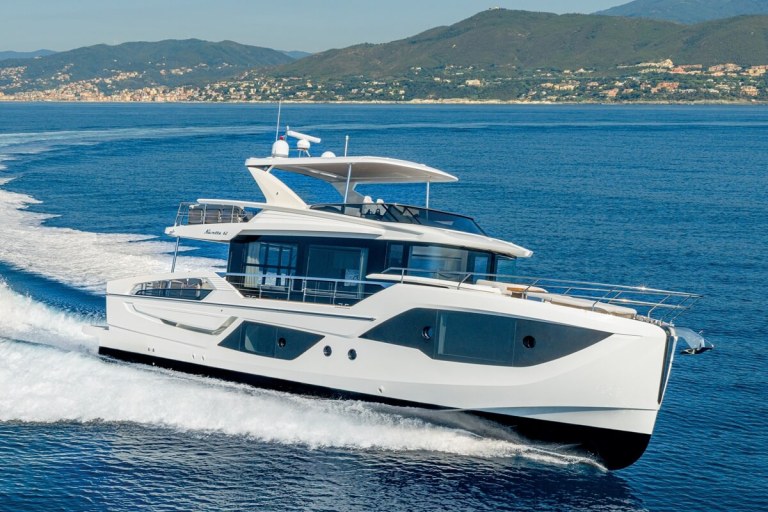
Sunreef’s 80 Power Catamaran Enjoys Strong Support

Sunreef’s 80 Power Catamaran Enjoys Strong Support

The spectacular 80 Sunreef Power is the builder’s current flagship powercat and cover star of Yacht Style’s 2020 ‘Multihulls Issue’.

 Having married his long-time girlfriend in Mallorca last October, Rafa Nadal has recently been preparing for another major event – the arrival of his new 80 Sunreef Power.
Rafa Nadal has ordered received hull four of the 80 Sunreef Power

Rafa Nadal has ordered received hull four of the 80 Sunreef Power (hull one pictured)

One of the world’s best-known sportsmen since winning his first Grand Slam as a teenager, Nadal has lived his whole life in Mallorca. And as a native of the stunning Balearic Islands off the coast of mainland Spain, the tennis superstar has long enjoyed yachting as a calming retreat from his arduous training regime.

Yet when the Spaniard sought to trade up his MCY 76 and buy a larger boat, he signed up to buy hull four of Sunreef’s current flagship motor yacht long before the first unit had even launched.

Francis Lapp, founder and President of Sunreef, recalls: “In 2017, he visited our booth at the Cannes Yachting Festival and stayed one or two hours. In 2018, when we were showing the 80 sailing cat, he visited our stand for three days! We explained the 80 powercat would offer similar space with a little more beam, and we made the deal.”

Hull one of the 80 Sunreef Power premiered at the Cannes Yachting Festival

Hull one of the 80 Sunreef Power premiered at the Cannes Yachting Festival

In fact, Nadal – like us – only saw an 80 Sunreef Power for the first time when the model premiered at last year’s Cannes Yachting Festival.

NEW POWER RANGE

Aria, the first hull, was unveiled at Cannes one year after the Sunreef 80 sailing catamaran had her debut at the same show.

The Sunreef 80 is the biggest model in the builder’s new range of sailing catamarans, which also prompted a new range of powercats, according to Lapp.

“We received fantastic feedback from our sailing yacht clients, but we quickly witnessed new demand for motor yacht options,” says Lapp, who founded the company in Gdansk in 2002.

The innovative jetski ‘garage’ sits under the aft cockpit sofa, which can be raised upwards and aft to allow access

The innovative jetski ‘garage’ sits under the aft cockpit sofa

Although appearing a year after the 80ft sailing version, the 80 Power is actually an evolution of two previous Sunreef powercats: the 70 Power launched in 2008 and the 60 Power from 2012.

The success of the models, which sold 17 units in total, prompted Lapp to think bigger still, an idea that was realised after the evolution of the new sailing range.

“We took all the knowledge of the 70 and 60 motor yachts, then applied it to the 80 Power and a new generation of motor yachts,” Lapp said.

Despite sharing a model name with the company’s flagship sailing catamaran, the 80 Power was designed from scratch, with a completely new hull.

The flybridge of the 80 Sunreef Power has an enormous sunbathing area; hull one features a jacuzzi

The flybridge has an enormous sunbathing area; hull one features a jacuzzi

The hull is 23.95m (78ft 7in) in length, so 40cm shorter than its ‘80’ sailing counterpart, yet it’s also 50cm wider, with a 12m beam that’s significantly wider than other powercats in its sector.

“We don’t just take the mast off a sailing cat and say, ‘There’s a powercat’. The hulls are completely different,” Lapp emphasises.

“We work on a motor yacht hull from scratch. The sailing yacht has a more banana-shaped hull, whereas the motor yacht has a flatter structure. Hull shapes are very important to us.”

LEADER OF THE PACK

As seen on Aria, the 80 Power’s hull has a bold, contemporary style and high bulwarks.

The enormous covered cockpit makes the most of the yacht’s 39ft beam

The enormous covered cockpit makes the most of the yacht’s 39ft beam

Aria is fitted with teak decks, while the interiors and décor were customised to the tastes of her owner, whose brief was for a Miami high-rise style décor that offered both comfort and privacy.

A huge covered cockpit welcomes guests and has a wide sofa, a dining table and four aft-facing chairs. Doors open fully to an enormous saloon with large windows on all three sides.

Portside is a large L-shaped sofa, coffee table and chairs, while there’s a long dining table to starboard, with seating provided by a large sofa on the far side and a row of chairs. Forward is a bar and a helm station, which sit either side of a central door to the enormous foredeck.

Sunreef offers multiple layouts for the main-deck interior

Sunreef offers multiple layouts for the main-deck interior

However, the saloon and pretty much all on-board spaces can be customised. The saloon, for example, can accommodate a large galley on either side or forward, while the forward area can even be used for a master suite, with a double bed facing the bow terrace.

THE GREAT OUTDOORS

The foredeck is one of the show’s signature spaces, a vast area with an L-shaped sofa and a coffee table on either side, and an almost full- beam row of sunpads in front.

On the upper deck, the immense flybridge can also be customised. On Aria, there’s another vast expanse of sunpads at the back, although the centrepiece of the aft area is a round spa pool surrounded by a great semi-circular bar with four fixed bar stools offering great views.

The foredeck features an enormous row of full-length sunpads

The foredeck features an enormous row of full-length sunpads

On each side further forward, there’s a corner sofa, coffee table and helm station – so, three in total – while the centre of the flybridge has been left clear like a dancefloor, indicating that this could be a great party boat.

In fact, both the flybridge and aft cockpit have been equipped with lavishly sophisticated home entertainment systems.

However, the real party piece on Aria is the jetski garage, which sits under the aft cockpit sofa on the main deck.

The entire sofa can be pivoted upwards and aft, allowing someone to sit on the jetski before the central platform descends directly into the water and off you jet!

The immense flybridge can be customised; hull one could be a great party boat

The immense flybridge can be customised; hull one could be a great party boat

Behind the cockpit, an aft platform lifts up and down between the two stairways and can also be used to carry a tender or other water toys.

MULTIPLE CABIN LAYOUTS

There’s enormous flexibility in the cabin arrangement. Aria features an aft master cabin and a guest cabin in the starboard hull, while the port hull houses a VIP cabin forward, a crew cabin and galley aft.

The crew quarters, along with the galley and crew mess, can only be accessed from the aft cockpit, allowing both crew and guests privacy. There’s also a small crew cabin in the starboard forepeak.

Multiple layout configurations are available for crew and guest cabins, and the immense volumes in the hulls of the 80 Sunreef Power give plenty of room to tailor a layout to very specific requirements.

On hull one, the owner’s suite is situated in the centre of the starboard hull

On hull one, the owner’s suite is situated in the centre of the starboard hull

Sunreef has a strong tradition of creating bespoke layouts and décor on its yachts, and that offer is enlarged on the 80 Power due to its enormous size.

Nadal’s customisations, for example, include a private drop-down balcony in the master cabin.

“When it comes to onboard customisation, the options are limitless,” Lapp says. “I am really happy when the client wants to change the layout and design because I don’t want to make two boats that look and feel the same

“In fact, I’m almost disappointed if a customer is happy with our default design layout and décor, although many are,” he adds with a chuckle.

The master cabin's en-suite bathroom features exceptional design and finish

The master cabin’s en-suite bathroom features exceptional design and finish

The design of this 78-footer is a milestone for the company and another example of the growing appetite for large powercats, a niche sector until recent years.

Yet Sunreef is already working on a 100 Power, a 110 Power and a fully customised 49m (161ft) motor yacht, more than double the length of the 80.

For now, the 80 Power is Sunreef’s flagship motor yacht and has a new owner in Mallorca who’s set to draw further attention to the Polish builder’s pioneering powercats.

www.sunreef-yachts.com

YACHT STYLE Issue 53: Catamarans Shine in 'Multihulls Issue' 2020

Yacht Style's second annual Multihulls Issue throws the spotlight on power and sailing catamarans, as the boating industry pushes on.

SHARE

MORE REVIEWS

Sunreef’s 80 Power Catamaran Enjoys Strong Support Read More »

Lurssen Madsummer Owner Isn’t Afraid To Stand Out From The Crowd

Lurssen Madsummer Owner Isn’t Afraid To Stand Out From The Crowd

SHARE

The owner of the 95m Lurssen-built Madsummer – formerly known as Project Fiji – plans to voyage into Asia-Pacific waters.

Readers of the annual Top 100 Superyachts of Asia-Pacific will recall that, a decade ago, readyviewed the first Madsummer, a 78.5m Lurssen designed by Espen Øino , was part of a complex swap in which a Mexican billionaire acquired the vessel and renamed her TV. She then cruised extensively in the Pacific and visited many Asian ports.

Madsummer, Nice, France, 2019

Madsummer was delivered in 2019; Photos: Jeff Brown & Giorgio Boroni

The original American owner acquired two smaller superyachts and a Sunseeker in the interim, calling them all Madsummer, and now owns the 95m Lurssen Madsummer. Convention precludes naming the dashing owner, but he is widely identified online, and is closely associated with Miami Beach’s high-profile Fontainebleau Hotel.

The stunning new vessel, says Lurssen, “is a bold, joyous expression of her owner’s love of yachting. From her beautiful sweeping exterior curves penned by Eidsgaard Design to her colourful and personality-filled interior by Laura Sessa, Madsummer is a home from home for an owner who isn’t afraid to stand out from the crowd.

“This superyacht is a first collaborative effort for Eidsgaard Design and Lürssen, and proved a very successful partnership, with the yacht being delivered ahead of schedule.

“On the inside, however, it was to be a meeting of old friends, with Laura Sessa and the owner having worked together on projects spanning the last 15 years.”

Peter Lurssen comments: “The owner’s brief was demanding. However, we believe our engineering expertise has surpassed his wishes to own a yacht that many years from now will be timeless and yet still ahead of its time.

Interior designer Laura Sessa and the owner have worked together on projects for years

“Our thanks go, of course, to good design and communications with the designers of the exterior, Harrison Eidsgaard, and Laura Sessa respectively for the interior as well as to Moran Yacht & Ship and the owner’s captain who supervised the build on behalf of the owner.”

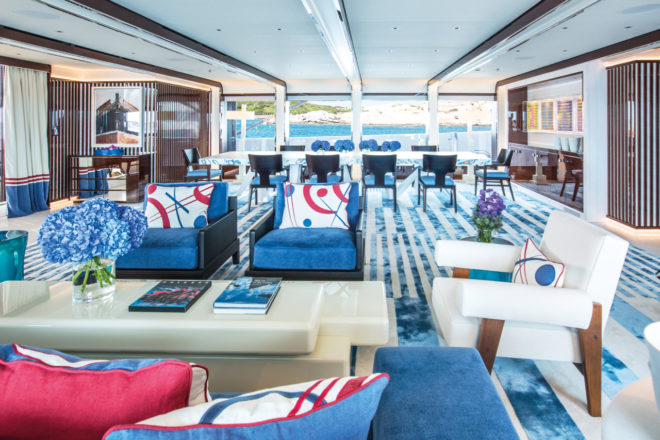
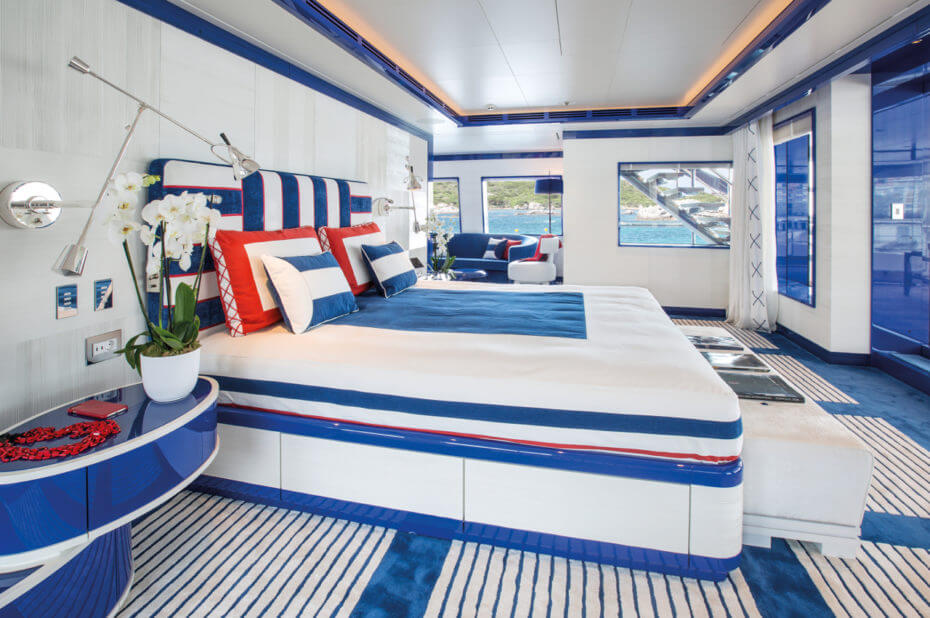
The interior of Madsummer is suffused with bright reds, whites and, most extensively, blues. The brief from the owner was to incorporate colours and textures in a way that was both stylish and contemporary but also homely and personal. Throughout the yacht, moments of fun and levity complement the décor, allowing the spaces to be beautiful without pretention.

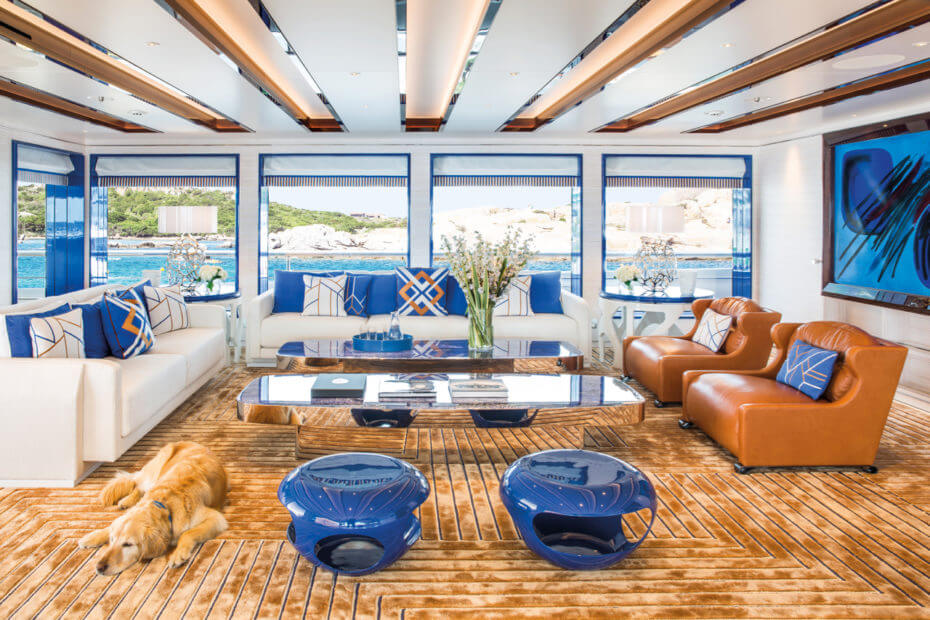
The main salon, says a Lurssen spokeswoman, is a prime example of this patriotic tribute to colour, with a soft royal blue silk carpet. A captivating raised geometric pattern on the walls, made from dark Mutenye wood, cleverly disguises the handles to the storage spaces behind.

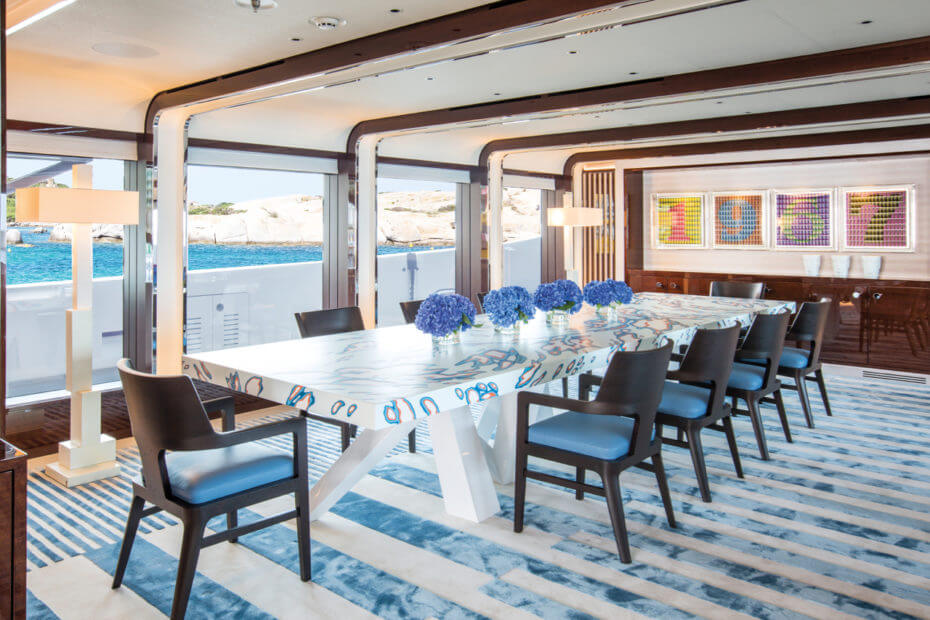
To port, a bespoke dining table for 14 catches the eye: layers of coloured lacquer are concealed beneath a white layer which is scored off in circular patterns to reveal the colours beneath, forming a unique and contemporary talking piece.

On the wall, a piece of art depicting an important date to the owner reflects the personal element of the brief. Pale Oregon pine elements and ceilings with straw details lighten the space. To starboard, a comfortable sofa completes the room. A stylish lift carries guests across four floors from the main deck to the sundeck, while a staircase with white leather steps surrounded by a dark Mutenye boarder encircles the lift.

Dining room is clean, modern, elegant and offers spectacular views during service

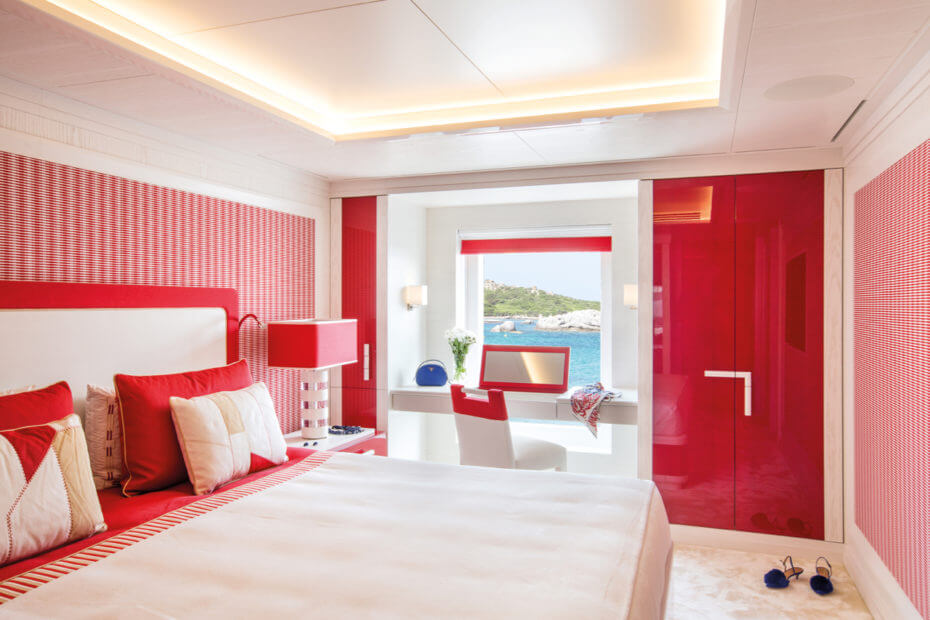
The main deck forward is home to six of the yacht’s 10 cabins. The cabins are split between four identical doubles aft and two twins forward, and each have their own colour scheme. The doubles are red, turquoise, beige and royal blue, while the twins are green and navy blue.

The cabins are awash with their chosen colour, with lacquered sycamore wardrobe doors, silk carpets, custom lampshades, bed frames and even the loo seats all bold and bright. The colours are carried through to the bathrooms as well, with stunning hand-dyed mother of pearl surrounds on the mirrors and bright Calacatta marble throughout.

The upper deck houses three more guest cabins: a double and two matching VIPs. The double cabin may be small in size but it packs a heavyweight punch in style. It boasts a blue and white, nautical-meets-The Hamptons theme, with a beautifully woven wool carpet, dressing room, stunning marble bathroom and enormous windows.

The two VIP cabins are identical except for colour, with one in blue and the other in a warm burnt orange. These two cabins boast a stunning accent wood that has been laminated with bronze. Running along the wall and framing the large windows, the whole shimmering structure becomes a piece of art in itself. The bathrooms boast eye-catching Zebrino marble and bronze Armani marble, complemented by rose gold taps and handles. On the cabin walls, pictures of vintage seaplanes are an homage to a passion of the owner.

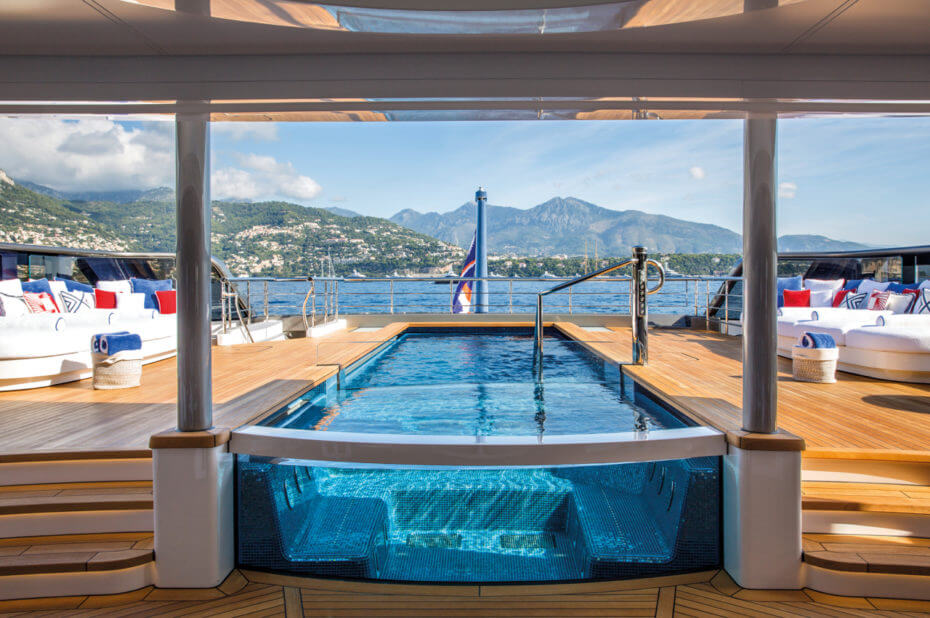
An impressive 9m pool and Jacuzzi are on the main deck aft

Overlooking the bow is the cinema. Deep sofas include stainlesssteel trays to hold drinks and snacks as well as charge phones. From a technical perspective, this room also includes a first, with the huge floor to ceiling 2m by 3m windows boasting electrically switchable glass.

A flush-line sliding door on each side leads out onto the foredeck, with a built-in sofa and table on one side and a sunpad on the other, protected from the elements by the height of the bow.

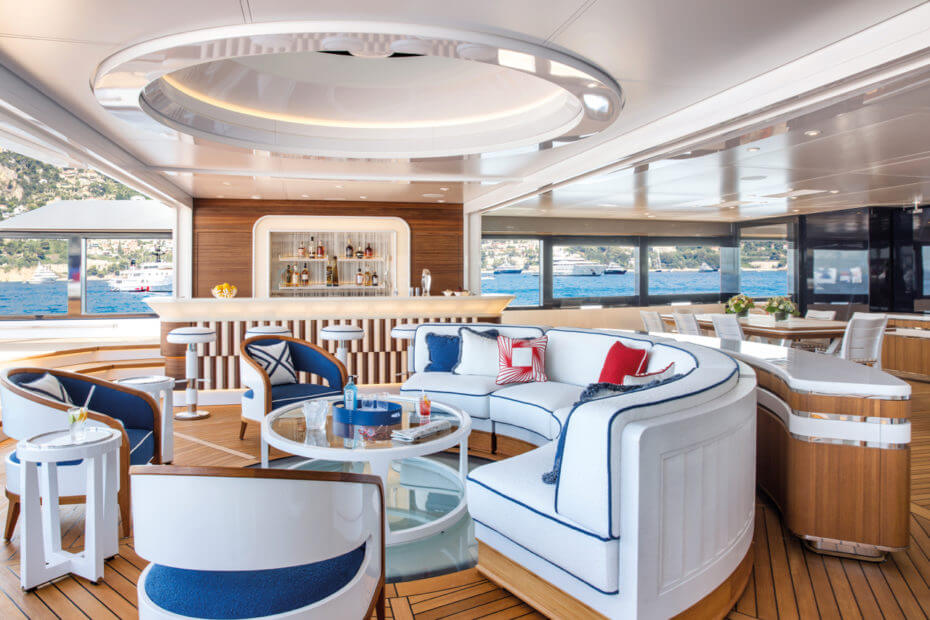
In the upper deck salon, a superb bar in backlit white alabaster with deep blue stripes immediately draws the eye. This is a mature, grownup space, as confirmed by the white Steinway and Sons grand piano in the corner.

On the port side, comfortable sofas surround two custom coffee tables. One of the objectives of the brief was to create central guest spaces that would form the heart of the yacht and be easy to move between.

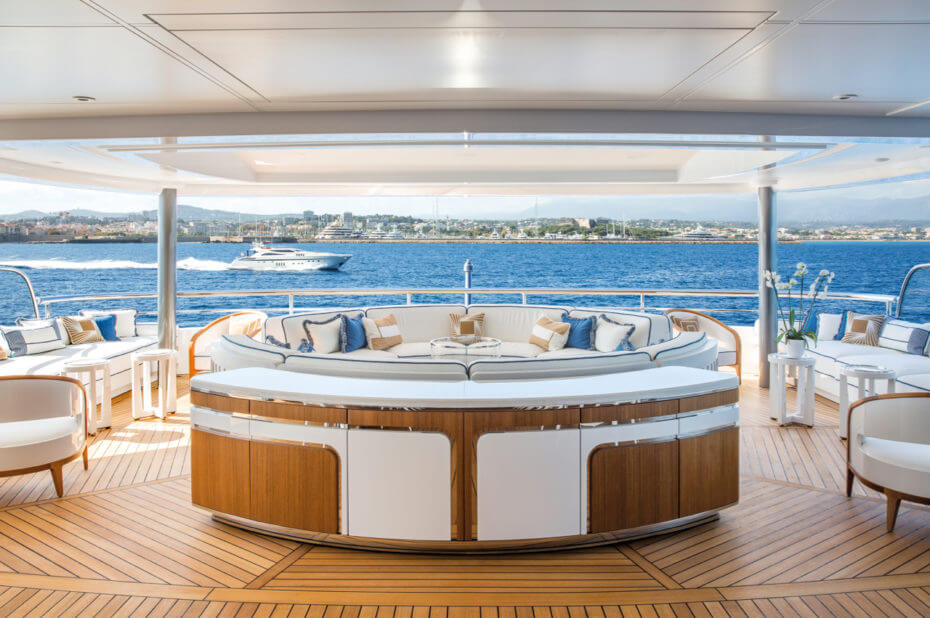
The upper aft deck is one of these key areas and is home to the informal exterior dining space as well as the large ethanol-driven fire pit. Glass windbreakers slide in to position along the side decks to provide respite from the elements, a key request from the owner. Next to the dining table is a sizeable Teppanyaki bar.

Lovely nautical-meets-The Hamptons décor in al fresco areas

The bridge deck is home to the bridge forward and the master suite aft. Inside the master suite the brief to include colours and textures has been stepped up a gear and the space explodes into a kaleidoscope of warmth and personality.

The wall panelling in white tinted oak finished with a clear blue luminous resin gives the space a stylish, futuristic feel. To port and starboard are two corridors of his-and-hers dressing rooms with spy mirror wardrobe doors. At the end of the central hallway to the cabin a large work of art in bright red makes an impressive impact.

On the port side, her bathroom is a feminine, clean space, with a striking white quartzite light-reflecting floor and geometric inlay work in stainless steel. Among the aesthetic details there are practical considerations too, such as a refrigerator for beauty creams.

To starboard is his bathroom, where a dark Travertine marble gives the space a masculine energy, with bold details in brushed painted teak. A huge shower is reminiscent of that of an opulent spa.

Master suite faces aft on the bridge deck, a change from the owner’s prior Madsummers

The cabin itself is a homely, patriotic space, with lots of blues accented with reds and whites. A blue silk carpet shimmers in the light and provides a warm sweep of colour. The headboard is a custom design in velour and embroidery with colourful details.

The master cabin embodies the joyful personality that shines throughout the whole yacht and confirms Madsummer as a family space that has been lovingly and passionately curated by everyone involved.

In a breakaway from the owner’s previous yachts, it was decided to have the master suite in this space to maximise the views and enjoy the luxury of a private aft terrace.

Here there are a number of distinct spaces to relax in, including a dining table, two sunbeds, sofas and coffee tables and even a hanging egg chair. As on the deck below, sliding glass panels, reflecting the distinguished curves of the superstructure, protect the deck and its occupants from the elements.

Guest suite reflects continued use of vibrant colors in accommodation areas

Forward on this deck is the state-of-the-art bridge. Growing up on the water and at one stage racing offshore powerboats, the owner
 is very knowledgeable about the workings of yachts and enjoys spending as much time as possible in the bridge. To this end, there is a Hermes-style raised sofa and table for the owner to sit at and enjoy underway, a favourite pastime of his. Aft of the bridge is a sizeable cabin for his longstanding captain.

The sundeck is home to a gym which includes a kinesis machine and hidden television screens. The sundeck aft is a large exterior space used to store a Husky seaplane. When at anchor, the seaplane is lowered into the water and the whole deck becomes a dance floor and party space. To highlight this, a bar in backlit white ICE-glass sits poised. Furthest forward on this deck is a cosy observation area with sun pads, tables and a Jacuzzi under the mast.

On the main deck aft is the impressive 9m pool and Jacuzzi, where the teak deck curls up to the sides of the pool, creating a visually striking, flush surface that reflects the curves evident in the yacht’s exterior lines.

Alongside are inbuilt sunpads and sofas that slide on a rail mechanism to cover the technical areas when they are not in use. Forward are two large formal dining tables. Round sofas and coffee tables provide separation between the spaces, as does a bar with custom bar stools.

Large sliding glass doors to the salon allow for an easy flow between the interior and exterior and details such a scatter cushions in red, white and blue and subtle blue piping on the bar stools enhance the design relationship between the inside and the outside.

Views of some stunning outdoor and indoor areas on this superb Lurssen

On the lower deck is the yacht’s spa and wellness retreat. A large foldout balcony on the starboard side also functions as the reception space for guests arriving by tender.

The spa itself is a calming, quiet space, with intricate mosaic tiles and lacquered wood details. A sliding door reveals a well-stocked bar next to a circular day bed. A huge circular ice shower leads to a beauty and hair salon, a massage room and a Hammam and sun shower. There is also a day head here, which, in keeping with the rest of the yacht, proudly sports a royal blue loo seat.

On the technical side, Madsummer is also world class. In a superyacht first, she boasts a peak levelling system thanks to a special battery pack. This 125kW, lithium-ion battery pack ensures the electrical generators can always run on the best percentage, burning less fuel and requiring less maintenance by storing the excess energy produced. It then uses this to fuel the system and level the peaks if the system requires more energy, removing the need to start another generator.

There are two tender garages on Madsummer, one forward and one aft. These house an 11m Maori Yacht limo tender, a Ski Nautique, a 10m rib and a rescue tender. There are also five PWCs, a range of skis and boards and a large selection of dive equipment.

The foredeck is certified for helicopter operations and bunkering, and a helicopter can also be stowed on the aft sundeck. Thanks to her two powerful MTU 16V4000M63 IMO-compliant diesel engines, Madsummer has a range of up to 6,000nm at 12 knots and a top speed of 17 knots. A round-the-world trip and a Pacific cruise are on the agenda, with the galley and cold storage being designed with long distances in mind.

A complement of 29 crew are on hand, with spa professionals and dive masters among them to ensure guests are able to enjoy every aspect of this exciting yacht.

www.lurssen.com

Yacht Style Issue 52: Asia's Top Builders, Reviews & More

Yacht Style Issue 52 profiles Asia's top builders and features Amels, Galeon, Burgess, Lady Azul, Lurssen, Fairline, Sunseeker and Bali.

SHARE

MORE REVIEWS

Lurssen Madsummer Owner Isn’t Afraid To Stand Out From The Crowd Read More »

Abeking & Rasmussen, Winch Combine to Create 80m Excellence

Abeking & Rasmussen, Winch Combine to Create 80m Excellence

SHARE

Built in Germany by Abeking & Rasmussen, the 80m Excellence was designed by Winch to be “sexy, different and unique”, writes Julia Zaltzman
.

Disrupting”, “brave” and “risky” are just a few of the words used to describe readyviewed the 80m superyacht Excellence, built by German shipyard Abeking & Rasmussen . A yawning expanse of mirrored glass flanks her sides. An arresting triple-height atrium takes centre stage in the interior. Her exterior is akin to that of a spaceship.

Excellence has a bow shaped like an American eagle’s beak, plus red and blue stripes above the waterline, a feature on the American owner’s previous yachts; Exterior Photos: Guillaume Plisson For Abeking & Rasmussen (Cover Photo: Tom Van Oossanen)

Excellence is a yacht with a difference and she duly played a starring role at the 29th Monaco Yacht Show last September where she made her international debut. She even scooped Finest New Superyacht and Exterior Design prizes at the show’s Superyacht Awards Ceremony, praised by the judges for being both contemporary and versatile.

The sixth incarnation of this aptly-named vessel, and the fourth by Abeking & Rasmussen, Excellence is a masterclass in artistic discipline, a fine balance between creative freedom and owner’s lifestyle.

British studio Winch Design has pulled off a symbiotic relationship between exterior design and interior styling, producing flowing 
spaces adorned with references from the East Coast Art Deco era, and incorporating details inspired by the owner’s outstanding automotive collection.

Owner Herb Chambers is experienced in the art of yachting. Recognising originality when he sees it, the American plucked a five-year-old Winch concept off the shelf (albeit a 120m version) and set about making it his own.

In tribute to the owner’s love of cars, circles are used throughout the design including for most of the outdoor areas

“The client looked at the concept drawings and said, ‘that is sexy, different and unique; let’s make it my boat’,” explains Andrew Winch, founder of Winch Design.

James Russell, lead exterior designer at Winch, handled the challenging task of sketching the exterior lines for a yacht that started out at 75m and eventually grew to 80m. From the placement of the glass, to how the atriums work, to the balance in the swimming pool and the varying ceiling heights, the job took precision and courage.

Winch says: “It was extremely difficult to get the exterior lines right because there are very few lines. If you get the sheer lines wrong, it looks fussy. It’s very difficult to get it to look this simple and it’s different in every place to any other boat that has been drawn.”

A patriotic nod to America is evident in both Excellence’s head-turning, rear-inclined ‘American eagle bow’ – inspired by the shape of the bird’s beak – and the red and blue stripes on the water line, the latter a design quirk Chambers has featured on all of his yachts.

The main swimming pool is on the aft main deck

A sculpture of the bird – one of only two in existence; the other resides in the White House – sits in the main-deck atrium.

“The interior was accommodated to the client’s lifestyle. He likes 
to sit looking on to the swimming pool, and he wanted all the guest bedrooms on one deck, with very big windows,” Winch explains. “But we had planned the vast windows along the profile from the beginning.”

GLASS STRUCTURE SUPREME

Affording amazing views and sight lines from all six main-deck guest cabins, the cohesion between the interior arrangement and the complicated exterior is one of the main benefits of undertaking both elements of yacht design, says Winch.

British studio Winch Design was responsible for both the exterior and interior

“When you look at the exterior, you notice 
a mirrored glass stripe down the side, but for every two panes of glass, there’s a guest cabin; it repeats perfectly,” he says.

“To get that to work, there is no discord between the exterior and the interior; there is no change
 of shape because it looks ‘styled’ on the outside without relating to the inside. You walk in and the windows are large. Everything is in harmony and that’s when it starts to work and be unique.”

Stretching an incredible 5m high, and weighing a hefty 1.3 tonnes, the breadth of exterior glass that visually links the main deck, bridge deck and owner’s deck is an engineering first for Abeking & Rasmussen.

Hans Schaedla, CEO at Abeking & Rasmussen, says: “You never know when you start a project if you’ve made the correct decision, especially with something like the glass structure on Excellence.

Winch handling both exterior and interior was beneficial for such a complex build featuring 5m-high glass panels and a triple-level atrium; Interior Photos: Winch Design

“It took a lot of engineering and proved very challenging. But the more we progressed into the build, we all believed that we had achieved a fantastic project. And we couldn’t ask for more than the recognition we received at the Monaco Yacht Show.”

Providing a triple-height view of the interior balconies, the 
large panes of glass are complemented by the use of mirrored glass throughout the yacht, selected for its ‘dynamic’ appeal, from the treads on the staircase to the panels in the main saloon, and all devised to open up the space architecturally.

STONE, WOOD, LEATHER, CARS

Likewise, the range of soft materials selected by Lizzy Hart, Winch’s lead interior designer, serve as both functional and luxurious.

Around 32 different types of stone, from granite flooring to backlit white onyx, feature in areas of high traffic. Textured leather and 3D surfaces create a tactile space, while 24 different types of wood, from oak to Japanese ash to sycamore, work in unison to enhance the calming aesthetic.

Abeking & Rasmussen: On the main deck, an enormous white rabbit sculpture is a feature of the atrium

On the main deck, an enormous white rabbit sculpture is a feature of the atrium

No less than two tonnes of ‘teak wood’ stone flooring feature in the luxurious main-deck spa area, equipped with underfloor heating, a sauna with hemlock wood seating, a steam room, massage table and sprawling views out to sea.

Directly connected is the fully-equipped gym with shower room, while adjacent sits the nine- person cinema room. Unusually located forward in the yacht, the areas are virtually noiseless.

Central to the yacht’s design is Chambers’ love of automobiles. Paying homage to his private collection of 25-plus cars, automotive details can be observed at every turn, such as the shape of a wheel in the saloon ceiling, mimicked directly beneath in the patterned carpet.

The six day heads are each inspired by a different car, from a Ferrari Daytona to a navy Bugatti Veyron to a Bentley GT. Silver car grills feature on the sides of the sofas and hallway cabinet, while the custom-made window mullions in the bridge-deck lounge echo the dashboard of a silver 1960s Mercedes.

In the the saloon, the circular theme is evident on the ceiling and in the table and seating arrangement

“You may never notice that there is ribbed fabric in the interior,” says Winch, “but ribbing, which is on the fantail of a Cadillac, is part of the interior signature.”

BRIDGE, OWNER’S DECKS

Accessed by the elevator or staircase with high-glossed slabs of cut-through maple on the atrium wall to create a dramatic backdrop, the bridge-deck lounge is a key space for Chambers. Frequently host to both lunch and dinner on the aft deck, the room is among the yacht’s main social hubs.

It benefits from a sunken bar area, intentionally designed to ensure that when guests are sat down in both the lounge area and on the aft deck, they will be at the same head height for ease of conversation.

This floor also houses the owner’s study, which converts into a dedicated sick bay if required, and has direct access to both the bridge and Captain’s cabin.

On the upper deck, the aft lounge is an elegant social area

Ray Shore, Captain of Excellence, has been employed by Chambers for more than 20 years, spanning multiple yacht builds and traversing the seven seas together. Their enduring relationship is reflected in the highly generous size of the Captain’s cabin and its luxurious set-up.

Move up one floor, and you discover Chambers’ inner sanctum, the owner’s ‘penthouse’. Panoramic vistas sprawl as far as the eye can see from wraparound, floor-to-ceiling windows in the master suite, so designed to fulfil Chambers’ desire to “feel outside”.

A starburst-wooden wardrobe in the bedroom and the use of Macassar wenge in the intimate owner’s lounge – with room enough for four to dine – continues the coherent design language, while the exposed horizon is further enhanced by the owner’s exterior areas.

Part of 136sqm dedicated to the owners, the master suite is forward on the fifth of six decks and offers sensational views through full-height windows

Winch explains: “The concept of having non-continuous decks 
is the signature of this yacht because the master-suite deck has its own private balcony around the bedroom, and its own private balcony around the aft area, so it gives this sense of privacy to his deck, but then creates the triple-deck atrium to the staircase.”

TINTIN, MICKEY, RABBIT, DOG

Playful artwork is peppered throughout the yacht, from the Mickey Mouse and Tintin sculptures in the owner’s lounge, to a 6ft white sculpture of a rabbit in the atrium, and even a painting of a dog with a Porsche balanced on the tip of its nose.

But for Winch, his excitement lies in how the yacht reflects Chambers’ lifestyle, which he says is epitomised by the beach-club area on the lower deck.

The owner’s lounge is aft and, like the master suite, offers stunning views through huge windows; it also leads to a plunge pool on the aft deck

Likened to celebrity hotspot Cinq sur Cinq in St Tropez, the aft beach club marries relaxation by the water’s edge with easy access to the water toys, all wrapped up in a luxurious yet practical style.

When basking in the warm glow of the sun, guests can look up and gaze through the glass-bottomed pool on the main deck above. Once evening draws in, guests can take the elevator all the way to the sun deck for a cosy, intimate and private ambience, equipped with a second Captain’s helm and views all around.

“We create art with architecture,” says Winch, proud of his firm’s collaboration with Abeking & Rasmussen. “We have many concepts that are outrageous and different, but Excellence centred around the client and his brief, his dream to have his sixth yacht stand out from the crowd.”

It’s fair to say this goal has been achieved.

http://www.abeking.com

The original article appears in Yacht Style Issue 51. Email subscribe@lux-inc.com for print subscription enquiries or subscribe to the Magzter version at: www.magzter.com/SG/Lux-Inc-Media/Yacht-Style/Fashion/

Yacht Style Issue 51: 'The Personalities Issue' Is Out Now!

The latest Yacht Style features a bumper version of 'Asia's Top Yachting Personalities' and a review of the stunning, HK-owned Pershing 140.

SHARE

MORE REVIEWS

Abeking & Rasmussen, Winch Combine to Create 80m Excellence Read More »
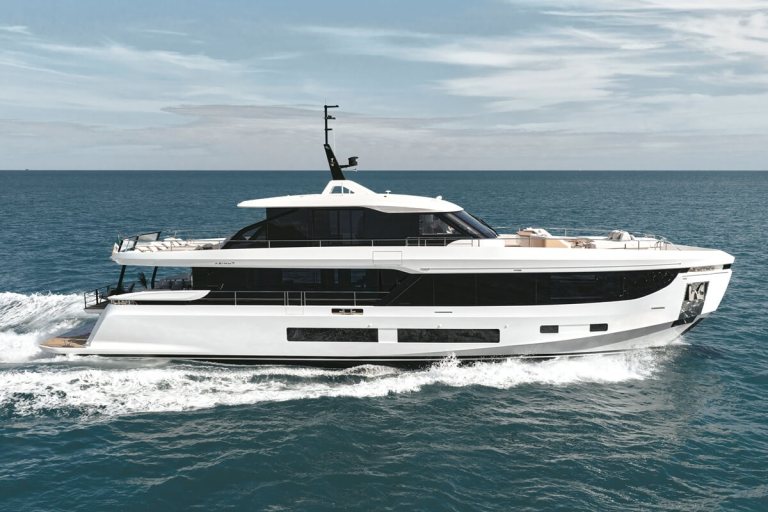
Sunseeker’s New Predator 60 Evo Embodies Accelerated Evolution

Sunseeker’s New Predator 60 Evo Embodies Accelerated Evolution

SHARE

One of the first models launched under Sunseeker CEO Andrea Frabetti, the Predator 60 Evo is moving the British builder in a fresh direction.

The ‘Evo’ label has been applied to cars over the years 
to demonstrate major breakthroughs in specific models. Sunseeker is using Evo – short for Evolution – on its new Predator 55 and 60 models to show the rapid transformation of the brand.

The Predator 60 Evo is distinguished by the racy orange stripe along its hull

readyviewed The Predator 60 Evo made its North American debut at the Fort Lauderdale International Boat Show late last year and was displayed at the Miami Yacht Show this February. We had a chance to run the boat after Fort Lauderdale, before spending time in Miami with Sunseeker CEO Andrea Frabetti to talk about the new design.

The boat shares the same hull as the older Predator 57, but its interior and cockpit are via Frabetti, and give a glimpse of the future of the brand.

The Italian was hired as Sunseeker’s Chief Technology Officer in January 2019 and was promoted to CEO in June. He brings a unique skill set to Sunseeker, having been the chief designer for Ferretti Group brands for 25 years, including Sunseeker’s historic competitor Riva.

The yacht can reach 34 knots and benefits from Sunseeker’s new ‘Hydro-Pack’

Shortly after he joined Ferretti Group in 1985, Frabetti became the chief protégé of Norberto Ferretti, long considered a pioneer in yacht innovation. By the time Frabetti left, he had designed over 300 yachts and developed then-radical technologies – like through-hull windows and stabilisers – that are standard features today.

“More than any other brand, we saw Sunseeker as the most innovative among our competitors,” Frabetti says. “We had a lot of respect for them, and there was much back and forth in new designs over the years as we fought it out. I can’t recall how many times we discussed what Sunseeker was doing and how we would have to respond.”

Frabetti, who walks the Sunseeker docks in Poole every morning to see how his boats look in the water, seemed an unlikely choice to lead his British rival. Then again, Sunseeker was always a different brand to its British competitors.

The aft cockpit features a barbecue and a wet bar to starboard

Founders Robert and John Braithwaite designed into their boats a Mediterranean spirit that made their yachts look as much at home in Cannes or Miami, as Southampton or New York.

The Predator 60 Evo, the first Sunseeker launched with Frabetti’s imprint, also marks the unofficial passing of the design torch from John Braithwaite, who retired from Sunseeker in mid 2018.

NEW LOOK, NEW ERA

The 60’s long profile, with an orange racing stripe along the hull sides and an aggressively curved superstructure, shows how Frabetti has retained the Predator’s DNA. The interior, however, is completely new, with many features showing his love for the small details that define modern yachts.

The aft cockpit can be covered and is ideal for al fresco dining with sea views

The submersible aft swim platform has a transom seat, so it can double as a beach club, while the garage houses a Williams Sportjet 345 tender that can be launched and retrieved without having to manhandle it. The boat also has a single crew quarter designed into the transom, if the owner doesn’t want to be the operator.

The main-deck cockpit makes full use of the 4.7m beam, with a large U-shaped lounge to port, starboard exterior galley with grill, fridge and sink, and the rear docking station. A two-person sunpad, positioned above the tender garage, connects to the saloon. The bow also has a large three-person sunpad, with lifting backrests.

One of the major differentiators of this Evo from competitors is the large drop-down window that separates the cockpit and interior. When the window’s down, with the side door open, the deck becomes one expanse of open space from the cockpit to the helm station, all sitting on the same level.

The massive overhead glass panel is the second major innovation. It’s a full carbon-fibre structure with six glazed panels that retracts above the windshield to turn the protected saloon into an open-air space. With a push of a button, the coupe becomes an open boat. In bad weather or running at sea, the whole area is securely covered.

SMOOTH OPERATOR

I ran the 60 for a few hours on South Florida’s Intracoastal Waterway (ICW), heading out into the Atlantic into 3-5ft seas. With its twin Volvo IPS 950s, the 60 Evo reaches a top speed of 34 knots.

That’s reasonably fast, but the most impressive feature of the hull is the ‘Hydro-Pack’ running surface, which increases water flow across the props for a smoother, more efficient ride.

The well designed foredeck features a triple sunpad with adjustable backrests

Once we left the ICW and got out into the Atlantic, I was happy to see the Sunseeker didn’t bang through seas but rode up and over, without the vibrations or mysterious noises you often hear on other boats. Given the confused seas, it was a smooth ride. The 30-plus- gusts and whitecaps outside our little bubble felt like we were watching a movie.

The Evo is the first Sunseeker to adopt two Simrad evo3 touchscreen displays that allow the driver to control onboard functions without having to search for dozens of buttons or switches. It is much less cluttered, with a more automotive feel.

The two identical displays monitored fuel, batteries, generator, engine status and other systems. The Simrad screens also integrated GPS navigation, autopilot and radar, making it more intuitive to run the boat.

The saloon has white sofas, a black foldout table and a helm with leather bucket seats

ATTENTION TO DETAILING

The helm area has two large, leather bucket seats, slightly reminiscent of a performance automobile, that demonstrate the heritage of the Predator brand but show Sunseeker’s fresh focus on luxury.

A teak footrest is positioned along the bottom of the helm, but there’s an even larger teak platform under the seat that folds down to let the driver stand, with their head above the windshield, and run the yacht like a sportboat with the overhead hatch open. Dozens of small but stylish details like these define the 60 Evo.

The white fabric of the lounge has a high-quality tweedy texture, with black piping and intricate stitching. It fits well with the black foldout table.

When the cockpit window is lowered and the starboard door is opened, the cockpit and saloon combine to form a large and attractive living area

The Eucalyptus woodwork across the interior is stylish but subtle. At the rear of the saloon near the hardtop is an off-white, arrow-shaped piece that has no other function than to look as if it’s a continuation of the aft cockpit, in order to visually unite the two areas. Again, details matter on this boat.

GALLEY DOWN, THREE CABINS

Below decks, the open galley has white Miele appliances, Eucalyptus cabinets and stainless-door handles that have been milled, another thoughtful detail that gives the impression of being on a much larger, more expensive boat. Other railings and handles are made from pure carbon-fibre to reflect the boat’s performance heritage.

The three-bedroom layout includes a VIP with ensuite in the bow, twin berths amidships and an expansive full-beam master at the stern, with a side settee, in-wall television and generous headroom.

The lower deck features the galley (above) and three guest cabins including a full-beam master suite midships (below)

Frabetti wanted the new Predator Evo series to appeal to a younger buyer than its Manhattan line, so he also included artistic flourishes like stainless-steel stripes in the doors, a sculptural headboard with LED lighting above the berth in the VIP suite, and even an art-deco wooden bookshelf beside the bed in the master suite.

The grain in the dark marble of the heads is also beautiful. Functionally, features like these are unnecessary, but they give a sense of the new direction that Sunseeker is heading.

The 60 Evo is a very strong debut for Frabetti, who keeps in touch with John Braithwaite, who was active in Sunseeker’s design department up until his retirement. Frabetti asked Braithwaite, whom he considers an industry icon and personal hero, what he thought of the new generation of Sunseekers.

“He gave me a thumbs-up,” says Frabetti. “That’s the best response that I could’ve ever gotten.”

www.sunseeker.com

Yacht Style Issue 52: Asia's Top Builders, Reviews & More

Yacht Style Issue 52 profiles Asia's top builders and features Amels, Galeon, Burgess, Lady Azul, Lurssen, Fairline, Sunseeker and Bali.

SHARE

MORE REVIEWS

Sunseeker’s New Predator 60 Evo Embodies Accelerated Evolution Read More »
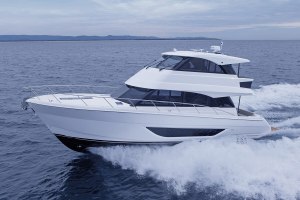
Fairline’s New Flagship Squadron 68 Holds Global Appeal

Fairline’s New Flagship Squadron 68 Holds Global Appeal

SHARE

Fairline has secured double-figure sales of its new Squadron 68 including from the US, Europe and Asia, where the British builder’s dealers include Simpson Marine.

When Fairline’s new Squadron 68 debuted at the Cannes Yachting Festival in September 2019, it received the exact response a yacht builder dreams about. A new client came along who just had to have the boat – and right away. There was only one problem. This particular hull had already been promised to another buyer.

Designed with Italian Alberto Mancini, the Squadron 68 is Fairline’s largest model

“It was one of those once-in-a-million encounters,” says Miles Moorhouse, Head of Marketing for Fairline Yachts. “Somebody we’d never met before
walked onto the stand. We showed him the boat, he was quite taken with it and he said he’d like to buy it.”

The builder explained that it wasn’t available, but the new client was insistent on having this particular boat. Fortunately, Fairline was able to come up with a solution that worked for everyone.

Although it was the first Squadron 68 to premiere, the boat was actually hull number three. The first two hulls of the flybridge motor yacht had been customised for their owners, in the USA and Asia, while number three, destined for Europe, had been built to standard dealer specifications.

The Squadron 68 has a powerful exterior stance and handles well on the water

Fairline went back to the original buyer and offered to start working on a customised version of the Squadron 68 right away, so he could have it in time for the next cruising season. Everyone walked away happy.

The ability to build a boat that suits each owner is one of the key selling points of Fairline’s new model. The British brand’s smaller models are production boats with less room for customisation beyond wood and material choices.

“On the smaller models, it’s more personalisation rather than customisation,” says Moorhouse. “With the 68, we can do nearly anything, except move bulkheads or upset the centre of gravity and weight balance of the boat.”

The Fairline Squadron 68’s foredeck features flexible furniture

Offering such a high level on customisation on a boat under 24m is not something you see every day, but Fairline wanted the Squadron 68 to stand apart from others in its class.

FLYING FLAGSHIP

The boat was designed by the Fairline Yachts Design Studio in collaboration with Italian superyacht designer Alberto Mancini and engineering by Dutch naval architecture firm Vripack.

The brief to the design team was to create a flybridge yacht that would be contemporary in style, yet instantly recognised as part of the Fairline family. The Squadron 68 has a powerful exterior stance and handles well on the water.

The interior starts with a large, well equipped galley, which includes a useful L-shaped counter that can be used for preparation, plating, serving or a bar

“She blends perfectly with the current range of Fairline yachts, but with the feel of a considerably bigger boat,” says Wayne Huntley, Fairline’s Head of Design and Engineering.

“We’ve made the most of the space available and have used clever design touches to help the boat feel even more spacious and luxurious.”

Hull number one was sold to an existing Fairline customer who had a Squadron 50 and was moving up in size. The owners’ perspective was inherent in shaping the 68 and they were involved in the design process from the moment the layout was planned, influencing items such as the galley, which is located aft and to port in the saloon.

The saloon has lots of seating on both sides and flexible table arrangements

The owners also suggested the addition of an L-shaped counter that runs along the aft window and turns inwards. It’s the ideal place for meal prep and plating. And when the aft doors are open and the window lowers, it’s also easy to pass plates over for meals enjoyed on the aft deck.

Fairline modelled the 68 in virtual reality (VR), which allowed such owner input. The company was an early adopter of VR because the company didn’t want clients to have to wait 18 months before they saw anything in the flesh.

VR was used previously for the new F//Line 33, plus the Targa 45 and Targa 65. Allowing a client to have a virtual walk-through of the boat helps not just in the design process but also to sell boats. Moorhouse notes a New Zealand client who bought a Fairline after seeing it on VR.

The saloon on the 68 is open, with large picture-box windows and plentiful headroom. The flow is smooth, with a single-level floor on the main deck. There is a dining area to port, across from a sofa to starboard and a helm forward.

The impressive, full-beam master suite on a different yacht to the one shown on the previous interior photos, although both units feature gloss walnut woodwork

“The sofa can be detached and used as additional seating around the table, creating a highly sociable and flexible space, perfect for entertaining,” Huntley says. “This is a really neat design solution, which utilises the space highly effectively.”

FINE FINISH

Fairline has chosen premium materials to create the feeling of a more luxurious yacht, including lacquered, grain-matched timbers, high-grade leather and bamboo silk carpeting. Hull three has gloss walnut wood that complements the white Carrara marble countertops, which are honey-backed for weight savings. Acoustic-deadening materials help to make for a very quiet ride.

Headroom is generous with 2m of it throughout the boat, including the master on the lower deck. Hull three has three cabins and a day head, but an owner could choose to have four staterooms, trading the day head for a bunk-bed room.

The master suite has a sofa to starboard, while the en-suite bathroom is aft of the bed and adjoins an impressive walk-in wardrobe

A great deal of flexibility is allowed, depending on an owner’s needs. For instance, the galley up is standard on the 68, but the owner of hull two, an Asian client who plans to use the boat for entertaining, chose three galleys – in the usual place on the main deck, on the lower deck in lieu of a day head, and on the flybridge, in an extended wet bar arrangement to create an al fresco galley.

Of course, customisations need to be nailed down early in the process, as Fairline still prides itself on being a production builder with a quick turnaround to launch.

“A client will need to come in pretty early in the build to make customisation changes as some parts are on a very lengthy lead time, and a big change in spec can clog up the production line,” says Moorhouse. A standard version, from mould to finishing, will take Fairline six to seven months.

The hardtop features slats that can be partially or fully open, or completely closed

Up top, the flybridge is ideal for entertaining. There is a large u-shaped settee and dining table, and a wet bar area. I briefly sit at the helm, which has good visibility and seating for guests who want to mix with the Captain.

But at the other end of the flybridge, Moorhouse points out his favourite spot, a set of low-slung chairs which face aft. What a perfect place to take in the epic views of sights and coastline that you leave in your wake – just as Fairline hopes to do with the Squadron 68 competitors in its class of flybridge yachts.

www.fairline.com

www.simpsonmarine.com

Yacht Style Issue 52: Asia's Top Builders, Reviews & More

Yacht Style Issue 52 profiles Asia's top builders and features Amels, Galeon, Burgess, Lady Azul, Lurssen, Fairline, Sunseeker and Bali.

SHARE

MORE REVIEWS

Fairline’s New Flagship Squadron 68 Holds Global Appeal Read More »
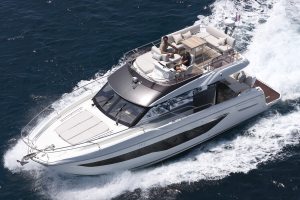
Bali’s Pioneering 4.3 MY Powers French Brand Into Motor Yacht Sector

Bali’s Pioneering 4.3 MY Powers French Brand Into Motor Yacht Sector

SHARE

The Bali 4.3 MY is the French brand’s first powercat and offers large living spaces, impressive fuel economy and two to four cabins.
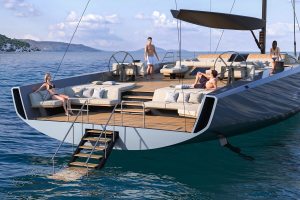
Launched in 2019, the 4.3 MY is the first power model in the Bali range of cruising catamarans built by Catana in southwest France. It reflects the growing market for these spacious boats, as company design engineer Yann Chabaud explained.
The first Bali powercat, the 4.3 MY builds on the success of the French brand’s sailing models; Photos: Bresch & Ludovic Fruchaud for Bali Catamarans / Catana Group

“It was determined right from the start that Bali Catamarans would have a power model, but it took us a few years to develop the uniquely-designed sailing boats that form the heart of our range before we could enter the motor yacht sector.”

Catana’s reputation as the French builder of performance cats took a different tack with the introduction of the Bali series in 2015, which created a range that currently has eight models from the Bali 4.0 (39ft) to the flagship 5.4 (55ft) that impressed me during a recent delivery.

The range has quickly provided successful because it mimicked motorboat features – voluminous, usable space with innovative features such as movable bulkheads and multiple deck access points.

To then follow in the wakes of powercat market leaders Leopard from South Africa and prolific French competitor Fountaine Pajot was never going to be easy, but a natural evolution of the brand.

The flybridge with helm is enhanced by access from both sides

“Since our close competitors are making significant sales in this sector, we’d be wrong not to be interested in it,” Chabaud said.

The result: a flybridge cruiser with up to four ensuite cabins and lounge areas fore and aft, plus a vast upper deck. Creating this topside is the easier part of the equation, while transforming a sailing hull shape into an effective motor cruiser is a trickier task.

Some early attempts at this transition have failed, such as Lagoon’s defunct MY40 which delivered only trawler performance in single-digit speeds, while others have bodged some volume into the back ends of hulls in attempts to engender successful planing.

Catana spent three years working on the 4.3 MY and the result is a winning design (which has been joined by the Bali Catspace MY powercat, unveiled at Boot Dusseldorf in January).

The sunken cockpit on the foredeck is ideal for relaxing or bow riding

Catamaran features include two engines located far apart – unlike a monohull – which gives them incredible manoeuvrability and inbuilt redundancy. This can blur the lines between sailing and power versions. The catamaran design equation is further tweaked by the creation of flybridges, as found on the Bali 4.3 MY and several others from market leaders Lagoon and Fountaine Pajot.

Of course, engines can only do so much for the sailing catamaran style of hulls, but for sailors who want to go cruising and enjoy ample space, the trawler powercat concept is very attractive.

The Bali 4.3 MY flybridge elevates you to see hazards well ahead in the shoal waters found around Asia, something I had wished for when delivering a catamaran through the Arafura Sea a few years ago. The downside of these towering structures is windage, which increases fuel consumption, but handling these high flyers is fairly easy due to the outboard engines that pivot the hulls.

INNOVATIVE FEATURES

Given the stiff competition, Chabaud and fellow designer Oliver Poncin cleverly sought a market differentiator and found it in a word – flexibility – that dictated the approach to the entire Bali range.

The electric lifting aft bulkhead creates a huge indoor-outdoor area

The main attractions on every Bali include the movable aft bulkhead that creates a vast entertaining space. Other access points around the boat include two sets of stairs to the flybridge, while the walk-around transom on the 4.3 MY is ideal for tropical waters.

Water access is yet another attraction, with a transom platform that can hold an inflatable dinghy on its side and the swim ladder on the port hull. These features, along with the spacious three-level layout, will appeal strongly to both private owners and charter operators.

Looking over the Bali 4.3 MY, it was clear that similar approaches have been taken to how space is maximised on a flybridge catamaran. The result is fairly angular aesthetics that are perhaps more functional than sleek.

Notable features included the voluminous, tall hulls with fine plumb bows running aft to wide transoms, with the latter ideal for carrying heavy cruising loads. The flat decks with flush hatches allow unimpeded walking space, topped off with the high flybridge lounge space.

The dining table and main L-shaped sofa are portside, close to the forward galley

The large flybridge has access on two sides and a starboard helm, protected by a discreet but effective windshield. Our review boat was destined for tropical waters, so wisely had the optional fibreglass bimini fitted, which completely shaded the two sets of tables and benches.

Again, this dual use of fittings will appeal to charterers with the added flexibility of being able to change the table height – albeit with rather cumbersome alternate table legs – to create dual sunbeds. Further comforts include the wet bar adjoining the steering console.

At the steering console, the feeling is snug with a compact hydraulic wheel, throttles for the shaft-driven Yanmar 250hps and essential electronics – Raymarine autopilot, plotter and trim tab controls. Another handy system is the anchor counter/control for the 1500w windlass and rode, especially useful when short-handed.

MOVABLE BULKHEAD

On the main deck, the aft area will be a key selling point for prospective buyers, especially those coming from a motorboat background where unimpeded relaxing space is enjoyed. The area is partly shaded by the flybridge extension and seamlessly flows into the saloon at the click of a button that lifts the aft bulkhead upwards.

Ahead of the dining table is the galley, ideally placed for serving food

Inside, the saloon is dominated by the longitudinal dinette table surrounded by an L-shaped sofa, while ahead is the galley, ideally placed for serving food. Over to starboard is the elevated steering console, just ahead of the stairs on each side to the hulls. The console has similar controls to the flybridge, and the double helm seat means command need not be a lonely job.

This demarcation cleverly divides the forepart of the saloon for working while leaving the large aft section to flow out into the cockpit or be snugly closed by that movable bulkhead.

Given that the Bali 4.3 MY can sleep eight if four cabins are chosen, catering needs to be on a fairly grand scale and owners won’t be disappointed with the huge household fridge and generous Corian work surfaces around the U-shaped galley and flat space.

Cooking is done on the three-burner gas hob with oven nearby, while barbecue food is put on the electric plate on the transom. Other plus points include the deep double sinks and fiddles around all work surfaces, and good ventilation from the large sliding window at the front.

OWNER’S CABIN

This first hull is an owner’s layout, so the entire port side is a suite and there are two double cabins on the starboard one. Alternatively, for large families or those considering charter, there are four cabins with four bathrooms available – the latter a good achievement for a 42ft hull.

All the double cabins benefit from plenty of natural light

Accessed by steps in the forepart of the saloon, the owner’s suite has the vanity table in the centre, bed aft and large bathroom forward. A single seat at the vanity rather than the preferable two was my only gripe here, but on the upside, it means lots of storage cupboards.

Around the double bed is ample headroom and hatch space, while a large sliding door seals off the area from the saloon. The escape hatch on the hull gives good ventilation, but just remember to close before seagoing!

Similarly, over on starboard, the two cabins are functional, with the stern one having the slightly larger bed but both with ensuite bathrooms, a good reason for the optional water maker.

DECKED OUT

Warm-water boating is largely about alfresco living so generous deck space is essential and another major feature that the entire Bali range was designed around.

The voluminous, tall hulls feature fine plumb bows

The sunken foredeck cockpit is a wonderful area with benches, two tables and triple sunpads, although the latter require better fastening. Good practicalities here include deep lazarettes and a powerful 1,500w vertical windlass with deep chain locker. The optional generator can go here, to balance the trim.

Catana’s yard, near the foothills of the majestic Pyrenees mountains at Canet-en-Roussillon, uses the latest infused foam moulding system to create a relatively light but strong vessel. Twin mini keels protect the spade rudders behind the shaft-driven propellers, which have small skegs, so in theory the hull can dry out or survive a grounding.

Inside, the engine room on each hull is spacious so can house hot water, air-conditioners and starting batteries with room to spare. All service points – water, oilways, filters – were visible on the Yanmar 4LV250 engines. Based on the Toyota 2.8L turbo intercooled direct injection diesel, accessing parts should be easy anywhere around Asia.

The four-cylinder 4LV250 has the latest common rail fuel injection with electronic engine management, enabling it to operate over a wide range of rpm without worry about cylinder wall glazing under light loads. Its 130amp alternator puts stored power into the triple AGM house batteries deep in the nacelle, so ideally situated for weight distribution to counteract the hefty 800kg of engines at the stern.

Also, here I could see the sturdy steering linkages and quadrants (on stainless shafts), along with the emergency tiller, should the hydraulic steering fail.

MOTORING ON THE MED

Marina manoeuvring is the major source of stress for most boat owners and catamarans are no exception, especially if it’s windy. But with engines located far outboard and judicious use of throttles from the commanding views afforded by the flybridge, we easily pivoted within our own length before making our way past the hundreds of yachts at the largest marina on France’s south coast.

The Bali 4.3 MY had a top speed of 23 knots during the sea trial

A placid Mediterranean Sea welcomed us, despite the stiff breeze blowing offshore, so after making myself snug at the inside helm, I pointed our twin bows towards my favourite islands over the horizon – the Balearics – and put the throttles down.

Acceleration was steady as the dull roar from the twin 250hps put us on the plane at about 14 knots then to 18 knots, which is the optimised cruising speed. The auto trim tabs showed 100 per cent as their vertical fins stabilised our stern and made the ride feel comfortable.

Looking at the numbers on the Yanmar dials, they showed revs of 3,400 and diesel consumption at 80 litres per hour, giving a range of 180 miles. This wasn’t quite the 225 miles needed to reach the Balearics, so I’d consider the optional larger tanks to double this capacity.

Pushing the throttles fully down made a difference as we passed the magic 20 knots and topped-out at nearly 23 knots. Catamarans can’t lean like monohull powerboats, so the downside is larger turning circles, yet the manoeuvres were comfortably completed and without any drinks being spilled, proving that Bali 4.3 MY owners can enjoy the high life wherever they voyage.

www.bali-catamarans.com

Yacht Style Issue 52: Asia's Top Builders, Reviews & More

Yacht Style Issue 52 profiles Asia's top builders and features Amels, Galeon, Burgess, Lady Azul, Lurssen, Fairline, Sunseeker and Bali.

SHARE

MORE REVIEWS

Bali’s Pioneering 4.3 MY Powers French Brand Into Motor Yacht Sector Read More »