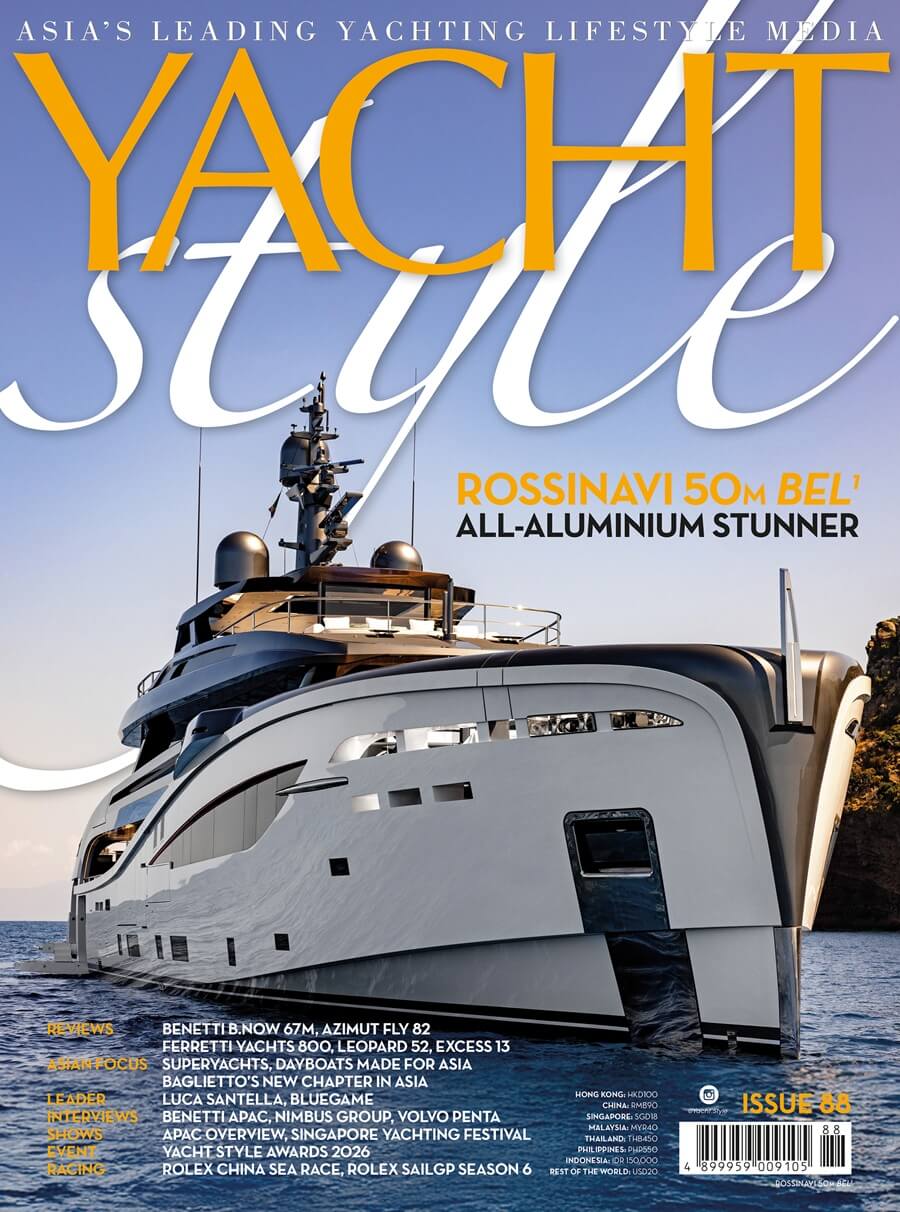
Yacht Style, Issue 88
Read and download copy
Yacht Style, Issue 86, Top 100 Superyachts of Indo-Asia-Pacific 2026, Jonathan Beckett, Burgess, Erwin Bamps, Gulf Craft Group, Fraser, Camper & Nicholsons, AB Yachts, AB 95, Van der Valk, Lalabe, Azimut, Grande 30M, Ferretti Yachts, 940, Absolute, Navetta 62, Cannes Yachting Festival, Genoa International Boat Show, Monaco Yacht Show, Lantau Yacht Club Boat Show - Festa Nautica, Rolex SailGP, Maxi Yacht Rolex Cup, Rolex Middle Sea Race, Phuket King’s Cup Regatta, Thailand, Port Takola Yacht Marina & Boatyard, Krabi, Yousuf Al Hashimi, Phoenix Yacht Management, Su Lin Cheah, ICOMIA, Suzy Rayment, Asia-Pacific Superyacht Association, APSA
Read and download copy

Asia's leading yachting lifestyle media

More results...

Generic selectors
Exact matches only
Search in title
Search in content
Post Type Selectors
Screenshot 2026-01-16 at 9.52.20 AM
Read your copy

More results...

Generic selectors
Exact matches only
Search in title
Search in content
Post Type Selectors
Yacht Style, Issue 88
Read and download copy

More results...

Generic selectors
Exact matches only
Search in title
Search in content
Post Type Selectors

lifestyle

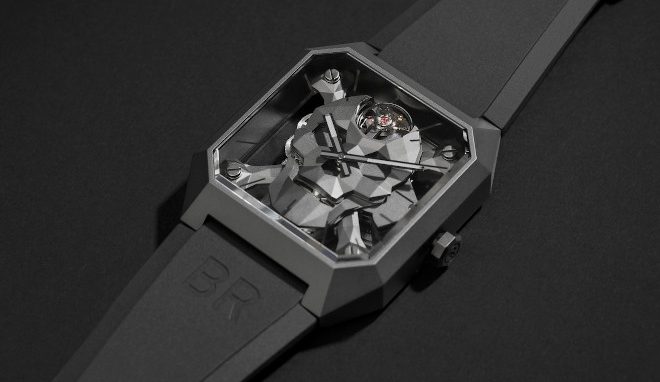
Bell & Ross BR01 Cyber Skull extends the watchmaking into the World of Art

Bell & Ross BR01 Cyber Skull extends the watchmaking into the World of Art

SHARE

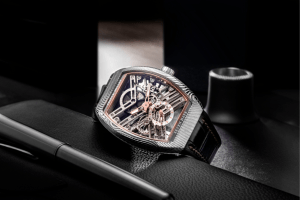
Avant-garde and sculpted, the Bell & Ross BR 01 Cyber Skull reinvents the popular skull watch it pioneered.

By Jonathan Ho

  •  
  •  
  •  
  •  
  •  
  •  
  •  

Human civilisation has a mixed relationship with the visual motif that is the skull. While the most common symbolic use of the skull is as a representation of death, mortality and the unachievable nature of immortality, Vikings of the first millennium to the paratroopers of the Second World War, including the pirates of the 17th and 18th centuries have used representations of the skull as a prominent warlike symbol.

Suffice it to say, Death’s heads are found throughout art history as well.To those without finely tuned aesthetic judgment, Stephen Gregory’s jewel-decorated human skulls look like they’ve inspired Damien Hirst’s diamond-encrusted skull For the Love of God, but Gregory tells Guardian UK, “My skulls and his are very different objects.” What Damien has done to skulls, casting it in platinum and encrusting it with diamonds, Bell & Ross has done to watchmaking with the potency of humanity’s most recognisable emblem.

When Art and Watchmaking Combine, What results is the New Bell & Ross BR 01 Cyber Skull

Naturally, Bell & Ross has developed other variants of its famed Skull. While the skull is a literal personification of death (and in the case of the paratroopers, “Death from above”), the skull has other poetic and philosophical implications. It symbolises the fragility and brevity of life, particularly in works of art. Venetian painters of the 16th century elaborated moral allegories for their patrons, and memento mori was a common theme: translated “remember you must die” is a constant reminder of one’s own mortality despite the immense scientific advances made during the age of the Enlightenment, recalling the gruesome depictions in ancient paintings or in curiosity cabinets owned by humanists during that Age.

Día de los Muertos or the Mexican Day of the Dead is associated with the Catholic celebrations of All Saints’ Day and All Souls’ Day, held in November, mocking death by wearing the famous calaveras, artistic representations of skulls, typically rendered in bright colours in opposition to the usual association of black or charcoal funereal hues. This irony is similarly expressed by the BR 01 Cyber Skull in revealing a mischievous smile when its mouth is opened. It has a timelessness displayed in its faceted relief, conveying an ancient symbol in an ultra-contemporary style.

Reminiscent of Jose Guadalupe Posada’s satirical work with the laughing skull, the Bell & Ross BR 01 Cyber Skull revisits its famed motif with a design far from the vintage style that is usually associated with the Skull. When last we saw a skull watch, they were either matched with primal tattoos or carved in the style of the Jolly Roger, this time, the BR 01 Cyber Skull establishes itself in contemporary modernity. A watch with several faces (and facets), angular like an F117 Stealth Bomber which projects this watch artpiece firmly in the 20th century and the future.

The Bell & Ross BR 01 Cyber Skull is where watchmaking, design, symbolism and bold creativity With its cut sides and sharp edges, the angular silhouette of the BR 01 Cyber Skull ably conveys Bell & Ross heritage for military aviation inspired timepieces. Modelled like the fuselage on an F117 fighter plane, the facets are meant to deflect radar waves rendering the stealth bomber invisible. While this concept is applicable to military jets and sophisticated military ships, in order to conceal their visual identity as much as possible, this technique renders the Cyber Skull watch highly noticeable instead.

Additionally, Bell & Ross has chosen to adorn its Cyber Skull with black matte ceramic. This anti-reflective colour is also used on some military vehicles. Its glazed superstructure is reminiscent of the canopy on a jet. More than just a colour, the new black matte used on the watch gets its depth from a ceramic used to match its design. Its lines, structured like those of a fighter plane, pass under the radar and establish a new design language which bellows in loud contrast to the over-done trends for luxury sports watches and classic watchmaking shapes that favour curves and roundness.

The architecture of the new BR 01 Cyber Skull establishes the brand’s creativity whilst respecting its military and aviation roots. Each element of the watch, the case middle, bezel, crown, skull, crossbones, is structured within the many faces that sculpt the surfaces, creating remarkable depth; metaphorically escaping the radar but attracting attention.

The BR 01 Cyber Skull is Whatever You Perceive it to be

In the same way an artist creates a subjective experience through works that are interpreted in their own way by each person that views them, the new BR 01 Cyber Skull reveals itself fully through the experience of those who wear it. Quite simply, it is akin to Hirst and Gregory’s own creations, treading similar yet divergent paths. Hirst puts eyes in his – so the skulls look back; you interact with them. Damien’s possess the ultraluxe flair of diamonds that one doesn’t quite get one’s eyes to really focus on its countenance.

The new Bell & Ross BR 01 Cyber Skull too reveals a fascinating approach to perceived reality: depending on how you look and which facet you start from – the objet d’art appears either futuristic origami thanks to its angular style evocative of an ancestral art of folding, or a pensive if puzzled face (given the raised “eyebrows”), or an awkward Iron Man (the mouth agape), or a genteel Jolly Roger, given the gentleness and subtlety of the crossbones which serve as bridges for the calibre.

A work of traditional watchmaking and yet possessing a visage of modernity, there is no doubt that the faceting of lines is a nod to the digital arts. When a digital image is still, you can see the pixels that it is made up of, a result of the grained, textured surface of the skull and crossbones which dominate your attention so completely.

As an innovative work of its time, the BR 01 Cyber Skull raises questions by capturing people’s eyes with a work of sublime animation: Trapped between two pieces of sapphire crystal, the screwed-down skull and crossbones possesses a jaw which seems to levitate, an automaton powered by the concealed BR-CAL 206 hand-wound movement, ingeniously disguised under the faceted decoration. To make it invisible to the eye, the main plate closely follows the shape of the skull, while the bridges extend up to the four corners of the case, hidden by the tibias. An architecture like this makes the skull appear to float weightlessly inside the case. An impression which is enhanced by the total transparency of the dial, highlighted solely by 12 baton-shaped indices. Only when the watch is turned over is the key to the mystery revealed through the sapphire crystal case-back. This phenomenon is further amplified by the middle of the faceted case with no lugs, also made from black matte ceramic.

The jaws continue to “snigger” when the spring is wound, one of two signs of “life”, the other being the balance spring obviously beating within the brain of the skull – as if to say, the consciousness of man resides in the head rather than the beating organ which keeps our life force flowing at the center of our chests.

The luxury sports watch aesthetics come courtesy of its natural purity of design: lugs carefully integrated into the mid case with the housing for the rubber strap cut out of the volume of the case, measuring 45 mm x 46.5 mm. Its luxurious swagger is further enhanced by the choice of ceramic in creating this post-modern Skull watch. A high-tech material that is solid yet lightweight, the ceramic acquires its legendary hardness, density and resistance in the appearance of black matte, a colour that cannot be achieved with traditional watchmaking materials. The facets of the new Bell & Ross BR 01 Cyber Skull are consequently achieved using diamond powder to cut the angular surfaces in the same way jewellers cut a precious stone – no mean feat.

Avant-garde and sculpted, the Bell & Ross BR 01 Cyber Skull reinvents the popular skull watch it pioneered. In this latest opus, Parisian aesthetic sensibilities and Swiss watchmaking prowess move art and watch lovers alike; an ultra-modern watch which invites one to ask the question: is there new life in a (watch) world that has constantly re-tread old ground? The new Cyber Skull appears to say a resounding, “Yes!”

The BR 01 Cyber Skull is Whatever You Perceive it to be

Movement Manual winding calibre BR-CAL.208, developed with Concepto, with 50 hours power reserve
Case 46mm matte black ceramic with 50 metres water resistance
Strap Rubber
Price EUR 9,900

SHARE

Bell & Ross BR01 Cyber Skull extends the watchmaking into the World of Art Read More »

Silent Resorts Takes First Steps

Silent Resorts Takes First Steps

SHARE

Building on the solar technology developed for Silent-Yachts catamarans, Silent Resorts is launching its first yacht-and-villa retreat in the Caribbean, while Asia is in the plans as the new company looks to grow a global network of exclusive, eco-friendly holiday destinations.

  •  
  •  
  •  
  •  
  •  
  •  
  •  


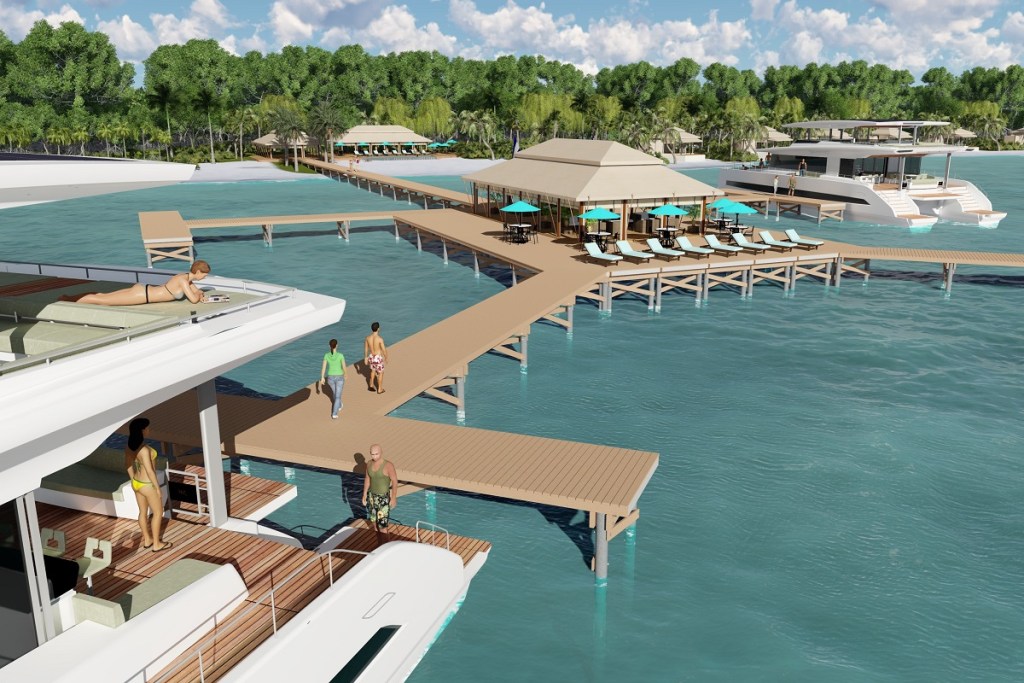
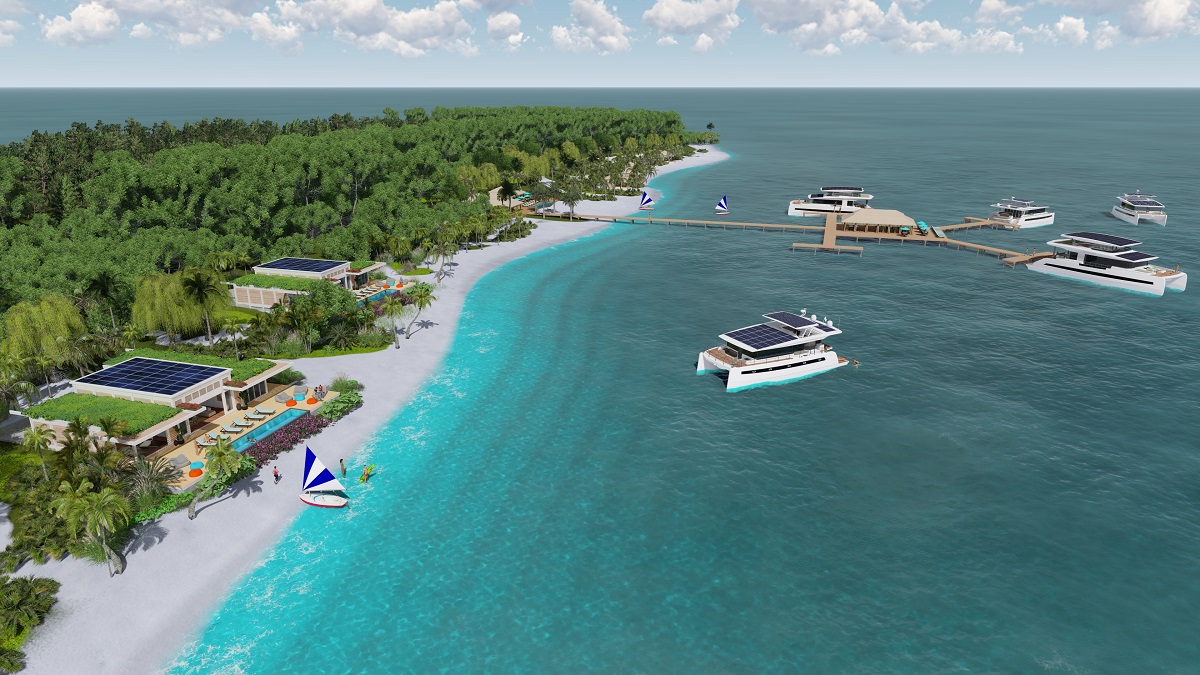
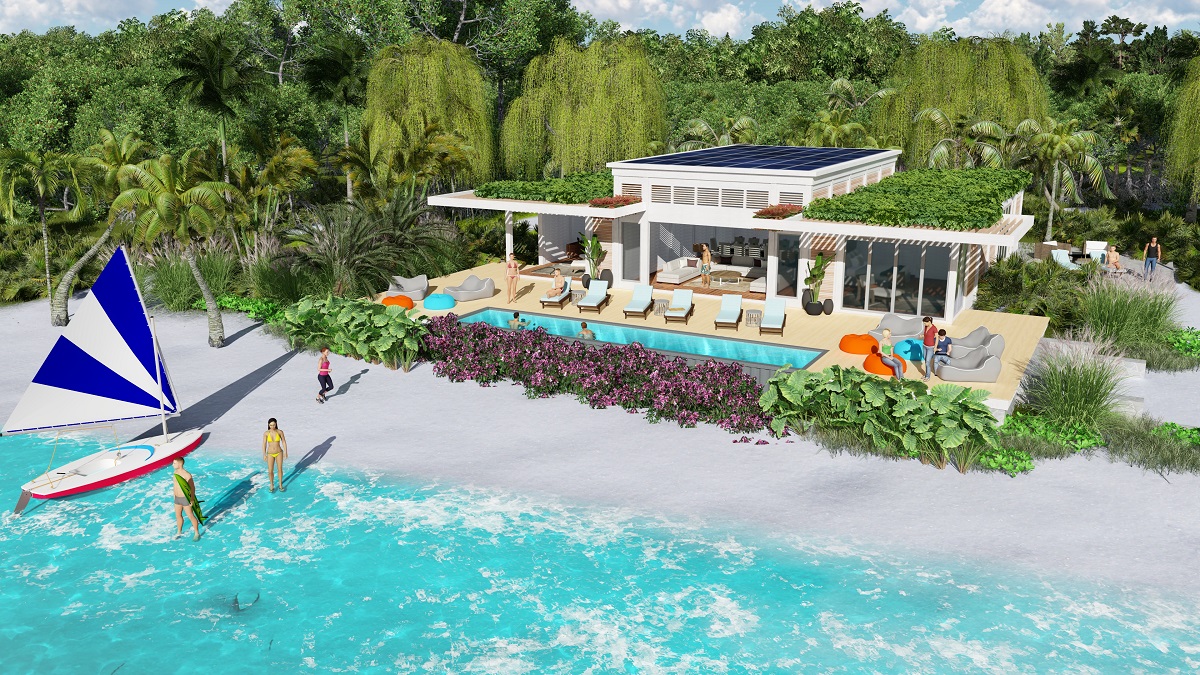
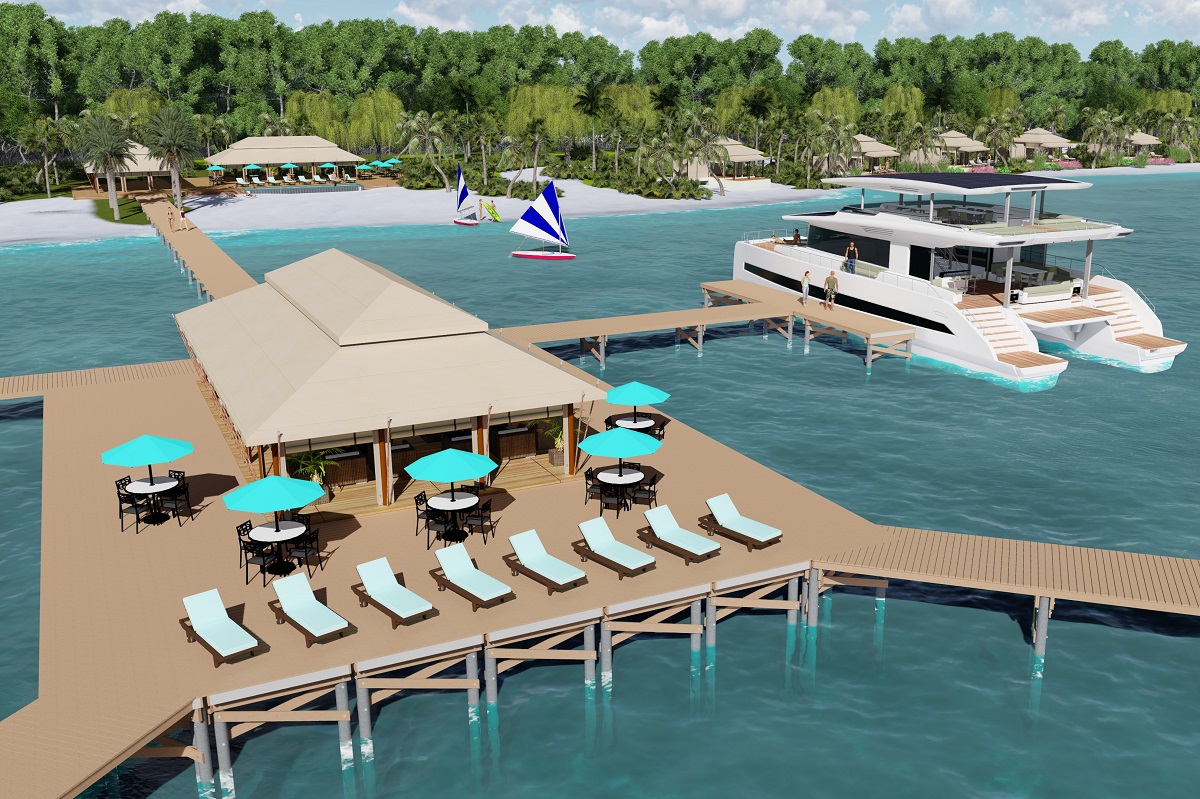
Silent Resorts developments feature a docking system and Silent-Yachts solar-electric catamarans


As the world leader in solar-electric luxury catamarans, Silent-Yachts has displayed a particularly global vision. The brand’s Silent 55 is built in China. Its new Silent 60 is being built in Thailand. And several units of its future flagship 80 are under construction in Italy, where more 60s are being built to cope with demand for what’s already the brand’s best-selling model.


Yet before hull one of either the 60 or 80 have touched water, Austrian Michael Kohler, the company’s founder and CEO, has joined forces with American architect Victor Barrett to create Silent Resorts. Their mission? To develop solar-powered beachfront resorts featuring Silent catamarans as floating villas.


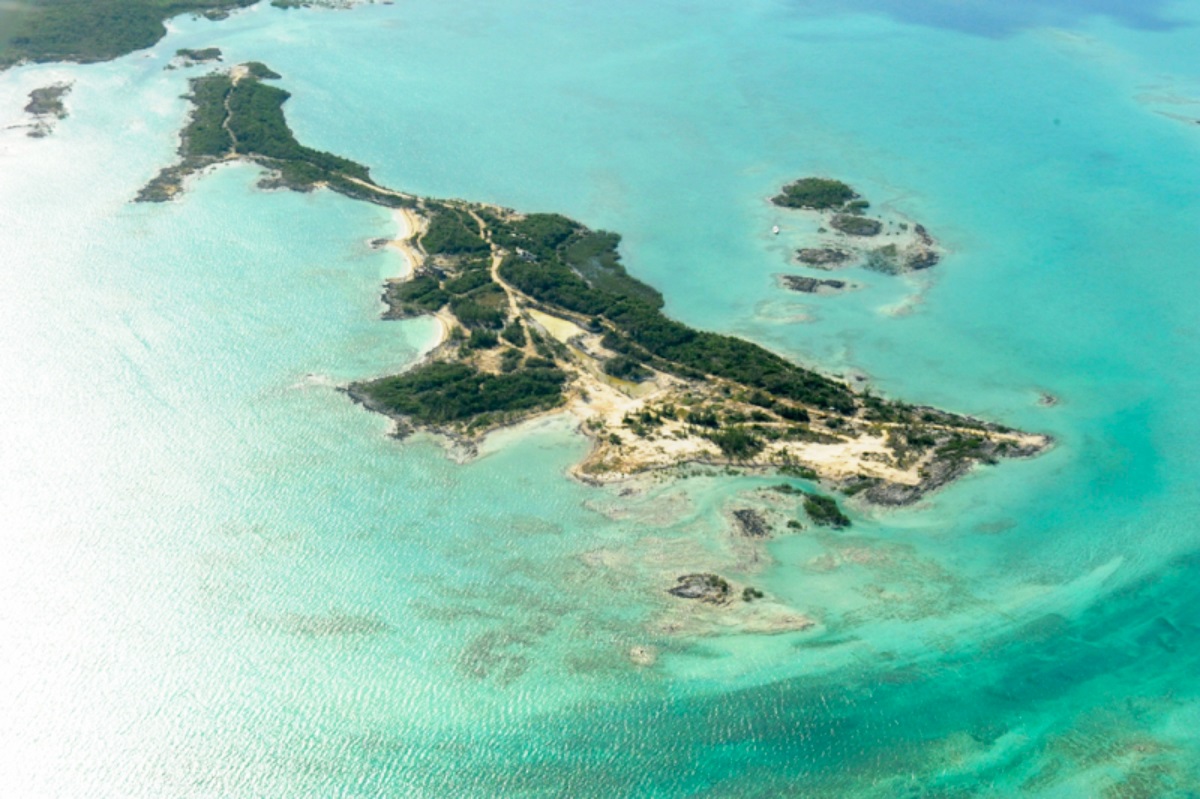
Designed to be sustainable, eco-friendly and built with a ‘light touch’, these resorts are more than just a cute concept. They’re happening, starting in the Bahamas with the 30-acre Silent Island located in the district of North Eleuthera, which has its own airport and is a 55-minute flight east of Miami.


‘Silent Island’  in the Bahamas


Barrett, CEO of Silent Resorts, says Silent Island will accommodate eight catamarans at sea and 16 villas on land, with the first few units scheduled to be ready by late 2021. The forward-thinking property will include a clubhouse, spa, pool and water toys, all eco-friendly as per the company’s tagline: ‘Live Fully, Tread Lightly, Stay Silently’.


Silent-Yachts’ luxurious 60 and 80 catamarans, measuring 18m and 24m respectively, each have four guest cabins with ensuite bathrooms, a large saloon, dining area and galley, as well as outdoor social areas in the aft cockpit and on the foredeck and flybridge.


At any time, guests staying on the catamarans are free to set off on a cruise and start exploring the surrounding region, whether for a few hours, few days or few weeks.


Along with its catamarans, Silent-Yachts is supplying the solar-electric technology that will power the villas, communal facilities and infrastructure for a fully integrated, carbon-free property.


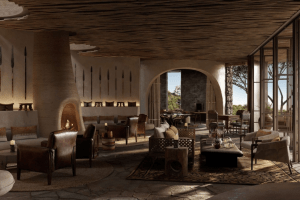
On land, Silent Resorts developments feature beachfront villas, a clubhouse, pool and spa


“You can start your vacation on the yacht and finish in a villa, if you want, or the other way around,” Barrett says. “The power systems on the villas and yachts are matched, so they can balance themselves. When a yacht pulls up to the resort, they can plug in for power or transfer excess power to the island. It’s a very symbiotic and balanced system.”


In fact, the designs of the catamarans have even influenced the new villa concepts, according to Barrett.


“We’re designing the one-storey villas to mirror the catamaran layout, with suites on either side of a big, open living room and kitchen in the middle. You can also have a staircase to the sunset deck or ‘flybridge’ on top, like the way the catamarans are laid out,” he says.


MEETING OF MINDS

Like Kohler, Barrett has a very global outlook and his recent bases have included landlocked Austria and the African island nation of Mauritius, where he founded his company TrueDesign.


The globetrotting American has worked on projects in North and Central America, the Caribbean, Middle East, Africa and Asia, including in Indonesia and China, where he spent two years as a Senior Architectural Designer for Atkins a decade ago.


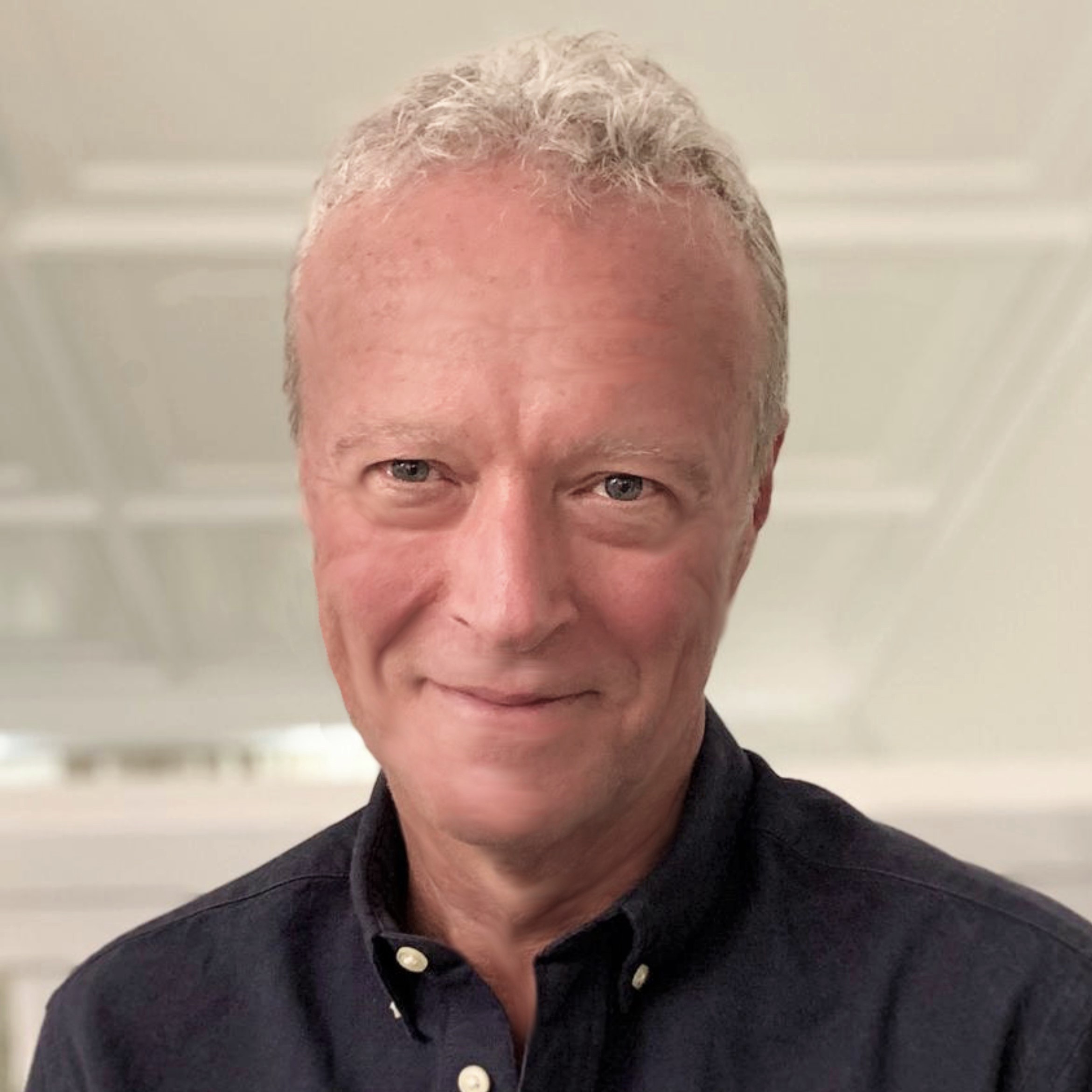
Victor Barrett, co-founder and CEO of Silent Resorts


Having helped develop high-end resorts for the likes of Six Senses, Como and Aman, he was recently working for the TradeWinds yacht charter company, building a beach club in the southern Caribbean until Covid-19 halted its development early last year.


It was then he returned to Austria and pitched his idea for Silent Resorts to Kohler, having become aware of Silent-Yachts while the pioneering yacht builder was exhibiting at a boat show in Miami.


“I was thinking of better ways to build resorts on islands,” Barrett said. “That’s when I called Michael and proposed we use his yachts as villas for these beautiful, remote locations, so we don’t really damage the islands.”


Kohler was receptive to the concept, having previously approached multiple luxury resorts with the idea of buying Silent catamarans to use as an added attraction for guests and extra rooms when required.


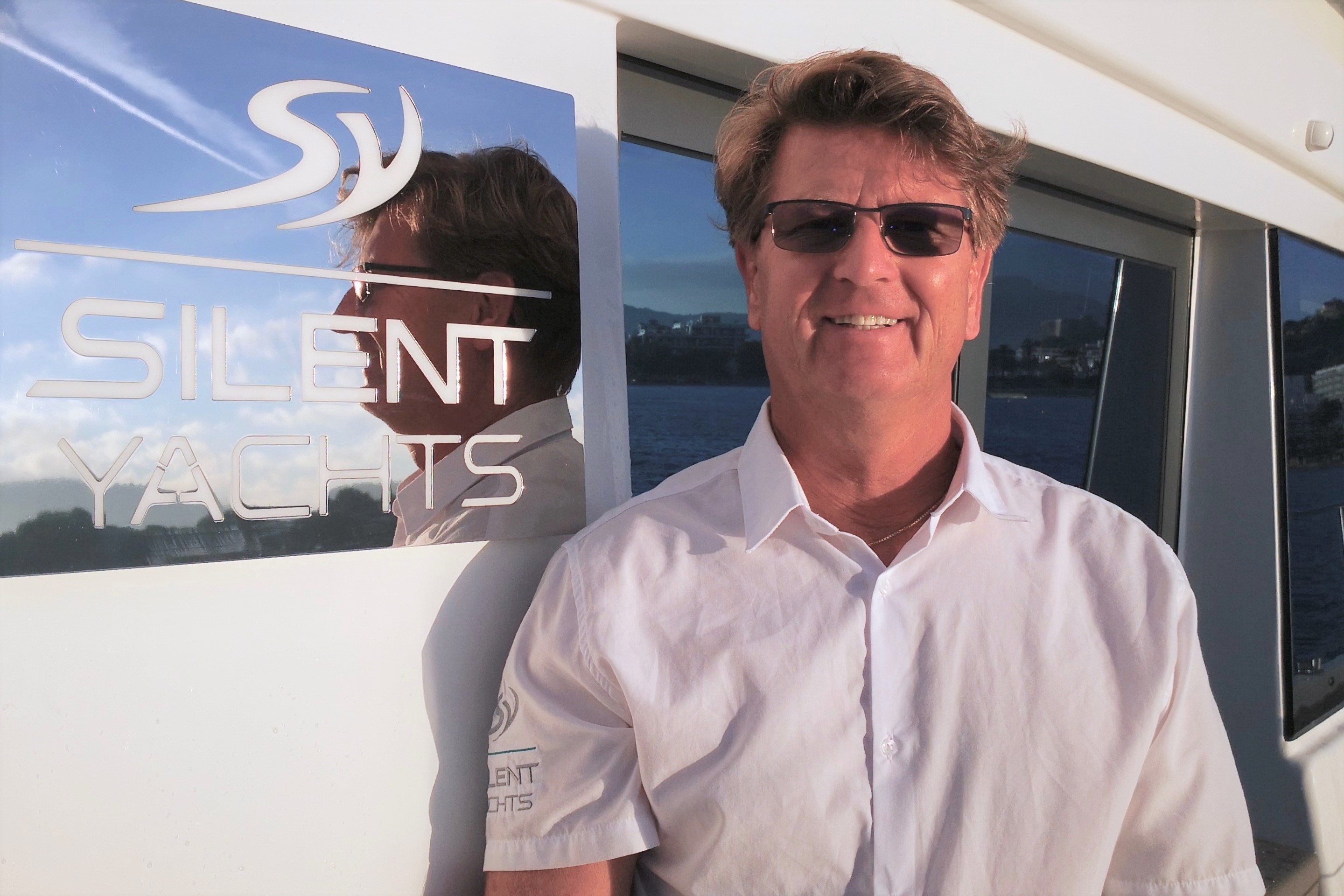
Michael Kohler, founder and CEO of Silent-Yachts and co-founder of Silent Resorts


“When Victor told me more about his idea, I was very happy because it was a better version of what we were previously trying to do with resorts,” Kohler said. “This time, it’s not working with an existing facility that has already had a negative environmental impact on the island, as you see so often.”


Silent Resorts offers a flexible build solution that includes pre-engineered villas and other structures, while even the villa pools are modular, made in Canada. Land-based infrastructure, such as water purification, wastewater processing and solar-power systems, is containerised.


The villas at the first resort in the Caribbean will be built from sustainable hardwood and prepared in Belize – another country Barrett has worked in – while there will also be components from Indonesia for interiors and furniture.


The floating docking system is also modular, while the Silent catamarans can be shipped in or make their own way, depending on where they’re coming from, before serving as sustainable floating villas.


Silent Resorts uses the same solar-electric technology used by Silent-Yachts, with catamarans and villas drawing from the power grid and contributing to it


“With Silent Resorts, we have a green approach from the start,” Kohler says. “All the components of one villa are in one container. We put it together and there’s no waste material, nothing to contaminate the island or bay. We can take it away at any time, which is what we mean when we describe the resorts as ‘reversible’.


“It’s a much more flexible system, with almost no negative impact on the environment. Whatever we bring, we can remove. Victor’s idea was very, very smart and is a perfect match for our Silent catamarans.”


GLOBAL MEMBERSHIP

Silent Resorts is based on a membership model, so each member has access to the resort and future sister facilities for six weeks a year, and is effectively a part-owner of the property, including the catamarans.


Joining fees will range from about US$300,000 to US$500,000, with annual fees on top, although Barrett says they will be minimal compared to other properties due to the low-maintenance nature of both the resort and the catamarans.


“A member can say, I’m coming for 10 days and I want to spend five days in the villa and five on a yacht. That yacht can move around, stay in a cove overnight, go where you want in the region,” he says. “From Silent Island, there are thousands of islands nearby like the Exumas and you can choose your itinerary each day. The guest experience at Silent Resorts will be unique.”


Starting in the Caribbean, Silent Resorts is looking to grow its network of beachfront yacht-and-villa resorts across the globe, including in Asia


Conceived during the Covid-19 era, the Silent Resorts model also fits with what Barrett believes will be a growing emphasis on quality, experience and duration for luxury travel.


“We believe people will take fewer vacations, but that holidays will be longer and of a higher quality. It won’t be unusual for people to travel for two or three weeks,” he says. “Due to Covid, I think the growth areas in luxury tourism are going to be yachts, private islands, private villas and private aircraft, rather than the traditional hotels and resorts.”


Along with getting the first resort up and running this year, Silent Resorts is also looking to build its network across the globe and is scouting for suitable sites at idyllic beachfront and island locations. The company states that a turnkey resort can be operational in 18 months or less in any location worldwide.


“The plan is to have five more resorts around the globe within five years and when you become a member of one location, you can use any of the locations,” Barrett says.


As well as a place for catamarans to berth, the docking system has the potential to provide on-water facilities


“For the Bahamas resort, the US is an obvious target market for members, but we’re getting interest from all over the world. Europe is the next big market for such members, so we’re also looking for a site in the Mediterranean and maybe the Middle East.


“We then want to circumnavigate the globe, so we’re considering Asia – especially Indonesia – as well as Australia, New Zealand, Fiji and the South Pacific.”


Only a few years ago, Silent-Yachts’ proposition of 100 per cent solar-powered catamarans seemed admirable but ambitious, too niche to sustain mass production. However, the company’s huge increase in sales over the past year or so have shown that such technology is becoming increasingly sought after by conscientious owners.


Barrett is similarly confident that Silent Resorts will lead the way in sustainable beachfront destinations and says the initial feedback has been encouraging.


“The appeal of 100 per cent solar-powered, green resorts in beautiful destinations, responsibly developed and managed, connecting the worlds of luxury yachting and luxury villas, is very powerful,” he says. “And in terms of what we’re doing, there’s zero competition. We’re the first.”

www.silent-resorts.com

www.silent-yachts.com

The original article appeared in Yacht Style Issue 56 (Nov/Dec 2020)

First Silent 60 due in January 2021

Four units of the brand’s best-selling Silent 60 powercat are under construction in Thailand.

SHARE

Silent Resorts Takes First Steps Read More »

Aurora Santika Depicts a Dream-Like Escape From a World Plagued By Social Injustice

Aurora Santika Depicts a Dream-Like Escape From a World Plagued By Social Injustice

SHARE

Aurora Santika’s surreal depictions of society are indisputably grounded in truth and impossible to overlook.

By Julia Roxan

  •  
  •  
 

Aurora Santika

“To live as a good person is to contribute goodness to other people, as best as one’s able to.” She may not be a superhero, but Aurora Santika is most definitely not a stranger to the innumerable adversities of this world. As one of many women in her generation battling the good fight against social inequality and injustice, this young and idealistic Indonesian artist is a force to be reckoned with. Armed with a robust familial support system, the happiest of childhood memories, keen observational skills, alongside an intricate understanding and unique outlook on her surroundings, Aurora Santika’s surreal depictions are indisputably grounded in truth and impossible to overlook.

Aurora Santika Depicts a Dream-Like Escape From a World Plagued By Social Injustice

(2020), Aurora Santika – A Vision of Mankind Triumphing Over Demise, (part of In Between Worlds series), AOC, 180 x 300 cm
 

You were born in Bogor in 1996, you are now established in Yogyakarta and you have been studying Fine Arts at the Indonesian Institute of the Arts (Yogyakarta). Tell us more about your first steps as an artist?

As a child, I didn’t care about being a professional artist. I was, bluntly put, a nerd. I spent my days reading about the mystery of nature, the gallant tales in history of mankind,  the wonders of science. That’s not to say that I had no artistic inclination. My parents were lenient enough to let me fill the house with  ‘decorative crafts’ which included temporary installations in their bed and a makeshift playhouse with painted cardboards in the living room. I did paint sometimes, and I managed to win a poster design competition in my hometown during middle school, but the rest of my teenage years was mostly focused in academics.

I was in my final year of high school when I seriously considered art as a career option, to my dad’s dismay at the time. My sister and some of my parents’ friends (including the artist Hardi of Gerakan Seni Rupa Baru) helped assuring my parents enough to give me permission for applying to a Fine Art major at Indonesian Institute of the Arts Yogyakarta in 2013. Hardi’s friend, the curator Mikke Susanto, guided me in polishing my skills for the entrance exam which I then passed.

I learned a lot during my study in the Indonesian Institute of the Arts. In my second year, I joined the Tulang Rusuk community where I became acquainted with young female artists such as the Hasibuan sisters (Camelia and Reza Hasibuan), Harindarvati, Rika Ayu, and others with whom I have exhibitions together. At some point in college, I also began doing commissioned illustrations—an experience that, combined with my ever growing fondness for good novels, ballet symphonies, and comic books, was pivotal in shaping my visual style to be the way they are.

However my professional career in fine art didn’t kick into gear until my solo exhibition “Breaking Through” in 2018. The show, curated by Suwarno Wisetrotomo and held in Taman Ismail Marzuki, later opened the path for me to participate in projects such as the collaboration with Disney Indonesia in 2019, collaboration with Ferial Affif and 8 other artists for Biennale Jogja XV, and several shows with Kohesi Initiatives.

(2020), Aurora Santika – 5 Minutes Conversation With The Universe, (And Why There Can Never Be Peace), (part of In Between Worlds series), Acrylic on canvas, 180 x 150 cm

You mentioned several times across past interviews “There are many reasons why a person create an art. For me, art is a way to communicate to other people what can’t be said or written or shown in any other way”. This is a strong statement, can you elaborate further?

Art to me started out as a hobby, then a cry for help, and later a call for discussion. The last two have one thing in common: to deliver ideas that would push people into an action, whether that action is directed toward themselves, to me, or to others. If I could convey these ideas well and safely enough through everyday words or other communication mediums without them losing their intended effect, then there would be no need for me to bother creating art to begin with.

Sometimes, there are ideas that would not be well received nor had much of a good impact unless they were delivered in subtlety due to the circumstances surrounding their birth and the environment in which they were to be published. Things like sexuality, critics on ideologies, and even bits of commentaries on the socio-economic dynamic within a society (which are also related to the aforementioned subjects) are generally difficult to be brought up without adding fuel into the fire. They require delicate handling. Art, which is not only limited to visual art, but also includes all kinds of artistic mediums, is a perfect instrument for that.

On the other hand, there are ideas like personal encouragement to strive for the better that would mostly not be taken seriously unless they were delivered in a more implicit manner. As I personally experienced, sometimes it is more effective to motivate others (especially strangers) to keep going in life by having them enjoy a story of protagonists fighting adversaries rather than tapping their shoulders and saying, “Don’t give up.”

2017), Aurora Santika – Breaking Through, (part of the Paper Airplanes series), Acrylic on canvas, 120 x 100 cm

Your art tackles social issues, particularly on the women’s side (rape, prostitution, couple). Your series are delivering powerful messages. Do you consider yourself an engaged artist?

I speak from a woman’s perspective simply because I happen to be a woman, raised as an educated woman and dealing with woman-related problems. However that does not mean that I limit myself to specific topics only. While I do at times tackle issues like rape and prostitution that often involve women (and children), my main concern has always been humanity as a whole. I want to help people live a more fulfilled life by helping them be better in understanding themselves and the things that happen around them. A lot of the issues I address in my art are inspired by real life interactions with people who either act as perpetrator in said issues, fall victim to them, or are fighting their hardest to eliminate them. Whether that makes me an engaged artist or not… I think that’s for the public to decide.

(2018), Aurora Santika – History Repeating Itself, (part the Snakes and Rabbits series), Acrylic on canvas, 100 x 100 cm

Childhood memories, good and bad, are at the core of many of your series. Is this reflecting your personal introspection work?

All of my works are practically born from contemplation and introspection since those are necessary in interpreting what I have observed of my surroundings, but I assume you were talking about specific works that particularly focused on childhood reminiscence. I see the majority of my childhood as happy times gone by, which is why I sometimes turn to it whenever I need to take a breather or when I simply miss my family.

(2019), Aurora Santika – The Quest for Dawn, (part of In Between Worlds series), AOC, 120 x 100 cm

How would you define your style?

Surrealism + romanticism sprinkled with pop influences.

The surrealistic and romantic aspect comes from my desire to create fictional stories set in a dream-like world that parallels the reality we are living in. The pop part has more to do with technicalities, as I often derive visual inspirations from products of popular culture.

(2018), Aurora Santika – A Family Dinner, (part of Snakes and Rabbits series), Acrylic on canvas, 100 x 150 cm

What is the role artists play in society? How do you view the current art scene in Indonesia? How important is the space given to artists in modern Indonesian society?

I believe artists as human beings have responsibilities to bring improvement to their surroundings. My mom told me, “To live as a good person is to contribute goodness to other people, as best as one’s able to.” I have seen other artists do this, whether as individual or a collective. Taring Padi actively hold protests (through art campaigns) in defense of those exploited by capitalistic endeavours. A senior artist and an acquaintance of mine, Ayu Arista Murti, recently co-founded the collective Tactic Plastic and Galastica which focused on upcycling plastic waste into a body of art. Heri Dono, an even more senior artist, wittily speaks up about problems in our society, educating his audience through unique paintings and installations that heavily borrows elements from traditional Javanese culture such as wayang. I may not be in the level of these people yet, but I’m doing my best to contribute at my own pace.

Regarding the current art scene in Indonesia, I see that there are many artists (emerging or established) and very few local galleries available to showcase them. While some artists—particularly illustrators—have taken this responsibility into their own hands to successfully promote their brand independently using social media, I still think that Indonesia needs more art-educated people with a heartfelt dedication to help artists with career management. More support (and encouragement) from the government would be great too.

Art itself has been integrated in varying degrees into the life of many Indonesians (this might have something to do with a growing number of art graduates and the economic growth in recent decades) although contemporary art at times is still seen as a privilege to those in more developed regions. Despite this, a profession as an artist is still questioned to be a real job by a lot of people and I’ve had experiences being asked, “So what do you actually do for a living?”.

(2020), Aurora Santika – summerwind #2, Gouache on paper, 21 x 29.7 cm

The five words that best describe your art?

Dramatic, human, narrative, analogous, dreamlike.

(2020), Aurora Santika – Between the Heavens Wrath and the Underworlds Generosity, (part of In Between Worlds series), AOC, 180 x 300 cm

In which city can we expect to see your next solo exhibition?

I have plans with Kohesi Initiatives in Yogyakarta. The date is still in discussion, but probably sometime within the next two years.

(2017), Aurora Santika – The Chainholder, the Pimp, (part the Snakes and Rabbits series), Acrylic on canvas, 120 x 120 cm

Can you let our readers know which is your favourite art museum in Indonesia?

Unfortunately I have been to galleries more often that I do to art museums. I can attest that the OHD museum in Magelang have good collections, but I’ve heard greater things about MACAN. I would love to check it out the next time I’m in Jakarta.

(2019), Aurora Santika – Stormy Seas Outside, Deep Jungle Inside, (part of the Paper Airplane series), Watercolor, ink, on paper, 60 x 50 cm

Where can we see some of you work online, are these for sale?

You can check out my Instagram, and contact me should you need a thorough portfolio of available works, or visit Kohesi Initiatives’ website. For merchandises, check out Kita Art Friends’ page.

(2019), Aurora Santika, “…of Crushed Dreams and a Leap of Faith”, mixed media, collaboration with Disney Indonesia for the release of Maleficent II: Mistress of Evil.

If you were to name one mentor who has inspired you in your life and path as an artist, who would that be?

I have to mention multiple people instead of one:

  • My parents,
  • Suwarno Wisetrotomo, a curator and my professor in college,
  • Every other person who left an impact in my life—however little—be that other artists, my other professors, my friends, my favorite musicians and movie directors, great writers I admire, and even strangers I talk to in the streets.

Contact:

Aurora Santika is contactable through Instagram, or via Email at aurorasantika.fineart@gmail.com, whilst Kohesi Initiatives in Yogyakarta, Indonesia, which showcases a selection of her work is contactable through both their online platform and kohesi.initiatives@gmail.com.


SHARE

Aurora Santika Depicts a Dream-Like Escape From a World Plagued By Social Injustice Read More »

Beauty, Brains & Brawn: The Mercedes-Benz E-class evokes desire

Beauty, Brains & Brawn: The Mercedes-Benz E-class evokes desire

SHARE

Brimming with high-tech features, an exquisite interior, and the smoothest drive ever, the new Mercedes-Benz E-Class reimagines the automotive future with unrivalled intelligence and creativity.

By Jonathan Ho

  •  
  •  
  •  
  •  
  •  
  •  
  •  

From electric mobility to ride-sharing—the automotive industry has had to deal with quite a few of the major disruptions. This is not even accounting for environmental roadblocks like compliance with ever-stricter climate targets, fiercer competition, the digital disruption and a global pandemic.

Meanwhile declining sales figures worldwide are being further exacerbated by the Covid-19 scourge which has caused unprecedented damage to many economies; but lately, Mercedes-Benz has made an unprecedented effort in regaining the hearts and minds of consumers wondering what the “new normal” for the auto sector will look like.

Silver-metallic Mercedes-Benz E-Class Sedan

The New E-Class heralds the Exceptional

A pioneer of the automobile, the Stuttgart based marque often seeks innovations which provide for pleasant, safe and resource-friendly mobility, and in the E-Class, the Mercedes-Benz heralded a truly exceptional vehicle. Brimming with high-tech features, an exquisite interior, among the smoothest drives ever, readyviewed the new Mercedes-Benz E-Class epitomises sophistication and uncharacteristic intelligence

“The interface with the driver is not something that we would like to outsource to somebody else.” – Chief Executive Ola Källenius

Having spent years—and billions of dollars— most carmakers including Mercedes-Benz have prepared for a shift in production toward electric vehicles, but the real battle front is coming from what used to be an unrelated sector: information technology – the field which gave us ride-sharing apps. A new breed of digitally “connected” savvy consumers, growing dependent on the new genre of peer-to-peer ride-sharing is proving to be an even greater disruption to the traditional business strengths of car manufacturing.

According to business intelligence consultancy Deloitte, CASE (connectivity, autonomy, shared mobility and electrification) technologies are causing wholesale transformation of the global automotive sector; while no single development will doom the industry, it is the convergence of these technologies and the backdrop of looming macroeconomic headwinds which will shape global car manufacturing over the next decade. In light of this, Mercedes-Benz is just one of two German carmakers working on a proprietary operating system that will run not just Mercedes’s infotainment system but also crucial elements of the driving experience, including self-driving features and battery management. Speaking to the Wall Street Journal, Chief Executive Ola Källenius said, “The interface with the driver is not something that we would like to outsource to somebody else.”

Indeed, a leading search engine provider is currently trialing their own autonomous smart vehicle (yet another threat), continues to refine a vehicle-centric edition of its popular smartphone software, CEO Källenius is right to not want to cede control of such a crucial element of the driving experience given that just 9 years ago, app companies like Uber wasn’t even on anyone’s radar and today, they’re largely considered one of the biggest disruptors to car ownership.

BEAUTY: A PHILOSOPHY OF SENSUAL PURITY

The designers in Stuttgart had conceived of a philosophy of sensual purity, a delicate balance of aggressive masculinity and the sensuousness of well sculpted, seamless elements: Think the physique of bodybuilder meets male gymnast. It’s these unexpected moments where high-quality materials snuggle up to gently curved trim parts, which run like waves from the dashboard to the doors. Or the flex-worthy power domes which capture the power and stance of the E-Class, matching other bold and eye-catching elements in the grille and wheels which truly sets this vehicle apart from anything else on the market.

readyviewed The stimulating contrast of the new Mercedes Benz E-Class is achieved via creative use of materials, colour, and form in places one might not expect . Inner beauty matches its exquisite exterior as you find yourself in the embrace of inviting leather seats in both the driver and passenger sections. These comfortable environs make ample (and intelligence) use of proportions and design to achieve a sense of energy and harmony which permeates every fibre of the E-Class from frame to wheels.


Mercedes-Benz E-Klasse Limousine, 2020, Outdoor, Exterieur: mojavesilber metallic, AMG-Line
Mercedes-Benz E-Class Sedan, 2020, Outdoor, exterior: mojave silver metallic, AMG line[/caption]

Arguably, the most enlightened aspect of E-Class aesthetics extends to the nigh miraculous ability of the designers to join two opposing concepts like Freeform & Geometry. Mercedes-Benz accomplishes an aesthetic impossibility simply by applying these philosophies in different areas of the car: The core of the car uses “clear, comprehensible shapes” (geometry) while the styling embraces “sensual, sculpted surfaces” (freeform).

If eyes are the windows to the soul, then the E-Class possess ‘eyes’ (read: headlights) which telegraph a sophisticated automotive spirit, creating a visage for the E-Class that is alluring yet powerful with refined, precise and sculpted ‘windows’ which peer deep into the heart of Stuttgart’s latest magnum opus.

It’s hard to deny the natural chemistry and undeniable attraction readyviewed when feels when you gaze upon the E-Class’s natural perfection ; an alchemic composition of haptic materials, colours and moods, combined with surprising muscular forms like a crouched panther is evocative of a rearing its haunches, its power, tamed under your control.

Mercedes-Benz E-Klasse Limousine, 2020, Studio; Interieur: Leder Nappa nussbraun/schwarz, Zierteile MetallstrukturMercedes-Benz E-Class Sedan, 2020, studio; interior: Nappa leather nut brown/black, metal-weave trim parts

Brains: More Driver-Centric than Ever thanks to MBUX

While the Mercedes-Benz operating system, MB.OS, is not expected to manage Mercedes’s automobiles until 2024, what the new E-Class demonstrates today is an automotive future not unlike the one presented with the world’s first smartphone – the iPhone: with the E-Class, screens have become the heart of the driving experience. The Widescreen cockpit which is made up of two 12.3-inch screens (media display touchscreen and instrument cluster) transforms Mercedes-Benz’s latest car into a bonafide smartcar. Instead of the old rotary dial controller, you get touchscreens, and a touchpad on the center console, including a built in a voice assistant, not unlike Siri. But these are just the mere metaphorical ‘dressing’ on the core of the E-Class experience: a truly evolved driving experience.

Yes, the E-Class is currently fully mapped for Apple CarPlay and Android Auto but it is clear that the marque is pushing for sheer driver satisfaction with their eventual OS.


It used to be that mere weight or pressure on the steering wheel alerted the car to your presence but now, the new E-Class steering wheel features capacitive hands-off detection: a two-zone sensor pad in the steering wheel rim where sensors on the front and reverse sides of the rim register whether the driver’s hands are on the wheel. If the system detects that the driver does not have their hands on the steering wheel for a certain time, a warning cascade is started, which finally activates Emergency Brake Assist if the driver continues to be inactive.

Engineers thought of everything

Gone too are awkward manual controls, Mercedes-Benz embraces the future with capacitive Touch Control buttons integrated into the steering wheel spokes, with thoughtfully arranged jointless control arrays divided into functional groups allowing intuitive operation using swiping gestures and pressing the familiar symbols, much like touch impulses on a literal smartphone. User friendliness and thoughtful intelligent choices permeate every inch of the E-Class right down to its leather fibres (we’ll get back to that in a moment).

With the latest generation of Mercedes-Benz driving assistance systems providing cooperative support to drivers, you don’t ‘drive’ the E-Class but rather ‘command’ it: Digital solutions such as the networking of safety and assistance systems ensure that the E-Class is probably the most intelligent saloon in its segment. The new E-Class actively assists the driver when things get critical to prevent unfortunate outcomes.

Alongside an enhanced multi-purpose stereo camera behind the windscreen and new multi-stage radar sensors with adjustable range and opening angle around the vehicle, the numerous networked sensors include ultrasonic sensors and the 360° camera’s lenses provide the on-board systems with a continuous stream of data allowing analysis of complex traffic situations. When the Active Distance Assist DISTRONIC with route-based speed adjustment is turned on, the E-Class is now able to respond to Live Traffic Information before the driver, radar or camera sensors are able to detect a traffic obstruction. In short, the raw intelligence of the E-Class provides better detection of potential dangers on the road, and further enhancing the functionality provided by the safety and assistance systems.

This results in an especially high level of active safety: the vehicle is able to react intelligently and rapidly if the driver fails to respond. Like the fore-mentioned Emergency Brake Assist, Active Brake Assist uses satellite and sensor data on the movement of the traffic ahead which and in many situations, use autonomous braking when necessary to prevent a collision or mitigate its severity. The system is also able to brake for stationary vehicles and crossing pedestrians at typical city speeds and even to prevent collisions, depending on the situation.

While massage functions in the car seat are still rare, they’re a common enough feature in premium offerings for many luxury carmakers but what really takes the cake is something the maker of the new 2021 Mercedes-Benz E-Class calls “seat kinetics”. The driver’s seat of the E-Class actively conforms to your body and on longer drives, makes a variety of subtle yet crucial shifts to alleviate discomfort arising from being in the same seated position for so long. A touch interface allows you to make ‘shaped’ adjustments by allowing you to ‘draw’ your desired seat posture on the screen allowing for maximum comfort.

Teases at an Extraordinary Future

Based on an intelligent algorithm that approaches some semblance of artificial intelligence, the new E-Class is also able to make driver comfort recommendations according to biofeedback data retrieved from appropriately compatible Garmin wearables; personal values such as stress level or sleep quality optimise the precision of the comfort control programmes’ recommendation. Via the Mercedes me App, the smartwatch sends vital data of the wearer to the vehicle, e.g. pulse rate, stress level and sleep quality, ensuring that the driver feels well and relaxed even during demanding or monotonous journeys.

Depending on driver stress levels, Mercedes-Benz astute “Energizing” programmes are active for ten minutes. They are visualised on the media display with colour graphics, and backed by suitable music and suitable lighting mood provided by the ambience lighting.

With over 14 million Saloon, Estate, Coupe and Cabriolet models delivered since 1946, the E-Class is the best-selling model series in the history of Mercedes-Benz. It is perceived by many as the “heart of the brand”. Contemplative and considerate, the 2021 Mercedes-Benz E-Class teases at an extraordinary future beneath its clean yet emotionally appealing design. The wealth of innovations in the area of the driving assistance systems make an incredible counter-argument to one of the company’s harshest critics – Mark Wakefield, an industry analyst commented, “There are a lot of economies of scale in software development. Auto makers who want to get more programmers and do the work themselves are generally underestimating the costs.”

What begins to be clear is that at Mercedes-Benz, there can be no price to sheer driver-centrism and with more than 1.2 million customers around the world have bought a current-generation E-Class Saloon or E-Class Estate, this complete package of emotional appeal and intelligence is undeniably successful.

SHARE

Beauty, Brains & Brawn: The Mercedes-Benz E-class evokes desire Read More »

Inside the Mind of Mojoko

Inside the Mind of Mojoko

SHARE

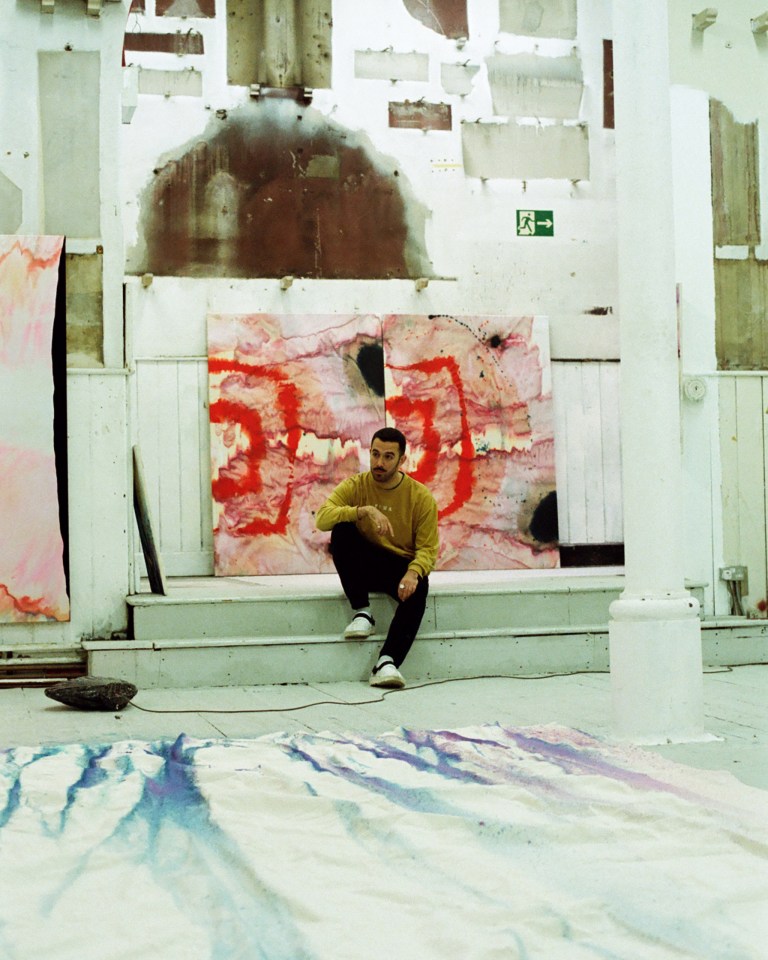
Iran-born Steve Lawler was raised in Hong Kong, educated in Europe and has lived in Singapore since 2003. As Mojoko, he mixes Asian and Western influences with B-movie sensibility to produce art that pops and dazzles the eyes. Interview by Julia Roxan.

  •  
  •  
  •  
  •  
  •  
  •  
  •  

Mojoko spent 16 years in Hong Kong and has lived in Singapore since 2003


Mojoko – real name Steve Lawler – had quite the global journey before moving to Singapore. Born in the Iranian capital of Tehran, the Brit spent 16 years in Hong Kong before studying graphic design at the University of Brighton.


In 2000, he moved to northern Italy to attend Benetton Group’s prestigious Fabrica art residency in Treviso before kickstarting his interactive design career with a year at the Diesel headquarters.


Moving to Singapore in 2003, he climbed through the creative ranks as an artist, designer, curator and creative director. He established the Kult studio in 2007, later adding a magazine of the same name and opening a gallery before leaving the company after almost a decade, having built a reputation for curation, installation, interactive design and fine art.


Having worked with a global network of over 600 artists, designers and animators, Mojoko is currently the Creative Director of The Unusual Network, an international collection of creators, and Head of Creative at EYEYAH!, which he co-founded in 2017.


As a Brit raised in Hong Kong, can you explain why the city has had a lasting influence on your art?

Hong Kong was an overload on the senses. The neon lights, the volume of people, the sights and smells were intense. The energy is infectious and the juxtaposition of Western and Asian culture was everywhere – Chinese movies with English subtitles, Rambo movie posters with Chinese typography. I found it fascinating and still do.


There is definitely an air of nostalgia about it for me, but it was so futuristic and still feels like one of the most exciting cities in the world.


Alternative and obscure movies have had a big influence on Mojoko


Do you still feel British, having lived in Asia for so long?

I think I have a British sense of humour, but I’m not particularly patriotic about the UK. I still look to it as a benchmark for creativity and quality content, but I do enjoy a global perspective on all things art, music and film.


Who has most inspired you in your path as an artist?

During my second year at university, we had a film module led by Dr Chris Mullen. He introduced me to the visual telling of stories and world of alternative cinema. He was the most knowledgeable person across so many subjects and has one of the largest, most comprehensive archives of imagery online.


Lawler at work in his studio; Photo: Brilliant Prints


Mojoko sounds funky and rather universal, like it could come from Japan, Indonesia or Nigeria. When did you adopt this artist name and where did it come from?

Actually, the name comes from the printing process CMYK. I was playing with colour values on my computer and I noticed M=0 Y=0 K=0. It just resonated with me, and yes, it felt like it could be African or Japanese or Indonesian, so I loved that versatility of the moniker.


Your art is strongly inspired by B-movies, trash TV and alternative culture. When did it all begin?

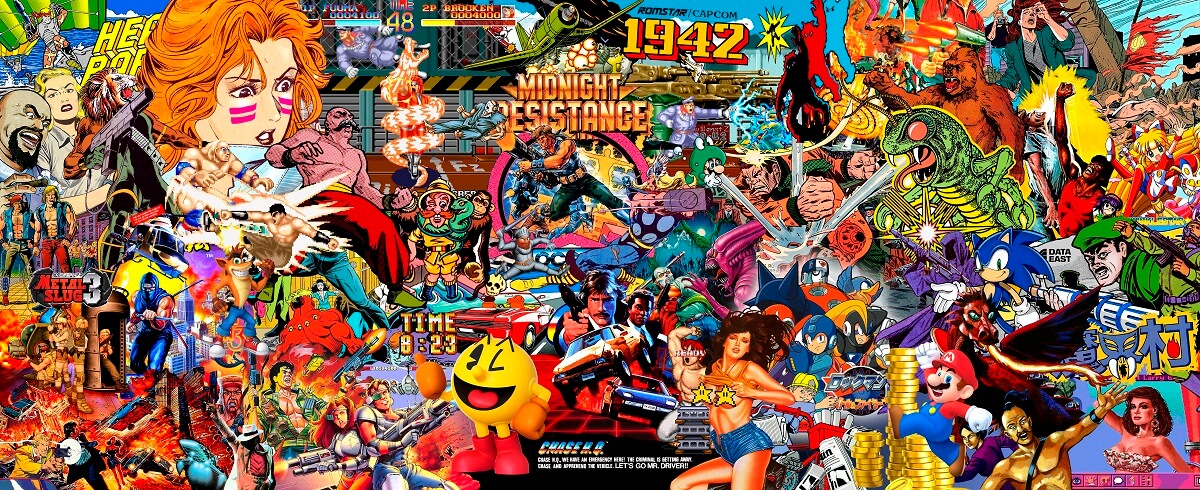
I think it was born by rejection of the mainstream. I always hated pop music and big Hollywood films. I found alternative music and culture much more exciting and unusual. For example, in a VHS video rental store, I was much more glamoured by the graphics and titles of the weird sections than the blockbuster films. They were much more intriguing and explicit.

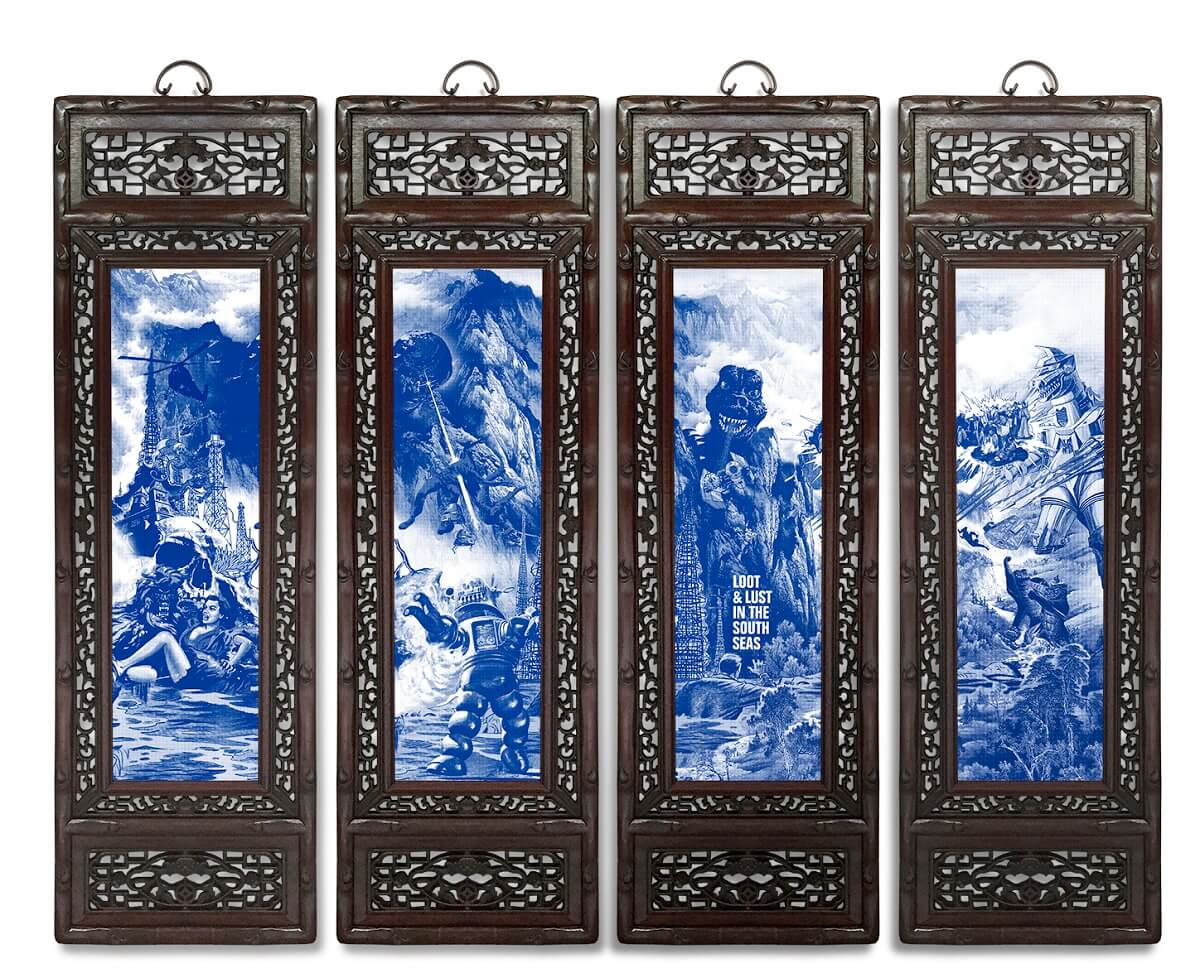
Silkscreen on ceramic tiles in antique redwood frames, created for Art Stage 2017


Has collage always been at the core of your creative process?

Everything I do has an element of collage. It’s the interplay between two separate ideas which create a spark. The creative process is very much started by linking two previously unlinked ideas. This idea multiplies with more and more elements, so the trick is to try and control or guide it so that your concept or theme is understood.


Tell us more about your collection of comic books, advertisements and B movie posters.

I must have started collecting around the late 1990s, everything from Rave flyers, typography, vintage catalogues and stuff like that. It just became a habit to seek out the obscure things in flea markets and jumble sales.


I used to make scrapbooks and then anything that wasn’t cut up was put into a kind of filing system. I keep on searching for new (old) things. That’s what keeps me going and triggers inspiration. And yes, online has become a valuable resource for finding things, but in Asia there is very little 1960s and 1970s pop culture documented online. You have to dig for that the old-fashioned way.


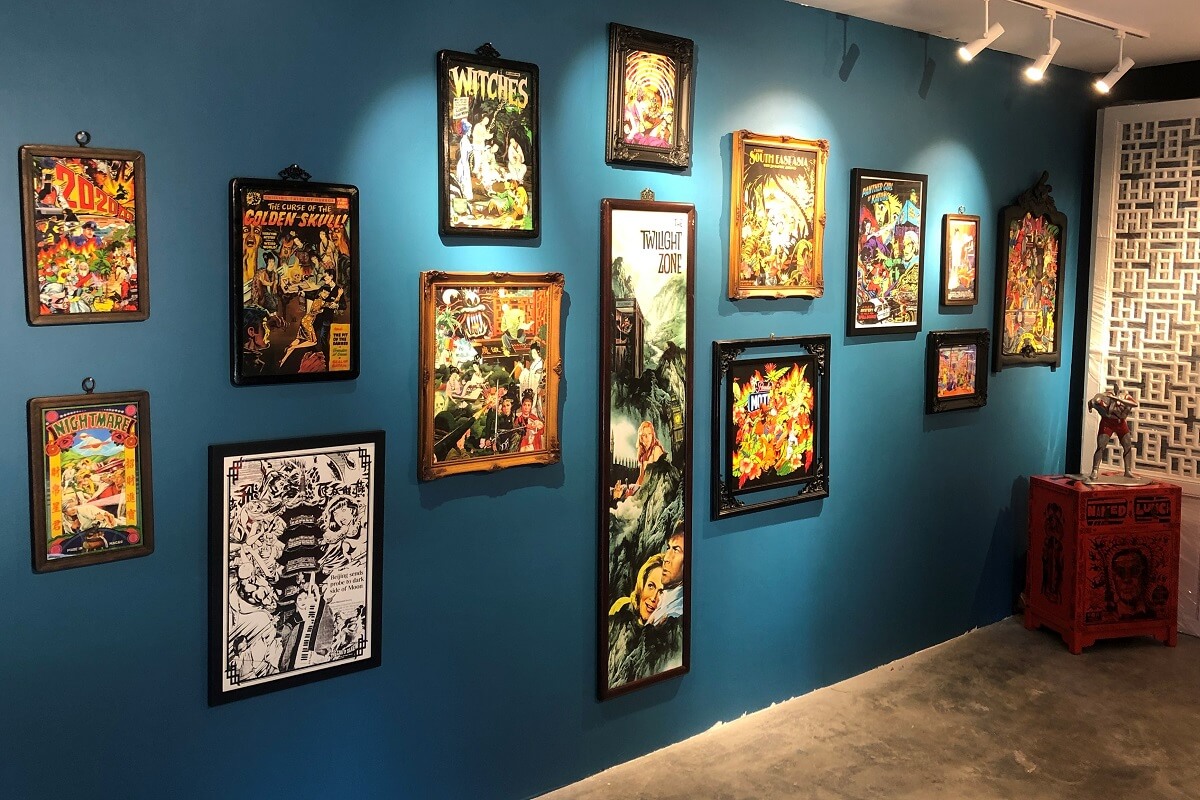
The Secret Room exhibition in Singapore


Tell us about The Secret Room, your recent show in Singapore.

The Secret Room delved into the mystery and intrigue of the past, but with a modern twist: deconstructed antiques, traditional paintings and objects infused with contemporary internet culture. The installation featured over 20 new artworks in varying traditional mediums, such as rosewood furniture, lanterns, ceramics and glass, but with a modern twist.


What are your thoughts on Singapore’s art and design scene?

I think the biggest problem is, and will continue to be, that artists can’t afford spaces to create and show work. The scene is primarily gallery driven, which means non-commercial work has very little opportunity to grow its influence. Artist-run spaces are always where you see the most progressive work and we should recognise and try to nurture that.


The Secret Room exhibition in Singapore


Having worked in the likes of Singapore, Tokyo and Taipei, are there any other big cities you’d like to work and exhibit in?

I’d be happy to have more shows in Europe – Paris, London, Amsterdam, for example. I’ve sold works and have some great buyers there, but never had the opportunity to showcase there. I look forward to that.


Are there other countries in Asia that appeal to you because of their artistic scene?

I’ve always loved the visual power of work from the Philippines and Indonesia. They would be my favourite Southeast Asian countries, closely followed by Thailand. However, I’d have to say Korean art has excited me the most over the years. Always pushing forward, a real thrust for originality seems to be a driver there in terms of medium and subject matter. Their harnessing of kinetic sculpture and craft is most impressive.


Artwork displayed on the artist’s website mixes west and east, classic and modern


You’re popular among many art collectors across the region, but is any of your work displayed in museums?

I’ve had a number of works featured in museums, but most of them were temporary. The Singapore Art Museum has been the biggest Patron, commissioning a mix of digital installations and sculptures over the years. I have some museum projects in the pipeline, but they are still under wraps for now.


Where can people see your work online?

The most up to date place to see what I’m up to is Instagram (@mojokoworld) and if you are looking for archive projects and prints, it’s best to visit mywebsite.
www.mojokoworld.com

Indonesian Artist Bahaudin Seeks To Exhaust All Means of Peace Through His Vibrant Paintings

“Aren’t people bored to disagree and spill their blood on the earth we love?”, our differences are what make this life beautiful, but it wouldn’t it be nice to find some common ground? By Julia Roxan

SHARE

Inside the Mind of Mojoko Read More »

Rolex’s Sensational Submariner

Rolex’s Sensational Submariner

SHARE

Built to conquer the deep, Rolex’s new Oyster Perpetual Submariner reaches new heights of craftsmanship.

  •  
  •  
  •  
  •  
  •  
  •  
  •  


The new Rolex Oyster Perpetual Submariner features a redesigned, slightly larger 41 mm case


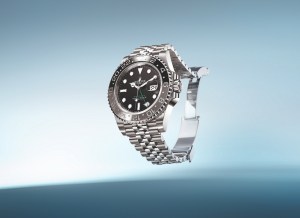
Rolex is introducing the new generation of its Oyster Perpetual Submariner and Oyster Perpetual Submariner Date, watches that exemplify the historic links between Rolex and the world of diving. Both timepieces now feature a redesigned, slightly larger 41 mm case – whose profile is highlighted by the light reflections from the case sides and lugs – and are fitted on a remodelled bracelet.


They are equipped with movements at the forefront of watchmaking technology – the Submariner with calibre 3230, unveiled by the brand this year, and the Submariner Date with calibre 3235, offering both time and date functions, and used in the Submariner range for the first time.
 

True to its aesthetic heritage, the new Submariner in Oystersteel has a black dial and rotatable bezel with matching Cerachrom insert. A yellow Rolesor version (combining Oystersteel and 18 ct yellow gold) of the Submariner Date presents a royal blue dial with a rotatable bezel and a blue Cerachrom insert.


The new-generation Submariner is equipped with calibre 3230, a movement entirely developed and manufactured by Rolex, and launched in 2020


Two versions of the Submariner Date, one in Oystersteel and the other in 18 ct white gold, bring distinctive colour combinations, with the dial and Cerachrom insert in different hues. The first watch blends a black dial with a green bezel, while the second proposes a black dial and a blue bezel.


Like all Rolex watches, the Oyster Perpetual Submariner and Submariner Date carry the Superlative Chronometer certification, which ensures excellent performance on the wrist.


EXTRAORDINARY HISTORY

The creation of the Submariner is linked to the development of deep-sea diving. In the early 1940s, the exploration of the deep marked a significant turning point with the advent of scuba diving. At the time, Rolex played an important role in the development and manufacturing of waterproof chronometer wristwatches, particularly due to the Oyster case, patented in 1926.


As the brand wanted to create a watch that met divers’ practical needs as closely as possible, in the 1950s it began an experimental process that involved many successful collaborations with diving pioneers. The experiments carried out and subsequent technical advances led to the introduction in 1953 of the Submariner, the first divers’ wristwatch waterproof to a depth of 100 m (330 ft).


The model has evolved from the first Oyster case, patented in 1926


Just a year after its launch, the waterproofness of the Submariner was increased to a depth of 200 m (660 ft). The watch was soon fitted with other technical innovations such as a luminescent disc on the hour hand to clearly distinguish it from the minute hand, and a crown guard.


In 1969, Rolex unveiled the Submariner Date, adding the date function. Its waterproofness, then guaranteed to 200 m, was extended in 1979 to a depth of 300 m (1,000 ft). The waterproofness of the Submariner achieved the same depth in 1989.


Over time, the appeal of the Submariner and Submariner Date has extended well beyond the marine world. With their proven performance, these tool watches have become archetypes of the action watch on land as underwater.


LEGIBILITY AND FUNCTIONALITY

When diving, being able to read the time with absolute certainty is a matter of survival. Therefore, the dial of the Submariner and Submariner Date is designed to be clean and unambiguous. The hour and minute hands, clearly differentiated in size and shape, and the hour markers in simple geometric forms – triangles, circles and rectangles – enable instant and reliable reading, preventing any risk of confusion underwater.


The dial of the Submariner and Submariner Date is clean and unambiguous, preventing any risk of confusion underwater


The Submariner and Submariner Date also feature a Chromalight display: the hands and hour markers are coated or filled with a luminescent material that emits a long-lasting blue glow in dark

conditions. On the bezel, the triangular zero marker is also visible in darkness thanks to a capsule containing the same luminescent material.


HIGH-TECHNOLOGY CERAMIC

Rolex played a pioneering role in the development of special ceramics for creating monobloc bezels and bezel inserts. Not only are these materials virtually scratchproof, their colours are also of a rare intensity and are resistant to environmental effects.


Rolex has developed exclusive expertise and innovative manufacturing methods that grant it complete independence in the production of these ceramic components.


The Submariner in Oystersteel with a black Cerachrom bezel and a black dial


On these versions of the Submariner and Submariner Date, the unidirectional rotatable bezel is fitted with a 60-minute graduated Cerachrom insert in black, green or blue ceramic that allows divers to confidently monitor their dive times.


The moulded, recessed graduations and numerals are coated with platinum or yellow gold via PVD (Physical Vapour Deposition). The bezel’s knurled edge offers excellent grip, to comfortably set dive time even when wearing gloves.

 

ROLESOR: MARRYING GOLD AND STEEL

Rolesor, the combination of 18 ct gold and Oystersteel on a Rolex watch, has been a signature feature of the brand since 1933, when the name was registered.


The Submariner Date in yellow Rolesor (a marriage of Oystersteel and 18 ct yellow gold) with a blue Cerachrom bezel and a royal blue dial


It is a meeting of two metals: one, noble and precious, attractive for its lustre and stability; the other, known for its resistance to corrosion, ensures strength and reliability. All these qualities perfectly mirror the elegance and performance that come together in a Rolex watch.


On the yellow Rolesor version of the Submariner Date, the bezel, winding crown and centre links of the bracelet are in 18 ct yellow gold, while the case and outer links of the bracelet are in Oystersteel.


OYSTER CASE

A paragon of robustness and reliability, the Oyster case of the Submariner and Submariner Date is guaranteed waterproof to a depth of 300 m (1,000 ft). Its middle case is crafted from a solid block of Oystersteel, a particularly corrosion-resistant alloy, or from 18 ct white gold.


The Oyster case of the Submariner and Submariner Date is guaranteed waterproof to a depth of 300 m


The case back, edged with fine fluting, is hermetically screwed down with a special tool that allows only Rolex watchmakers to access the movement. The Triplock winding crown, fitted with a triple waterproofness system, screws down securely against the case and is protected by an integral crown guard.


The crystal is made of virtually scratchproof sapphire and, on the Submariner Date, is fitted with a Cyclops lens at 3 o’clock for easy reading of the date. The waterproof Oyster case provides optimum protection for the watch’s movement.


PERPETUAL CALIBRES

At the forefront of watchmaking technology, these self-winding mechanical movements led to the filing of several patents, and offer fundamental gains in terms of precision, power reserve, resistance to shocks and magnetic fields, convenience and reliability.


Calibres 3230 and 3235 incorporate the Chronergy escapement, patented by Rolex, which combines high-energy efficiency with great dependability. Made of nickel-phosphorus, it is also insensitive to

magnetic fields.


The Submariner Date in Oystersteel with a green Cerachrom bezel and a black dial


The movements are fitted with an optimised blue Parachrom hairspring, manufactured by Rolex in an exclusive paramagnetic alloy that makes it up to 10 times more precise than a traditional hairspring in case of shocks.


The blue Parachrom hairspring is equipped with a Rolex overcoil, ensuring the calibres’ regularity in any position. The oscillator is fitted on the Rolex-designed and -patented high-performance Paraflex shock absorbers, increasing the movements’ shock resistance.


Both calibres are equipped with a self-winding module via a Perpetual rotor. Due to their barrel architecture and the escapement’s superior efficiency, the movements’ power reserve extends to approximately 70 hours.


OYSTER BRACELET, OYSTER SAFETY CLASP

These versions of the Submariner and Submariner Date are fitted with an Oyster bracelet. Developed at the end of the 1930s, this three-piece link bracelet is known for its robustness. The Oyster bracelet on these new versions is equipped with a Rolex-designed and -patented Oysterlock folding safety clasp, which prevents accidental opening. It also features the Rolex Glidelock extension system, designed and patented by the brand.


The Oyster bracelet is equipped with a Rolex-designed and -patented Oysterlock folding safety clasp


This particularly inventive mechanism comprises a rack located under the clasp cover and a toothed sliding link that locks into the chosen notch. The Rolex Glidelock on the Oyster bracelet has 10 notches of approximately 2 mm, allowing the length of the bracelet to be adjusted easily, and without tools, up to some 20 mm.


On the 18 ct white gold version of the Submariner Date, the Oyster bracelet includes ceramic inserts inside the links to enhance its flexibility and longevity. In addition, a concealed attachment system ensures seamless visual continuity between the bracelet and case.


SUPERLATIVE CHRONOMETER CERTIFICATION

Like all Rolex watches, the Oyster Perpetual Submariner and Submariner Date are covered by the Superlative Chronometer certification redefined by Rolex in 2015. This exclusive designation testifies that every watch leaving the brand’s workshops has successfully undergone a series of tests conducted by Rolex in its own laboratories according to its own criteria.


The Submariner Date in 18 ct white gold with a blue Cerachrom bezel and a black dial


These certification tests apply to the fully assembled watch, after casing the movement, guaranteeing superlative performance on the wrist in terms of precision, power reserve, waterproofness and self-winding.


The precision of a Rolex Superlative Chronometer is of the order of −2 /+2 seconds per day, or more than twice that required of an official chronometer. The Superlative Chronometer status is symbolized by the green seal that comes with every Rolex watch and is coupled with an international five-year guarantee.
www.rolex.com


SHARE

Rolex’s Sensational Submariner Read More »

A His and Hers Merry Bvlgari Christmas featuring Bvlgari Classics: Roma, Serpenti, Lvcea and Diva

A His and Hers Merry Bvlgari Christmas featuring Bvlgari Classics: Roma, Serpenti, Lvcea and Diva

SHARE

‘Tis the season to be jolly with Bvlgari classics. By Joseph Low

  •  
  •  
  •  
  •  
  •  
  •  
  •  

The festive season has finally arrived and with the season of gifting just around the corner, here are some gift ideas for you from the luxury jeweller, Bvlgari who has been creating extravagant pieces since 1884. From iconic timepieces like the Serpenti to the Octo Roman Watch, this “His and Hers Gift Guide” will definitely be handy for this Christmas.

For Her:

Serpenti Seduttori

This is perhaps one of the most recognised watches from the Maison, the Serpenti is cult favourite ladies watch in the market. The new Serpenti Seduttori is a riff off of the Serpinti with its slimmer snake-head case but unlike the Serpenti, it has a leather strap or a bracelet crafted with hexagonal patterns resembling scales of a serpent.

The Serpenti Seduttori comes in either white gold, rose gold or stainless steel, and options of getting diamonds set in the bezel are also available. This watch is perfect for a glamourous date night or simply an everyday watch you would wear to work.

Diva’s Dream

Another iconic motif is reimagined and incorporated into the Maison’s collection of watches. The Diva’s Dream’s fan-shape design is seen on the watch’s lugs as opposed to the necklaces and earrings where it is traditionally seen. The Diva’s Dream floral petal pattern represents femininity and sensuality, and has been stealing hearts since years ago. This time, the Diva’s Dream has once again been pushed the brand to achieve greater prowess and craftsmanship, debuting the world’s thinnest ladies’ minute repeater to date.

Gleaming diamonds are assiduously set around the case as well as the perimeter of the lugs, and its peacock motif dial combined with blue alligator strap is an ode to the opulence of the brand’s luxurious past.

Lvcea Skeleton

This collection is representative of Bvlgari’s exquisite jewellery and watch expertise. While it may seem geeky to see all the inner workings of the watch up front, under the watchful eyes of the design team from Bvlgari, it gave a breath of new life into the stale and mechanical layout. The Lvcea Skelaton is a beautifully constructed, with the moving parts resembling a carefully synchronised dance, serving as a backdrop to the Maison’s logo.

FOR HIM:

Octo Roma Watch

A clever union between Italian creativity and preeminence of Swiss watchmaking culminated into the creation of the Octo Roma watch. This distinct watch has been a mainstay at the Maison since 2012 due to its unique shape that is neither round nor square. This design code permeates the Octo Roma collection and while the overall structure has not changed much, the watch is updated to fit the contemporary styles of today. This watch is an icon of discreet luxury ideal for the modern man.

Bvlgari Aluminium Watch

While we have decided to put the Bvlgari Aluminium Watch under the list for “Him”, this 40mm timepiece is actually designed to be genderless. This 90’s symbol has a new iteration this year and like its predecessors, the watch is composed of unconventional materials such as its aluminium case and rubber bezel. This collection is a sports piece as it confers the watch up to 100m of water resitence making it highly versatile, taking you from office to the pools.

B.zero1 one-band ring

Drawing inspiration from the famous amphitheatre, the Colosseum, the B.zero1 one-band ring is now one of the Maison’s most distinguished piece of jewellery. An interesting point to note about the ring is the name “zero1”, while the “B” stands for Bvlgari, the latter actually represents the Maison’s first jewellery in the second millennium. Its design is fairly simple, the Maison’s logos are engraved on the outer side while the inner part of the ring allows for personalisation where you can have your initials inscribed. Highly minimal yet visionary, the circularity of the ring is a metaphor for the harmony of the past, present and future.

Visit Bvlgari’s website to shop for the gifts.

All images courtesy of Bvlgari


SHARE

A His and Hers Merry Bvlgari Christmas featuring Bvlgari Classics: Roma, Serpenti, Lvcea and Diva Read More »

Indonesian Artist Bahaudin Seeks To Exhaust All Means of Peace Through His Vibrant Paintings

Indonesian Artist Bahaudin Seeks To Exhaust All Means of Peace Through His Vibrant Paintings

SHARE

“Aren’t people bored to disagree and spill their blood on the earth we love?”, our differences are what make this life beautiful, but it wouldn’t it be nice to find some common ground? By Julia Roxan

  •  
  •  
  •  
  •  
  •  
  •  

Ketersambungan, 50 x 40 cm, Acrylic, Decorfin Paint on Canvas, 2020 by Bahaudin

In some cultures Bahaudin means, ‘The magnificent of the Faith’. As a young man with a powerful name, and an equally powerful set of skills, Bahaudin harnesses his talents for the greater good. Depicting messages of peace and love, regardless of one’s individual affiliation or creed, this Indonesian artist has dedicated his career to unveiling the deep-seated mysteries of humanity and the issues which it spawns, through vibrant and childlike imagery.

Indonesian Artist Bahaudin Seeks To Exhaust All Means of Peace Through His Vibrant Paintings

Pesona Nurani, 145 x 95 cm, Acrylic, Decorfin Paint on Canvas, 2019 by Bahaudin

You are now established in Yogyakarta which can be considered as the art capital of Indonesia. Tell us more about your first steps as an artist?

I’ve liked drawing since i was in elementary school. My mom was the first to tell me that she really loved the stories my drawings told. My knowledge and artistic experience has increased since studying at Indonesian Institute of Art. Apart from completing the academic process, my artistic experience was also influenced by working as part- time art handler with Serrum.

In 2015, I conducted my first solo exhibition at IAM Gallery Yogyakarta as a form of initial introduction to the public. The work showcased printmaking techniques as an achievement in visual techniques. Several months after the solo exhibition, there were many things that I still needed to learn and develop in order to become an artist. Luckily, I met Anton Subiyanto, who is also an artist. I had learned many things from him over a period of 2 months, he gave me  many tips and taught me how to survive as an artist.

Working as an art handler was one of the most important career decisions I made. Through that experience, I discovered a lot of beautiful works from various artists and I was proud to display their work. The experience boosted my self confidence, inspiring me to immediately start my career as an artist and end my side job as art handler.

Refleksi Kesadaran, 100 x 70 cm, Acrylic, Decorfin Paint on Canvas, 2020 by Bahaudin

Your art is vibrant with vivid colours and cartoonish characters – yet it is easy to sense a not-so-hidden criticism of our modern societies. What message do you wish to send across in your art?

I really love the pattern of peace. For this reason, many of my works always start from a question within oneself, “Aren’t people bored to disagree and spill their blood on the earth we love?” Differences of opinion are common in the living patterns of life. Differences make colors in the beauty of life, however, it would be nice if these differences are always sought for a common thread so that they do not turn into futile feuds.

Takdir Kasih, 50 x 40cm, Acrylic, Decorfin Paint on Canvas, 2020 by Bahaudin

The inclusion of sunflowers in your art is quite frequent, what is this a symbol of?

The sunflower is not a single symbol. But to be more precise, any flowers in my works including sunflowers are part of the hopes and prayers related to beauty and peace in life.

Fourteen Thirty Eight, 145 x 95 cm, Acrylic on Canvas, 2017 by Bahaudin

What is your creative process like? Where do you find your inspiration?

Confusion in today’s problems is very mature in terms of perspective. If a red thread is drawn, my work is related to the value of peace. One of the supporting elements of the word peace is the ability to know ourselves more deeply so that we don’t always have problems outside ourselves, if there are people who do not share our understanding. I always use the packaging for the meaning of love to see other people so as not to prioritize bad prejudices.

I use a lot of colors in my work even though there are some works that use monochrome colors. For me, each color has its own energy which reinforces each other. Just like humans who have their own strength within each person.

Reference to think before making a work is about how to rearrange whatever is seen and the ideas that are caught by translating them back together with the method of contemplation. Emha Ainun Nadjib is one of the people who helps provide a bridge for broad-mindedness because he always talks about life and many things that are used as self-learning. As for me I have a close friend the curator Arga Aditya who has always helped to become a partner for discussion about anything. But the most important thing for me is the goodness of God for allowing me to get inspiration for His creation to be made into artwork.

The Sanguine, 100 x 160 cm (2 panel), Acrylic, Decorfin Paint on Canvas, 2018 by Bahaudin

You love to express yourself outdoors. You enjoy when your art is visible to all. In your mind, what is the role artist play in the society? How important is the space given to artists in modern Indonesian society?

Because artists are part of society itself, by merging artists into society, many things will be obtained such as understanding directly the problems in society and then using their own perspective to draw a common thread that can be used as a simultaneous learning curve in each work. At least for self-introspection, it is grateful if it is useful for others. Space for artists is very important because apart from being a place for work presentation, it is also a place to exchange ideas.

Ruang Lintas, 167 x 122 cm, Acrylic, Decorfin Paint on Canvas, 2020 by Bahaudin

Any current or past Indonesian artist who has influenced you?

I have great friends, they don’t hesitate to share anything with me about the world of art namely Pupuk DP, Eko Nugroho, Ronald Apriyan, M.Lugas Syllabus, Justian Jafin, Gilang Fradika, Danni Febriana, etc.

Conscience Clad in Rhetoric, 200 x 300 cm, Acrylic, Decorfin Paint on Canvas, 2018 by Bahaudin

The five words that best describe your art?

Believe, Contemplation, Sharing, Energy and Peace.

In which city can we expect to see your next solo exhibition?

I am in the process of preparing and looking for a suitable place.

Humans Today, 33 x 132 cm (4 panel), Acrylic, Decorfin Paint on Wood, 2019 by Bahaudin

Can you let our readers which is your favourite art museum in Indonesia?

MACAN Museum is my favourite as it offers many things. Beyond displaying visual works on the walls and providing available space, this museum has created several programs that invite people to know more about fine arts.

Where can we see some of you work online, are these for sale?

You can visit my Instagram to find out more.Life Resources, 150 x240cm, Acrylic, Decorfin, Silicone, Mirror on Canvas and Wood, 2018 by Bahaudin

If you were to name one mentor who has inspired you in your life and path as an artist, who would that be?

Because I love peace, the figure of Emha Ainun Nadjib offers quite a lot of perspectives on the reasoning of thinking from interpreting the debris of life so that it becomes meaningful and does not become mere waste. Mahatma Gandhi, Abdurahman Wahid and Emha Ainun Nadjib they all have their respective functions regarding peace. Emha Ainun Najib has also influenced the wisdom of living life. Becoming an artist is not just talking about the ability to understand technicalities but also formulating ideas.

Bahaudin is contactable via email at udienaee@gmail.com or through Instagram.

SHARE

Indonesian Artist Bahaudin Seeks To Exhaust All Means of Peace Through His Vibrant Paintings Read More »

Bugatti Takes Flight With An All-New Chiron Sport Dubbed “Les Légendes du Ciel”

Bugatti Takes Flight With An All-New Chiron Sport Dubbed “Les Légendes du Ciel”

SHARE

Bugatti breathes life into steel once more with the all-new “Les Légendes du Ciel”, a concept car designed in tribute of France’s legendary pilots and race car drivers.

  •  
  •  
  •  
  •  
  •  
  •  
  •  

Highlighting the little-known link between some of its earliest race cars and aviation with a limited-edition variant of the Chiron Sport, Bugatti pays tribute to the notable and successful race driver, Albert Divo, Robert Benoist and Bartolomeo ‘Meo’ Costantini, who also flew in the French Air Force. Through unveiling an all-new Les Légendes du Ciel, the French car manufacturer of high-performance automobiles aims to cater to both vintage car and airplane buffs alike. 

Bugatti Takes Flight With An All-New Chiron Sport Dubbed “Les Légendes du Ciel”

Dubbed Les Légendes du Ciel or “Legends of the Sky”, the new limited edition build represents courage, speed, and extraordinary technology, all wrapped in one. Dressed to the nines in matt grey or “Gris Serpent”, the Les Légendes du Ciel mirrors the metallic exterior colour of early 20th century planes, with a broad high-contrast, white gloss runway-like centre stripe which spans over the car’s complete body from the back to the front.

Reminiscent of the historically popular Nieuport 17 biplane, Bugatti’s latest design incorporates a double wing front, alongside mesh patterns on the horseshoe radiator grille which are intended to resemble planes flying in parade formation. Other design details include a propeller logo and “Les Légendes du Ciel” lettering across the car’s left and right front fenders, and exposed-carbon-fibre side sills painted in a Bleu-Blanc-Rouge French tricolour, which pay tribute to both BUGATTI’s and the Daredevils’ origins.

With the option of a Sky View glass roof, the Les Légendes du Ciel comes complete with a brown Gaucho leather interior, as fine and robust as the original Nieuport 17’s cockpit, whilst the parade formation, propeller logos and lettering details are repeated in the seat’s stitching, on the head rests, and along the aluminium inlay of the middle console.

Characterised by its minimalist design, the Les Légendes du Ciel lives up to the high regard, legendary pilot Roland Garros once viewed founder and proprietor, Ettore Bugatti. Describing him as an “incomparable artist who alone knows how to give life to steel”, the Les Légendes du Ciel is yet another example of expert craftsmanship and design.

Thanks to the inclusion of an advanced 8.0 litres W16 engine, this beauty takes flight effortlessly, delivering up to 1,500 PS and 1,600 newton metres of torque, whilst accelerating to maximum speeds of 420km/h. Limited to 20 units worldwide, Bugatti has since announced the commencement of production by end 2020.

SHARE

Bugatti Takes Flight With An All-New Chiron Sport Dubbed “Les Légendes du Ciel” Read More »

New Bell & Ross BR 05 chronograph is the 1970s watch you wanted

New Bell & Ross BR 05 chronograph is the 1970s watch you wanted

SHARE

High on masculinity and full of character, the new Bell & Ross BR 05 chronograph exudes a quiet strength which belies its subtle elegance, hiding its perfection in the details. By Jonathan Ho

  •  
  •  
  •  

Oversized, instrumental and immediately distinctive, the new BR 05 chronograph joins the family of integrated bracelet Bell & Ross BR 05 watches. Featuring the same aesthetics driving the brand’s most iconic models, the BR 01 and BR 03, the new BR 05 chronograph is the latest in the series to play up the signature “circle within a square” element in the popular sports watch genre.

“This type of design harks back to a category of watches which appeared in the 1970s and when infused with Bell & Ross’ signature identity, the resulting graphic style is both striking and modern.” – Bruno Belamich, Bell & Ross Creative Director

“The case and bracelet form one unit” explains Bruno Belamich, the brand’s Creative Director. The new Bell & Ross chronograph is 42mm, up from the base-model 40mm BR 05 while applying the same design elements like perfectly flat satin-polished surfaces and polished bevels which enhance depth and volume, but the biggest update is reserved for the twin super-ellipse (rounded square) chronograph registers which anchors the entire look by mimicking bezel and midcase.

The New Bell & Ross BR 05 chronograph is the modern 1970s watch you never knew you wanted

While the iconic BR 01 and BR 03 are undeniably aviation cockpit inspired, it bears mentioning that the new BR 05 chronograph is evocative of an era of automotive racing watches like the 1970s Heuer Silverstone. This isn’t a criticism though, where the BR 05 chronograph excels is the fact that it is highly sculptural, recognisably modern while still seductively refined as its smaller, authentically retro counterparts

High on masculinity and full of character, the Bell & Ross chronograph exudes a quite strength which belies its subtle elegance, hiding its perfection in the details. Large Arabic 12 and 6 numerals firmly echo the design language of the original icons while not forcing the squircle chronograph registers to co-exist with 9 and 3 o’clock markers.

The 42mm BR 05 chronograph also enjoys more flexibility with layout thanks to increased dimensions, allowing the design to breathe a little better. The integrated pushers also serve as a defacto crown guard which creates a fluidity of lines not commonly found in many traditional chronographs: What results are two variations of a highly wearable Bell & Ross sports chronograph dubbed “Black Steel” and “Blue Steel” for its dial variations and available on both a rubber strap and an integrated bracelet.

The angle of the attachment to the bracelet has been carefully designed to follow the contours of the wrist, ensuring a secure and comfortable fit. The BR 05 chronograph’s identity is also built on a multitude of small technical and aesthetic details which truly elevate it: By blending fluidity and robustness, the continuity of the lines of this piece becomes a part of its identity.

BELL & ROSS BR 05 CHRONOGRAPH PRICE & SPECS

Movement Automatic calibre BR-CAL.301 with 42 hours power reserve
Case 42 mm stainless steel with 100 metres water resistance
Strap Rubber or Bracelet
Price US$5,900 on rubber / US$6,400 on bracelet
SGD 8700 on rubber / SGD 9500 on steel bracelet

SHARE

New Bell & Ross BR 05 chronograph is the 1970s watch you wanted Read More »

Filipino Artist, Darel Betita Javier’s Surreal Visual Illusions

Filipino Artist, Darel Betita Javier’s Surreal Visual Illusions

SHARE

Forever endowed with the pleasure of experimenting in every aspect of his work, Darel Betita Javier comes from a long line of esteemed Filipino artists. By  Julia Roxan

SCREAM. Colored, pencil, 40inx30in.

  •  
  •  
  •  
  •  
  •  

Born and raised in a family of artists, Darel Betita Javier, unlike his two siblings, was not quick to follow in the footsteps of their parents. Graduating with knowledge of architecture in 1992 from La Consolacion College- Bacolod, Darel spent much of his time in North Carolina, working on construction projects, before finally returning to the Bacolod City of Philippines. Finally pursuing what he was always meant to, Darel is now a full time evolving artist, forever endowed with the pleasure of experimenting in every aspect of his work.

Filipino Artist, Darel Betita Javier’s Surreal Visual Illusions

KING, QUEEN & THE PRINCE.

You grew up in the Philippines in a family of artists. How important has been this positive family environment in allowing you to express your art?

Art for me is just like a sport. It’s a playful thing. I never imagined that someday I will be just like my late dad doing art and enjoying it. I did not take art seriously when I was younger. My two brothers were already joining art competitions from the time we were elementary and high school, but not me. It was only after I came back from the US that I became a full time visual artist.

You then emigrated to the US for a few years (North Carolina). A major culture shock and a substantially different environment from the Philippines. What major learning(s) did you bring back from the US?

To be on time. In the US, it is important to be on time for an appointment or a meeting. The people there are always punctual and they always respect everybody’s time.

THIS GIRL IS ON FIRE.

How important for you, was the recognition of your talent in 2014 when you won the Philippines Art Awards- Visayas (Juror’s Choice Awards)?

2014 is the one of my most memorable years of my life. This award is important to me, as this is where I gained confidence to work harder in my field. This was the first time my work was displayed in Manila and the first time I saw and met famous visual artists in a show. It was the time I realized that the art world in the Philippines is alive and I’m so excited to be part of it.

SELF PORTRAIT.

You are always looking for new techniques in your art (coloured pen, pen and ink, paper cutting). How would you describe your style?

For me looking for a new style and technique in art should be continuous. I’m always curious and it’s a never ending learning experience. I want to explore learning new things and styles. I think I will never be content in doing or discovering new techniques, materials and ideas.

Some of my work looks like a collage but actually it’s a painting. I often use surrealism, conceptual realism, and collaged styles.

MOTHER’S PARADOX.

You were born and brought-up in the Philippines, a Catholic country where religion is a central pillar within society. How important is religion in your art? What religious references do you like to refer to?

I am a christian, I respect all kinds of beliefs and I don’t really touch religions in my art.

What is your creative process like? Where do you find your inspiration?

I usually draw it first on paper or tracing paper before finalizing it on a canvas. I often find my inspiration from my family especially from my wife, who has always believed in my work, since the beginning. She is a very supportive wife, and for an artist that is a very important thing.

ARISE.

Which is the role the artist plays in the society? How do you view the current art scene in the Philippines? How important is the space given to artists in modern Filipino society?

Artists help people and communities find their voice to be heard through art. It helps people express their feelings and learn to appreciate colors, textures, emotions and the beauties around them.

The Art scene in Philippines is very alive! A lot of new art galleries have opened, and more art exhibitions are happening. More young people have begun to appreciate art, and there are more younger art collectors emerging. The art scene in the Philippines is getting more exciting every year.

STUDIO.

Any current or past Filipino artist who has influenced you?

I have a lot of present Filipino artists who influenced me a lot. I call them my art idols or the “masters”. Some of which are, Ronald Ventura, Rodel Tapaya, Andres Barrioquinto, Lynyrd Paras, Jon Jaylo and Jason Montinola.

Can you let our readers know of your favorite Art Museum in the Philippines?

Ilomoca, Bencab & The Pinto Museum but I have never been there. The Pinto Museum is on my wishlist for when this pandemic ends. It’s the most instagram-worthy museum of Asia. As it is an hour from Manila, I tried to go there many times when I have group shows in Manila but it was to no avail, I’m always short of time. Because I usually stay only for 2 to 3 days and then go back again to Bacolod. Manila is so crowded, it’s a big city. I don’t belong there. I only go there when I have group shows.

SANCHUPAPA. Oil on canvas with Toilet Pump.

The five words that best describe your art?

Exceptional unique, expressively composed, and evolving.

In which city can we expect to see your next solo exhibition?

In Manila. I have upcoming solo shows but because of the pandemic, they were rescheduled.

Where can we see some of your work online, are these for sale?

You can find my artworks and upcoming shows on my Instagram. Each post is labelled ‘available’ or ‘sold’.

SELF PORTRAIT SERIES.

If you were to name one mentor who has inspired you in your life and path as an artist, who would that be?

Of course my late dad, Eng. Eduardo D. Javier. He was an engineer, a visual artist, a muralist (who made the longest wood mural in Asia 1969), a sculptor, a Dad and a mentor.

SHARE

Filipino Artist, Darel Betita Javier’s Surreal Visual Illusions Read More »

Relive The Fragments of Luh Gede’s Memories in Her Series of Awe-Inspiring Oil Paintings

Relive The Fragments of Luh Gede’s Memories in Her Series of Awe-Inspiring Oil Paintings

SHARE

Luh Gede’s immaculate oil paintings, effortlessly induce a sense of youthful serenity and excitement.By Julia Roxan

  •  
  •  
  •  
  •  
  •  
  •  
  •  

Portrait of Luh Gede Gita Sangita Yasa

Representing a new generation of breakthrough artists in the Indonesian art scene, Luh Gede Gita Sangita Yasa, not only a fresh graduate from the Teknologi Institute of Bandung, but also a needle in a haystack. Realising her dreams and purpose much sooner than most, Luh Gede was quick to make the necessary life adjustments in order to achieve her goals – which have since paid off, considering her swiftly escalating recognition. Worth every bit of the attention she’s garnered, Luh Gede’s immaculate oil paintings, effortlessly induce a sense of youthful serenity and excitement.

Relive The
Fragments of Luh Gede’s Memories in Her Series of Awe-Inspiring Oil Paintings

Study #44G, 2020, Oil on canvas, 100x60cm

Luh Gede

Born in Bali in 1997, you graduated from the Teknologi Institute in Bandung, majoring in Fine Arts. And we can already see your art exhibited in galleries across Asia – that is fast ! Tell us more about your first steps as an artist?

That sounds like an overstatement, but I’ll take that as a manifestation mantra.. Graduating in the middle of the pandemic actually sucked, I took a long 3 months rest after the chaos of my final project in university then started working as a graphic designer in 2 different start-ups but quit after a month each. I could say I was bored, lost and had nothing to do but to get a job since all my art supplies were still locked in my campus studio. It was not until I faced the stress of an office workload that I realized, a 9-5 isn’t really for me nor is it personally fulfilling, I just don’t vibe with the whole rush. So, yeah I saved up, rebuilt my brush and paint collections, and took some small commissions. I’m still working out how to readjust things that work and don’t so yes, I am just starting to paint very slowly these days.Paradiso #3: Sebuah Sandiwara, 2020, Oil on Canvas, 120x170cm

“Fragments of memories”, this is how you describe many of your large format paintings. Tell us more about this work on memory and your latest series entitled “Paradiso”.

I daydream a lot. Sometimes I can’t tell if the pictures playing in my mind are from a distance past or if it’s a made up. I think it has something to do with my desire. Often times I found myself having an image of a perfect situation, a perfect person, anything. A desire for alternate realities, can be a future or just simply a dream. The Paradiso series actually has an explanatory title in Indonesia, “Paradiso: Sebuah Sandiwara Waktu ”. The Fragments here is translated into “sandiwara”; a play, like in theatre. Times play the play. The past and the future merging; creating the present on the canvas. The tensions created, that’s just simply how the broken record of memory and the ever so ideal future be haunting my mind. Like in one of my painting; “Boys in Canggu”, there are these 2 ghosts like form and honestly I didn’t know why I put it, I thought it was just funny and aesthetically made everything balanced but when I painted that part I was like “oh man, this whole concept of the painting I do feel like a ghost, instead of tryna be in an actual reality I watch people in my own dimension”.Where’s My Summer #2, 2017, Oil on Canvas, 70x120cm

Any current or past Pop Art artist who has influenced you? Has British artist David Hockney inspired you?

Hockney was a popular artist to take reference from in my year when I was in university, I guess people see similarity in the subject matters that we brought up; tropical images and pools but in my early days of painting I was fascinated by how James Rosenquist used Montage. Could actually drop countless names, in the last 4 years since I first started using oil I’ve gathered references from Justin Mortimer, Phil Hale, Luo Ross, David Salle to Kei Imazu. I saved so many arts on my instagram and other arts that I found interesting. I even painted them again in some of my paintings to make my own narration. My interest is too broad, I like my approach to painting now, combining “a bit realistic” images, flat area and a bit of abstraction. I plan to add more abstraction and expressive strokes in the future to emphasize the chaotic effect. Visually I want both chaos and balance in my paintings. The blank space either they are white or simply flat areas on the canvas are there to give visual break, like an interlude in a hip-hop album.Early works inspired by pop artists like James Rosenquist and David Salle’s composition

You mentioned several times that the evocation of Bali can bring out many “clichés” which you do not want to be associated with. Yet you live in Bali and love the island life. Tell us about the Bali you cherish and call home?

It’s like a love-hate relationship. It becomes annoying when most people are projecting their preconceived idea  when I say that I’m from Bali. they would have this image about spirituality, traditional balinese paintings and all. At the same time I cannot run away from my identity. Not that I hate my ancestors, but these days, I realise the very core of my cultural background it’s so fluid. It has the potential to stay true to its core whilst also following modernity. So, it’s cool I guess.My Dogs Go on a Block, 2019, Oil on Canvas, 120x90cm

How do you view the current art scene in Indonesia? How important is the space given to artists in modern Indonesian society?

Been seeing the major artspots in Jakarta, Bandung and Jogja and I have to say my hometown is a bit late in upgrading the archival system and decent spaces for contemporary arts. Compared to those cities I think Bali has a different approach, the art space is often combined with other lifestyles activities. I worked as an intern in a gallery and I noticed the ecosystem is not so pretty like its reputation. And of the spaces, can’t say we lack of it but geographically it can be quite frustrating. Space is so important for me, where you show your work can show your value, not to mention how the artworks and the space can be more aesthetically pleasing by responding to each other. I think artists these days are given more chances to show their works in public spaces like the mall, a monument and stuff. It gives room for people to start a conversation by seeing but also critics for the artists. Art workshops and therapy are growing too, it’s just nice seeing how art has become a medium for healing in this vast modern world. Can’t find the right work to say it in English but; suka melihat seni bisa memanusiakan manusia, because we tend to get overwhelmed by the city’s life and here we have artists asking us to be in touch with ourselves and our surroundings.Paradiso #2: Sebuah Sandiwara Waktu – Boys in Canggu, 2020, Oil on Canvas, 120x170cm

The five words that best describe your art?

Vibrant colors, simulation, intriguing, pop.The New Now IV: Tension/Creation (Credit to Gajah Gallery Singapore)

In which city can we expect to see your next solo exhibition?

Can’t say an exact place, but I’ve been working on few new paintings so let the wait-and-see begin! In the meantime you can check my previous group exhibition at Gajah Gallery.Resin art

Where can we see some of you work online, are these for sale?

For now you can see them on my Instagram! I post snippets and partial pictures of my paintings there!Paradiso #5: Sprite Ads, 2020, Oil on Canvas, 120 cm x 70 cm.

Your favourite museum in Indonesia?

I’ve been to Jakarta alot and sadly in those countless times I haven’t gotten the chance to visit MACAN despite how desperate I was at everytime. So I guess Galeri Nasional Indonesia, they have so many artworks from old masters like Raden Saleh to more contemporary artists, they also have friendly guide with e-catalogue for some works. They hold exhibitions for established artists too from the country and outside Indonesia. You should go there sometimes, I think they installed the artworks based on the development of Indonesia’s art scene from the colonial.Paradiso #3: Sebuah Sandiwara Waktu – Girl Who Leapt Through Time, 2020, Oil on Canvas, 120x170cm

If you were to name one mentor who has inspired you in your life and path as an artist, who would that be?

Alot. When I was a child I was so intrigued with Van Gogh and children/fantasy writers, they would have these cute illustrations on the book; it was done so technically fine and precise but also not too realistic; I tried to copy it. From my hometown I also admire Antonio Blanco’s artworks, they are so beautiful and graceful, when I visited his museum I thought, “your art can open access to anything uh” as I saw his pictures going around the world and hanging out with Michael Jackson. That’s dope for that time. As I grew older I worked as an artisan for several artists and I just love hearing their stories and approach to life; how to cope with anxiety and to be yourself and express it through your art. I dont have the balls to name them all but I thank these 5 artists whom I’ve been an artisan for during my study. But as I came out from art school I realized my professor helped me so much by understanding my works that everything must not come in chronological order. That maybe by seeing the final artwork you’ll realize where you come from instead of being ingrained on an idea from the get go. It also gives me the freedom to develop and change whatever I want in the creating process. Whatever that fits at the moment.

For more information, Luh Gede Gita Sangita Yasa is contactable via Instagram and luhdegita@gmail.com.

SHARE

Relive The Fragments of Luh Gede’s Memories in Her Series of Awe-Inspiring Oil Paintings Read More »