Story Seychelles: The New ‘Paradise on Earth’ Now Welcomes Guests
SHARE
A paradise awaits your arrival this summer.
By Joseph Low
Credit: Story Seychelles
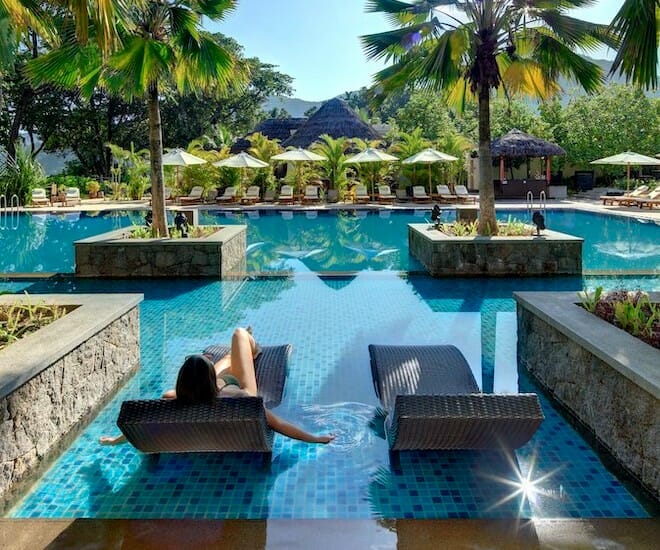
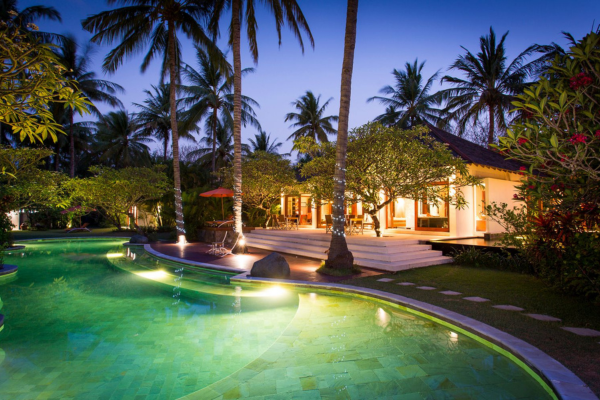
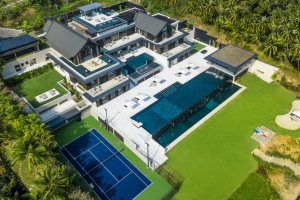
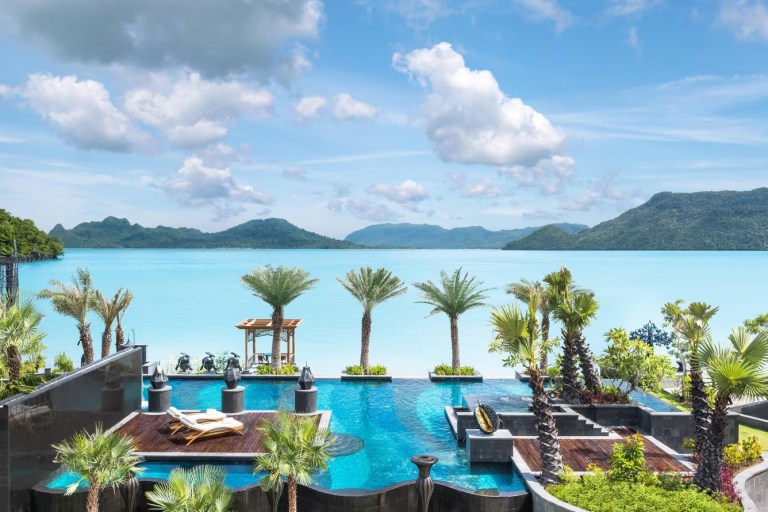
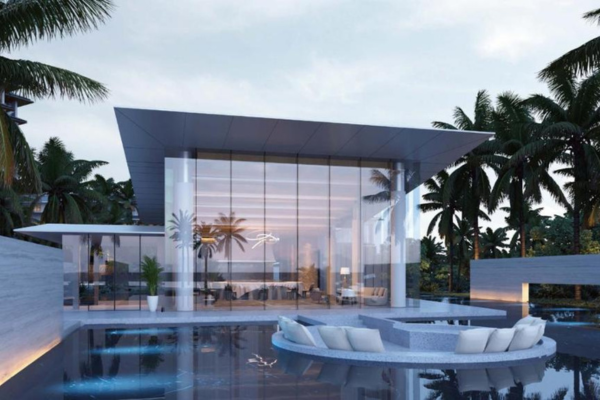
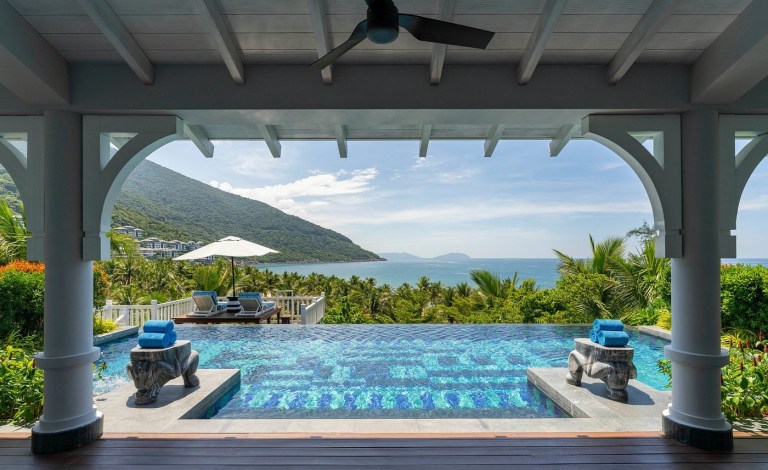
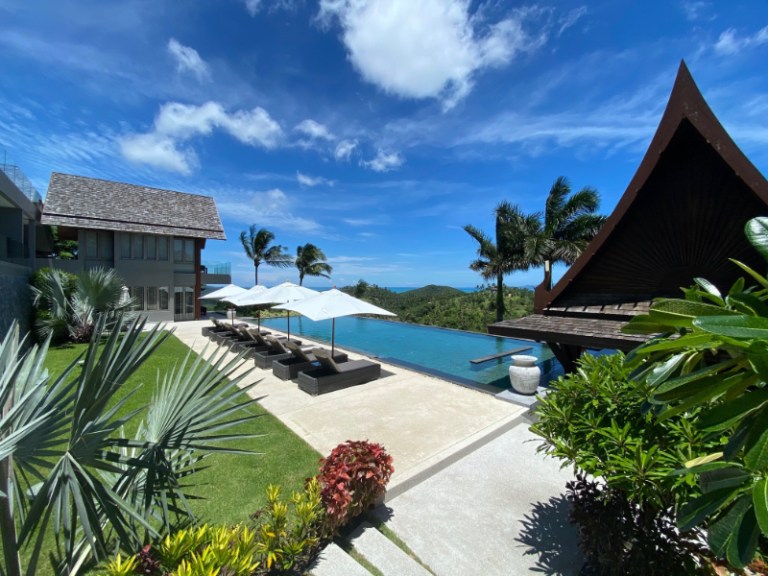
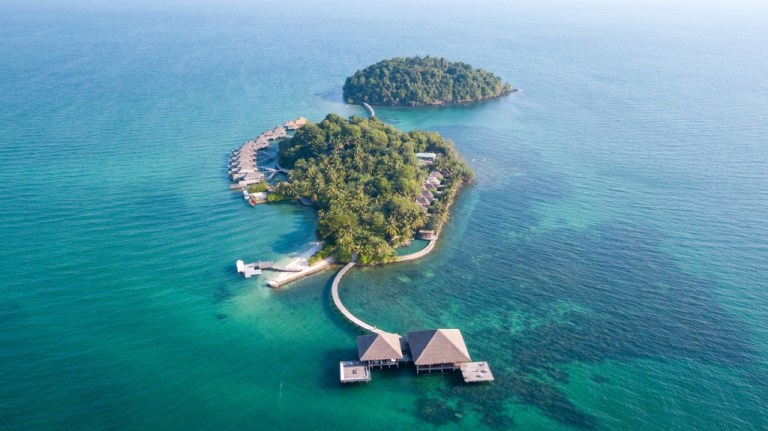
Luxury hospitality management company, Story Hospitality has opened its flagship hotel in Seychelles: Story Seychelles. Located on the scenic island of Mahè, the hotel is surrounded by the pristine beach and turquoise water of Beau Vallon.
Credit: Story Seychelles
Just in time for the beginning of summer, the luxurious hotel boasts a total of 100 suites and villas to accommodate families or couples looking to take a break from the hustle and bustle of city life. This lavish experience awaits guests to explore as they craft their own stories through the carefully curated activities. Be it enjoying a full day of spa or embarking on a gastronomic journey through the eclectic choice of restaurants available, not a day is wasted at this new hotel.
Credit: Story Seychelles
The island nation of Seychelles is home to many of the world’s most expensive hotels and Story Seychelles is a great addition to the family of resorts around. What makes this establishment unique is the unparalleled view of the Indian Ocean and guests can also take a dive and swim among the biodiversity.
Credit: Story Seychelles
“Fuelled by a unique set of operating beliefs, [the new hotel]’s objective is, in essence, to inspire its guests by kindling passions and awakening new dreams either through their introduction to new experiences, or to existing experiences but freshly perceived in novel and surprising ways,” said the hotel in a statement.
The United Arab Emirates-based luxury hotel is only a 20-minute drive away from Seychelles International Airport and 10 minutes from Victoria (the capital).
For more information or to make a reservation at Story Seychelles, head over to their website here.
American Artist Burton Machen: “Art raises our consciousness”
SHARE
Known for his “urban decay” style, Machen chats with us about controversial figures, his creative process and art’s influence on society.
By Joseph Low
Pursuit of Happiness Cuffs
Whether it is present on a canvas or a photograph, art’s melange of medium has an ultimate aim: shedding light on pertinent issues that might otherwise be overlooked. Artist Burton Machen is fond of using portraits of famous figures to convey his message, and he encourages collaborations so that there is engagement between what he has created and what people think. Documenting “urban decay” is what fascinates Machen the most because the final product contains elements from various sources and in totality, it speaks volumes of what society thinks of the current situation.
To understand more about Machen as an artist, we speak to him about his creative process and his philosophy in creating art.
You were born in Ashville, Alabama in 1970 and you have lived in Los Angeles, New York, Washington DC, New Orleans, Atlanta and Rio de Janeiro, Brazil. You also travelled numerous times to Europe and Asia. Tell us more about your first steps as an artist and how these travels around the globe have “impacted” your vision of the arts?
Being from rural Alabama and living [in the south] for the first 16 years of my life gave me an appreciation for nature and how nature puts its mark on objects, buildings or anything exposed to the natural elements over time – marking the passage of time. As I’ve travelled around the world I’ve noted the natural evolution created by the elements is much the same everywhere.
It varies depending on humidity and dry climates but the natural elements create the evolution of things or the deterioration of things, which to me are one in the same. As things evolve what was deteriorates and evolves into what is. In urban settings, this process is much the same but the addition of human action or interaction and location culture, customs, colloquialisms all play a part. Also, the colour palette varies greatly from place to place.
You are a photographer at heart. Yet, you seem to take inspirations from very diverse sources – politics, pop music, television series, movie posters – how would you describe your style?
Artist Burton Machen
My photographic style is very much documentarian and interactive. My collage work is visually much the same. Both are studies of human nature and the human psyche and also showing the effect of the passage of time.
Tell us more about the “Portraits Project” which has generated substantial interest for your art?
Ali
I’m fascinated by human nature and like to observe how people interact with elements (portraits) on the street. Whether it be deliberate with street art and graffiti or reactive by trying to destroy the piece or deface it, or by simply writing a comment.
My Urban Evolution Portraits Project series process is where I wheat paste portraits of people up on abandoned buildings or structures, some of the people are famous and some not. Some loved and some despised. I then watch to see the reaction that they incite. So much of my work (Urban Evolution and Portraits Project) is basically the documentation of a visually expressive conversation. Once the starter piece is up the conversation begins. One element is added and then causes a reaction or statement from someone else and the conversation continues until the subject matter is lost and no longer visible or known.
It’s the fact that people are unknowingly collaborating on these pieces with me and with each other that really fascinates me.
A lot of your work deals with a sociological observation of societal power structures. Your work also contains political themes (The “Mao Zedong” series for instance). Do you see yourself as an “engaged” artist?
Mao
I am and I like to engage others. I believe that we are constantly creating, collaborating with each other all of the time. We just don’t often take responsibility for what we create because we are unaware of our participation. We don’t own it but our actions speak volumes all the same.
You have been advocating the raw power of “Street Art”. What is the most challenging part about creating your artworks?
Butterfly
Navigating and actually getting the pieces up legally and without being noticed. Also, having people realise that if I put up a portrait of a controversial figure it’s because I want to know what the portrait painted by society will be? How will it look? What will it say? It’s not that I like or approve of all of who/what I put up. I’ve taken a break from posting new images for the last couple of years. In those years the world has changed and I am now called to put up images of people who have been instrumental in changing our world. In positive, negative and yet to be defined ways. I find it challenging to watch and allow things to evolve as they do especially when what evolves does not reflect my opinion or attitude. Allowing that to be what it is takes great restraint on my part. It was easy enough when posting celebrities but when the people being posted are less benign it’s much more intense. We’ll see how this next generation of Portraits Project evolves.
What is the role the artist plays in society? How important is the space given to artists in modern American society
Pursuit of Happiness
I believe that artists act as mirrors. They wake people up to what’s really going on in the world. Art is not always about presenting a pretty picture. Sometimes it’s about revealing what lies beneath the surface. Exposing what we don’t consciously acknowledge. Exposing the dark side (hidden side) so that we may allow light in to see more clearly and understand the world and ourselves a bit better.
You have today collectors around the world. You are referenced amongst the leading global art websites. How does such recognition inspire you?
A series of images captures the evolution of a painting after the artist puts it on a wall
My experience through my art with both artists and collectors have given me respect for the platform artists have to influence and shape the world. It inspires me to be more direct and intentional with what I create.
What is the current project you are working on? In which city can we expect to see your next solo exhibition?
Pickford
A feature film that I created artwork for with writer, producer and director Jennifer Delia is in the process of being released. It is called “Why Not Choose Love? A Mary Pickford Manifesto” and it premiered at the 2019 Venice Biennale along with an installation of artwork from and inspired by the film. Follow Jennifer and the film on Instagram: @jennifer.delia@marypickfordmovie
I am also working on a few commissions. One is a portrait for a collector of their family and the other is a collage derived from and inspired by one of my Urban Evolution photographs. Also, I’m looking to start a new collection (new incarnation) of Urban Evolution Portrait Project — one that goes deeper into equality and inclusion. Erasing racial identity. Erasure.
Can you let our readers know which is your favourite art museum in the US?
There are so many that I have not been to but of the ones I have been to I am partial to the Whitney Museum in NYC and the Broad in Los Angeles.
If you were to name one mentor who has inspired you in your life and path as an artist, who would that be?
Visually I’m inspired by many… a few of which are… Shepard Fairey who I was fortunately lucky enough to do a collaboration with his clothing company OBEY. Mark Bradford is another… though I was making art long before I discovered Bradford’s work, I found parallels with our art. He continues to inspire me and his work resonates with me. Stuart Davis is another.
Personally, I’ve been mentored and inspired by a 25-year friendship with a very spiritual and kind-hearted artist named Geraldine Neuwirth. Her commitment to her art and her ability to tell a story with her art is awe inspiring.
Her willingness and ability to allow the work (and spirit) to flow through her has influenced the way I approach creating art. I aspire to have the discipline and dedication she does. Follow her Instagram: @geraldineneuwirth
Head over to the artist’s Instagram: @burtonmachen or visit his website burtonmachen.com to view more of his artworks.
Rolls-Royce Landspeed Collection Celebrates The Forgotten Record Holder
SHARE
In total, Rolls-Royce plans to manufacture only 25 Dawn Black Badge and 35 Wraith Black Badge.
By Joseph Low
Rolls-Royce Wraith Black Badge Landspeed Collection
The year was 1937 when Captain George Eyston’s Thunderbolt reached a record land speed of 312 mph, powered by two Rolls-Royce R V12 aero engines. The British racer was not new to the world of racing as two years prior, he had already set new 24-hour and 48-hour endurance speed records held at the Bonneville Salt Flats in Utah. For his outstanding achievements, he was presented with the Segrave Trophy — an award to “British national who demonstrates Outstanding Skill, Courage and Initiative on Land, Water and in the Air”.
While the world is acquainted with Sir Malcolm Campbell and his car, Blue Bird, he was bettered by Eyston and the new record timing would stay in place till 1939. More than eight decades later, Eyston’s accomplishments still hold a special place in the chronicles of Rolls-Royce. Determined to proclaim to the world Eyston’s inspiring feat, the British marque has unveiled two special versions of the Wraith and Dawn in a Black Badge finish, which collectively is called the Landspeed collection.
“With this Collection, we have revived Eyston’s memory and retold his remarkable story. Throughout Wraith and Dawn Landspeed, clients will find numerous subtle design elements and narrative details that recall and commemorate his amazing achievements, grand vision and exceptional courage.” — Torsten Müller-Ötvös, CEO, Rolls-Royce Motor Cars
The Landspeed collection, unfortunately, is not equipped with the V12 engines seen in the Thunderbolt. Only about 19 of these engines were ever made and the ones in the Eyston’s are now preserved at the Royal Air Force Museum, Hendon and the Science Museum in London. Motor enthusiasts be sure to mark down these places and make a quick pit stop when visiting the UK. In replacement, Rolls-Royce has fitted the well-known 6.6-litre twin turbo engine, which also provides the same horsepower as the V12.
In designing the marque’s Landspeed collection, the allure of the Bonneville Salt Flats has been irresistible to dismiss. Aside from being the prime location for famous motor events, stunning views at night also warrants attention. The star-filled sky is meticulously captured in the Wraith Landspeed’s Starlight Headliner, which calls to mind the heavens of 16 September 1938, the date that Eyston and Thunderbolt sealed their last land-speed record. Using exactly 2,117 fibre-optic ‘stars’, they are fastidiously placed to resemble the constellations of that date and the largest number of stars ever fitted in a Roll-Royce Wraith Starlight Headliner.
Elsewhere on the car, identical Grosgrain weave silk and colours as with Eyston’s accolades he had received during his lifetime can be found on the driver’s door — Military Cross for serving in the Great War, a Chevalier Légion d’honneur and the Order of the British Empire. Reminiscence of the Thunderbolt could be seen with the occasional splashes of yellow and black, a combination pertinent in allowing the day’s timing equipment to accurately record the results. The colours are translated subtly onto the clock, which also resembles closely to the instrument dials of the Thunderbolt.
The Landspeed collection will no doubt be rare as the marque has planned to only manufacture 25 Dawn Black Badge and 35 Wraith Black Badge.
Ferrari Roma lives ‘la nuova dolce vita’ in Singapore
SHARE
The fastest way to enjoy ‘la nuova dolce vita’, the Ferrari Roma is a beautiful marriage of comfortable elegance and supreme speed – and looks even more stunning with Singapore as her playground.
Words: Aw Yizhong. Photos: Ital Auto.
The latest Prancing Horse has left the stables and arrived on the streets of the Lion City. Luckily for me, Ital Auto, Ferrari’s dealer in Singapore, invited Yacht Style to trial the new Ferrari Roma and experience a slice of la nuova dolce vita, the new version of Italy’s grasp of the ‘good life’ or ‘sweet life’.
When one thinks of the supercars that make up the marque’s impressive catalogue, the first thing that comes to mind is of a beast possessed of great power that must be tamed before one can bring this force to bear. But this couldn’t be further from the truth.
We’re not saying the Roma isn’t powerful. It is. But at first glance, the sleek lines and graceful curves of the Roma conjure feelings of lightness and speed rather than overwhelming force.
Think of the difference between a rapier and a broadsword. The former was designed to be light enough to strike quickly while the latter has more heft to it and provides more force to a blow when swung.
With its small, almost dainty proportions, the Roma is one of Ferrari’s lighter cars and this contributes to the way it accelerates and handles. But more on that later.
DETAILED LUXURY
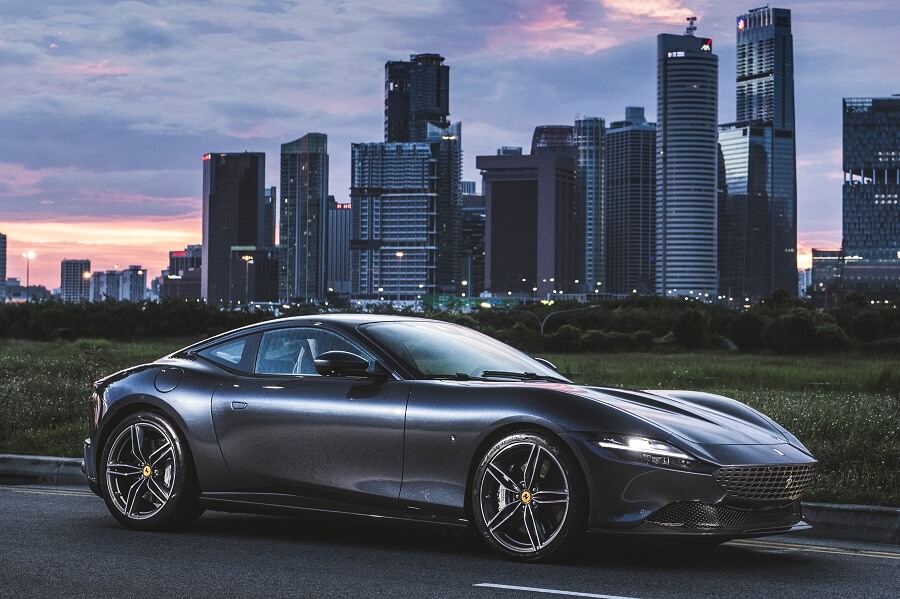
Apart from its sophisticated curves, the Roma also sports an eye-catching paint job. For the model we tested in Singapore, Ferrari went with a more understated colour rather than their trademark Rosso corsa.
The dark blue coat had the same effect as a classic black tuxedo, giving off an air of mystery and allure. But under brighter conditions, the reflective specks in the paint caught the light and came alive, wrapping the Roma in a starry night sky.
The interior was similarly understated yet classy. The moment you’re seated, you become more aware of the car’s SG$888,000 price tag. The seats and much of the dashboard are finished in a mix of luxurious, full-grain Frau leather and Alcantara, while streaks of chromed aluminium and carbon-fibre provide tasteful highlights.
The classic furnishings of the dual cockpit blend seamlessly with the more modern appointments such as the driver’s widescreen display for main instruments and two additional touchscreens. The radical digitalisation of the Roma is Ferrari’s most extreme to date.
Practically all the controls were either an electronic switch or a touch-sensitive surface, apart from the iconic red ‘manettino’ knob used to switch driving modes.
Along with the choice to place more of the car’s instrument controls on the steering wheel, this is all part of Ferrari’s ‘eyes on the road, hands on the wheel’ philosophy. Slightly confusing at first, but much more intuitive than other layouts once you’re used to it.
TAMING THE STALLION
As mentioned, the Roma isn’t a speed monster that you must struggle with to control. Right off the bat, it handled like a dream.
As with the other turbocharged cars in the Prancing Horse stable, its throttle response was instantaneous, necessitating a gentler touch on the accelerator pedal. The 3.9-litre V8 mid-front engine produces 620hp and combines with the car’s small size and light weight to produce startling acceleration, reaching 100kmh in 3.4secs.
All the Roma’s innovative features, like the new eight-speed gearbox, come together to create a driving experience that’s beyond pleasurable.
When put in the hands of Sean Hudspeth, a professional race driver and official Ferrari driving instructor who accompanied us, the stallion’s full potential was revealed. With the manettino set to ‘Comfort’ mode, the Singaporean showed us how Ferrari designed the Roma to be more than just a sports car.
Accelerating and braking was efficient, and oh so smooth, even making it enjoyable to cruise along Singapore’s shorter roads, where traffic lights abound. Switching to ‘Sports’ mode then kicked things up a notch and left us in no doubt that we were riding a Ferrari.
Yes, we were in good hands with a pro behind the wheel, but for someone who only popped his supercar cherry about 10 minutes earlier, speeding round the bends of Vigilante Drive was both exhilarating and slightly terrifying for me. All I could do was try not to dig my nails into the expensive leather upholstery.
On the ride back, though, we swapped places and my heart skipped a beat as I had my first hands-on experience of la nuova dolce vita.
While I’m not a professional driver like my co-pilot, the ease with which the Roma handled amazed me. Switching lanes and overtaking other vehicles was a breeze.
One thing I will point out, though, is that the hood of the Roma is a little longer than conventional cars, owing to the front-mounted V8 engine, so be wary of that stop line.
To conclude, Ferrari’s new Roma is a masterful fusion of super speed and luxurious comfort. With good looks and superior handling, this new addition to the legacy of the Prancing Horse provides a heart-racing introduction to the good life.
www.ferrari.comwww.singapore.ferraridealers.com
Yacht Style’s annual Multihulls Issue highlights new models from the world’s leading cruising catamaran builders and features reviews of the Aquila 70, Lagoon 55 and Bali 4.8, as well as MCY 76 Skylounge and Ferretti Yachts 500, while Gulf Craft Chairman Mohammed Alshaali, Lee Marine and Water Revolution Foundation are also in the spotlight.
“So, an artist is selfish because they have something they want to express and they make it happen through art.”
By Joseph Low
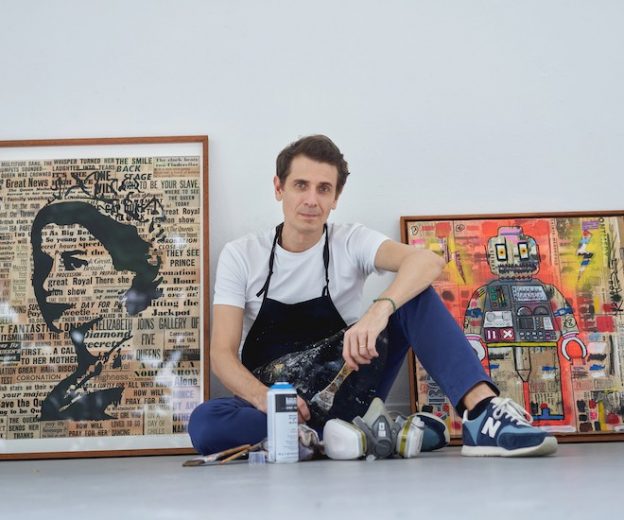
Looking at Gabriel Dufourcq’s artwork, you will inevitably have your focus on the icons that have been featured. But there is more than meets the eye because laying behind the iconic figure are newspaper headlines and original archives as old as 200 years, related to the political and pop icons. At first glance, an artwork presented to us may speak of our preconceived notions, but Dufourcq’s artwork invites us to inspect with greater detail questioning our established certitudes. Doing so, it could perhaps help to shed light by providing more information.
Chatting with Gabriel Dufourcq, the artist takes us through what it means to be an artist and how beyond his formal background in Economics and an MBA, his holistic approach to life stimulates his creativity and drive his pictorial and stylistic development.
You originate from France and you are now based in Singapore. Tell us about your first steps as an artist?
I don’t really think there are any first steps as an artist. It’s more like things gradually reveal themselves to you over time, and you ultimately end up creating something which others call “art”. If I recall, I feel the start lays in a sincere and profound need to create something, to give birth and reveal your inner self in one way or the other by connecting ideas and inspirations. Materalising an idea for an artwork is ultimately making space in your mind!
I’m originally from France but have spent the last 12 years in Singapore. After spending few years on the road starting in Madrid then Rome, followed by a couple of months in the Middle East and the Horn of Africa, I finally landed in Kuala Lumpur in 2007. The cultural diversity coupled with the intellectual excitement of being out of my comfort zone is something that also creates many “sparkles of creativity”. It is freeing the mind of your own stereotypes and allowing you to expand your own intellectual horizons. Discovering new flavours, colours, philosophies, mindsets, thinking and religious standards create a very fertile ground for the growth and the revealing of your artistic expression.
So like I said, there aren’t any “first steps”, it’s more like a spiritual journey, growing in the silence of our minds. I don’t have any formal Art education or training. Instead, I studied economics and statistics. One can go to school to study arts but ultimately, like entrepreneurs, an academic background is not what makes you! It took me years to call myself an artist. I didn’t want to self-proclaim as such. For me, this is a title to be won and should be given by others in recognition of your work. It is only when people start calling you “artist” that you know for sure you’re one.
Vintage newspapers, archive papers and bright pop-style colours are recurrent across your work. What led you to associate these rather opposite mediums?
Portrait Series, Queen Elizabeth, 120 x 80 cm
As I mentioned earlier, the creative process is gradual and therefore this came slowly to me as a real thought process. I started with simple newspapers collages and then began painting iconic elements onto them to create a dialogue — a parallelism between the background and the icon. In this way, we’re touching on the exact intentions of my work, which is to have a double-reading and provoke a reflection to the audience on these preconceived icons
My artworks require two layers of reading: First you have a very familiar pop icon, which is a straightforward visual element that can be easily repeated (the principle of Pop(ular) Art). Then there are the newspapers and archive documents I work with that could be 150-200 years old, and so the goal is to create a dialogue between historical elements and more contemporary elements. It is about bringing modernity to old memories or history into modernity. I try to incorporate a “back-to-the-future” element into my artwork and create dialogues between two very different time periods, the 21st century and 18th or 19th and 20th century.
For example, when I draw the Maharaja’s face in Fluo pink on an old Indian paper from the 19th century, the contrast of the dull documents and vibrant colours is really like travelling through time. Also, the value of these pieces stems not only from the actual art but the historical documents that are part of the artwork. These can cost thousands when I acquire them from auctions or antique collectors but are often just lying dormant in some library before I revive them using art.
Through my artwork, I aspire to open people’s eyes to history and remind them of where they come from. The question of origins is central in my work. It is especially important in the 21st century where we have mass production of Pop art icons, like Muhammad Ali or Marilyn Monroe. But no one knows really their full story, beyond a name or a function. In contrast, when I work on a portrait of Ali with 300 newspapers titles in the background, I am reviving all the elements that built the icon. When people see the portrait, everyone recognizes Ali but to truly get to know him you must dive into the background reading.
How do you choose the icons and personalities you are portraying in your artworks? What is your creative process like?
Portrait Series, Lee Kuan Yew, 120 x 80 cm
I started with political icons as I was fascinated with how these figures could become famous. Aside from 20th century dictators, I have been focusing on those universally known personalities like Mandela, Queen Elizabeth, Churchill, Kennedy and others.
In line with this series, I also portrayed Lee Kuan Yew as a tribute to Singapore, who helped with building and fixing the history of the country’s art scene, but also because Mr Lee‘s legacy is beyond the achievement of many global political leaders in my eyes.
That is how it started and then I gradually shifted to more popular icons like The Beatles and Muhammad Ali who also had tremendous social and political impact.
Keeping up with pop culture, in some ways, has deviated my artistic style of double-reading as it is now influenced by more commercial icons. But anyway, an artist shouldn’t be doing the same thing over and over… Consistency is important as I mentioned earlier, but collectors are expecting to see progression, evolution trajectory and ability to continuously evolve. Collectors do not want to buy another “Printing Machine” style artwork, and being an artist is also being able to explore new territories, different styles and techniques, expanding our own boundaries
What is the most challenging part about creating your artwork?
The process of collecting and building historical archives is physically challenging and very time-consuming but that is not the hardest part. The most challenging part of creating art is the ability to judge yourself and ask, “Does my artwork deserve to be shown?”. I never ask my friends nor my family, because I want to avoid any complacency and false confidence. I usually keep an artwork to myself for a certain amount of time before releasing it publicly so that I can contemplate it alone in my home studio and take the time to judge what I created.
One of my favourite stories is The Little Prince. In the story, the Prince travels to seven planets before arriving on Earth. On the first planet he lands on, he is greeted by the sole inhabitant, a King, who makes him his Minister of Justice. The Prince remarks that there isn’t anyone else to judge on his planet and so the King asks him to judge himself. To this, the Prince replies, “that is the most difficult thing of all. It is much more difficult to judge oneself than to judge others. If you succeed in judging yourself rightly, then you are indeed a man of true wisdom.” And I absolutely agree with that.
More realistically the two major challenges I face are time constraints to create what I have accumulated in my notebooks and on papers, and secondly judging which of my artworks deserve to be shown out of the countless pieces I have created.
What emotions do you hope the viewers experience when looking at your art?
That’s the toughest question yet! I would love to be able to feel the emotions of my collectors when they look at my artwork. As an artist, I already know what my work means and what emotions it elucidates since it is by essence an expression of my inner self, mirroring a certain perception of my reality.
But I would like to feel what they truly feel, what catches their eyes, and what invites them to pause in front of the work and even to acquire it. In communication there’s always a difference between what one intends to say and what other hears and interpret. I feel this to be the same with art.
“Nothing touches a work of art so little as words: they always result in more or less fortunate misunderstandings. Things aren’t all so tangible and sayable as people would usually have us believe” — Rainer Maria Rilke
A work of art is good if it has arisen out of necessity. That is the only way one can judge it. On this note, my latest works from the series “Oedipal Disobedience” involve the use of mixed media. Robots in this series are painted in a post expressionist style, which are more complex to read and more open to individual interpretation. It is also the result of more mature thoughts and technical experimentations and countless influences.
I do not really believe that artists should impose their definition of what people have to feel or understand from their work. If your art is good enough, it will speak to people, but just let them appreciate it and form their own interpretations.
You have started a new series focusing on robots, tell us more about this new artistic venture?
As part of my artistic endeavour, it is a natural progression, pushing my boundaries and challenging myself with a new stylistic approach. In short, it is a fusion of my technicalities and different influences aiming to question our contemporary purpose and trajectory. In many of my works, I include the math equation from Chaos Theory, inspired by my economics and statistics background. The theory’s fundamental conditions fascinate me as it is the start and end of everything. It echoes my religious influence when I include Greek symbols of Alpha and Omega, which represent eternity.
These robots are an invitation to contemplate, and self-reflect on what the future looks like, and how robots could replace or complement humanity. The shape and size of my robots are remastered version of religious effigies, like those used by the Incas and in Voodoo. My robots are acting as the religious effigies of this 21st century, the new totems of the Digital Age.
What is the role the artist plays in society?
I am not sure that artists must own a specific role in society; a very fixed and constrained concept. I mean a limited time frame conditioned by norms and bias. The artistic condition is before all a self-centred necessity to explore our innermost feeling. I am no one to impose my thoughts on others. If people find a common message in my work, it is great that it has contributed to their own reflections. But artists by themselves have no specific role, their works might have one by contributing beyond the temporality of the artist.
When creating, I simply bring to my own life and the light I want to see in the world. It is a bit similar to Gandhi’s quote, “be the change you want to see in the world.” I create what I would like to see.
In fact, an artist should just provide an escape, a dream state for others to plunge into and feel at peace, inspired, as they enjoy the art piece. As a final point I’d like to share one of my motto in life: Who are my creative irritators and to whom am I a creative irritator? If it is not the universal artist role, it is at least my guiding principle…
How is Singapore inspiring you in your daily life and in your personal evolution as an artist?
My journey in Southeast Asia started 14 years ago and has been a steep learning curve since. I was not an “artist” when I landed here. And I would have probably never been if I had stayed in Europe. Loneliness, away from my native country, has been an eye opener from a cultural, religious, historical point of view. Singapore’s multicultural diversity has been a true accelerator, fuelling the sparkles of creativity in my mind. Even after 12 years, every day here is a new opportunity of discovery and questions. Recently I really liked this statement I came across on a public advertising in the train: “Singapore is not boring, you are boring.” I simply cannot understand why people find Singapore boring. There are so many flavours, colours, and diversity here! It is a constant effervescence that offer you so many opportunities. Some people made use of the opportunities to start their own businesses and start-ups, I used it to become an artist.
The five words that best describe your art?
Introspection, personal need, meticulous, lonely, combination.
Tell us about your major projects and highlights across 2021?
Portrait Series, Obama, 120 x 80 cm
Covid-19 affected many of my recent projects. I was supposed to do an art fair in New York a few months ago and an exhibition in Paris back in March. Looking at the positive side, I have been focusing on maturing my style and creating new works that are well received by my collectors and the public.
The next big milestone will be toward my robot series. I feel I am at the beginning of a journey with something big at the end. Also, I’m currently finishing a residence at Intercontinental Hotel in Bugis and planning to attend the Singapore Affordable Art Fair this coming November (if restrictions are lifted). By 2022, we are planning some bigger things overseas mostly in the US, London, and Paris so stay tuned!
How can the LUXUO and ART REPUBLIK readers purchase an artwork from you?
For the latest releases, head over to my Instagram or my website, then contact me via WhatsApp or email. I ship my works worldwide, from Singapore to Rio de Janeiro and Johannesburg to London. It is very important for me to have a personal connection with every collector, even briefly; to chat and advise them on the different pieces, their stories and thought processes. Buying an artwork, it is before all buying a part of the artist story and thought process. It also allows my collectors to be my creative irritators, sometimes bringing to life new works, as a collaborating effort.
If you were to name one mentor who has inspired you in your life and path as an artist, who would that be?
I don’t have just one! There are plenty of people who gave me fantastic pieces of advice along my journey or supported me, from my mother to my wife but also many friends or even unknown people. My childhood as well as my life experiences, have been significant sources of inspiration, making my art almost a form of psychotherapy.
If pressed, perhaps one mentor I would highlight would be Michael Brimm, an INSEAD teacher during my MBA, who gave me the words I used earlier of “creative irritator”, advising us to identify who are these creative irritators in our lives. It has been a guiding principle since.
To follow Gabriel Dufourcq’s artworks, head over to his website or you can also follow his Instagram here: @gabrielsg_art.
Berluti x Bang & Olufsen Collaboration Mixes Artisanal Craft with Sensual Sound
SHARE
The limited edition collection celebrates the design excellence of two brands in distinct fields.
By Abram Yum
These days, it isn’t enough that a product has cutting-edge features guaranteed to enhance its functionality. When every product you use sends a message to others about your personality, it has to look good as well. And only the best will do. Berluti’s collaboration with luxury Danish audio brand Bang & Olufsen checks all the boxes here. The new collection features six products designed to enhance your listening experience while making a statement with Berluti’s signature leather work.
For audiophiles looking for delightful sound and style while out and about, the collection’s first three offerings are your best bet. Let’s start with the portable Beosound A1 2nd-Gen Berluti Edition. Like the original Beosound A1, it has a waterproof rating of IP67 and is designed to be completely resistant to sand and dust. The portable speaker delivers stunning 360° omnidirectional sound and features a three-microphone design with built-in Alexa, allowing the user to make calls and control it using just their voice. The stylish Beosound A1 2nd-Gen Berluti Edition has Bang & Olufsen signature minimalist Scandinavian aesthetics but with a twist courtesy of the French maison. On the speaker grille, the Berluti logo is boldly emblazoned while a calf leather cord provides a more subtle hint at the collaboration and provides a greater degree of stylish portability. With its 18 hours of play time, it’s perfect for days at home or out with friends.
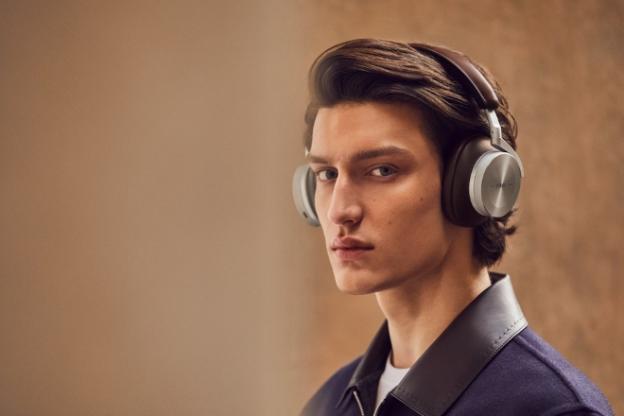
Moving on to the Beoplay H95 Berluti Edition wireless headphones, this is for those who want a truly immersive and enjoyable listening experience while on the go. It has an over-the-ear design which provides unrivalled noise cancellation, sound production and comfort. The latter is enhanced by the use of soft lambskin ear cushions for an over the top level of luxury. The headband is similarly covered in leather but this time utilising Berluti’s signature Venezia calfskin, crafted in Manifattura Berluti, with a TDM Intenso patina and embossed with the logo of the French maison. On the left and right, the aluminium speaker plates are engraved with Berluti’s and Bang & Olufsen’s logos respectively.
Both of the aforementioned products can be stored in the elegant Berluti Sound Pouch, made with Berluti’s Signature Canvas and “Scritto” text, when not in use, keeping them safe while adding a touch of class and elegance.
For those who are looking to enjoy their favourite tracks from the safety and comfort of their homes during this pandemic, the Berluti X Band & Olufsen collection has offerings for you as well. The Beosound Balance Berluti Edition home speaker offers a great entry point for those looking to get into high-end home audio. The Beosound Balance was designed with input from Benjamin Hubert of London-based Layer Design and delivers impressive acoustic performance despite its relatively smaller size. Apart from great sound, its Scandinavian minimalism and the addition of Venezia leather to its unique construction makes it a uniquely luxurious interior design feature.
Finally, the pièce de résistance of the collection, consisting of the Beolab 90 Berluti Edition speaker and Beovision Harmony Berluti Edition. These products are produced under only under a made-to-order system. The Beolab 90 Berluti Edition is the most powerful speaker in Bang & Olufsen’s entire range, boasting a whopping 8200 watts of power and cutting-edge speaker design to completely immerse an entire home with your favourite tracks. Paired with the Beovison Harmony Berluti edition’s LG 4K resolution and 77-inch OLED screen, it’s a delectable treat for the eyes and ears. Of course, all these features mean nothing if the products don’t look stunning. Like the rest of the offerings in the collection, the Beolab 90 Berluti Edition’s base, as well as the TV’s covering, has been customised with artisanal Venezia leather with a TDM Intenso patina, ensuring that they will be the highlight of any home even before they are turned on.
All products in the aforementioned Berluti x Bang & Olufsen Collection are available in select Berluti and Bang & Olufsen stores and e-shops in limited quantities, with the exception of the Beolab 90 and Beovision Harmony Berluti Edition which are available to order and will be constructed upon receipt of the order. For more information on this luxurious marriage of artisanal French leatherworking and Danish audio innovation, head over to Berluti’s and Band & Olufsen’s websites now.
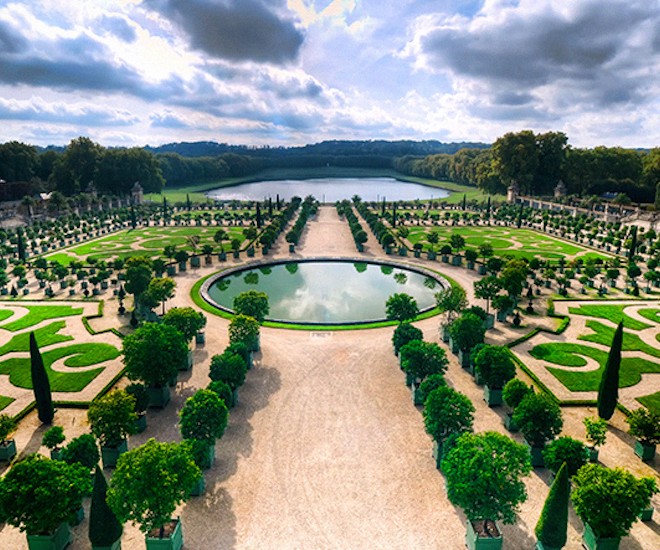
You don’t have to be a courtier to stay at one of the world’s most opulent addresses, the Palace of Versailles.
By Joseph Low
It has been two years since France first closed its borders and on June 9, the country will once again welcome foreign tourists back. “From June 9, the flow of travellers between France and foreign countries will be reopened according to terms that vary depending on the health situation in third countries and the vaccination of travellers,” the French government announced last Friday. Likewise, starting on June 7, Spain has allowed entry of international visitors.
With vaccination programmes starting to pick up across the world, more European countries are looking towards reopening their borders in a bid to restart their currently dormant travel sector which is said to rake in billions of euros every year during pre-Covid period.
Exterior view of the Palace of Versailles
If you are ready to spare no expense, you can now spend a night at the world’s most lavish address, the Château de Versailles. Check into Le Grand Contrôle, the newly launched luxury hotel by French brand Airelles. Built in 1681 by Louis XIV’s favourite architect Jules Hardouin-Mansart, the hotel occupies three historic buildings on the estate that has since been restored to its former 18th century glory by architect and interior designer Christophe Tollemer.
The Arielles Château de Versailles, Le Grand Contrôle is the luxury hotel group’s sixth property. Originally the residence and working space for the minister of finance, the newly renovated buildings have a total of 14 rooms and suites that have all been furnished with furniture from the era and this entailed a countrywide hunt through various auction houses and antique shops. Furthermore, a small team of the nation’s most talented craftsmen and artisans were also convened to salvage the stonework, parquet and wall panelling.
The Necker Suite
Nestled within the hotel is the Valmont spa that touts treatments inspired by Marie-Antoinette, such as the “Majestic Mirror” facial and “Divine Hand Beauty” massage. Guests can also look forward to gastronomical delights prepared by Michelin-starred French chef Alain Ducasse, who has specially curated a menu inspired by the Sun King. In the afternoon, indulge yourself in an afternoon tea session dedicated to Marie-Antoinette herself.
Lavishly looking indoor dining area
An indoor swimming pool
The highlight of this hotel stay is perhaps the exclusive experiences available. Guests will be assigned to a dedicated butler, access to boats and golf carts as well as private tours to areas such as the Queen’s Hamlet, Hall of Mirrors and other previously unseen living quarters used by the monarchs — this once-in-a-lifetime chance to explore these places without crowds is a huge motivating factor to book a night at Le Grand Contrôle, which costs €1,700 a night (S$2,740). As international travel slowly resumes, it is not a bad idea to include this into your bucket list.
Embark on a Life-Changing Luxury Travel Experience With Ker & Downey Africa
SHARE
“To get lost is to learn the way” – African proverb
By Joseph Low
In the world of high-end luxury travel, the concept of experiential travel is a hot topic that is not about to cool off anytime soon. It is an ever-growing trend that sees people wanting to do more with their time, immersing themselves in adventure and tailored trips that allow them to do something, try something, and experience something unique.
Leading award-winning travel company, Ker & Downey® Africa, is made up of a community of explorers, mindful travellers and adventurous souls who are driven by a shared passion for the continent they call home – Africa Their one-of-a-kind LuxVenture® trips aim to connect you with the best of both worlds — bucket list worthy days and luxurious nights in some of the most remote and unique corners of Africa, taking the concept of experiential travel to a whole new exhilarating level.
Ker & Downey® Africa are world-renowned for pioneering quality expeditions and crafting African experiences for people from around the globe that are nothing short of life-changing. There is no place on the planet like Africa, teeming with thrilling once-in-a-lifetime experiences – from the world’s biggest inland delta in Botswana, to the vast plains of the Serengeti to witness the Great Annual Migration, and gorilla trekking in the jungles of Rwanda, the adventures and experiences are endless.
Want to get inspired? Thought you’d never ask…
_____
The Greatest Wildlife Show on Earth – Kenya
It is considered the world’s quintessential wildlife experience and for good reason. The Great Wildebeest Migration, that sees millions of animals make the treacherous journey across Tanzania and Kenya each year, is a wildlife spectacle that moves through some of the most exquisite ecosystems on the planet. Experience survival of the fittest first-hand as you witness the pitfalls and triumphs of the massive herds as they undertake this hair-raising journey. The team of East African experts at Ker & Downey® Africa have put together a monthly calendar that follows the migratory pattern of the herds as they make the circular route through some of the most wildlife-rich regions in the world. Their LuxVenture® trips are uniquely tailored to ensure an unforgettable experience with you at the very heart of the action of this epic event.
Roam with Africa’s endangered mountain gorillas – Rwanda | Uganda
Having a face-to-face encounter with the rare and endangered Silverback Mountain Gorillas is a once-in-a-lifetime wildlife experience. Considered to be the ultimate primate experience, gorilla trekking takes place deep in the African jungle, in a small handful of remote locations in the Albertine Rift montane forests. With only around 1,000 mountain gorillas left in the world, a gorilla trekking safari is a unique and impactful experience that contributes directly to the conservation and preservation of these magnificent primates. However, this bucket list worthy experience doesn’t come without a few challenges, which is why booking through a trusted travel partner is so important. From securing permits and expert local guides to seamless travel logistics in remote locations – Ker & Downey® Africa’s team has you covered.
Explore the African bushveld on foot – Zambia | Botswana
Become part of the landscape and not merely a spectator by exploring Africa’s most remote and pristine bushveld wilderness… on foot. A walking safari is an epic wildlife experience that takes you off the roads, and deep into the unexplored parts of the bush. Led by professional guides, a walking safari guarantees a more intimate encounter with wildlife than if you were in a vehicle. For some of the best walking safaris on the continent, venture into Zambia’s South Luangwa National Park – a region considered to be the birthplace of walking safaris. Their one-of-a-kind LuxVenture® trips aim to connect you with the best of both worlds like wildebeest, giraffe, zebra, buffalo and lechwe attract an abundance of lurking predators…
The best of the bush and the beach – South Africa & Indian Ocean Islands
Africa’s melting pot of diverse ecosystems, remarkable wildlife and breath-taking landscapes are not just found inland, but all along the spectacular Indian Ocean
islands and rugged coastlines of the continent. It is the only place on the planet with such a uniquely juxtaposed blend of inland bush country and pristine tropical beach destinations. A bush and beach safari combines the high-paced thrill of a safari with a more chilled idyllic white-sand beach experience, giving you the best of both worlds. Want to add a beach destination to your African safari trip? Ker & Downey® Africa’s team of experts can recommend the best bush and beach combinations for a well-rounded African itinerary.
Exclusive, exclusive, exclusive – Tanzania | Zanzibar
There’s luxury travel, and then there’s super-luxury travel, where remote destinations offering utmost privacy and exclusivity are key. A private safari is on your own terms. From flying private, unlocking new and exciting destinations, to private safari vehicles, exclusive-use luxury villas and lodges, and private staff to cater to your needs, this is the epitome of luxury travel. Get whisked away to some of the most secluded regions in Africa, skipping the crowds and while the team at Ker & Downey® Africa craft your bespoke itinerary to suit all your needs. It doesn’t get better than this…
Experienceluxury travel in Africa at its best with someone you can trust by your side, tailoring your trip to suit your every desire and need. It’s the only way to go. And with a trusted partner like Ker & Downey® Africa, you can rest assured knowing that the experience of a LIFETIME awaits.
Sophistication and Harmony Secure The Harmonist a Double Nomination at the US Fragrance Foundation Awards
SHARE
Reflecting the dual nature of Yin and Yang, Lola Tillyaeva (Till)’s latest perfume emphasises the importance of empowering yourself and your body.
By Joseph Low
Perfume is a powerful thing. It has the ability to transport you to a certain moment in time, bring back memories, and also make you feel a certain way. With the right scent, you feel powerful, feminine, happy, reminiscent—the emotions, thoughts, and feelings depend on what perfume it is. If you are looking for a new perfume to add to your roster, look no further than The Harmonist, a brand new creation from Ms Lola Tillyaeva (Till) and recently, two of its fragrances were selected as finalists of the prestigious 2021 US Fragrance Foundation Awards
Double Nomination
Moon Glory and Sun Force, the two newly launched fragrances have been nominated as finalists under the awards’ most noteworthy categories that include “Fragrance of the Year, Women’s Luxury” for Moon Glory and “Fragrance of the Year, Men’s Luxury” for Sun Force. Not to mention, The Harmonist is also the first brand to be shortlisted under both categories
Finalists of the 2021 US Fragrance Foundation Awards, Moon Glory (Left) and Sun Force (Right)
Also competing for the top spot include powerhouses from Chanel, Gucci and Tom Ford. Despite being a relatively new player in this highly competitive field, The Harmonist’s unique proposition and ingenuity are what sets it apart from the rest and we will delve further later on.
Guillaume Flavigny, the well-known Nose behind numerous favourites from brands such as Commodity, Elizabeth Arden and Giorgio Armani and others, is Moon Glory and Sun Force’s scent designer who have scoured the world for precious ingredients to formulate these olfactory delights.
“Being recognised by the Fragrance Foundation is an incredible honour. Our team is passionate about creating unique, memorable scents that captivate the wearer and reflect the planet’s beauty and the wonders of nature. We will continue to innovate in the perfume industry and are excited to announce that The Harmonist will release a new collection of scents in the Fall of 2021”, said The Harmonist founder Lola Tillyaeva (Till).
About The Harmonist
The Harmonist is a Maison de perfume and is the latest project fromLola Tillyaeva (Till) and it represents the perfect union of the “craft and savior-faire of Paris with the modernism and storytelling of Los Angeles”. As with her other projects, it ties in with her work on providing harmony to the world around us. There are thirteen perfumes in the range, all of which reflect the dual nature of Yin and Yang as well as elements that are said to constitute our universe: Earth, Water, Fire, Wood and Metal. This sensitive balancing act echos the traditional Chinese philosophies of Daoism and Feng Shui, two widely practised concepts that help to empower us and our bodies.
Since its launch, The Harmonist has had a boutique in Paris in 2016, followed by an LA store in March of the same year. As well as being a beautiful range of products, The Harmonist also sponsors philanthropic causes to help develop solutions to the world’s most pressing issues. From providing clean water in developing countries to creating training materials for education about hygiene and sanitation—the brand is committed to making an impact on the world.
About Lola Tillyaeva (Till)
Lola Tillyaeva (Till) works with her husband Timur Tillyaev, a partnership that has been strong for many years. They are both prominent philanthropists and support many charities, as well as juggling their businesses.Lola herself was born in Uzbekistan and over her life has had many prominent positions such as the Permanent Delegate of Uzbekistan to UNESCO for 10 years between 2008 to 2018.
She works with many disadvantaged children as well as for environmental causes and has always had the belief that education, culture, and sport are fundamental for peace and tolerance, and this is something she brings to everything she works within her life. She set up her own charity back in 2002 called the You Are Not Alone Foundation to help underprivileged children in orphanages as well as funding the medical treatment of children from orphanages and low-income families.
In 2004, she set up the National Centre for the Social Adoption of Children and to date has helped over 7,500 children between the ages of one to 18 with special needs. Other notable achievements in her life include being the President of the GFU from 2005 to 2018 and the Honorary President of the Asian Gymnastics Union. Two years later, she was awarded the International Olympic Committee’s “Women and Sport” diploma to recognise the achievements and contributions she has had in promoting gender equality in sport. Furthermore, she instigated the Droplet project, which is a walk-in, multi-sensory installation to serve as a platform for debate on global water-related topics and environmental issues. She was made a Dame of the Royal Order of Francis I in March 2018, which is internationally recognised for its contribution to charitable initiatives.
Inspired by J-Class Yachts, the Rolls-Royce Boat Tail brings maritime aesthetics to the road in an elegant bespoke package.
By Abram Yum
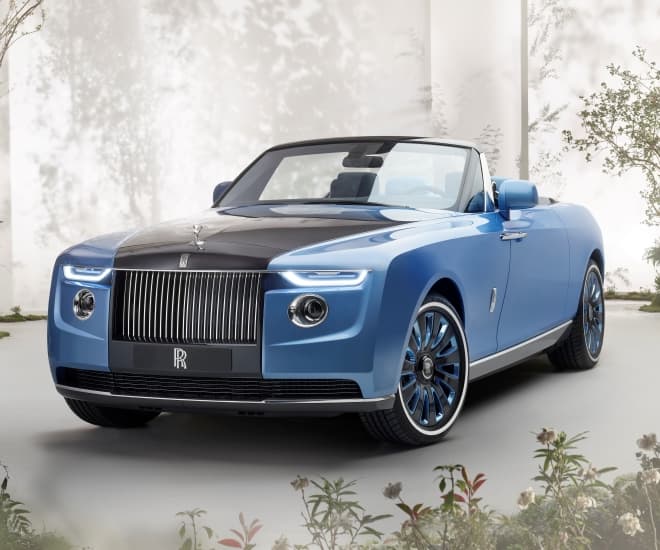
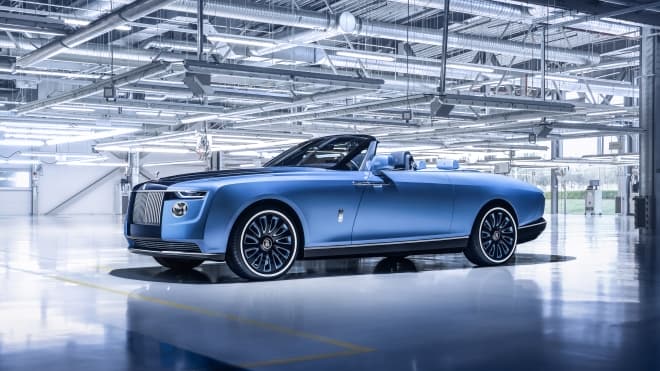
The brainchild of three die-hard fans and the esteemed marque’s new Coachbuild program, the Boat Tail is one of Rolls-Royce’s most interesting models to date. Crafted using a traditional technique known as coachbuilding, the new automotive takes cues from the hull of a J-class yacht, with the nautical influence clearly seen in its distinctive rear end. Like any Rolls-Royce, it’s packed with a range of exquisite features serving to enhance the car’s beauty and user enjoyment. While Rolls-Royce has traditionally been very discreet with the prices of their bespoke vehicles, talk on the road is that it’s a serious competitor for the title of most expensive car in the world, which is currently held by Bugatti’s La Voiture Noire.
Before we get into the nitty-gritty of the car’s specifications, perhaps we should shed some light on the Boat Tail’s history. It begins with the revival of Rolls-Royce’s Coachbuild department and the artisanal skills unique to the marque’s craftsmen. In 2017, this revival spawned the celebrated one-off bespoke model known as the Sweptail which embodied the dawn of a new era for the brand’s hand-built vehicles and their collaborative approach to design.
From the legions of dedicated fans, three individuals approached the marque with a shared love of modern nautical designs and a single demand, “show me something that I have never seen before.”
From discussions between Rolls-Royce and these three clients, three iterations of the Boat Tail were born, each sharing the same body but with their own personalised touches.
At first glance, the Boat Tail possesses Rolls-Royce’s iconic design identity, being based on the same aluminium platform as the acclaimed Phantom and Ghost models. Apart from some shared DNA however, the Boat Tail is a completely different beast. As mentioned, the car’s design was inspired by the nautical designs of J-Class yachts and the original “Boat Tails” of the 1920s and 1930s, from which it derived its name. Those vintage automobiles were unique creations in their own right, constructed by grafting the “hull forms of sailing boats onto the rolling chassis of a Rolls-Royce.”
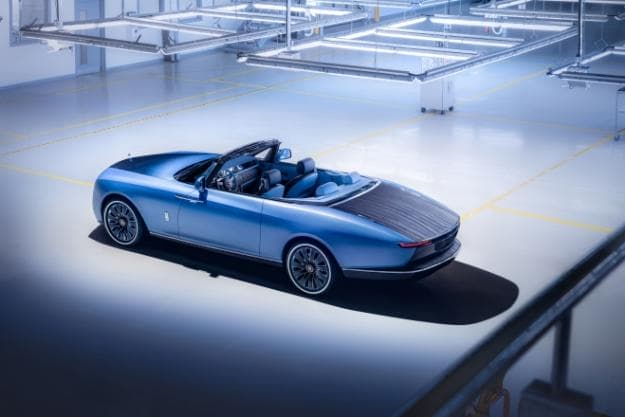
The Boat Tail’s nautical influence is particularly apparent in the car’s aft deck.
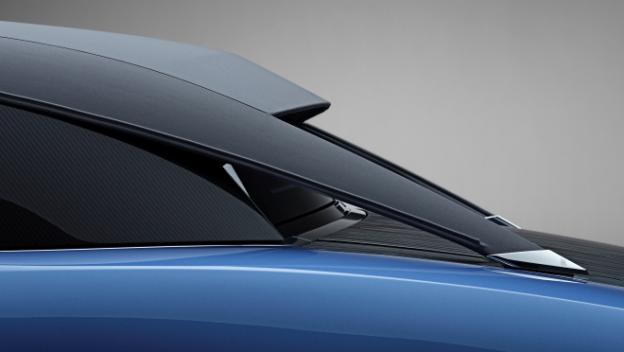
The near 5.8-metre-long behemoth of a grand tourer comfortably seats four occupants and has a removable “canopy” roof. Power is provided by Rolls-Royce’s 6.75 litre twin-turbo V12 engine, the same one used in the Phantom and which puts out 563 bhp.
Speaking of the Phantom, the Boat Tail shares a number of safety elements with its distant cousin. However, with the level of personalisation that went into crafting this vehicle, it necessitated the creation of 1813 bespoke components. Even the design of the venerable 15-speaker Bespoke Rolls-Royce Audio System had to be rethought to make it work with the altered spaceframe architecture. Specifically, the entire floor structure of the Boat Tail is used as the resonance chamber for the system’s bass speakers.
In the rear of the vehicle, sits its most extravagant feature, the hosting suite. To ensure that this signature appointment worked optimally, it required a unique electronic treatment in the form of five electric control units (ECU), which needed nine months of dedicated research and development. When activated, the aft deck lids open to a specific 67-degree angle, revealing two fridges specially designed to store and chill the clients’ favourite caviar and champagne at the optimal temperature.
Apart from food, the hosting suite also has a storage compartment which holds two carbon fibre stools, crafted by the Italian firm Promemoria. In case of rain or excessive sunlight, the Boat Tail even has a parasol which conveniently slots into the aft deck of the vehicle to shield owners from the elements.
Last but not least are a pair of specially crafted Bovet 1822 timepieces, made in collaboration with the Swiss manufacture for the couple which commissioned this particular model shown. To highlight the spirit of collaboration, there is a special slot in the Boat Tail’s dashboard where the watches can be inserted, serving as the vehicle’s clock.
The Boat Tail is a Rolls-Royce unlike any other. It represents the pinnacle of bespoke automotive creation and a spirit of collaboration and ambition never seen before. In the words of Torsten Müller-Ötvos, “Boat Tail is the culmination of collaboration, ambition, endeavour, and time. It was born from a desire to celebrate success and create a lasting legacy. In its remarkable realisation, Rolls-Royce Boat Tail forges a pivotal moment in our marque’s history and in the contemporary luxury landscape.”
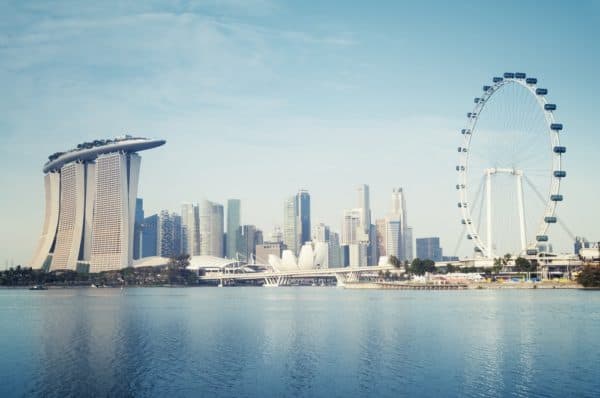
Wealth Magnetism – A Boom Time for Singapore Realty Market
SHARE
Despite the pandemic and slowdown in global economic growth, Singapore’s luxury property market is propelling ahead with robustness.
By Alexander K Shlaen
Our resident luxury expert Alexander Karolik-Shlaen shares why Singapore is attracting wealth and significant pecuniary investments from many global investors, and the Singapore Realty Market is reaping the benefits. The Little Red Dot pulled off its magic yet again with the exceptionally well-managed crisis control. Initially, it wasn’t as clear if Singapore would weather the storm too well, but in no time the true picture of the situation cleared up, especially when compared with other countries’ clumsy Covid-19 pandemic handling.
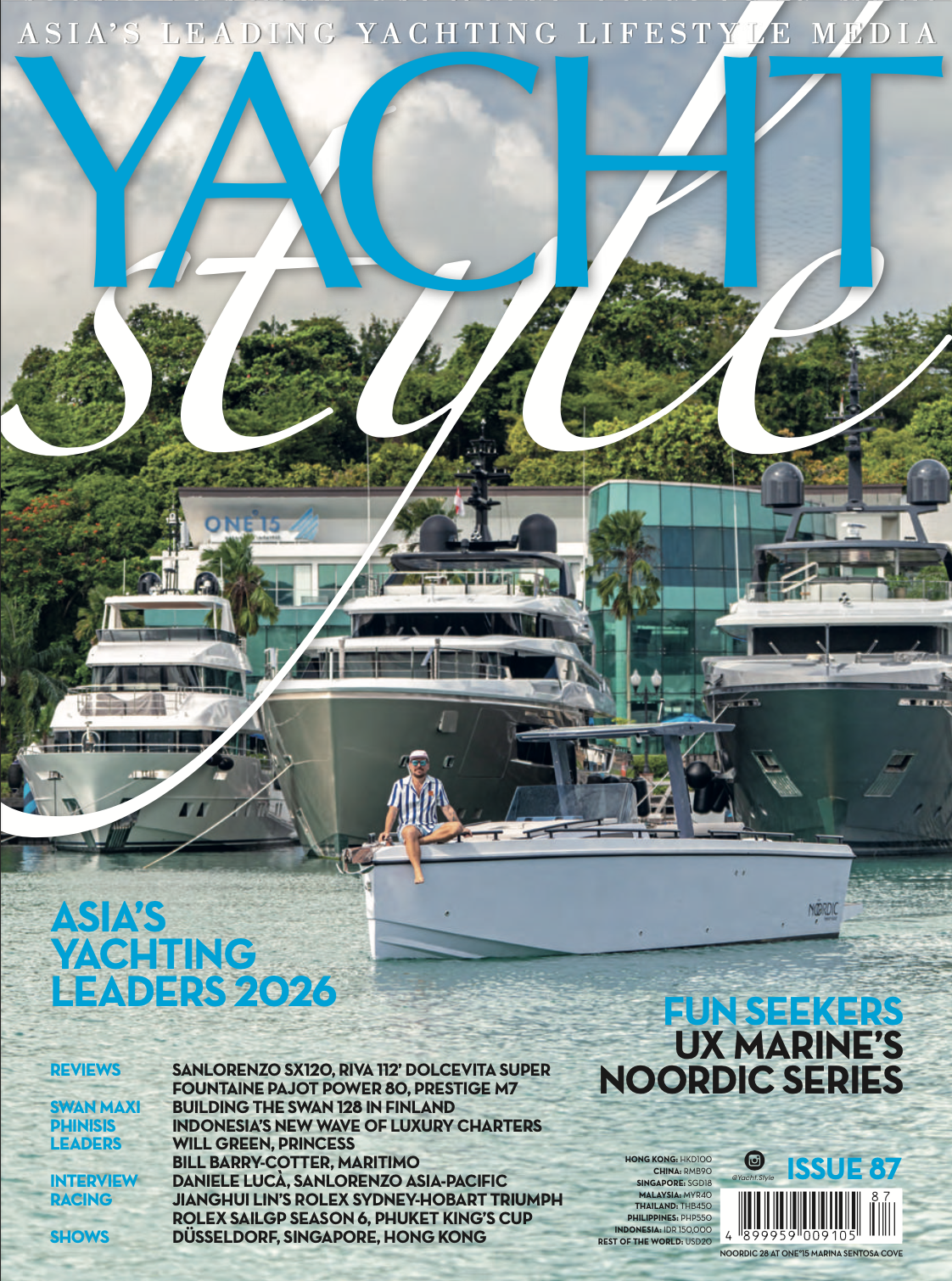
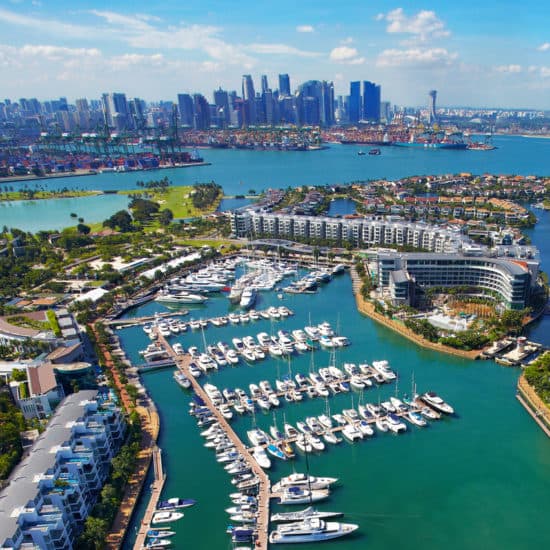
ONE ̊15 Marina Sentosa Cove offers the life of luxury living and yachting
Singapore came out of this crisis with a reinforced image as a top country in the world for safe and comfortable living. This naturally had a major effect on the financial and property markets.
Singapore Property Market’s Resilient Growth Despite non-existent international travel, billions of dollars streamed into Singapore. The residential property showrooms were filled with local buyers, who were purchasing properties in numbers exceeding pre-Covid levels. The grand finale was in December 2020, with sales up 126 per cent compared to a year ago, making this the highest performance in the month of December in eight years.
And to remind you, the foreign buyers are still missing in the showrooms and are mostly absent in the residential property markets. One can just imagine the actual build-up demand for investing in a slice of the Singapore realty market. And that is despite the draconian cooling measures that were applied on the forever-in-demand residential property of this shining beacon of safety and stability in the world.
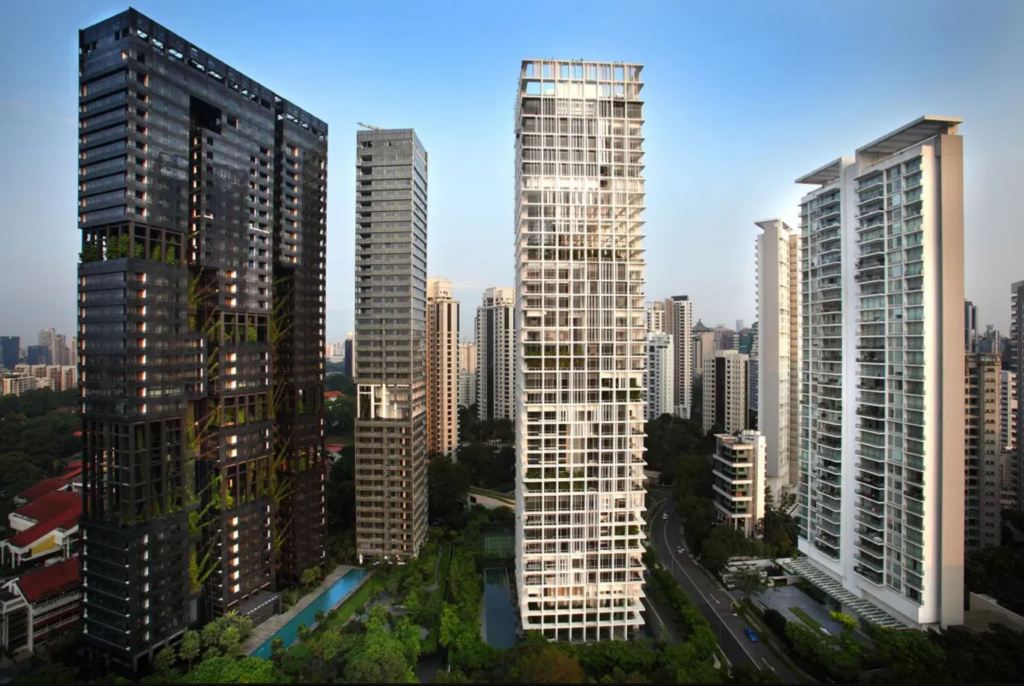
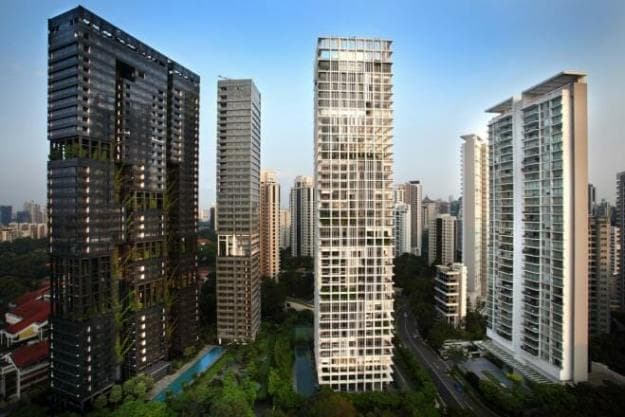
The 43-unit Le Nouvel Ardmore (centre) and the neighbouring Nouvel 18 (left) were designed by French architect Jean Nouvel, attracts many global investors.
Big Foreign Investors On the money front: the Google co-founder Sergey Brin, the world’s ninth-richest person with a personal fortune of USD 86.5 billion, is setting up a family office in the Lion City to manage his wealth. He is one of the latest billionaires to take advantage of Singapore’s low taxes and relative ease to set up and run family offices. Family offices are private investment companies, sort of small private banks, which are set up to manage the assets of wealthy individuals and families. Singapore has hundreds of such offices, that just grow in numbers. These offices are good for the Singapore economy as they employ local people, and the big money is moving to other parts of the economy.
Wooing Tycoons The city-state had become a “magnet” for tycoons from around the world with some taking up local citizenship. One such example is a billionaire Facebook co-founder and internet entrepreneur Eduardo Saverin with a networth of USD 12 billion, who moved to Singapore some 10 years ago. This “magnetism” became stronger in recent years and especially during the pandemic. The more recent arrivals are Ray Dalio, with a networth of more than USD 15 billion, the founder of Bridgewater Associates, who opened a family office in Singapore last November to run his investments and philanthropy throughout the region.
The family office of James Dyson, the billionaire founder of vacuum cleaning giant Dyson Ltd, incorporated in Singapore in late 2019. He has a networth of about USD 11.9 billion, making him the United Kingdom’s second-richest person.
Attracting The Rich Chinese But not only the well-known billionaires from the west move to Singapore with their money. There are many rich Asians, who use Singapore as their base, too, and especially so the super-billionaires from China, such as the richest person in Singapore Li Xi Ting, the founder, and CEO of a company that supplies medical devices. During the Covid period, his worth swelled to USD 18.1 billion, according to Forbes’ Billionaires List, as countries around the world are buying his company’s medical products, which include ventilators.
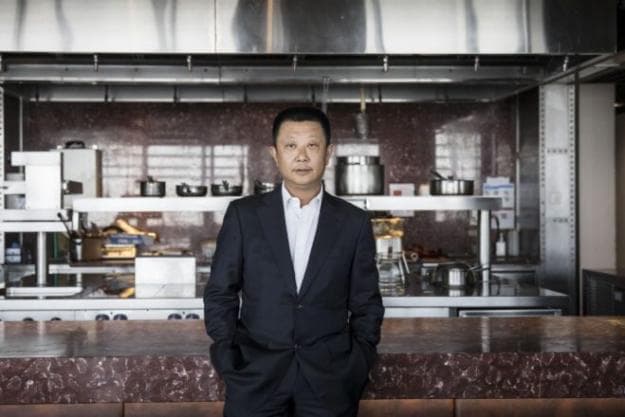
Haidilao founder Zhang Yong topped the list in 2020 for Forbes Singapore’s Richest list
His ex-compatriots, the current Singapore citizens are Singapore’s richest couple. The founders, Zhang Yong and wife Shu Ping are the owners of a spicy hot pot chain Haidilao. They cooked up a storm and with a combined networth of USD 19 billion they own and run two family offices with equally divided sums of money under management.
Rise of Singapore Billionaires Another noteworthy China-born billionaire is the founder of Singapore’s most valuable company, Sea, Forrest Li. His company soared on the stock exchange and so did his fortune, around USD 10 billion, as estimated at the end of last year. There are many other wealthy people who moved their money and their home base to Singapore recently. But not only the uber-rich do it. Many well-to-do people from neighbouring countries and from further afar are moving to Singapore and they know what they are doing as lots of recent ratings confirm the desirability of Singapore.
ECA International rated Singapore as the most liveable place in the world for the 15th consecutive year for overseas workers based on a January 2021 report. The ratings also reflect the city-state’s superior infrastructure, low pollution, and relatively mild and successful lockdown.
Based on Transparency International’s Corruption Perceptions Index Singapore is one of the five least corrupt countries in the world, perfect to woo investors.
Wellington in New Zealand was second. Japanese cities of Osaka, Tokyo, and Nagoya at third, Copenhagen in a sixth-place, Vancouver, Basel, and San Francisco in 17th place, and Hong Kong in 58th pace, to name a few. In Bloomberg’s latest Covid Resilience Ranking list, Singapore is high up on top of the list. According to Transparency International’s Corruption Perceptions Index Singapore is one of the five least corrupt countries in the world, and so on.
All these data points will draw more attention to Singapore markets as the shine of Singapore is now even further accented by the mismanagement of the pandemic in the west and other countries in the world. Read about Singapore’s positive property outlook here.
Raring To Go Singapore’s Deputy Prime Minister and Finance Minister Heng Swee Keat was quoted saying: “Interest rates today are ultra-low, and in some cases even negative, so this can lead to a significant mispricing of asset prices and a significant risk of investing in the wrong places”.
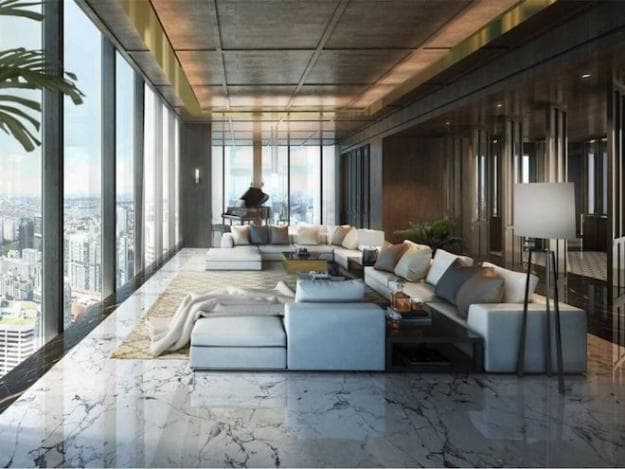
The living area of Wallich Residence super penthouse, attracting big investors like James Dyson to buy a unit there.
This is solid advice for any investor. What has been happening in recent weeks is that following the rumours of further government intervention, many buyers rushed to the showrooms to purchase properties. Naturally, such a situation is contra-productive to all – the buyers and the sellers, as eventually, the markets want to find their natural equilibrium between the demand and supply and remain as free from government intervention as possible. Property is the most desirable type of investment for most Asians. More investors trust property and prefer it over stock markets. Naturally, the quantum of investment in property tends to be the biggest for most people and hence the Singapore government is rightfully concerned that buyers won’t overextend themselves, while investors in financial markets are left to their own devices.
Alexander Karolik-ShlaenAlexander Karolik Shlaen, Executive MBA, is the founder of the Singapore-based Panache Management Pte Ltd which represents Aston Martin Interiors, Tonino Lamborghini Casa and Formitalia design lines in Asia. Panache Management is involved in real estate and technology investment projects and provides luxury interiors and design for exclusive real estate, private jets and superyachts. Shlaen has appeared in various regional and global media and has written the Luxury Expert columns of regional business magazines since 2009. He was also the chairman of the judges’ panel for Asia Property Awards and is frequently sought to attend established business forums. Learn more on PanacheManage.com
Brimming with high-tech features, exquisite interiors and a silk-smooth drive, the new Mercedes-Benz E-Class reimagines the automotive future with unrivalled intelligence and creativity.
From electric mobility to ride-sharing, the automotive industry has had to deal with a few major disruptions. This is not even accounting for environmental roadblocks like compliance with ever-stricter climate targets, fiercer competition, the digital disruption and a global pandemic.
Declining sales figures worldwide are being further exacerbated by Covid-19, which has caused unprecedented damage to many economies. Lately, however, Mercedes-Benz has made a renewed effort to regain the hearts and minds of consumers wondering what the ‘new normal’ for the auto sector will look like.
E FOR EXCEPTIONAL
A pioneer of the automobile, the Stuttgart-based marque often seeks innovations that provide for pleasant, safe and resource-friendly mobility, and in the E-Class, Mercedes-Benz heralded a truly
exceptional vehicle.
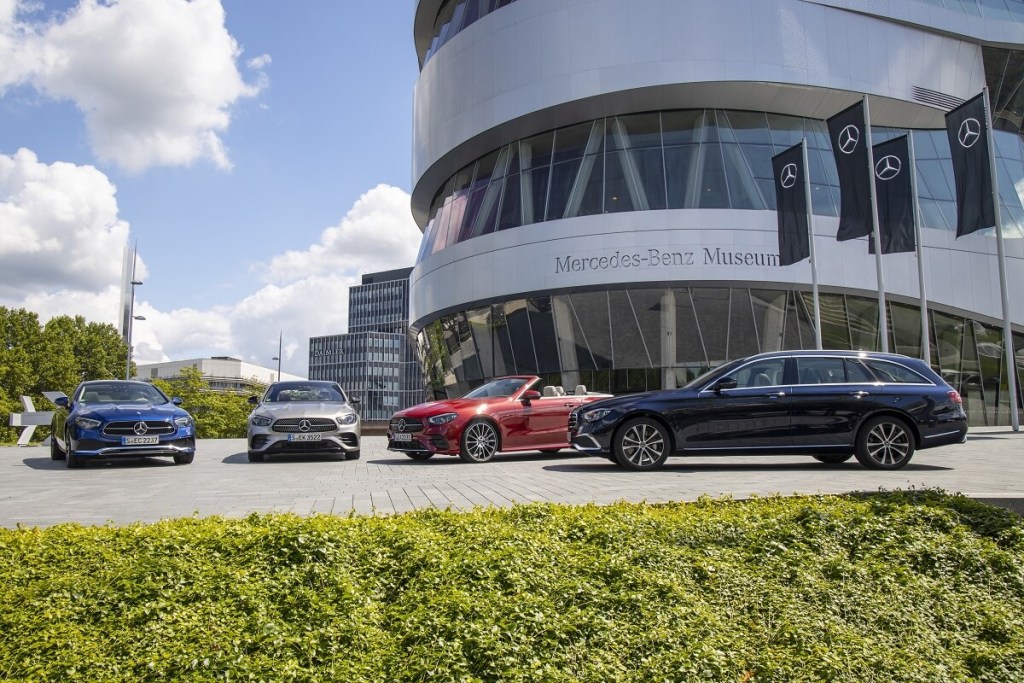
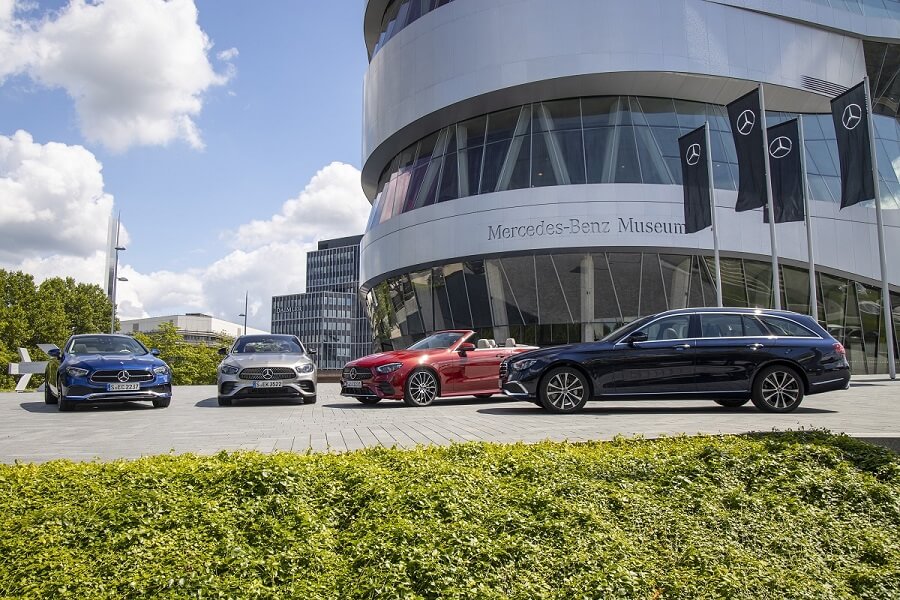
With over 14 million Saloon, Estate, Coupe and Cabriolet models delivered since 1946, the E-Class is the best-selling model series in the history of Mercedes-Benz and perceived by many as the ‘heart of the brand’. Brimming with high-tech features, an exquisite interior, among the smoothest drives ever, the updated E-Class range epitomises sophistication and intelligence.
Most carmakers including Mercedes-Benz have prepared for a shift in production toward electric vehicles, but the real battlefront is coming from what used to be an unrelated sector, information technology, the field that gave us ride-sharing apps.
A new breed of digitally-savvy, ‘connected’ consumers, growing dependent on the new genre of peer-to-peer ride-sharing, is proving to be an even greater disruption to the traditional business strengths of
car manufacturers.
According to business intelligence consultancy Deloitte, CASE (connectivity, autonomy, shared mobility and electrification) technologies are causing wholesale transformation of the global automotive sector.
Although no single development will doom the industry, it is the convergence of these technologies and the backdrop of looming macroeconomic headwinds that will shape global car manufacturing over the next decade.
Considering this, Mercedes-Benz is just one of two German carmakers working on a proprietary operating system that will run not just its own infotainment system but also crucial elements of the driving experience, including self-driving features and battery management.
Speaking to the Wall Street Journal, Chief Executive Ola Källenius said: “The interface with the driver is not something that we would like to outsource to somebody else.”
Indeed, a leading search engine provider is currently trialling its own autonomous smart vehicle (yet another threat) and continues to refine a vehicle-centric edition of its popular smartphone software, CEO Källenius is right to not want to cede control of such a crucial element of the driving experience.
After all, less than a decade ago, app companies like Uber weren’t even on anyone’s radar and today, they’re largely considered one of the biggest disruptors to car ownership.
SENSUAL PURITY
The designers in Stuttgart had conceived of a philosophy of sensual purity, a delicate balance of aggressive masculinity and the sensuousness of well sculpted, seamless elements – think the physique of bodybuilder meets male gymnast.
It’s these unexpected moments where high-quality materials snuggle up to gently curved trim parts, which run like waves from the dashboard to the doors. Or the flex-worthy power domes which capture the power and stance of the E-Class, matching other bold and eye-catching elements in the grille and wheels which truly sets this range apart from anything else on the market.
The stimulating contrast of the new E-Class is achieved via creative use of materials, colour and form in places one might not expect. Inner beauty matches its exquisite exterior as you find yourself in the embrace of inviting leather seats in both the driver and passenger sections.
These comfortable environs make ample and intelligent use of proportions and design to achieve a sense of energy and harmony that permeates every fibre of the E-Class from frame to wheels.
Arguably, the most enlightened aspect of E-Class aesthetics extends to the ability of the designers to join two opposing concepts like freeform and geometry. Mercedes-Benz accomplishes an aesthetic challenge simply by applying these philosophies in different areas of the car.
The core of the car uses “clear, comprehensible shapes” (geometry) while the styling embraces “sensual, sculpted surfaces” (freeform).
If eyes are the windows to the soul, then the E-Class possess ‘eyes’ (read: headlights) which telegraph a sophisticated automotive spirit, creating a visage for the E-Class that is alluring yet powerful with refined, precise and sculpted ‘windows’ that peer deep into the heart of Stuttgart’s latest magnum opus.
It’s hard to deny the natural chemistry and undeniable attraction you feel when you gaze upon the E-Class’s natural perfection; an alchemic composition of haptic materials, colours and moods, combined with surprising muscular forms evocative of a crouched panther rearing its haunches, its power tamed under your control.
MORE DRIVER-CENTRIC
While the Mercedes-Benz operating system, MB.OS, is not expected to manage Mercedes’s automobiles until 2024, what the new E-Class demonstrates today is an automotive future not unlike the one presented with the world’s first smartphone – the iPhone.
With the E-Class, screens have become the heart of the driving experience. The widescreen cockpit includes two 12.3-inch screens (media display touchscreen and instrument cluster) and transforms Mercedes-Benz’s latest car into a bona fide smartcar.
Instead of the old rotary dial controller, you get touchscreens and a touchpad on the centre console, including a built-in voice assistant, not unlike Siri. But these are just ‘dressing’ on the core of the E-Class experience: a truly evolved driving experience.
Yes, the E-Class is currently fully mapped for Apple CarPlay and Android Auto, but the marque is pushing for all-round driver satisfaction with their eventual OS. It used to be that mere weight or pressure on the steering wheel alerted the car to your presence, but now the new E-Class steering wheel features capacitive hands-off detection: a two-zone sensor pad in the steering wheel rim where sensors on the front and reverse sides of the rim register whether the driver’s hands are on the wheel.
If the system detects that the driver does not have their hands on the steering wheel for a certain time, a warning cascade is started, which finally activates Emergency Brake Assist if the driver continues to be inactive.
DIGITAL DEVELOPMENT
Awkward manual controls have also disappeared. Mercedes-Benz embraces the future with capacitive Touch Control buttons integrated into the steering wheel spokes. Thoughtfully arranged jointless control arrays are divided into functional groups, allowing intuitive operation using swiping gestures and pressing the familiar symbols, much like touch impulses on a literal smartphone.
User friendliness and thoughtful, intelligent choices permeate every inch of the E-Class right down to its leather fibres (we’ll get back to that).
With the latest generation of Mercedes-Benz driving assistance systems providing cooperative support to drivers, you don’t ‘drive’ the E-Class but rather ‘command’ it. Digital solutions such as the networking of safety and assistance systems ensure the E-Class is arguably the most intelligent saloon in its segment. The new E-Class actively assists the driver when things get critical to prevent unfortunate outcomes.
Alongside an enhanced multi-purpose stereo camera behind the windscreen and new multi-stage radar sensors with adjustable range and opening angle around the vehicle, the numerous networked sensors include ultrasonic sensors and the 360-degree camera’s lenses provide the on-board systems with a continuous stream of data, allowing analysis of complex traffic situations.
When the Active Distance Assist DISTRONIC with route-based speed adjustment is turned on, the E-Class is able to respond to Live Traffic Information before the driver, radar or camera sensors are able to detect a traffic obstruction.
In short, the raw intelligence of the E-Class provides better detection of potential dangers on the road, further enhancing the functionality provided by the safety and assistance systems. This results in an especially high level of active safety – the vehicle is able to react intelligently and rapidly if the driver fails to respond.
Like the Emergency Brake Assist, Active Brake Assist uses satellite and sensor data on the movement of the traffic ahead and can use autonomous braking when necessary to prevent a collision or mitigate its severity.
The system is also able to brake for stationary vehicles and crossing pedestrians at typical city speeds and even to prevent collisions, depending on the situation. While massage functions in the car seat are still rare, they’re a common enough feature in premium offerings for many luxury carmakers.
However, what really takes the cake is something the maker of the new E-Class calls “seat kinetics”. The driver’s seat actively conforms to your body and on longer drives, makes a variety of subtle yet crucial shifts to alleviate discomfort arising from being in the same seated position for so long.
A touch interface allows you to make ‘shaped’ adjustments by allowing you to ‘draw’ your desired seat posture on the screen allowing for maximum comfort.
EXTRAORDINARY FUTURE
Based on an intelligent algorithm that approaches some semblance of artificial intelligence, the new E-Class is also able to make driver comfort recommendations according to biofeedback data retrieved from appropriately compatible Garmin wearables. Personal values such as stress level or sleep quality optimise the precision of the comfort control programmes’ recommendation.
Via the Mercedes me App, the smartwatch sends vital data of the wearer to the vehicle, such as pulse rate, stress level and sleep quality, ensuring the driver feels well and relaxed even during demanding or Depending on driver stress levels, Mercedes-Benz’s astute ‘Energizing’ programmes are active for 10 minutes. They are visualised on the media display with colour graphics and backed by suitable music and lighting moods, the latter provided by ambient lighting.
Contemplative and considerate, the new Mercedes-Benz E-Class teases at an extraordinary future beneath its clean yet emotionally appealing design.
The wealth of innovations in the driving assistance systems make an incredible counter-argument to one of the company’s harshest critics, Mark Wakefield, an industry analyst who commented: “There are a lot of economies of scale in software development. Auto makers who want to get more programmers and do the work themselves are generally underestimating the costs.”
What begins to be clear is that at Mercedes-Benz, there can be no price to sheer driver-centrism. Today, more than 1.2 million customers around the world have bought a current-generation E-Class Saloon or E-Class Estate, showing that this complete package of emotional appeal and intelligence is undeniably successful. And getting better. www.mercedes-benz.com
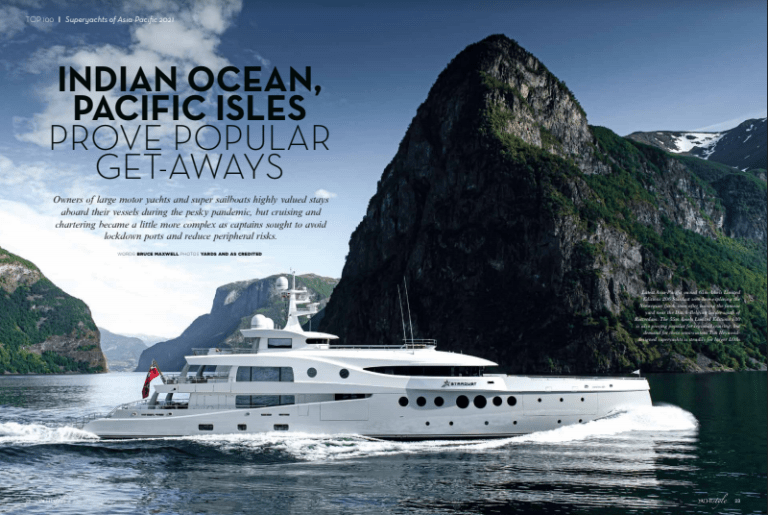
Actor Hugh Bonneville presents the British builder’s ‘Famous Five’ new models in a 12-minute video that includes the yachts cruising in formation off the coast of Dorset.