Here’s everything you may have missed from GRAZIA Singapore’s sparkling launch party
By GRAZIA SG
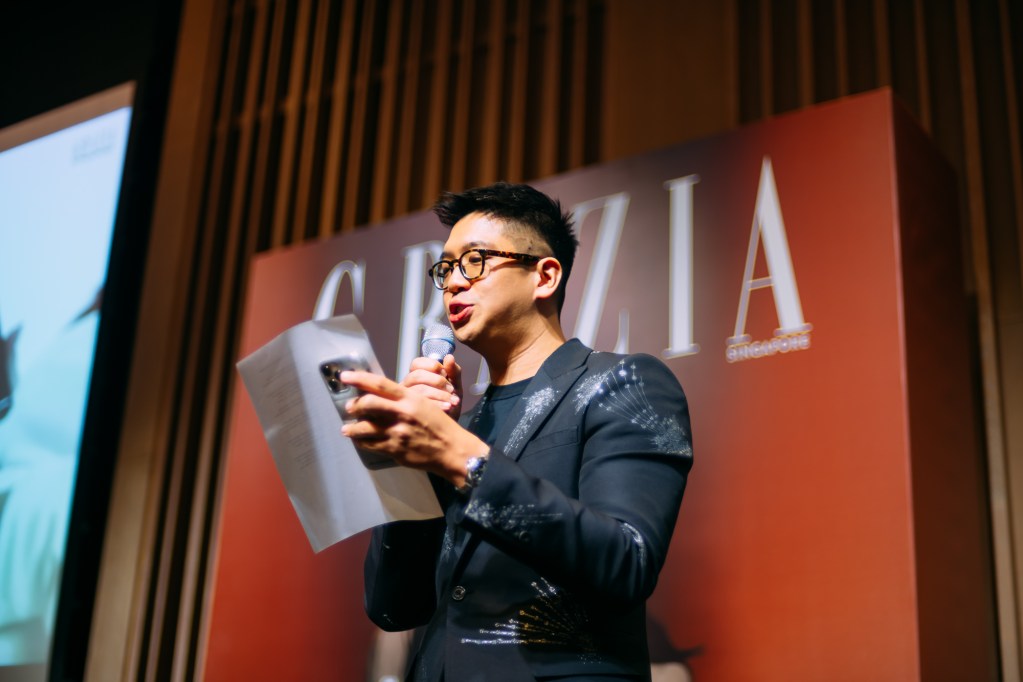
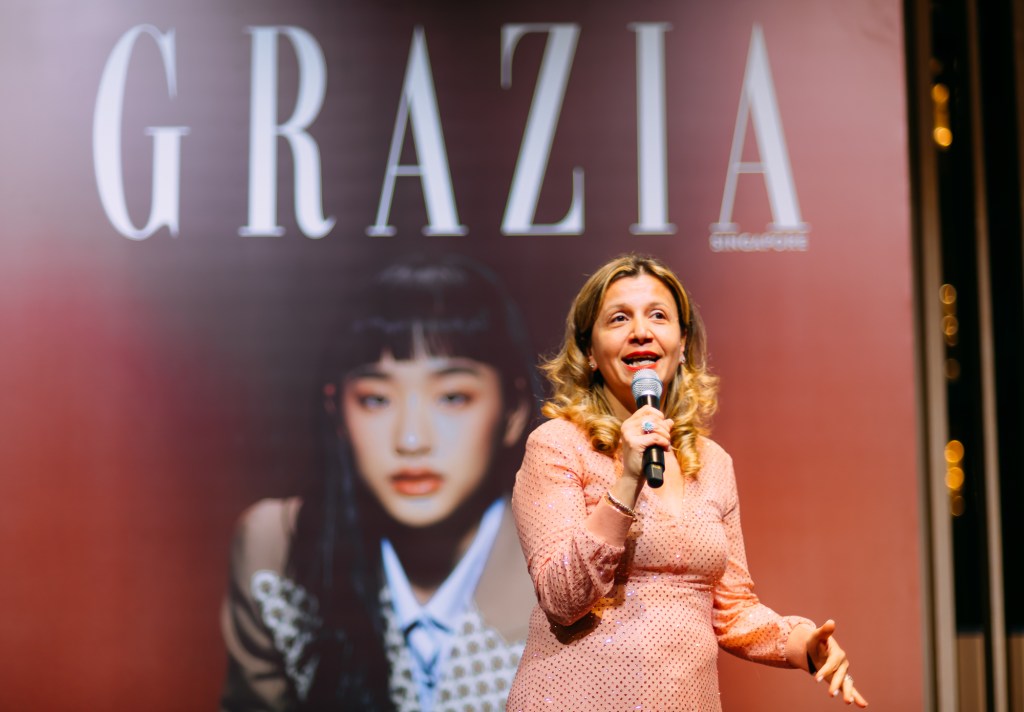
Legendary magazine brand GRAZIA made its official debut in Singapore last night at the Andaz Singapore. In the presence of His Excellency, Mario Vattani, Ambassador of Italy to Singapore and Brunei Darussalam, Daniela Sola, Chief Executive Officer of Reworld Media Italia Srl, and Olivier Burlot, CEO of Heart Media, over 400 attendees from the worlds of fashion, beauty, design, technology, finance, and more, came together to toast the inauguration of Singapore’s newest fashion and luxury title.
Mario Vattani, Ambassador of Italy to Singapore and Brunei Darussalam
We are delighted to welcome GRAZIA in Singapore: we look forward to a partnership with this iconic Italian magazine. From this strategic hub in the whole region, GRAZIA—who already counts on millions of readers in more than 20 countries—will broaden its reach in Asia, bringing Italian lifestyle, fashion and design to a refined and well travelled public who loves the quality and excellence of our (products) made in Italy,” said Mario Vattani, Ambassador of Italy to Singapore and Brunei Darussalam.
Guests were lavished with a celebration of all things Italian for the evening, including a special performance by opera singer Rony Jorge, who belted out classic Italian ballads at the start of the evening; a summery GRAZIA gelato stand; drinks from Campari and Cointreau; stilt walkers; a 360-degree video photo booth; a souvenir photo stand that turned guests into GRAZIA cover stars; and a special set by one of Singapore’s star DJs, Eden Cai, who spun well into the night.
“It is our immense pleasure to introduce this historic fashion title from one of the world’s top fashion capitals to the Southeast Asian region, alongside our sister publication in Malaysia, and to carry its proverbial flame to our bustling part of the world. Our vision for GRAZIA Singapore is to inspire and provoke our readers with bold, compelling content powered by purpose, shining the spotlight on Asian talent in fashion, beauty, culture and beyond, from every part of the world,” said Pakkee Tan, Editor-in-Chief of GRAZIA Singapore.
See all the images from the sparkling launch event here:
Most Expensive House in London on Sale for £250 Million
SHARE
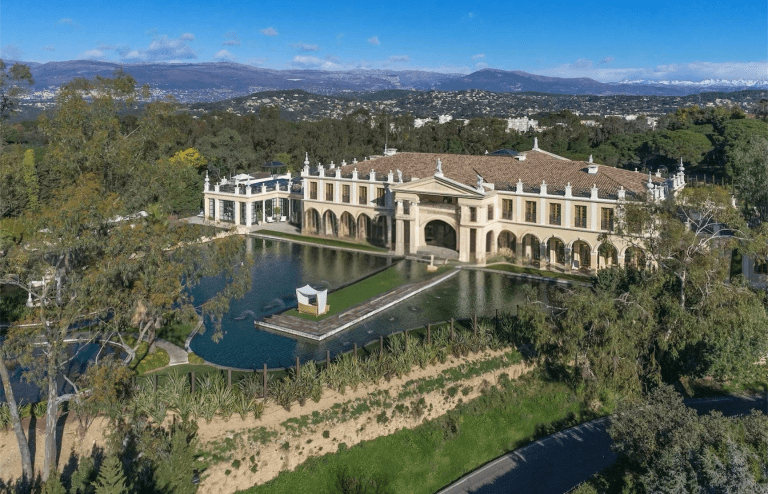
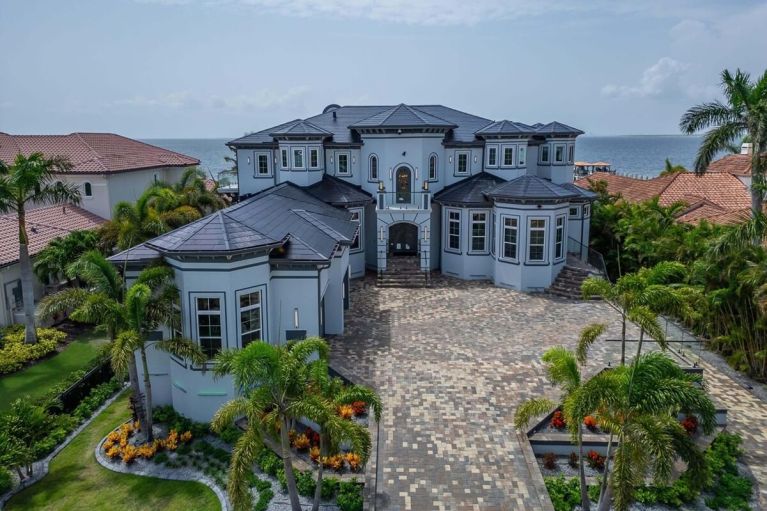
Once owned by the Saudi Royal Family, the Holme is a four-acre mansion located on one of London’s royal parks — Regent’s Park.
By Joseph Low
The Holme, a four-acre mansion located in London’s Regent’s Park, is set to become the city’s most expensive property and the world if it finds a new owner. As reported by the Financial Times, the property has been listed on the market for an asking price of £250 million. This staggering price edges out strong contenders such as the £210 million 2-8a Rutland Gate property on Knightsbridge and the US$250 million penthouse atop Central Park Tower to claim the title as the most expensive abode on the market.
With 40 bedrooms and an impressive 29,000 square feet of living space, the estate is easily the top choice for those searching for a family home where members can gather during the holidays. Apart from the countless rooms, The Holme boasts eight garages, a tennis court, a library, a sauna and a grand dining room. Also on the property is an ornamental lake, a sweeping lawn and lush greenery.
Located on one of the eight royal parks in London, the Holme is expected to attract bouts of wealthy buyers from the city and overseas. According to Quartz, “The London housing market has been attracting an increased number of international buyers, with foreigners purchasing 48 per cent of real estate considered ‘prime central’ in the city last year.”
This strong sentiment among the world’s wealthiest serves as a strong contrast against the rapidly declining market and rising inflation rates across the world. Despite these unfavourable conditions, the rich are still making big purchases and this demonstrate how the wealthy considers property an essential aspect of diversifying one’s portfolio.
Designed by Decimus Burton, a prominent 19th-century architect, in 1818, the property typifies a Regency-style building. It also has Ionic influences as seen from the slender columns on the patio. The first owner was James Burton and more recently, the ownership could be traced to the Saudi royal family when it changed hands in 1998.
It was reported that the mansion was repossessed after a loan of US$180 million expired. Receivers also seized other assets including a private plane and a property in New York. The sale of the Holme, with its high asking price, would be the quickest way to repay the loan. The massive house is on the market with Beauchamp Estates and Knight Frank.
Johanna Monange, Founder of Maison 21G Shares Her Business Philosophy
SHARE
“My mission: become the n°1 tailored perfumery brand globally and empower everyone to create their own perfume”
By Joseph Low
What led you to create Maison 21G and tell us more about the innovative concept of bespoke perfumes?
Evocative, distinctive, and memorable, I deeply believe that the fifth sense inspires profound emotions and connections with others. Your signature perfume is so much more than a mere accessory; it is a true extension of your personality, a tool to imprint memories, and bring confidence throughout key moments of your life. As such, I believe that your scent should be as unique as you are!
In 2020, I conceptualised Maison 21G, supported by my passion and 25 years of experience in perfumery as a creative director working alongside renowned designers and perfumers. Throughout this time, I watched this beautiful industry lose its soul and settle for one-size-fits-all scents, creating the same everyday floral, fruity, and gourmand scents for everybody, while pushing huge marketing campaigns at the expense of quality, distinction, and character of what is inside the bottle. I felt that something was going wrong in this beautiful industry, so I decided to break free from the glamorous corporate world and shake the conventions of this sleeping industry.
My vision was to bring back the “power of creation” into the hands of consumers, offering a unique and engaging scent discovery experience. Committed to a cleaner perfume industry, I was driven by a desire to bring transparency, sharing, education, and sustainability to make a better perfumery world for the next generation. My ultimate mission was to recreate a real “Maison de creation” for all of us, creating a unique experience with beautiful scent encounters.
The concept of “experience” is key for opening and running a boutique. What is a successful “experience” for your customers?
Maison 21G is a luxury Maison of Creation with modern iconic flagship stores worldwide, using a poly-sensorial approach to create a unique retail experience. We aim to create a luxury experience in perfumery like no other for our customers. We inspire confidence, self-expression, and exploration in perfumery, with a poly-sensorial approach. With 10 flagship stores across the world, every corner of our boutiques is meticulously curated with a series of dedicated zones such as our famous innovative scent bar to discover and choose your ingredients, the perfumer organ where consumers blend their own scent, and our private atelier’s areas to learn the art of creation.
We also continually seek new technology to enhance our experiential retail offerings. For instance in line with our commitment to innovation, we offer a unique AI personality quiz. Our open app collect information such as your skin tone, your scent preference, your values in life, and your desired benefits to recommend well-matched scents for each individual. Our RFID Technology informs and educates shoppers on the origins, the olfactive profile and properties of our scents.
After creating their custom scent, customers can add a personal touch by using our complimentary UV Printing Machine to customise their perfume bottle design. In addition, we provide perfume workshops for couples, team building events where our scent experts guide clients in creating a personalised fragrance in one hour by appointment.
Our experiential retail space encourages cross-cultural exchanges. And customers come together to share ideas and cultures, pushing the envelope of creativity. Maison 21G is committed to disrupting the luxury industry by creating a community of fragrance designers, connoisseurs, aficionados, or novices in every major city in the world, driven by a unique offline retail experience, relayed by a strong digital presence to complete the offline experience with a dedicated loyalty program, and automatic reorder services for your personalised scent from anywhere in the world.
The personalisation of scent is at the core of Maison 21G’s concept? What are the parameters that go into determining a bespoke fragrance?
Maison 21G is a brand that prides itself on its commitment to craftsmanship, personalisation, education, and experience. At the heart of our business model is the desire to create bespoke fragrances that are tailored to the unique personality and olfactory preferences of each of our customers. Our flagship stores serve as laboratories, where highly-skilled scent designers guide customers in their scent creation, ensuring that their personalities and preferences are considered at every step of the process. We believe that a perfume is much more than just an accessory. It is personal, intimate, and becomes your voice to express your unique identity. This is why we offer our customers direct access to perfume concentrates with the highest percentage of fragrance concentration to make tailor-made haute perfumery accessible.
The process of creating a bespoke fragrance at Maison 21G is interactive, engaging and fun: we begin by asking customers to fill out our personality quiz, which focuses on their values in life, personal DNA (nationality, skin colour, age), likes and dislikes related to their olfactive preferences, and the reasons they want to wear a particular perfume (to be seductive, elegant, outstanding, relaxing, etc.). This builds a customer scent profile that is unique to their identity. We have defined five unique personality profiles, each with its own distinctive ingredient recommendations. For example, an “Impressive personality profile” will need a perfume that projects strongly, with long-lasting sillage, and features bold woody, oriental, and spicy notes. A “Social Enthusiast Profile” on the other hand, will be more drawn to softer, comforting, and caring notes such as musk, vanilla, and light juicy fruits.
With the use of cutting-edge technology, leveraging AI alongside more traditional skills, we are revolutionising the perfume industry by understanding the needs and tastes of each nationality, culture, and generation. The more customers we get, the more powerful our AI becomes, and the more precise the recommendations reveal themselves to be. As a bottom-to-top approach, we’re able to learn instantly from our customer base and answer immediately to new consumers trends in each capital like Seoul, Shanghai, Paris, and elsewhere. It’s a game-changing approach for the perfume industry, and the more we grow, the more knowledgeable and concise we are able to become in tailoring scents to individuals.
Workshops are at the very core of the Maison 21G DNA. What is your favourite memory of a Maison 21G workshop you organised in 2022?
We believe in the power of scent to bring people together, and our workshops are designed to offer an unforgettable and unique sensory experience. It’s a fun and exploratory experience, where people can reconnect, share, and learn about each other through scent.
One of my favourite memories is from a Love Atelier that we organised in 2022. During this workshop, the couple had the opportunity to take their love to the next level! A young man surprised his girlfriend with a marriage proposal. He had asked the scent designer to print “Marry Me” on the bottle that he had created for her. As he presented her with the bottle, he got down on one knee and revealed a ring hidden inside the box. The entire room was moved to tears by this romantic gesture. In that moment, I was reminded of the power of scent to create deep and meaningful connections, and I was grateful to be a part of such a special moment in their lives.
Tell us more about the sustainability efforts behind all the packaging and glass bottles used at Maison 21G? You seem to be amongst the very first luxury houses talking openly about recycling and the reuse of perfume bottles.
At Maison 21G, our sustainable pillar is integrated into everything we do. Our focus on eco-consciousness, ethical and clean production and distribution, is part of our commitment to excellence, quality, and luxury. In an industry where the use of buzzwords and marketing jargon to ‘greenwash’ products is rampant, we strive to be transparent, honest, and open about our sustainability practices.
To achieve our sustainable goals, we have partnered with IFF-LMR (Laboratoire Monique Rémy) to source the highest quality of perfumes. IFF’s vertical integration allows us to control every step of our ingredients supply chain, and its adherence to specific sustainable and clean criteria, including environmental responsibility, fair working conditions, and positive relations with local communities.
At Maison 21G, we pride ourselves on being transparent and open about what we include in our bottles and what we don’t. Our scents are 100 per cent vegan, cruelty-free, CMR-free, paraben-free, phthalate-free, and preservative-free. We also formulate our scents as biodegradable to reduce our environmental impact.
We believe in creating products that are recyclable and refillable. We have banned the use of plastic in any of our products. We are the first company to have refillable bottles, encouraging shoppers to reuse their bottles, with discounts and incentives for those who reuse, recycle, and reduce their waste. By committing to eco-consciousness, ethical production, clean sourcing, Maison 21G is taking steps towards a greener future for all.
You have expanded your product range and Maison 21G now offers within its boutiques perfumed candles, the very start of an elaborate home scent collection. How is it performing?
The pandemic brought unprecedented changes in our lifestyles, with people spending more time at home than ever before. At Maison 21G, we recognised that consumers were looking for ways to make their home environment more comfortable, inviting, and reflective of their personalities. This inspired us to launch our sustainable, natural, and customisable Home Scents range, and we’re delighted with how it has been embraced.
Our Home Scents range was launched with the same bold and disruptive approach that characterises our perfume range, and is underpinned by a commitment to wellness, including all-natural ingredients that can help customers relax, focus, and sleep more effectively. We believe that people deserve to unlock the scent of their soul, and our Home Scents range is designed to make that process easy, enjoyable, and eco-conscious.
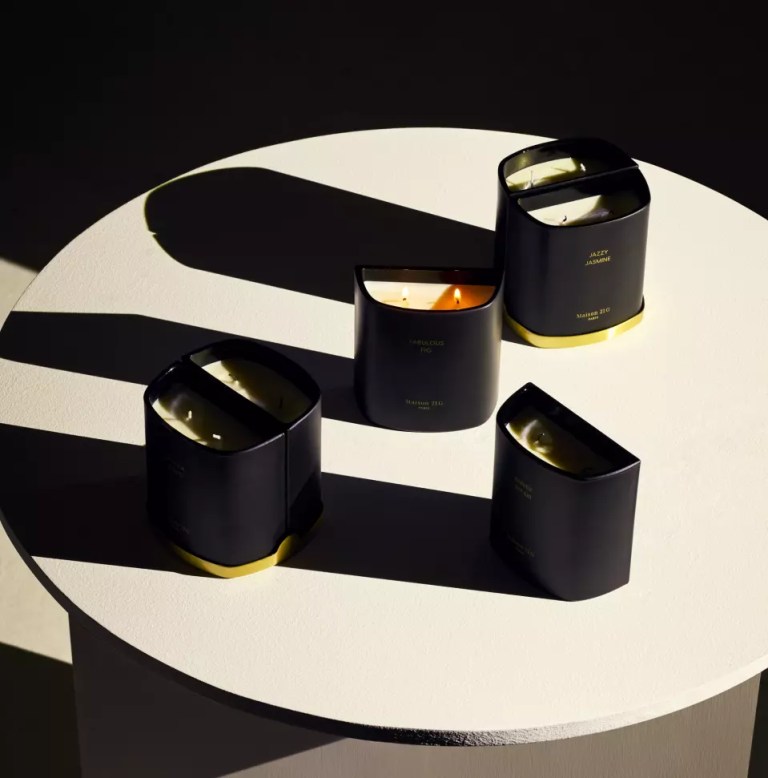
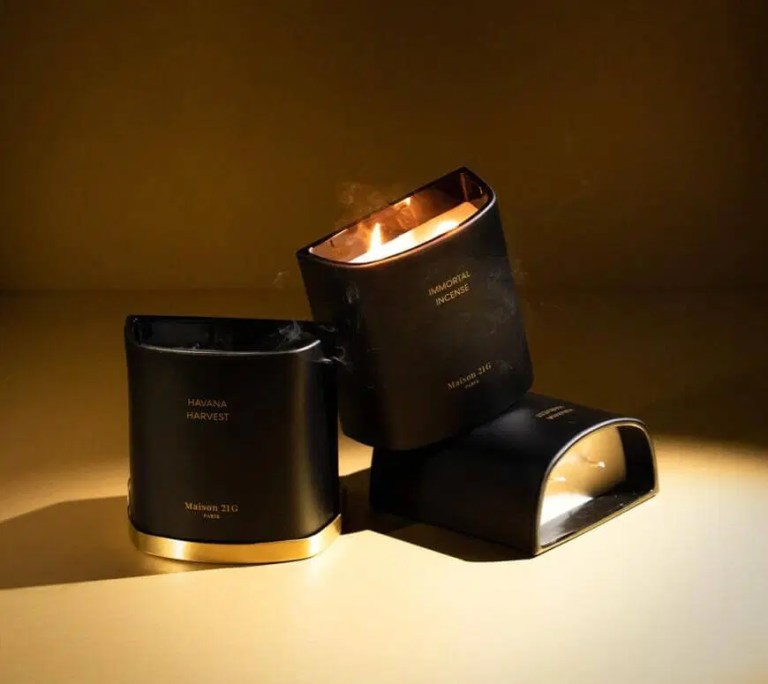
The collection includes our beautiful 100 per cent natural wax Dual Candles, Bespoke biodegradable Reed Diffuser, and natural Oil burner which allow customers to choose and combine their favourite scents in stylish and luxurious decorative objects, a premiere in the Home Scent world. As with our personalised perfumes, we put the customer at the heart of the creation process and set it apart from all of our competitors.
We believe that the knowledge to create a beautiful, healthy Home Scent for the whole family, should be accessible to everyone. E-commerce is rising fast across all continents. We see your team working hard on increasing the global digital presence of Maison 21G. How are online sales performing for you?
Maison 21G’s experiential online e-commerce completes the offline experience with a dedicated loyalty programme and automatic reorder services for personalised scents from anywhere in the world. We offer bespoke creative experiences to anyone, anywhere, with our DIY creative set, which we can send to any location across the globe. Our fully customised website allows a unique and playful creative experience at home.
Our lead magnet, the AI-Powered Quiz, guides consumers in creating the perfect scent combinations online based on their personality, culture, age, and different desires for a perfume, such as freshness, elegance, and seduction. The dual-scented crayon allows people to try mini scents before purchasing a full bottle. Today our perfume fans online who cannot access to our shops have grown significantly. A lot of people are tired of off-the-shelf scents and have leapt at the chance to craft their own scents from sustainable and high-quality ingredients on our bespoke website. Our brand promise of natural, clean, and ethically sourced essences has resonated strongly. Our core customer base consists of Millennials and Gen Z consumers from Asia, US, Canada, Australia, and Europe, seeking personalised products with an experiential edge online. Through various activations with online campaigns, direct marketing, and a dedicated, inclusive, engaged, and active community of scent designers, we have built a loyal customer base that shares our passion for creativity, quality, and sustainability.
Tell us about your latest expansion in the Middle East with the opening of a boutique in Dubai and a long term partnership with the Chalhoub group. This all sounds very promising!
We’ve been thrilled with the responses from the Middle East consumers since we launched Maison 21G. Fragrance is purely ingrained into their culture, and it is amazing for me to express the DNA of my brand there. I am personally passionate about the Middle East market, and we have exciting plans for the region with the support of the prestigious and professional Chalhoub Group.
In Dubai, I’m always inspired by the diversity of cultures and the natural creative instincts of the people I meet. They are so trendy and take amazing care of their image and scent identity. Dubai has no boundaries, and I love the grandiose and multisensory experiences found at every corner of this buzzing international capital. We’re looking to expand our presence in Dubai but also Abu Dhabi, with a focus on opening more stores in key selective top locations like Bloomingdales, Tyrano, Malls of the Emirates, and beyond.
In Qatar, we’ve just opened a beautiful flagship store in the brand new luxurious mall of Vendome, next to all the most luxurious brands. We’re now expanding and have established partnerships with prestigious stores such as Printemps, Galerie Lafayette, and Harvey Nichols, with a creative scent bar concept. We’ve been overwhelmed by the kindness and passion of the people for our beautiful ingredients and experiential concepts.
My biggest challenge now is to conquer Saudi Arabia, with the opening of our flagship store in Nakheel mall. We know it’s a demanding market in terms of quality and service, with a large base of perfume connoisseurs and aficionados. However, we’re confident that we have everything at Maison 21G to make an impact there. I’m personally involved in every aspect of the store opening, and we’re committed to providing the highest quality products and services to our customers in Saudi Arabia and across the Middle East.
Perfume is an inseparable part of Middle Eastern culture. What attitude towards perfume have you noticed amongst Middle Eastern consumers?
The Middle East is revered to a high degree and perfumery rooting in historical practices. For instance, the Persians were the first to use distillation in extracting oils from flowers to create beautiful essences that only Middle Eastern people have the culture to appreciate. Who would’ve known that decades, centuries later, perfume application still remains an essential ritual in their daily lives.
Renowned for the most fragrant of traditions — smouldering incense, burning bakhoor, using ritualistic essential oils, and fragrant teas — it is no wonder why the language of scent creation applies on many levels in their culture. From a spiritual way to anoint oneself before prayer to epitomising a personal fingerprint, deep memories of their life, a statement of themselves; perfume is a powerful tool in characterising one’s individuality here.
With surely the strongest olfactive preferences globally, the residents of the Middle East seek a bold, unique scent and definitely above-average longevity. Moreover, their traditional approach includes layering multiple opposing scents. Most prevalently, they use spices, earthy patchouli, deep resins and amber, sensual oud, floral rose Taif, all to create the most elaborate, exclusive, and astounding compositions unique to themselves, which they can find at Maison 21G. Our concept of creating your own perfume is perfectly adapted to Middle Eastern consumers who have been layering and mixing scents for decades. They appreciate the art of perfume making and have a deep understanding of the complexities of creating a unique scent that reflects their personality and style.
After opening boutiques in Vietnam and South Korea, what is your next important projects and developments across 2023 & 2024?
South Korea is a key market for Maison 21G in Asia and success in this country can have a significant impact on our brand’s reputation and expansion in Asia. Because South Korea is known for being a trending market for luxury brands, achieving success there can set the tone for the rest of Asia, including countries such as China, Thailand, and Vietnam. Consumers in these countries may be more likely to pay attention to a brand that has already proven itself in the competitive South Korean market.
Next for me is to continue expanding my brand selectively in Asia with experiential retail, sustainability, and education. I am committed to opening more flagship stores, shop in shop in luxury department stores, counters in duty free spaces, to bring our unique experience to every major capital.
My next biggest challenge for 2023-24 will be China where we have a very ambitious plan with Eternal group. We’ve already opened a beautiful store in Hainan with Lagardere and will soon be opening flagship stores in Shanghai and Shenzhen, as well as partnering with trendy distributors who understand and can express our brand DNA. To reach trendy Gen Z and Millennials, we’ll also focus on digital platforms like Tmall, Weibo, Little Red Book, and WeChat, translating our AI quiz and promoting our hero products in Chinese.
In China, consumers have a relatively short history with perfumery and are eager to learn about the ingredients, discover their preferences, and develop their own scent style. They’re also interested in learning about perfumery tips and tricks, including what scents to wear for different occasions and the differences between high- and low-quality perfumes. The trend towards niche perfumery in China reflects a desire among consumers to express their identity and individuality through fragrance, as well as a growing appreciation for high-quality, artisanal products. This trend is partly driven by a desire to stand out and be different from the crowd, with unique fragrances that cannot be found in mass prestige perfumes. Chinese consumers are also increasingly interested in unconventional scents with characters that allow them to express their edgy style.
To adapt to these different expectations, Maison 21G will tailor our marketing approach and services to Chinese consumers. This is the strength of our personalised approach, which is not only tailored to the individual but also to the culture and context. We put high effort into localising our approach, considering the cultural and historical context of perfumery in each market and how this influences consumer preferences and behaviour to succeed worldwide. The era of “one-size-fits-all” perfume and super-centralised marketing is definitely over, and I am excited to be at the forefront of this new approach to the industry.
Where do you see Maison 21G in five years down the road? Any IPO planned ahead?
Become the number one tailored perfumery brand globally.
The brand aims to challenge ready-made products and establish a new segment in the fragrance industry: the Tailored Perfumery segment — after the surprise of Niche Perfumery. We intend to have iconic Houses of Creation in key fragrance capitals worldwide to install this new segment via the brand’s strong credentials in design, innovation, and sourcing new natural ingredients for our scent designer community.
We continuously improve our service and training of Maison 21G scent designers, possibly building an academy of perfumery to share knowledge and expertise. We have projects in Web3 to tokenise our unique perfume creation recipes, which will prevent copying and grant ownership to our loyal customers, preserving their creativity at Maison 21G.
We also plan to partner with other industries such as art, culinary, music, hotels, and mixology to create polysensorial events.
To support the vision and mission, Maison 21G will continue to raise smart money with bigger investors to challenge the traditional perfume industry, gain sustainable market share and become the most desirable perfume brand.
We want to keep the authenticity of what they do as long as possible, supported by active funds and financial partners who understand the importance of disruption, branding construction and innovation to meet the new consumers’ needs in perfumery.
How did you react to the purchase of Tom Ford by the Estee Lauder Group in November 2022 for a hefty US$2.8 Billion price tag (including debt)?
This acquisition of Tom Ford is a strategic move that strengthens Estee Lauder’s high-end luxury beauty portfolio. Tom Ford has established itself as a leading brand in the fragrance and cosmetics market over the course of several decades and has a significant presence in important growth markets such as the Asia-Pacific region and travel retail. Their success in disrupting the perfume industry years ago is noteworthy. This acquisition is a testament to the value of building a strong brand image with innovative products, reaching untapped consumers, and being led by a bold, strong founder.
Maison 21G aims to follow in Tom Ford’s footsteps by creating a luxury creative brand image with innovative products and services that can reach untapped consumers. We strive to be a challenger in the high-end luxury segment of the perfumery industry, focusing on personalisation, sustainability, and an experiential approach to create your own scents. Our commitment to creativity sets us apart from competitors, and we are constantly pushing the boundaries with new technology and machine learning to better understand the needs and tastes of our customers. We are bold and unafraid to disrupt the perfume industry, bringing transparency and openness into an industry sorely lacking in disruption.
What are the commanding valuation ratios in the beauty and perfume industry?
Valuation ratios in the beauty and perfume industry are determined by a number of factors, including a company’s size, growth potential, profitability, barrier of entry, technology, strong USP and brand image. When a company has a strong brand image and a disruptive approach, it tends to have higher valuation ratios. In the beauty industry, it is not uncommon for larger companies to pay up to 10-12 times a company’s revenue if they see potential for growth and expansion.
So for small beauty companies, the key to achieving high valuation ratios is to challenge the traditional business model and create a strong, disruptive value proposal with high barrier of entry and agility, that larger companies cannot easily replicate with their established structures. It is indeed difficult for larger companies to innovate as they need to balance risk and often have heavy structures to navigate.
This creates significant potential for acquisition and development with big groups, as they seek out innovative and disruptive companies to enhance their portfolios and gain market share.
In the perfume industry, by disrupting the industry with new and innovative ideas, small companies have a huge potential for acquisition and development with big groups and potentially command high valuation ratios in the process.
Loic Serot of ASIAOMB, Event Creator for the World of Luxury
SHARE
The luxury event creator demystifies the exclusive world of curated and unforgettable experiences.
By Joseph Low
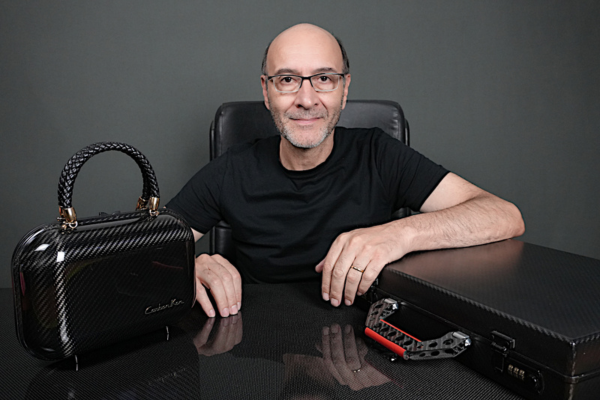
An NFT artwork of Loic Serot
What Loic Serot loves most about his job is not only the access to a world of exclusivity and luxury but the real interaction and connection he can have with very different and interesting people, celebrities, artistic talents and chefs too. While gastronomy today has been elevated beyond comparison, it remains focused on the table, which has always been a locus for storytelling and history. There is so much to say about dinners, it is the most politically — and artistically — charged moment that can exist, in life itself.
Today at ASIAOMB, as Strategic Director and Art Director, he is broadening and developing the concepts and economy that he has created for dinner to other dimensions in luxury, travel, and yachting to successfully create other kinds of experiences.Ahead, we speak with Loic Serot to learn more about his experiences as an Event Creator.
You are an “Event Creator”, how important has been your family background in becoming who you are now (for eg. your father as an architect and your mother as a fashion designer)?
My parents raised my brother and I with an open mindset and tailored a portfolio of very different experiences that encouraged us to explore a wide range of knowledge from different cultures, literature, architectures, art, fashion and music.
As our parents were often invited to openings, they were not home and we became responsible for our time. We were asked to surprise them when they returned. This pushed us to be creative, transforming the house into another theme by rearranging the lighting and objects, transforming the rooms into a starry hotel and sometimes even dressing up for the occasion. Experimenting with new recipes and cooking soon became a passion we both treasure.
The most fascinating part of my upbringing was my parents’ background as an architect and a fashion designer. They focused on converting 2D drawings into 3D realities, and that influenced the way I perceived things too. I find it transcendental to see the moment when an idea takes shape, birthing from a specific emotion, and then becoming a true experience of changing realities.
If you were to mention one mentor who is inspiring you in your daily life and career, who would that be?
My father, Daniel Serot. He was an unknown genius who played with his senses to manipulate reality and to create a stunning life.
Salvador Dali was another mentor that I look up to. He was not just an iconic painter but also an incredible event designer, staging “impossible” stories.
Another source of inspiration for me comes from the book “Image, Icon, Economy” by Marie-José Mondzain. The book explores the origins of the Byzantine empire’s war of representation and how it influenced our contemporary imagination. Sometimes I do think that Bernard Arnaut learned a lot from it as well.
What would you describe as your forte? What different perspectives do you provide versus other Event Producers?
I would say it is my ability to craft compelling stories based on the laws of the universe, attraction, and excitement, then to translate those stories into distinct chapters that possess their own power and energy of emotion through art, aesthetics and design, and finally to crystallize the magic by ending with a climax of memorable celebrations.
I don’t compare too much to other producers’ work. Instead, I follow my intuition and believe that the best ideas are hidden in the processes of nature, physics, the universe, history, technology and games. I focus all my attention on the subject and work until all parts are mastered, connected and alive in the same direction. Each project is a whole new “economy” to be envisioned and succeed.
Do you have any specificity?
At events, for example, the food plates were mainly used as a white canvas: an invisible support to contrast a chef’s creations, or as a backdrop to reflect the brand’s logo. But for me, each plate is more than a support or a statement, I create them with the same perfection as the other components of the experience. So, each course and plate works in the continuity of a narrative. They display, at first, a chef’s culinary economy (how gastronomy works as a combination of taste, temperature, substance, plating and intention) and then integrate those in a larger framework and artistic context to infuse emotions that link with the wider theme.
The concept of “experience” is key for you when designing an event. What is a successful “experience” for guests?
People attend events to experience something not commonly felt or expected. The key value is to successfully provide access to another reality. We, as event makers, have to be the conduit of newness and allow people to elevate themselves to another level of freedom and imagination — in essence, we are the magicians.
The principles we work by are: ritual, transfiguration, sacrifice, glorification and catharsis.
The actual return on event investment (apart from exponential sales) are these crystalized memories that must persist the longest. And they should be engraved, mirroring as well, brand’s name and philosophy.
Why do you specifically focus on events related to the world of luxury?
If you want to explore more in-depth about specific creation or concept in events, you need ways to afford them. So there is no compromise: the best for the best. For luxury brands and billionaires, they need you to generate exceptional moments for them and their guests. This is a challenge that I readily take on to create new dimensions and ideas to blow people away.
Is there anything you wish to add about your work?
We have learnt so much these last 10 years and chartered new directions for the next 10 so there will be a lot of changes coming. As a result of our work, we also created two new roles: “Dinner Designer” in 2010 and “Culinary-tellers” in 2012 who bring meaning to any event. These new roles have become essential in any high-end event today.
I think that our industry is more complex and sophisticated than in the past, involving a range of new techniques, representations, effects, personalisation and dimensions. So it is crucial to be specific in your approach and invite the right person to do the right job, especially in Asia.
What brought you to Asia? And why did you settle in Hong Kong?
I was drawn to Asia due to its culture, philosophy, and cinema which I felt a connection to my work. After completing three masters in art, design and cinema, I was awarded grants and invited to participate in various art residences in Asia, including becoming a laureate of the prestigious Villa Kujoma, Kyoto in 2005. After this exceptional experience, I chose to stay in Asia. Hong Kong was growing to be fascinating enough to aid me in developing concepts I had about art, architecture and gastronomy.
Building upon the success of our experimentation in festivals and events, we founded ASIAOMB (AO), a company based on an avant-garde vision of unique, sensorial and luxurious curated experiences. For example, we were the first to create a full-immersive video projection and sound-designed series of dinners in Asia for K11 Founder Adrian Cheng in the K11 Art Mall TST opening at the beginning of 2010, inviting a young Singaporean pastry chef to lead the gastronomy and dishes structures, that has since become famous.
After Asia, what is another continent you would like to explore?
We did a few projects in Europe and a lot in South Asia, and we do love Hong Kong and Singapore for their high culture, curiosity and demographic. Now, it seems as well that some of the wealthy Chinese and Americans are interested in us. So, let’s see how it will turn…
What is your favourite memory of an event you organised in Singapore?
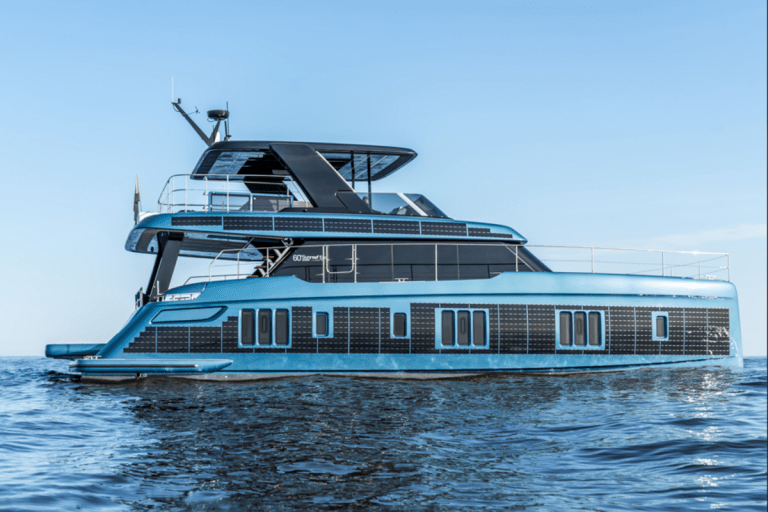
There are so many good memories of success. Chanel, in the heart of Aubazine; Cartier, Panthera Odyssey, a sublime exhibition that we signed; Bank of Singapore was one of the more outstanding projects involving virtuality and Web3 theme. The most amazing was definitely the launch of the biggest superyacht in Asia, the White Rabbit for the Goh family.
My very favourite among the others that I have done was the launch of Richard Mille 50-04 with Kimi Raikkonen. It was by far the most challenging but also the most rewarding. I had to come up with a way to raise funds for Kimi’s foundation, while also entertaining the guests with 3-starred meals and reviewing the watch. At first, I was unsure about how to mix luxury, haute watchmaking, celebrities, games and gastronomy, but in the end it all came together seamlessly. The event culminated with an ecstatic series of emotions from races, menu, TV show, table games, intensity and humour, all happened in a world-class setting.
Your next important projects across 2023?
After these three years of strong economic headwinds, we have re-evaluated AO to capitalise more on our exceptional skills. On the one hand, we are continuing to create stunning events for brands and the wealthy incorporating even more potentiality and vision. On the other hand, we are now beginning to engage with investors for a multi-immersion restaurant that would be a culmination and celebration of our 13 years of success in designing dinner experiences.
Additionally, there is also a hotel concept that has the potential to revolutionise the hotel industry with a new destination! But most importantly, after several years as a sponsor and partnership agent, AO will host its own summit that will open in 2024, with the first-ever event that to generate positive carbon credits. Stay tuned!
And about dinner “design”?
The next one is named the “Jet lag dinner” and is being organized for one of our most loyal customers in Europe. We are creating a “flying sun” that will serve as the main source of light during the dinner. The event will incorporate elements of different time zones, economics, psychology, word processes and sustainability as these investors are interested in the blue economy. It will be truly amazing to play with the intensity and positioning of the sun to create an illusion of time dimension, distorting perception and reality and bringing attention to the pressing issue of climate change and our collective responsibility to address it.
Gregor Gregersen, Founder of Silver Bullion, On the Precious Metals Market in 2023
SHARE
“My fascination for financial markets was thus replaced by an unrelenting drive to create an alternative, truly secure, wealth storage independent of politics and counterparties.”
By Joseph Low
SHARE
Precious metals like gold and silver have been gaining prominence in the last few years. These commodities are becoming the preferred choice for retail investors to hedge against the impending recession. As a result of this growing interest, prices for gold and silver have risen more drastically such that people make a beeline to own bars of it.
Now, not everyone has the luxury of space to store gold or silver bars at home so that is how Silver Bullion and The Safe House come into play. Gregor Gregersen, the founder of the Silver Bullion, believes that more and more people will look towards building a robust precious metals portfolio and his company will be able to satisfy this demand for a secure and reliable storage facility.
Ahead, we speak with him to learn more about the precious metals market in the coming years and his motivation behind building one of the highest capacity vaults worldwide — The Reserve.
Hi Gregor, how did you become interested in precious metals, and could you tell us more about Silver Bullion and The Safe House?
I have been fascinated by the stock market since I was little. I became a stockbroker assistant in the US, and eventually ended up working with quants (math PhDs) at a bank’s structured product desk developing custom derivatives for institutions.
I learned to program some of the derivatives that have become our financial system’s little-understood, quadrillion-dollar foundation. These derivatives are complicated bets from different counterparties that offset each other to produce the desired behaviour. Mathematically they might be sound, but they have a fatal flaw in that they work only if all counterparties remain solvent.
This flaw became apparent in 2008 when Lehman Brothers’ US$35 trillion worth of derivative positions defaulted. Being twice the GDP of the United States, its impact brought the financial system within hours of collapsing.
I witnessed the consequences of this collapse, working as a senior data architect at a major bank in Frankfurt, and realised, with absolute certainty, that greed and incompetence had irreparably transformed our financial system into a fragile house of cards. It had become too leveraged and interdependent.
Physical precious metals, like gold and silver, were one of the few real wealth refuges that did not depend on somebody’s solvency, so they were in very high demand as people quickly bought them from every dealer or bank that still had stock.
By the time I decided to buy some physical silver, no physical bars were left. Banks and dealers would only buy back, and in the secondary markets, silver was trading at three times the official price.
I finally managed to buy a 1kg silver bar through a contact at the gift shop of the European Central Bank.
My fascination for financial markets was thus replaced by an unrelenting drive to create an alternative, truly secure, wealth storage independent of politics and counterparties.
This is still the drive behind Silver Bullion, which has delivered to clients over S$1.5 billion (or more than 730 metric tons) of gold and silver to Singapore, and The Safe House vault, which is safeguarding much of this bullion for our clients.
There are different types of commodities that one can invest in other than metals like agriculture and energy. Why are precious metals the preferred choice over other commodities?
Gold and silver are not just commodities. They are the world’s most enduring currencies (currency code XAU and XAG), are intrinsically valuable, practically indestructible, and cannot be printed out of thin air. They are effectively money that appreciates over time. Gold, for example, has appreciated on average by 7.8 per cent per year since 1970, from US$35.96 to around US$1,900 today.
Currencies backed by gold are limited by their gold holdings, which is why no government-issued currency is now backed by gold. Today’s fiat currencies’ worth depends solely on the perceived credibility of the issuer, allowing popular issuers to fund increasingly unsustainable deficits with no plans for repayment other than by issuing more currency.
Fiat currencies nearly always lose value over time through inflation, and eventually, become worthless once confidence in the issuer is lost. In contrast, gold and silver have endured throughout history as they have always been the neutral asset people trust, especially in a crisis.
To put it plainly, in a crisis, do you want to risk holding the next banana money or gold?
These monetary uses set gold and silver apart from other commodities, which must usually be consumed lest they decay.
Various news outlets have forecasted a recession in 2023. Why do you think precious metals are a good buy during a recession?
We are not heading into a normal recession characterised by negative to low growth and low inflation. Instead, most of the developed world is in a stagflation (defined as low growth and high inflation). On average, major currencies lost 9 per cent of their purchasing power in 2022. Such wealth losses have not been seen since the last stagflation ended in the early 1980s.
In a normal recession, the traditional advice is to purchase low-risk bonds, earn interest, and sit out the tough times. In a stagflation, however, buying low-risk bonds that pay 4 per cent or 5 per cent interest while your money loses an average of 9 per cent in purchasing power is not necessarily a good long-term plan.
While inflation might fluctuate year to year, inflation will remain uncomfortably high for the next five to 10 years because so much paper money was created over the past decade. Meanwhile, geopolitical tensions are causing trade to recede, making goods harder to make and, therefore, more expensive.
This prolonged high inflation expectation is not just my opinion. Singapore’s Prime Minister Lee Hsien Loong has made it clear in his 2022 National Day message that low inflation is not likely to return anytime soon.
As people see their dollar wealth erode, they will realise that they need to protect their wealth by buying something that tends to do well in a stagflation.
Precious metals tend to do well in stagflations. For example, during the last decade-long stagflation, the gold prices in US dollars surged from US$35.96 in 1970 to US$459 in 1981, representing an average 26 per cent increase per year for 11 years.
Central banks have already greatly increased their physical gold purchase in 2022. I think mainstream investors will slowly follow suit, ensuring that gold and silver will become increasingly popular this decade.
Why should one invest in silver and could you share with us the outlook of silver in the future?
Silver was the first global trading currency and, along with gold, the foundation of most modern currencies, including the US dollar and Pound Sterling. Silver literally means money in Spanish (plata) and French (argent). The Chinese characters for a bank (银行) literally refer to a place to store silver.
As an industrial metal, silver is indispensable, being the best electrical and thermal conductor and a potent antibacterial agent. Our mobile and electronic devices all have silver in them, which cannot be easily substituted away. When these devices reach end-of-life, they are often discarded in landfills, making the silver unretrievable.
So whereas gold is carefully hoarded, much silver has been literally thrown away a gram at a time over the past 50 years, leaving global silver reserves a tiny fraction of what they used to be. As of 2022, the identifiable above-ground silver inventories are only 52,000 metric tons compared to over 190,000 metric tons of gold that the World Gold Council estimates to exist.
Besides being surprisingly scarce, silver is also historically undervalued. In nature, the ratio of silver to gold is about 16 to 1, which was also the exchange ratio between silver and gold for most of history. However, gold is trading at 75 times the price of silver today, making silver over four times cheaper than its historical mean.
I would define silver as scarce, indispensable, undervalued, and largely forgotten by the mainstream. Most of my personal money is invested in silver, as I expect it to strongly outperform gold as we enter the next precious metal bull market.
Could you share with us why you have decided to build The Reserve in Singapore instead of another place like Malaysia?
Throughout history, when a country with unsustainable debts can no longer monetise their debts effectively, they tend to make drastic changes, usually at the expense of savers.
For example, during the Great Depression in 1933, the US suddenly made gold ownership illegal. It forced individuals to sell their physical gold to the government at US$20.67 per troy ounce or face up to 10 years in prison.
Essentially holding gold in the United States in 1933 became like holding cocaine today, a highly illegal and dangerous endeavour.
Following this gold nationalisation, the government increased the gold price to US$35 per troy ounce, effectively creating 70 per cent more US dollars for the government to spend at the expense of gold holders (today, gold is trading at US$1,850).
People who held their gold outside the United States were unaffected. So, it is important to store gold in a stable, well-funded, trusted jurisdiction that is unlikely to nationalise gold in a crisis.
Storing gold and silver in Singapore, which has no net debts and a fully funded pension system, rather than in highly indebted Western countries whose unfunded pension systems I consider to be a ticking timebomb, is a prudent choice.
Singapore is politically stable, has very low corruption, well-enforced property ownership rights, and investment-grade precious metals are exempted from taxes, which are all good things.
Singapore is also well-regarded internationally. It has a strong regional military presence comprising of over 420,000 active and reserve personnel and a military budget over three times that of Malaysia.
These are the reasons we are investing so heavily in Singapore.
The Reserve is going to be one of the biggest precious metals storage facilities in the world, why have you decided to embark on such a large-scale project and what’s your vision behind this project?
History tends to repeat and recurring cycles can be identified. Every 80 to 100 years, a new superpower replaces the prior one, and every 30 to 40 years, reserve currencies tend to get into a crisis (e.g. the US dollar in the 1970s) and are either saved or replaced. Such cycle transition periods are always painful and often involve wars.
I believe that this decade we will be facing such a transition period and that this will cause great demand for ownership of liquid physical assets, stored in safe jurisdictions in a transparent manner.
The Reserve is built to address this demand by:
Raising Awareness — Physical asset ownership is compelling, but it is difficult to capture people’s attention. The Reserve’s iconic structure symbolises the resurgence of physical assets while providing an attractive venue for related services and events.
Protect Physical Wealth — Since 2009, we have ceaselessly prepared for the next systemic crisis. The Reserve will be the culmination of our efforts and the go-to destination for holistic wealth protection solutions.
Bigger scale, lower costs — The facilities’ high floor loading and 15 high-security vaults allow us to lower per-ton-fixed storage costs by more than an order of magnitude compared to our prior facility. This enables us to efficiently store silver and valuable industrial metals in addition to gold, art, luxury timepieces, and other high-value items.
What are some services that will be offered on The Reserve that make it different from the others in the market?
Most vaults tend to be austere, inaccessible places. The Reserve has a more open, welcoming design and is cleverly compartmentalised to maintain high security without intrusiveness for most visitors.
We are currently storing over S$800 million in precious metals. Visiting the vault will be an experience. In our main 20,000 sqft vault room, we will store silver, and other valuable metals stacked 12 metres high. Walking through this room will be like walking through a canyon of silver.
Our clients can visit one of two labs in the facility that test the metals to learn about the five non-destructive testing processes we developed to authenticate and guarantee the metals.
Also, on site is The Xcess, a specialised bonded watch vault that will have 2,000 watch winders to store high-end timepieces optimally. These watches can be authenticated and maintained at a 2,000 sqft watch workshop within The Reserve. Once stored, the watches can be collateralised by the owner or sold to the highest bidder. Over time we expect to store a very exclusive watch collection.
The Reserve will additionally store art, wine, and whisky. We have approved zoning permission to conduct high-value international auctions in the facility. The facility will be a good venue for exclusive events.
Once this facility is fully operational, we expect third-party banks, family offices, and wealth managers to make use of the facility as well.
The Reserve will redefine what a vault can be.
Silver Bullion offers a unique secured P2P loan service where stored bullion can be collateralized for loans. What are the reasons behind offering this service?
Our secured P2P loan platform was launched in 2015. It allows customers to use their stored, authenticated assets as collateral to obtain loans peer-to-peer. The lenders are other customers who want to lend out cash for interest. Silver Bullion acts as an escrow and provides the platform to match lenders and borrowers based on a bid/ask process.
With this service, our clients have an added option of how they can use their stored assets. Perhaps they have investment opportunities and need liquidity without selling their bullion.
Having passed compliance checks to become storage customers, they can then obtain loans quickly since the collateral is a liquid physical asset. The system is designed to be very safe for lenders, and over the past eight years, we have had no defaults and averaged a yearly interest rate of just 4 per cent pa.
The loan platform has matched nearly half a billion Singapore dollars over 13,000 plus loans since its launch.
The company has been around since 2009, what are your biggest takeways from those years?
Maintaining a high level of trust and transparency with our clients is paramount. Sales are secondary to always building and maintaining this trust.
Strict AML/KYC and authentication processes are also indispensable to protect our customers and us. This is particularly true as we grow and invest so much capital into The Reserve.
Lastly, we are more than a conventional bullion dealer. We provide advanced systemic wealth protection solutions whereby precious metals play a big role. This important mindset distinction leads to, sometimes, radically different approaches compared to traditional gold vaults and dealers.
If you weren’t in the precious metals industry, what would you be doing for a living?
I would be developing smart software (a kind of AI) to optimise vegetable growth efficiencies for urban farming and franchise the systems. I hope to do this in the future .
Winemaker Laurent Delaunay: Spotlighting the House of Edouard Delaunay
SHARE
Laurent Delaunay revives family wine business, House of Edouard Delaunay, with focus on precise wine-making from exceptional Burgundy terroirs.
By Joseph Low
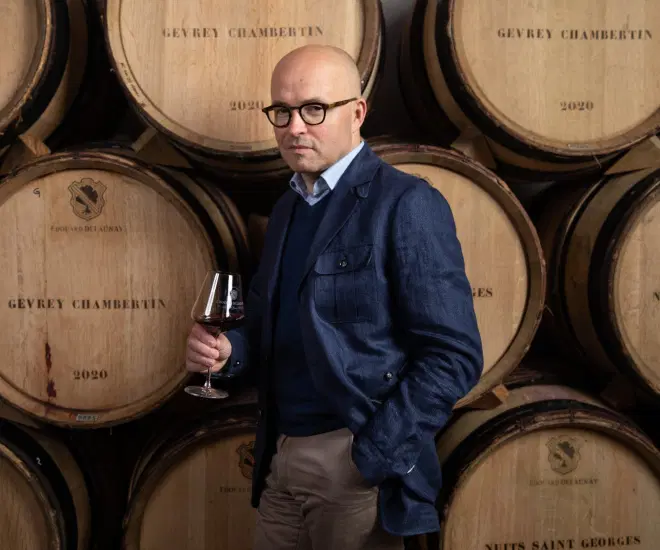
Laurent Delaunay, representing the fifth generation of a family of winemakers and negociants, is reappropriating his family’s history. Though it had progressively declined over the last several years, the House of Edouard Delaunay, an old Maison with a rich and unique history, has always been closely connected to the Burgundy wine trade and was considerably involved in the epic intercontinental expansion the industry experienced throughout the entire 20th century. Bought back in 2017 by Laurent Delaunay, the great-grandson of the founder, it strives to regain its place within the inner circle of the great houses of Burgundy through the meticulous and precise vinification and ageing of exceptional wines from some of Burgundy’s finest terroirs.
Could you tell us about your youth and your early connection to winemaking?
Our family has been in winemaking since the 19th century. Delaunay has been a well-established name in Burgundy across the whole of the 20th century. I grew up with my father and my grandfather in the cellar and the vineyards and I started to work there with my father in 1989 after my studies in the US (Napa Valley). After a few years we were obliged to sell for various reasons. One was that my father was ill with Alzheimer’s disease, so he made some wrong decisions in terms of investments. The other reason was that it was in the early 1990s, and the economic situation became very complicated with the cost of oil going up with the first Gulf War. The business was therefore sold in a friendly transaction to a leading Burgundy negociant.
This then led you to new adventures in winemaking right?
Indeed! I stayed with the new owners for a couple of years, but I decided to branch out in 1995 with my wife Catherine, also a trained oenologist. We wanted to recover our independence, so we left and started our own company in the south of France. This is how we started Badet Clément to make wine in the Languedoc, Rhône Valley and Provence. The company became known for its “Les Jamelles” brand of varietal wines from Pays d’Oc, its high-end label Abbotts & Delaunay, and for selling more than 15 million bottles of wine around the world. It was a boom time in the south of France in the 1990s. Yet I always kept the dream of coming back to Burgundy and creating my own brand, my own range there.
Tell us about your return to Burgundy.
Château de Charmont
It is an amazing twist of life. The first step came in 2003 when our company Badet Clément purchased DVP (Domaines & Vins de Propriété), which distributes Burgundian domains. But the big step actually came in 2017 when we purchased the Edouard Delaunay brand name from the Burgundy negociant we had sold the brand to back in 1993 and some other buildings from relatives. We carried out extensive refurbishment at the château (Château de Charmont), which dates from the 19th century, the vaulted cellars and the buildings next door, which date from the 1950s and 60s and have been renovated in the style of factories from the 1920s and 30s. The metal beams and pillars, for example, are reminiscent of the metalwork used in the Eiffel Tower.
Looks like it is a dream which came true for you.
Indeed, this has been a project very close to my heart and a dream that has come true. My grandfather used to say that the House of Edouard Delaunay was “the smallest of the great Houses’’. My ambition is to return it to its former glory and make Edouard Delaunay a leading Burgundian wine house once more. We are on the right track to achieving such a goal.
What was it like to start from scratch in 2017 again and produce your first cuvee later on?
As mentioned, the first thing needed in January 2017 was to restore the château and winery in time for that year’s harvest. Next, we needed to put together a team, and I was able to hire a young and talented winemaker, Christophe Briotet. But the most complicated was finding grapes as we didn’t have our own vineyards. We were fortunate to have many friends and family members in the trade and obviously our connections with many small producers thanks to Badet-Clément’s DVP marketing arm really helped us. I was highly surprised that so many of them accepted our offer to buy their grapes, but then they all saw it as our “Renaissance” (rebirth), and for them it was also an amazing and rather unique story. A family that had ventured a few regions away and who was then truly back to Burgundy!
You have mentioned several times the importance of packaging and service to clients. Do you feel that you have actually adopted the codes of luxury Houses?
This is correct. From 2018 onwards all ranges of Edouard Delaunay wines have come in “luxury” packaging. We have paid a lot of attention to packaging because in Burgundy the wines are expensive and so it means that — worldwide and especially in Asia — people who can afford Burgundy wines are also people who purchase luxury goods. I feel that in Burgundy, very often, we pay a lot of attention to the quality of the wine but all that is around the wine – the packaging and the service – is not of the same quality. We wish to change that specific perception. We actually take our inspiration from Champagne or Cognac for the packaging as well as for the servicing and marketing to the consumers.
Do you have any expansion plans?
In Burgundy, we see the Hautes Côtes as a prime place for expansion, especially because of its high altitude which makes the grapes less prone to weather problems. The Hautes have actually much-unplanted land that is not classified and we can see the eventual production of single-vineyard wines from the region.
What are the key drivers which you follow daily?
My philosophy is all about listening, reading the terroir and the vines’ condition; trying to understand, and gently accompanying the natural evolution of the wine.
You have been elected president of the BIVB, the Burgundy Wine Board. What has been your key message to the BIVB members?
The need to keep track of trends in the wine trade worldwide. The need to understand the impact of climate change on the Burgundy region. I also keep stressing the need for Burgundy to keep open lines of communication with customers and the duty of the region to practice social responsibility. On a lighter tone, I also wish that people across the globe know how to pronounce Bourgogne and not only Burgundy.
How do you view Burgundy wine lovers in Asia versus European or American regular Burgundy wine drinkers? How do their taste or requests differ?
My grandfather established a presence in Singapore as early as 1932. Asia and Asian consumers have always been highly regarded in our family. I am very impressed by the level of knowledge Asian drinkers have about Burgundy. The US market has been a leading purchaser of Burgundy wines for over a century, yet Asia is catching up fast, and the wine audience is avid to learn and understand our complicated region classification. It is quite refreshing for a winemaker to know that the ultimate consumer knows what he or she is drinking.
Talking about Asia, tell us more about Badet-Clément’s presence in this part of the world?
Badet-Clément has a regional bureau in Hong Kong with a highly active, experienced and mobile team headed by Olivier Hui-Bon-Hoa. We also have a presence in Singapore, South Korea, Japan, China, Vietnam and lately in the Philippines.
Have you seen the 2017 movie by Cedric Klapisch “Ce qui nous Lie” (“Back To Burgundy”)? How did you personally react to that movie set in Burgundy and focusing on inheritance issues?
My wife and myself truly enjoyed Cedric Klapisch’s movie “Ce qui nous Lie”. It is a movie that is very touching for the local community because the story it tells is very realistic. Every wine-growing family has had to face the difficulty of arranging the transmission of the estate to the next generation, and it is a challenge we all must live with, especially at a time of rising land prices (inheritance taxes are on the high side in France). Cedric Klapisch shows these difficulties in a very straightforward light.
Your career and overall entrepreneurship story is amazing, have you got anything you wish to work on?
Yes, speaking in public. But I have progressed rather well on that matter by taking courses at the famed Cours Florent in Paris.
If you were to name someone who has influenced you in your career as an entrepreneur, whom would that be?
I learned a lot in terms of entrepreneurship and business from Jean-Claude Boisset, one of the smartest wine entrepreneurs I have met.
I also learned a lot from Aubert de Villaine. What I like is not only his wine philosophy but his life philosophy. I appreciate that he is not only one of the most emblematic producers of Burgundy but he has a vision, his thinking is across several generations, and he is very sensitive of the fact that in a traditional region like Burgundy, we do not inherit, we simply pass the land on. This gives you a vision and a perspective across centuries. You have to think and consider the consequences in the long term.
Hublot CEO Ricardo Guadalupe On the Brand Being a Trend Maker
SHARE
Hublot CEO Ricardo Guadalupe takes us through the art of fusion, and how clever marketing can build a bright future for traditional watchmaking.
By Ashok Soman and Asaph Low
The contemporary marketing machine that powers Swiss fine watchmaking is, arguably, inextricably linked with the story of Hublot. Famously, the brand emerged from what was then a shocking idea: what if you combined gold with rubber in a luxury timepiece? Such watches are everywhere these days, from the most storied watchmakers to independents working with a completely classical mien. This fact alone was not enough to turn Hublot into the powerhouse it is today, with approximately 60,000 watches produced annually; the brand is one of the most prominent faces of Swiss watchmaking today, what with it being the official timekeeper of the FIFA World Cup, which you cannot have missed, even if you are not interested in the football (and call it soccer).
While all watch collectors associate Hublot with its former boss, the magnetic Jean-Claude Biver, its success is the result of the work of an entire team, one of whom is the current CEO Ricardo Guadalupe. Enticed by Biver to join him at Hublot in 2004, Guadalupe has been at the brand for all its hits, including the explosive trendsetter that was the Big Bang in 2005 and the controversial marketing campaign featuring former F1 supremo Bernie Ecclestone in 2010. That last one was about a literal hit, and correctly predicted a startling growth in criminals targeting the watch collectors in Europe.
Trends were a big deal for Hublot under Biver, who still urges watchmaking brands to seize the opportunity with unoccupied niches, or special offerings. Since Guadalupe took on the top job in 2012, Hublot has largely stayed the course, enshrining its forward-thinking approach in its own brand identity. “Hublot, in order to succeed, had to be different compared to other traditional brands,” Guadalupe told Gulf Business in 2021. “Why else would someone buy a classic Hublot from a 40-year-old brand when they can have beautiful watches from brands that have been in existence for over 100 years?”
We caught up with Guadalupe when he was in town a couple of months ago for the launch of the Hublot boutique in ION Orchard.
Before getting into the story of Hublot itself, you became CEO a little more than 10 years ago. How did you handle the challenge of stepping out of the shadow of Jean-Claude Biver? Arguably, his reputation continues to loom over the brand itself.
In fact, I was already in the brand since 2004, so (I know Mr Biver’s style)… and I was part of the brand’s success even before I took over (as CEO) in 2012. Of course, I am different from Mr Biver, who was very closely linked to Hublot (as a larger-than-life personality) and my priority when I took over was to have the brand stand on its own. The big challenge was to make the brand bigger and more important than any one person, and we achieved that. Today, Hublot alone is an important brand in the watch industry. What I want is for Hublot to stand on its own merits when, one day, I leave the brand.
Hublot was founded slightly more than 40 years ago, in 1980. What are some principles or values that Hublot continues to emphasise?
Hublot represents the Art of Fusion in watchmaking, and the brand did it in 1980 for the first time. It came up with a watch made of yellow gold (a traditional luxury material) with a rubber strap, which is a modern material. This fusion is what we call the Art of Fusion, linking tradition with innovation.
What phase do you think Hublot is at with its “Art of Fusion” motto?
We work on three pillars, and we can bring fusion into design. The Murakami watch, for instance, is a fusion of the art of Murakami and the Hublot art, and we realise a watch that becomes a work of art.
I think consumers are waiting for this kind of product because a mechanical watch today is not important for telling time. It’s important for what it represents, the object (and attendant emotions) it represents.
When it comes to materials, we always try to be innovative. We have coloured ceramics such as red and yellow. We industrialised sapphire crystal in 2016, and we are the only brand to have coloured sapphire, and produce sapphire crystal watches at a certain price point, even though they are expensive. We work on different alloys too (including Magic Gold and King Gold).
And from the movement side, we created the Unico chronograph calibre, various special calibres, and our tourbillon. We are creating new calibres for the future, but it takes years of development, and not months. We try at every level to be innovative.
That’s the key element for the success of Hublot in the future.
Speaking of the future, we are seeing unprecedented demand for fine watches. Do you think it really is unprecedented, and how is Hublot coping?
Yeah, it’s true, demand is really high and I’ve never seen that in my career. I think what I have done in the last 10 years at Hublot (sort of anticipating this moment in history) is building a manufacture, an integrated manufacture, being able to produce ourselves, not everything, but parts of the production of movements and in material innovation as well. This allows us to have quite good flexibility in production…of course (this does not mean) we can double our production like this [snaps his fingers]. I think we can manage to grow (and keep up with demand) with the investments we have made in our own industrial capacity.
We have also built strong relationships with our suppliers; we form an important part of their business. This is useful because when you are important to a supplier, you can ask for more and maybe they allocate more for you than other brands. Of course, we share suppliers with a number of brands… Being loyal to our suppliers over a number of years is also important to us, especially during the Covid lockdowns because many suppliers had a tough time, and had to fire staff… we tried to support as much as we could.
How does Hublot optimise its product strategy with the ever-changing taste of consumers?
We try to be innovative and creative and invest a lot in R&D in materials, movements (and in mechanics), and design. These are the three main pillars on which we work.
We try to create trends, and with our innovations and creativity, we can please the existing consumer and new consumers coming in with what we can offer. The key element is always to be innovative, and we do it more by instinct. We don’t analyse other trends; we create the trend.
How has Hublot’s presence in football helped the manufacture reach its marketing goals?
We entered football in 2006 with a very small partnership, and then in 2008, we had the Euro cup in Switzerland. And Mr Biver, at that time, thought about which sport we could support as a partner to communicate about our brand.
If you look at tennis, it’s quite complicated; if you look at golf, it’s complicated. And for football, there is no watch brand. Football is a very popular sport; it talks to not only our potential consumers but billions of people. Football has brought us brand awareness.
When I started working at Hublot in 2004, people in Switzerland didn’t know about Hublot. Today we can say that, in general, people know Hublot is a watch brand. And thanks to football, it was an accelerator for brand awareness, especially with the Hublot Big Bang Unico-shaped Referee Board that we had in Brazil.
Billions of people have seen it, so it is very positive for us and allowed us to be a strong brand in the world thanks to football.
Hublot ambassador Kylian Mbappé is currently one of football’s biggest stars. What do you admire most about him?
Kylian Mbappé wearing Big Bang e FIFA watch
To take an active player was a decision. When you have an active player, you can have good and sometimes negative parts, such as injuries or issues in his private life. When you have a legend like the late Pelé, he will remain a legend forever. But at a certain point, I saw this link between a legend and an active player, and I saw it through Kylian Mbappé. Even Pelé sees him as (a successor of sorts) because he won the World Cup at a very young age as Pelé did; they have similar looks and playing styles.
Mbappé accepted to be our ambassador; I think he’s a great personality, very positive. He has values of being serious and passionate, and he has success, so that’s important.
Ambassadorship is one of the main pillars of Hublot’s marketing strategy. What are some values that Hublot looks out for in potential ambassadors?
First of all, we need to have good alchemy in human relationships. An ambassador has to like our brand and not just do a commercial deal. So we always have dinner or spend a moment with the ambassador before signing anything. Of course, they have to carry the values of passion, having success and being aspirational to the young generation.
Akila Leverages Data and Technology to Improve Companies’ ESG Efforts
SHARE
Akila is a digital twin platform built to revolutionise sustainability, performance and human-centricity in the built environment, while also streamlining ESG reporting for C-suites.
By Joseph Low
Philippe Obry, Akila Co-Founder. Image: Akila
Akila is a real-estate data and management platform founded in 2021 that uses digital twin and AI technologies to empower data-driven decision making and ESG for large and multinational portfolios. How was the concept of Akila nurtured?
Akila started with a group of people from different fields related to the built environment: 3D design and simulation, system engineering, energy, construction, IoT and smart buildings, and facility management. What united us was a recognition that buildings contribute a massive share of all carbon emissions, approximately 40 per cent in fact, and that the sector still ranks bottom three for digitalisation. This simply must change. So, we were resolved to create a platform capable of driving a sustainability transformation in the built environment. This is a transformation oriented around data, digitalisation, improved performance and ESG. It very much includes the luxury industry and its built assets — mining operations, factories, warehouses, retail spaces, yachts and more.
There were many steps to get us where we are today. We took a lot of inspiration from the example of our strategic partners, Dassault Systèmes. From the 1980s onwards, they completely transformed manufacturing in the aerospace and automotive industries, using digital twin and 3D simulation to move from an analogue and paper-based system to one that was fully digital and model-based, leveraging the concept of a single source of truth from design through production and operation.
Now we want to do the same thing for the built environment, helping businesses and portfolio holders achieve massive decarbonisation across their holdings. We can achieve this because the Akila platform is an enabling technology capable of optimising across the value chain from design and construction to operations, all the way until decommissioning. In Akila, we are confident we have built a unique digital twin platform, carefully designed for the age of ESG.
Tell us about the close relationship between Akila and Aden Group?
Aden Group was the incubator of Akila and remains one of its three main strategic partners, alongside Dassault Systèmes and Microsoft. From Aden Group, we have been able to draw on 25 years of hands-on expertise managing complex operations at large facilities — factories, industrial parks, commercial space, retail space, etc. That experience has greatly informed the development of Akila because, alongside ESG and performance dashboards for high-level decision-makers, Akila is also designed as a solution for operational teams at sites. So, the functionalities of Akila have been very deeply informed by Aden’s decades of experience understanding client needs, resolving their pain points and making their buildings into high-performing, high-comfort, human-centric spaces.
Another exciting thing is that our partnership with Aden Group opens up opportunities to collaborate on net-zero carbon projects with other entities under the Aden Group umbrella. I am thinking especially of Tera Energies, the clean-energy JV it co-founded Total-Eren, and NXpark, a series of turn-key Industry 4.0 industrial parks that it is developing in China right now. Simply put, we are stronger together, and able to make an even stronger push for decarbonization and optimisation.
How instrumental has Dassault Systèmes been in the definition of the data to be collected and overall process of these?
Building Digital Twin with sensors. Image: Akila
As I mentioned earlier, Dassault Systèmes are truly pioneers in the field of 3D design and simulation. Over the past 40 years, they have become global leaders in software for advanced simulation and 3D modelling. Having Dassault Systèmes as one of our three main strategic partners has greatly expanded our capabilities in two areas especially.
First, Dassault Systèmes is central when creating and maintaining what we call the “digital thread” of a site in the built environment. This ensures that a single source of truth is preserved for a project through design, construction, commissioning, and then the Akila integration makes sure that this digital thread is maintained through operations. Only by having accurate data inputs can you have accurate outputs — otherwise, as the saying goes: garbage-in, garbage-out. Dassault Systèmes ensures the integrity of all structural data that goes into our platform.
Secondly, Dassault Systèmes software enables advanced simulation of an enormous range of scenarios for a building or asset without limitation. This includes things like energy simulation, thermal comfort simulation, carbon footprint calculation and more. In effect, we are able to merge the virtual and physical world for a continuous loop of optimisation and “see into the future” in ways that facilitate smarter and more sustainable building design for greenfield projects. Then, during the operational phase of a building, this simulation capability enables critical carbon-reducing features like predictive maintenance — this means we can target potential issues before they impact operations and cause unnecessary environmental impact.
Who are the key members of the Akila team?
Honestly, too many to name. Since our founding, we have grown from a team of five to 80, and we’ll see that number continue to rise. Our founding team is multicultural and multinational, bringing together high-level tech, business and sustainability experts from across a range of global tech, consulting and industrial groups. Our backgrounds cover ESG, energy, engineering, construction, PropTech and LEED. We started in China, but we’ve been expanding fast in Singapore, Vietnam, Malaysia and Indonesia, with two main divisions: SaaS as well as an Architecture & Engineering Technologies division.
Akila’s Energy Savings Tracker: a smarter, simpler way to measure impact. What specific solutions is Akila providing?
Akila asset management. Image: Akila
Many companies are already undertaking energy-savings projects but lack the tools to successfully conduct and measure optimisation at scale. For instance, some companies don’t have a clear picture of how much energy they are consuming and where the inefficiencies lay — they can only compare energy bills side-by-side, for the crudest measurement of energy consumption. Or, they have undertaken energy optimisation projects, but they are still working off massive Excel sheets, dependent upon manual input and management. This limits how often measurement can take place, brings the risk of human error, and proves enormously difficult to coordinate across sites and borders.
These are the problems Akila Energy Savings Tracker addresses. The platform uses IoT to create a transparent energy-consumption baseline for each site, down to the level of individual pieces of equipment. Then, it tracks all subsequent energy consumption in real time, in the same digital space, using the same metrics. That means that at any point you can measure in exact terms how much energy has been saved for any equipment, facility, or portfolio over any period of time, and also calculate the change in carbon emissions that has been produced.
Real-time data and analytics in a user-friendly dashboard — is that the key message delivered to decision makers?
Akila workspace energy matrix. Image: Akila
Yes, it is one of the key messages. Akila is designed to facilitate faster, better decision-making among C-level leadership. We believe that centralising key information relating to ESG and building performance into a customisable “portfolio performance cockpit” is one of the best ways to achieve this. Importantly, this is not just a static report, but a dynamically updated one, so that leadership can be updated immediately if there are any irregularities at a particular site and ensure that they are followed up on in the fastest manner possible.
Is the Akila team acting as an adviser — can the team support clients in high ESG risk industries to develop their climate transition strategies?
In these cases, Akila is the enabler and we work with specialists to produce a detailed report. Those specialists can be either the company’s in-house experts or can be drawn from one of the consultancy firms in our own network. Either way, when this groundwork is done, Akila parametrises its solutions to meet the specific recommendations and needs of the company. We are then able to greatly simplify the execution of tour clients’ climate transition by automating the collection of data covering Scopes 1, 2 and 3.
Which clients have started implementing the various Akila solutions?
We are working with American, Japanese and European multinationals, many of whom are currently running pilots in China and Southeast Asia as a first step towards a global deployment. One of our biggest contracts for ESG and decarbonisation is in the retail sector (expect a public announcement about this very soon), but to date the largest share of our client base has been in industry and manufacturing, including automotive, construction equipment, electronics, and petrochemicals.
The beauty of the platform, though, is that any building or asset in any sector produces data, and Akila can help harness and scale this data collection, no matter what type of building or sector. We also have used Akila to help clients link and optimise multisite portfolios covering commercial buildings, warehouses, even hospitals and international schools.
The World Economic Forum (WEF) has just recognised Akila as a fast rising player in the ESG space. The highly selective award recognises annually the top 100 early- to growth-stage worldwide that are shaping the future by advancing technologies. How such an award impacts on the whole team at Akila?
Yes, we were selected as one of 100 global startups to join the WEF’s 2022 Technology Pioneers cohort. Needless to say, this was a big milestone and will really help us connect with high-level audiences and partners in our mission of decarbonisation. To us, it is an indication that the things driving Akila — the climate crisis, the rise of ESG, digitalisation as the key to decarbonisation — are also resonating with a wider audience and people at the highest levels of business, technology and government.
As members of the Technology Pioneers cohort, we are able to connect directly with the WEF through working groups (we have just joined the Digital Twin Cities Advisory committee in Beijing, for example), as well as WEF events and networking in a group whose alumni include Google, Airbnb, Spotify, Wikimedia and many other massive tech companies.
Do you see growing number of companies integrating ESG into their investment process?
Akila multi-site dashboard in China. Image: Akila
Absolutely. And this makes good sense because ESG has always been structured from an investor point of view — making it easier and more reliable for investors to assess different companies on sustainability and best practice metrics. Looking at the luxury industry today, different companies are in different places on the journey, but the trend towards ESG is clear and lasting. It’s safe to say that in the coming years, sustainability — based on transparent, quantitative ESG data — will be one of the key markers of a premium brand, right alongside traditional measures like the grade of materials, craftsmanship and design, etc.
What is driving this is a real convergence in different sectors. On one hand, there is a wave of tougher government and industry regulation, but just as important is the market pressure coming from consumers themselves. This makes the robustness of a company’s ESG and sustainability policies a major strategic concern. Buyers today think about sustainability and carbon impact more than ever before and have been empowered by a new wave of apps and other tools to do their own research on a company’s impact. And, they are spending accordingly. In the past, companies have been able to pay lip service to sustainability and just greenwash, but ESG really takes an axe to that. The new reality is that companies which proactively adopt ESG policies will win, while greenwashers will pay. There will be nowhere to hide.
Overall, what should a company do to make sure its social and governance-focused targets are credible and ambitious?
They must put a premium on the transparency of their data. How do you achieve this? It requires digital transformation, carried out systemically across whole portfolios and across the property lifecycle — concept to operations all the way to operations and decommissioning. For credibility, companies also need third-party auditing of their data. Akila enables the needed traceability, and is designed to ensure a coherent structure of ESG data, making this process transparent and smooth.
As for ensuring that targets are ambitious enough, that needs to be taken on a case-by-case, looking at the clients’ specifics and taking into account industry benchmarking. It’s also important to remember that ESG is not something you start today and finish tomorrow — it is a process, and continuous improvement is the name of the game. Akila is the tool that lets companies document this trajectory in great detail. And by working with organisations like SBTi (of which Akila is a partner), targets can be set in both an ambitious and scientific way.
Where do you see Akila in five years?
Image: Akila
Well, by 2027, we won’t need to explain what a digital twin or ESG are anymore, because both will have become so prevalent in business and life. Our ambition by that point is to have become one of the defining digital tools of this ESG era, and to have accelerated a substantial change in the carbon emissions of buildings and cities.
How do we get there? Our Asia-first strategy and the fact that we are operational inside and outside of China will be very important. Asia will remain the world’s most dynamic economic zone. Then as now, it will be the place where MNCs have the freedom to pilot new technologies ahead of their global rollout. We have already begun this process with many major global clients, and we see this as a path we’ll continue on over the next five years: in short, we’ll be taking Akila from Asia to the world.
The other aspect we will see developing more is Akila’s open Ecosystem — a space we can conceptualise as a kind of app store for buildings and assets in the ESG era. Akila is designed as an open platform, so that partners with strong vertical specialisations can offer integrations inside the Akila platform. We have already begun this process by working with partners in industries like AR (augmented reality), but in five years we should see this really coming to fruition.
The Ultimate Maldives Island Experience For Those In Search of True Balance of Mind, Body and Soul
SHARE
ElE|NA Launches “Wellness Your Way” at OZEN RESERVE BOLIFUSHI.
By LUXUO
The Maldives, with its famously crystal clear waters is a dream destination for travellers from all around the world. The number one destination for anyone seeking peace and tranquillity. Launching into this market sees global leading wellness brand ElE|NA partnered with the award-winning luxury resort OZEN RESERVE BOLIFUSHI, a part of THE OZEN COLLECTION, this unique sophisticated wellness brand is rewriting the rule book named “Wellness Your Way” available to all.
Guests get to be immersed fully in the island through its ultimate holistic journey of wellness, healing, and relaxation within the cocoon of exceptional surroundings of OZEN RESERVE BOLIFUSHI. This journey will invite the guests to feel rejuvenated and refreshed through lasting, transformative experiences characterised by the curation of the very finest local, healing traditions and international spa treatments. Using naturally energising natural products, the experience is designed to help you rediscover your inner balance and an enduring sensation of tranquil energy.
ElE|NA wellness rejuvenation journey is bespoke to each guest, with each journey designed by our resident Ayurvedic doctors according to fully researched healing programmes that also include exclusively curated plant-based nutrition meal plans, therapies, and specially designed activities, all of which are geared towards enhancing your island experience and health.
For the journey towards ultimate zen, each guest’s residence is transformed into a personalised private paradise, designed to offer pure relaxation at every opportunity. Through the customised programmes, guests will be more in-tuned with Mother Nature and reap its benefits with this reconnection. At night, the ambience is made to be conducive for a good sleep, an essential part of any rejuvenating experience.
ELE|NA is talilored to all and caters to diverse journey options including chronic pain management; anti-anxiety/stress programme; gut health and detox; sleep therapy; age-defying; wellness for cancer and weight loss. With its suite of exceptional choices, beauty, and spa experiences, dovetail seamlessly with the many benefits and attributes of a world-class retreat to ensure a perfectly balanced stay replete with all the fun, adventure, and indulgence of a blissful tropical holiday experience.
The SR Series not only provides comfort when flying, but its safety features also ensure peace of mind.
By Joseph Low
Jan Ralph and his wife.
Humans have made great leaps in aviation since the Wright brothers first took flight. From the first personal aircraft to commercial jetliners, aircraft have become essential to regional and long-distance commutes. For business or personal travel needs, journeying through the sky confers a sense of exhilaration unfound in conventional forms of transport like taking a train, driving or sailing on a ship. The idea of freedom commonly associated with air travel draws people to explore the blue skies.
To help aviation enthusiasts with their quest to conquer the sky, companies like Cirrus Aircraft have created the best-selling personal aircraft and robust training programs to teach people how to fly. Starting with the VK-30 in 1984, Cirrus Aircraft has since grown to focus on manufacturing the SR Series piston aircraft and the SF-50 Vision Jet the world’s first Personal Jet™. The SR Series comes in three models, each being a single-engine, piston composite aircraft – touted to be a game-changer in the personal aviation industry. This year marks the delivery of the 9,000th SR Series aircraft. Worldwide flight time on Cirrus Aircraft has passed 15 million hours, and 240 people have returned home safely because of advanced safety systems such as the Cirrus Airframe Parachute System (CAPS).
With nearly 40 years of experience in the personal aviation industry, Cirrus Aircraft has consistently ranked at the top for customer satisfaction. Jan Ralph is a Cirrus Aircraft customer who owns a 2018 G6 SR22 aircraft with a Cirrus Airframe Parachute System, Garmin’s Perspective+ and is fully air-conditioned. Jan is the father of two children and has been interested in aviation since he was young. He started with Airfix models and then onto remote control aircraft.
Visiting the Biggin Hill airshow in the UK was an annual pilgrimage for Jan when he was a child. At 11 years old, his father paid for a trial flying lesson that eventually paved the way for him to obtain a Private Pilot License in 2018 and a subsequent Instrument Rating in 2019.
Jan selected the Cirrus SR22 for its unique and advanced flying qualities.
“It’s a real ‘get there’ aircraft with long-distance capabilities and amazing avionics, which helps lessen the workload for the types of flying we do in Asia,” shares Jan. “The CAPS also provides great comfort in flying with my family over the jungles and palm plantations of Malaysia and Indonesia, serving as an additional safety feature. Additionally, the comfort of the cabin is really the best choice for my missions.”
Jan further adds that regionally, in Southeast Asia, the Cirrus SR22 is best suited for private travel. Its superb range makes flying across the region a breeze and a comfortable ride. Experiencing all of this first-hand was Jan, who had since flown to many nearby places like Langkawi, Tioman Islands and Kuala Lumpur in Malaysia. The trip was done during the tail-end of Covid-19 restrictions in Singapore and vaccinated travel was the only way out of the country.
“Toward the end of Covid when borders were opening a little, and vaccinated travel lanes were very expensive and hard to secure, we were able to fly direct to Langkawi and other parts of Malaysia while many others were not. I was the first international flight into Tioman Island at the beginning of April and have been there 17 times since borders opened up,” said Jan. “Getting from Singapore to Tioman would usually take over seven hours via driving and ferry, but with the Cirrus SR22 we can reach the amazing island of Tioman in 37 mins.”
Most recently, Ralph had just completed his trip from Singapore to Australia and clocked over 54 flying hours while covering over 10,000 miles.
“Our mission was to fly and collect another Cirrus aircraft which had its annual maintenance check at Air Gold Coast but was stranded due to Covid-19,” said Jan. “I flew with a friend/Chief Flight Instructor and two-time earth rounder to collect the G3 SR22 and then flew back in convoy.”
Along the way, Jan stopped at several stunning places like Karumba and Shute Harbour. As with all journeys, there will be times when skills are tested and that happened to be over the long water crossings from Timor to Darwin and across Indonesia.
“This trip really tested my pilot skills, and I got to know how capable the aircraft is. I plan to make this a yearly trip now to Australia and next year. I am also looking to fly from Singapore to the UK.”
Leonardo da Vinci said, “When once you have tasted flight, you will forever walk the earth with your eyes turned skyward, for there you have been, and there you will always long to return.”
For those fortunate to experience flying, the desire to return to the skies will only grow stronger as is the case for Jan. Cirrus Aircraft’s range of models, flight training programme and emphasis on safety makes it one of the industry-leading companies for aviation enthusiasts.
Learn how to fly a Cirrus by contacting, Wings Over Asia at (+65) 6659 6225.
A great year starts with a good toast, and here are 5 to pick from this Chinese New Year.
By Joseph Low
For Chinese all over the world, the upcoming Spring Festival or Chinese New Year is a massive affair that will see one of the largest human migrations and the highest consumption of food and drinks. Undoubtedly, alcohol ranks near the top of the list and comprises spirits like whisky, gin and cognac. From the Macallan to Glenfiddich and Royal Salute, say “Cheers!” to the new year with these exquisite drinks.
The Macallan: A Night On Earth in Scotland
Inspired by Hogmanay, the traditional Scottish New Year’s Eve celebration, this limited-edition whisky makes a great gift this Lunar New Year as it parallels the universal optimism and joyfulness that binds both festivities together. Packaged in red, a symbol of great fortune, the whisky’s natural warm amber hue also complements the rich colour of its presentation box.
Crafted from a selection of The Macallan’s sherry seasoned American and European oak casks and ex-bourbon barrels, the whisky exudes notes of sweet vanilla, baked apples and baking biscuits on the nose. Taking a sip, the liquid’s soft velvety mouthfeel coats the palate and brings to mind shortbread along with toasted marshmallows, dried oranges, figs and cinnamon. The finish is medium with a lingering sweetness of butterscotch and freshly baked biscuits.
Royal Salute Lunar New Year Special Edition
A main staple at any celebrations, Royal Salute was created in 1953 to rejoice in momentous occasions like the coronation of Queen Elizabeth II. Continuing this long history, the distiller presents the Royal Salute Lunar New Year Special Edition to “Ignite the New Year”. Featuring a myriad of symbolic motifs like drums, lanterns, and celebratory streamers, the hand-crafted ruby flagon is believed to bring you and your family fortune and prosperity in the year ahead.
The bottle contains Royal Salute’s iconic 21-Year-Old Signature Blend with fruity and floral notes and a hint of sherry spice. The whisky’s sophisticated and opulent character complements flawlessly with its gift box’s design, which was inspired by traditional Chinese painting, literature and historical culture by renowned illustrator and visual designer Trajan Jia.
Rémy Martin Limited Edition Gift Collection
Be it for a night of celebration or as a token of appreciation, Rémy Martin’s limited-edition cognacs are a great way to give a toast to a prosperous new year. Coming in three different iterations: Rémy Martin 1738 Accord Royal Harmonia Limited Edition, Rémy Martin XO Harmonia Limited Edition and Rémy Martin VSOP Harmonia Limited Edition, these exceptional liquids are best tasted in a cocktail. Rémy Martin even has a cocktail shaker to complete the special occasion.
Housed in a red coffret or shimmering gold gift box, the cognacs certainly add to the festivities of the widely celebrated Lunar New Year.
Johnnie Walker Blue Label Lunar New Year Limited Edition Design
For the Year of the Rabbit, Johnnie Walker collaborates with Shanghai-based designer Angel Chen to design its presentation box and the bottle itself. Featuring the animated rabbit, which represents mercy, elegance and beauty, the animal also signifies longevity in most Asian cultures and is illustrated by the prancing rabbits along different mountainous peaks.
For this limited-edition collection, Chen drew inspiration from the crafts Jonnie Walker Master Blender Emma Walker and her team bring to the distillery. “My work is often inspired by different generations, different genders and cultures coming together to create something fresh and new. These ideals echo the craft of Johnnie Walker, taking different types of whisky from different distilleries, with differing ages of maturation and blending them together perfectly to create a masterpiece – that is something I can relate to.”
Glenfiddich Chinese New Year Gift Packs
Celebrate Chinese New Year and usher in the Year of the Rabbit with Glenfiddich as the whisky maker has unveiled its annual limited edition gift packs. This year’s edition of the iconic Glenfiddich Stag has been designed by Shanghai-based illustrator Yixin Zeng, who is known for his “vibrant, expressive detailed style of painting”. These special gift packs make a good gifting option to commemorate the occasion.
Each pack comes with a single malt Scotch whisky crafted by Malt Master Brian Kinsman, the Reserva Rum Cask 21-Year-Old. The exceptional spirit is finished in Caribbean rum-soaked casks, which gives the whisky a spicy warm and indulgent vanilla and toffee sweetness. Other variants in 12-, 15- and 18-Year-Old are also available in its corresponding design colour and housed in a beautiful gift box
Today, H. Moser & Cie employs close to 100 people in offices all around the world, from Switzerland to the Middle East and Hong Kong.
By Ashok Soman
At this year’s Grand Prix d’Horlogerie de Geneve (GPHG), H. Moser & Cie picked up the Tourbillon Watch Prize for the Pioneer Cylindrical Tourbillon Skeleton, adding to its tally of wins at the prestigious watch industry awards. These include the double wins in 2020 for the Endeavour Cylindrical Tourbillon H. Moser & Cie x MB&F (Audacity Prize), and the Streamliner Flyback Chronograph Automatic (Chronograph Watch Prize). And these are just the most recent achievements for the Schaffhausen-based watchmaker, which was established in 1828, 40 years before its neighbour, IWC started up. In fact, H. Moser & Cie was making watches some 11 years before the brand that would become Patek Philippe was founded, and close to 50 years before Audemars Piguet got its start. Despite this, it may surprise you to learn that in 2012, the firm was staring down the barrel of bankruptcy.
Many storied names in watchmaking have faced this fate, despite more than a hundred years of know-how and capacity. H. Moser & Cie seemed to have it all in 2012. It boasted a fully integrated manufacture that could not only draw upon its close to 200 years of creating fine timepieces, but also something few others could do: the ability to produce its own regulating organs and balance springs, via its sister company, Precision Engineering AG. Such assets are indeed very rare, but the firm was nevertheless in bad shape, and had no obvious saviour.
The Meylan Family.
Fortunately, MELB Holding, the independent Swiss family group owned by the Meylan family knew a winner when it saw one. This is likely to be because the family itself was steeped in the watchmaking trade — the Meylans are distantly related to watchmaking legend Charles-Henri Meylan, who was active in Le Brassus at the same time as Jules Audemars and Edouard Piguet. At the helm of MELB, Georges-Henri Meylan was famous in his own right, as the retired CEO of Audemars Piguet, where he built many lasting relationships in the watchmaking trade, including in Asia, which we will come back to.
After doing what the company calls “emergency due diligence,” MELB Holding agreed to rescue H. Moser & Cie, becoming its majority shareholder in 2012. What followed was not simply a change in direction, rather something altogether more subtle yet engaging. George-Henri’s son Edouard took the reins of H. Moser & Cie as CEO, supported by his brother Bertrand, and leaned into innovation and disruption to create a future for the independent watchmaking firm. Crucially, the new leadership was not interested in radically changing the watches, by embracing the emerging sports watch trend, or really by jumping on any sort of bandwagon.
“The idea was to draw on what had already been done well — and there were lots of good things — and to further improve this by adding a bit of our own personality, i.e. by respecting the past but incorporating a contemporary and occasionally irreverent edge,” Edouard noted in the press release announcing the 10th anniversary of the Meylan family’s rejuvenation of H. Moser & Cie.
Instead of being trendy, H. Moser & Cie actually gained traction for starting trends, being by turns loudly caustic (the Swiss Mad Watch and the Moser Nature Watch) and quietly revolutionary (by removing the brand name, and indeed all the markers, from the dial). A favourite of ours is the Swiss Alp Watch Concept Black in 2019, where even the hands are dispensed with, although there is a tourbillon at 6 o’clock; the brand makes a habit of releasing at least one such concept piece that speaks to who H. Moser & Cie is every year, since 2016. Perhaps the most significant watch that signalled what H. Moser & Cie would become was the Endeavour Perpetual Calendar Funky Blue, with its startling gradient electric blue dial. If nothing else, H. Moser & Cie was renowned for its perpetual calendars, so this 2015 watch combined something everyone already knew about the brand, but now with a twist. The watch also had a raw leather strap, foreshadowing the Swiss Mad Watch and other irreverent concept timepieces.
As wild and polarising as some of those moves and watches were, they had the intended effect of getting H. Moser & Cie some much needed attention. The brand finally had a presence befitting its fine watchmaking skills, and collectors took notice. In the last 10 years, H. Moser & Cie has reported a fivefold increase in production, accompanied by an even more impressive eightfold increase in turnover. Today, its profitability is significantly higher than the average in the Swiss watchmaking sector, and it is riding the second wave of interest in independent watchmaking. Arguably, H. Moser & Cie was at least partially responsible for creating the wave.
These waves of interest in independent watchmaking had long been crashing into Singapore’s shores, where collectors are always on the lookout for rare gems. Although H. Moser & Cie only began its relationship with regional distributor Pacific Time Pte Ltd in 2019, the watches were already known in Singapore. The Meylan family, on the other hand, had a much longer relationship with the distributor, or rather the family behind it. In his days at Audemars Piguet, George-Henri Meylan had established a relationship with Anthony Lim, the man who started what would become Cortina Holdings in Singapore, as Edouard told collectors and press at H. Moser & Cie events in Singapore and KL, Malaysia. Pacific Time is a wholly owned subsidiary of Cortina Holdings Group, which also owns Cortina Watch and now Sincere Watch.
From the left: Bertrand Meylan, Sharon Lim, Jeremy Lim and Edouard Meylan.
Watchmaking is all about connections, and relationships that last generations. This is as true of the watches as it is of the people behind the watches, and behind the scenes. Today, H. Moser & Cie employs close to 100 people in offices all around the world, from Switzerland to the Middle East and Hong Kong. Its core watchmaking competencies remain as strong as ever, and it tends to partner with the best in the trade to deliver superlative watches to collectors. The brand is thus set to continue on its audaciously classical journey, with a dash of acerbic wit. No doubt you will encounter H. Moser & Cie in the metaverse before too long…



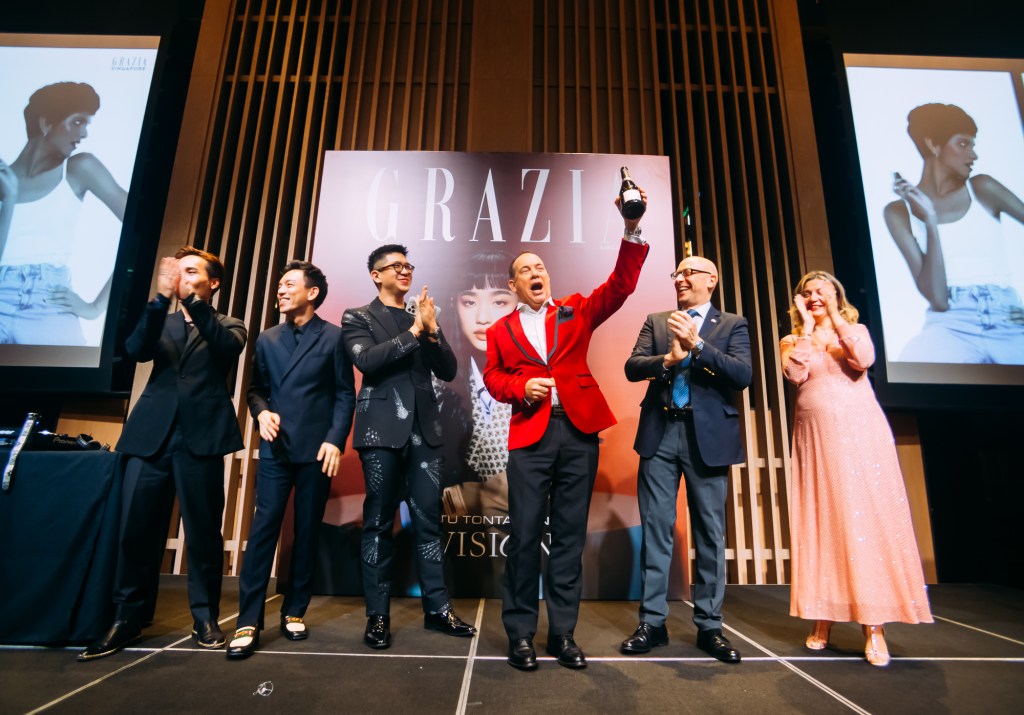
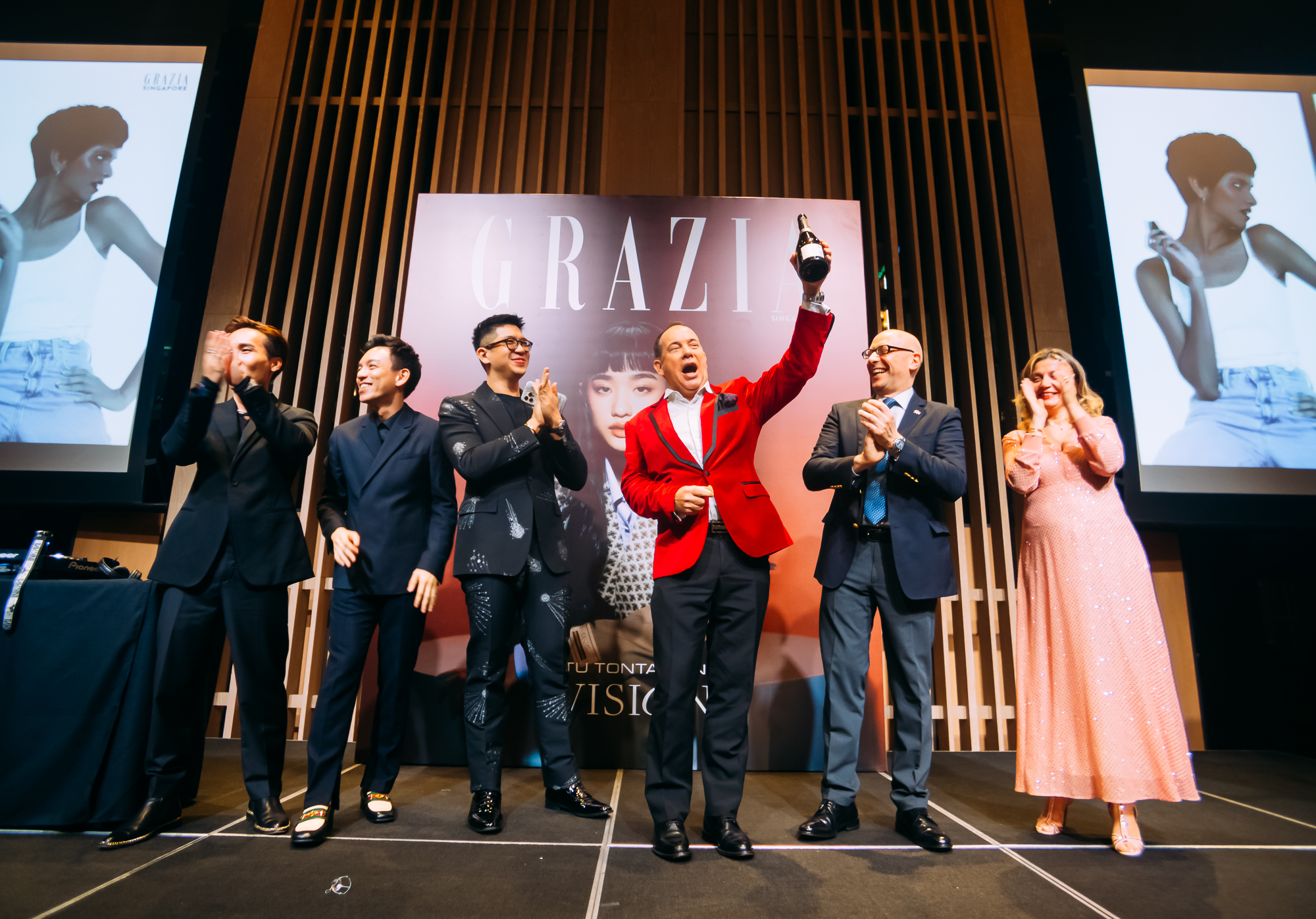
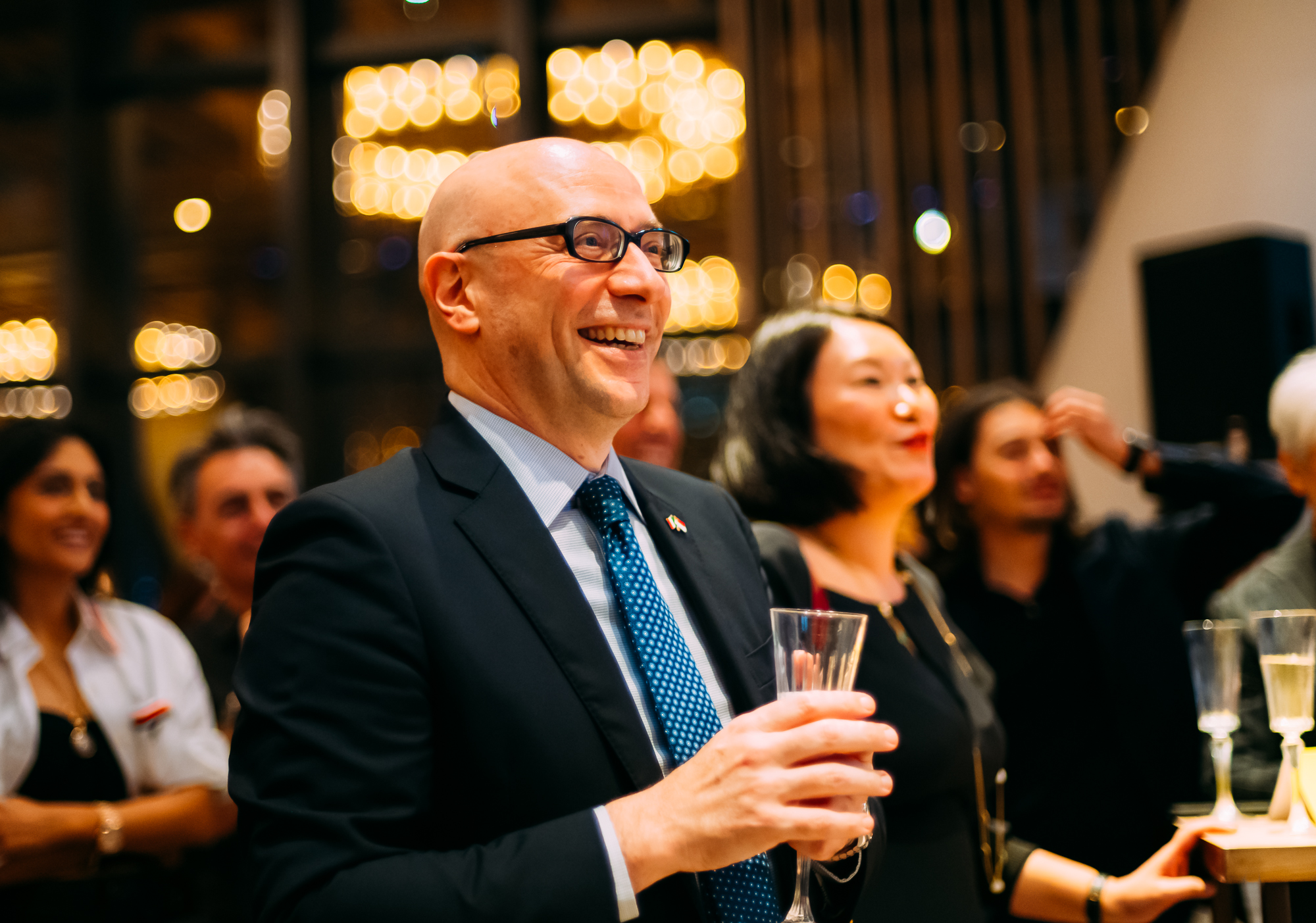 Mario Vattani, Ambassador of Italy to Singapore and Brunei Darussalam