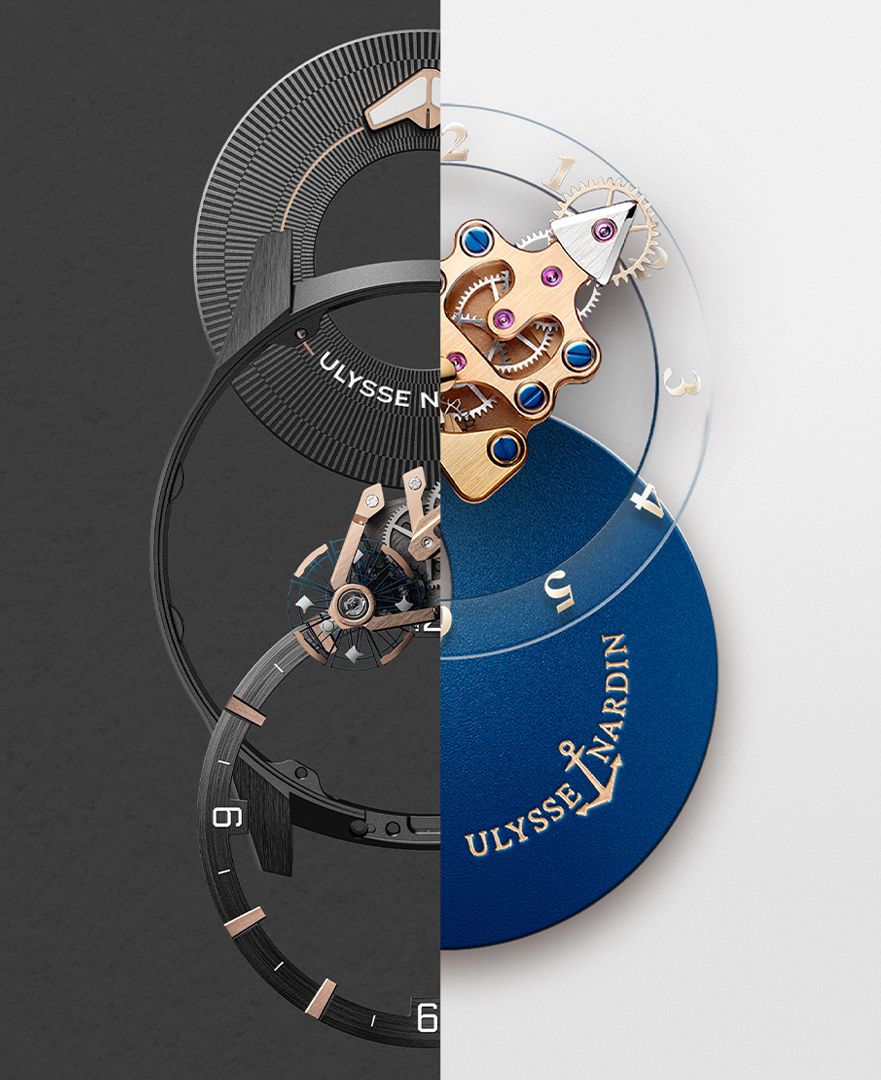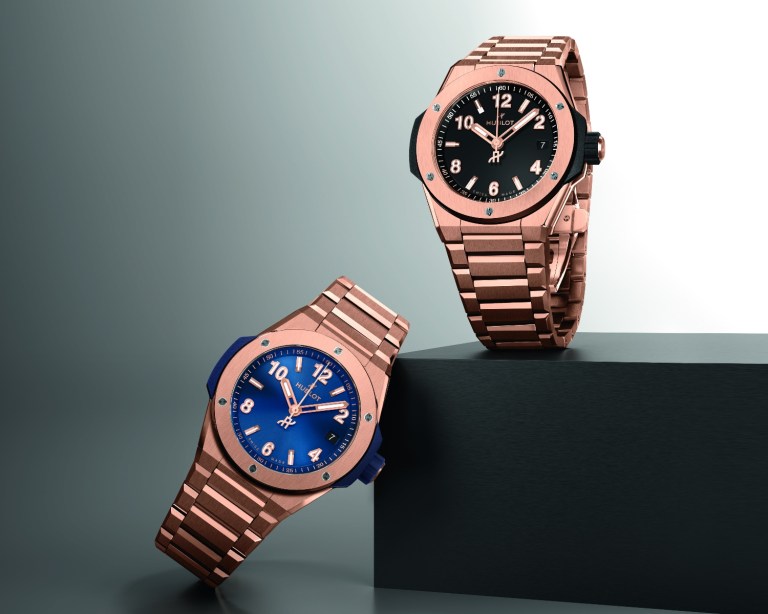
The Ulysse Nardin Freak is having a moment, having received long- overdue recognition from the GPHG. The true significance of this momentous timepiece is both in the past and the future…
“I just love the Freak One. It’s just an amazing watch. It’s a status watch. It’s a killer watch,” enthuses George Bamford, of Bamford Watch Department, and a Grand Prix of Horlogerie de Geneve jury member. “I mean, just calling it the Freak is impressive enough because that must have been a huge risk when the collection was first launched over 20 years ago. But then you have all that design content, those big ideas. It’s freaking nuts. It’s freaking mad.”
In 2023, the Grand Prix of Horlogerie de Geneve named Ulysee Nardin’s Freak One the winner of its ‘iconic’ category, acknowledging this latest iteration of the line debuted in 2001 – under the leadership of Rolf Schnyder and the watchmaking radicalism of Carole Forestier and Ludwig Oechslin – as totemic of something bigger than itself: a shift in the way watches were conceived and, in turn, perceived.
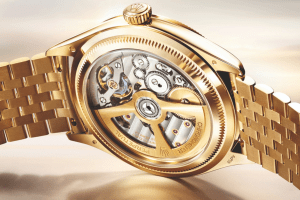
Here was a watch with no crown – the display is adjusted using the bezel, the watch wound using the casebook. More impressive still, here was a watch without a dial or hands, utilising the movement itself to display the time and, in turn, proposing that the movement could find visual expression as a kind of kinetic art. Here was one that also took a new approach to materials, being the first watch with a silicium escapement. Small wonder then that the Freak line has garnered some 20 patents for Ulysee Nardin.
“What made the Freak possible was that Rolf Schynder, when he acquired the company in 1983, was determined to make substantial investments in the manufacture. More importantly, he aimed to establish a manufacture with its own vision,” explains Clemence Le Rolland, Ulysee Nardin’s brand director for South East Asia and Oceania. Surely the effect of that vision was, however, greater than perhaps he imagined.
“[The Freak] deserves its current reputation for initiating the era of ‘modern’ watchmaking,” argues Le Rolland. “This era shifted the focus away from a classical, albeit high-end, approach to watchmaking to one that prioritised creating something entirely different and innovative. It inspired other watchmaking brands and brought a twist to haute horlogerie.”
Bamford agrees. He suggests that without the Freak – a watch given additional credibility in coming from a company of historic pedigree, dating back to 1846 – potentially new brands the likes of Richard Mille or Urwerk, both also known for unconventional approaches to watch design, would have had a harder time establishing a market following their launch soon after. Maybe the timeline of modern watchmaking should be conceived as being BF and AF: Before the Freak and After the Freak.
“We are more used to seeing weird and wonderful proposals in watchmaking more often now. Even in that context the Freak remains mesmerising: you look at it and immediately ask yourself ‘so how does this work?’. Figuring that out for yourself is part of what makes the design intriguing,” he suggests. “But what I think is especially telling is that Ulysee Nardin was taking that approach so long ago. To really appreciate the Freak you have to look at [watchmaking] history and appreciate what its launch did for the watch world at large. It’s akin to Swatch or G-Shock – it’s easy to overlook how radical they were when they were launched”.
Indeed, these and other pioneering watches might be too readily appreciated now as primarily being aesthetic leaps forward. And, as notes Maximillian Busser, Grand Prix of Horlogerie de Geneve jury member and founder of MB&F – a brand that also benefited from the path paved by the Freak – the various iterations of the Freak have managed to be unconventional while also being lightweight, compact and relatively streamlined. Unlike so many other exotic watches, they have also managed to remain comfortably wearable even on a small wrist – something Busser cites as being a major trial in the creation of his own timepieces. And yet, he stresses, all that is to miss the real import of these groundbreakers.
“Sure, before [the likes of the Freak, RM001, the UR103 or the Harry Winston Opus 1] the look of high-end watchmaking was incredibly classic and conservative. But that’s not why for me the Freak has to be considered one of the great contemporary watchmaking benchmarks of the early 2000s,” says Busser. “Rather it’s because it also required the development of an incredibly complex technology to make it come to life. These kinds of watches are not only about design. They’re not just about a nicely designed packaging of an existing movement. They represent overcoming enormous technical challenges. The Freak’s lack of a crown is a case in point. Since the movement turns on itself a traditional crown-stem wouldn’t have worked. And the solution just makes the watch that much more ground-breaking.”
From the Freak’s Dual Direct escapement – at a time when a watchmakers creating their own escapement was largely unheard of, George Daniels aside – to the idea of orientating the blades of the balance wheel to exploit air resistance for a more constant amplitude; from the hugely improved energy transmission of the Grinder automatic winding system to, more recently, the escapement being treated with a silicium and synthetic diamond plasma finish for abrasion and shock resistance… The Freak series has kept the innovations coming, without the original losing its relevance.
“Remarkably, although a multitude of new ideas have emerged since then, the Freak continues to stand out as a highly creative and unique watch,” argues Le Rolland. Indeed, in a way the Freak has come to replace the marine chronographs, with which Ulysee Nardin has long been closely associated, as the most direct expression of what the brand stands for today. Simply put, “it [expresses] Ulysse Nardin’s unconventional, avant-gardist mindset in its approach to watchmaking.”
All images, except one, are of the original Freak from 2001. It is remarkable that more than 20 years after its debut, it does not look out of place amongst the novelties of today
The final touch of ambiance in a Provençal farmhouse.
Using mouth-blown glass as the centrepiece of their creations, they have chosen this storied technique to enhance indoor lighting and dress-up interior spaces. Each of Concept Verre‘s products incorporates the latest technological and normative developments and reflects their know-how in terms of originality and manufacturing quality. The company successfully balances its opulent French roots to suit an international clientele.
The Circé collection adorns the lobby of Paris’s Charles de Gaulle airport.
A custom-made Circé pendant light in the Atol flagship store on the Champs Élysées in Paris.
Their in-house painter carries out the finishing touches; from subtle gradients to pastel hues and silvering, each finish has its own technique. They precisely apply every nuance, stroke, and detail to create a final look that perfectly matches the customer’s style.
The Circé pendant light completes the gorgeous interior of this seaside home in Marbella.
Encompassing residential property to public spaces and corporate offices, Concept Verre’s custom fixtures will add a touch of sophistication and character to any space. Each piece is lovingly and meticulously crafted to offer clients an unforgettable lighting experience.
Concept Verre’s iconic Circé collection in a vacation home on France’s West Coast.
With its wide range of personalisation options, Concept Verre believes that every fixture should be an extension of your personality and how you envision your interior to look. Be it an intimate ambiance, an explosion of colour, or a minimalist, contemporary aesthetic, Concept Verre aims to turn your vision into a reality.
Stunning 1903 Mercedes-Simplex heads vintage Mercedes-Benz cars for auction
SHARE
The models range in price from about US$1.6 million to over US$10 million for what has been described as the “first supercar”.
The 1903 Mercedes-Simplex 60 HP “Roi des Belges”, 1957 Mercedes-Benz 300 SL Roadster and 1955 Mercedes-Benz 300 SL Gullwing will all headline Amelia Island Auctions. The 1903 Mercedes-Simplex 60 HP “Roi des Belges”, is particularly interesting as it comes fresh to market from 121 years of continuous family ownership. The car will also be displayed at the upcoming Salon Rétromobile exhibition.
1903 Mercedes-Simplex 60 HP “Roi des Belges” (Approximately Upwards of USD 10,000,000)
Image courtesy of Gooding & Company
The Mercedes-Simplex 60 HP is a classic vintage car and was the blueprint for all of the automobiles that would follow. Considered to be the very first supercar, its design was so ahead of its time that it redefined performance capabilities, serving as the basis of Mercedes’ cutting-edge technology in their winning Grand Prix cars even as late as 1908. Manufacturers throughout the world would boast in their advertisements that their cars were built “in the style of Mercedes,” as these were the cars everyone wanted to make, drive, and own. Its importance, influence, and indelible legacy cannot be overstated.
Designed by Wilhelm Maybach and produced by Daimler Motoren Gesellschaft (DMG) at the behest of Emil Jellinek, the Mercedes-Simplex 60 HP is widely regarded as the first modern, high-performance automobile. Powered by a 9.25-liter F-head inline four-cylinder engine, which produced an ample 60 HP, the Mercedes was capable of reaching speeds topping 80 mph, making it the fastest production car in the world at the turn of the 20th century. The Mercedes-Simplex featured many of the mechanical and technical advances of its time, including a state-of-the-art chassis with a low center of gravity, a gated H-pattern four-speed gearbox, smooth scroll-type clutch, dual-chain drive, and honeycomb radiator. Between 1903 and 1905, the Mercedes-Simplex 60 HP dominated the world of racing, winning countless speed trials, hill climbs, and circuit races. Its unparalleled performance capabilities were most prominently displayed at the 1903 Gordon Bennett Cup in Ireland, where Belgian racing driver Camille Jenatzy won the race outright, defeating purpose-built racing machines in what was a stock production car delivered to a private customer.
Today, the car remains in highly original condition, with its fabulous Rothschild bodywork still retaining much of its original leather upholstery. This car is one of only four remaining examples in private ownership, with a fifth example, a Long-Wheelbase Omnibus, at the Mercedes-Benz Museum in Stuttgart, Germany. Further, the Harmsworth Mercedes is one of only two such cars with original coachwork still intact. Remarkably, this car has never changed hands, remaining as an heirloom within the Harmsworth family for over 120 years. However, what is most important is that this is the only Mercedes 60 HP that has a known racing pedigree, and a winning one, at that! It is being offered for sale for the very first time in its history, and is among the most significant cars to ever come to public auction. Gooding & Company has never before offered a car from such long-standing single-family ownership and is honored to present one of the most valuable antique-era cars in existence. Presented from the family of one of England’s most influential figures of the modern era, with documented period competition history, this Mercedes-Simplex comes to market as one of the most historic, important, and groundbreaking automobiles from the dawn of motoring – setting the stage for a historic moment ready to unfold in front of the world at the upcoming Amelia Island Auctions this March.
The iconic 300 SL Roadster needs no introduction, as it is one of the most coveted and revered sports cars ever produced. Gooding & Company is proud to offer one of the most original, well-preserved 300 SLs of any type in existence, chassis 198.042.7500348, for its upcoming Amelia Island Auctions. This extremely rare factory Rudge-wheel Roadster is one of less than 30 produced and is believed by the consignor to retain the vast majority of its original paint, along with its original interior, soft top, and countless other rarely seen details. This Roadster has had just three owners from new, and was retained by its second owner for a remarkable 54 years. In current ownership, the 300 SL received a painstakingly careful mechanical restoration undertaken by leading 300 SL specialists HK Engineering, who went to great lengths to preserve its original finishes in the engine compartment and other areas. The Roadster is resplendent in Silbergrau Metallic (Silver-Gray Metallic) with a Rot (Red Leather) interior and Schwarz (Black) soft top. The car is accompanied by an original set of Hepco-fitted luggage, along with manuals, a jack, tool kit, a second set of date-stamped Rudge wheels, a spare injection pump, and rare factory onboard parts kit. It also retains its matching-numbers engine, body, chassis, steering box, rear end, and front axles, per a copy of its Mercedes-Benz data card. The sheer number of this Roadster’s astonishing attributes make it an automobile of true historic import and extreme rarity. This singular Mercedes-Benz will impress anyone fortunate enough to see it, and a close inspection by even the most knowledgeable 300 SL enthusiast will be highly rewarded.
This fastidiously maintained 1955 Mercedes-Benz 300 SL Gullwing comes to Amelia Island with an exceptionally documented history from new, consisting of just two California owners from 1955 to 2023 before acquisition by the consignor. Its first owner was Glen Smith Harman, M.D., who regularly drove the car, accumulating over 130,000 miles by the end of 1967. The doctor exercised as much precision with the care of his beloved Gullwing as he did in his profession, keeping exceptional records of services and routine maintenance performed on the car throughout the decades. An engine rebuild was performed in 1973 by local 300 SL expert Rudy Geipel, and in 1986, the Gullwing was repainted in its original DB50 White. After Doctor Harman passed away in 1999, his wife Lillian carefully handpicked the car’s next caretaker, and in 2003, the Gullwing made its way into the hands of Gull Wing Group member and accomplished mechanic, Robert West. West owned the car for the next two decades, enjoying it sparingly on club events. Never before offered for public sale, this Gullwing is a true standout among the many examples that have previously graced the auction stage, retaining the essence of a well-maintained and lovingly cared-for 300 SL with a comprehensive, California-from-new provenance.
Elements of this article were referenced from Gooding & Company
For more on the latest in luxury cars and automotive news, click here.
Assessing Prime Residential Markets Globally in 2024
SHARE
Dubai and Auckland comes out tops in the markets that stand resilient for homebuyers to invest.
With holiday-goers returning from their trips and school now back in full swing, the winding down of New Year celebrations brings the rest of the year into perspective. Plans for buying a home and investing in property in 2024 might be on your mind should you decide to maximise your potential investment plans. LUXUO highlights the prime areas and risks involved when investing in property for the year to come.
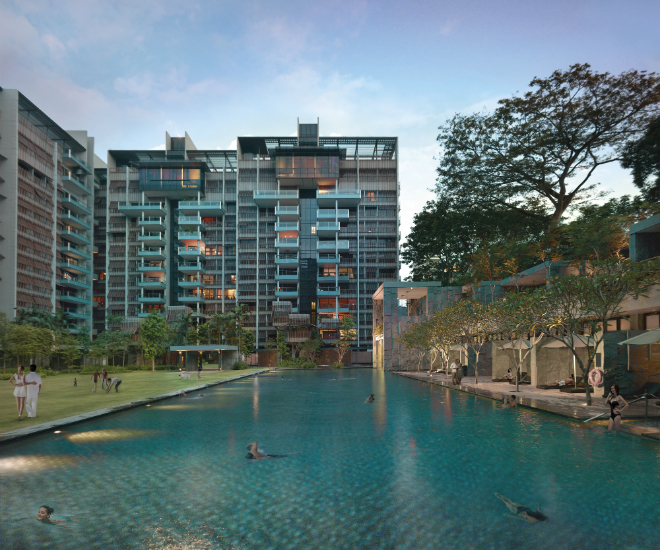
Goodwood Residences in Bukit Timah. Image: Goodwood Residences.
A recent Knight Frank 2024 report has revealed “cautious optimism” based on a global forecast. The findings also revealed that frontrunner Dubai is the location to invest for 2024.
While two major geopolitical crises occur, observers have noted varying approaches within the banking industry. As prices for gas and oil remain high, this has led to leaders in Canada and the UK signalling their intent to address inflationary risks. However, their political brethren in Europe and the US come at a more relaxed stance.
Kate Everett-Allen, Head of International Residential Research, Knight Frank, opines, “Amid this backdrop, the ‘higher for longer’ trend persists, leading to a notable shift in buyer behaviour. Our global research network reports that 52 percent of prime buyers now opt for cash purchases, an increase from 46 percent six months ago.”
The Economist’s report is more alarming: “Governments are grappling with mounting challenges, as public debt in the affluent world reaches historic levels relative to GDP, surpassing post-Napoleonic War figures.”
This inevitable consequence points to rising taxes, where policymakers will most likely focus on wealth and property. While these are the looming headwinds, Everett-Allen cites, “Overall prime price forecast for 2024 has grown from 2.1 percent to 2.5 percent since our mid-2023 global research team assessment. However, the outlook for 2023 has seen the most significant improvement. Our researchers projected a 1.7 percent average price increase at the year’s midpoint. However, this figure has surged to 2.4 percent with just a month remaining.
So, the silver lining on the cloud? Some prime buyers think that the worst is behind us. On the demand factor, interest rate hikes are witnessing a swan song while inflation puts on its brakes; therefore, buyers have regained their appetite in certain markets. In the supply factor, it is observed that there’s a reluctance among mortgaged households to move, buoyed by persistent labour shortages, high construction costs and planning delays; all these collectively contribute to a shortage of new stock entering the market.
Some Key Findings
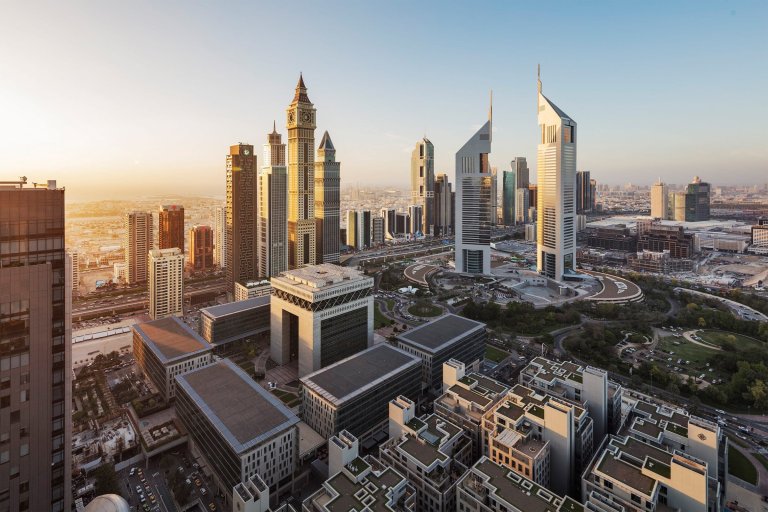
Dubai is one of the top destinations for homebuyers. Image: Red Magazine.
Dubai is in the lead as Knight Frank’s price forecast for 2023 points to 14 percent growth envisaged, while Auckland (+10 percent) is the frontrunner for 2024. Cash buyers, as a proportion of all prime sales, have risen from 46 percent to 52 percent in the last six months, according to Knight Frank’s research network. Upcoming elections in some key cities have become the most considerable potential risk to prime markets in 2024, with the relaxation of tax and property regulations considered the most significant opportunity.
Looking Back
A lot has changed in some key property markets, notably Singapore, Hong Kong and New Zealand. The Little Red Dot ramped up stamp duty for non-residents, taking total purchase costs to around 60 percent; Hong Kong took the opposite approach; New Zealand’s change of government offered relaxed rules for foreign buyers. Over in the United States, Los Angeles has put in place a mansion tax while New York’s authorities opted for a de facto ban on short-term lets. Prime residential prices have stood their ground with these changes in economic uncertainty and the uneasiness of geopolitical risks. Based on Knight Frank’s 2023 rankings, Dubai takes pole position where it has anticipated annual growth of 14 percent over the entire 12 months. The other countries that follow: Madrid (6.5 percent), Stockholm (five percent), Seoul (4.5 percent), and Miami (four percent), round out the top five; each city is either rebounding from recent price declines or experiencing robust wealth migration.
Therefore, investors are always looking to explore new locations and diverse property sectors based on the landscape of slower price growth, courtesy of the elevated cost of debt. While persistent inflation might throw a spanner in the works, the advent of new property cycles whets the appetites of eagle-eyed opportunistic homebuyers.
Crystal Ball
Peering into the crystal ball, Knight Frank tracked 25 cities where Auckland takes the lead for 2024, where it is anticipating a 10 percent increase in luxury prices. Dubai will snag the third position in 2024 with a projected prime price growth of five percent. Dubai witnessed a stellar post-pandemic performance-based, in fact, on the slowdown in the rate of price growth. China faced a scarcity of new prime supply and renewed demand, while India will see it remain in the positive realm; all have helped Dubai’s growth. The Emirate is pulling out all the stops to woo local and international buyers by focusing on its affluent enclaves, inland villas offering lush greenery, and more.
Christine Li, Head of Research, APAC, Knight Frank, chimes in, “Singapore is one key market to look out for as it seems to be insulated from the economic headwinds, particularly the Bukit Timah zone. The nation’s stable, business-friendly environment has made it resilient. Bukit Timah remains a prime choice for luxury living for expatriates and locals.
Madrid and Stockholm have become Europe’s best performers, all thanks to offering homebuyers good value, low purchase costs, high-quality life and no regulations or restrictions on overseas buyers.
Triptych Bankside residence in London. Image: Triptych Bankside.
Everett-Allen also sheds light on Paris, “The city of lights has a diverse mix of buyers, the euro remains relatively weak, providing some with a discount; the 2024 Paris Olympics will attract global interest; it is home to the most prominent urban transport regeneration plan in Europe (Grand Paris Express), and if approved, a Bill currently going through the French National Assembly could provide Brits with an automatic right to a long-stay visa.
Prime central London did not move its needle as it is poised for a milder correction than the broader UK market. This resilience is attributed to a higher prevalence of cash sales, particularly within Zone 1, coupled with prices currently sitting 15 percent below their previous peak.
Raffles Doha: Where Luxury Meets Unforgettable Hospitality
SHARE
Find out why Lucas Raven describes this hotel as one of the “best in Qatar and one of the finest in the world”.
As a seasoned traveler who has roamed the globe for years and resided in Qatar for a significant stretch, I can say without reservation that Raffles Doha stands out as not only the crown jewel of Qatar’s hotel scene but a global treasure among luxury accommodations. Nestled within the heart of Doha, the property manages the miraculous feat of being larger than life yet radiating the warm intimacy of a boutique hotel, crafting an unforgettable experience like no other.
Royal Treatment From Arrival to Departure
The Raffles Doha
From the moment you step into the awe-inspiring lobby, you’ll find yourself transported to a world where every guest is treated like a member of a royal family. The architecture is a masterpiece, marrying traditional Qatari design elements with modern, avant-garde aesthetics. The interior design, meticulously curated to perfection, effortlessly blends opulence and comfort, setting the stage for a truly regal experience.
The Raffles Doha
Yet what truly sets them apart is its impeccable butler service. The butlers here are not just well-trained; they are masters of the art of anticipation. The moment I arrived, a keen-eyed butler noticed a small issue with the leather handle on my luggage. With grace and humility, they asked if they could fix it for me. A mere day later, my luggage was returned, its handle restored to a condition that made it seem as though it had just left the workshop. It’s these small but meaningful gestures that etch memories and leave an indelible mark on your heart.
A Warm Embrace in Grandeur
The Raffles Doha
Raffles manages to maintain genuine warmth and a keen attention to detail, reminiscent of a family-run boutique hotel, despite its grand scale. The service team here is the epitome of perfection, an inspiration to all other hotels in Qatar. The personalised care and attention to even the minutest of details are the true hallmarks of a five-star experience, and this hotel effortlessly excels in this regard.
Culinary Perfection at Alba
The Raffles Doha
For those seeking culinary perfection in the heart of Doha, a visit to Alba, the Italian restaurant overseen by renowned chef Enrico Crippa, is an absolute must.
The Raffles Doha
This culinary masterpiece is not only the best Italian restaurant in Qatar but arguably one of the finest in the entire Middle East.
The Raffles Doha
The attention to detail extends to every facet of Alba, from the exquisite interior design that transports you to the heart of Italy to the carefully crafted menu that celebrates the essence of Italian cuisine. Every dish is a culinary journey, an experience that transcends the ordinary and transcends into the extraordinary.
The Raffles Doha
They have achieved the remarkable by elevating the concept of luxury hospitality to unparalleled heights. It’s not merely a hotel; it’s an experience that leaves a lasting mark on your heart and memory.
Raffles Doha truly deserves its place as the best hotel in Qatar and one of the finest in the world, and it’s a place I will undoubtedly return to time and time again.
For more on the latest in luxury hotels and retreats, click here.
Nick Downing On Why The Siam Hotel is Bangkok’s Latest Must-Stay Scenic Retreat
SHARE
Conceived by Krissada Sukosol Clapp and designed by acclaimed architect Bill Bensley, this stunning escape sits in the heart of Bangkok
Nick Downing, general manager at The Siam hotel
Nestled amongst Bangkok’s historical palaces, temples and museums, and along the River of Kings lies this expansive 38-room luxury retreat. Dubbed “The Siam”, this boutique gem is set on three acres of premium river frontage, transporting guests to a bygone serenity suffused with priceless antiquities, quintessential Thai allure and contemporary comforts. The Siam’s 38 rooms consists of 28 suites and 10 pool villas which include private pool villas and unique access to Bangkok’s historic palace district. At The Siam, guests have the unique experience of exploring Bangkok by boat from the hotel’s private pier. When it comes to relaxation, indulge in a pampering session at The Siam’s seductive spa or simply unwind with a sunset cocktail at the hotel’s riverfront bar.
The Siam hotel, Bangkok
With a striking million-dollar reinvention, The Siam has pulled out all the stops when it comes to enhancing the aesthetics of its interior space including a bold new black and light grey checkered courtyard with a soaring glass pyramid roof. Modern and functional, guests are welcomed into a temperature-controlled environment before indulging in an extraordinarily culinary experience curtesy of The Siam’s signature Chon Thai Restaurant.
The Siam Courtyard
The Siam stands out for its ability to meet the growing demands of today’s modern traveller while simultaneously staying true to honouring Thailand’s heritage. Genuine kindness, authenticity and a caring attitude are all Siamese characteristic that this hotel strives to maintain. Be it for an overnight escape or ultimate private riverside adventure, its no secret why The Siam was crowned as one of the “most iconic hotels of the last century” by Architectural DigestMagazine. LUXUO speaks to Nick Downing, the general manager at The Siam hotel to find out about the hotel’s unique offerings, curated artworks and future plans for expansion.
Tell us about your experience in hospitality and how it all started?
Being an only child of parents who travelled avidly, I suppose I was always destined to fall in love with hotels and different cultures. While I was at university studying Business and Information Systems, I actually wrote to all the five-star hotels seeking an entry level job. Luckily Hyatt Regency Perth offered me the night porter position and the rest is history. I was studying during the day and working the nightshift. Hyatt was my hospitality foundation; including me in all their training programs and promoting me through the ranks and eventually ended up transferring me to Park Hyatt Canberra as the Front Office Manager. From a solid ten-year period with Hyatt, opportunities opened ahead of me to take amazing positions ranging from opening Palazzo Versace to amazing experiences in Maldives, the Seychelles, Cambodia, Thailand and other countries around the Indian Ocean.
When did you join The Siam hotel?
I actually joined The Siam family in late 2016.
What is the DNA of The Siam hotel and how does the hotel differentiate itself from other high-end boutique hotels in Bangkok?
The Siam hotel, Bangkok
I always think words such as “luxury” and “boutique” are quite generic words these days without real meaning. I often feel “boutique” hotels are all about style but somehow missing soul or heart. Ultimately it has to be more than a simple design. That being said, we obviously have a stunning Bill Bensley designed property in the royal district of Bangkok. However I believe the secret is that we are family owned and independently managed. The Sukosol family lead by Khun Kamala has always given us the freedom to do whatever it takes to succeed. Our primary goal is to ensure we have happy guests and a happy team. This will ultimately lead to success as a property, creating an exceptional reputation for crafting memorable experiences beyond simply checking in and out.
The Siam is known for offering unique private pool villas but what do your guest love most at The Siam?
The Siam hotel, Bangkok
We have so many features at the hotel which differentiate us. Guests love the fact that we have so many hidden corners to explore. Whether it be the Vinyl Room with an amazing collection of vinyl records to enjoy, or the private screening room to enjoy watching that favourite movie with your family. Our Opium Spa which not only features a haven of exclusive space but also the opportunity to receive a traditional Sak Yant tattoo from a Master. Or perhaps it’s the opportunity to enjoy a class with our chef by the river learning some key Thai recipes. Guests constantly mention the sense of space throughout the property. Most hotel designers or owners would have put over 100 rooms on a site of this size, whereas The Siam was created to ensure a sense of exclusivity and serenity, a true sanctuary to retreat to after a day exploring the frenetic energy of Bangkok.
How easy is it to access Bangkok’s vibrant city centre using the Chao Prayah river?
The Siam hotel, Bangkok
This is the key to the guest experience of The Siam. Guests take advantage of our private water limousine than runs on a schedule throughout the day for our guests to explore key historic sites and head out for amazing meals or shopping experiences. Trips are arranged through their butler and coordinated depending on their wishes. Not only does this escape Bangkok’s infamous traffic snarls, it also ensures that guests can accurately plan their day knowing they will get somewhere or return to the hotel at a specific time, ultimately maximising their time with us.
Every detail at The Siam hotel tells a story with an emphasis on reinvigorating local craft, arts, culture and community. Tell us more about its exterior as well as interior design and decoration.
The Siam hotel, Bangkok
The Siam was designed by Bill Bensley who always has a sense of drama to his properties. The Siam is no different and is quite striking. A blend of Deco and Asian influences. Dramatic black and white scenes throughout the hotel. However due to both Bensley and the owner’s love for the reused and repurposed, the antique and curios, the whole hotel gives the atmosphere of a Hotel and Museum with its corridors and rooms filled with artwork and antiques from around Asia and beyond. Owning family member, Krissada Sukosol-Clapp is known for constantly decorating and styling areas around the property as he finds new pieces or inspiration. The latest is the Bar at The Story House which had taken a dramatic turn with red accented pieces and a gothic style chandelier. Both recent additions for the surprise of our regular guests.
Tell us more about the special relationship between The Siam and Thai luxury brand Jim Thompson?
In 2022, it was decided to convert our famous Connie’s Cottage from a guest villa into public space. We had various ideas what to do with the spaces. However it was owner Khun Kamala who suggested we open discussions with Jim Thompson (as an internationally recognised iconic thai brand) to see if they would be interested in a formal collaboration to take over all or part of the villa. This was especially relevant as Jim Thompson features in the history of the four antique Thai houses that are on the property. We then had a discussion with the incoming CEO Frank Cancelloni who was also looking to partner with other iconic Thai brands. We eventually came to agreement for them to take the ground floor as a small retail space which would introduce our guests directly to the brand with the idea to entice them to visit their revitalised and relaunched Heritage Quarter downtown. I am pleased to say the partnership and collaboration has been a great success for both parties.
What The Siam has on offer on fine dining?
The Chon Thai Restaurant
Our signature restaurant is the riverside Chon Thai Restaurant. However rather than going down the “fine dining” route, we have preferred to focus on exceptional home-style cuisine for our guests to enjoy the best flavours from Thailand while sitting in the historic surroundings of century-old wooden Thai houses.
The terrace at The Story House
To counter this traditional Thai experience; during the covid period we chose to create a new dining experience at the other end of the hotel called The Story House. A striking Bensley designed renovation was completed and a dramatic series of rooms filled with Krissada’s antiques, artworks and furniture created a space for guests to experience a menu of contemporary culinary options with flavours from around the world. Opening Executive Chef, Blair Mathieson was bought back to launch this restaurant and I am delighted to see guests enjoy a wide range of options with many plant based specialities also.
Will The Siam experience in Bangkok be reproduced in other parts of Thailand? What are the plans for brand expansion?
Boats are available for charter for sunset cruises and exploring local temples
In November 2019, we actually announced plans for The Siam Chiang Mai. The Sukosol family have purchased an incredible site which lends itself to create an experience unique for Chiang Mai. For us, it’s important that any new guest experience we create in Chiang Mai (or elsewhere) is also a logical and is a welcomed extension to the one we have created in Bangkok. Ultimately Covid paused this project and we hope to revisit this in the near future and bring the project to life.
Bangkok is rapidly changing. What are some of the challenges the city is facing post-Covid in attracting more tourists from the Southeast Asian region and beyond?
The Siam hotel, Bangkok
The Bangkok skyline is changing daily and is unrecognisable from ten years ago. This includes a multitude of new hotel developments stretching from downtown to the riverside with more to come in the next few years. The challenge comes not only from increased local competition but also from other countries and regions. Ease and cost of travel to and from any country is critical as well as the safety and security of travellers while visiting. Even though travellers have short memories and tend to revert to old travel habits in a short period of time, it is also critical for any country to be politically stable. Thailand continues to prove its resilience and continues to look forward with hope.
To end this interview, tell us one secret that you have never shared about The Siam hotel? Perhaps a hidden location or a secret experience?
The Siam hotel, Bangkok
There is not a period of time that we are not thinking about the next guest experience we create or how to elevate The Siam to new levels. Whether it be improving a space or looking for new ways to impress guests. For example we are starting a collaboration with a local photographer who has taken metal plate vintage portraits and we are introducing this unique experience for our guests. I cannot share the exact details but we are currently looking at the feasibility of another guest experience that would definitely be a first for any Bangkok or indeed any Thailand hotel. But sorry, you will have to wait for those details!
For the latest in luxury property reads, click here.
Introducing London’s Latest Luxury Hotel: The Broadwick Soho
SHARE
A seductive character with a historic location, The Broadwick Soho is an independent luxury hotel in the heart of London’s West End.
Grit, glamour and dynamic energy collide to create an opulent yet contemporary 57-room retreat in London’s most storied neighbourhood, Soho. With its 90 colourful streets packed into one square mile, Soho has been the pulse of this rich city for centuries. Besides the unbeatable location, the interior of Broadwick Soho is a feast for the senses as it blends glamour and comfort in equal measure.
Broadwick Soho’s townhouse aesthetic was created by world-renowned interior designer Martin Brudnizki whose repertoire includes Annabel’s, The Beekman and Scott’s Restaurant. The space evokes a range of inspirations and references from Jazz-Age opulence to an Italian escape, a touch of British eccentricity and a dash of “disco fabulousness”. Each room features bespoke furniture and individually selected artworks while the walls are decorated with rich geometric patterns and vibrant prints that are complemented by a soothing colour scheme and the artful layering of different textures and materials.
While the rooms (including nine Suites and one Penthouse) effortlessly exude the vibrancy of its surrounding location, it is the eclectic mix of restaurants and bars within Broadwick Soho that offer a unique experience for any time and occasion.Dear Jackie, the hotel’s flagship lower-ground restaurant, serves classic Italian dishes with a modern twist. Inspired by for Italian splendour and nighttime glamour Dear Jackie is cloaked in a seductive Murano lighting, red silk walls and plush booths.
Bar Jackie, the little sister of Dear Jackie, is an all-day street level Italian bar and terrace that serves up anything from barista-made coffee to an evening aperitivo. Flute is Broadwick Soho’s rooftop dining bar and terrace, and has been deemed as the “crown jewel” of the hotel for its show-stopping décor and incredible views over the rooftops of London. The Dining Room is located at Broadwick Soho’s eighth-floor private dining room and offers an elegant backdrop for some of London’s most exceptional celebrations. With floor-to-ceiling windows guests can be wined and dined with magnificent views of the city.
Broadwick Soho is a love letter from the property’s owner, Noel Hayden to his family and is the culmination of a long-held personal dream to open his own luxury hotel in Central London. The essence of the hotel is birthed by the magic and nostalgia from Noel’s family’s hotel Mon Ami, combined with the history and vibrancy of Soho. Elements of the hotel give a not-so-subtle nod to Noel’s family — from Jackie Noel’s beloved mother to vintage images from Noel’s family photo albums form part of the hotel’s art collection. Broadwick Soho boasts a spectacular collection of artworks throughout the property including the likes of Francis Bacon, Bridget Riley, Andy Warhol, and William Turnbull, amongst other vintage relics and exciting emerging artists’ pieces from Faye Wei Wei and Casey Moore to name a few.
Joining Noel in bringing Broadwick Soho to life are his friends Jo Ringestad, Joshua Gardner, Andrea Gelardin and Jamie Poulton. This group of friends who together conceived Broadwick Soho, are committed to providing an impeccable service and creating memorable experiences for every guest.
For more on the latest in luxury hotels, click here.
The monumental El Primero 9004 movement is back in business, this time in a case that equals its razzle-dazzle
Zenith’s DEFY Extreme Mirror
Zenith defies expectations once again with the extremely reflective Defy Extreme Mirror, which is another iteration of the brand’s ultra-high frequency chronograph. Watch enthusiasts and chronograph collectors will certainly recognise this as another spin on the dual-escapement dual-mainspring 1/100th of a second chronograph, which is now the only such chronograph in series production. In its debut guise as the El Primero 21 in 2017, the watch introduced the calibre 9004, which is right at the heart of this horological gem. We will return to the movement momentarily but form must take precedence here because, well, just look at it.
Zenith’s DEFY Extreme Mirror Highly polished tool watches are nothing new but the Zenith Defy Extreme Mirror takes reflective surfaces to a new level, if the pictures are anything to go by (we will be shooting this watch soon so look to the coming issue of WOW Singapore for our thoughts on the watch in the metal – Ed). Zenith calls the Extreme Mirror the “ultimate, ultramodern camouflage watch” and we can only think that this means that the watch will have a sort of chrome-like finish, despite being entirely cased in stainless steel. Think perhaps of the iconic sheen of certain memorable contemporary watches from the likes of Chanel and Rado for some context, although both these brands were using a sort of ceramic to create the effect.
Zenith’s DEFY Extreme Mirror
Itself no stranger to material experiments, Zenith instead opts for uniformity in this model, with everything from crown and chrono pushers to case middle and bezel in the same steel. As you can see, this steel has apparently been polished so thoroughly as to challenge the eye. For the ultimate experience, the bracelet looks promising but because this is Zenith, there are options. The Extreme Mirror has the usual interchangeable strap system and comes with two extra straps: rubber with folding buckle and Velcro.
Zenith’s DEFY Extreme Mirror
The potential brilliance of the Extreme Mirror is precisely why Zenith is touting camouflage credentials here, which has us thinking that this watch might be the polar opposite of the stealth all-black watch (pioneered by Hublot), while essentially having the same effect. The very brightness of the model might render it invisible, except in its timekeeping and chronograph functions. Given that the three-dimensional multi-level dial also sports some mirror effects, the openworked hands with SuperLuminova SLN C1, the markers and the chronograph tracks all appear to hover in a fetchingly ethereal fashion. The proposition here is that this will keep things nice and legible.
50 Hz chronograph escapement
Now for those of you who do not recall, here is the tl;dr on the chronograph movement. It is effectively two watches in one, with one part of the movement (powered by a 5 Hz escapement) handling regular timekeeping, while another part handles the chronograph (powered by a 50 Hz escapement). Both parts have their own mainsprings as well, meaning any 1/100th of a second chronograph watch powered by the El Primero 9004 has two movements in one watch. There is no need for clutch systems here, consequently, and it is not really a modular system either. One significant consequence for owners here is remembering that the chronograph runs on its own train, and is actually manual-winding. This is why the chronograph, with its shorter power reserve, has its own power reserve indicator on the dial.
Zenith’s DEFY Extreme Mirror
Finally, the Extreme Mirror bears the distinction of a new naming convention, with Zenith choosing to drop the ‘21’ from the name; it was called the Defy El Primero 21 in 2017, and was most recently available in the Defy 21 Chroma guise (the only version still in stock, according to the Zenith website). Unlike some previous iterations of the 1/100th of a second chronograph, the Extreme Mirror is not a limited edition. Furthermore, it is available online from Zenith and in Zenith boutiques, plus authorised retailers.
Movement: El Primero 9004 with dual escapement chronograph; 50-hour power reserve (time only); 50-minute power reserve (chronograph only)
Case: 45mm in mirror-polished steel; water-resistant to 200m
Strap:Polished steel bracelet with folding clasp, plus two additional – rubber and Velcro
Special needs and differently-abled performers scale new heights alongside international superstars at the recent Extra·Ordinary Stars concert
Extra·Ordinary Stars concert. EXTRA·ORDINARY PEOPLE
“Tonight, our audience members were visibly touched by the hard work and talents of our differently-abled performers, some of whom performed for the first time alongside international superstars,” says Wee Boo Kuan, Co-Founder of Extra·Ordinary People.
1 December 2023 marked a transformative moment in the nation’s performance arts scene. Singapore’s Extra·Ordinary Stars concert was a groundbreaking showcase of not only talent but also inclusivity.
The curated performances, designed to highlight both mainstream and differently-abled artists, were held at the Star Theatre. The 5,000-seater venue was packed to capacity. The live show is set to reach an even broader audience through international broadcasts.
Cyril Takayama kicked off the star-studded evening with a mesmerising magic show, followed by Zanna’s piano rendition of “Nothing Is Impossible.” Benjamin Kheng, accompanied by Ng Kok Wee’s flute performance, delivered a moving rendition of “Do I Make You Proud.” Glenn Yong’s energetic performance of “Break Out” with John Chan showcased the seamless integration of diverse talents.
Cyril Takayama. EXTRA·ORDINARY PEOPLE
The Unleash Your Light Taiwan crew brought the house down with a dynamic breakdance. It’s followed by a performance featuring “The Story of Annie.” A-Lin, a Taiwanese superstar, captivated the audience with four of her hit songs. Ten children were incorporated into her heartwarming performance of “Romadiw.”
To generate excitement, the concert organisers launched the 54448 Dance Challenge on social media. Symbolising the word “LIGHT” on an alphanumeric keypad, participants not only engage in a captivating dance but also embody the inspiring message of being a “Light to the World.” The challenge culminates with a winner announced in December. Not only that but with a chance to win up to SGD10,000 in prizes and a matching donation to a charitable cause.
“Donations will go a long way in benefiting the underprivileged and special needs communities, but most importantly, the human connections made today form a firm foundation for a kinder and more inclusive society.”
Realising that special needs individuals cannot be thrown in the deep end after their education, and might require opportunities and guidance even in adulthood, Wee founded Extra·Ordinary People in 2017 to provide continual support to differently-abled individuals and to inspire a more inclusive world.
The Extra·Ordinary Stars concert is the flagship event for the Unleash Your Light movement. This cause envisions a world where genuine human-to-human connections form the foundation for personal and societal transformation. The movement believes that these connections can shatter limitations, ignite individual potential and empower everyone to shine.
Cartier Director of Image, Style, and Heritage Pierre Rainero waxes lyrical about his more than 30 years of history with the brand
Cartier Director of Image, Style, and Heritage Pierre Rainero
When it comes to timepieces, fine or otherwise, style is often not part of the package…at least not style as defined here by the Oxford dictionary, which goes something like this: a distinctive appearance, typically determined by the principles according to which something is designed. Of course, if one looks at Mirriam-Webster, one finds something a little more useful to the idea of style and watchmaking: a distinctive quality, form, or type of something. That one is succinct and perhaps best suited when it comes to introducing a man for whom style is his entire job…well, a part of it at least.
Helpfully, Pierre Rainero, Director of Image, Style and Heritage at Cartier, has published his own definition of style, which I have referenced on more than one occasion. It will now come home to roost, which I find most gratifying. “Style is the incarnation of a philosophy that conveys complex things in a simple way. It has its own sensibility, and thus becomes a way of anticipating, experiencing, and communicating feelings and emotions – style, perhaps, is simply the expression of a vision.” Rainero wrote that in his chapter in the Flamarion hardcover Cartier: The Power of Style (2010).
Combining image and heritage with style, and you might think that Rainero is the de facto creative or artistic director, but that is not the case. No such role exists at Cartier, although his title originally was Communication and Artistic Director back in 1999. In fact, Rainero has held a number of roles at Cartier since 1984, when he first joined. It was a time of change at the storied jewellery and watch firm, and Rainero has had a front seat alongside the great names of that time…Perrin, Cologni, Fornas… We sat down with Rainero to hear his story at Watches and Wonders Geneva 2023.
You have a rather impressive title, which you have held since 2003. Tell us about it?
All the new Collection Prive models this year
Well, every day is different of course, because in fact I have many different things I’m involved in… The central responsibility, of course, and that explains all the other ones (as you will see), is my involvement in the creative process. So that’s effectively the style part of my title.
In 1998, Alain Dominique Perrin was President of Cartier and he had that role (as artistic director) without having the title – he was president, so he could do everything. In 1999, when he was leaving to become president of Richemont, he told me ‘you will be the artistic director.’
So, for a while I had the Communication and Artistic Director title, and very quickly I realized that it was not exactly what I was doing. For two reasons. First, I realized immediately that there are many people who are responsible in the creative process; in the making-of process of the artistic dimension of each of our objects. There is basically a synergy of talents. Probably I could already have known this (before taking on the role)!
Anyway, each of these creatives has an influence on the artistic part; you know that in jewellery, it is even more obvious than in watches.
So you knew that no one person could do the job?
(Right) Dial, handset and surprising movement of the Tank Americaine (Left) The hands being attached to the dial of the Tank Americaine
It is not one person who could be entitled to (the entire creative dimension) because it is not true. The second reason (that my job was not exactly what my title said it was) was, in a way, really to have and share a vision of what a Cartier object should be today, and of course, in the near future, because we work some years in advance, depending on the category of items.
I’m not the creative because the creative part is on the side of the designers as it has always been since the time of Louis Cartier himself, and Jeanne Toussaint [the legendary fashion and jewellery designer]. Louis Cartier himself used to call them (the designers) the inventors.
Tell us about your portfolio as it is today, and what a typical day looks like for you?
So my role (today) is to discuss with the creatives (the inventors), at all stages, about which direction Cartier should go towards. (Together, we try to identify) what makes Cartier so different, with a historical approach (for example), and try to explain why the objects were like they were at that time. What was the philosophy behind those objects and how can or does this philosophy apply today. My interaction with the creatives is at all stages, even before the design brief.
Day by day, I have many questions arriving on my desk. Maybe I have a design head, the head of a studio, saying we are thinking of doing something, and what do you think about it. Or maybe they have a prototype to show me. These are the unscheduled meetings, but of course there are plenty of scheduled ones!
And by the way, the style part of my title includes my involvement in everything that is created at Cartier, like the architecture of the stores for instance. I’m also involved the same way with the architects and interior designers…I am the link between image and style because effectively the style of the store is a part of image-building, for example. As a consequence, I am also in charge of the cultural and artistic aspects of Cartier. This means all Cartier’s links with external institutions or schools all over the world. You know, so I travel a lot [before Watches and Wonders Geneva 2023, Rainero was in Mexico City for a Cartier exhibition and he went to Hong Kong the week after the fair for another exhibition scheduled to open there]. My work is not only with the curators (of the exhibitions) but also the backroom part, including contract negotiations and this sort of thing. There is also a permanent component to this because we are always in contact with some institutions, such as the Louvre in Paris, the British Museum and the Metropolitan in New York, because they have Cartier pieces in their (respective) collections (and may acquire historical pieces now or in future).
Why is Cartier’s history so powerful?
Various Tanks
The history of Cartier and the production of Cartier both are so rich because (among other things) since the first years of the 20th century, we became the first real (watch and jewellery Maison) in the world. Meaning in terms of innovation (by virtue of being first), yes, but also just in terms of production. We became sort of an object of curiosity for the people of the whole world. A century ago, Cartier was so big that all the other jewellers were looking at it and calling it the ‘Firm’ because it was already something incredible. We had production already in London and New York so, as I used to say, it was really possible for a young guy to have an international career at Cartier in the early 20th century. It was really not so far from an international company of today. We were sending people to Hong Kong, to Tehran, to South America…we have all the reports of those people (the commercial reports).
It is incredible when you think of it, so that’s why there’s a richness in terms of production, and also different categories of products because Carter is so unique in this way…and also of having that watchmaking part as equal to the jewellery part. We also greatly improved the making of objects of many different kinds, and it makes Cartier one of the main actors in the decorative arts in the applied arts segment. There is also a human dimension to this story, and I’m not referring only to the Cartier family (in those early days) because very, very quickly the family needed a lot of people to manage the company.
What sorts of people are you referring to, and are you ever surprised by what you yourself learn about the brand?
Bagnoire watch
So they are less known to the outside world but we at Cartier know them. I’m talking about the directors for London and for New York, you know the succession of them (and the significant things they did for Cartier)… For instance, the help we gave to Charles de Gaulle during World War II was decided by the director, not by the Cartier family. This was just one of many examples, including Jeanne Toussaint [who was not a member of the Cartier family, but was appointed Director of Fine Jewellery by Louis Cartier in 1933; she remained with the firm until 1970, after the Cartier family had sold the business].
So you realise the power of those people…the artisans; it is an incredible number of people over the years. It is a human adventure, the story of Cartier, you know, and that makes it so rich. This also makes it difficult to apprehend everything about Cartier because as a commercial entity, what we keep in our archives is mainly linked to how the company works and the production; that’s already very important because it is the link with the clients. But you know, of all the dimensions of decisions taken to open a store or a market, we only keep what we have a legal obligation to keep. The information on personal interactions (and the human story of the people who worked at Cartier), we have almost nothing, or perhaps we have only a few things. So that’s why I see there are many, many things still to discover…including the reason why the name Ronde was given to this Santos model [a vintage watch worn by a Cartier employee who sat in on the interview], which is actually not round at all…I never received an answer to my question when I first joined in 1984, and I still don’t know!
Moving to watches and jewellery, how important is the feel of the pieces versus how they look?
In jewellery, ergonomics is key, and in fact our vision in terms of watchmaking and jewellery is linked (by this). It is a specific skill in jewellery (or to jewellery) in considering how the object will wear… it is not like making little sculptures, which is something that might come to mind (as being analogous). Jewellery is worn, and worn mainly by women, and also always in motion, which has enormous consequences for how the jewellers conceive objects. This culture (of creativity) from jewellery is also very important for watchmaking (because watches are also worn). So if we have a specific (identity) through our creations in watchmaking, it is because we were a jeweller before being a watchmaker.
I think being a jeweller first also gave us (a degree of) freedom in a way and that also makes it totally obvious when you think of the (initial) decision to go on shapes. In fact, we became the designer of shapes in terms of watchmaking, but there is a total logic there because we were not originally a provider of movements and we were not on the technical side; we were a creator of beautiful objects. For us, a watch was a beautiful object or had to be a beautiful object, and that is our vision and explains everything we do, till today I think.
What is a Cartier watch design that challenged you?
The Tank Normale in yellow gold with new distinctive bracelet
Well, the Ballon Bleu was for me one of the most interesting exercises I had to face in terms of creativity because we wanted a round watch, but typically Cartier, so it is a contradiction in terms. Because, you know, we were born doing all shapes but round (and thus known for our range of various shapes, as I said). Thus for Ballon Bleu, we said let’s think of this design as if nothing is impossible; impossible is not French!
So, we went forward and the idea was to create something like a pebble; the brilliant idea was to get rid of the (traditional) crown) by including it within the circular shape of the case (instead of protruding as it normally does) in a space that was like a bubble. Obviously, it is not a regular round watch because it is so bizarre to not have the crown present as usual. But the design logic is there, and the ergonomic presence of the watch, in terms of how soft it feels, is there. One thing I recall perfectly about this model is the design of the bracelet, which I thought should be elegant and serviceable, not adding something else in terms of creativity, or another point of interest.
How much of Cartier’s design philosophy, as far as watches go, can be tied back to 1904?
Stylised visual of the gem-set Tank Americaine in action
I think when you analyze the creations, the different creations in terms of watchmaking from 1904, the original design of the Santos (from the first piece designed in 1904, for aviator Alberto Santos-Dumont and then the production models in 1911) until (the designs of) 1917, and the 1920s…it is very, very interesting because you have that idea to design for the first time an object that contains a watch designed specifically to be worn on the wrist (as a tool).
That was brilliant because before that, a man could only wear a pocket watch linked with a strap on his wrist. The basis of the design for the watch Santos-Dumont would use was a square shape with rounded corners because we had pocket watches in this style. But, if we create an object, it has to have aesthetical validity; the Santos-Dumont of 1904 was valid as an object, but for Louis Cartier and his team it was not corresponding to the purest shape possible to achieve the objective (of being a great wristwatch). So we followed up with the Tonneau watch just two years (1906) later, which was bigger. That is why it was curved, because it had to follow the curve of a wrist. If it was smaller, it could be flat, so in 1912, we came up with the Tortue, which is the flat version.
Five years later, in 1917, it was the (now-famous) two parallel lines (that characterised the Tank). There is nothing simpler than two parallel lines that link up (the Tank Normale this year harks back to this original Tank). In 1922, Louis Cartier himself asked to get rid of that metal between the lugs, and to just have the two parallel lines and no metal (or as little metal showing as possible). So, in our archives, this Tank is suddenly called Tank Louis Cartier. Louis Cartier personally asked to do that and to produce that model, you know, and it was not often like this, where he interfered in the design process. So if that watch bears that name, it is because his will to modify it was very strong. The sense of purity here is really something very important, not only for Louis Cartier but for many people of this time. The two first decades of the 20th century, that’s where many revolutions happened in terms of design, art in general and many other areas, and Louis Cartier is part of this new era.
This article was first published on WOW Autumn Issue #70
For more on the latest in luxury watches, click here.
Here’s What Happened at the Jim Thompson Heritage Quarter Grand Opening Party
SHARE
Jim Thompson makes moves to evolve into an all-encompassing lifestyle brand from Thailand beyond its existing reputation for beautiful silks.
Jim Thompson Heritage Quarter Grand Opening
It was all smiles as celebrities, models, musicians and entrepreneurs descended to the heart of Bangkok to celebrate the launch of the Jim Thompson Heritage Quarter in Thailand. In a dazzling display of cultural fusion and modern flair, the grand opening was graced by celebrities and punctuated by a fashion showcase of unrivalled creativity, celebrating the new “Beyond Silk” ethos. This destination is now poised to draw visitors from across the globe, setting a new standard for flair and ingenuity in the heart of Thailand.
The spectacular opening saw the attendance of several renowned Thai celebrities, including Pruk “Zee” Panich, Chawarin “Nunew” Perdpiriyawong, Thitiya “Baipor” Jirapornsilp, Jumpol “Off” Adulkittiporn, Atthaphan “Gun” Phunsawat and Vasin “Ko” Assawanarunat. Also among the guests were top management from Central Group, King Power, One Bangkok and Siam Piwat. However, it was the fashion show that formed the centrepiece of the event.
42 captivating looks were unveiled, each establishing a new benchmark for sartorial creativity and sophistication. The Jim Thompson collection showcased a versatile range, bridging the gap between relaxed beachwear and the sophistication of everyday wear for work or travel.
Jim Thompson Heritage Quarter Grand Opening
The highlight was the dramatic reveal of the last look – “Look 42” – a testament to the enduring innovation, artistry, and heritage that Jim Thompson is celebrated for. The show’s pinnacle look paid homage to regal sophistication with the Ikat Silk/Metallic Jacquard Gown, inspired by Her Majesty Queen Sirikit’s iconic Thai silk gown. The showstopper gown was a masterful rendition of Jim Thompson’s exquisite metallic and golden silk fabrics, offering a modern take on Thai tradition for the discerning aesthete. Accompanying the fashion show was an artful selection of songs which chronicled the company’s journey since the 1950s — each emblematic of its era, deeply connected to key moments in the brand’s history and to its founder, Mr. Thompson.
Jim Thompson Heritage Quarter Grand Opening Fashion Show
Frank Cancelloni, Group CEO at Jim Thompson, reflected on the event’s success, stating, “The grand opening of the Jim Thompson Heritage Quarter was a celebration of our heritage and a declaration of our future. It represents a pivotal moment as we embark on our mission to become Asia’s first iconic global lifestyle brand. We are proud to showcase Thailand’s rich cultural tapestry to the world through our diverse offerings.
Culinary artistry was at the forefront with a menu designed by the executive chef of Jim Thompson, A Thai Restaurant offering an array of signature dishes. The O.S.S. Bar showcased its celebrated mixologists with meticulously crafted drinks. These unique epicurean experiences not only showcased the brand’s unwavering dedication to delivering exquisite dining experience but also set the stage for an unforgettable after party held at The Moonlight Hall, featuring a line-up of DJs and the admired Thai band – Nisatiwa.
This was instrumental as the culinary landscape at Jim Thompson Heritage Quarter promises to become a food connoisseur’s paradise. Jim Thompson, A Thai Restaurant, has undergone a vibrant transformation, aiming to become a cornerstone of modern Thai cuisine with its creative menu offering an inventive twist to classic flavours through an enticing à la carte menu.
This new lifestyle quarter provides a dynamic space where history, art, culture, cuisine and retail experience converge, reflecting Jim Thompson’s vision of crafting a global destination that celebrates the essence of Thai heritage and modernity.
The success of Jim Thompson Heritage Quarter’s grand opening has set the stage for the brand to continue its evolution as a leader in the global lifestyle sector with this new venture as a vibrant lifestyle destination, drawing both international and domestic tourists to the heart of Thailand.
For more the lastest in luxury and business, click here.
Gioele Amaro Ushers in the New Era of Contemporary Art
SHARE
With a background in architecture and a fascination for vivid surfaces, this “digital painter” has mastered the art of distortion.
Image courtesy of HdM GALLERY and Gioele Amaro
Italian-born Gioele Amaro is a renowned contemporary artist who has successfully melded different mediums of art to deliver his one-of-a-kind abstract pieces. Taking inspiration from his love of Paris while keeping his Italian roots in mind, the 37-year-old has successfully redefined the concept of “painting” with his merging of physical subjects with the virtual world. Amaro’s artwork often explores the complexity of forms and shapes while showcasing his mastery of colour theory. Incorporating the use of rich materials and innovative surfaces, this self-described “digital painter” aims to emphasise the distortion of reality with his work. With a portfolio of work that includes numerous solo and group exhibitions in Europe and China, Gioele speaks to LUXUO on his artistic journey, what inspires him and how art is shaped by digital innovation.
Image courtesy of Valentino
An architect by training, you have worked with Jean Nouvel, a revered and multi-award-winning French architect for three years before turning to digital painting. Tell us how this creative journey began.
Every single aspect of the architectural process is almost always digital, so moving from handmade sketches or paintings to digital ones was a smooth and gradual move. Architecture was the best way for the emancipation of the digital world without any remaining doubt.
Image courtesy of HdM GALLERY and Gioele AmaroGioele Amaro
MANY MOONEY MONEY 120 x 97cm Ink and varnish on canvas 2023 Contact HdM GALLERY for more information
Clue us in on your close collaboration with Italian artist and filmmaker Francesco Vezzoli.
I always admired the way he was able to be conceptual, figurative, nostalgic, and empathic at the same time. Some of the processes that bring the works of Francesco to their final results were really inspiring because you can feel this love and passion for the development of a concept and how to face it.
As an Italian who fell in love with Paris, what artistic qualities do you find in Paris?
Like all the big cultural cities in the world, it allows you to be who you want to be and follow your dream with a very big chance to fulfill it if you give it your all. Things happen in Paris because there is a genuine creative energy that is neverending.
Image courtesy of Valentino
I heard that you recently had a collaboration with Valentino, and your artwork was on a billboard at Avenue de L’Opéra. What was that collaboration like?
I only had a positive experience with the team. I am always fascinated by how people who work for a large brand and have such a personal and precise idea of what they like, give you unconditional freedom to express your vision completely free from schemes and expectations. From this, you realise how they believe in the power of creativity and expression even before commercial rules. The real gift for an artist is to feel safe to experiment without any kind of limitation.
Image courtesy of Valentino
You have rapidly evolved from traditional media such as painting, photography, and drawings to computers, graphic tablets, and digital brushes. This is the epitome of a versatile digital artist, right?
Every real artist follows his own intuition related to his own historical period and context. I feel I am going in the right direction if I try a new trajectory not yet completely known. For me, this is only a way that represent my values and my beliefs — other visions need a different approach. The quality is not only in the medium you express yourself in but in what you want to say and why.
What is your first approach to your work and how would you describe your practice?
It is a never-ending process that can start when you are busy doing other things or when you are waiting for your train — the idea is the most exciting thing. Then comes the realisation and the joy of seeing your intuition taking a form or collapsing and having to face the reality of the situation. Sometimes you see the potential of some ideas only while you are in the midst of making them.
Where does the inspiration for your work come from?
I will never find an answer to this question. Inspiration for me is not something related to the context or the situation, it is more a state of mind open to suggestions, dreams, to visions, and exciting thoughts that could happen in a negative or positive situation. Of course, movies, books, the virtual and reality are the proverbial “churches” and “factories” for suggestions.
What emotions do you hope to evoke in the viewers when they look at your art?
I don’t like to think about it because it would make the process be influenced or distracted by the viewer’s judgment but it is often unconsciously oriented to the desire of giving a new key to see things. Disorientating is rewarding.
In your case, is creating a new painting a solitary process?
I need to give time and space for the new idea to grow in my head and be powered by emotions and feelings that could also be calming from their external identity.
The six words that describe best your art?
Coloured tiles that bare the soul.
You mentioned several times that you wish to explore the infinite possibilities of digital innovation. Are there still some limitations that you encounter on a daily basis?
Breathing is literally “oxidising” your body. Stairs are remainders that we cannot fly. The limit is both a challenge and a satisfaction, like going to a new level in Super Mario Bros.
What should art lovers and collectors expect from you at ART SG 2024 at the HdM Art Gallery booth?
Fairs really change the way people approach and access contemporary art. Thousands of people discover your works even if surrounded by billions of different approaches and sensibilities. Being present in a crowded place is the first step to perceiving people’s feelings and about your work, be it in a positive or negative way. It is always important to understand what you are doing. I discovered a lot about myself listening to people’s thoughts, being self-centered is often an easy trap for an artist — I don’t pretend to create feelings or emotions but I will love for some in the other way. Originality and talent are not something that we should look for but mostly the way the work of an artist could fit and investigate with our fears and desires to create a pointing start for fertile reflections.
Any artist who has inspired you on the contemporary art scene lately?
This may be a little taboo because for some, I like their personality, some the technique, others the form, and giving a list may associate them to me but for the wrong reasons. I usually like it when there’s a sense of humour and irony inside a piece and I like understated works.
Image courtesy of HdM GALLERY and Gioele Amaro
As an artist, what is your take on the contemporary art system?
I think the world and people are moving too fast now to have a unique static point of view. Opinions and facts are changing daily, the difference is the ability to anticipate the future. NFTs, fairs, digital art, numbers, scandals, tastes, politics, beauty, AI; the elements are too unstable to make a clear point. I like the idea that an “unknown” artist can be discovered easily with Instagram and have a platform to express themselves even without the support of a gallery.
What is the role that an artist plays in the society?
Underline hypotheses.
What is the most rewarding part of working as an artist?
The very long interviews.
To find Gioele Amaro on Instagram, click here: @gioeleamaro HdM gallery contact details: s@hdmgallery.com IG for the gallery: @hdm_gallery Booth number at ART SG: FC30 Address of the fair: Marina Bay Sands Expo and Convention Centre, 10 Bayfront Ave, Singapore 018956