


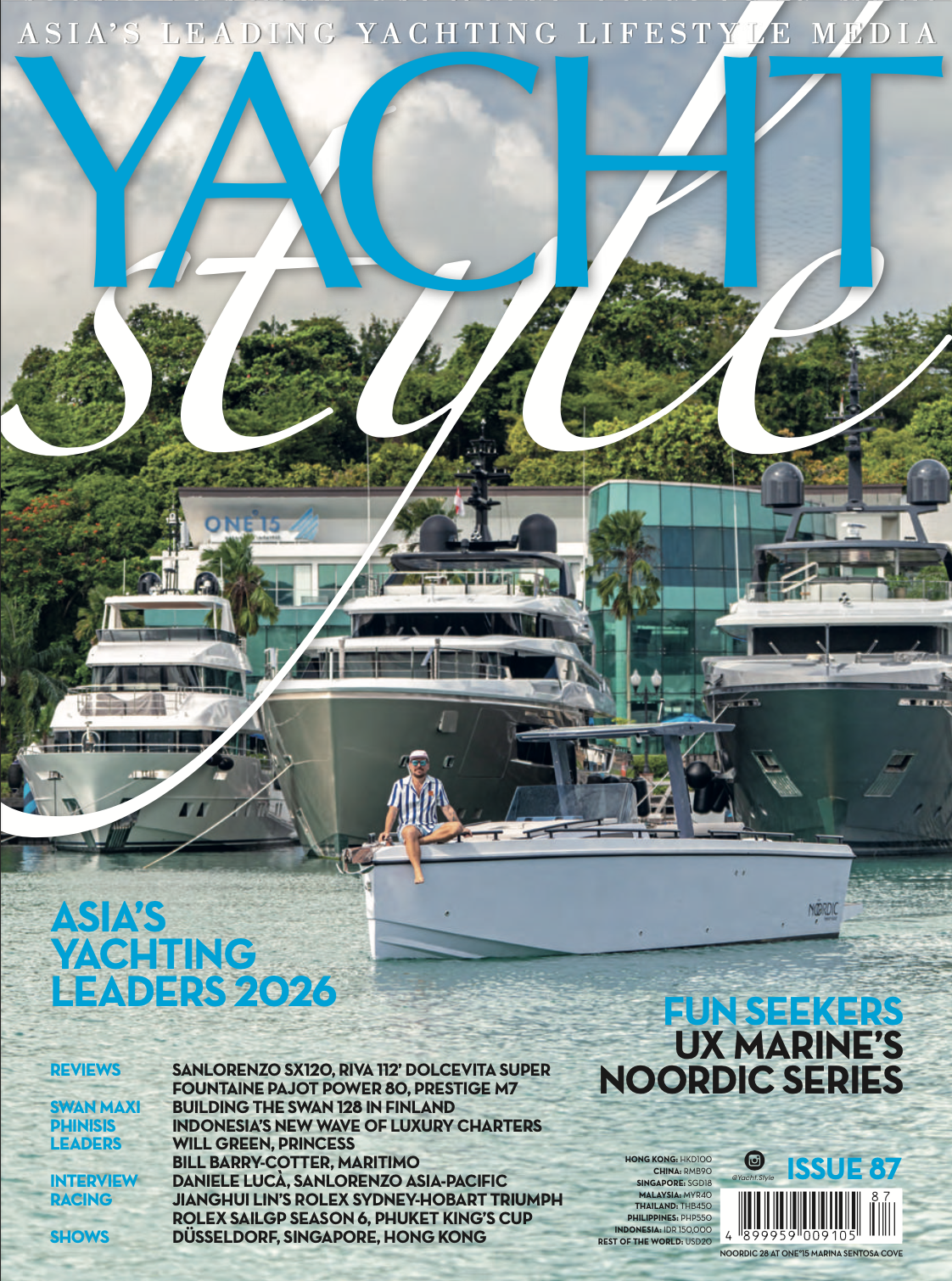

Su Lin Cheah, Asia Pacific representative for ICOMIA (International Council of Marine Industry Associations), summarises the ICOMIA Market Insights: Pathways in Asia report in a Column for Yacht Style Issue 86.

Archipelagos of Asia: Southeast Asia is home to much of the Coral Triangle, the world’s most biodiverse marine region, where destinations include Raja Ampat and Komodo in Indonesia, and Palawan and El Nido in the Philippines; Commentary: WWF-Singapore; Infographic: ICOMIA
Asia’s leisure boating industry operates in a complex environment, requiring a clear understanding of the region’s unique characteristics to identify opportunities and address challenges.
With over 60,000km of coastline, thousands of islands and favourable climates, Asia supports year-round recreational boating. Its strategic location between the Pacific and Indian Oceans, along with expanding infrastructure, makes it a key waypoint for global yachting.
Asia’s maritime heritage has shaped global history through centuries of seafaring, trade and advanced shipbuilding. This legacy enabled early globalisation, fostering trade and cultural exchange across the region.
Mastery of maritime sciences and strategic sea routes continues to influence modern maritime law and diplomacy. Key waterways, such as the Straits of Malacca, remain vital to regional economies and are expected to face capacity challenges, underscoring their ongoing importance in Southeast Asia.
HOME TO GLOBAL ECONOMIC POWERHOUSES
Asia is experiencing strong economic growth, especially within ASEAN, which has nearly 630 million people and recent annual GDP growth of nearly 5 per cent. The ASEAN Economic Community Strategic Plan 2026-2030 aims to make the region the world’s fourth largest economy. Despite global political challenges, ASEAN is focusing on job creation, education, digital economy, infrastructure and integration.
However, maritime disputes and declining fish stocks present coastal challenges. Prioritising local economic development and exploring green and blue economy opportunities are essential for sustainable welfare.

Su Lin Cheah at Penang’s Straits Quay Marina, Malaysia
China is now the world’s second-largest economy, with a nominal GDP over US$19 trillion, contributing about 30 per cent to global economic growth. It leads in manufacturing and exports, shipping goods valued at over US$3 trillion annually. China’s financial strength is evident in its large foreign exchange reserves, while the services sector offers further growth potential.
India, the world’s fifth-largest economy, is expected to sustain rapid growth between 6.3-6.8 per cent through FY 2025-26. Its youthful population and digital transformation, combined with ongoing industrial development and initiatives like ‘Make in India’, position India for significant future growth.
BOATING IN ASIA’S BLUE ECONOMY
Boating plays a key role in Asia’s blue economy, supporting coastal tourism, economic growth and local prosperity. Stakeholders face challenges in measuring boating’s economic impact and advocating for supportive policies. National collaboration is essential for engaging regulators and improving reporting accuracy.
Although the leisure marine industry is fragmented, leading yacht manufacturers are investing in offices and partnerships in major hubs like Hong Kong and Singapore. These efforts help them navigate new markets, enhance customer service and succeed despite infrastructure challenges.
Meanwhile, Asia’s engineering and manufacturing sectors are advancing, focusing on innovation to address environmental challenges.
At the China International Boat Show 2025 in Shanghai, Chinese companies showcased new propulsion and sustainability technologies alongside established brands. Asian firms are actively expanding globally and participating in major trade events to build new business connections.

China is pioneering eco-friendly technologies, as displayed at the China International Boat Show; Photo: Su Lin Cheah
Asian markets are aligning with global standards and enhancing compliance through regional standards and certification organisations such as the China Classification Society (CCS), with a growing emphasis on environmental sustainability.
Regional governments are updating regulations and investing in green technologies to meet global sustainability goals, which will affect water access and leisure boating infrastructure. While growth potential is strong, the industry must adapt to an uncertain environmental landscape.
Regional governments are implementing policies to enhance sustainability, reduce environmental impact and improve resource efficiency. These changes require owners and managers of infrastructure (such as marinas) and services to upgrade facilities and adapt procedures to comply with new regulations, including alternative energy and waste management.
More than ever, industry stakeholders at all levels need to engage with the relevant authorities through their respective national Marine Industry Associations (MIAs) so any implementation will be inclusive and supportive of a sustainable industry.
Key fundamentals existing within the ecosystem of all leisure marine markets in the region include – in varying degrees of priority and development – Government Advocacy, Access to Water and Financial Infrastructure, as well as initiatives like Grow Boating.
These are intertwined with cross sectoral dependencies, underscoring the challenging complexity of the regulatory and operating environments in the region. Yet, more importantly, they collectively hold the development potential and growth opportunities of boating in Asia.
SU LIN CHEAH

As ICOMIA’s Regional Representative, Asia Pacific, Cheah leads ICOMIA’s initiatives and programmes while supporting the interests and activities of ICOMIA’s members in the region. An advocate of collaboration, cooperation and the strength of the collective, she continues to build upon 30 years of experience in the industry, bringing local-global-local perspectives and strategies in this dynamic region of diverse cultures and business practices.
ICOMIA Market Insights: Pathways in Asia is part of a research initiative of the ICOMIA Asia Working Group. This report, together with an extensive appendix comprising unique market reports by ICOMIA Members in Asia, is available as a complementary supplement with every purchase of ICOMIA Recreational Boating Industry Statistics 2023.


